Bringing Biology to Life

We may not be Science Geeks per se, but we’re clearly fans of that type of thing! Not to mention that some of “our own” being deeply involved in Citizen Science projects around the world…

So we say Kudos to the National Science Teacher’s Association for creating curriculum and publishing textbooks that are both real and engaging.

“Observing the life cycle of monarch butterflies and following their remarkable migratory journeys between Canada, the United States, and Mexico … 

“Tracking climate change by recording the dates of first leaf, flower, and fruit of local trees, shrubs, flowers, and grasses …

“Discovering which bird species migrate, where they go, and when …

“Exploring life cycles and population dynamics of frogs, toads, and other animals in nearby ponds … Continue reading
Herpetologist Confidential

This slideshow requires JavaScript.

Thanks to the scientific journal Nature, the history-biology continuum is alive and full of intrigue as the story below shows (click here for a podcast related to the same story):

Before leaving for the Philippines as an undergraduate in 1992, Rafe Brown scoured his supervisor’s bookshelf to learn as much as he could about the creatures he might encounter. He flipped through a photocopy of a 1922 monograph by the prolific herpetologist Edward Taylor, and became mesmerized by a particular lizard, Ptychozoon intermedium, the Philippine parachute gecko. With marbled skin, webs between its toes and aerodynamic flaps along its body that allow it to glide down from the treetops, it was just about the strangest animal that Brown had ever seen. Continue reading

Cornell Herpetology and Ornithology

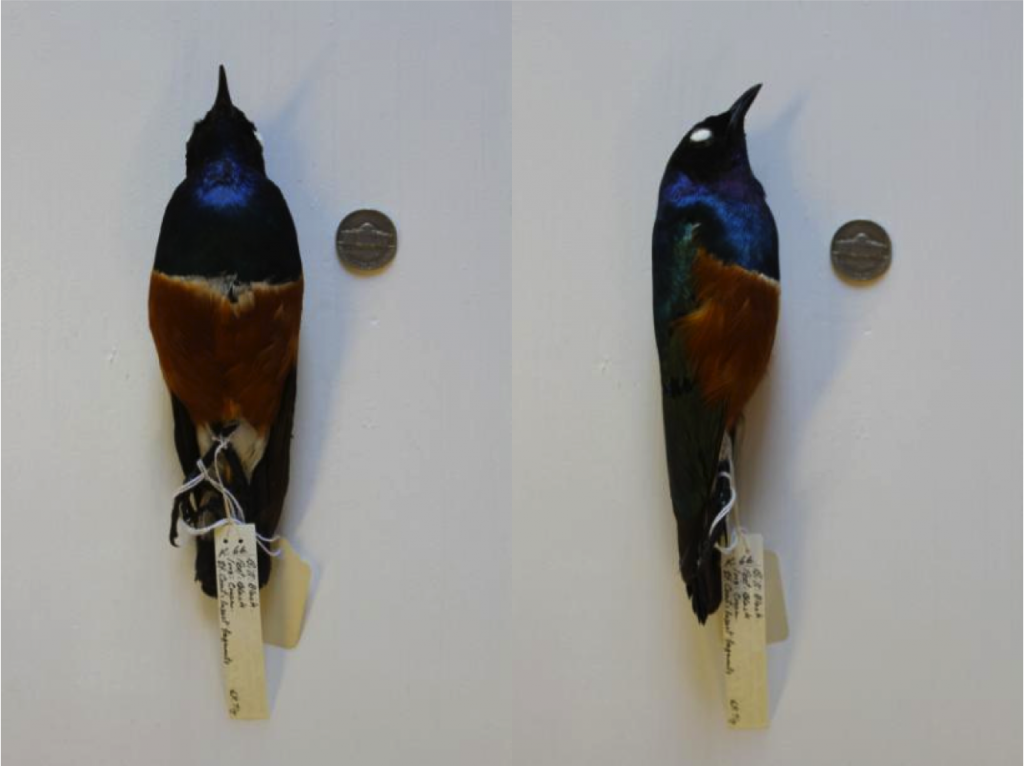
African Superb Starling specimen from Cornell’s collection. Photo by Jon Atkinson for students taking BIOEE 4750 – Ornithology.

During each of the spring semesters in my second and third year at Cornell, I took an advanced biology course that focused on one big group of vertebrates that I’ve always found both interesting and beautiful to study both in and out of school: birds and ‘herps’, or reptiles and amphibians. In the university setting, there is a half-joking rivalry between biologists who study these groups, leading to this type of crude but funny cartoon that can be seen on the office doors of at least one professor in Cornell’s Corson-Mudd Hall, home of the Ecology & Evolutionary Biology Department.

Continue reading

Scientific Findings About Those Famous Cousins

According to fable attributed to Aesop, there was once a country mouse who invited his cousin who lived in the city to come visit him…If you do not know that story, it is easy to find. The moral of that story seems to be that peace and quiet in the country ultimately provide a better life than the dangers of the city, no matter the attractions of the latter.  Hard to argue with that, unless you are a city mouse at heart.  And/or if your mouse brain has been hardwired that way. In which case, you can thank the tendency of humans to transform the natural environment into built space. Carl Zimmer explains recent scientific findings along these lines:

Evolutionary biologists have come to recognize humans as a tremendous evolutionary force. In hospitals, we drive the evolution of resistant bacteria by giving patients antibiotics. In the oceans, we drive the evolution of small-bodied fish by catching the big ones. Continue reading

Extinction Is Forever, Except When It Is Not

But where would I live? Royal BC Museum

But where would I live? Royal BC Museum

From the fellow who brought you Dolly, a philosophical yet practical consideration of the ethics of cloning an extinct species:

It is unlikely that a mammoth could be cloned in the way we created Dolly the sheep, as has been proposed following the discovery of mammoth bones in northern Siberia. However, the idea prompts us to consider the feasibility of other avenues. Even if the Dolly method is not possible, there are other ways in which it would be biologically interesting to work with viable mammoth cells if they can be found. Continue reading

Save Soil, Perhaps Even Improve It By Drinking Organic Coffee

SaveOurSoil_LOGOThe news we pointed to about coffee-making best practices was mainly about the last step of a long chain–when the coffee is just about to give its olfactory, gustatory and other pleasures upon consumption.  It linked to an earlier post about the artisanal agriculture link in the coffee-making value chain, but here we add one more link on that topic. It has strong recommendations about what else we as consumers might do to assist in coffee-making best practices. It brings to mind topics we have covered in non-coffee posts, such as altruism, which we have considered more than once; and collective action, likewise more than a passing interest.

When we have the opportunity to support a good cause, at minimum we can give it attention here by linking to it, and with great pleasure we do so for our friends at Counter Culture Coffee:

Our soils are in crisis. Conventional, chemical-based farming is destroying soil health, leaving farms with increasingly barren earth. Extraordinary coffee – that which we are dedicated to – needs rich, thriving soil, since healthy soil leads to healthy coffee trees, prosperous farms, and delicious coffee. Continue reading

Entomological Wonders

The New Yorker’s website has a post by Michael Lemonick describing a natural wonder than most people would not likely rate as highly as, say, an aurora borealis. But if you happen to be in the USA during the coming months, prepare for a natural shock and awe:

…The chirp of a single Magicicada septendecim, a type of cicada, is hardly noticeable. The simultaneous chirping of a million of them—a very rough estimate of how many insects will populate each infested acre—is not quite deafening, but it’s certainly overwhelming. The sound, a shrill, relentless whine, has been likened to the screech of a jet engine. Continue reading

Artisanal Glass & Natural History

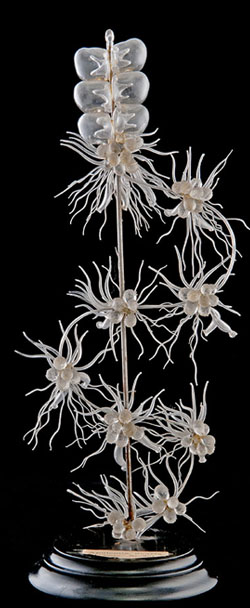
Intro jelly fishAn article in today’s New York Times by C. Drew Harvell profiles the Blaschkas, glassmakers who were commissioned to create anatomically perfect sculptures of marine creatures for scientific purposes starting in the late 1800s, and current efforts to find living specimens of the same. From the introduction to one of the original collections, at Cornell University:

Before Jacques Cousteau and the aqualung, before Kodachrome and underwater photography – there were the Blaschkas, father and son glassworkers who produced some of the most extraordinary glass objects that have ever been made. Their work has been described as “an artistic marvel in the field of science and a scientific marvel in the field of art.”

Artifacts inevitably reflect the cultural values leading to their creation. In 19th century Europe and America, an explosion of interest in science and education directly affected Leopold and Rudolf Blaschka. Reflecting these interests, new museums were built and opened to the public. They differed from earlier museums not only by admitting the public but also by featuring collections that illustrated science and natural history and often displayed systematic arrangements of plants and animals.

Continue reading

Lost City Of The Monkey God

Another great article (click the image to the left to go to the source), complementing this recent one from the New Yorker, about one special location within the region several members of Raxa Collective have called home for most of the last two decades:

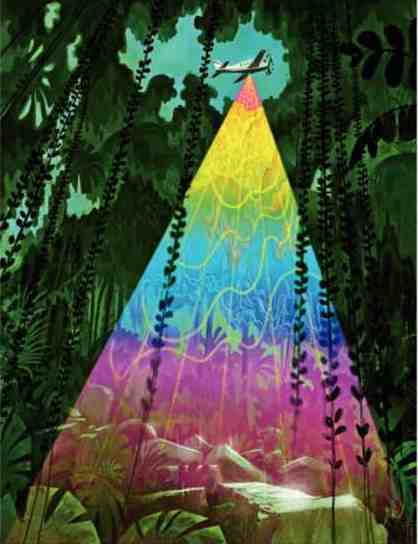
The rain forests of Mosquitia, which span more than thirty-two thousand square miles of Honduras and Nicaragua, are among the densest and most inhospitable in the world. “It’s mountainous,” Chris Begley, an archeologist and expert on Honduras, told me recently. “There’s white water. There are jumping vipers, coral snakes, fer-de-lance, stinging plants, and biting insects. And then there are the illnesses—malaria, dengue fever, leishmaniasis, Chagas’.” Nevertheless, for nearly a century, archeologists and adventurers have plunged into the region, in search of the ruins of an ancient city, built of white stone, called la Ciudad Blanca, the White City. Continue reading

Exoskeletal Bling

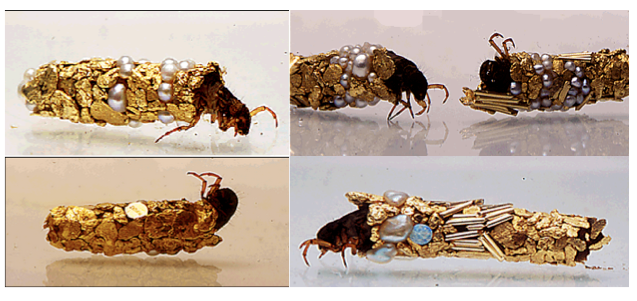
The caddis worm (order Trichoptera) may not be as popular as its famous shiny cousin, the scarab beetle, but it carries the extra charisma of an intrinsic aesthetic behavior.

French artist and science enthusiast Hubert Duprat took his natural curiosity to an elaborate level when he began providing these case building larva with gold spangles and semi-precious materials in lieu of the bits of sand and gravel they would normally use.

An amazing observation is that the worms seem to approach their work with an artistic eye, choosing the color and quality of the materials they use. In the 1930s an American entomologist observed in a Nevada river that “among all the little particles of sand and minerals swept along by the water, the Trichoptera make meaningful selections of bright blue opals—in other words, the most conspicuous or garish materials.” Continue reading

The Poetry of Science

This conversation between two luminaries of modern science: Neil deGrasse Tyson, astrophysicist and host of NOVA and evolutionary biologist Richard Dawkins is as poetic as it is informative, and well worth the time it takes to listen.

Professor Dawkins says that science is the poetry of reality. We take pleasure in his and Professor Tyson’s expanded bandwidth… Continue reading

Rainforest Primer

Statistics:

  •   .03% of the world’s surface with 5% of the world’s biodiversity.
  •   130 species of freshwater fish
  •   160 species of amphibians
  •   208 species of mammals
  •   220 species of reptiles
  •   850 species of birds, including 52 species of hummingbirds alone
  •  1,000 species of butterflies
  •  1,200 varieties of orchids
  •  9,000 species of plants
  •  34,000 species of insects
  • twelve climatic zones
  • 5 types of forest: mangrove, rain forest, cloud forest, lowland tropical dry forest, deciduous forest
  • Landmass of 19,730 square miles – approximately the size of West Virginia

But statistics only tell a rather 2 dimensional story. Continue reading

Aliens In Europe

A red swamp crayfish. 'Alien' species cost the European economy €12bn a year, a study shows. Photograph: FLPA/Alamy

A red swamp crayfish. ‘Alien’ species cost the European economy €12bn a year, a study shows. Photograph: FLPA/Alamy

The Everglades are not the only location where invasive introduced species are causing harm:

Animals and plants brought to Europe from other parts of the world are a bigger-than-expected threat to health and the environment costing at least €12bn (£10bn) a year, according to a study published on Thursday. Continue reading

Sticky Explanations

Pea aphid on alfalfa

Pea aphid on alfalfa

Thank you, Ed.  Thank you, National Geographic. A smart fellow who communicates clearly, a great publication with a long history of communicating important information with good writing and excellent photography; now we have an explanation for:

How Falling Aphids Land on Their Feet Like Cats

by Ed Yong

Cats are famous for landing on their feet after a fall, but they aren’t the only animals that do so. The tiny pea aphid can also right itself in mid-air, and it does so in a way that’s far simpler than a falling feline. Continue reading

More On Internal Compasses

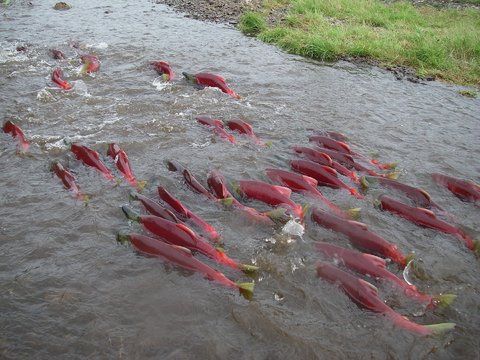
Tom Quinn/University of Washington.  Sockeye salmon migrating from saltwater to fresh water.

Tom Quinn/University of Washington. Sockeye salmon migrating from saltwater to fresh water.

More and more stories addressing the understanding scientists are developing about internal guidance systems:

Every summer, millions of sockeye salmon flood into the Fraser River in British Columbia, clogging its shivering waters with their brilliant blushing bodies.

Scientists and spectators alike have long been awed by the sockeye’s audacious struggle to swim upstream to spawn. And while it has been known for years that a salmon can smell its way up the river to find its natal stream, no one has been able to explain just how these beautiful and economically vital fish find their way back from the open ocean, 4,000 or 5,000 miles away, to the right river mouth. Continue reading

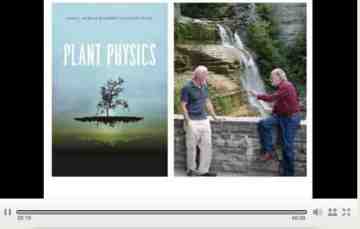
Plant Physics

Another in the excellent series of Cornell luminaries sharing their work in informal presentations (i.e. “in the stacks”) for lay folk like us.  Click the image to the right to go to the video of this talk:

Over 90 percent of all visible living matter is plant life. Plants clean the air, provide food and fuel, fibers for clothing, and pharmaceuticals. Interweaving themes that emphasize biology and physics, the book explains how plants cannot be fully understood without examining how physical forces and processes influence growth, development, reproduction, evolution, and the environment. Continue reading

Star-Led Little Critters

Further on the the various compasses we navigate by:

Look up at the sky on a clear, moonless night, and you can make out the broad, hazy band of the Milky Way. For the longest time, observers were unsure what the milkiness was. Celestial clouds? Tiny stars? The “fiery exhalation” of large, sublunar stars, as Aristotle proposed? In 1610, using a telescope (a recent invention), Galileo revealed that the haze is made up of individual, barely visible stars; they are faint only because they are so distant. So continued the hard process of putting us in our proper cosmic place—an orientation that only gets more disorienting with each new scientific discovery. Continue reading

Thoreau’s Flowers

orchid-blog480

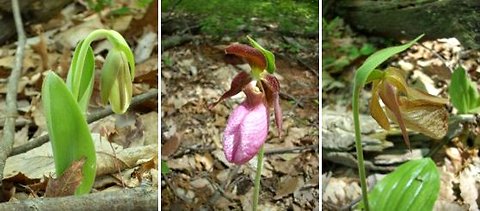
Zoe Panchen. Earlier flowering times: the progression of Cypripedium acaule, the pink lady slipper orchid, on April 23, May 7 and May 20, 2010.


From Green Blog:

Henry David Thoreau was a peculiar fellow. After his secluded stint at Walden Pond, his fixation with the natural world only grew. Starting in 1852, his journal turned into a two million-word project documenting seasonal observations around his small Massachusetts township, Concord. Over the next six springs he could be seen racing about town like a madman in an effort to spot and record that year’s first elusive blooms, all the while taking notes. Continue reading

Mexican Moths

_MG_7886

Entomology is a relatively minor hobby of mine. I enjoy chasing after and photographing insects when I have the chance – and most places in the world have an abundance of insects. Cabo’s airport, located on the southern point of Baja California, is no exception. These photographs were taken mere minutes after disembarking the airplane on which we arrived. The thousands upon thousands of egg-laying moths were easily mistaken for bird droppings, until examined more closely.

_MG_7888 Continue reading

Newly Discovered Species

This slideshow requires JavaScript.

A bit of synchronicity accompanies this post, following Seth’s post about Quagmire, and the post just prior to that about our efforts to balance out doom and gloom with as much evidence as we can find of “how to” or “there is still time and it is worth making the effort” stories.

Case in point: while Seth’s book review covers a certain delta in a certain country at a certain moment in history–all with pretty challenging consequences environmentally–the Guardian had just posted a sampling of 12 images of the 126 species of animal and plant life newly identified by biologists working in the same region  in the last year or so.  Those came from a new publication of WWF, whose press release we quote here:

126 new species have been discovered in the Greater Mekong in the past year. The total newly identified by scientists in 2011 includes 82 plants, 21 reptiles, 13 fish, 5 amphibians, and 5 mammals.

Continue reading