Photographer + Professor + Himalayas = Collaborative Book

The blurb is enough to get our attention, but the images on the book’s website (click the image above to see) make the journey palpable:

The Eastern Himalaya—land of Gods, of ancient mountain kingdoms, of icy peaks and alpine meadows—is like no other place on Earth. The life and landscapes of the region are as diverse, spectacular and fragile as the mountains themselves. Even today, these mountains hold many mysteries: unnamed species, primeval cultures and the promise of magical cures to heal all of humanity. Himalaya—Mountains of Life takes us on a journey of biocultural discovery, from the great canyon of Yarlung Tsangpo and the Siang Gorge in the east to the Kali Gandaki Gorge in the west. Along the way, Himalaya demonstrates through breathtaking imagery and words, why the preservation of this heritage is so important—not just for us, but for the future of all life on Earth. Continue reading

If You Happen To Be In Scotland

The 20th annual World Porridge Making Championships will take place in the Scottish Highland village of Carrbridge on Saturday 5th October 2013.

We should have known such an event existed. Now that we do, but being stuck in south India with no time to witness it first hand today, we will watch it from afar; but we have marked the calendar for next year’s championships. Meanwhile, you might find interesting how we came to know about this event.

Continue reading

Winter Arrivals

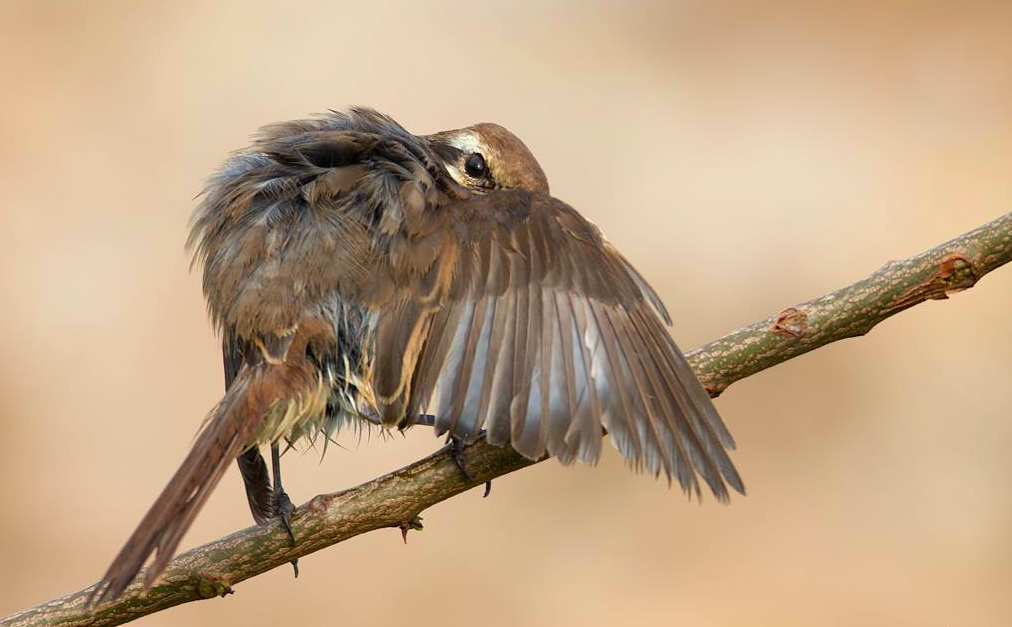
An exhausted winter arrival

Yesterday I encountered the first Brown Shrike for the season at Daroji Bear Sanctuary, near the town of Hampi, Karnataka.

For me, the appearance of the Brown Shrike is an indication of the winter migrants arrival. In previous years my first sightings have been in October, but they’ve arrived earlier this year.

I saw and photographed 2 individuals. One was totally worn out, probably because of the long, tiring migration from as far north as Siberia. Continue reading

Big Day Arizona

Northern Saw-whet Owl from Rustler Park

Northern Saw-whet Owl from Rustler Park

As we pulled up to the Rustler Park Campground parking lot in the Coronado National Forest a light rain began to fall.  Graham and I turned to each other upon arrival and with the same quizzical tone wondered, “Why is there someone else up here?”  The lights of another car illuminated the area and once we parked a man approached us.  There was a knock on my window as his flashlight blinded me.  I began the conversation puzzled and slightly alarmed, “Hey…how you doing?”  He announced himself as Portal’s lieutenant police officer and he asked to see our identification.  As I got out of the car to retrieve my id I noticed another ten or so officers standing behind the car.  When he asked what we were doing there at this hour and I replied “Birding” we received an expected response: “Birding? It’s midnight”.

This was hardly the way I imagined our Big Day would begin, but I suppose being searched to see if we were drug traffickers was an appropriate way to start our 24-hour birding adventure in the Chiricahua Mountains of Southeast Arizona. After trying to explain what a Big Day was (a whole day of non-stop birding in an attempt to see as many species as possible during that time) the officer hesitantly departed.

We didn’t have much time to think about this interaction, because our day was about to begin.

I gave Graham the countdown as my phone read, 11:59:45, 15 seconds, 10 seconds, 5 seconds, and Go. We immediately cupped our hands to our ears. There were three night birds we desperately needed at high elevation, and each was just as hard as next. A “sweep” of these three species would be unlikely to say the least. We did have one thing going for us though. For the past two months we had been interning at the Southwest Research Station just up the mountain from Portal. For those two months we had done almost nothing but bird. We knew specifically, sometimes down to a certain tree, where we could find each bird on our target list.

So as the clock struck midnight we were standing at the bathroom at Rustler Park listening for the rarest owl in the Chiricahuas, the Northern Saw-whet Owl. Graham and I used double playback, meaning I played the bird’s call and he would respond as a second bird; this strategy usually has a higher success rate of eliciting a call. To our delight we heard the tooting call of the owl echoing off the canyons. On a normal day we would want to see this bird, but today was far from normal. We were solely after numbers, and in the birding world an aural identification is sufficient. Once we got the Saw-whet we headed up the trail to the Forest Service cabins and began playing the Flammulated Owl. Our recordings weren’t loud enough, so I had to do it the old fashioned way and emulate the call myself. Based on my experiences in these mountains this particular owl is the most sought-after bird because it is the hardest to find. During the summer internship I received numerous emails from fellow birders asking where to spot it. But at the moment those other birders were certainly not our problem—getting this owl to respond was! Continue reading

Cornell Herpetology and Ornithology

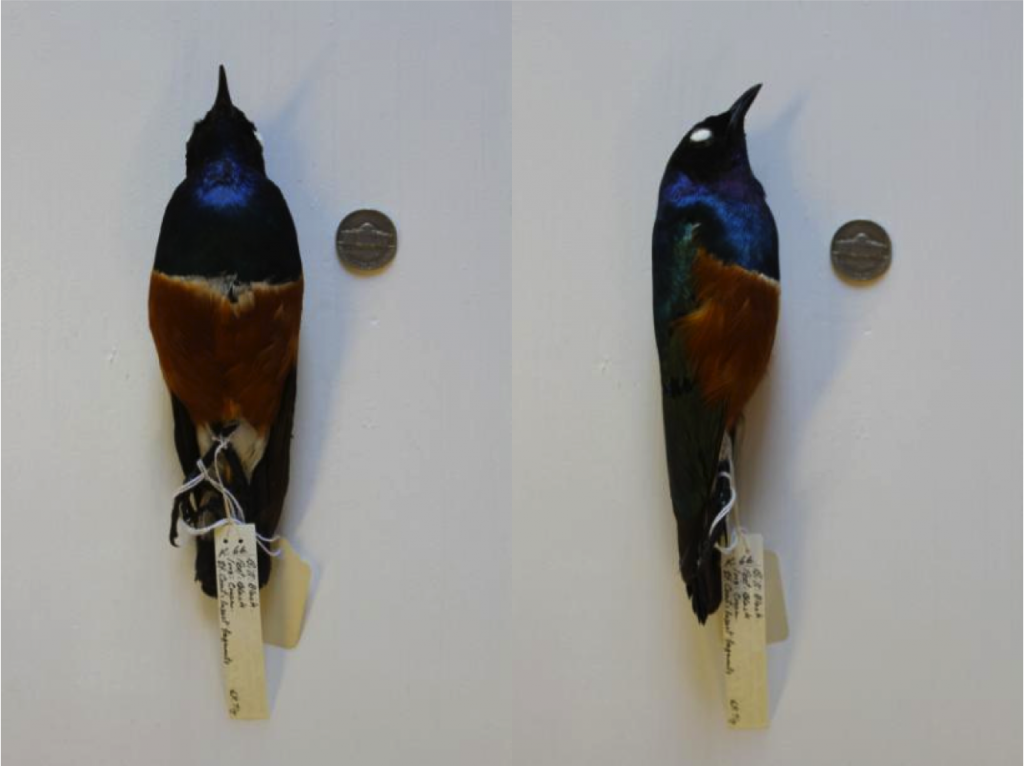
African Superb Starling specimen from Cornell’s collection. Photo by Jon Atkinson for students taking BIOEE 4750 – Ornithology.

During each of the spring semesters in my second and third year at Cornell, I took an advanced biology course that focused on one big group of vertebrates that I’ve always found both interesting and beautiful to study both in and out of school: birds and ‘herps’, or reptiles and amphibians. In the university setting, there is a half-joking rivalry between biologists who study these groups, leading to this type of crude but funny cartoon that can be seen on the office doors of at least one professor in Cornell’s Corson-Mudd Hall, home of the Ecology & Evolutionary Biology Department.

Continue reading

Of Birds and Beans Redux

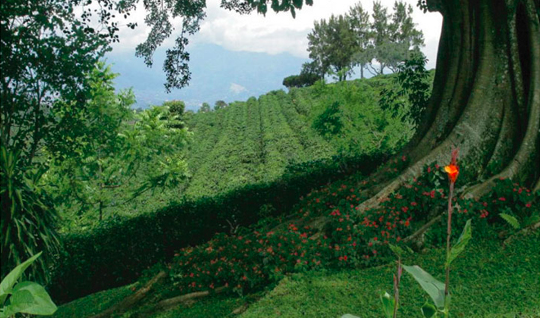
Shade grown coffee plantations in Costa Rica; photo credit: Emilia Ferreira

What first struck me when I read about the Smithsonian Migratory Bird Center this morning was that their bird friendly coffee certification was a great idea. What struck me second was that I’d read about it before on this site, or at least a teaser on the subject. Chalk not having a “part 2” up to a Cornell student’s busy schedule, but it certainly left the door open for me to discover this wonderful initiative on my own.

We’ve discussed the environmental benefits of shade grown coffee on these pages before, and the Cornell Lab of Ornithology is a La Paz Group “touch stone” in many ways. Leave it to them to so clearly make sense of all the sustainable coffee certifiers on the market from a bird’s eye point of view.

Making Sense of Sustainable Coffee Labels
They’re those little rectangular icons lined up on your favorite gourmet coffee bags—a tree, a flower, a frog, a harvester, each trying to tell you something about how the coffee was grown. But what does each one mean, and how do they differ? Here’s a list of common labels and their benefits for birds….

Bird Friendly. Certified by scientists from the Smithsonian Migratory Bird Center, this coffee is organic and meets strict requirements for both the amount of shade and the type of forest in which the coffee is grown. Bird Friendly coffee farms are unique places where forest canopy and working farm merge into a single habitat. By paying a little extra and insisting on Bird Friendly coffee, you can help farmers hold out against economic pressures and continue preserving these valuable lands. The good news is that there’s more Bird Friendly coffee out there than many people realize—we just need to let retailers know we want it…

Organic. As with other organic crops, certified organic coffee is grown without most synthetic pesticides and fertilizers and is fairly sustainable—although there are no criteria for shade cover. Because of coffee’s growth requirements, it’s likely that organic coffee has been grown under some kind of shade. However, many farmers shade their coffee using other crops or nonnative, heavily pruned trees that provide substantially less habitat for birds, and the organic label offers no information about this. Continue reading

How The Catcher In Rye Works

At first light Richard Dale collects migrating birds caught in the mist net Photograph: Dan Kitwood/Getty Images

At first light Richard Dale collects migrating birds caught in the mist net Photograph: Dan Kitwood/Getty Images

We have paid attention to the places where birdsong, and other ornithological phenomena, are studied since the beginning of this blog 2+ years ago.  Thanks to the Guardian for this slide show to tell a short story:

Birds are recorded at the ringing station in Rye – in pictures

Bird ringers, aided by the British Trust for Ornithology, are this month recording hirundines and other migratory birds at a private reserve in East Sussex

To Read It To The End, You Must Disbelieve It

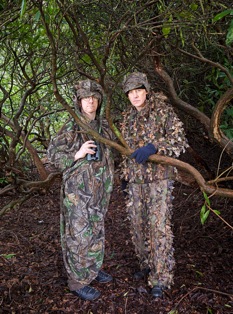
Mark Thomas (left) and Guy Shorrock keep watch on Britain’s egg obsessives. “These are not normal criminals,” Shorrock says. Photographs by Richard Barnes.

Thanks to the New Yorker‘s commitment to a difficult topic–birds and their fate at the hands of regular and irregular people–and especially to Julian Rubinstein and his confidants for this taxing piece of journalism:

On the afternoon of May 31, 2011, Charlie Everitt, an investigator for the National Wildlife Crime Unit in Edinburgh, Scotland, received an urgent call from a colleague in the Northern Constabulary, the regional police department whose jurisdiction includes the islands off the country’s western coast. The officer told Everitt that a nature-reserve warden on the Isle of Rum, twenty miles offshore, had reported seeing a man “dancing about” in a gull colony. Everitt looked at the clock. It was 4 p.m., too late to catch the last ferry, so he drove Continue reading

Powdermill Avian Research Center (PARC)

This slideshow requires JavaScript.

Thanks to Atlantic‘s website for hosting the Venue folks’ post about this remarkable research station devoted to a phenomenon we pay tribute to every day. In particular, this post helps understand a century+ of evolution in the research tools used to study the behavior of birds:

On a recent morning, Venue joined researchers Luke DeGroote, Amy Tegeler, Mary Shidel, Kate Johnston, and Matt Webb, as well as several dozen warblers, catbirds, and a cuckoo, for a tour of the various devices of bird surveillance at the Powdermill Avian Research Center (PARC), part of Carnegie Museum of Natural History’s Powdermill Nature Reserve. Continue reading

Bird Dust-bathing in D.C. and Shark Tail-whipping in PH

These House Sparrows, one of the sixteen focal species of the Celebrate Urban Birds program, were all dust-bathing together next to the sidewalk near the Washington Monument as I walked past this week. Birds dust-bathe to clean their feathers of oils and parasites, and the behavior is well-documented in this species.

On the other side of the world, just a few days ago, footage was released of previously undocumented (but formerly observed) behavior in Philippine thresher sharks, pelagic predators with a prodigious posterior. A thresher shark’s tail comprises about half of the shark’s total length, and in the video Continue reading

Wild Periyar – Avifaunal Hotspot

malabar parakeet

malabar parakeet

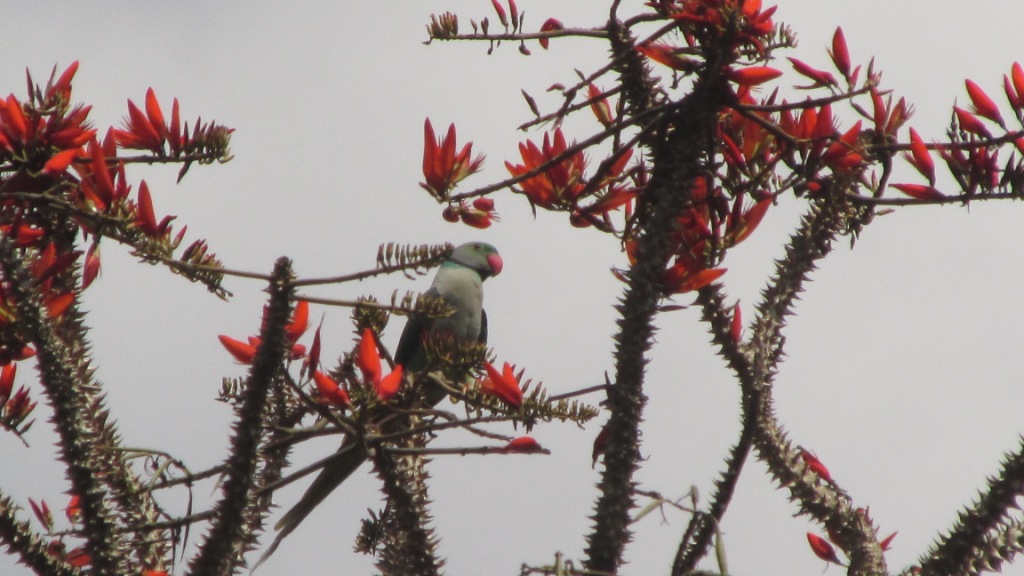
Periyar Tiger Reserve is an avifaunal hotspot extraordinaire and one of the most facinating birding destinations in the entire Western Ghats. The verdure of rolling hills, rich flora and a many-armed reservoir supports an impressive 323 species of birds, including Malabar Parakeet, Hill Myna, Bulbuls and Hornbills. Continue reading

Wildlife Conservation Society Announces Discovery Of New Bird Species

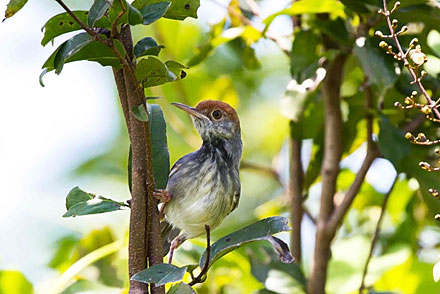
© Ashish John/WCS.  A new species of bird turns out to have been hiding in plain sight: in Cambodia’s capital city limits of Phnom Penh, home to 1.5 million people.

© Ashish John/WCS. A new species of bird turns out to have been hiding in plain sight: in Cambodia’s capital city limits of Phnom Penh, home to 1.5 million people.

One of the conservation organizations we most admire announced some unexpected news via the CS Monitor:

It can be easy to go unnoticed in a big city, and that may describe how the Cambodian tailorbird kept its low profile for so long. A team of scientists discovered the new red-headed, wren-sized bird in Cambodia’s urbanized capital Phnom Penh and several other nearby locations, including at a construction site. It is one of only two bird species found solely in Cambodia. The other, the Cambodian laughingthrush, is restricted to the remote Cardamom Mountains.  Continue reading

Birders, Language Apps, And Protected Area Rules

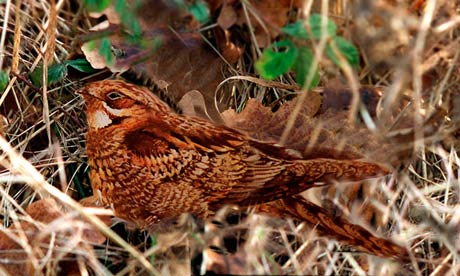
Several visitors to Brownsea Island, Poole Harbour, were found to be using apps that imitate the unusual 'churring' call of the nightjar to coax out the bird. Photograph: Don Mcphee for the Guardian

Several visitors to Brownsea Island, Poole Harbour, were found to be using apps that imitate the unusual ‘churring’ call of the nightjar to coax out the bird. Photograph: Don Mcphee for the Guardian

Where is Ben, apart from being on the road to 2,000 birds, when you need him? We are curious how widespread the use of such apps might be among serious birders. Read this Guardian story to the end and you may agree with us that this language app is more likely to do harm than good:

To the long list of nature reserve do’s and dont’s can be added a thoroughly 21st-century injunction: don’t use your apps to pap the feathered denizens. Continue reading

Are you doing a Big Year?


I was working from the internet café during a windy day last week-end when I thought I was squinting again. “Did you see that bird? It has two tails!” my colleague Martin exclaimed entering the room a little later. I checked out the sighting: a racket-tailed drongo. The most surprising, graceful creature I have ever seen. Actually, I didn’t know much about birding before I got here. Since then, I’ve learned about the fallouts following a storm, the threats to bird migration and the ethics of the birder. As of yesterday, thanks to India’s cable tv, I’ve learnt from a Hollywood movie that birding can also be a competition. Continue reading

Woven Nests

Below is a slideshow of birds and their woven nests, which I spoke about in my previous post.

This slideshow requires JavaScript.

Here you can see the diversity of nesting materials and supporting structures, the state of the strands of vegetation upon building (fresh and green or dry and brown), and the overall craftsbirdship exhibited by these master weavers!

Basket Cases

What strange growths protrude from this tree? Photo by Seth Inman.

There are birds around the world that use strands of different materials to craft marvelous woven nests that hang from tree branches — if you’re lucky enough to see them!

Yellow-rumped Cacique in Avian Architecture by Peter Goodfellow © Princeton University Press 2011. p95

Of course, in some circumstances it is not hard to find these pendent, or hanging, nests, as with many species of caciques and oropendolas in Central and South America (birds related to the North American blackbirds, orioles, and cowbirds). That’s right, the photo above isn’t of some weird fruit tree, but a tree-wide colony of oropendolas at Las Isletas, in Nicaragua!

Caciques, close relatives of Oropendolas, often nest beside wasp nests; orioles, only slightly more distant relatives, frequently nest near Eastern Kingbirds and Great Kiskadees. Wasps and these large flycatchers all help defend against nest predators. Yellow-rumped Caciques like the one pictured on the right start their nest building with a loop in a tangled mass of fibers that surrounds the end of a branch. Continue reading

CUBs Focal Species Close-up: Barn Swallows

This slideshow requires JavaScript.

The Barn Swallow’s nesting and habitat preferences have made it the most abundant and widely distributed swallow species in the world. The species adapted to using human structures as nest-bases from their previous preference of nesting in caves (although a single population on California’s Channel Islands still chooses to nest in its ancestral cave-grounds), and today you can find Barn Swallows nesting nearly anywhere in the US, even ranging as far afield as southern Alaska.

Since they nest on man-made structures so often (hence their common name, as well as their species name rustica in the genus Hirundo), they make for a great focal species for Celebrate Urban Birds given that their habitat of choice can coincide with rural, suburban, and urban landscapes that include buildings, open areas, and water, especially bodies of which provide a source of mud. As you can see in the photos above and below, mud is the main building material for their nests, as it is for Cliff Swallows, a few of which are featured in these slideshows! Barn Swallows are also frequent subjects of the Funky Nests in Funky Places challenge at Celebrate Urban Birds.

Continue reading

First Egg: Same Box; Same Female; Same Ordinal Date!

We couldn’t believe it either, but an ASY female (an ASY is a bird known to have hatched earlier than the calendar year preceeding the year of banding) that we banded last year has returned to the same box at the same site, built a nest and laid her first egg on the same ordinal date as last year. (In 2012, February had 29 days and the first egg arrived on April 30th, this year February has 28 days and the first egg arrived on May 1st.)  We celebrated how any other field biologists in the middle of nowhere would – a hot cup of tea and an invigorating game of cribbage. Continue reading

Egg Coloration

Gray Catbird nest with eggs. Photo by Flickr user JMK Birder.

In my last post I covered Killdeer eggs and nests, focusing on their pyriform shape and mottled coloration. Here I’d like to talk a bit about egg pigmentation in more detail, since variation in patterns and colors is so fascinating in itself!

We saw with Killdeer that the spotted coloration of the eggs helped them blend in better with their surroundings, but what about eggs that aren’t marked at all? Well, white eggs, as we might assume, don’t have much camouflage potential unless placed in a white background, which is essentially limited to very light sand or gravel. White eggs, therefore, need to be disguised in other ways. They can be covered by things like feathers or vegetation, which is what many waterbirds do–wet leaves or seaweed can even stain parts of the eggs brown! They can also be laid in burrows or cavities where they won’t be seen anyway, which is what many woodpeckers, parrots, and owls, among other species, do.

Continue reading