2012 National Book Award For Non-Fiction: Small Stories Matter

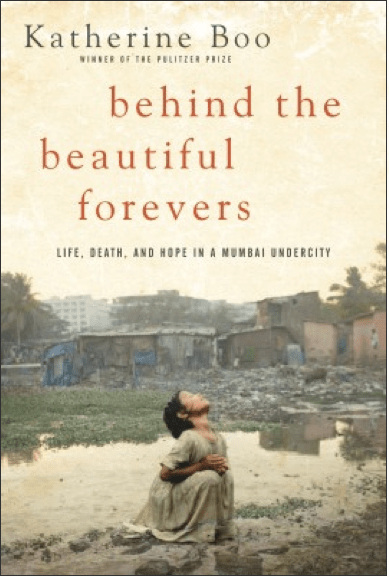
Click the image of the book to the right to read about it.  Click here for a podcast interview with Katherine Boo, which we first heard earlier this year. At that time, for several of us non-Indians living in Kerala, the story Boo told in the interview was fiercely captivating — we live small stories of India’s humanity every day.

It was also something else: many non-Indians who we hope will visit India (for reasons we try to make plain every day on this site) are already so saturated with images of India’s poverty that we are inclined to talk about anything but poverty.

And yet, this book is too important to not shout about it from the roof top. Coverage in the New York Times of the National Book Awards ceremony contained the following (midway through the article):

…The nonfiction category was every bit as competitive and featured established authors like the biographer Robert Caro and the late Pulitzer Prize-winning journalist Anthony Shadid, who wrote for The Washington Post and The New York Times. Continue reading
Treatments of the Frontier

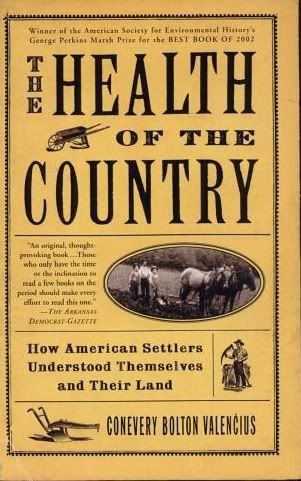
Whether merely traveling or settling down to start new lives, American emigrants to the Western frontier held certain beliefs about the “salubrity,” or health, of the land and how it could affect their own wellbeing. Such is the subject material of Conevery Valenčius’ book The Health of the Country, which explores the realm of eighteenth-century settlers as they struggled to cope with new and changing environments—primarily in Missouri and Arkansas.

Like Ann Greene in her book about horses that I reviewed last week, Valenčius does not discuss environmental degradation or change on a scale anywhere close to some other authors I’ll refer to in future posts (partly due to the limited temporal scope of the work but also given the text’s narrower subject of “medical geography”), but both The Health of the Country and Horses at Work share the distinction of being a creative sort of environmental history that readily utilizes some of this new field’s best characteristics: use of interdisciplinary evidence and modes of analysis, reconstruction of past landscapes through culture (e.g. myth, law, perception) and science, and concentration on the two-way discourse between man and nature.

Continue reading

Humans Read Stories For Perspective

We are anchored, as an organization, around experiential learning and action, not only for our interns but also in/for the communities we are part of.  But this bias itself is informed by the opportunities many of us have had, through education, living in cultures other than those we were born into, access to libraries, or work experience early in life, to read our way to better understanding.  We have plenty of diverse posts on this topic. In a couple of minutes, the video above sheds light on why this post, and a few follow-ups by one of our first contributors, set the bar for what we see on a good day: with the aid of good literary perspective, we can describe our experiences in a way that benefits others.

Humans Tell Stories For A Living

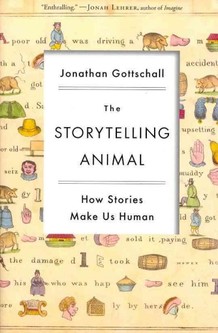
A great conversation with the author of this book is podcast here thanks to PBS and its contributors.  In the current issue of American Scientist, a review:

Gottschall clearly considers it safe to say that storytelling has something to do with helping us navigate our social worlds, since we are such thoroughly social animals: “We are attracted to fiction not because of an evolutionary glitch, but because fiction is, on the whole, good for us. This is because human life, especially social life, is intensely complicated and the stakes are high.”

Continue reading

Writer’s Craft

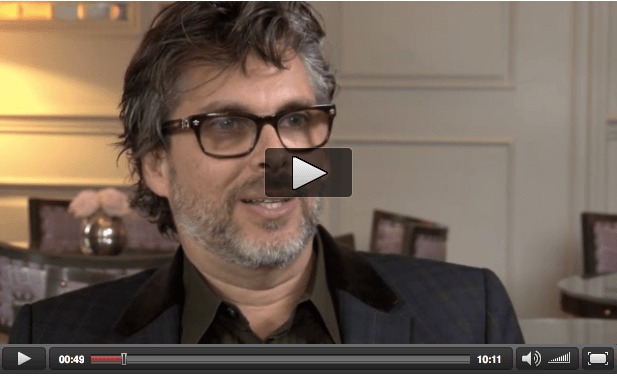
There will never be a need for Chabonologists in the way there are Dylanologists.  The market for anyone-ologists is created by artists (novelists, poets, song-writers included) who cannot or will not talk about their work. Capable and willing artists seem to be the exception rather than the norm so we celebrate them when we find them. Chabon is a superb conversationalist, and is on on the road talking about his book. Thankfully he spent some time with the Guardian‘s great Sarfraz Manzoor describing the inspirations behind Telegraph Avenue.  Click the image above to go to the video.

Really, Exxon?

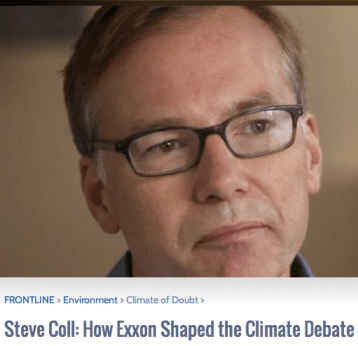
Okay, we admit that Exxon fails the Really? test.  Little about them shocks us at this point. We have highlighted examples of passing that test with flying colors, looking no further than our living room and even in our favored reading materials.  But thanks to one of the best investigative journalists out there, a writer at The New Yorker and author of Private Empire: ExxonMobil and American Power, we find we still have a bit of shockability. Steve Coll, interviewed for a Front Line series on Climate Change (caveat emptor: that documentary film series is exhaustively full of Really? revelations; for a smaller dose, click the image above for the transcript of the Coll interview, or here for a podcast of an interview he gave about the book on Fresh Air):

In some ways, it’s kind of a no-brainer that Exxon would go after climate science on a very superficial level. It’s sort of in their self-interest to keep government away from fossil fuels, right? Is that how it began? Continue reading

Feathers, Evolution’s Pride And Joy

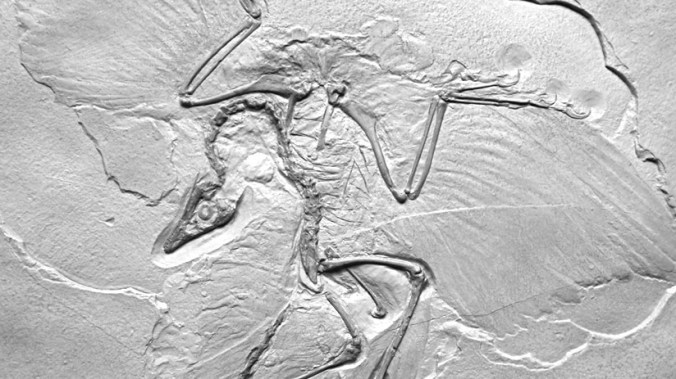
Thor Hanson/Basic Books. Thor Hanson’s own cast of Archaeopteryx lithographica presents what he calls the “ancient wing written in stone.”

Click the image above to go to a podcasted interview with Thor Hanson, author of Feathers:

“To this day, they are the most efficient insulation known. We haven’t been able to match them with synthetics, and I think it boils down to that growth process and the fact that you can make these fine, fine branching structures. The key to insulation is what they call loft — how much air can you hold in a small space? And because feathers are so beautifully and finely branched, they can hold a great deal of tiny, tiny air pockets in that branched structure. And that’s what people try to mimic with synthetics, but haven’t been able to match feathers for that yet, because it’s difficult to manufacture finely branched structures.” Continue reading

Rachel’s Place In The Eco-Pantheon

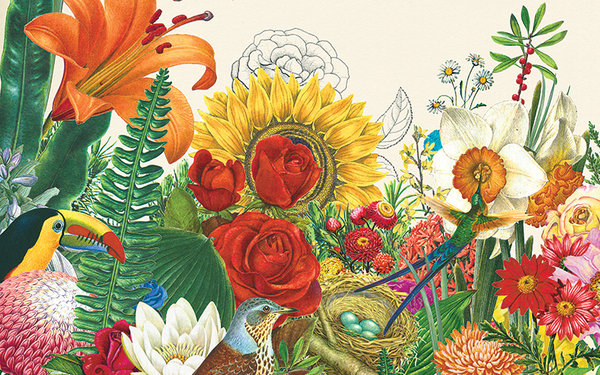
Illustration by Valero Doval

Click the illustration above to go to a great article in this past Sunday’s New York Times Magazine by Eliza Griswold about the historic significance of Rachel Carson’s book:

“Silent Spring” was published 50 years ago this month. Though she did not set out to do so, Carson influenced the environmental movement as no one had since the 19th century’s most celebrated hermit, Henry David Thoreau, wrote about Walden Pond.

Saying Nothing Well


Click the banner to the left to go to Paul Griffiths’ review:

I have nothing to say, and I am saying it.” The line, probably John Cage’s most famous statement, appears three times over in his book Silence, which Wesleyan University Press has reissued in a smart fiftieth anniversary edition that also coincides with the centenary of the author’s birth. Continue reading

Birds, Book, Bother

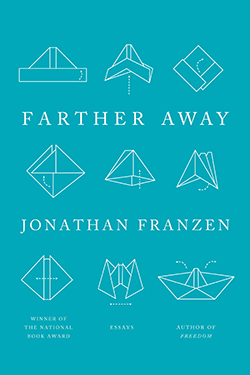
From the review in Smart Set (click to book image to go to the source) it is clear that we will enjoy this collection, whose title we had already seen in another context, from a writer we already had reason to admire for his attention to birds:

A novel is a bird. I learned this from Jonathan Franzen. It is the underlying message of his newest collection of essays, Farther Away.

Franzen became a bird watcher many years ago. He is almost apologetic about that fact, realizing that — in the opinion of most normal human beings — the birdwatcher is a slightly pathetic if otherwise harmless individual. In his commencement address at Kenyon College, “Pain Won’t Kill You,” Franzen writes: Continue reading

If You Happen To Be In Washington, DC

There was a remarkable new museum connected to books that we posted about not long back.  Now, an exhibition in one of the world’s great libraries answering the question (so to speak): do books matter?  You still have more than one month to catch it in person (but if you cannot catch it in person take half an hour with this podcast about the exhibition).  Click the banner above to go to the exhibit’s website, which notes:

Books That Shaped America

June 25–September 29, 2012

Books That Shaped America marks a starting point—a way to spark a national conversation on books and their importance in Americans’ lives, and, indeed, in shaping our nation. The titles featured here (by American authors) have had a profound effect on American life, but they are by no means the only ones.

Read more about Books That Shaped America »

113 Hemingway

Screen shot from my subscriber’s access to old New Yorker articles–the text is cut off at the bottom of the image but you can still savor the journalistic description in the sampling.

Lillian Ross, today among the last living chroniclers, along with A. E. Hotchner, of Hemingway in living technicolor, wrote this profile of him when he was a 50-year old superstar and she was a 24-year old who had been a New Yorker staff writer since she was 19.  How’s that?

Who cares how?  I care that.  And thank her for it on this, his 113th birthday.  She has always had a distinctively invisible presence in her writing, which makes Hemingway pop on her page.  Of course he never popped. He banged. Exploded.  Her profile makes a trip to your local public library worthwhile to find a 62-year old hard copy of the magazine.

Or, if the library near you is no longer, subscribe to the magazine and gain access to all content in past issues.  I care that she, and Hotchner, and others, have shared small sketches not designed to titillate as gossip, but yes to amuse.  As in amuse-bouche.  Small tastes for those who aspire to greatness and are not embarrassed from time to time to wonder how the great think, how they feel, what they do:

Commoner’s Dilemma


A Perfect Moral Storm: The Ethical Tragedy of Climate Change 
by Stephen Gardiner, Oxford, 512 pp, £22.50, July 2011, ISBN 978 0 19 537944 0
 

Click the LRB banner above to go to the review of this important book, which starts:

For the benefit of anyone who has spent the past decade or so on a different planet, the most frequently asked questions about climate change on this one are as follows. Is it getting warmer? Yes, surface temperatures have risen by 0.8°C from pre-industrial levels. Are humans causing it? Almost certainly.

Report To Greco

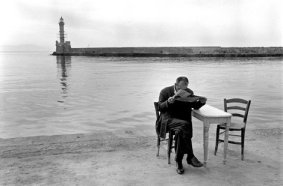
Man reading, Chania, Crete, 1962 (Costa Manos/Magnum Photos)

Click the photo to go to the recent post titled “Do We Need Stories?” in the blog site of the New York Review of Books.  It starts out:

Let’s tackle one of the literary set’s favorite orthodoxies head on: that the world “needs stories.” There is an enormous need,” Jonathan Franzen declares in an interview with Corriere della Sera (there’s no escape these days), “for long, elaborate, complex stories, such as can only be written by an author concentrating alone, free from the deafening chatter of Twitter.”

Continue reading

The Swerve, Prized Again

File photo by Stephanie Mitchell/Harvard Staff Photographer

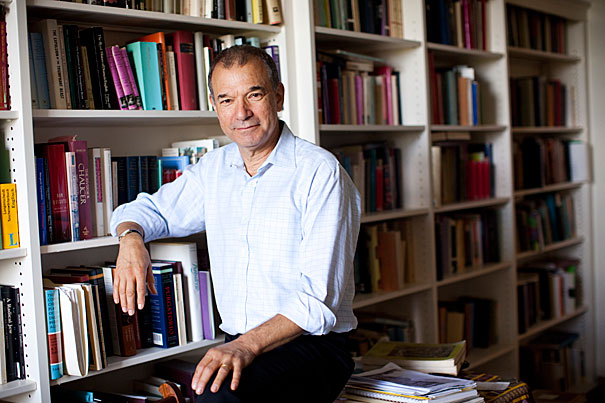
I have already said how surprising I found it that writing about the influence of classical literature on modern thought can be so effectively illuminated; in fact I could not help but say it a couple of times.  On this site we like to celebrate the success of our favored visionaries, writers, producers, educators, artists, thinkers, doers.  One of the publications at the university where he teaches had special reason today to put his name in visible circulation (click the image above to go to the story) with the announcement mentioned here:

Greenblatt’s book, which describes how an ancient Roman philosophical epic helped pave the way for modern thought, was awarded the 2012 Pulitzer Prize for general nonfiction.

In its citation, the Pulitzer board described “The Swerve” as “a provocative book arguing that an obscure work of philosophy, discovered nearly 600 years ago, changed the course of history by anticipating the science and sensibilities of today.”

Continue reading

Foodienomics

In a world that already has its fair share of freaky explanations for life’s quirks, and where celebrity is built in a day by some of the cleverer writers in that genre, do we really need this?  Hard to say with just a couple of reviews seen so far (click the image to the left to see the Kirkus review or click here to see the New York Times review of the book), but it sounds as though you are more likely to enjoy this if you are of the libertarian persuasion (as the author is touted to be) or a liberal (not the political variety but the curious, open-minded variety).

This snippet from the Kirkus review sums up why and for whom it may be worth the read:

Continue reading

Dance Then

Click the image to the right for a wonderful reminder, in the form of book review, of what makes dance uniquely suited to certain important cultural tasks:

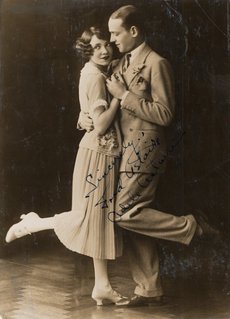
Now that The Artist has whetted our interest in the silent film and the revolutionary impact of sound, it may be time to reconsider the career of the man who made the conversion to sound the basis of a whole new kind of movie, Fred Astaire. The Artist suggests quite accurately that the definitive event of the new sound era was the arrival of the film musical. Sound meant music; music meant jazz. But the technological transition was slow. After the first feature-length sound movie, The Jazz Singer (1927), which starred Al Jolson, it was six years before the advent of the Jazz Dancer proved that talking and even singing mouths were not nearly as expressive in the new medium as dancing feet, especially and almost exclusively the feet of Fred Astaire. Astaire and the difference he made to the film musical add up to more than the story of one career. No other film genre provided as perfect a synchronization of sight and sound or an experience as exhilarating, and that was very largely Astaire’s doing. Continue reading

In the Shadow of Books

For centuries books have held a place of honor in our collective hearts and minds, whether housed in the great libraries of classical civilizations, the libraries of the “Great Houses” of Europe, or the wooden niche in a country home.

Whether related to their historical relevance or their long beloved history, books resonate with the stories they tell, the places they carry us to and the way they make us feel. Continue reading

Yoga & Evolution

A few months ago there was an article in The New York Times that apparently caused a ruckus (click the image to the left to read The Guardian‘s coverage of that aftermath) in the Western yoga community.  Maybe it is because I am not a member of the Western yoga community that, when I read the article originally I thought:   Brilliant.  Eastern tradition meets Western science.  Evolution.  Improvement.

Today I had a reminder about that article, and my response to it, while listening to this podcast.  The journalist (a Pulitzer-toting science writer who also has practiced yoga for more than 40 years and recently published The Science Of Yoga) writing that article says something about half way through that rings true: Continue reading

Curiouser Than Fiction

Children examine the Automaton during a visit to The Franklin Institute.

About 5 years ago I brought home a curious book called The Invention of Hugo Cabret by Brian Selznick.  Both of my sons had been avid readers and lovers of detailed illustrations since childhood and books like The Eleventh Hour by Graeme Base had been favorites for as long as I could remember, so the elaborate charcoal drawings and almost graphic novel design in this new book were intriguing.

The most fascinating moment came with poking around the history behind the story itself.  Although placed within a work of fiction, both Georges Méliès and automatons are quite real. The Franklin Institute of Science and Technology has one in their collection with a history similar to the one in Selznick’s book:

In November of 1928, a truck pulled up to The Franklin Institute science museum in Philadelphia and unloaded the pieces of an interesting, complex, but totally ruined brass machine. Donated by the estate of John Penn Brock, a wealthy Philadelphian, the machine was studied and the museum began to realize the treasure it had been given. Continue reading