Seeds Are Our Future

Lotus-seeds.jpg

Lotus flower seed heads and raw, un-puffed lotus seeds.

Lotus flower first appeared in these pages years ago, but its seeds were never mentioned. Time to correct that. We missed the opportunity to mention this book when it was first published–we missed the enthusiastic review–but better late than never. Thanks to the folks at Gastropod for the shoutout in a recent episode that gives Thor Hanson and his book their due:

Seeds

02b9f459390ae3332af708bdd6a67871

When seeds first evolved, hundreds of millions of years ago, they not only revolutionized the plant world, but they also eventually sowed the path for human civilization. Today, it’s nearly impossible to eat a meal without consuming a plant embryo—or many. But how did seeds come to play such a critical role in human history? Why might one seed in particular, the lotus seed, hold the secret to immortality? And, perhaps just as importantly, how does this magical seed taste?

The New It Crop

0217Mag-Tip-1-jumbo.pngThe first time I heard of hemp was in the 1970s during my teen years. I do not remember what I learned about it then, except for something like this:

…For centuries, American farmers grew hemp for fiber, oil and many other uses. George Washington cultivated it at Mount Vernon to mend fishing nets…

Thanks to Malia Wollan, in her Tip quite straightforwardly titled How to Grow Hemp, I know more today than I did then:

…Practice your explainer, which should go something like this: Marijuana and hemp are varieties of the same species of cannabis plant, but hemp contains less than 0.3 percent of the mind-altering tetrahydrocannabinols, or THC, and will not get you high…

There is more, but not a lot more. Continue reading

Adaptation & South-South Cooperation

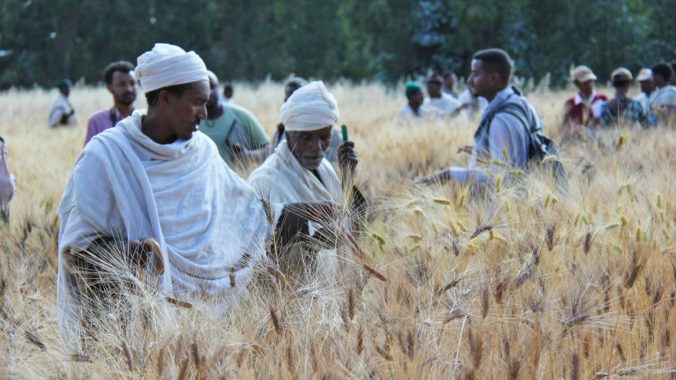
Ethiopia_Wheat_23496722552_5868e72816_k_web

Ethiopian farmers examine the results of a trial of wheat varieties. BIOVERSITY INTERNATIONAL

The bread we eat in the not so distant future may depend on the type of cooperation described below. Thanks to Yale e360 and Virginia Gewin for this story:

How Crowdsourcing Seeds Can Help Farmers Adapt to Climate Change

In Ethiopia and other developing nations, scientists are working with small-scale farmers on trials to see which seed varieties perform best in changing conditions. These initiatives are enabling farmers to make smarter crop choices in the face of rising temperatures, drought, and more extreme weather.

Ethiopia_Wheat_23605266175_c076fa1be7_k_web.jpg

Durum wheat varieties grow in trial plots in Ethiopia’s Amhara region. Thousands of farmers participated in the project, testing how various wheat strands performed under changing climatic conditions. BIOVERSITY INTERNATIONAL

In Ethiopia’s undulating, high-elevation grasslands, farmers — most of them working parcels of only two to three acres — produce more wheat than anywhere else in sub-Saharan Africa. They accomplish this feat in the face of chronically short supplies of high-quality seed. Still, Ethiopia’s record harvest of 4.6 million metric tons in 2017 didn’t satisfy the country’s needs, forcing it to import an additional 1.5 million tons of wheat. Continue reading

Megafauna’s Neglected Cousin, Microflora

Steve-Pearlman-32_FLUXMAG_WEB (1).jpg

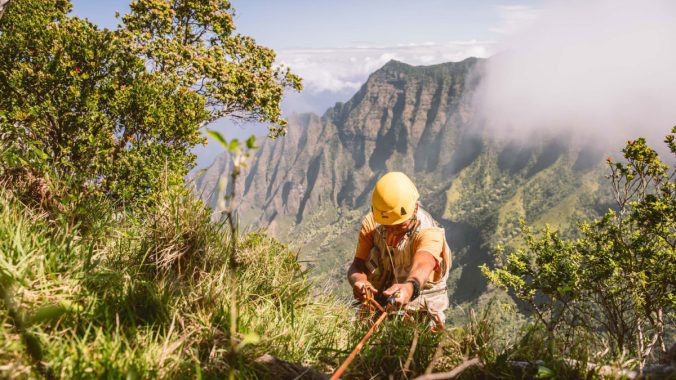
Botanist Steve Perlman rappels into the Kalalau Valley, a biodiversity hotspot on the Hawaiian island of Kauai. COURTESY OF BRYCE JOHNSON/FLUX HAWAII

RS40032_Limahuli-Garden_Brighamia-insignis_Nov-8-2016-2_web (1)

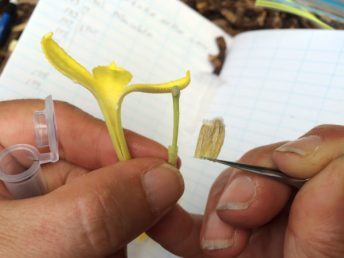
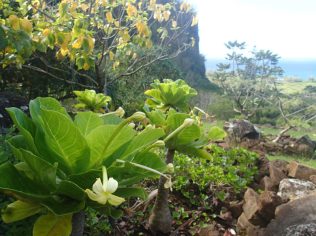
A botanist collects pollen from the flower of Brighamia insignis. NATIONAL TROPICAL BOTANICAL GARDEN

The work described in this article may explain why I first missed the story when it was published in October. The heroics get lost in the delicacy. My attention, like that of many people who are fortunate enough to have plenty of exposure to the natural world, gravitates to megafauna. And next in line for our attention is usually the rest of the fauna. But without flora, none of that fauna would be possible. And so our concern for biodiversity, and perhaps especially for the hotspots of biodiversity, should reflect an equal gravitational pull. So, my thanks to Yale e360 for this story:

Extreme Botany: The Precarious Science of Endangered Rare Plants

They don’t make the headlines the way charismatic animals such as rhinos and elephants do. But there are thousands of critically endangered plants in the world, and a determined group of botanists are ready to go to great lengths to save them.

Scientist-climbing_PEPP_WEB2

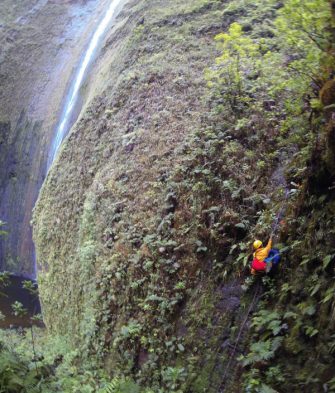
A scientist with the Plant Extinction Prevention Program climbs through remote Hawaiian ecosystems to study endangered plant species. PEPP

To save plants that can no longer survive on their own, Steve Perlman has bushwhacked through remote valleys, dangled from helicopters, and teetered on the edge of towering sea cliffs. Watching a video of the self-described “extreme botanist” in actio­­n is not for the faint-hearted. “Each time I make this journey I’m aware that nature can turn on me,” Perlman says in the video as he battles ocean swells in a kayak to reach the few remaining members of a critically endangered species on a rugged, isolated stretch of Hawaiian coastline. “The ocean could suddenly rise up and dash me against the rocks like a piece of driftwood.”

B.insignis-outplanted-in-former-range-at-LImahuli-Garden-2_web (1).jpg

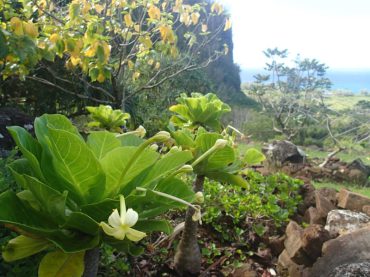
The plant known as cabbage-on-a-stick (Brighamia insignis) has been grown at Limahuli Garden & Preserve on Kauai, which is within the historic range of the species. SEANA WALSH

When he arrives at his destination, Perlman starts hauling himself up an impossibly steep, razor-sharp cliff 3,000 feet above the sea without a rope, his fingers sending chunks of rock tumbling down to the waters below. Finally, he reaches the plants and painstakingly transfers pollen from the flowers of one to those of another to ensure that the species can perpetuate itself. At the end of the season, he will return to collect any seeds they were able to produce. Continue reading

Rutabaga’s Moment In The Light

Rosner-Rutabaga-Secondary.jpg

Rutabaga tagliatelle, from Olmstead, in Brooklyn.Photograph by Evan Sung

In the interest of cutting back meat consumption, my eye is easily caught these days by pretty shiny things, like the image above, but even more so by rich description, especially when the history of a food is illuminated. This brief history of one root vegetable, accompanied by a couple of beautiful photos, led me to the book below right. Click the book image to go to the source. RutaB.jpg

The original is in a collection akin to the one where Seth did his History honors thesis, and akin to the one where some of my doctoral dissertation‘s historic data was sourced (if you are a Cornell geek or library geek scroll upward from the cover page to see the details). Thanks to Helen Rosner once again brilliantly for getting me exploring:

The Swiss botanist Gaspard Bauhin was born in Basel in 1560, and he dedicated his life to obsessively cataloguing the vegetable world. To present-day historians, he’s notable primarily for his botanical thesaurus “Pinax Theatri Botanici” (“An Illustrated Exposition of Plants”), published in 1623. But, among cooks, he’s sometimes recalled for his lesser work, published in 1620: “Prodromos Theatri Botanici” (“Prologue to the Exposition of Plants”), a compendium of flora in which he describes a plant with vivid yellow flowers, a spray of leaves, and massive, hairy roots “more or less similar to those of turnip or carrots.” It was a specimen that had never before appeared in any scientific list of plants: the rutabaga.

Rosner-Rutabaga-4.jpg

The rutabaga is a culinary underdog. It struggles to shine among its fellow root vegetables.Photograph by Matthias Haupt / Picture Press / Redux

The annals of botany abound with claims that Bauhin was not only rutabaga’s biographer but also its inventor: that he found it growing wild and domesticated it; that he was a civic-minded scientist seeking a cold-resistant turnip to feed his chilly countrymen and not (more likely) a monomaniacal scholar who spent his life ensconced in an herbarium, scrivening endless latinate lists of plant names. “The turnip is older than history,” the caption on a color plate in a 1949 issue of National Geographic declares. “The rutabaga almost modern.” In fact, the vegetable has been around at least since ancient-Roman times, when the naturalist Pliny the Elder, writing in the first century, described an edible root “between a radish and a rape”—meaning the plant from which rapeseed oil derives, which is a cultivar of the same species. Bauhin writes that in his time the vegetable was widely grown in “the cold Noric fields of Bohemia,” where it was eaten pickled or mashed and was called simply “root” by its cultivators. Continue reading

Hunting Wild Coffee

merlin_149142180_e389d902-4d9f-4559-b2f6-687d704e15eb-jumbo.jpg

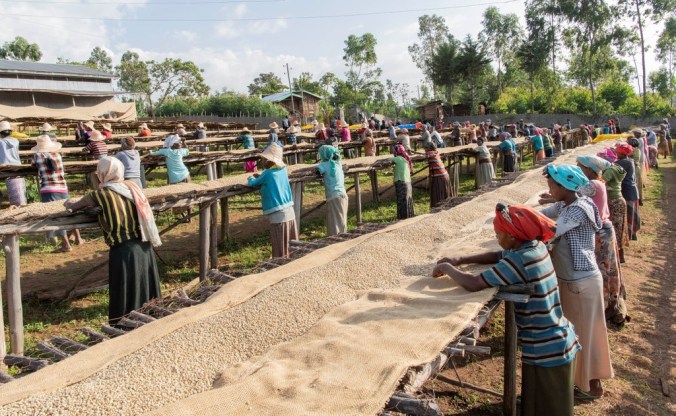
Drying coffee beans in Ethiopia. More than half of all species are at risk of vanishing in the wild because of climate change and deforestation. Maheder Haileselassie/Reuters

As much as I thought I learned in the last year about coffee, I got a hint just now, reading the article below, how steep my learning curve remains. 124 species of coffee? So much to hunt, so little time! Thanks to Somini Sengupta for this story:

15CLI-COFFEE2-jumbo.jpg

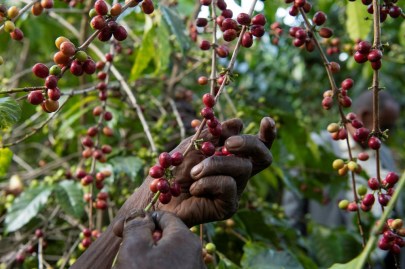
Picking coffee berries on a farm in Ethiopia. Maheder Haileselassie/Reuters

Aaron Davis, a British botanist, has spent 30 years trekking across forests and farms to chronicle the fate of one plant: coffee.

He has recorded how a warming planet is making it harder to grow coffee in traditional coffee-producing regions, including Ethiopia, the birthplace of the world’s most popular bean, arabica. He has mapped where farmers can grow coffee next: basically upcountry, where it’s cooler. He has gone searching for rare varieties in the wild. Continue reading

Enigmatic Fungi

A nematode pierces the cell walls of a mushroom’s hyphae to feed on them.Credit By Markus Künzler

The mysteries of nature never cease to amaze, and fungi rank high in all aspects. Since the inception of this site we’ve highlighted this special branch of the animal kingdom.

When Fungi Fight Back

A mushroom species was found to sense predators and sent warning signals to other parts of its body, but how it does that remains a mystery.

It’s known as fight or flight — the message the brain sends your body when it detects something frightening. Something like it happens to plants when they are under attack, too. And then there are fungi — perhaps the most mysterious kingdom of multicellular life.

Fungi too can sense attackers and manufacture powerful weapons to combat them, including the toxins and poisons that can send you to the emergency room if you eat the wrong mushroom.

But little is known about the built-in threat detectors of these limbless, brainless beings. Humans send messages through their nervous systems. A plant’s vascular system is its relay apparatus. But fungi have neither. Continue reading

Floral Communication Better Understood

lead_720_405 (5).jpg

A bee collects pollen from a flower. DARREN STAPLES / REUTERS

 Thanks to Ed Yong, 6+ years in our pages, whose work we always appreciate:

Plants Can Hear Animals Using Their Flowers

And they react to the buzzing of pollinators by sweetening their nectar.

When people pose the old question about whether a tree falling in an empty forest makes a sound, they presuppose that none of the other plants in the forest are listening in. Plants, supposedly, are silent and unhearing. They don’t make noises, unless rustled or bitten. When Rachel Carson described a spring bereft of birds, she called it silent.

But these stereotypes may not be true. According to a blossoming batch of studies, it’s not that plants have no acoustic lives. It’s more that, until now, we’ve been blissfully unaware of them. Continue reading

Herbaria, Preservation & Science

062617_Herbarium_039.jpg

Charles Davis, director of the Harvard University Herbaria, looks at specimens collected by Henry David Thoreau. Davis was a co-editor of a special issue of Philosophical Transactions B, which advocates for the continued preservation of biological collections. Jon Chase/Harvard file photo

Collecting plant specimens and pressing them for further inspection is a pastime many of us have tried at least once in our lives. It was fun while it lasted. And some beautiful mementos may have survived to tell the tale. The opportunity to look at and learn from plant specimens collected by Henry David Thoreau? Priceless. Thanks to Peter Reuell, a writer and publicist at Harvard University, for this:

Critical collections

Importance of biological samples and their preservation goes beyond the obvious

062617_Herbarium_009.jpg

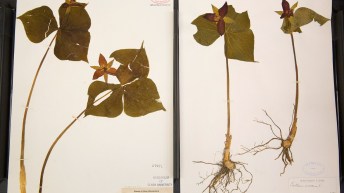
The Harvard University Herbaria holds a specimen of trillium collected by Henry David Thoreau. Jon Chase/Havard file photo

More than a century ago, when botanists and naturalists were in the field collecting plant and animal specimens, they couldn’t have imagined that scientists would one day be able to extract DNA from samples to understand how plants and animals are related to one another.

They couldn’t have imagined that their collections could one day shed light on the effects of global climate change, or the emergence and spread of pathogens, the spread of fungal-driven amphibian extinction, or the effectiveness of policies aimed at reducing pollution in the U.S. Continue reading

Defending Megafauna

Canby-Elephant-Path-Njaia-Njoku.jpg

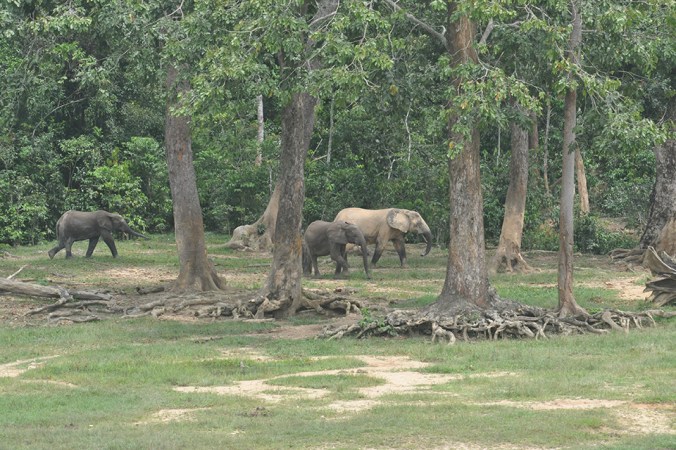
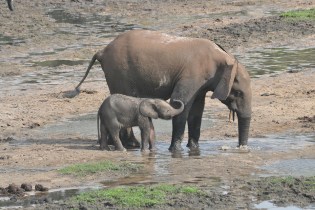
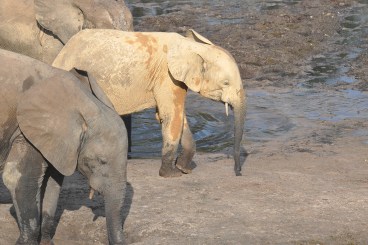
Perhaps as few as eighty thousand African forest elephants remain, and a new documentary explores the megafauna’s threats and defenders.Photograph Courtesy Elephant Path / Njaia Njoku

When we moved to Kerala in 2010 one of our motivations was that among the properties we would take responsibility for one was within a vast protected forest area in southern India. It was/is one of the great remaining habitats of elephants and tigers among other mammals, not to mention birds and all kinds of other life. Which is to say the ecosystem is intact enough to support apex predators and their megafauna prey, and everything around them and below them in the food chain. Which makes their viability as species possible. We networked as much as possible with scientists whose initiatives seemed relevant to our own.  Todd McGrain somehow escaped our attention until now, even though his work at the Lab of Ornithology should have caught it the way other artists’ did. Thanks to Peter Canby for pointing us here, and we have taken the liberty of inserting some of Tom’s other photos within the text below, which you can click on to go to one of his websites to learn more:

EP_0277.jpg

EP_0419.jpgIn Africa, there are two kinds of elephants: savanna and forest elephants. The species diverged somewhere between two and six million years ago, with the better-known savanna elephants spreading over the plains and open woodlands of Eastern, Southern, and Western Africa while forest elephants stayed behind in the dense forests at the center of the continent. Although the two occasionally hybridize, they are widely viewed as separate species. Forest elephants are smaller, with smaller and straighter tusks. The size of their tusks, however, has not protected them from rampant poaching, because the tusks have a distinctive hue, sometimes known as “pink ivory,” that has made them particularly valuable.
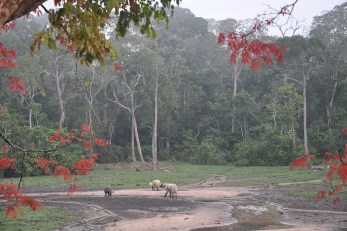
EP_0634.jpgSomething about the nobility of forest elephants regularly raises concern for their extinction. The tropical forests of the Congo Basin, once considered impenetrable, are now yielding to logging roads, mines, and even palm-oil plantations. In 2013, a widely respected study by Fiona Maisels, of the Wildlife Conservation Society, found that, between 2002 and 2011, the population of forest elephants had declined by sixty-two per cent. Perhaps as few as eighty thousand remain. The story of these declining numbers is also a story of habitat destruction. Where forest elephants exist in an undisturbed state, they build networks of trails through the deep forest. These trails connect mineral deposits, fruit groves, and other essentials of forest-elephant life. In Central Africa, there are dozens of fruit trees whose seeds are too large to pass through the guts of any other animal and for which forest elephants have evolved as the sole dispersers. These trees line the forest-elephant paths. Where elephant populations are disturbed, the paths disappear.
EP_0480.jpgMatt Davis, a researcher in ecoinformatics and biodiversity at Aarhus University, in Denmark, recently published a paper arguing that we are entering a period of extinction of large mammals akin to the scale of the extinction of the dinosaurs. “We are now living in a world without giants,” he told the Guardian, and went on to detail the many ecological consequences of the loss of megafauna. When I asked John Poulsen, an assistant professor of tropical ecology at Duke’s Nicholas School of the Environment, if this observation could apply to the role of forest elephants, he said, “Absolutely.”

The sculptor Todd McGrain has made a name for himself, over a thirty-year career, as the creator of sculptural monuments to birds that have been the victims of “human-caused extinction.” It’s not, therefore, entirely surprising that he has directed a documentary about forest elephants, “Elephant Path / Njaia Njoku,” showing at New York’s DOC NYC film festival this Wednesday and Thursday. McGrain’s subjects have included, among others, the passenger pigeon, the great auk, the Labrador duck, the heath hen, and the Carolina parakeet. When McGrain was the artist in residence at the Cornell Lab of Ornithology, Katy Payne, founder of the Elephant Listening Project at the Bioacoustics Research Program, introduced him to something she had discovered: forest-elephant infrasound, which is how elephants communicate inside the forest, at a frequency too low for human ears to register. She pitched up the recordings of elephant calls so that McGrain could listen to them. “I couldn’t help but hear them as bird calls,” he told me. “It was the complexity of their language that grabbed me.” Continue reading

Get Your Biome On

merlin_145518831_d9814803-584c-487f-afa1-35489af25baa-jumbo.jpg

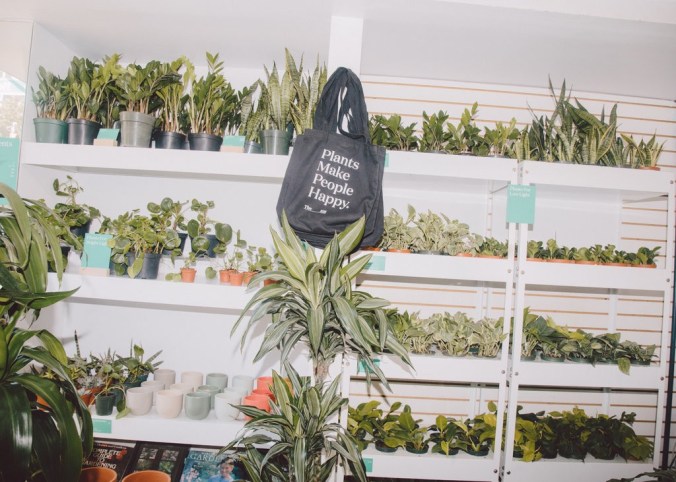
The Sill sells ceramic planters, watering cans, misters with arch sayings on them, fertilizer and soil mixes, totes and T-shirts. It also hosts movie nights, “sip and shop” cocktail parties and workshops (in store and online). Credit Nathan Bajar for The New York Times

Thanks to Penelope Green for brightening up our Sunday:

Meet the Plantfluencers

In a world of climate change, creating a biome of one’s own.

Plant1.jpg

Eliza Blank has conceived The Sill as a plant lifestyle company, or a global plant brand — a Glossier of plants. Credit Nathan Bajar for The New York Times

Horticulture and red wine were served up the other night at the Sill, a boutique on Hester Street, as Christopher Satch, a botanist wearing a T-shirt that read, “Plants Make People Happy,” the company motto, led a workshop on carnivorous plants.

It was plant stand-up — slightly blue patter with quick takes on Linnaeus and Darwin; binomial nomenclature (note the shape of the Venus fly trap for cues to how it got its name); detailed care instructions (carnivorous plants evolved in acidic bogs, which means they need distilled water, not tap, and lots of it); and a show-and-tell of Mr. Satch’s collection of butterworts and sundews.

Plant2Among the rapt attendees were Madison Steinberg and Lindsay Reisman, both 23 and working in public relations, and Brayan Poma, also 23, who works in construction; afterward they each took home an attractive tropical pitcher plant. “I like plants, but I kill so many of them,” said Mr. Poma, who wore a green hoodie and a goatee. “Maybe that’s why I find them so alluring.”

Plant3.jpg

The Sill began when Ms. Blank was trying to brighten up her sunless, sixth-floor walk-up with a plant or two, and was turned off by the wares at Home Depot, one of the few sources for plants and containers in the city. Credit Nathan Bajar for The New York Times

Mr. Poma is not the only millennial to feel that allure. Buoyed by Instagram, his generation’s obsession with houseplants is growing faster and more tenaciously than English ivy. Plant influencers, the horticultural stars of that medium, now have book deals, sponsors and hundreds of thousands of followers.Their apartment living rooms are the new urban jungles, spilling over with philodendrons, pilea (this year’s “It” plant) and bird’s nest ferns. Plant parents, as they call themselves, fuss over their plant babies with the attention once given to kimchi or coffee connoisseurship. (Such anthropomorphism — ironic though it may be — recalls the 1970s, when “The Secret Life of Plants” proposed plant sentience based on dubious science and convinced New Agers to chat up their spider ferns.)

Unlike George Orwell, these houseplant lovers see the lowly aspidistra as an aspirational totem, not a bourgeois cliché, and post money shots of their monsteras on #monsteramonday. That hashtag was propagated in 2016 by Morgan Doane, a director of analytics for an art company in Florida. Continue reading

Charisma & Conservation

Steve-Pearlman-32_FLUXMAG_WEB

Botanist Steve Perlman rappels into the Kalalau Valley, a biodiversity hotspot on the Hawaiian island of Kauai. COURTESY OF BRYCE JOHNSON/FLUX HAWAII

Thanks to Janet Marinelli and the team at Yale e360 for a reminder that charisma is not all that matters in decisions about conservation:

Extreme Botany: The Precarious Science of Endangered Rare Plants

They don’t make the headlines the way charismatic animals such as rhinos and elephants do. But there are thousands of critically endangered plants in the world, and a determined group of botanists are ready to go to great lengths to save them.

B.insignis-outplanted-in-former-range-at-LImahuli-Garden-2_web

The plant known as cabbage-on-a-stick (Brighamia insignis) has been grown at Limahuli Garden & Preserve on Kauai, which is within the historic range of the species. SEANA WALSH

To save plants that can no longer survive on their own, Steve Perlman has bushwhacked through remote valleys, dangled from helicopters, and teetered on the edge of towering sea cliffs. Watching a video of the self-described “extreme botanist” in actio­­n is not for the faint-hearted. “Each time I make this journey I’m aware that nature can turn on me,” Perlman says in the video as he battles ocean swells in a kayak to reach the few remaining members of a critically endangered species on a rugged, isolated stretch of Hawaiian coastline. “The ocean could suddenly rise up and dash me against the rocks like a piece of driftwood.”

RS40032_Limahuli-Garden_Brighamia-insignis_Nov-8-2016-2_web

A botanist collects pollen from the flower of Brighamia insignis. NATIONAL TROPICAL BOTANICAL GARDEN

When he arrives at his destination, Perlman starts hauling himself up an impossibly steep, razor-sharp cliff 3,000 feet above the sea without a rope, his fingers sending chunks of rock tumbling down to the waters below. Finally, he reaches the plants and painstakingly transfers pollen from the flowers of one to those of another to ensure that the species can perpetuate itself. At the end of the season, he will return to collect any seeds they were able to produce. Continue reading

Eye of the Beholder

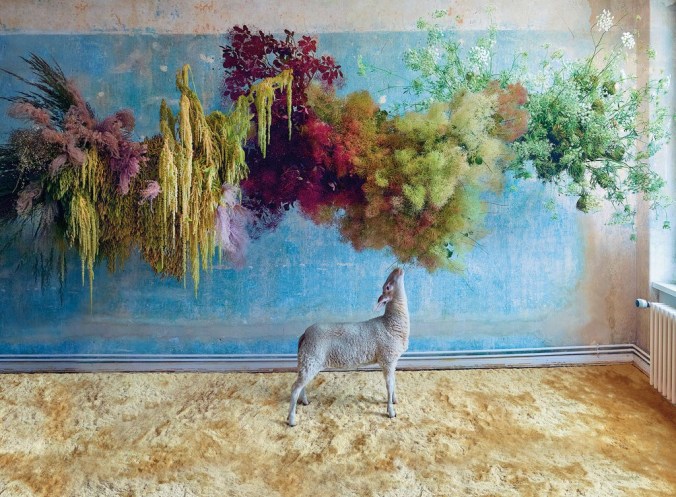
The Berlin-based florist Ruby Barber of Mary Lennox created some of her signature cloud arrangements with once-neglected weeds. A composite of individual arrangements, from left, of weeping amaranth and fresh and dried wild grasses; an abundant gathering of the once-humble smoke bush, now a fashionable challenger to traditional hothouse flowers; and Queen Anne’s lace. Credit Photograph by Guido Castagnoli. Flowers styled by Mary Lennox

Ralph Waldo Emerson may have written that a weed is just “a plant whose virtues have not yet been discovered,”  but another way of stating it is that a weed “is a plant growing in the wrong place”. The current revalorization of the “common weed”– aesthetically, culinarily and nutritionally — dovetails beautifully with much of what we highlight on this site.  Thanks to Ligaya Mishan of the NYTimes for the refocus.

How the Common Weed Has Grown on Florists (and Chefs)

From the flower arrangement to the plate, this is the era of the formerly unwanted plant.

A WEED IS UNWANTED: That is its definition. It is a plant that we have deemed to have no value because it contributes nothing to our life, neither nourishment nor beauty. Why should it help us when it doesn’t need us to survive, its seeds borne on the idlest gust, taking root and thriving in even the cruelest terrain? It stands wholly apart from human civilization, hardy and self-sustaining, mocking our hegemony, claiming the earth as its own. Worse, it is a predator, stealing resources — real estate, sunlight — from the plants we do value and rely on, crowding them out, threatening their existence and, by extension, ours.

A weed is never singular but an army. Its legions sweep across land like the Golden Horde, “always three steps ahead of the gardener, traveling underground, seeding by the million, smothering all in their path,” says the British writer and landscape designer Isabel Bannerman. Her husband and partner, Julian Bannerman, frames it slightly less savagely: The garden “is a bit like having a party. What we call weeds are the uninvited guests.” And in the Swedish writer and illustrator Elsa Beskow’s picture book “The Flowers’ Festival,” originally published in 1914 as “Blomsterfesten i Tappan,” they appear as exactly that, a rabble of thistles, chickweed, nettles and burdock, “scoundrels and beggars and ragamuffins” all, consigned to a ditch outside the garden to glower while the violets and orchids revel. “But we’re flowers, too,” the weeds roar.

But their time has come. Continue reading

Local Knowledge Aids Scientific Understanding

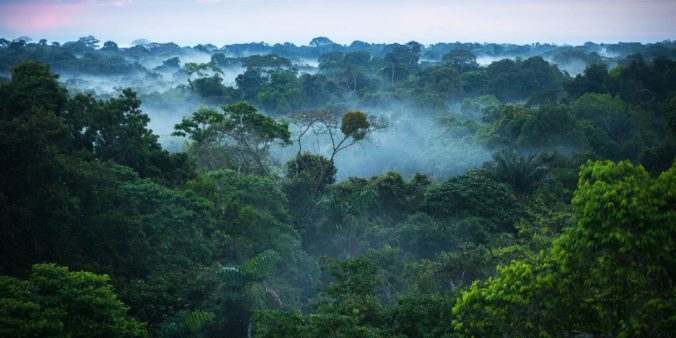
Brazilian_amazon_rainforest_web

WIKIMEDIA COMMONS

In a perfect dovetail with yesterday’s nod to one science writer, today we nod to the contributions of ancestral ways in helping scientists better understand the life cycles of forests. Thanks to Richard Schiffman for this interview:

Lessons Learned from Centuries of Indigenous Forest Management

CMPeters_web.jpgIn an interview with Yale Environment 360, botanist Charles M. Peters discusses how, in an era of runaway destruction of tropical forests, the centuries-old ecological understanding of indigenous woodland residents can help point the way to the restoration of damaged rainforests.

Over centuries, even millennia, indigenous communities have developed interdependent systems of agriculture and forestry that are uniquely suited to the ecological requirements of the land they inhabit. Yet even today, says Charles M. Peters, the Curator of Botany at the New York Botanical Gardens, that skill and knowledge often remain unacknowledged, with some government officials and conservationists arguing that indigenous communities should sometimes be excluded from protected lands that are part of their historical territory.

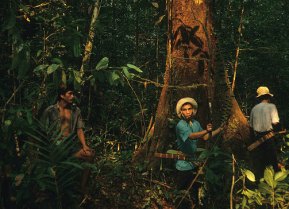
Field-crews.002_web

Members of the Kenyah Dayak indigenous group conducting forest surveys in Western Borneo in the early 1990s. CHARLES PETERS

In an interview with Yale Environment 360, Peters — author of the recently published bookManaging the Wild: Stories of People and Plants and Tropical Forests — discusses what he has learned from 35 years of working with indigenous forest communities; explains how indigenous farming, even slash-and-burn agriculture, can actually improve forest health; and reflects on the need to enlist indigenous groups as allies in the struggle to preserve and restore tropical forests. Continue reading

Plant-Based Diets Boost UK Chia Farming

5760 (1).jpg

Thanks to Rebecca Smithers, consumer affairs correspondent for the Guardian, for this:

First UK-grown chia seeds to go on sale this week

The popularity of plant-based diets has created huge demand for the oil-rich seeds, prompting a farm in Essex to plant a crop

1653

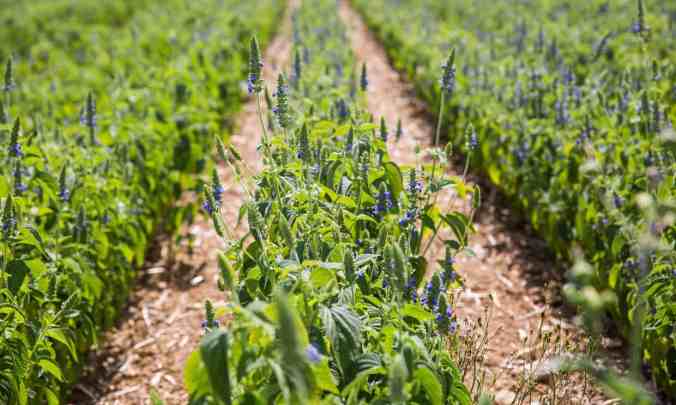
Essex grown Chia seeds by Peter Fairs for Hodmedod’s Photograph: Rebecca Noakes/Courtesy of Hodmedod’s

The first UK-grown chia seeds go on sale this week, as demand for the plant native to the Americas is fuelled by the explosion in the popularity of plant-based diets.

The company Hodmedod, pioneers of British-grown pulses, grains and seeds, has been working with farmers Peter and Andrew Fairs, of Great Tey in Essex, to bring the new British crop to market.  Continue reading

The Science Of Nature, Exhibited

27folkart2-jumbo.jpg

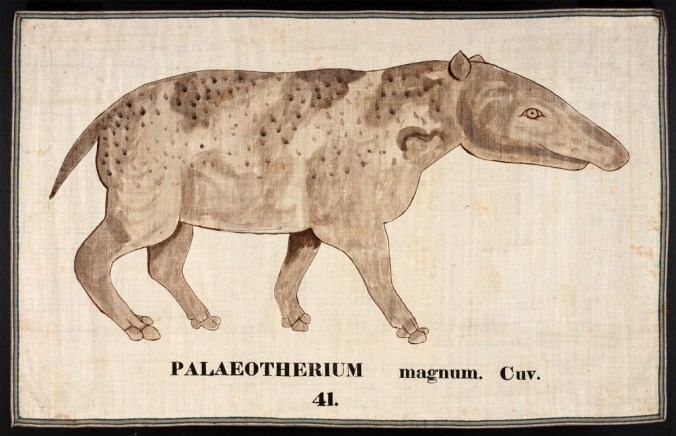
Classroom chart on linen drawn by Orra White Hitchcock, 1828–1840. Credit Amherst College Archives & Special Collections

Thanks to Jason Farago for this review of  Charting the Divine Plan: The Art of Orra White Hitchcock at the American Folk Art Museum:

Mushrooms, Magma and Love in a Time of Science

27folkart1-superJumbo.jpg

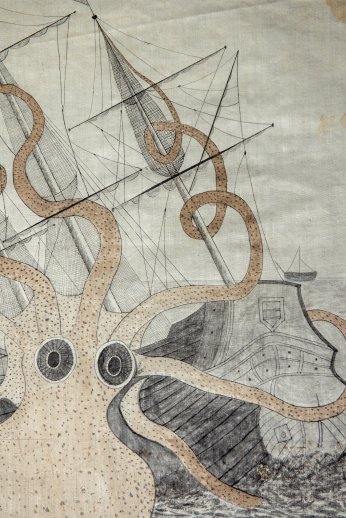
“Colossal Octopus,” 1828–1840, by Orra White Hitchcock, one of America’s first female scientific illustrators, on view at the American Folk Art Museum. Credit George Etheredge for The New York Times

Women remain grossly underrepresented at the highest echelons of American science, and continue to face absurd claims of “innate” inferiority, whether from former Harvard presidents or senior engineers at Google. But until the mid-19th century — when the sciences became professionalized, and when Charles Darwin and others put Christian doctrine under pressure — a woman’s place was in the laboratory, or among the geology and zoology specimens.

Back then the humanities (classics and philosophy, especially) were understood as masculine academic pursuits. It was the more genteel disciplines of natural science, astronomy, chemistry, botany and anatomy, to which women of a certain class gravitated.

merlin_141627540_d42f254c-e955-4d3d-9751-733e1d3723eb-superJumbo.jpg

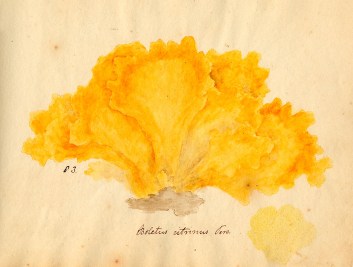
Orra White Hitchcock’s “Fungi Selecti Picti, Vicinity of Conway, Massachusetts” (1821), watercolor, pencil, pen and ink, and ink wash on paper in sewn album. Credit Smith College Special Collections

Orra White Hitchcock (1796-1863) was one of the most remarkable women from this more egalitarian age of scientific study. She had a deep knowledge of botany, zoology and paleontology, and she was also an artist — though that “also” would have seemed unnecessary to her. She produced two albums of botanical illustrations, and later, as introductory materials for her husband’s classes, she diagramed volcanoes, sketched the skeletons of extinct fish and mammals, and drew undulant squids and octopuses on large cotton sheets.

They’re all united at the American Folk Art Museum in “Charting the Divine Plan: The Art of Orra White Hitchcock,” a handsome and unexpectedly passionate exhibition on art, science and education in the early American republic. More than 100 watercolors and classroom charts are here, from painstakingly accurate paintings of reeds and mushrooms to boldly colored abstractions of the earth’s crust and core, and they share space with a splendid array of diaries and correspondence, redolent with the Hitchcocks’ intertwined loves for science, God and each other. Continue reading

Helping Plants Make Their Own Nitrogen

img_20171013_133748571_hdr-3-bab7de57d14653c47b66cf3afc9fa586b3731b9c-s1400-c85.jpg

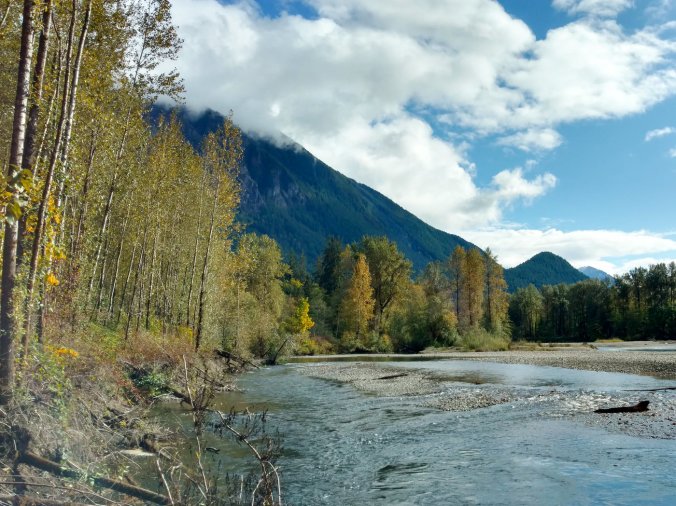
Poplar trees at the Snoqualmie River in Washington State. The river is fed mostly by snow melt and is extremely low in nitrogen, yet the trees thrive thanks to endophytes. Sharon Doty

Thanks to our friends at the salt, and National Public Radio (USA) for this:

Microbial Magic Could Help Slash Your Dinner’s Carbon Footprint

m1_zstack4-1-18cd73a7dc27353a90c3aeda47317503af40edca-s1400-c85.jpg

Endophytes are microbes that live inside plants — the ones tagged with a fluorescent dye in this image are found in poplars. The microbes gather nitrogen from the air, turning it into a form plants can use, a process called nitrogen fixation. Researchers are looking at how these microbes could be used to help crops like rice and corn make their own fertilizer.
Sam Scharffenberger

If you’re interested in sustainability, you’ve probably thought about how to reduce your carbon footprint, from how you fuel your car to how you heat your home. But what about carbon emissions from growing the food you eat?

Most of the crops in the United States are grown using chemical fertilizer – a lot of it: American farmers used over 24 billion pounds of nitrogen fertilizer in 2011. And making nitrogen fertilizer requires fossil fuels like natural gas or coal. Continue reading

The Food Explorer, Explored

GastroTaking a cue from yesterday’s post, another recent Gastropod can be combined with a review in the New York Times of a book that fits well in our pages:

You’ve probably never heard of David Fairchild. But if you’ve savored kale, mango, peaches, dates, grapes, a Meyer lemon, or a glass of craft beer lately, you’ve tasted the fruits of his globe-trotting travels in search of the world’s best crops—and his struggles to get them back home to the United States.

This episode, we talk to Daniel Stone, author of The Food Explorer, a new book all about Fairchild’s adventures. Listen in now for tales of pirates and biopiracy, eccentric patrons and painful betrayals, as well as the successes and failures that shaped not only the way we eat, but America’s place in the world.

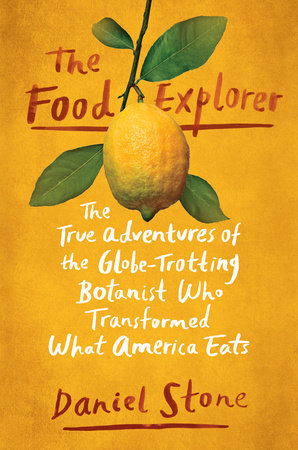
9781101990582Daniel Stone, an author I had not known of 24 hours ago, fits well within our pages as part of a mix of historical sleuthing and present-day food activism that have been central themes here since we started.  Thanks to his book being the subject of that podcast, as well as its review last month, allow us to recommend that if you have an hour for the both, combine the listen with the read:

In a photograph dated Christmas 1896, featured in “The Food Explorer,” Daniel Stone’s biography of the botanist and explorer David Fairchild, his subject is sitting with his patron and friend Barbour Lathrop, in what looks like an empty saloon or a lounge on a steamship. The caption informs us that they’re off the coast of Sumatra; both are dressed in white and have mustaches that border on the extravagant.

Continue reading

Trees For Life In Scotland

4000m.jpg

Trees for Life have planted 1.5m native trees in Glenmoriston and nearby Glen Affric since being founded 30 years ago. Photograph: Desmond Dugan/RSPB/PA

Thanks to Damian Carrington, the Guardian’s Environment editor, for this:

‘Magical’ mushroom mix to boost regrowth of lost Scottish forests

Return of Great Caledonian forest speeded up with fungi spores to help saplings flourish

The return of the Great Caledonian forest that once covered much of Scotland’s highlands is being boosted with a special mix of mushroom spores that should help saplings survive better on the hills.

Fungi living on the roots of trees play a vital role in the ecology, helping to break down nutrients in the soil. But trees were lost in much of the Highlands many years ago so the fungi vanished too.

The new project, run by Trees for Life, is adding the spores when young trees are planted. Continue reading

Legume’s Lost Legacy, Found

180423_r31919.jpg

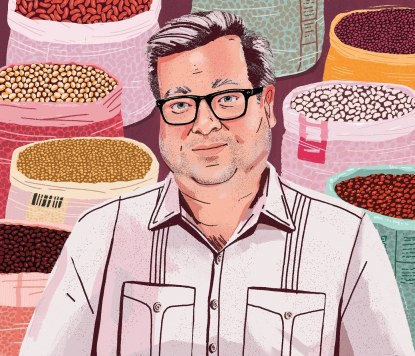
Rancho Gordo’s heirloom beans look like gems in a jewelry case. The company sells half a million pounds of them a year.Illustration by Cari Vander Yacht

180423_r31939

“My favorite bean is always the last one I ate,” Steve Sando says.Illustration by Cari Vander Yacht

If you only had read the first sentence in this story, you might move right on to something more promising.

Look at the author and look at the title, both familiar to those visiting this platform over the years, and it is certain not to disappoint. It is about this man to the right, and his culinary/cultural mission:

The Hunt for Mexico’s Heirloom Beans

Rare varieties discovered by Rancho Gordo’s Steve Sando have turned the humble legume into a gourmet food.

By Burkhard Bilger

The best meal of my life, or at least the most memorable, came from a can. I was thirteen at the time and living in France, so that may have had something to do with it. But I credit the beans. My older sisters and I were at a hippie camp in the Alps that summer, not far from the Italian border. My parents had stashed us there while they went home to Oklahoma to check on our house, which they’d rented to some graduate students while my father was on sabbatical. The camp was the cheapest one they could find, and they seemed to have done next to no research before signing us up. My mother just loved the name: Jeunesse du Soleil Levant, Youth of the Rising Sun. Continue reading