The Great Carbon Divide

While the wealthiest 1% tend to live climate-insulated lives, their emissions are responsible for immense suffering. Illustration: Guardian Design

Jonathan Watts, whose work we have been linking to for some years now, is the global environment editor for the Guardian, and this may be his most revealing story yet.

Even if you are not in the 1%, if you are not in the bottom 66% the implications for all of us on the wealthier side of the divide are challenging:

Richest 1% account for more carbon emissions than poorest 66%, report says

‘Polluter elite’ are plundering the planet to point of destruction, says Oxfam after comprehensive study of climate inequality

The richest 1% of humanity is responsible for more carbon emissions than the poorest 66%, with dire consequences for vulnerable communities and global efforts to tackle the climate emergency, a report says. Continue reading
Prioritizing Carbon Capture Versus Emissions Reduction

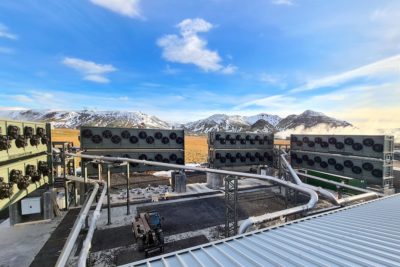
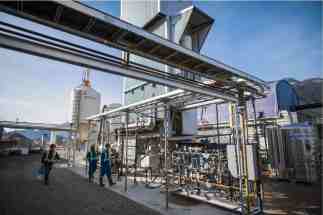
A carbon capture plant near Reykjavik, Iceland.

A carbon capture plant near Reykjavik, Iceland. CLIMEWORKS

Since we first heard of it we have been enthusiastic about the upside potential of this technology, but until now had not considered the tradeoffs:

Climate Plans That Rely Too Much on Carbon Removal Could Breach International Law

Countries that rely too heavily on carbon removal in their climate plans could violate international law, warns a new paper. Continue reading

Photosynthesis Mimicry Out Of Cambridge

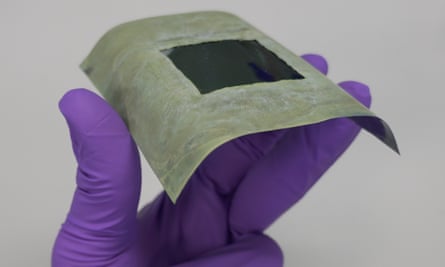
Researchers from the University of Cambridge designed ultra-thin, flexible devices, which take their inspiration from photosynthesis – the process by which plants convert sunlight into food.

Researchers from the University of Cambridge designed ultra-thin, flexible devices, which take their inspiration from photosynthesis – the process by which plants convert sunlight and CO2 into food. Photograph: Virgil Andrei

Photsynthesis comes in handy on this planet. This invention leverages the natural process into a technology to tackle a large scale challenge. We can only hope that it is not too little, too late:

Floating factories of artificial leaves could make green fuel for jets and ships

Cambridge University scientists develop a device to ‘defossilise’ the economy using sunlight, water and carbon dioxide

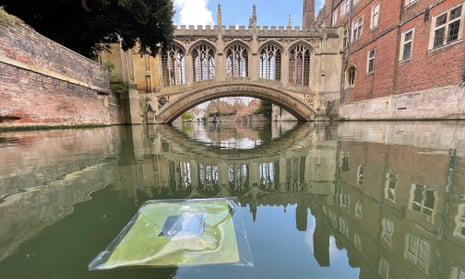
The artificial leaves were tested on the River Cam in and around Cambridge including sites such as the Bridge of Sighs.

The artificial leaves were tested on the River Cam in and around Cambridge including sites such as the Bridge of Sighs. Photograph: Virgil Andrei

Automated floating factories that manufacture green versions of petrol or diesel could soon be in operation thanks to pioneering work at the University of Cambridge. The revolutionary system would produce a net-zero fuel that would burn without creating fossil-derived emissions of carbon dioxide, say researchers. Continue reading
Dominica’s Whale Sanctuary

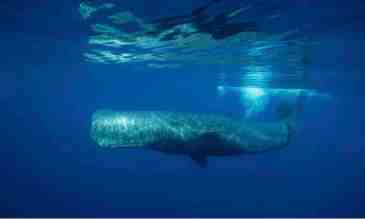
Fewer than 500 sperm whales are estimated to live in the waters surrounding Dominica. Photograph: By Wildestanimal/Getty Images

This island is already known for sperm whales. Protecting their habitat strengthens Dominica’s reputation as the conservation leader in the region:

Dominica creates world’s first marine protected area for sperm whales

Nearly 300 sq miles of water on west of Caribbean island to be designated as a reserve for endangered animals

The tiny Caribbean island of Dominica is creating the world’s first marine protected area for one of Earth’s largest animals: the endangered sperm whale. Continue reading
More Energy Use Annually Dwarfs Gains From Renewables

Ty Wright / Bloomberg / Getty

The facts about our progress combatting environmental crises are complex. Sometimes we sense hope and other times not so much. Zoë Schlanger, writing in the Atlantic, runs some numbers on mitigation from renewables:

One Huge Contradiction Is Undoing Our Best Climate Efforts

The math isn’t adding up.

You’d be forgiven for thinking that the fight against climate change is finally going well. Continue reading

Heirloom Captures Carbon

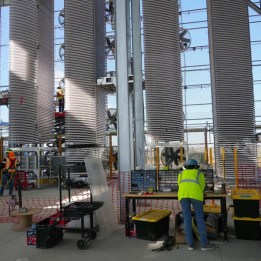
Heirloom’s plant in Tracy, Calif., pulls carbon dioxide from the air so it can be sealed permanently in concrete. Jim Wilson/The New York Times

We have been waiting for this day to arrive:

In a U.S. First, a Commercial Plant Starts Pulling Carbon From the Air

The technique is expensive but it could help fight climate change. Backers hope fast growth can bring down costs.

In an open-air warehouse in California’s Central Valley, 40-foot-tall racks hold hundreds of trays filled with a white powder that turns crusty as it absorbs carbon dioxide from the sky.

The start-up that built the facility, Heirloom Carbon Technologies, calls it the first commercial plant in the United States to use direct air capture, which involves vacuuming greenhouse gases from the atmosphere. Continue reading

Civil Disobedience & Civil Response

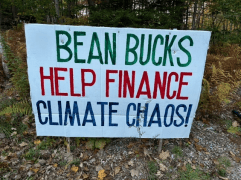
A sign made by William Rixon, who has been protesting L.L. Bean’s partnership with Citibank to offer the Bean Bucks credit card. Courtesy photo

Thanks to Bill McKibben for bringing this to our attention. And kudos to L.L. Bean’s CEO for having the decency to respond to this activist’s efforts to raise awareness of the company’s climate-unfriendly banking choice. Iconic companies messaging their environmental responsibilities need to be held to the same standard as the lousiest companies.

Climate demonstrator outside L.L. Bean gets surprise visit from CEO

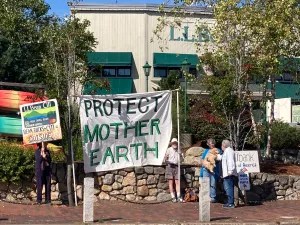
Bill Rixon outside the L.L. Bean retail store earlier this month. He was joined by Molly Schen, a member of Third Act Maine. Luna Soley / The Times Record

Freeport resident and retired schoolteacher William Rixon has been demonstrating outside L.L. Bean since the beginning of September. This week, he got a response.

“PROTECT MOTHER EARTH,” William Rixon’s homemade climate banner reads. Assembled with drop cloth and PVC piping, it stands at 10 feet, dwarfing Rixon.

Since September, Rixon and a group of fellow retirees have been standing with signs outside L.L. Bean’s sprawling downtown Freeport campus as well as its corporate headquarters just down the road. Continue reading
Pricing Flights Realistically

United Airlines wants to zero out its greenhouse gas emissions by 2050, but without using conventional carbon offsets. Nicolas Economou/NurPhoto via Getty Images

If airlines can quantify what it would cost to become carbon neutral within a relevant timeframe, it implies that we know by how much they are currently fudging their investment model. If it is going to require an investment of X number of dollars over Y number of years to achieve carbon neutrality then they should invest, and price their flights accordingly. Then we will all know the real cost of flying, including the environmental cost. Thanks to Umair Irfan (long time since we last saw his work) and to Vox for this:

Emirates demonstrated a Boeing 777 flight fueled with SAF earlier this year. Giuseppe Cacace/AFP via Getty Images

Airlines say they’ve found a route to climate-friendly flying

Cleaner, faster, cheaper — the aviation industry’s plan to decarbonize air travel, explained.

If you’ve caught an ad for an airline lately on TV, a podcast, or the entertainment display on your flight, you’ve probably heard the company brag about what it wants to do about climate change.

Major airlines like AmericanDeltaSouthwest, and United have all set targets of achieving net-zero greenhouse gas emissions by 2050. They’re using a suite of tactics including buying more fuel-efficient aircraft, electrifying their ground vehicles, and increasing the efficiency of their operations. They’re also testing the winds on battery- and hydrogen-powered planes, as well as some radically different aircraft designs. Continue reading
Preferred Pet Practices

Pet owners can reduce the carbon footprint of their furry loved ones without affecting their health, experts say. Photograph: Getty Images

Pets have featured in exactly one prior post in our pages. Now, thanks to Dwayne Grant and the Guardian, we see there is a topic related to pets quite relevant to our interests:

Throw a dog a bean: how to reduce the carbon footprint of your pets

Thinking about what your dog or cat eats and the products you buy for them can lessen the impact they have on the planet

Did you hear the one about the luxury aviation CEO who claims pets cause as much carbon pollution as private jets? Continue reading
Rishi Doubles Down On Awful

Prime Minister Rishi Sunak announcing last month that the U.K. will delay the phaseout of gasoline and diesel cars. JUSTIN TALLIS / POOL VIA AP

When leadership is most needed, the special relationship between the UK and the USA should count for something, but so far no sign of the USA pressing back on the UK’s awful reversal on their already tepid recent leadership on climate. We knew that leadershsip was lacking in the UK. The Orwell-worthy podium messaging in the photo to the left says all you need to know about efforts to obfuscate, but read Fred Pearce‘s account in Yale e360 anyway:

Demonstrators in Edinburgh protest the government’s recent approval of drilling in the Rosebank North Sea oil field. PRESS ASSOCIATION VIA AP IMAGES

Why Is Britain Retreating from Global Leadership on Climate Action?

While Britain has long been a leader in cutting emissions, Prime Minister Rishi Sunak is now implementing a stunning reversal of climate-friendly policies, with new plans to “max out” oil production. Business leaders have joined environmentalists in condemning the moves.

In 1988, British Prime Minister Margaret Thatcher became the first world leader to take a stand on fighting climate change. Continue reading

Climate Leadership Lacking In Too Many Places

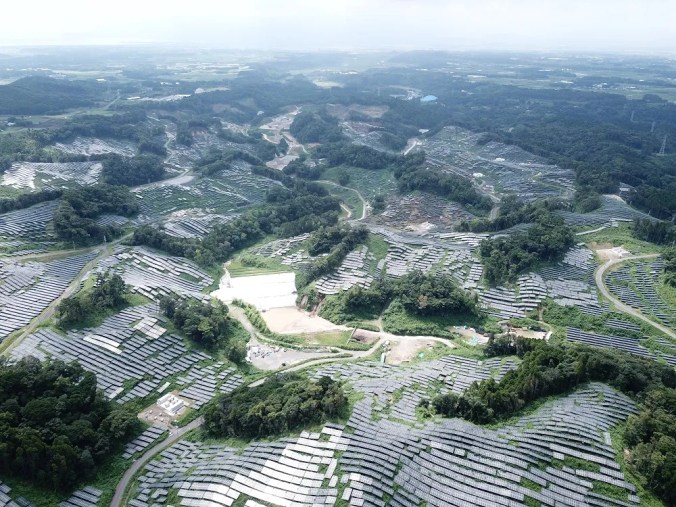
Once a golf course, now a solar farm supplying tens of thousands of homes in Japan

If you know a bit about Japan’s love of golf, the photo above says alot about leadership there in moving away from fossil fuels in the direction of alternative energy. But it is too little too late compared to what is happening elsewhere. Thanks as always to Bill McKibben for his newsletter:

Energy from Heaven

and not from Hell/Exxon.

Amid the torrent of hideous news last week, one item might have skipped your notice: Exxon announced the acquisition—its biggest since picking up Mobil a quarter century ago—of one of the largest fracking operators in the world. As the AP reported, “including debt, Exxon is committing about $64.5 billion to the acquisition, leaving no doubt of the Texas energy company’s commitment to fossil fuels.” In fact, it’s the declaration of conviction that they think they have enough political juice to keep us hooked on oil and gas for a few more decades, even in the face of the highest temperatures in 125,000 years. Continue reading

Fossil Fuel-free Ammonia

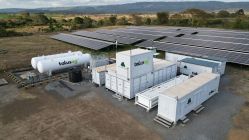
A fossil fuel-free ammonia plant at the Kenya Nut Company, near Nairobi. TALUS RENEWABLES

Alternative fertilizer has been something of an environmental holy grail, and this technology looks to be large step in the right direction. Have a look at the two companies mentioned in this Yale e360 news short:

Farm in Kenya First to Produce Fossil-Free Fertilizer On Site

The Kenya Nut Company, near Nairobi, will be the first farm in the world to produce fertilizer, on site, that’s free of fossil fuels.

small fertilizer plant, built by U.S. startup Talus Renewables, will use solar power to strip hydrogen from water. Continue reading

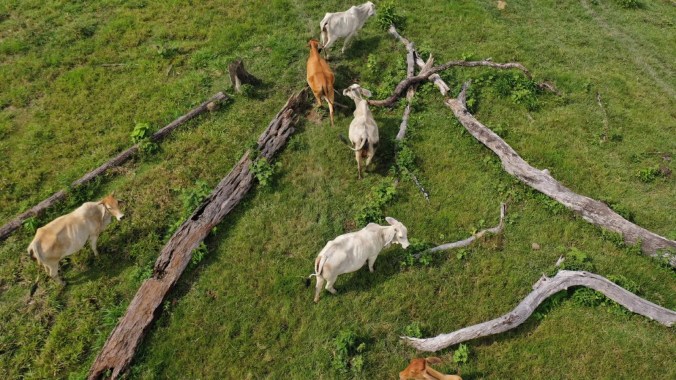
Really, Cargill?

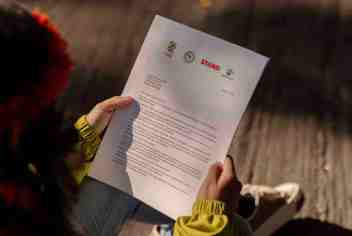
Beka will hand-deliver a letter to the Cargill-MacMillian dynasty in Minneapolis on Thursday, calling on the billionaire owners of America’s biggest private company to stop destroying the Amazon rainforest and its people. Photograph: Thalia Juarez/The Guardian

Cargill has appeared a few times in our pages over the years, not always showing poor stewardship. But today, we have to ask whether they really are trying as diligently as possible to do the right thing. We applaud Beka and her community for this letter, and hope the recipients respond with the sense of responsibility that comes with their wealth:

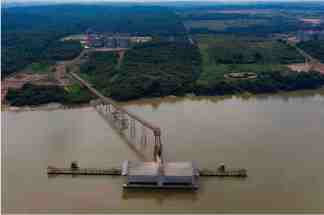
A Cargill transshipment port for soy and corn projects on the Tapajos River in Itaituba, Para state, Brazil, in 2019. Photograph: Léo Corrêa/AP

‘Our world hangs by a thread’: Indigenous activist asks US agri giant to stop destroying Amazon rainforest

Beka Saw Munduruku , 21, traveled 4,000 miles to deliver letter and confront family behind Cargill empire over what she says amounts to a litany of broken promises

A 21-year-old Indigenous activist from a remote Amazonian village will hand deliver a letter to the Cargill-MacMillan dynasty in Minneapolis on Thursday, calling on the billionaire owners of the US’s biggest private company to stop destroying the Amazon rainforest and its people. Continue reading

Reclamation, Restoration & Biodiversity

Overgrown agricultural machinery on a vacant farm near the Chernobyl Nuclear Power Plant in Ukraine. OKLA MICHEL / CTK VIA AP

Thanks to Fred Pearce, as always:

Abandoned Lands: A Hidden Resource for Restoring Biodiversity

Abandoned farmland has been increasing, with a billion acres — an area half the size of Australia — lost globally. Ecologists are increasingly pointing to the potential of these lands and of degraded forests as neglected resources for rewilding and for capturing carbon.

Gergana Daskalova was nine months old when she was taken in by her grandparents in their small village in Bulgaria. It was soon after the fall of the Iron Curtain, and her parents had left for the city after the closure of the village’s state-run collective farm. Continue reading

Really, Kiel?

We are surprised that his employer cannot appreciate his decision:

Dr Gianluca Grimalda. Photograph: Institute for World Economy – Kiel

Climate scientist faces sack for refusing to fly to Germany from Solomon Islands archipelago

Dr Gianluca Grimalda told by Kiel Institute for World Economy he must be at his desk on Monday after finishing fieldwork

A climate researcher has been threatened with the sack by his employer after refusing to fly back to Germany at short notice after finishing fieldwork on Bougainvillein the Solomon Islands archipelago. Continue reading

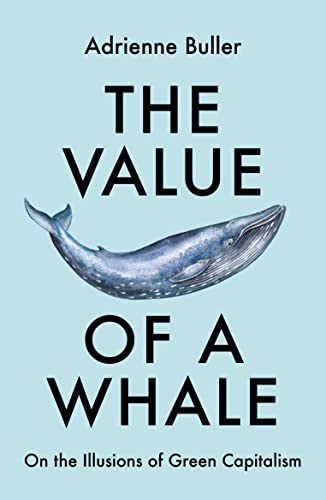
Green Capitalism Reconsidered

We shared an interview with the author of this book a few months ago, but missed the numerous reviews when her book was published last year. Thanks again to a Dutch biologist named Leon at the Inquisitive Biologist for this book review now:

BOOK REVIEW – THE VALUE OF A WHALE: ON THE ILLUSIONS OF GREEN CAPITALISM

In an attempt to address climate change and other environmental problems, governments are increasingly turning to economic solutions. The underlying message is clear: capitalism might have created the problem, but capitalism can solve it. Adrienne Buller, a Senior Fellow with progressive think tank Common Wealth, is, to put it mildly, sceptical of this. From carbon credits to biodiversity offsets, she unmasks these policies for the greenwashing that they are. The Value of a Whale is a necessary corrective that is as eye-opening as it is shocking. Continue reading

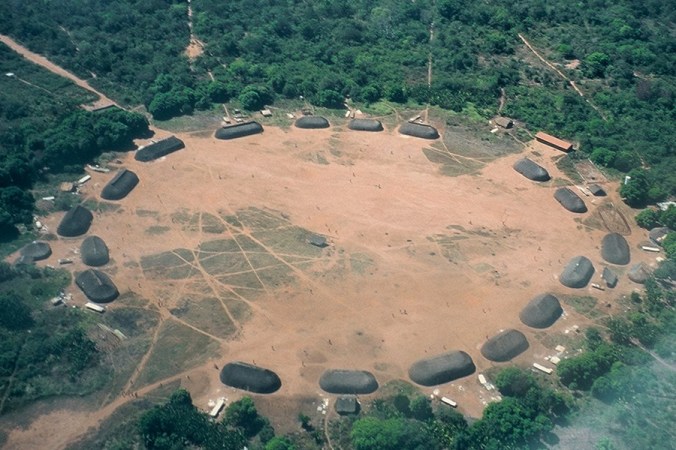
Ancient Amazon Carbon Capture

A Kuikuro village in the southeastern Amazon. JOSHUA TONEY

Thanks to Yale e360 for this one:

How Ancient Amazonians Locked Away Thousands of Tons of Carbon in “Dark Earth

A new study reveals how, by cultivating fertile soil for farming, ancient Amazonians locked away thousands of tons of carbon that have stayed in the ground for centuries. Continue reading

Really, Rishi?

image: reuters

As a non-Brit, I spared the world my opinion on the own-goalness of Brexit, and the follow-up own-goal of electing Boris Johnson. Not my circus, not my monkey. But as a speaker of the English language, among other reasons, I have always cared about and paid attention to the civic affairs of the UK more than I do those of many other countries. I was reflexively optimistic with the baton passing to Rishi Sunak. He could not possibly be as terrible as his two immediate predecessors, right? In some ways right, but in the way that matters most to the entire world, shame on him. The Economist weighs in heavily, as does the New Yorker’s correspondent in the UK, the great Sam Knight:

Photograph by Justin Tallis / Getty

Rishi Sunak’s Self-Serving Climate Retreat

The British Prime Minister has rolled back the country’s policies on reducing emissions. To what end?

Since Rishi Sunak became Britain’s Prime Minister, almost a year ago, in the middle of a national financial breakdown, his premiership has been defined by trying to make things go away. Continue reading

Reminder Primer On Meat & Dairy

Raul Arboleda / AFP via Getty Images

We have been preaching, and practicing, reduction in the consumption of meat and dairy for as long as we have been sharing on this platform. Reminders of why are always welcome. Our thanks to Max Graham, a Food and Agriculture Fellow at Grist for this reminder-primer:

What would happen if the world cut meat and milk consumption in half?

Agricultural emissions would fall by almost a third. But getting there wouldn’t be easy.

Cows are often described as climate change criminals because of how much planet-warming methane they burp. Continue reading

Carbon Capture, Scaled To Texas

A direct air capture system at the Carbon Engineering pilot facility in Squamish, British Columbia, Canada. Photograph: Bloomberg/Getty Images

Carbon capture technology has its skeptics, but it has steadily improved and is closer to proof of concept. Next step, scaling to Texas:

The world’s biggest carbon capture facility is being built in Texas. Will it work?

The plant will inject 500,000 tons of carbon dioxide into the ground each year – but is it just greenwashing from big oil?

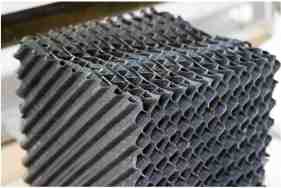
Plastic membrane used in the direct air capture system. Photograph: Bloomberg/Getty Images

Rising out of the arid scrubland of western Texas is the world’s largest project yet to remove excess carbon dioxide (CO2) from the atmosphere, a quest that has been lauded as essential to help avert climate catastrophe. The project has now been awarded funding from the Biden administration, even as critics attack it as a fossil fuel industry-backed distraction. Continue reading