Get Your Biome On

merlin_145518831_d9814803-584c-487f-afa1-35489af25baa-jumbo.jpg

The Sill sells ceramic planters, watering cans, misters with arch sayings on them, fertilizer and soil mixes, totes and T-shirts. It also hosts movie nights, “sip and shop” cocktail parties and workshops (in store and online). Credit Nathan Bajar for The New York Times

Thanks to Penelope Green for brightening up our Sunday:

Meet the Plantfluencers

In a world of climate change, creating a biome of one’s own.

Plant1.jpg

Eliza Blank has conceived The Sill as a plant lifestyle company, or a global plant brand — a Glossier of plants. Credit Nathan Bajar for The New York Times

Horticulture and red wine were served up the other night at the Sill, a boutique on Hester Street, as Christopher Satch, a botanist wearing a T-shirt that read, “Plants Make People Happy,” the company motto, led a workshop on carnivorous plants.

It was plant stand-up — slightly blue patter with quick takes on Linnaeus and Darwin; binomial nomenclature (note the shape of the Venus fly trap for cues to how it got its name); detailed care instructions (carnivorous plants evolved in acidic bogs, which means they need distilled water, not tap, and lots of it); and a show-and-tell of Mr. Satch’s collection of butterworts and sundews.

Plant2Among the rapt attendees were Madison Steinberg and Lindsay Reisman, both 23 and working in public relations, and Brayan Poma, also 23, who works in construction; afterward they each took home an attractive tropical pitcher plant. “I like plants, but I kill so many of them,” said Mr. Poma, who wore a green hoodie and a goatee. “Maybe that’s why I find them so alluring.”

Plant3.jpg

The Sill began when Ms. Blank was trying to brighten up her sunless, sixth-floor walk-up with a plant or two, and was turned off by the wares at Home Depot, one of the few sources for plants and containers in the city. Credit Nathan Bajar for The New York Times

Mr. Poma is not the only millennial to feel that allure. Buoyed by Instagram, his generation’s obsession with houseplants is growing faster and more tenaciously than English ivy. Plant influencers, the horticultural stars of that medium, now have book deals, sponsors and hundreds of thousands of followers.Their apartment living rooms are the new urban jungles, spilling over with philodendrons, pilea (this year’s “It” plant) and bird’s nest ferns. Plant parents, as they call themselves, fuss over their plant babies with the attention once given to kimchi or coffee connoisseurship. (Such anthropomorphism — ironic though it may be — recalls the 1970s, when “The Secret Life of Plants” proposed plant sentience based on dubious science and convinced New Agers to chat up their spider ferns.)

Unlike George Orwell, these houseplant lovers see the lowly aspidistra as an aspirational totem, not a bourgeois cliché, and post money shots of their monsteras on #monsteramonday. That hashtag was propagated in 2016 by Morgan Doane, a director of analytics for an art company in Florida. Continue reading

Trust & Responsibility

4284

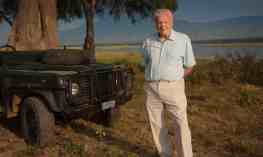
Sir David Attenborough on location for the new series. Photograph: Nick Lyons/BBC NHU

There are few people featured as frequently in our pages since 2011. His documentation of the wonders of nature surely qualifies as a major contribution to humanity. He has a new series and as always we link out to it here. But with it, some questions arise based on an interview he recently gave to Jonathan Watts, the Guardian’s Global Environment Editor, to promote the series:

David Attenborough: too much alarmism on environment a turn-off

Veteran broadcaster says Dynasties, his new BBC wildlife series, will be gripping, truthful and entertaining but not overtly campaigning

I am susceptible to those questions, especially after reading Guardian columnist (another frequent subject in our pages) George Monbiot’s editorial below. Just because David Attenborough is a hero does not mean he is always right. These two items are both worth a read and further consideration about the responsibility that comes with trust, well-earned, but whose value perhaps should be employed for campaigning considering what is at stake. I find myself surprised to reflexively lean in to this editorial argument, because the mission of our platform here is to emphasize creative, entrepreneurial approaches to conservation. While we chose at the outset to not focus exclusively on feel-good stories, we also do not serve up excessive doom and gloom because there is plenty of reporting on that for anyone paying attention. Maybe my surprise is more that a hero of nature-lovers reveals himself to explicitly avoid campaigning when he knows better than most from decades of close observation what the planet has been losing during his lifetime.

David Attenborough has betrayed the living world he loves

By downplaying our environmental crisis, the presenter’s BBC films have generated complacency, confusion and ignorance

3909

David Attenborough filming the BBC series Africa in the Suguta Valley, northern Kenya. Photograph: David Chancellor/BBC

Knowingly creating a false impression of the world: this is a serious matter. It is more serious still when the BBC does it, and yet worse when the presenter is “the most trusted man in Britain”. But, as his latest interview with the Observer reveals, David Attenborough sticks to his line that fully representing environmental issues is a “turn-off”.

His new series, Dynasties, will mention the pressures affecting wildlife, but Attenborough makes it clear that it will play them down. To do otherwise, he suggests, would be “proselytising” and “alarmist”. His series will be “a great relief from the political landscape which otherwise dominates our thoughts”. In light of the astonishing rate of collapse of the animal populations he features, alongside most of the rest of the world’s living systems – and when broadcasting as a whole has disgracefully failed to represent such truths – I don’t think such escapism is appropriate or justifiable. Continue reading

Reckoning With Doom

Kolbert.jpgWe have featured work by Elizabeth Kolbert since the earliest days of this platform, about twice a year. A year ago we linked to The Fate of Earth, which remains a favorite.

LongformShe has chosen to focus her work on the existential environmental challenges created by mankind, and unflinchingly reports on what we collectively are, and more often are not, doing about those challenges. The word doom always comes to mind when I see her name or think about her work. Today I am recommending this rare interview with her, in which she shares personal reflections on what it is like to do the work she does, and about 40 minutes in touches on how and why she persists with her work, even knowing that most people simply cannot bear to face the facts she is presenting:

Elizabeth Kolbert, author of Field Notes from a Catastrophe: Man, Nature, and Climate Change and The Sixth Extinction: An Unnatural History, is a staff writer at The New Yorker.

“I still nurse the idea in my heart of hearts that something you write, that there’s some key to this all. Continue reading

Keeping Track Of Renewables

Kormann-Prop-127.jpg

Despite the rapid decline in the cost of solar-energy technology and battery storage, Arizona gets only six per cent of its electricity from solar. Photograph by Joshua Lott / Bloomberg / Getty

Thanks to Carolyn Kormann, making her fifth appearance since early 2016 in our pages, including this recent item that I particularly favored, for the article below that helps us understand what is happening with renewable energy these days in the USA. It is easy to forget, amidst all the noise of a federal government working to deregulate and reduce environmental protection, that important work continues:

The Battle for Solar Energy in the Country’s Sunniest State

In late September, the Heartland Institute, a libertarian think tank that receives donations from fossil-fuel companies, published a blog post titled “California Billionaire’s Renewable Energy Initiative Makes Arizona Ballot.” The billionaire in question was Tom Steyer, whose year-long effort to pass Proposition 127, an amendment to Arizona’s constitution that would require power companies to generate fifty per cent of their electricity from renewable sources by 2030, has faced aggressive opposition from the state’s largest utility, Arizona Public Service, or A.P.S. The blog post lamented a failed lawsuit filed by Arizonans for Affordable Energy, a political-action committee funded by A.P.S.’s parent company, to keep Prop 127 off the ballot, and quoted several opponents who believed the measure, now up for a vote in November, would be a costly mistake. “Prop 127 would tie Arizona’s future to technologies that do not deliver baseload electricity,” Mark Finchem, a Republican state representative, said, “and are arguably worse for the environment as a whole than the dependable technologies we already have.” The photograph accompanying the post depicted a wind-turbine farm, and, in the foreground, a dead bald eagle.

Arizona is the sunniest state in the country, with more than three hundred bluebird days per year. It is also projected to endure an additional month of hundred-degree days in the coming decades owing to climate change. Yet, despite the rapid decline in the cost of solar-energy technology and battery storage—to the point that, as an A.P.S. director told me, it now frequently outbids fossil fuels, even natural gas—in 2017, Arizona generated only six per cent of its electricity from solar, according to the ballot initiative’s advocates. The state currently requires utilities to generate eight per cent of their power from sources like solar and wind, scaling up to fifteen per cent by 2025. Natural gas, the largest source of Arizona’s net electricity generation, is imported from out of state. “Our most abundant resource in Arizona is our sunshine,” D. J. Quinlan, a spokesman for Clean Energy for a Healthy Arizona, the Phoenix-based political-action committee that Steyer is funding, said. “We need a nationwide transition to renewables. One of the first places we should be doing it is where it’s most efficient and cost-effective, and that’s here.” Continue reading
Scotland, Land Of Regret-Reducing Renewable Resources

5329

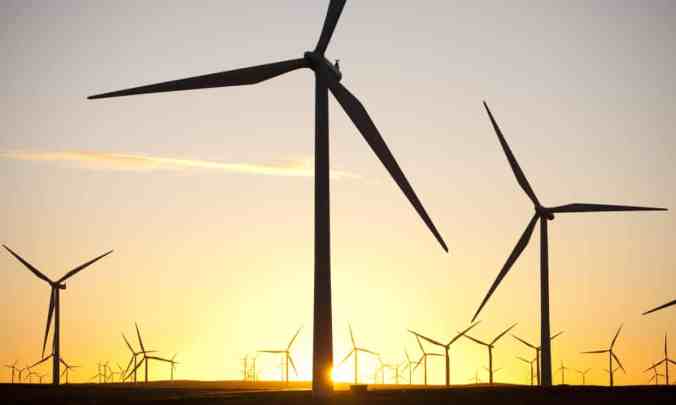
Scottish Power’s Whitelee windfarm on Eaglesham moor, just south of Glasgow. Photograph: Global Warming Images/REX

My daily contribution to this platform is a habit vaguely in the tradition of meditation–finding something each day that is worthy of gratitude, or otherwise worthy of sharing with friends, family, and anyone else who cares to listen. Because of the good fortune I have had to visit and work in many amazing places, it is important to me to never regret the places where I still have not been. Scotland is one of those places that, if I were a regretter, I would be feeling it now. I owe that place a visit (even if the company name sounds like a Bond villain):

Scottish Power shifts to 100% wind generation after £700m Drax sale

Big six energy firm drops fossil fuels for generation and say cheap green energy is the future

Scottish Power has ditched fossil fuels for electricity generation and switched to 100% wind power, by selling off its last remaining gas power stations to Drax for more than £700m.

Iberdrola, Scottish Power’s Spanish parent company, said the move was part of its strategy to tackle climate change and would free it up to invest in renewables and power grids in the UK.

The deal also marks a significant expansion and diversification for Drax, whose main business is a coal- and biomass-fired power station in North Yorkshire. Continue reading
Forests, Deforestation & Climate Change

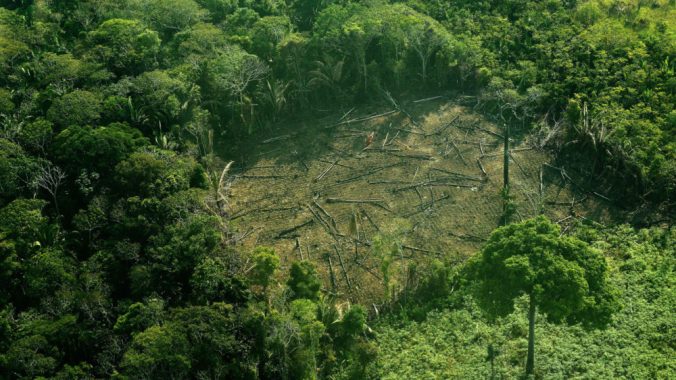
Trees cleared in the western Amazon region of Brazil in September 2017. CARL DE SOUZA / AFP / GETTY IMAGES

If you have been following the news recently, you may have noticed a report that indicates the urgency from climate change is greater than scientists previously thought. Everyone who cares has been digesting the science and we appreciate every effort to clarify what the science is saying. Fred Pearce, writing for Yale e360, has this:

Conflicting Data: How Fast Is the World Losing its Forests?

GP0STRVIX_PressMedia_web.jpg

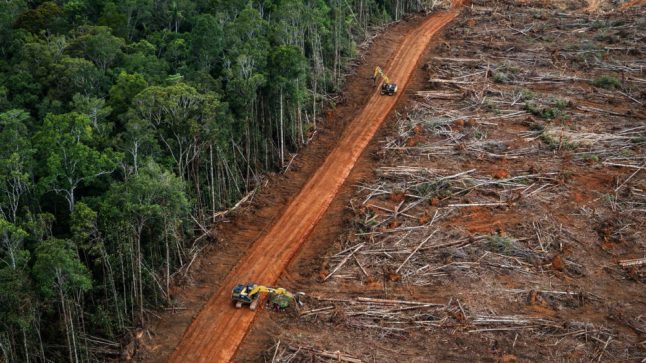
Forest cut to make way for an oil palm plantation in Papua, Indonesia in April 2018. ULET IFANSASTI / GREENPEACE

The latest UN report on climate says reducing deforestation is crucial to slowing global warming. But researchers must first reconcile two contradictory sets of statistics on tree loss in order to determine whether promises made by nations to protect and restore forests are on target.

The world is losing trees faster than ever. An area the size of Italy disappeared last year. Or did it? New research suggests three-quarters of those lost forests may already be regrowing. That hardly means we are out of the woods. Fighting climate change and protecting biodiversity still needs a global campaign to reforest the planet. But it does suggest that, given the chance, nature will do much of the work. Continue reading

Carbon Insurance As Heritage Insurance

Kormann-YurokCarbonCredits-Primary.jpg

A carbon-offset project, the first of its kind in the United States, has become the Yurok’s main source of discretionary income, helping the tribe buy back thousands of acres of land. Photograph by Joel Redman

Carbon trading has featured, or at least been mentioned, only rarely on this platform, now that I stop to check. That seems impossible. But the scheme with so much promise has simply not taken off. Indigenous heritage, on the other hand, has featured in dozens of stories here since we started in 2011. Thanks to Carolyn Kormann for bringing this story to my attention, helped by two captivating photos and the fact that it highlights the approach of the Yurok Tribe (a community I had not heard of before):

Kormann-YurokCarbonCredits-Secondary2

“I think we did a good thing by saving the trees, but I’m not happy with it,” Jene McCovey, a tribal elder, said. “It’s not viable. It allows polluters to pollute.” Photograph by Joel Redman

How Carbon Trading Became a Way of Life for California’s Yurok Tribe

When Marty Lamebear is not fighting fires, he is starting them. In the past few years, as a member of the Yurok Tribe Forestry Program’s fire department, he has been helping revive the controversial practice of prescribed burns to protect and restore the coastal redwood forests of northern California. Lamebear is also a hunter, fisherman, and dancer. In his free time, he makes tribal regalia for ceremonial dances from parts of elk, deer, minks, and porcupines, which he shoots or finds already dead, and from frozen eagles that he orders from the U.S. Fish and Wildlife Service. A prescribed burn, what Lamebear calls a culture burn, creates prairies within the forest, which attract those animals. “At first, we couldn’t really tell its effects,” he said. “But, after about six years now, we can honestly start seeing the landscape open up, animals come around.” They also serve another purpose, he said. “It’s insurance for our carbon.” Continue reading

The Picture From The Recent Climate Change Report Is Now More Clear

Chart_lg.gif

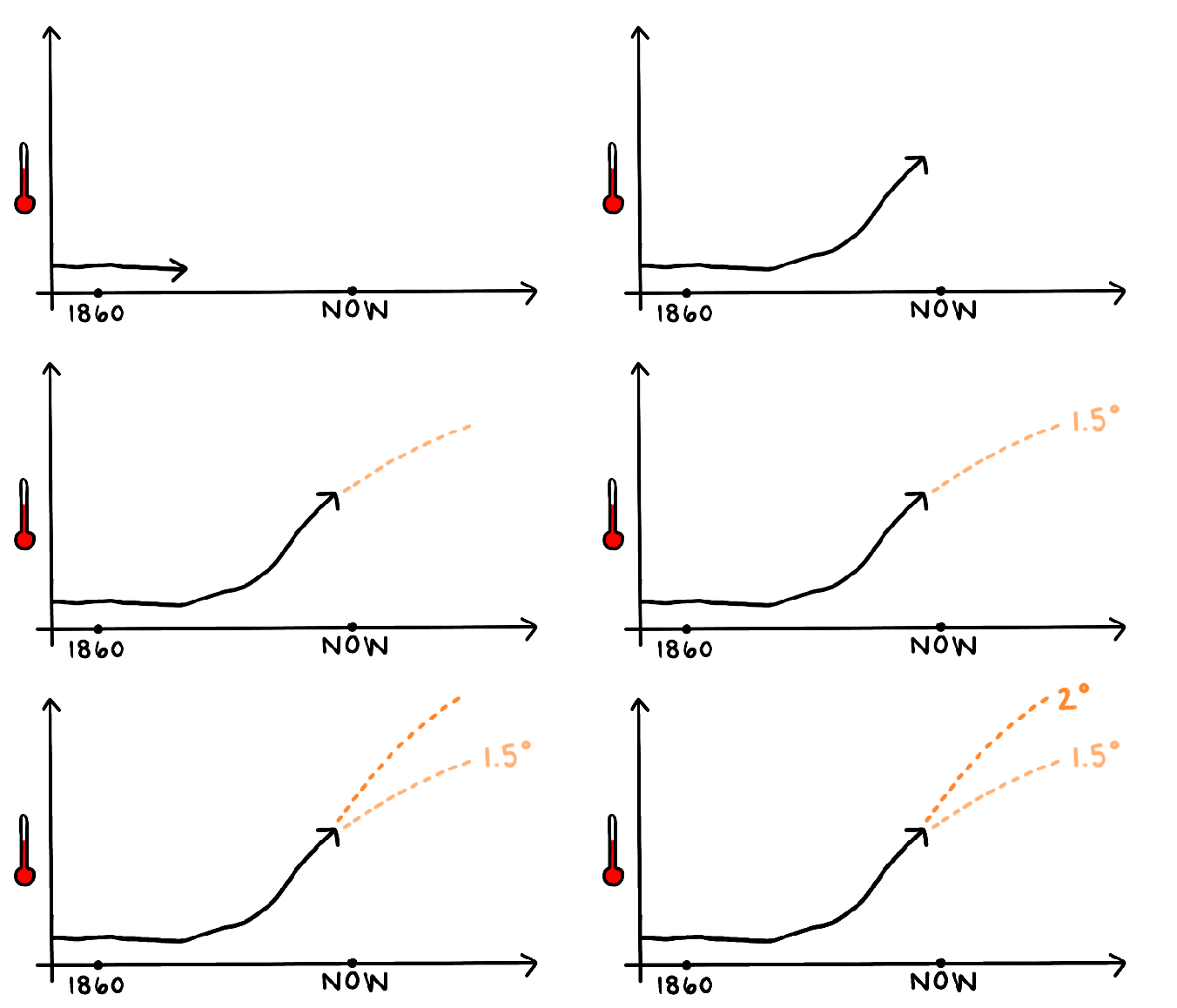
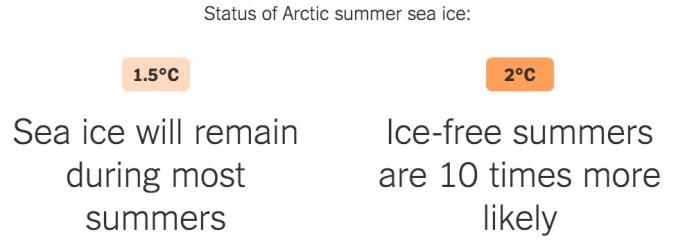
Deniers, we already know you will find a way to see this from some other perspective, and we have given up trying to understand why you do that. But for everyone else, there is still time to understand the implications of this science. And there is no shame in using props to help learn. Thanks to Brad Plumer and Nadja Popovich for making sure we get the point, with clear graphical illustration, about what this recent study is saying and why every one of us should care:

Heat

Extreme heat will be much more common worldwide under 2°C of warming compared to 1.5°C, with the tropics experiencing the biggest increase in the number of “highly unusual” hot days.

Read the rest of this graphics-rich story here.

Time As An Ingredient

MistMaize.jpg

Climate change has reared its big ugly head enough that I no longer count on seasonal consistency, but for now nine days in a row it has felt familiar, the greenest month of the green season in Costa Rica. And today, as of dawn, it looks like more of the same. “Some things never change” would be a real head in the sand cliché when thinking of seasons, but at least this October, so far, mornings have been sunny and by early afternoon the clouds roll in and the afternoons remind me of our 2010 to 2017 Kerala life, until dinner time. The photo above was from our second monsoon season there. Just up the hill from where I am writing at this moment, in Tarrazu–the Costa Rica equivalent of Munnar’s tea region–you might see something comparable, like this:

DCIM/100MEDIA/DJI_0482.JPG A few years ago Seth and James worked to restore a coffee plantation across the valley from the home where Seth grew up. The coffee they restored had been removed two decades earlier, a moment in time when coffee prices had crashed, even for the premium arabica that grows in Costa Rica. As it happens the same is true of the property where I am writing from, which had been a coffee plantation for most of the last century. In 2019 a restoration project will bring coffee back to this land, with tree shade for both the coffee and for the sake of restored bird habitat, and I look forward to sharing that progress here. And it is with this in mind that time, as an ingredient, is a theme for today. Work that Seth and James did demonstrated, with the passage of time, the fruitfulness of restoration and conservation. Now a replica project is ready to roll.

Time as an ingredient during green season is also a theme. Reading and cooking pass the time pleasantly during such afternoons, at least when the weekend schedule permits. Time for reading was on my mind a couple days ago, and the author featured in this podcast gets me thinking about time as an ingredient in the cooking I have been doing recently–almost all vegetarian and with the conscious effort to cook as minimally as possible to retain nutrients and flavor. As a bonus, this episode of a podcast we have been listening and linking to for two years shares the story behind espresso, so worth a listen:

EspWhiskey.jpg

One Week to Whiskey

A Los Angeles distillery aims to speed up a 10-year aging process to a matter of days.

9781468316384.jpgWhy does fish cook so fast? What’s the “wasabi window”? And can you really make 20-year-old aged whiskey in six days? This episode, we’re looking at the role of time in food and flavor: what it does and how we’ve tried—and sometimes succeeded—to manipulate that. To explore these questions, we visit a whiskey time machine tucked away in a low-slung warehouse in downtown Los Angeles and meet its inventor, Bryan Davis. And we speak with Jenny Linford, a food writer and author of a new book, The Missing Ingredient, all about time and food. Listen in now—this one’s well worth your time! Continue reading

Trees, Cities & Happiness

merlin_144034221_4ee0b063-798b-4669-80dc-817bcbc10dfe-superJumbo.jpg

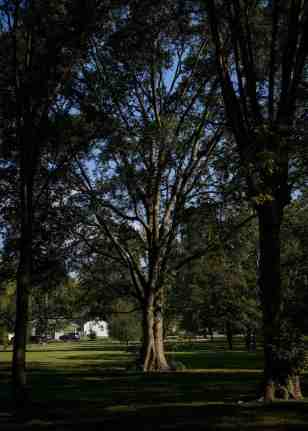
A tree in Riverfront Park competes for grandeur with Nashville’s iconic At&T building. Credit William DeShazer for The New York Times

PlantTreeCity.jpgI just learned of an urban tree-planting initiative on a day when the news shows purposeful indifference about climate change on the part of a powerful country’s elected leader, on the same day when the news also shows that an economist considered a pioneer of environmental economics is receiving a prestigious prize and what he said when he learned of his being awarded the prize:

“Once we start to try to reduce carbon emissions, we’ll be surprised that it wasn’t as hard as we anticipated. The danger with very alarming forecasts is that it will make people feel apathetic and hopeless.

“One problem today is that people think protecting the environment will be so costly and so hard that they want to ignore the problem and pretend it doesn’t exist. Humans are capable of amazing accomplishments if we set our minds to it.”

PlantTreesCity2Let’s decide together to do something, seems to be his message. I learned about this urban tree-planting initiative, news of a president’s abdication of responsibility, and this economist’s optimistic message on the same day I read about a 15-year old climate activist who has decided to do something where she sees her government failing to take action. She has decided at a very young age to do what she can regardless of the daunting odds. So thanks to Margaret Renkl a Nashville-based contributing opinion writer for The New York Times, for bringing this initiative to my attention, as a reminder to do something:

More Trees, Happier People

When cities grow, green space dies. Replanting it has been shown to lift the human spirit.

merlin_144034215_0e5eb0e9-e3ad-4046-b39b-a6189d715df7-superJumbo

A tale of two trees in Nashville. A mature tree in England Park, left, and a newly planted tree at Wright Middle School.

NASHVILLE — The scene in a tiny pocket park outside Plaza Mariachi here on Nolensville Pike last Wednesday was like a tableau from a Norman Rockwell painting, 21st-century style. Surrounded by signs advertising the Hispanic Family Foundation, Dubai Jewelry, the Dominican Barber Shop and restaurants offering Peruvian, Chinese, Mediterranean and Indian food — as well as a Game Stop franchise and H&R Block — was a small sign that read, “Today: Free trees.”

merlin_144034152_9a1c43d3-ccb7-42c0-bfd7-979917608536-superJumbo

Photographs by William DeShazer for The New York Times

The arrow on the sign pointed to a pop-up canopy where the Nashville Tree Foundation was hosting its fourth tree giveaway of October. A family standing under the canopy was posing for a photo with the sapling they had just adopted. Carolyn Sorenson, executive director of the foundation, was taking the picture: “Say ‘trees’!” she said.

The tree giveaway at Plaza Mariachi happened to fall on the very day that Nashville’s mayor, David Briley, announced a campaign to restore and enlarge the city’s tree canopy. The effort, called “Root Nashville,” will be overseen by the city and the Cumberland River Compact, an environmental nonprofit, and funded through a combination of public, corporate, foundation and private dollars. Together with several municipal departments and other nonprofit organizations, the initiative aims to plant 500,000 trees in Davidson County by 2050.

Many of these newly planted saplings will replace very large, very old trees that have been lost to Nashville’s meteoric growth — a population increase of more than 45 percent since 2000. As the city has grown, the city’s trees have fallen: deliberately felled by developers to make room for new construction or unintentionally killed as a side effect of nearby building. Just since 2008, the tree canopy in the urban core has dropped from 28 percent to 24 percent, a loss of roughly 9,000 trees a year. Continue reading

Helping Coral Repopulate

lead_720_405 (3).jpg

Valérie Chamberland and Erik Houtepen look for signs of spawning in grooved brain coral colonies. EXPOSURE LABS

Thanks to Michelle Nijhuis, whose science writing we have been following since 2014 but up to now mostly in another magazine we source from; this is as fine as it comes:

b8f1093ff.jpg

EXPOSURE LABS

Valérie Chamberland swims like a dolphin, quickly and fluidly, and for most of the past hour she has been darting through the warm, shallow water off the Caribbean island of Curaçao. Now, she is dangling upside down, hovering above a pillow-sized brain coral. Her rubber fins twitch steadily overhead, and as she sips air from the aluminum tank on her back, a stream of bubbles rises from her regulator’s mouthpiece.

The reef spread below Chamberland isn’t one of those flashy, fluorescent gardens seen in calendar photos and nature documentaries. Only a few dozen yards from shore, it lies almost literally in the shadows of a stone jetty, a busy casino, and a Denny’s restaurant. The waters that surround it are murky, and most of its corals are brown and lumpy, sparsely accessorized with bright-purple vase sponges and waving, rusty-red sea fans. Continue reading
For The Love Of Baobab!

merlin_142358673_6ed9ddd5-d873-47cb-8191-7a0ab1b3f9b7-jumbo

Selbe Dione and her sister harvesting baobab leaves to cook with couscous in the countryside of western Senegal.CreditCreditTomas Munita for The New York Times

Thanks to Dionne Searcey for reminding me of the first time I encountered one of these trees, which happened to be in Senegal (so why have we not featured Senegal more in these pages?) and was the location for the first field course I taught for Cornell focused on sustainable development. For the love of baobab, so to speak, I am more sensitive than ever to the ravages of palm oil plantations:

Across Senegal, the Beloved Baobab Tree Is the ‘Pride of the Neighborhood’

Baobabs have endured for centuries as essential cultural symbols. But increasingly, they are threatened by climate change, urbanization and a growing population.

merlin_142358517_50b1c5e5-ca69-478d-92ae-9cc754930e3d-jumbo

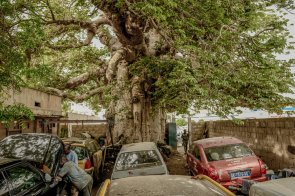
In Dakar, baobabs blend into the cityscape, like this one in the center of a taxi garage near a freeway on ramp. Credit Tomas Munita for The New York Times

DAKAR, Senegal — Wide, awkward baobab trees blend into the cityscape of Dakar, the busy capital of Senegal, almost without notice.

Drivers wash a fleet of taxis parked beneath one giant tree near a freeway on ramp. Rusting cars with open hoods are parked in a mechanic’s shop under the shade of another. A leathery trunk is a community billboard, with ads nailed to it for a plumber and an apartment for rent.

Aliou Ndour stood on a crowded corner, pulled out his phone and scrolled past the pictures of friends and family to another precious photo: the baobab in his home village.

merlin_142358277_052946e4-1f8f-4fe7-a85c-de8ec38cdb23-jumbo.jpg

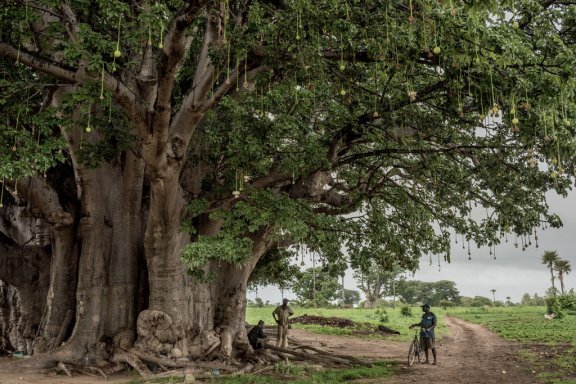
One of the largest baobab trees in Senegal is in the Fatick region, southwest of the capital. Credit Tomas Munita for The New York Times

Fat baobabs, some more than half a millennium old, have endured across Senegal, passed over for lumber largely because their wood is too brittle and spongy for use in furniture. Baobab leaves are mixed with couscous and eaten, the trees’ bark stripped to make rope, their fruit and seeds used for drinks and oils.

Something else has helped preserve these giants: They are beloved.

“This,” said Adama Dieme, craning his neck to look up at the spread of branches of the baobab on his block, “is the pride of the neighborhood.”

merlin_142358064_adba030f-b0fd-4d1f-bf7e-501cb141f23c-jumbo.jpg

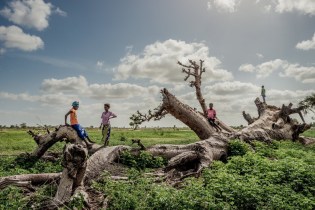
Children playing over a fallen baobab in southwestern Senegal. Credit Tomas Munita for The New York Times

But baobabs, like many of the region’s trees, are in jeopardy, threatened by the same forces upending numerous facets of society — climate change, urbanization and population growth.

West Africa has lost much of the natural resources once tied so closely to its cultural identity. Poaching has stolen most of its wildlife; lions, giraffes and desert elephants are sorely endangered.

Huge swaths of forest are being razed to clear space for palm oil and cocoa plantations. Mangroves are being killed off by pollution. Even wispy acacias are hacked away for use in cooking fires to feed growing families. Continue reading
Analyzing Local Sources Of Big Carbon Footprints

lead_720_405.png

GOOGLE

What gets measured gets managed. In the realm of climate science, national governments have the scale and responsibility to be involved in measurement. But if a skeptic is in charge of the government apparatus, good luck with that. With the national government of one of the big carbon footprint countries abandoning science and dropping out of the fight to reduce climate change, one of that country’s biggest companies is stepping up to offer an alternative. It may be too little too late but under the circumstances we may have no choice but to cheer it on:

Google’s New Tool to Fight Climate Change

The company will begin estimating local carbon pollution from cities around the world.

In the next decade or so, more than 6,000 cities, states, and provinces around the world will try to do something that has eluded humanity for 25 years: reduce their emissions of greenhouse gases, which warm the atmosphere and cause climate change.

The city-level leaders overseeing this task won’t have the same tools available to their national peers. Most of them won’t have an Environmental Protection Agency (or its equivalent), a meteorological bureau, a team of military engineers, or nasa. So where will they start? Never mind how to reduce their city’s greenhouse-gas emissions; how will they know what’s spewing carbon dioxide in the first place?

Maybe Google will do it for them. Or, at least, do it with them.

Google has started estimating greenhouse-gas emissions for individual cities, part of what it recently described as an ambitious new plan to deploy its hoard of geographic information on the side of climate-concerned local leaders. Continue reading
Climate Change’s Other Casualties

Scotland.jpg

Some of the world’s oldest structures have survived for 5,000 years in the Orkney Islands. Kitchens. Forges. Round houses. Now they face dire threats from climate change.

The Camera’s Gift To The Task Of Documenting Climate Change

main_900 (3).jpg

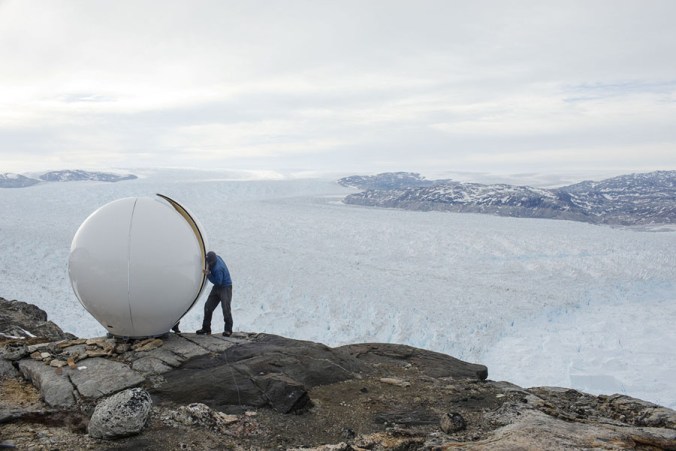
The safety officer Brian Rougeux assembles a radar dome while working at the research camp above Helheim Glacier near Tasiilaq, Greenland, on June 20, 2018. 
Lucas Jackson / Reuters

Alan Taylor, who  compiles and edits the news photo blog “In Focus” for the Atlantic, shares 21 spectacular images with captions that help even a lay person understand better the science of climate change:

Studying Greenland’s Ice to Understand Climate Change

main_900 (4).jpg

An iceberg floats in a fjord near Tasiilaq on June 16, 2018. # Lucas Jackson / Reuters

Earlier this year, Lucas Jackson, a photographer with Reuters, joined a team of scientists affiliated with a NASA project named Oceans Melting Greenland (OMG) and traveled with it to the Greenland ice sheet and fjords. Jackson photographed the researchers as they set up their scientific equipment and took readings to help understand the ongoing impact of the melting glaciers and map out what to expect in the future. Jackson says: “For both journalists and scientists, climate change is difficult to document. It most often happens imperceptibly—a tenth of a degree increase in temperature, a few less inches of rain, a slowly melting ice sheet.” Continue reading

Author of Extreme Conservation, Interviewed

9780226366265.jpg

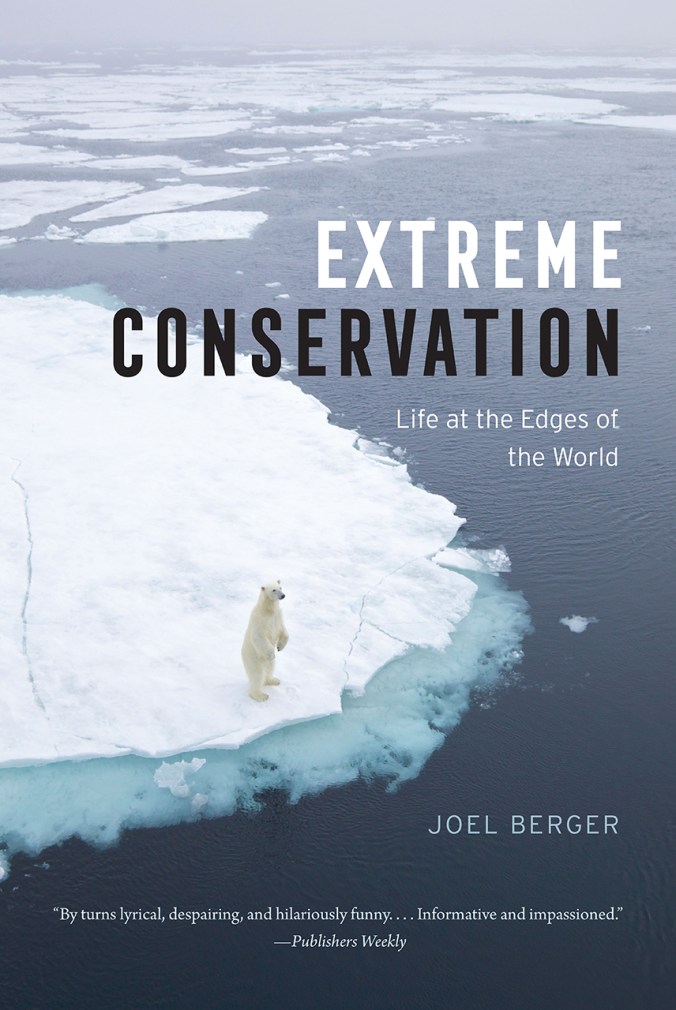
We recommend this interview in the Atlantic, with the author of the book above, a veteran conservationist reckoning with his career studying animals in the most extreme places on Earth:

In the winter of 2011, Joel Berger and his colleague Marci Johnson happened upon a ghostly Arctic death scene. Body parts and tufts of brown fur poked out of a frozen lagoon. This was all the biologists could find of a herd of 55 musk oxen they had been following.

The cause of mass mortality, they later determined, was an ice tsunami, the result of an unusual storm that slammed seawater and ice into the lagoon where the unfortunate musk oxen stood. Berger is a conservationist who works in some of the most hostile environments in the world, and he studies the enigmatic species, like musk oxen, that live there. His new book, Extreme Conservation, chronicles his career in Alaska, Siberia, Namibia, Tibet, Mongolia, and Bhutan. He is now a biologist at Colorado State University and a senior scientist at the Wildlife Conservation Society. Continue reading

The Future Is Bright, And Getting Brighter

A locust rests on some vegetation at a y

TENGKU BAHAR / GETTY

The future is bright, in one alarming way. Ed Yong explains, in his latest story The Very Hot, Very Hungry Caterpillar (anyone with children or grandchildren, or who has read books to a younger generation will appreciate the title) that climate change will help insects thrive. While that may be interesting for biodiversity it has implications for humans worth considering now, before too late:

Since the dawn of agriculture, humans have been unwillingly nourishing insects by growing plants that they then devour. Their mandibles consume somewhere between 10 and 20 percent of crops produced around the world. And these losses are likely to grow as the world slowly warms.

By looking at how insects will respond to rising temperatures, a team of researchers led by Curtis Deutsch and Joshua Tewksbury have calculated how rice, maize, and wheat—which provide 42 percent of humanity’s calories—will fare as the globe heats up. The results aren’t pretty.

They estimate that the portion of these grains that’s lost to insects will increase by 10 to 25 percent for every extra degree Celsius of warming. Continue reading

Climate Change Deniers, Beware Of The Speaking Stones

A “hunger stone” exposed by the low level of water in the Elbe river is seen in Decin, Czech Republic, on Thursday. The low level of water caused by the recent drought has exposed the stones on the river bed. Petr David Josek/AP

Thanks to National Public Radio (USA) for this:

Drought In Central Europe Reveals Cautionary ‘Hunger Stones’ In Czech River

ap_18235426463887_custom-7a1b9400512fdb6edfb48925e9b2ab2c08981692-s1400-c85.jpg

People visit a famous “hunger stone” exposed by the low level of water in the Elbe river in Decin, Czech Republic, on Thursday. Petr David Josek/AP

A lengthy drought in Europe has exposed carved boulders, known as “hunger stones,” that have been used for centuries to commemorate historic droughts — and warn of their consequences.

The Associated Press reports that hunger stones are newly visible in the Elbe River, which begins in the Czech Republic and flows through Germany.

“Over a dozen of the hunger stones, chosen to record low water levels, can now be seen in and near the northern Czech town of Decin near the German border,” the AP writes. Continue reading

Off Halogen, On With LED

Switching to LEDs has been estimated to save consumers up to £112 a year. Photograph: imageBroker/Rex/Shutterstock

Arthur Neslen at the Guardian shares the news, in Europe to ban halogen lightbulbs, that we have been waiting to hear for years:
After nearly 60 years of lighting homes halogens will be replaced with more energy efficient LEDs

After nearly 60 years of brightening our homes and streets, halogen lightbulbs will finally be banned across Europe on 1 September.

The lights will dim gradually for halogen. Remaining stocks may still be sold, and capsules, linear and low voltage incandescents used in oven lights will be exempted. But a continent-wide switchover to light-emitting diodes (LEDs) is underway that will slash emissions and energy bills, according to industry, campaigners and experts.

LEDs consume five times less energy than halogen bulbs and their phase-out will prevent more than 15m tonnes of carbon emissions a year, an amount equal to Portugal’s annual electricity usage. Continue reading

Bee Awesome

19mag-bees-slide-5XCH-jumbo

Will Nissen’s bees north of Bakersfield, Calif. Credit Ilona Szwarc for The New York Times

Thanks to Jaime Lowe for this: