Model Mad, Rollback Pushback

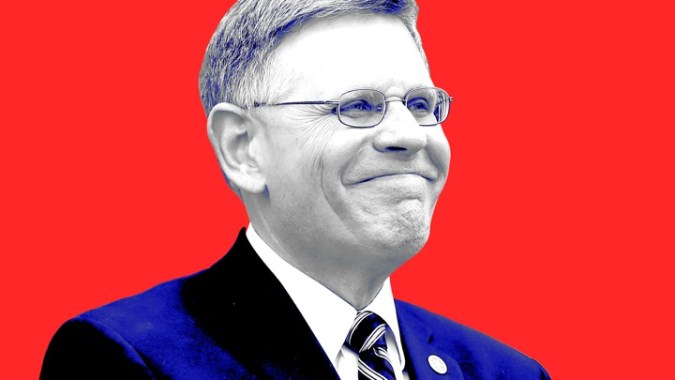
Mary Nichols, who heads the California Air Resources Board, has vowed to fight the federal government’s proposed changes. Credit Eric Risberg/Associated Press

It’s been a while since we’ve addressed our “model mad” theme, despite there being numerous opportunities. We’re continually heartened by the strength of both the public and the private sector to pushback against the current administration’s regressive proposals.

California Strikes Back Against the Trump Administration’s Auto Pollution Rollback

California went on the offensive Tuesday against the Trump administration’s plan to weaken fuel-efficiency rules for cars, laying out a scathing rebuttal that the state’s clean-air regulator said would shape the battle with Washington in the coming months and years.

The state’s target is one of President Trump’s most consequential environmental rollbacks to date, a proposal unveiled last week to let cars pollute more while stripping California of its right to set its own air-quality rules.

The administration’s proposal “is contrary to the facts and the law,” the California document says, before refuting point by point the Trump administration’s arguments for weakening the nation’s long-term goals for making vehicles more fuel efficient and less polluting.

The clash between California and Washington threatens to throw the United States auto market into disarray. Because California has the authority under the Clean Air Act to set its own air pollution rules, and because a dozen other states follow its lead, the dispute could effectively split the nation’s market into two, one side adhering to stringent emissions rules set in Sacramento and the other to weaker federal standards.
Continue reading

Spying On Whales, For Our Sake As Well As Theirs


Brannen-Reckoning-with-the-Almost-Satanic-Prospect-of-Twentieth-Century-Whaling

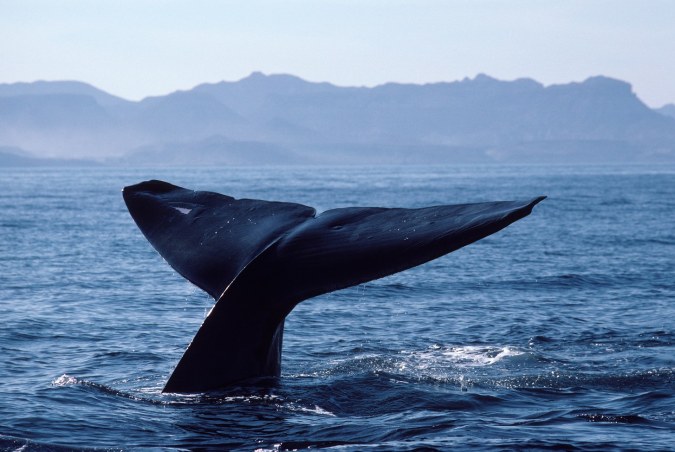
Whales are a powerful oceanographic force in their own right, one that begets even more life; many ecosystems are still straining to equilibrate from the effects of twentieth-century whaling. Photograph by Francois Gohier / VWPics / Redux

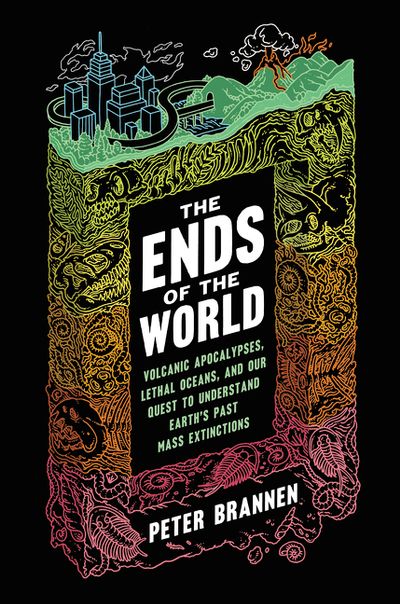
x400.jpgIt may be too late, but this is too important to pretend it does not matter. It is not too late to learn from our mistakes. Peter Brannen, a science journalist and the author of “The Ends of the World: Volcanic Apocalypses, Lethal Oceans, and Our Quest to Understand Earth’s Past Mass Extinctions” gets our thanks for this review in the New Yorker, titled We May Never Understand the Ocean-Wide Damage Done by Industrial Whaling:

A few months ago I learned that, as recently as 1972, General Motors was using sperm-whale oil in transmission fluid in its cars. I’m not sure why I was surprised to learn this. It took nearly another decade for much of the world to agree to ban commercial whaling, in 1982. (A handful of countries still ignore the ban.) But the detail about G.M. still struck me as anachronistic. The global pursuit of whales inescapably connotes the romance of nineteenth-century New Bedford and Nantucket: delicately embossed scrimshaw, Melville, oil paintings of stately twilit schooners setting out on the main. Not puke-green Chevy El Caminos. Continue reading

Sustainability & Land-Use Choices

e5ff336b-bd2f-4ce2-a2ba-2b4dfcc82edc-3944c6eeace218b5f8c8a63c4fa8191550f3f63c-s1400-c85.jpg

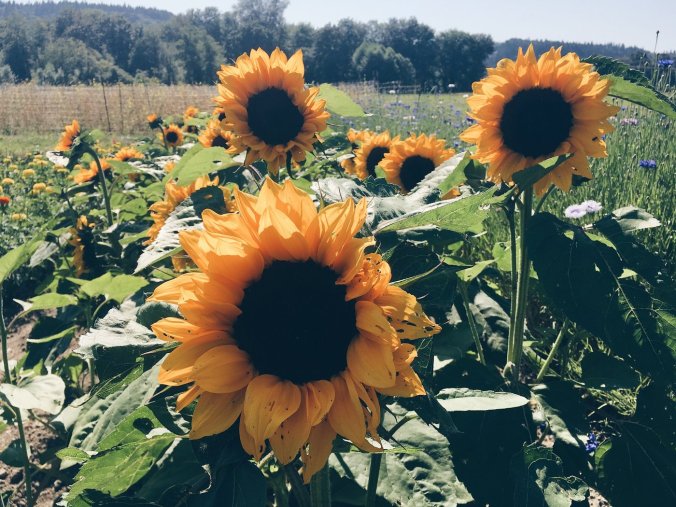
Along the back of this field of sugar snap peas, sunflowers and bachelor buttons at Oxbow Farm & Conservation Center is a buffer of maturing big-leaf maples and red-osier dogwoods. It’s a combination of forest and thicket that the farm has left standing to help protect water quality in the river and aquifer. Oxbow Farm & Conservation Center

Another day, another sunflower because, why not? But this story is about much more than the overwhelming attractiveness of sunflowers:

Which Vision Of Farming Is Better For The Planet?

OxbowFarmers face a growing dilemma. Specifically, a food-growing dilemma.

How do you feed an increasing number of people without harming the environment?

As it turns out, growing as much food as possible in a small area may be our best bet for sustainably feeding the world’s population, according to new research.

It all comes down to how we manage greenhouse gases and climate change. Continue reading

A Science Advisor At Long Last, Yay

ScienceAdvisor

SUE OGROCKI / AP / THE ATLANTIC

If Ed Yong is happy, then we too are happy about this. Really. Even if it has a bit of fiddling while Rome burns feel to it. Let’s hope he can talk some sense, even if it is too late, into the powers that be:

Trump Finally Picks a Science Adviser—And People Are Delighted

His nominee, Kelvin Droegemeier, is an accomplished meteorologist who studies storms and other extreme weather.

For decades, the meteorologist Kelvin Droegemeier has been immersed in the study of thunderstorms, tornadoes, and other extreme weather. Now he looks set to enter the unpredictable and stormy world of the Trump administration as its top scientific consigliere. Continue reading

Avian Adaptation in the Face of Climate Change


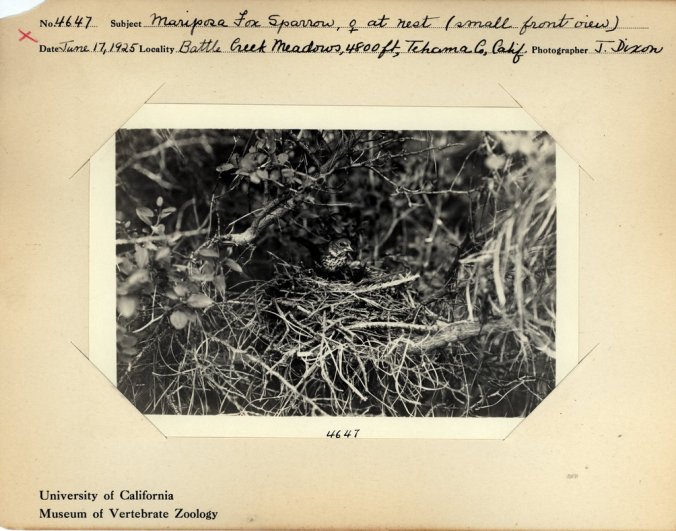
A Mariposa fox sparrow in its nest in 1925, observed during Dr. Joseph Grinnell’s surveys of California fauna. Credit Museum of Vertebrate Zoology, University of California, Berkeley

Accentuate the positive…

California’s Birds Are Testing New Survival Tactics on a Vast Scale

Retracing the steps of a century-old wildlife survey, ecologists find that birds are making remarkable adaptations to climate change.

More than a century ago, zoologist Joseph Grinnell launched a pioneering survey of animal life in California, a decades-long quest — at first by Model T or, failing that, mule — to all corners and habitats of the state, from Death Valley to the High Sierra.

Ultimately Grinnell, founding director of the Museum of Vertebrate Zoology at the University of California, Berkeley, and his colleagues produced one of the richest ecological records in the world: 74,000 pages of meticulously detailed field notes, recording the numbers, habits and habitats of all vertebrate species that the team encountered.

In 2003, museum scientists decided to retrace Grinnell’s steps throughout the state to learn what changes a century had wrought. And that’s why Morgan Tingley, then an ecology graduate student at the university, found himself trekking through the Sierra for four summers.

Dr. Tingley wanted to know how birds had fared since Grinnell last took a census. Years later, the answer turned out to be a bit of a shock. Continue reading

Vegetarianism For Footprint Reduction

3000 (2).jpg

Replacing 50% of meat consumption with a vegetarian diet would push back the overshoot date by five days. Photograph: Scott Olson/Getty

Our vegetarian diet ambitions are strengthening for all kinds of reasons. Footprint reduction among them. Thanks to our colleague Mathis Wackernagel for his regular reminders of the anything but regular footprint growth humanity imposes on the planet each year:

Earth’s resources consumed in ever greater destructive volumes

Study says the date by which we consume a year’s worth of resources is arriving faster

Humanity is devouring our planet’s resources in increasingly destructive volumes, according to a new study that reveals we have consumed a year’s worth of carbon, food, water, fibre, land and timber in a record 212 days.

As a result, the Earth Overshoot Day – which marks the point at which consumption exceeds the capacity of nature to regenerate – has moved forward two days to 1 August, the earliest date ever recorded.

Earth Overshoot Day falls on 1 August this year – marking the point at which consumption exceeds the capacity of nature to regenerate

OverShot.jpg

Guardian graphic. Source: Overshootday.org

To maintain our current appetite for resources, we would need the equivalent of 1.7 Earths, according to Global Footprint Network, an international research organisation that makes an annual assessment of how far humankind is falling into ecological debt. Continue reading

The Footprint Of Our Data-Driven Lives

New-Dark-Age-1050-5927870a2b206657f6b87133d3f776c4.jpgThanks to John Harris, writing in the Guardian, for “Our phones and gadgets are now endangering the planet,” an opinion essay that doubles as a review of the book to the right:

It was just another moment in this long, increasingly strange summer. I was on a train home from Paddington station, and the carriage’s air-conditioning was just about fighting off the heat outside. Most people seemed to be staring at their phones – in many cases, they were trying to stream a World Cup match, as the 4G signal came and went, and Great Western Railway’s onboard wifi proved to be maddeningly erratic. The trebly chatter of headphone leakage was constant. And thousands of miles and a few time zones away in Loudoun County, Virginia, one of the world’s largest concentrations of computing power was playing its part in keeping everything I saw ticking over, as data from around the world passed back and forth from its vast buildings.

Most of us communicate with this small and wealthy corner of the US every day. Thanks to a combination of factors – its proximity to Washington DC, competitive electricity prices, and its low susceptibility to natural disasters – the county is the home of data centres used by about 3,000 tech companies: huge agglomerations of circuitry, cables and cooling systems that sit in corners of the world most of us rarely see, but that are now at the core of how we live. About 70% of the world’s online traffic is reckoned to pass through Loudoun County. Continue reading

Last Resort Waste Management

Incinerate.jpg

In our sustainable hospitality practice we do from time to time think of incineration as an option worthy of consideration. Especially in India, where waste management is at a completely different stage of development, we thought about it quite seriously. But in the UK, it is clearly not the first best option. If you want to learn a thing or two about waste management, a few minutes with this article will be worth your while:

Waste incineration set to overtake recycling in England, Greens warn

Amount of rubbish burned by local authorities triples while household recycling rates stall

3450.jpg

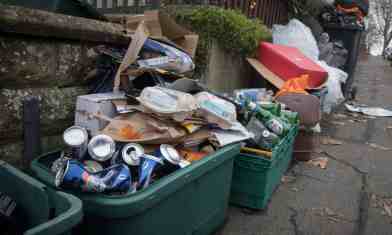
Full recycling bins on pavement in Bristol. Photograph: Matt Cardy/Getty Images

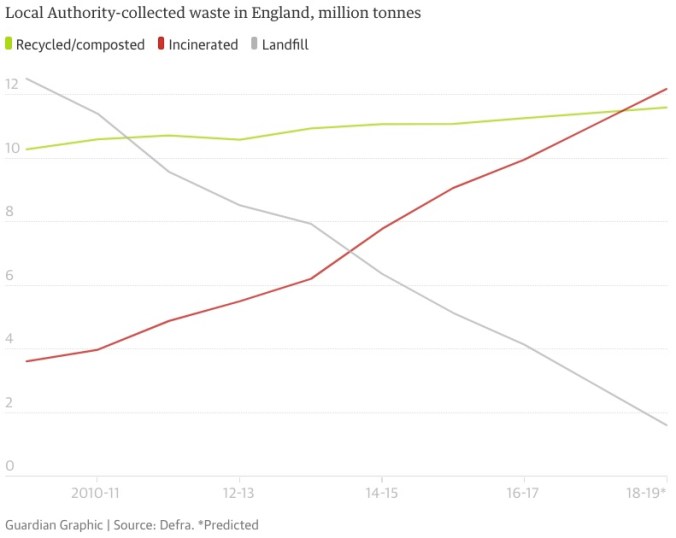
England is on the brink of burning more of its rubbish in incinerators than it recycles for the first time, according to a new analysis.

The amount of waste managed by local authorities and sent to incinerators, or energy-from-waste plants, tripled between 2010-11 and 2016-17. By contrast, household recycling rates have stalled since 2013.

If those trends continue, the millions of tonnes of waste incinerated will overtake the amount sent for recycling by the end of the current financial year, a report by the Green party found. Continue reading

Helping Plants Make Their Own Nitrogen

img_20171013_133748571_hdr-3-bab7de57d14653c47b66cf3afc9fa586b3731b9c-s1400-c85.jpg

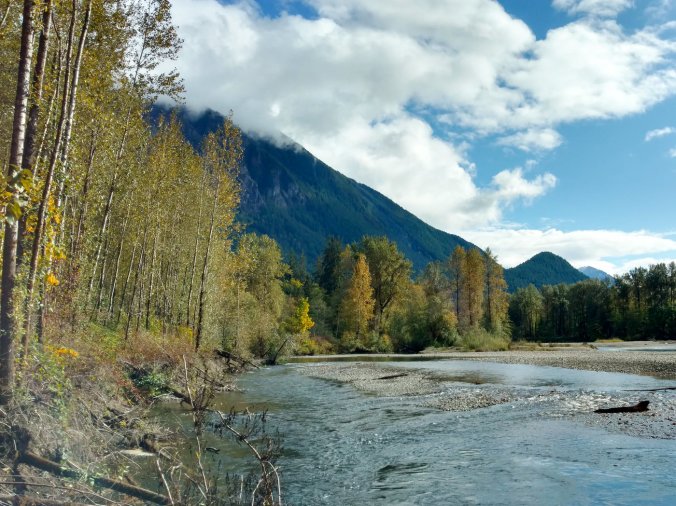
Poplar trees at the Snoqualmie River in Washington State. The river is fed mostly by snow melt and is extremely low in nitrogen, yet the trees thrive thanks to endophytes. Sharon Doty

Thanks to our friends at the salt, and National Public Radio (USA) for this:

Microbial Magic Could Help Slash Your Dinner’s Carbon Footprint

m1_zstack4-1-18cd73a7dc27353a90c3aeda47317503af40edca-s1400-c85.jpg

Endophytes are microbes that live inside plants — the ones tagged with a fluorescent dye in this image are found in poplars. The microbes gather nitrogen from the air, turning it into a form plants can use, a process called nitrogen fixation. Researchers are looking at how these microbes could be used to help crops like rice and corn make their own fertilizer.
Sam Scharffenberger

If you’re interested in sustainability, you’ve probably thought about how to reduce your carbon footprint, from how you fuel your car to how you heat your home. But what about carbon emissions from growing the food you eat?

Most of the crops in the United States are grown using chemical fertilizer – a lot of it: American farmers used over 24 billion pounds of nitrogen fertilizer in 2011. And making nitrogen fertilizer requires fossil fuels like natural gas or coal. Continue reading

Insects, Underappreciated Often-Charismatic Fauna

4177.jpg

This article by Robin McKie, Observer science editor, will have you thinking differently about what are often called the pests of summer:

Where have all our insects gone?

There is a crisis in the countryside – and a massive decline in insect numbers could have significant consequences for the environment

4928 (1).jpg

A great yellow bumblebee. Its numbers have declined steeply in recent years. Photograph: Alamy

When Simon Leather was a student in the 1970s, he took a summer job as a postman and delivered mail to the villages of Kirk Hammerton and Green Hammerton in North Yorkshire. He recalls his early morning walks through its lanes, past the porches of houses on his round. At virtually every home, he saw the same picture: windows plastered with tiger moths that had been attracted by lights the previous night and were still clinging to the glass. “It was quite a sight,” says Leather, who is now a professor of entomology at Harper Adams University in Shropshire. Continue reading

Decades Of Awareness, But Not Enough Action

Kolbert-HansenAnniversary

Thirty years ago, James Hansen, a scientist at nasa, issued a warning about the dangers of climate change. The predictions he and other scientists made at the time have proved spectacularly accurate. Photograph by Charles Ommanney / The Washington Post / Getty

I have always been appropriately alarmed by Elizabeth Kolbert’s articles and her comment pieces in the New Yorker. This brief comment below is alarming enough, but with a twist. Science has done its job, but we as citizens, business people, civic leaders have not acted with sufficient urgency considering the clear scientific evidence.

IMG_7014It may be true that scientists have not been the most compelling communicators, but that is no excuse for our inaction. As someone who left a scientific career developing a theoretical framework for entrepreneurial conservation in favor of opportunities to apply those ideas in the real world, I am in the same boat as a climate scientist. I look around today, after decades of best effort and I conclude that we have not accomplished enough in our practice. In our efforts to offer alternatives to messier forms of tourism, we have not accomplished enough. That is discouraging. But discouragement is not an option. We must find a better way to communicate that generates the required action for a less messy planet:

Listening to James Hansen on Climate Change, Thirty Years Ago and Now

On June 23, 1988—a blisteringly hot day in Washington, D.C.—James Hansen told a Senate committee that “the greenhouse effect has been detected and is changing our climate now.” At the time, Hansen was the head of nasa’s Goddard Institute for Space Studies, and though his testimony was certainly not the first official warning about the “greenhouse effect”—a report to President Lyndon Johnson, in 1965, predicted “measurable and perhaps marked changes in climate” in the decades to follow—it was the first to receive national news coverage. The Times ran the story at the top of the front page, with a graph showing a long-term rise in average global temperatures. Continue reading

Audubon’s Reasonable Request

apa_2016-a1_2147_4_northern-harrier_diana_whiting_kk.jpg

Northern Harrier. Photo: Diana Whiting/Audubon Photography Awards

A message from friends:

NEW YORK — “Audubon is committed to protecting birds and the places they need — and the greatest threat to birds and people is climate change,” said David Yarnold (@david_yarnold), president and CEO of National Audubon Society.

“While some may be holding out for a perfect solution to climate change, we know that it will take an array of approaches to reduce planet-warming pollution.

“The Carbon Capture Coalition is pursuing many avenues—including a market-driven approach that has deep bipartisan support. Audubon is excited to be at the table with a range of voices exploring policy options that accelerate a reduction in carbon pollution,” Yarnold added.

The Carbon Capture Coalition is led by the Center for Climate and Energy Solutions and the Great Plains Institute. With over 50 members ranging from the energy industry, agriculture, labor unions and conservation leaders, the coalition is non-partisan and solutions-oriented. Recently, the coalition successfully advocated for improving and extending the carbon capture tax credit, known as the 45Q tax credit, led by Senators Heidi Heitkamp (D-ND), John Barrasso (R-WY), Sheldon Whitehouse (D-RI) and Shelley Moore Capito (R-WV). Continue reading

Renewables In Our Midst

Facebook_Odense_Heat-Recovery_vFINAL_web

When it opens in 2020, Facebook’s new data center in Odense, Denmark will channel its waste heat to warm nearly 7,000 homes. FACEBOOK

Thanks to Nicola Jones and colleagues at Yale Environment 360 for this:

Waste Heat: Innovators Turn to an Overlooked Renewable Resource

Nearly three-quarters of all the energy produced by humanity is squandered as waste heat. Now, large businesses, high-tech operations such as data centers, and governments are exploring innovative technologies to capture and reuse this vast renewable energy source.

HeatHaze_Grangemouth-Refinery_Scotland_ChristopherFurlongGetty_web

Heat radiates from the Grangemouth Oil Refinery in Scotland. About 70 percent of all the energy produced globally gets discarded as waste heat. CHRISTOPHER FURLONG/GETTY IMAGES

When you think of Facebook and “hot air,” a stream of pointless online chatter might be what comes to mind. But the company will soon be putting its literal hot air — the waste heat pumped out by one of its data centers — to good environmental use. That center, in Odense, Denmark, plans to channel its waste heat to warm nearly 7,000 homes when it opens in 2020.

google-datacenter-places-04_Dalles-Oregon_web2

Data centers, such as Google’s facility in Dalles, Oregon, generate huge amounts of waste heat. GOOGLE

Waste heat is everywhere. Every time an engine runs, a machine clunks away, or any work is done by anything, heat is generated. That’s a law of thermodynamics. More often than not, that heat gets thrown away, dribbling out into the atmosphere. The scale of this invisible garbage is huge: About 70 percent of all the energy produced by humanity gets chucked as waste heat. Continue reading

Water, Power & Discontent

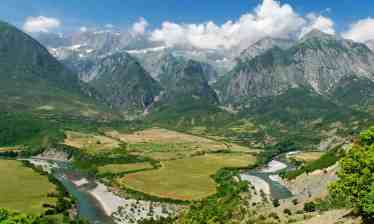
Early last year an article in the Guardian reminded me of work I had done in Montenegro in an earlier decade. The work was among the most impactful in my life, both professionally and personally, but the reminder was more a warning than a celebration. Something similar just happened with work I carried out in the region Rachel Dixon, a travel writer for the Guardian, brought to my attention with the film above, mentioned in this article:

Adventure in Albania: kayaking in one of Europe’s final frontiers

With wild rivers, mountains and Unesco sites aplenty, Albania is emerging as an exciting Mediterranean destination – but its wilderness could be devastated by huge dam-building projects

5188‘Go, go, go!” The white-water rafting guide shouted orders from the back of the boat and our five-strong crew paddled hard to stay on course. We were tackling a stretch of the Vjosa, a 270km river that begins in Greece (where it is called the Aoös) and flows through Albania and into the Adriatic just north of the city of Vlora. I was on a recce trip for a new southern Albanian break with Much Better Adventures, which specialises in long weekends to wild places in Europe and North Africa. But this trip was not just a fun adventure – rather just part of a campaign to save the river, which is under threat from proposed dams. A documentary film, Blue Heart, out this month, will highlight the fight to protect Europe’s last wild rivers, with help from ecotourism…

The film, and the article, have to do with the power of water. And the power of humans in deciding what to do with water. Not all reminders can be pleasant. This one is bittersweet. One sweet part is the call to action.

CallAct1

Step 1: Register your interest in hosting a screening

We are aiming to host hundreds of screenings of Blue Heart globally in 2018 to raise awareness of the plight of the people affected in the Balkan region. If you are interested in hosting a screening, please complete the form below and a member of our team will get back to you ASAP.  Please note the film is 40 mins long and we recommend that you allow at least 20 mins for a post screening discussion. Continue reading

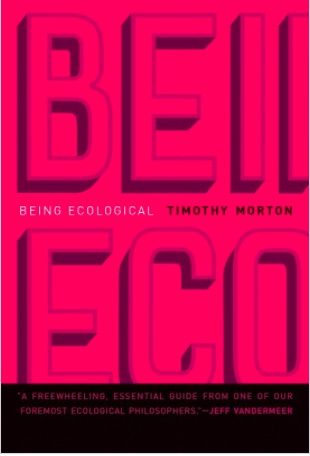
Being Ecological When Nature Is Perceived With Limits

BeingEco

A book about ecology without information dumping, guilt inducing, or preaching to the choir.

This new book is mentioned in a description of coming to terms with a life without water, an essay written from the perspective of living in Cape Town, South Africa. The essay is moving in the way a dream can be, which fits the writer’s reference to what we all might come to know as “the water-anxiety dream.”

The essay was effective enough to get me to click through to find out more about the book to the left. Which leads to Timothy Morton, who has somehow avoided our notice until now. How had we missed an author of books with titles like Dark Ecology, and The Ecological Thought, as well as Ecology without Nature?

Nevermind how. My thanks to Rosa Lyster for this, among other gifts from her essay.

Lyster-Capetown-Drought

For some residents of Cape Town, the memory of the drought is already fading. But, in an increasingly parched world, will the anxiety ever really end? Illustration by Owen Gent

A friend of mine got married in her parents’ garden last year, on a lavishly beautiful late-summer afternoon in Cape Town. Many of the guests were British, and they could not stop remarking on the fineness of the weather. It was a startling reminder that some people still relish hot days with no possibility of rain, that not everyone looks upon February in the Western Cape as something to be endured. After the ceremony, my date and I stood by the swimming pool, drinking sparkling wine and monitoring the canapés. My friend’s stepfather came by to say hello, carefully picking his way past the bride’s two young brothers, who were playing an ecstatic game of hide-and-seek on the lawn, getting grass stains on their tiny suits. After gracefully accepting our praise about how lovely everything had been, he told us that he’d been having torrid anxiety dreams. We nodded. Weddings are notoriously hard on the old nerves—guests to be tended to, speeches to be made, and the pool just lying there, waiting for any old idiot to accidentally fall in and cast an undignified pall over the happy day. He shook his head. His dream, he explained, was about the garden. Continue reading

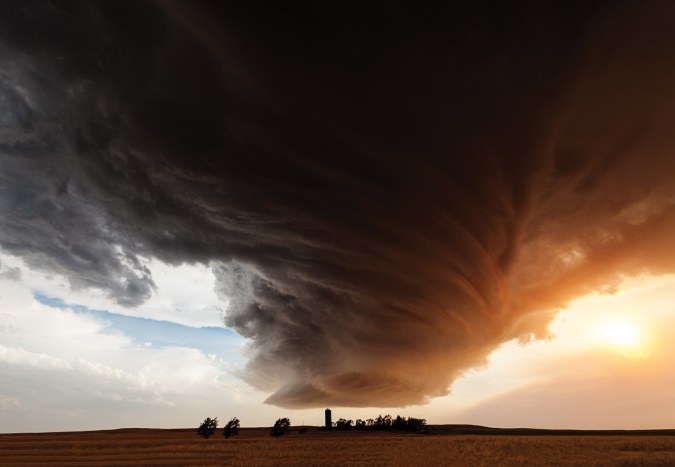
Celebrating A Force Of Nature, The Sky, With Clouds In All Their Visual Wonder

Big%20Cloud%20pg%2092.jpg

Nebraska, June, 2012.

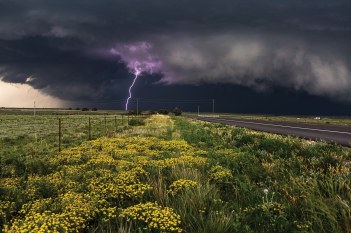
Just because the climate is changing at a pace both dangerous and seemingly impossible to slow, given human tendencies; just because the storms that come from clouds can cause fear and worse; none of that diminishes our wonder and our ability to see importance in those clouds:

A Storm Chaser’s Unforgiving View of the Sky

Big%20Cloud%20pg%20173.jpg

Texas, June, 2014.

By Alan Burdick

Photography by Camille Seaman

A cloud is a shade in motion. Shape-shifting and moody, it arrives with a message that is opaque as often as it is threatening. “Clouds always tell a true story,” the Scottish meteorologist Ralph Abercromby wrote, in 1887, “but one which is difficult to read.”

Big%20Cloud%20pg%2057.jpg

Kansas, June, 2008.

The appeal of clouds is obvious: no two are the same, and no one is the same for long. And they not only manifest change but inflict it as well. A cloud can be beautiful, terrible, or both—the embodiment of the sublime. Few other things on earth still present us with a power larger than ourselves. To watch a supercell gather force over the plains, as storm chasers take such pleasure in doing, is to watch Zeus take shape on earth. Continue reading

Polar Bears, Hudson Bay & Informed Opinion

Polar.jpg

Polar bears haunt the landscape around the remote town of Churchill in northern Manitoba.Published On Credit Image by Ian Kerr

Thanks to Ian Kerr, a filmmaker who has spent years documenting polar bears in Churchill, Manitoba and shared this op-ed in the New York Times:

Polar Bears of Hudson Bay

Polar bears sleep a lot. That sight can leave an observer feeling disappointed, even insulted — it’s like watching a superhero clean his nails while you’re wishing he’d fly or pick up a car.

Keep watching, though, and you begin to notice interesting things about the sleeping bear’s world: the hard, cold snow blown across ice or the sun turning into a vertical streak through sheets of sleet; the odd, sticky sensation of frost slowly growing over your beard. Continue reading

Two Op-Eds Arguing The Same Powerful Case In Two Different Ways

23Englander-superJumbo.jpgNathan Englander came to my attention nearly six years ago. A novelist who lives in Brooklyn, he got me thinking about story-telling in a way that was very important to me, two years into our residency in India. He did something important for me again this last week, focusing my attention on an act I would normally ignore. But his point resonated with me because of the subject’s connection to the state of nature. So I thought about how to link to his op-ed in a manner consistent with our objectives on this site.

22conniff-superJumbo.jpg

Credit Lan Truong

Four years ago Richard Conniff, who writes about wildlife and human and animal behavior, started a long series of regular appearances in our pages. The day after Nathan Englander published the op-ed I mentioned above, Richard Conniff published an op-ed referencing the same act, a day in advance of Earth Day. And it is powerful. So I knew how to proceed, and with this excerpt you may be inclined to read both op-eds in full:

I was thinking about Mr. Buckel and about despair a few nights later, over a drink with Joe Walston of the Wildlife Conservation Society. As director of that organization’s worldwide field conservation work, Mr. Walston routinely comes face-to-face with the dark forces of human overpopulation, mass extinction of species, climate change and pollution. But he is also the co-author of a paper being published this week in the journal BioScience that begins with the uplifting words of Winston Churchill to the British nation in June 1940, under the shadow of the Nazi conquest of France: “In casting up this dread balance sheet and contemplating our dangers with a disillusioned eye,” Churchill declared, “I see great reason for intense vigilance and exertion, but none whatever for panic or despair.” Continue reading

Global Problems, Forests & Solutions

19lovejoy-reid-jumbo.jpg

Thomas E. Lovejoy a pioneer in the use of economics to conserve forests and other ecosystems globally is joined by John Reid, who has worked in the Amazon since 1965, in presenting a case for:

How Big Forests Solve Global Problems

Sit on a log by the Madidi River in Bolivia at dusk and you can hear what an Amazon forest should sound like. The music includes red howler monkeys, breathy thumps from the mutum jungle fowl, droning cicadas, eerie calls locals attribute to deadly bushmaster vipers and the unhinged excitement of elusive titi monkeys. Around your feet, the beach is crisscrossed by jaguar tracks and those of the pony-size tapir, a shy beast that, if you keep quiet, will saunter out of the forest and swim across the river.

This is what scientists call an “intact forest landscape.” It’s a swath of at least 500 square kilometers (about 193 square miles, equal to 70,000 soccer fields) of unbroken forest. Because of their size, these areas have maintained all their native plant and animal life and biophysical processes. These forests still adorn parts of our planet’s tropical midsection, notably the Amazon, Congo Basin and the island of New Guinea. And they form a northern belt, the boreal forests of Canada, Russia, Alaska and Scandinavia. Continue reading

Carbon Footprint Self-Analysis

Carbon1.jpg

Thanks to Livia Albeck-Ripka and the New York Times for this

How to Reduce Your Carbon Footprint

carbonfootprint-slide-SUBX-jumbo.jpg

What Is a Carbon Footprint?

Climate change can be overwhelming. The science is complex, and when it comes to future impacts, there are still a lot of unknowns. While real solutions will require action on a global scale, there are choices you can make in your day-to-day life to lessen your personal impact on the environment. This guide will walk you through some of them.

carbonfootprint-slide-664U-jumbo.jpg

DRIVE LESS

A carbon footprint is the total amount of greenhouse gas emissions that come from the production, use and end-of-life of a product or service. It includes carbon dioxide — the gas most commonly emitted by humans — and others, including methane, nitrous oxide, and fluorinated gases, which trap gas in the atmosphere, causing global warming. Usually, the bulk of an individual’s carbon footprint will come from transportation, housing and food.

You can start the process by calculating your carbon footprint here. You will need to know the following: Continue reading