Solar’s Impressive Portion Of USA Energy Supply Increase

Robert Nickelsberg/Getty Images

Thanks to Tik Root, Senior Staff Writer at Grist:

Solar hits a renewable energy milestone not seen since WWII

With supply chains finally open, solar provided most of the nation’s new electricity capacity last year.

Solar accounted for most of the capacity the nation added to its electric grids last year. That feat marks the first time since World War II, when hydropower was booming, that a renewable power source has comprised more than half of the nation’s energy additions.  Continue reading

The Vertical Forest In Milan

The Vertical Forest, a residential complex in Milan. Marta Carenzi/Archivio Marta Carenzi/Mondadori Portfolio, via Getty Images

Italy has not figured in our climate change solutions coverage, until now. Our thanks to Stephen Wallis and the New York Times for this:

A Growth Spurt in Green Architecture

Buildings made shaggy with vegetation or fragrant with wood are no longer novelties.

In the lineup of climate villains, architecture towers above many. The building and construction industries account for some 37 percent of worldwide carbon dioxide emissions, according to the United Nations Environment Program. Three of the most commonly used building materials — concrete, steel and aluminum — generate nearly a quarter of all carbon output. Continue reading

A Tiny Forest For Roosevelt Island

An artist’s rendering of the Manhattan Healing Forest. Courtesy of SUGi

Thanks to Cara Buckley for another in her long line of tree stories:

Coming Soon to Manhattan, a Brand-New Tiny Forest

Pocket-size forests filled with native plants have been embraced worldwide for their environmental benefits. Now one is planned for New York City.

A trend that’s gaining momentum around the world is set to finally arrive in Manhattan. It’s a tiny forest, to be planted on the southern end of Roosevelt Island, in the East River, this spring. According to its creators, it would be the first of its kind in the city and would consist of 1,000 native plants, trees and shrubs, covering just 2,700 square feet. Continue reading

First Nations’ Food Sovereignty

Delphine Lee

Thanks to Mother Jones for this:

Tribal Nations Are Taking Back Their Food Systems

A new farm bill program aims to undo centuries of federal mismanagement.

The farm bill is one of the most important but least understood pieces of US legislation, and it’s overdue for renewal. Continue reading

New Landscape Vision For Dia Beacon

Rendered view looking north toward the new wet meadow after a big storm. “This will actually be something that you could come to experience in and of itself,” Dia’s director, Jessica Morgan, says of the landscape. Studio Zewde

We are impressed with the new direction that this institution is taking with one of the profession’s rising stars:

In a high-profile commission, Sara Zewde, a landscape architect, is designing eight acres of varied terrain at Dia Beacon that includes meadowlands, wetlands, rolling topography and pathways for visitors. Rafael Rios for The New York Times

Sara Zewde Sows, and Dia Beacon Reaps

On eight acres, a landscape architect challenges ideas about the legacy of the land, the museum’s history and climate change.

When it is introduced this year, the new and varied terrain of Dia Beacon, with its sculptural landforms, meadowlands and pathways, may surprise and delight.

Sara Zewde, the landscape architect who received the high-profile commission in 2021 to reimagine the museum’s eight back acres, says the goal wasn’t just dressing up Dia’s buildings with attractive plants. She sees her profession as a field “that has the skill set to take ecology, to take culture, to take people and tap into something bigger.” Continue reading

Embodied Carbon

Photo of a polluting factory.

Reporting credit: Ethan Freedman/ChavoBart Digital Media

Thanks to Yale Climate Connections for expanding our vocabulary:

What is ‘embodied carbon’?

It’s a little-known but major factor in the carbon footprint of our buildings.

Buildings can create a lot of global warming carbon pollution, from the electricity for lights and appliances to the oil or gas used to power the furnace.

McKibben Discusses The Future With John Kerry As He Moves On

“There’s a lack of knowledge, a lack of due diligence, a lack of basic education on the issue of climate,” John Kerry says.Photograph by Alain Jocard / AFP / Getty

With a transition this important, and especially when McKibben has a conversation like this one it is worth two posts in a row:

John Kerry Thinks We’re at a Critical Moment on Climate Change

As he steps down from office, the first Presidential envoy on the climate says that we have made progress, but we’re not moving fast enough.

He’s been perhaps most closely involved in negotiations with the Chinese government, in particular with his longtime interlocutor Xie Zhenhua, who retired in December at the age of seventy-four. One of Xie’s last encounters with Kerry came last December at the cop28 climate talks in Dubai, where Xie’s eight-year-old grandson presented Kerry with a card for his eightieth birthday. Continue reading

When Embarrassment Really Means Shame

Alex Wong / Getty

The sentiment is appreciated, but we should use the stronger word, shame, in describing the feeling many of us share:

Goodbye to America’s First Climate Envoy

John Kerry believes the world can still limit global warming, even if U.S. climate politics are “embarrassing.”

The smallest hint of frustration had crept into John Kerry’s voice. We were talking about international climate diplomacy, which for the past two years has been Kerry’s job as the U.S. special presidential envoy on climate, a role President Joe Biden created to signal his commitment to the issue. Continue reading

New Ways Of Thinking About Exxon

Her work is funded by Exxon, he’s skeptical of industry. Rebecca Grekin, left, and Yannai Kashtan at Stanford, where they study and teach.

We have made our views on Exxon clear, and also been open to new ways of thinking about them. In the spirit of being open to new ways of thinking, without being foolish, this story is worth a read:

He Wants Oil Money Off Campus. She’s Funded by Exxon. They’re Friends.

The two friends, both climate researchers, recently spent hours confronting the choices that will shape their careers, and the world. Their ideas are very different.

Two good friends, Rebecca Grekin and Yannai Kashtan, met up one crisp December morning at Stanford University, where they both study and teach. The campus was deserted for the holidays, an emptiness at odds with the school’s image as a place where giants roam, engaged in groundbreaking research on heart transplants, jet aerodynamics, high-performance computing. Work that has changed the world. Continue reading

Climate Change Challenges In Italy’s Food Basket

The inside of a rice plant about to flower. With global heating, farmers fear extreme weather events such as drought will become more frequent

Thanks to Ottavia Spaggiari for this article, and to Marco Massa and Haakon Sand for the photos. We are closer to the challenges coffee faces in the context of climate change, but we know it is a global race to find solutions:

Risotto crisis: the fight to save Italy’s beloved dish from extinction

After drought devastated prized arborio and carnaroli harvests in the Po valley, new rice varieties offer a glimmer of hope. But none are yet suitable for use in the traditional recipe

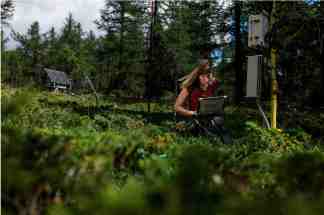
Biometeorologist Marta Galvagno at work

For most of winter and spring in 2022, Luigi Ferraris, a 58-year-old rice farmer from Mortara, a town in the Po valley, remained hopeful. Rainfall had been down 40% in the first six months of the year, and snow had accumulated thinly in the Alps, prompting an 88% drop in the amount of water coming to the Po River from snow-melt; flow in the river and its connected canals was at a historic low. Continue reading

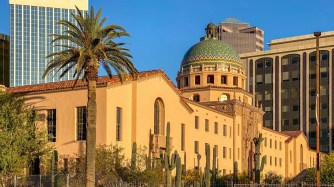
Arizona Youth Climate Coalition

(Photo credit: kevin dooley / CC BY 2.0)

Thanks to Yale Climate Connections for this:

High schoolers helped develop Tuscon’s climate action plan

They may not be able to vote yet, but they’re already having an influence.

In the past few years, young people have made headlines with their fight against climate change. Continue reading

Capturing Carbon In Trillions Of Tons Of Soil

Thanks to Yale Climate Connections for sharing Max Graham’s article at Grist:

How much carbon can farmers store in their soil? Nobody’s sure.

Advocates say the long-awaited farm bill could help fix that.

Dirt, it turns out, isn’t just worm poop. It’s also a humongous receptacle of carbon, some 2.5 trillion tons of it — three times more than all the carbon in the atmosphere. Continue reading

A Century’s Evidence On The Benefits Of Planting Trees

People work to reforest Allegheny National Forest in Pennsylvania circa 1934.
Photograph: Universal History Archive/Universal Images Group via Getty Images

Planting trees, we have noted, is smart policy.  Some campaigns may have stretched beyond scientific evidence, but science has given us plenty to go on:

Very cool: trees stalling effects of global heating in eastern US, study finds

Vast reforestation a major reason for ‘warming hole’ across parts of US where temperatures have flatlined or cooled

Civilian Conservation Corps workers plant 15,000,000 trees across the wastelands of southern Mississippi on 11 April 1940. They are part of the United Forest Service which will re-establish forests destroyed by logging and lumbering operations decades ago. Photograph: AP

Trees provide innumerable benefits to the world, from food to shelter to oxygen, but researchers have now found their dramatic rebound in the eastern US has delivered a further, stunning feat – the curtailing of the soaring temperatures caused by the climate crisis.

While the US, like the rest of the world, has heated up since industrial times due to the burning of fossil fuels, scientists have long been puzzled by a so-called “warming hole” over parts of the US south-east where temperatures have flatlined, or even cooled, despite the unmistakable broader warming trend. Continue reading

Carbon Clean 200’s Performance Update Report

A press release for this report above summarizes the findings:

Carbon Clean 200 Companies Outperform Dirty Energy by 39%

The 11th cohort of global Clean200 leaves dirty energy investments in the dust

As You Sow and Corporate Knights today released their 11th update of the Carbon Clean200™, a list of 200 publicly traded companies worldwide leading the way among global peers to a clean energy present and future. These companies generated almost double the returns of the main fossil fuel index from July 1, 2016, to January 15, 2024, despite geopolitical tensions that have favored fossil fuel stocks in the past two years. Continue reading

Pause On Terminals for LNG Export

Activists protest against fossil fuels and in particular fracking and liquefied natural gas, or LNG, on day eight of the UNFCCC COP28 Climate Conference at Expo City Dubai on December 8, 2023, in Dubai, United Arab Emirates. (Photo by Sean Gallup/Getty Images)

The news was hailed weeks ago as a big deal. Yale Climate Connections takes the proclomation a step further:

Why Biden’s pause on new LNG export terminals is a BFD

The administration’s move puts a spotlight on a potent climate-warming gas: methane, the main ingredient in natural gas.

Natural gas has long been touted as a “bridge fuel” to a clean energy future that gets all its power from renewable sources like wind, solar, and geothermal power. Continue reading

The Last Fire Season, Reviewed

Fire and its suppression are topics we are never quite sure about. Scientifically, there may be a correct answer. But this personal account sounds worthy of consideration as well.  This book review by Casey Schwartz in The Atlantic makes a compelling case:

Living Through the End of California
In a new book, Manjula Martin faces up to the way the altered environment of her home state will change her life forever.

In his 1998 book, Ecology of Fear, Mike Davis, the late California muckraker and self-proclaimed Marxist environmentalist, made the case for “letting Malibu burn.” Continue reading

Melipona Bees, A Peruvian Wonder

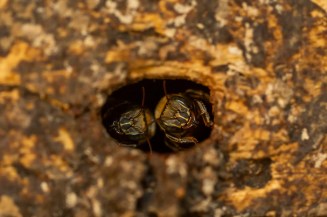
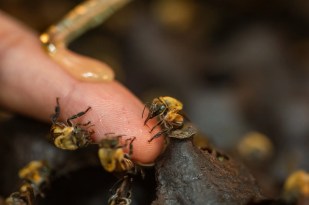
Melipona eburnea, a species of bee, is native to the Amazon. Unlike the more familiar but invasive honey bees from Africa and Europe that have spread through the Americas, these bees don’t sting. Ana Elisa Sotelo for National Geographic

The countless wonders of bees, as well as the many problems they now face, have made Melipona bees, also known as stingless bees, of particular interest to our daily scan for news stories:

Native to the tropics, these pollinators are taking a lead role in one of the latest efforts to conserve the Amazon rainforest.

Investing Patagonia’s Proceeds In Conservation

Greg Curtis, the former deputy general counsel of Patagonia, is responsible for giving away huge sums of money to causes that are aligned with Patagonia’s history of environmental activism. Adam Amengual for The New York Times

When news broke about the company’s future, we were in awe; since then we heard little so this is a welcome update:

Patagonia’s Profits Are Funding Conservation — and Politics

$71 million of the clothing company’s earnings have been used since September 2022 to fund wildlife restoration, dam removal and Democratic groups.

A little more than $3 million to block a proposed mine in Alaska. Another $3 million to conserve land in Chile and Argentina. And $1 million to help elect Democrats around the country, including $200,000 to a super PAC this month.

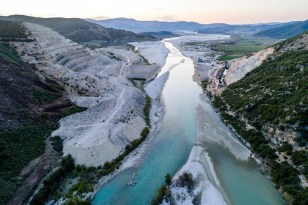
The site of the Kalivac Dam on the Vjosa River in Albania, where Holdfast has funded a major conservation project. Andrew Burr/Patagonia

Patagonia, the outdoor apparel brand, is funneling its profits to an array of groups working on everything from dam removal to voter registration.

In total, a network of nonprofit organizations linked to the company has distributed more than $71 million since September 2022, according to publicly available tax filings and internal documents reviewed by The Times. Continue reading

Renewables Outpacing Demand In Scotland

A wind farm in rural Scotland. THE SCOTTISH GOVERNMENT

Not exactly manatee charisma, but another ray of sunshine from a place we have been cheering from a distance for a few years now:

Scotland’s Renewable Output More Than 100 Percent of Demand

For the first time, in 2022, Scottish renewables generated more power than the country used, new government figures show.

The growth of wind power, coupled with a small drop in electricity consumption, meant that the volume of electricity produced by renewables in Scotland was equal to 113 percent of demand. Continue reading

Hydrogen & Us

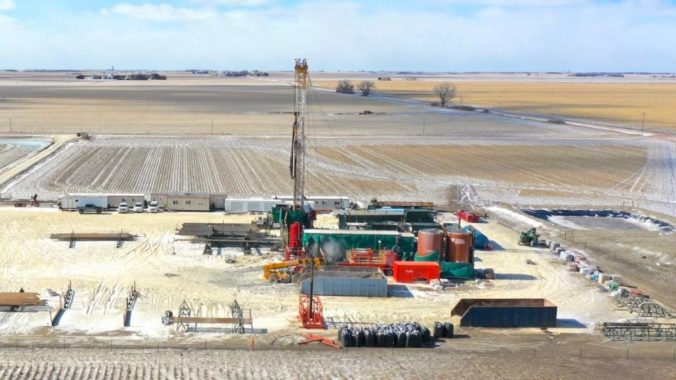
A hydrogen drilling facility in Nebraska. NATURAL HYDROGEN ENERGY

Thanks to Fred Pearce, as always, for making the complex more comprehensible; and to Yale e360′s contribution to our continuous learning:

Natural Hydrogen: A Potential Clean Energy Source Beneath Our Feet

As studies show far more natural hydrogen underground than believed, well-funded efforts to drill for the gas are underway around the globe. Boosters see a plentiful green replacement for fossil fuels, but skeptics say its large-scale use may not be practical or cost-effective.

A remote community of mud huts and corrugated iron roofs in the arid savannah of West Africa could be a trailblazer for a new form of carbon-free energy. Continue reading