Stromatolites & You

screen-shot-2016-10-09-at-10-29-39-am

We humans are part of a very tiny slice of history, whereas in Western Australia we can have a glimpse at a big slice of history. It is humbling, and at the same time inspiring. As good science journalism should be. We are not too proud to admit that these had completely escaped our attention until just now:

The natural wonder that holds the key to the origins of life – and warns of its destruction

Stromatolite-building bacteria once ruled the Earth, then changed its climate so much they nearly became extinct. Michael Slezak visits the world’s largest surviving colony in Hamelin pool, Western Australia

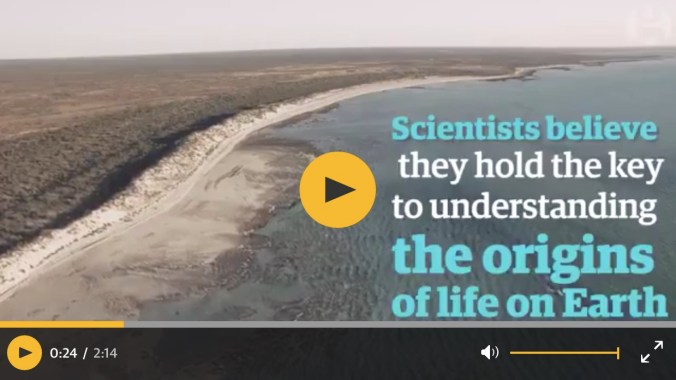
Just shy of the westernmost tip of the Australian continent lies a pool that provides an unparalleled window into the origins of life on Earth. In its warm, briny waters a biological process takes place that began just as the continents were starting to form.

It is this very process that made the abundance of life on the planet possible and studying it today promises insights into how life began as well as what the Earth was like 3.7bn years ago. Continue reading
Absurdity In Vivid, Brilliant Living Color

05porter-master768

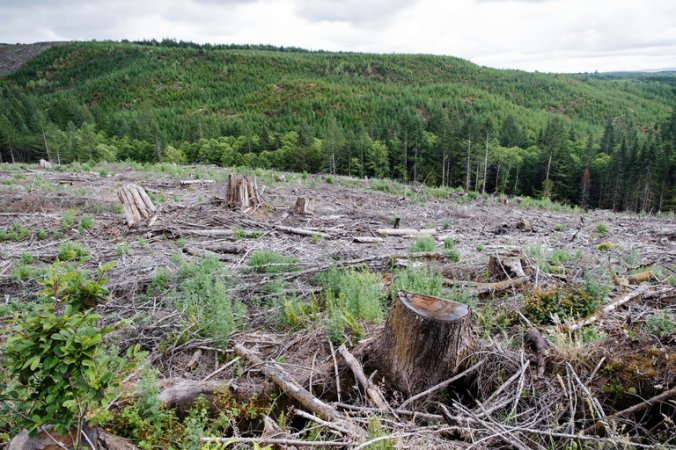
Clear-cutting along Highway 30 in Oregon. A bipartisan group of senators wants the government to assume that burning forests to generate electricity does not add carbon dioxide to the air but is instead “carbon neutral.” Credit Leah Nash for The New York Times

We have stayed away from politics as much as possible on this platform, except to celebrate innovative successes in the interest of conservation; but this news item is a must-share due to the gravity of its weirdness:

Next ‘Renewable Energy’: Burning Forests, if Senators Get Their Way

Eduardo Porter

President Obama’s Clean Power Plan — the central plank in his strategy to combat climate change — is in danger.

It’s not just that it is under attack in court, where its legality was challenged last week by a coalition of 28 states and scores of companies and industry groups. Or that fossil fuel interests and Republicans in Congress will keep trying to block it, whatever the courts decide.

The president’s plan to reduce emissions of heat-trapping carbon dioxide from the nation’s power sector could be undone within a matter of weeks by an unlikely bipartisan collection of senators that includes staunch Republican climate change deniers as well as Democrats who support the administration’s strategy. Continue reading

Coal Mining, Climate Change & Entrepreneurial Conservation

coal-jp1-superjumbo

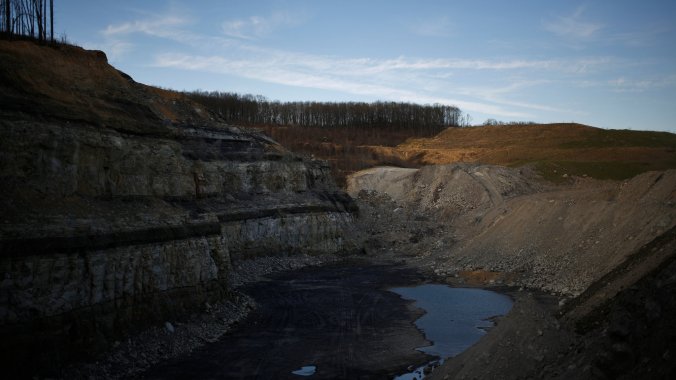
Reclamation crews fill in rock highwalls like this one, creating flat land that Tom Clarke intends to reforest as a way to trap and hold carbon dioxide. Credit Luke Sharrett for The New York Times

We had to read it to believe it:

A Curious Plan to Fight Climate Change: Buy Mines, Sell Coal

Tom Clarke, a nursing home owner, concocted a strategy to cut carbon emissions by gaining control of millions of tons of coal reserves and multiple mines.

FAIRVIEW, W.Va. — The coal was piled about as high as it could go, spilling down to the railroad tracks and towering over the elevator shaft. A yellow bulldozer pushed the mound to make room for more. From a distance on this rainy day, the black heap looked like a giant whale about to swallow the mine whole.

The word underground was that Federal mine No. 2 would soon have to close. It was early April, and the mine was running out of storage space. There were not enough buyers for all the coal. Continue reading

Perspective On The Ages

ages_custom-9ff69ab35ab626c9478bbdca45cef0f576c4797a-s1100-c85

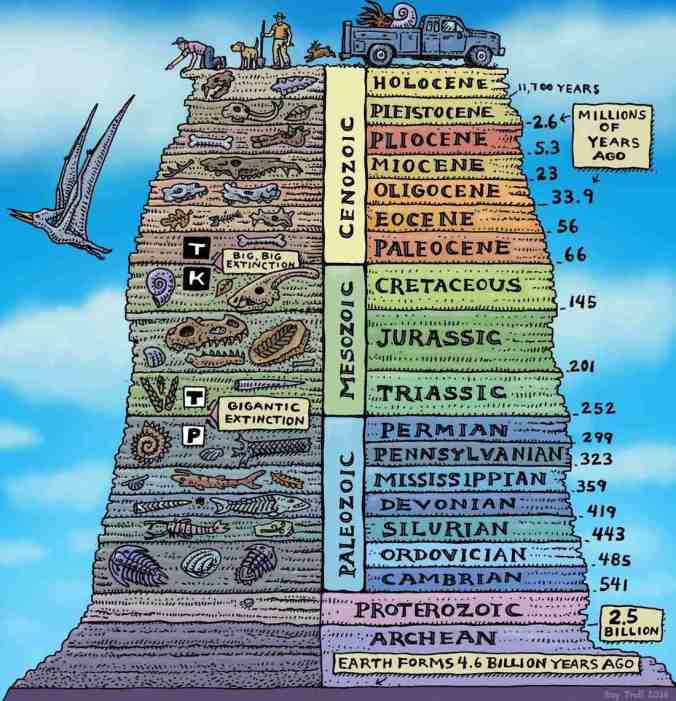
The Geologic History of Earth. Note the timescales. We are currently in the Holocene, which has been warm and moist and a great time to grow human civilization. But the activity of civilization is now pushing the planet into a new epoch which scientists call the Anthropocene. Ray Troll/Troll Art

Big words in the title may distract from the excellent point of this “cosmos & culture” article at National Public Radio (USA), worth a read:

Climate Change And The Astrobiology Of The Anthropocene

You can’t solve a problem until you understand it. When it comes to climate change, on a fundamental level we don’t really understand the problem.

For some time now, I’ve been writing about the need to broaden our thinking about climate. That includes our role in changing it — and the profound challenges those changes pose to our rightly cherished “project” of civilization. Continue reading

Bill McKibben On Oil, Banks & Solidarity With A Just Cause

screen-shot-2016-09-28-at-2-50-55-pmFighting Big Oil and Big Banks to Save Sacred Lands, Precious Water and Unraveling Climate
Bill McKibben

Most Americans live far from the path of the Dakota Access Pipeline—they won’t be able to visit the encampments on the Standing Rock Sioux reservation where representatives of more than 200 tribes have come together in the most dramatic show of force of this environmental moment. They won’t be able to participate in the daily nonviolent battle along the Missouri River against a $3.7 billion infrastructure project that threatens precious water and myriad sacred sites, not to mention the planet’s unraveling climate. Continue reading

Magnificent Ecological Services From Modest Parcels Of Trees

27FOREST1-superJumbo.jpg

Eve Lonnquist examining trees on her property with Logan Sander, a consulting forester. Credit Leah Nash for The New York Times

An excellent article, whose title says it all, in the Science section of the New York Times this week:

How Small Forests Can Help Save the Planet

By

BIRKENFELD, Ore. — Eve Lonnquist’s family has owned a forest in the mountains of northwest Oregon since her grandmother bought the land in 1919. Her 95-year-old father still lives on the 157-acre property. And she and her wife often drive up from their home just outside Portland.

But lately, Ms. Lonnquist, 59 and recently retired, has been thinking about the future of her family’s land. Like many small-forest owners, they draw some income from logging and would like to keep doing so. But they would also like to see the forest, with its stands of Douglas fir, alder and cherry, protected from clear-cutting or being sold off to developers. Continue reading

Carbon-Calculated Menu Planning

co2emmissionsmeal

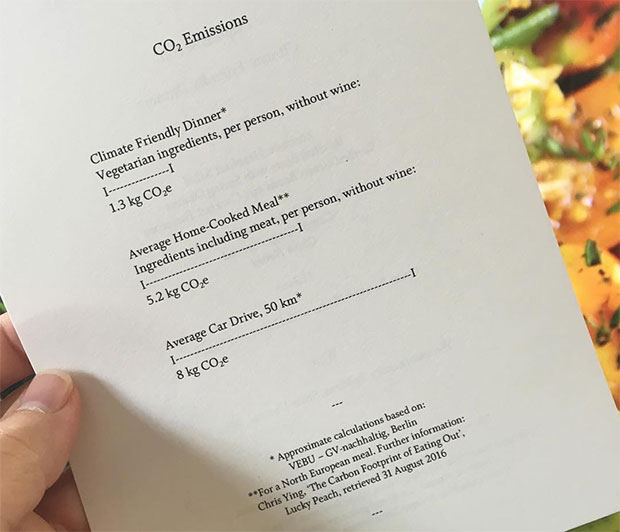
The menu from Studio Olafur Eliasson’s dinner for the Climate Museum’s Miranda Massie. Image courtesy of the artist’s Instagram

From the folks at Phaidon, news of a top artist’s contribution to the climate change conversation, in a manner we can kind of relate to:

Olafur Eliasson puts carbon on the menu

When Eliasson’s studio cooked a meal for NYC’s Climate Museum director it listed one additional ingredient.

The artist Olafur Eliasson is on the board of the Climate Museum, a US institution which endeavours to use the sciences, art, and design to inspire dialogue and innovation that address the challenges of climate change. The museum hasn’t been built, yet Eliasson has submitted a few concept sketches, picturing a globular structure that should, someday soon hopefully stand in New York City. Continue reading

How Cities Can Adapt to New High Temperatures

A community-gardening and forestry organization called Louisville Grows has planted city-hardy tree species on private land, churchyards, roadways, and curb strips to help the city cool its heat island. Photograph by Mark Peterson / Redux

We already know that climate change is no longer something to be concerned about for the future, but rather a very present danger. There are ways they can adapt, and part of that involves becoming more sustainable, as some are already doing. But one thing we hadn’t learned much about until now is the impact of increasing heat on the urban environment. Madeline Ostrander writes:

Katy Schneider, the former deputy mayor of Louisville, Kentucky, lives near Eastern Parkway, which forms one strand of her city’s necklace of green. Spending time on the leafy boulevard can make Louisville seem deceptively lush and shady, even when midsummer heat bakes the downtown. But about five years ago, Schneider was surprised to learn that the city had a shortage of trees. In the spring of 2011, students at the University of Louisville surveyed the local canopy and found that it had about thirteen per cent fewer trees than the average for metropolitan areas in the region.

Continue reading

The Future Of Coffee Matters To Us For More Than One Reason

3000

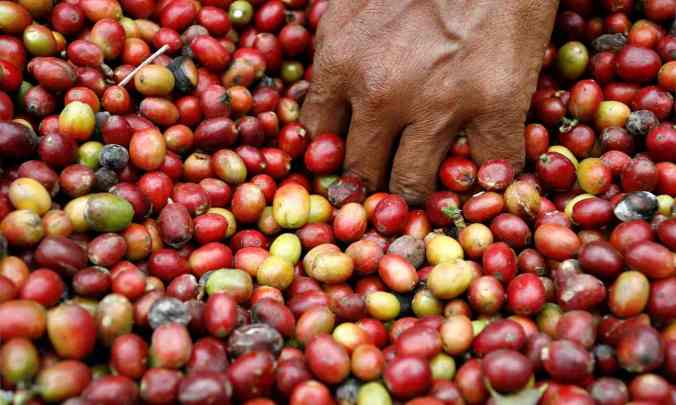
A farmer with coffee cherries from his latest crop, the seeds of which are roasted, ground and brewed to make coffee. Photograph: YT Haryono/Reuters

We work in several countries where coffee production is important to the national economy. We serve coffee in every property we have ever managed. Many of us working in La Paz Group are coffee junkies.

But more than that, as I have mentioned at least once in these pages, we care extra deeply about the future of coffee because on one of the properties we manage, some excellent arabica estate coffee is growing in the shade of a rainforest canopy. I owe you more on that topic. For now, what has my attention is ensuring the long run sustainability of this organic coffee production.

So you can be sure of where some of our team members will be next Tuesday. Join us if you can:

Climate change is threatening the world’s coffee supplies: what can we do? – live chat

Join us on this page on Tuesday 20 September, 2-3pm (BST), to debate the future of coffee, and the millions who depend on it, in the face of climate change

What we’ll be discussing Continue reading

Beware The Compost

veggiegarden_cropped-680x450

Image credit: US Department of Agriculture via Flickr

Thanks to Conservation for their tireless effort to review important science and summarize it for we, the less scientifically-trained folk:

HOME-GROWN VEGGIES CAN FIGHT CLIMATE CHANGE—BUT BEWARE THE COMPOST PILE

Vegetables grown in home gardens are associated with lower greenhouse gas emissions than vegetables bought at the store, according to a study by researchers at the University of California, Santa Barbara. Home gardening reduces emissions by about 2 kilograms for every kilogram of produce, they report in the journal Landscape and Urban Planning.

The study is the first to show that gardening could make a meaningful contribution to helping cities and states meet their emissions reductions targets. Continue reading

One Step Forward, Slip Sliding Away

Aerial view of the Thelon River and forest landscape of Canada's far northern Thelon Game Sanctuary. The refuge is the largest and most remote game sanctuary in North America. For the Akaitcho Dene people, the Upper Thelon River is "the place where God

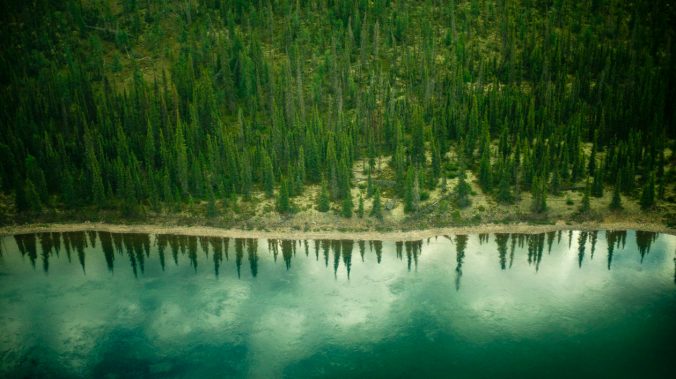
Aerial view of the Thelon River and forest landscape of Canada’s far northern Thelon Game Sanctuary. The refuge is the largest and most remote game sanctuary in North America. For the Akaitcho Dene people, the Upper Thelon River is “the place where God began.” In 2011 The Nature Conservancy’s lead scientist Sanjayan and Canada program director Dr. Richard Jeo went on an expedition through through this pristine area with young members of the Dene First Nation. They traveled by canoe along the Thelon River ending in North America’s largest and most remote wildlife refuge, the Thelon Game Sanctuary. This photograph is from that trip. PHOTO CREDIT: © Ami Vitale

Thanks to Cool Green Science, the conservation science blog of The Nature Conservancy, for this sobering update on the state of affairs of meeting conservation targets (um, those related to whether or not this planet will be one our future generations will be able to live on):

Global Wilderness Areas in Decline Despite Conservation Targets

BY JUSTINE E. HAUSHEER

Conservation today operates in a world of targets: Protect 17 percent of terrestrial systems and 10 percent of marine systems by 2020; keep global climate change below 1.5 degrees Celsius by 2100; halve the rate of natural habitat loss.

But despite widespread adoption of protected area targets, wilderness areas are still declining rapidly across the globe. Now, new research shows that 9.6 percent of all global wilderness has disappeared in the last 20 years. Continue reading

From A Favorite Trouble-Maker

591.jpg

‘We see the effects of warming on land: the floods, the droughts, the refugees headed towards temporary safety.’ Photograph: Malcolm Francis/NIWA

Please click here so that credit goes to the source for this editorial by one of the thinkers we regularly turn to, one of our favorite sources of reminder to take action:

So, just as a refresher, it’s always good to remember that we live on an ocean planet. Most of the Earth’s surface is salt water, studded with the large islands we call continents.

It’s worth recalling this small fact – which can slip our minds, since we humans congregate on the patches of dry ground – because new data shows just how profoundly we’re messing with those seven seas. The International Union for the Conservation of Nature has published an extensive study concluding that the runaway heating of the oceans is “the greatest hidden challenge of our generation”. Continue reading

The Adapters to Climate Change

field-notes-bangladesh-adapt-676-1

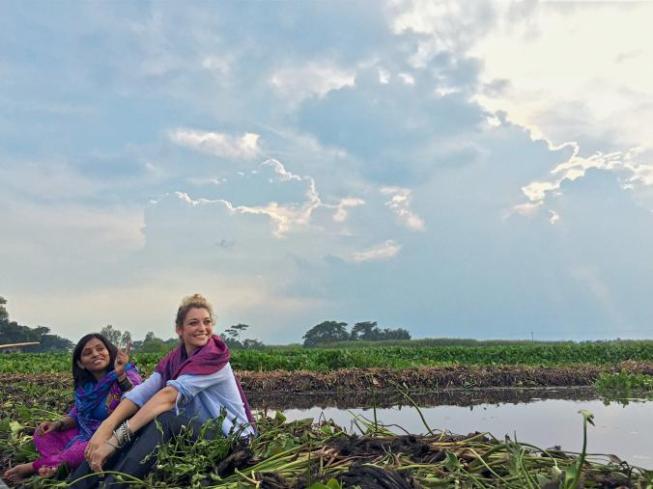
Bouyant fields made of plants and manure can support crops in Bangladesh. Source: National Geographic

Climate change is a tough reality, but in spite of its devastating impacts on the natural environment, there are people who are drawing from their ingenuity to find alternative farming methods in the affected surroundings. Alezé Carrère, a National Geographic grantee, is on a journey to study the people and communities that are adapting to climate change, and she and a film crew are documenting cases into a video series called Adaptation.

[In 2012 Carrère] learned of a group of farmers in Madagascar who were figuring out how to farm in fields eroded by deforestation and heavy rains. Instead of depending on development aid to reforest washed-out areas, the farmers adapted. Soon they began to prefer farming in the eroded gullies, which became rich with water and nutrients.

Continue reading

The Arctic Struggles

p043qgl8

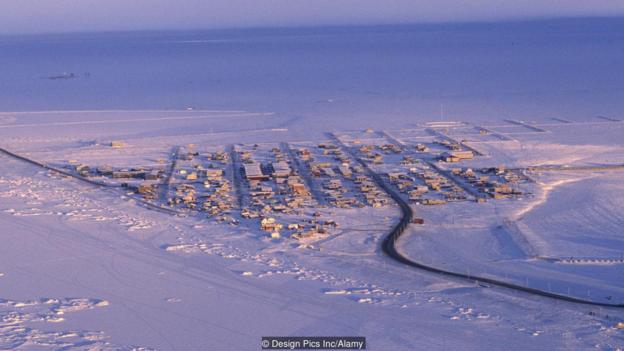
Barrow, Alaska. All photos from: BBC Earth

There is plenty of news on the alarming reduction of polar ice caps and the detrimental effect it has on polar bear populations. However, there is another, hidden problem that is hurting a different community just as much as these giant bears, and it is affecting the humans living in the northernmost town in the United States: Barrow, Alaska.

The big unspoken worry in the north is that large deposits of chemical pollutants are trapped within the ice.

For decades that was not a problem. But now rising temperatures are causing the ice to melt faster than ever. The area of summer sea ice has shrunk by 10% per decade since 1979, and in May 2016 the ice extent was the smallest in 38 years.

That means trapped chemicals like polychlorinated biphenyls (PCBs) are escaping and infecting animals like seals, the prey of choice for everything from polar bears to people.

Many of these chemicals have been banned for decades. They have been confined deep in the ice all this time and are perfectly preserved, like the sap-stuck mosquitos in Jurassic Park.

A study published in 2015 followed subsistence hunts from 1987 to 2007 and found significant amounts of PCBs in the internal organs and blubber of locally-harvested seals. The researchers concluded that, while levels of older banned contaminants are dropping, modern pollutants are rising.

That is problematic, because native Alaskans’ diets are largely comprised of seal.

Continue reading

Conservationists and Climate Change

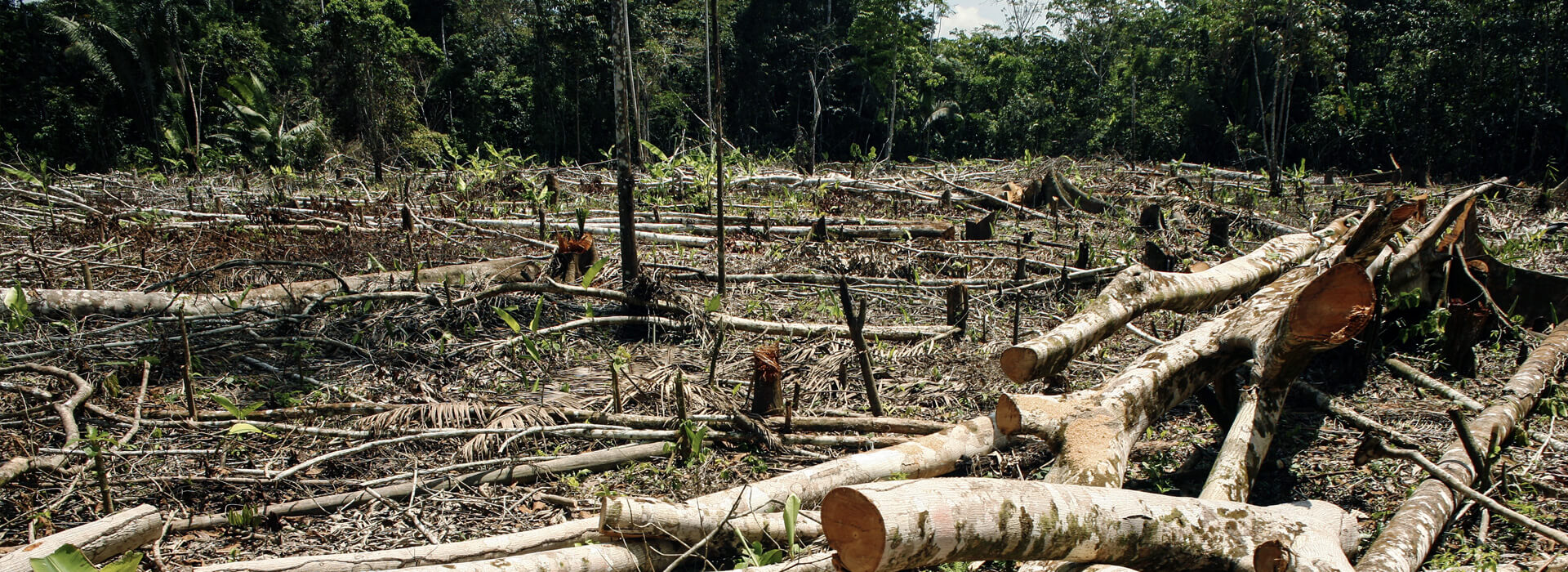
Deforestation in Peru, photo via the American Bird Conservancy’s habitat loss webpage

Almost two weeks ago, we shared a story from Conservation Magazine that covered a recent discussion piece published in the academic journal Biological Conservation, which was titled, “From biodiversity-based conservation to an ethic of bio-proportionality.” The author argued that the word ‘biodiversity’ limited conservationists to too small a goal in policy changes; in her opinion, ‘bioproportionality’ would be a better baseline. Today, we consider another contrasting view on conservation and what it should focus on when biodiversity is threatened, this time sourced from a commentary article in Nature, and covered by environmental writer Michelle Nijhuis for the New Yorker:

In January of this year, James Watson, an Australian scientist who works for the Wildlife Conservation Society, noticed an image that had been tweeted by a friend of his, a physician in Sydney. With a chain of progressively larger circles, it illustrated the relative frequency of causes of death among Australians, from the vanishingly rare (war, pregnancy and birth, murder) to the extremely common (respiratory disorders, cancer, heart disease). It was a simple but striking depiction of comparative risk. “I thought, ‘Why hasn’t anyone done something like this for the rest of nature?’ ” Watson recalled.

Continue reading

Bill McKibben Deserves Better

07mckibbenSUB-master768.jpg

We frequently have linked to articles about, and to messages by, this man whenever we see them. It is not surprising to read this, but it is important that we are all aware of this additional price he pays for the actions he takes on behalf of the environment:

MIDDLEBURY, Vt. — THERE are shameful photos of me on the internet.

In one series, my groceries are being packed into plastic bags, as I’d forgotten to bring cloth ones. In other shots, I am getting in and out of … cars. There are video snippets of me giving talks, or standing on the street. Sometimes I see the cameraman, sometimes I don’t. The images are often posted to Twitter, reminders that I’m being watched.

In April, Politico and The Hill reported that America Rising Squared, an arm of the Republican opposition research group America Rising, had decided to go after me and Tom Steyer, another prominent environmentalist, with a campaign on a scale previously reserved for presidential candidates. Using what The Hill called “an unprecedented amount of effort and money,” the group, its executive director said, was seeking to demonstrate our “epic hypocrisy and extreme positions.” Continue reading

Climate Change Deniers Meet Their Match

Oreskes.jpg

Naomi Oreskes. Photograph by Stephanie Mitchell/Harvard Public Affairs and Communications

Thanks to Harvard Magazine for this interview that puts into perspective how science writers can best serve the interest of accurate information about climate change:

Naomi Oreskes on How to Write about Science

HISTORY OF SCIENCE professor Naomi Oreskes talks about climate change the way one might expect of both an earth scientist and a historian. “Science has to be part of the conversation on climate change,” she says, “but it’s not the whole conversation. At this time, I actually don’t think it’s the most important piece. There’s a basic issue of justice here, and we desperately need economists and sociologists and philosophers and artists to be heard.” Her humanist instincts allow her to move a wide audience in a way most scientists never achieve. Her work has helped broaden the public’s acceptance of climate change as an issue of scientific consensus rather than debate, and for taking up this public mantle of climate change advocacy, she will be honored with the Schneider Award for Outstanding Climate Science Communication this winter. Oreskes recently talked to Harvard Magazine about the climate-denial industry, the political role of scientists, and writing about academic research for a wide audience. Continue reading

“Watermelon Snow” = “Black and Bloom” = Melting Ice

Photo via blackandbloom.org

The last time we mentioned Greenland and melting ice sheets it wasn’t good news either; it rarely is. But any new research that can analyze how ice is melting faster than it could be is also helping figure out how we might reduce that rate of ice loss and ocean level rise. Alexandra Witze reports on algae and Arctic ice sheets:

Researchers are fanning out across the Greenland ice sheet this month to explore a crucial, but overlooked, influence on its future: red, green and brown-coloured algal blooms. These darken the snow and ice, causing it to absorb more sunlight and melt faster.

The £3-million (US$4-million) Black and Bloom project aims to measure how algae are changing how much sunlight Greenland’s ice sheet bounces back into space. “We want to get a handle on just how much of the darkness is due to microbes and how much to other physical factors”, such as soot or mineral dust, says Martyn Tranter, a biogeochemist at the University of Bristol, UK, and the project’s principal investigator.

Continue reading

Largest Lithium-ion Storage Battery for L.A.

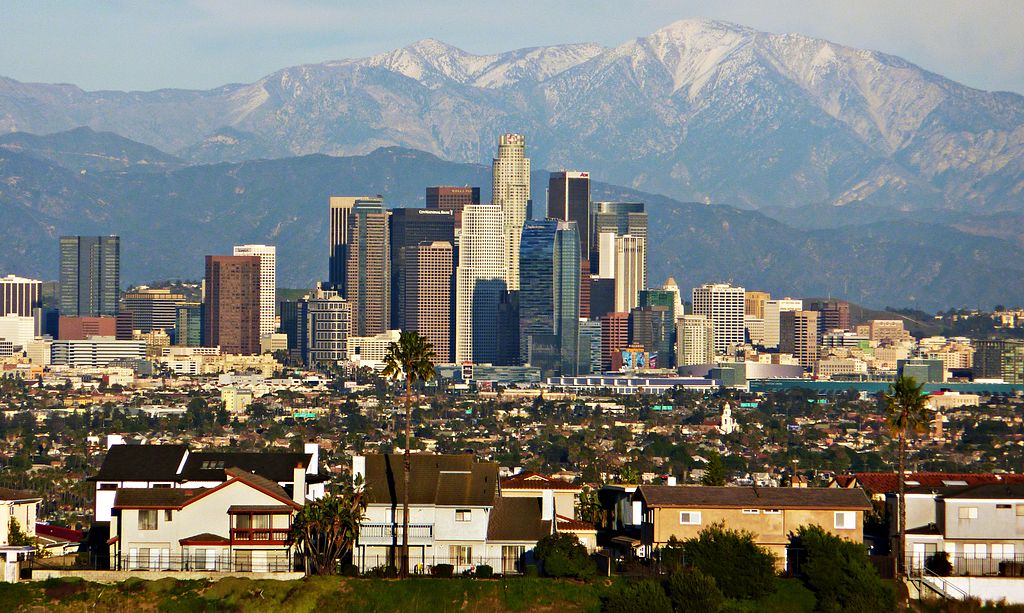
Downtown Los Angeles and the San Gabriel Mountains via Wikimedia Commons

Our posts about solar power normally include some mention of the batteries involved, since that’s where the electricity is stored for actual domestic or commercial use. Lithium-ion batteries in particular are some of the more powerful ones on the market, but sustainable options are on our radar too. This week, we learned about the proposal for a set of over 18,000 lithium-ion batteries to be put together as a super-battery in Los Angeles to meet peak demand. John Fialka reports for Scientific American:

By 2021, electricity use in the west Los Angeles area may be in for a climate change-fighting evolution.

For many years, the tradition has been that on midsummer afternoons, engineers will turn on what they call a “peaker,” a natural gas-burning power plant In Long Beach. It is needed to help the area’s other power plants meet the day’s peak electricity consumption. Thus, as air conditioners max out and people arriving home from work turn on their televisions and other appliances, the juice will be there.

Continue reading

Biomass Reconsidered

biomass-b235a828247f79eff9f6f0d3846599d44ae6b453-s1400-c85

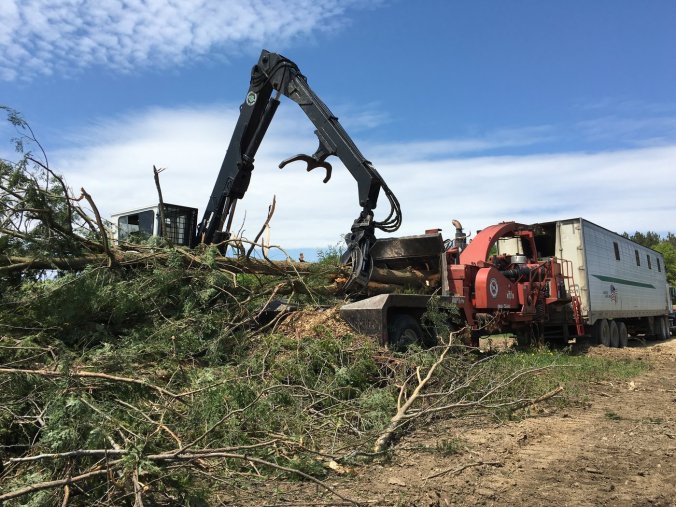
Logger Greg Hemmerich and his crew feed low-value trees into a wood chipper, before bringing the chips to ReEnergy Holdings’ biomass plant in Lyonsdale, N.Y. David Sommerstein/NCPR

Thanks to National Public Radio (USA) for this:

Is Burning Trees Still Green? Some Experts Now Question Biomass

by DAVID SOMMERSTEIN

In northern New York state, logger Greg Hemmerich and his crew are clearing out an old pasture at the edge of a forest.

“There’s a lot of balsam, lot of spruce, thorn apple trees,” Hemmerich says. “Ninety percent of this lot is low-grade wood.”

In other words, it’s no good for furniture or paper or sawmills. But he’ll make $80,000 to run the wood through a chipper and truck the chips to a nearby biomass plant.

“Everybody said that green power was supposed to be the wave of the future,” Hemmerich says. “So I went full in.” Continue reading