Conversation, Conservation, Controversy

We have recommended more conversation, and we mean all kinds, including the occasional heated debate. When it comes to the subject of climate change, we do not feel obliged to air the views of big-moneyed propagators of denial.  When it comes to potential solutions to slow the acceleration of climate change, or mitigate its impact, or such reasonable areas of debate, the doors are wide open, topically speaking.

We hope to learn from citizen scientists, research scientists and practitioners alike so we can become better informed and make better judgements on this complex topic. Take a look at the wording of this memo from the “Sierra Club Grazing Core Team” to Sierra Club staff and volunteers “(particularly those involved with sustainable-energy/climate-change campaigns, and commercial grazing on public lands)” before watching the TED talk above:

Summary

Recent widespread interest in Holistic Management (HM), primarily stemming from Allan Savory’s presentation at the February 2013 Long Beach, CA, TED conference, makes it important that Club members and staff be consistent in their response to calls for application of HM. Savory has received considerable attention for his claim that application of HM to husbandry of ungulate livestock (typically cattle) in the world’s grasslands could sequester sufficient atmospheric carbon to reduce atmospheric carbon concentrations to pre-industrial levels. The Sierra Club’s Grazing Core Team urges the Sierra Club to reject HM as a tactic to reverse climate change for the following reasons: Continue reading
Keystone XL Just Got More Interesting

Photograph by Chip Somodevilla/Getty.

Photograph by Chip Somodevilla/Getty.

We stay away from politics as much as possible, but on occasion it is a topic we cannot avoid if we want to stay tuned to important environmental issues.  Keystone XL is one we have been following from various angles in the last year or so.  Here is some hopeful news about the future of this issue, especially if you know something about politics in the USA (click the image above to go to the source):

Shortly after the 2012 election, John Podesta was invited to speak at a board meeting of the American Petroleum Institute. Podesta is an outspoken environmentalist who served as Bill Clinton’s White House chief of staff and then founded the Center for American Progress, an influential liberal think tank. A.P.I. represents the interests of the oil-and-gas industry. Continue reading

Will We Ever Tire Of This? Probably Not

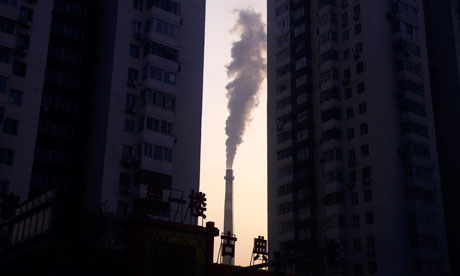
Oil, coal and gas companies are contributing to most carbon emissions, causing climate change and some are also funding denial campaigns. Photograph: David Gray/Reuters

Oil, coal and gas companies are contributing to most carbon emissions, causing climate change and some are also funding denial campaigns. Photograph: David Gray/Reuters

It bears repeating:

The climate crisis of the 21st century has been caused largely by just 90 companies, which between them produced nearly two-thirds of the greenhouse gas emissions generated since the dawning of the industrial age, new research suggests.

The companies range from investor-owned firms – household names such as Chevron, Exxon and BP – to state-owned and government-run firms.

The analysis, which was welcomed by the former vice-president Al Gore as a “crucial step forward” found that the vast majority of the firms were in the business of producing oil, gas or coal, found the analysis, which has been published in the journal Climatic Change. Continue reading

The Newest, Dismalest Branch Of Science

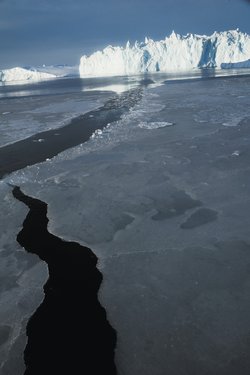
Stanley Greene/NOOR/Redux Greenland, photographed from a boat navigating the melt where dog sleds used to travel across the ice, October 2009

Stanley Greene/NOOR/Redux
Greenland, photographed from a boat navigating the melt where dog sleds used to travel across the ice, October 2009

We prefer the news about solutions to challenging problems. Preferably positive news. Preferably innovations that invoke smiles. Sometimes, dismal is the only way to move forward. Thanks to the New York Review of Books, and Paul Krugman for this review:

Forty years ago a brilliant young Yale economist named William Nordhaus published a landmark paper, “The Allocation of Energy Resources,” that opened new frontiers in economic analysis.1 Nordhaus argued that to think clearly about the economics of exhaustible resources like oil and coal, it was necessary to look far into the future, to assess their value as they become more scarce—and that this look into the future necessarily involved considering not just available resources and expected future economic growth, but likely future technologies as well. Moreover, he developed a method for incorporating all of this information—resource estimates, long-run economic forecasts, and engineers’ best guesses about the costs of future technologies—into a quantitative model of energy prices over the long term. Continue reading

Good Idea, So Go Out And Make Him Do It

After meeting with Obama, one activist felt challenged to make the case “why this pipeline is not in our country’s best interest.” Illustration by Paul Rogers.

After meeting with Obama, one activist felt challenged to make the case “why this pipeline is not in our country’s best interest.” Illustration by Paul Rogers.

Ryan Lizza, the New Yorker‘s Washington correspondent, published an article last month that explained the defining environmental of the current generation of US citizens, according to one of our heroes. The article is mostly about a wealthy, possibly powerful financier who our hero has influenced on this issue.  But it is also a good primer on the issue itself.  If you do not have time for the whole article, an even more efficient primer is this podcast interview with Lizza, late in which the activist’s challenge becomes mantra; but read the article if possible. Then, if you are a citizen of the USA, go make Obama do it:

On the day of his second Inauguration, in January, Barack Obama delivered an address of unabashed liberal ambition and promise. As recently as early April, before the realities of the world and the House of Representatives made themselves painfully evident, the President retained the confidence of a leader on the brink of enormous achievements. It seemed possible, even  Continue reading

The Big Thaw

2009 Jökulsárlón, Iceland. Destined to melt, an 800-pound chunk of ice glows in moonlight, from the National Geographic story “Meltdown.”

2009 Jökulsárlón, Iceland. Destined to melt, an 800-pound chunk of ice glows in moonlight, from the National Geographic story “Meltdown.”

On our pages we like to narrate stories, sometimes stories that people would rather not hear. If a “picture is worth a thousand words” then James Balog’s images for National Geographic tell a poignant narrative.

The pictorial language has the unique ability to penetrate the human heart and mind and photography has the power to alter the course of civilization through perception. My main subject has been the collision between human needs and nature, it’s always seemed to me that’s one of the pivotal issues of our moment in history Continue reading

A Hero’s Welcome On Familiar Ground

Stephanie Mitchell/Harvard Staff Photographer. “My goal is to bring at least some of you out of retirement and into a life of climate-change activism,” said Bill McKibben, who delivered the annual Robert C. Cobb Sr. Memorial Lecture, sponsored by the Harvard Institute for Learning in Retirement.

This article, about one of the activists we have favored in past posts more than once, is worth a spark to the imagination about the power that could be unleashed if he has captured the attention of his fellow alumni:

If you Google “Bill,” the first hit you get is the phrase “Bill me later.” It’s an accidental tribute to the writer-turned-activist whom everyone calls by his first name: Bill McKibben ’82, who spoke at Harvard Tuesday.

McKibben’s message for years has been that oil-based economies shelve the issue of the environmental costs of fossil fuels. When it comes to the natural systems that support humanity — clean air, fresh water, and pristine seas — the message from developing countries has been: Bill me later.

Well, the bill is due, McKibben said, and it may be too late to pay. Seas are rising, temperatures climbing, storms intensifying, and floods and droughts worsening because of fossil fuel emissions, a statement with a 95 percent chance of certainty, according to the Intergovernmental Panel on Climate Change, up from 66 percent in 2001. Continue reading

When The Going Gets Tough, Name Names

Bill McKibben is not likely to give up,  but you knew that already. Click the image above to go to the video and the new petition:

Petition to the WMO to name extreme storms after climate change deniers. Continue reading

Green Citizens, Green Consumers, Fear And Hope At The Aspen Ideas Festival

Thanks to James Fallows for referring this on his blog page on the Atlantic‘s website:

After a brief stage-business intro from me, the first 15 minutes or so are Harvey presenting an overview of how to think about carbon, coal, natural gas, electric grids, extreme weather, and other sources of problems and possibilities. The rest is our discussion, and questions from the audience.  Continue reading

Change In The Air

U.S. President Barack Obama wipes sweat off his face as he unveils his plan on climate change June 25, 2013 at Georgetown University in Washington, DC. President Obama laid out his plan to diminish carbon pollution and prepare the country for the impacts of climate change. (Photo by Alex Wong/Getty Images)

Thanks to Elizabeth Kolbert for a timely, pithy explanation of yesterday’s announcement of policy action in the USA:

Better late than never. This afternoon, speaking at Georgetown University, President Obama laid out what his aides had billed as a major initiative to fight climate change. The big news—which was not really news, since it had already been widely reported—was that the Administration will impose rules limiting carbon emissions from both new and existing power plants.

“For the sake of our children and the health and safety of all Americans, I’m directing the Environmental Protection Agency to put an end to the limitless dumping of carbon pollution from our power plants,” Obama said. This is, truly, a big deal. Power plants are responsible for about forty per cent of U.S. emissions. Continue reading

Harnessing The Sun To Study Climate Change On The High Seas

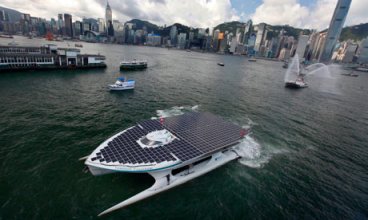
MS Türanor SolarPlanet will measure emissions in the open ocean. Photograph: Alex Hofford/EPA

MS Türanor SolarPlanet will measure emissions in the open ocean. Photograph: Alex Hofford/EPA

The Guardian is reporting on a floating phenomenon worth a look if you want to peer into the future of climate change science:

The solar-powered boat docked in Battery Park City in New York could easily have been packed off to a museum as a relic.

Continue reading

Documentaries : The Carbon Rush by Amy Miller

carbon rush credit Amy Miller

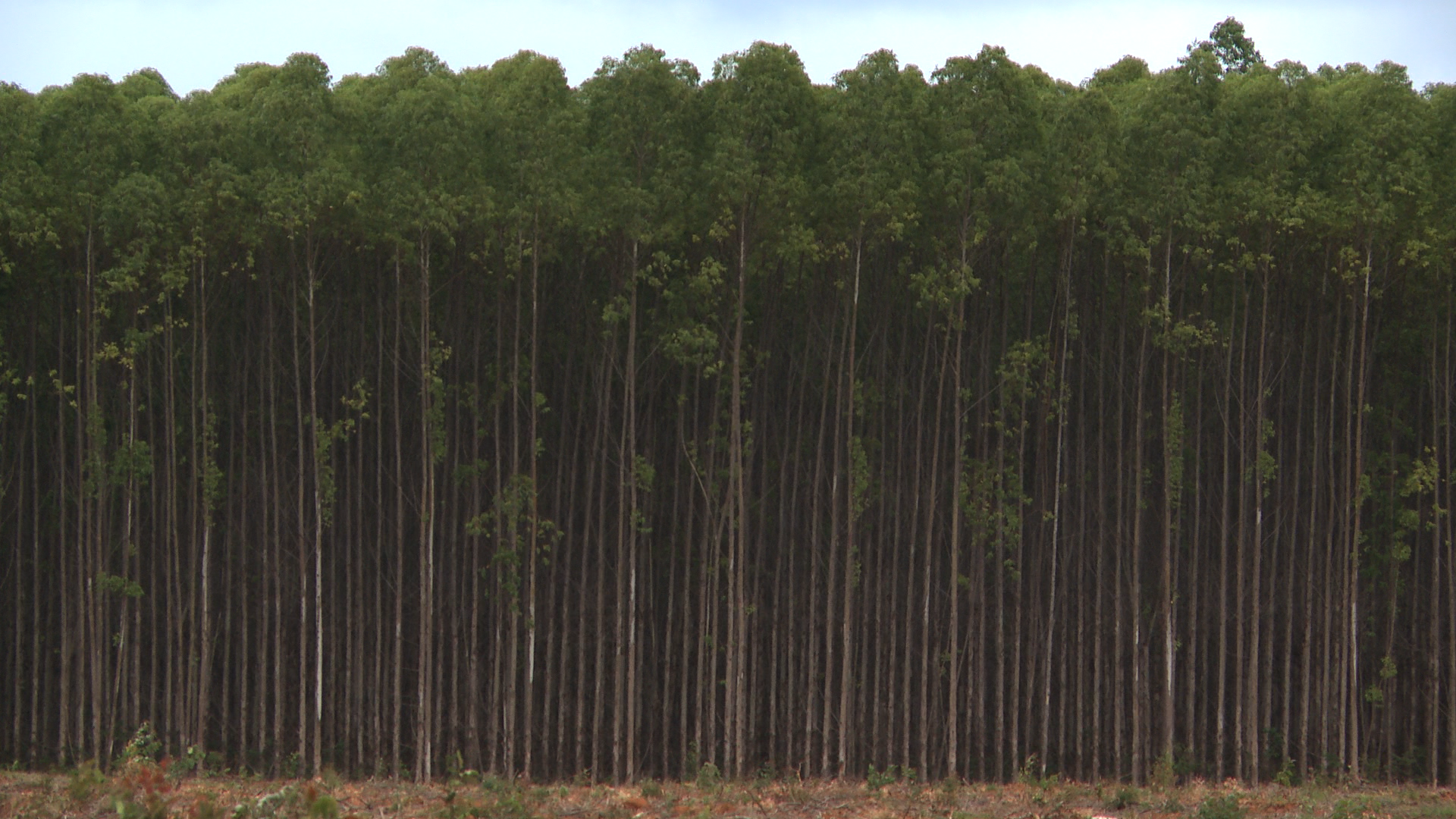
I am from Europe where since the Roman conquest forest and civilization were perceived as antagonistic. Silva, the forest, was wild and needed to be tamed, and ager, the man-made open space was culture. So when Western countries debate of reducing deforestation and planting trees to offset carbon emissions, you can bet they mean elsewhere.

We have shops where you can buy a wooden chair but in exchange you pay for a carbon offsetting voucher which will allow for trees to be planted somewhereThat’s the thinking behind the Clean Development Mechanism (CDM), which allows a country with an emission-reduction or emission-limitation commitment under the Kyoto Protocol to implement an emission-reduction project in developing countries. Director Amy Miller went around the world to meet the communities where some of those offsetting projects were implanted.  See the trailer after the jump.

Continue reading

Documentary: Shunte ki pao! (Are you listening), the life of a family of climate refugees in Bangladesh

Shunte ki pao (Are you listening) (c) Beginning Production

When introducing his documentary at the Paris International Documentary festival, Cinéma du Réel, director Kamar Ahmad Simon said to the audience: “Thank you for being here. I will be back at the end of the screening to discuss the film with you. I’d like to know your opinion and to answer any questions you may have, whether you liked the film or not, so I can go forward and progress.” If I had to sum up the response from the audience and jury it would be something like: “Please keep going. We’ll follow.”

Click here for the  trailer  of Shunte Ki Pao ! (Are you listening)

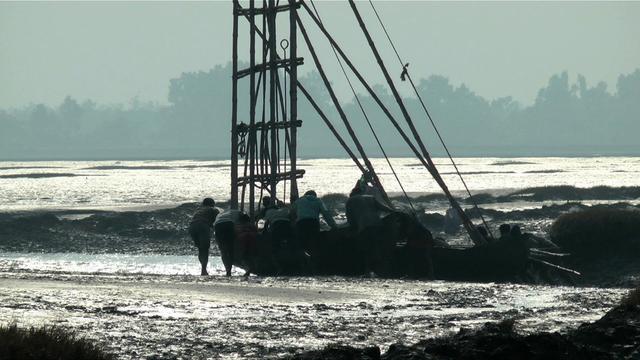
Rakhi and Soumen are a beautiful couple, they are young, in love and are the happy parents of little Rahul. You could say they have it all. That’s if their region of the coastal belts of Bangladesh had not been wiped out by the tidal in 2009. Rakhi and Soumen are climate refugees. A couple among  almost a million homeless, stranded under the open sky on an ancient dyke. They now live in a small village named Sutarkhali. Rakhi and Soumen were from the middle-class, today three years after the tidal, they buy fruits by the unit, fish for their meal and line-up on neverending queues for food aid. And life goes on.  Shunte Ki Pao ! (Are you listening) is not about disaster, it tells how people build a life afterwards. Continue reading

Climate Change Primer

In one of its last posts before dissolving, Green Blog has this interview that serves as an excellent primer on climate change:

Dieter Helm has long been frustrated that, despite more than two decades of international negotiations, the world has failed to tackle climate change. So he got angry, he said, and decided to write a book about it: “The Carbon Crunch: How We’re Getting Climate Change Wrong — and How to Fix It.” Continue reading

If You Happen To Be In Washington, DC

Protest

Click the image above to go to Sierra Club’s website for more information. At minimum it is a learning opportunity, a chance to participate or to just observe. Lend your presence and your voice:

Rally Speakers

  • Michael Brune; Sierra Club Executive Director
  • Bill McKibben; 350.org President, Scholar at Middlebury College
  • Continue reading

If Green Is The New Black, Perhaps Polar Bear Is The New Panda

Some polar bears may have to be placed in temporary holding compounds until it is cold enough for them to go back on to the sea ice, say scientists. Photograph: Paul Souders/Corbis

Some polar bears may have to be placed in temporary holding compounds until it is cold enough for them to go back on to the sea ice, say scientists. Photograph: Paul Souders/Corbis

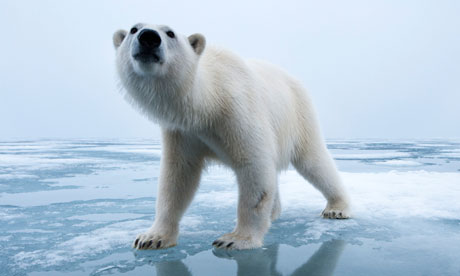
This story in the Guardian‘s Environment section, one of the longest stories that section has ever run, is worth the time to read.  It raises a kind of semi-doomsday scenario, and in the process heightens sensitivity to this particular magnificent charismatic megafauna.  Decades back, WWF leveraged the Panda into a strong iconic hot-button for the need of donations to conservation NGOs.  This article got us thinking whether the polar bear is now the hot button icon for increasing the sense of urgency needed to do something about climate change:

The day may soon come when some of the 19 polar bear populations in Canada, Alaska, Greenland, Norway, and Russia will have to be fed by humans in order to keep them alive during an extended ice-free season or prevent them from roaming into northern communities. Some bears may have to be placed in temporary holding compounds until it is cold enough for them to go back onto the sea ice. In worst-case scenarios, polar bears from southern regions may have to be relocated to more northerly climes that have sufficient sea ice cover. Continue reading

Metaphors For Understanding Climate Change

rovere-blog480

Justin Gillis/The New York Times. Alessio Rovere, a Columbia University researcher, examined an ancient shoreline deposit in Cape Agulhas, South Africa. Dunes moving inland ahead of a rising sea are believed to have buried trees at the site, with the decaying trunks producing the unusual features at center.

Thanks to Green Blog for linking to this article in the New York Times Science section on Tuesday:

In my article in Tuesday’s Science Times about the risks of long-term sea level rise, and in an accompanying podcast, I reported on the link between past instances of global warming, caused by natural fluctuations in the climate, and higher shorelines. Continue reading

Really, Whole Foods?

conscious capitalism_book cover

John Mackey has a new book out.  He is a visionary, no doubt.  He co-founded and co-leads a company we admire.  But he is not the sole shareholder in Whole Foods, and when he decides to be provocative, as he often does, the company’s reputation is at stake along with his own.  He claims not to be a climate change skeptic, but also says he does not believe we need to take any action because climate change is likely going to benefit humans.  Specifically, in an interview in the Guardian he says:

We’ve been in a gradual warming trend since the ending of the “Little Ice Age” in about 1870, and climate change is perfectly natural and not necessarily bad. Continue reading

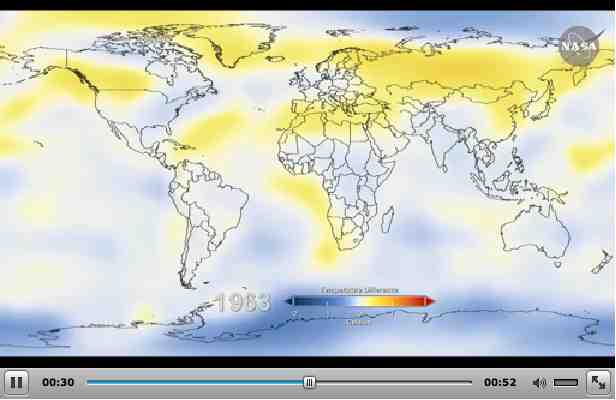
52 Seconds Of Silent, Strong Visual Representation Of Earth’s Temperature Since 1886

Nasa

Thanks to Atlantic’s coverage on this important topic, we have now this short but not very sweet visual message (click the image above to go to the video):

Whew! We did it! We didn’t have another warmest-year-on-record! Continue reading

Thoreau’s Flowers

orchid-blog480

Zoe Panchen. Earlier flowering times: the progression of Cypripedium acaule, the pink lady slipper orchid, on April 23, May 7 and May 20, 2010.


From Green Blog:

Henry David Thoreau was a peculiar fellow. After his secluded stint at Walden Pond, his fixation with the natural world only grew. Starting in 1852, his journal turned into a two million-word project documenting seasonal observations around his small Massachusetts township, Concord. Over the next six springs he could be seen racing about town like a madman in an effort to spot and record that year’s first elusive blooms, all the while taking notes. Continue reading