Hunting Wild Coffee

merlin_149142180_e389d902-4d9f-4559-b2f6-687d704e15eb-jumbo.jpg

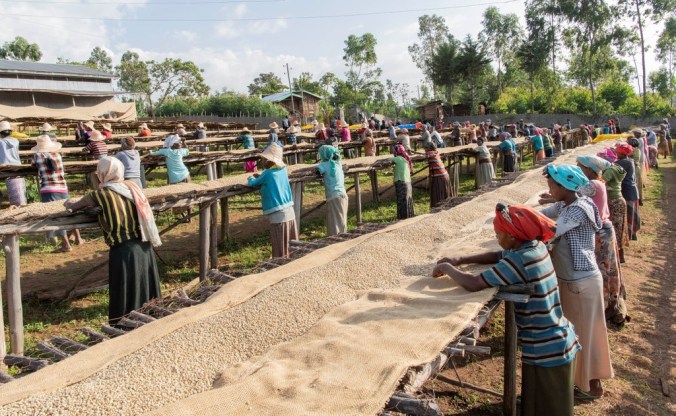
Drying coffee beans in Ethiopia. More than half of all species are at risk of vanishing in the wild because of climate change and deforestation. Maheder Haileselassie/Reuters

As much as I thought I learned in the last year about coffee, I got a hint just now, reading the article below, how steep my learning curve remains. 124 species of coffee? So much to hunt, so little time! Thanks to Somini Sengupta for this story:

15CLI-COFFEE2-jumbo.jpg

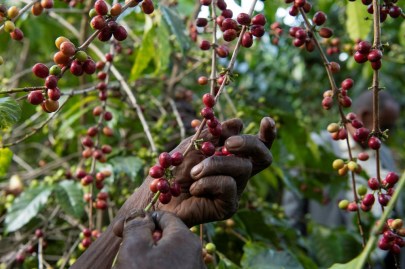
Picking coffee berries on a farm in Ethiopia. Maheder Haileselassie/Reuters

Aaron Davis, a British botanist, has spent 30 years trekking across forests and farms to chronicle the fate of one plant: coffee.

He has recorded how a warming planet is making it harder to grow coffee in traditional coffee-producing regions, including Ethiopia, the birthplace of the world’s most popular bean, arabica. He has mapped where farmers can grow coffee next: basically upcountry, where it’s cooler. He has gone searching for rare varieties in the wild. Continue reading

The Art of Inclusivity


A visitor takes a close look at “Missing Route 4,” a hand-stitched embroidery by Bapi Das.Credit Atul Loke for The New York Times

The history of our work in Kerala, and specifically in Kochi, has long been intertwined with Art, and how the surrounding community interacts with it. Biennales, by nature, often blur the line between street art and gallery space, as multi-dimensional and multi-media installations begin to appear on walls, pop-up spaces, cavernous warehouse buildings, and classic museum halls.

Now in it’s 4th edition, the Kochi-Muziris Biennale, has grown continually in both the breadth of the artists involved, and the depth of its work toward community outreach. This sense of inclusivity extends to gender equality, a longstanding issue that India as a country has battled with;  the curator and more than half of the artists are female.

As with the previous editions, the installations are thought provoking and moving, at times asking viewers to acknowledge and honor the difficult history of a colonial past.

In India, Building Bridges Between Life and Art

The Kochi-Muziris Biennale, South Asia’s biggest art show, uses interactive exhibits and live performances to help Indians connect with contemporary art.

KOCHI, India — Clad in a simple striped shirt and the white mundu of the city’s fishmongers, Bashir stood out from the well-heeled throng at the warehouse galleries and tree-filled courtyards on the first day of India’s biggest contemporary art show, the Kochi-Muziris Biennale.

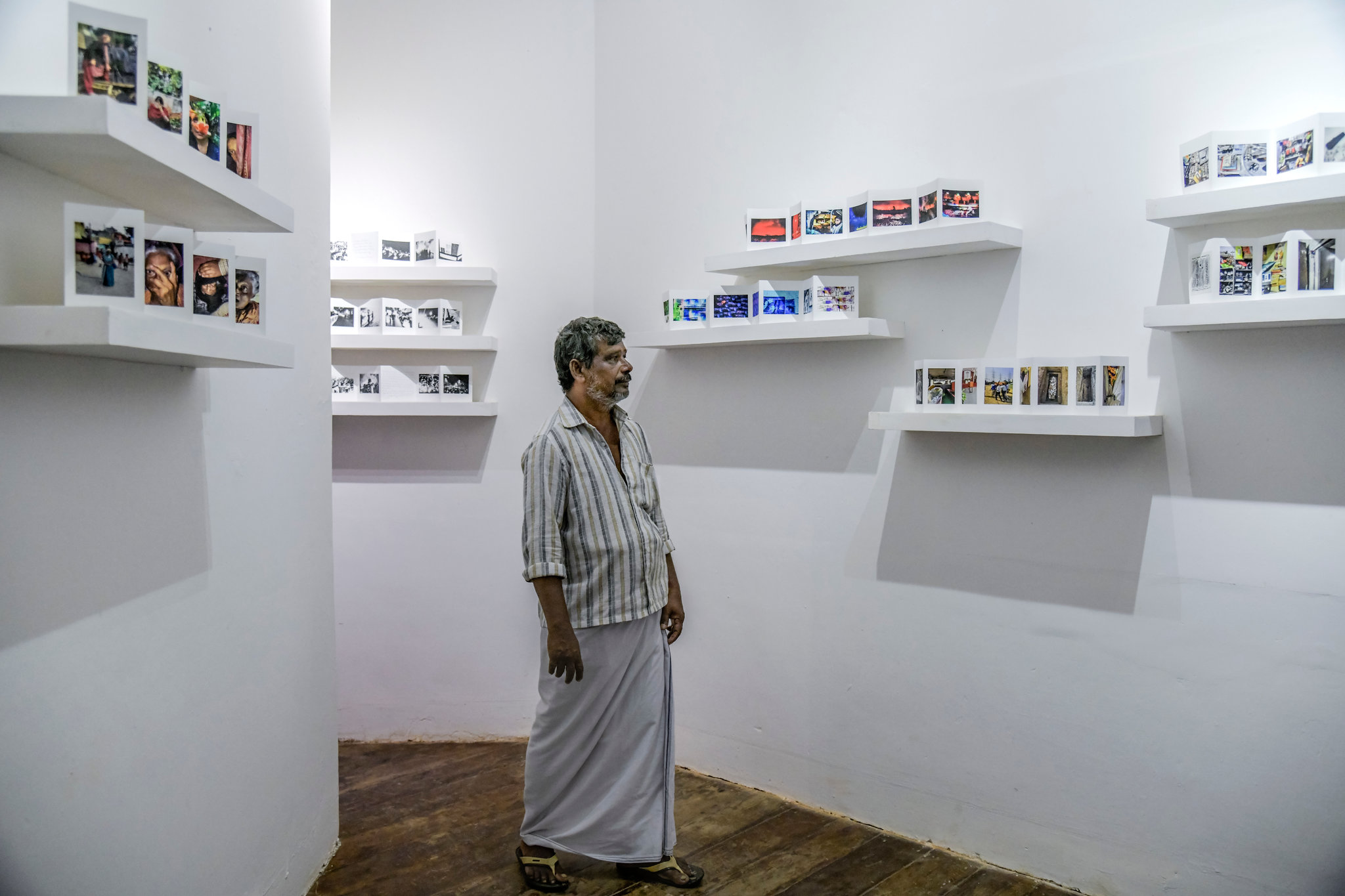
Bashir, a fishwrapper who works nearby, visited the Kochi-Muziris Biennale on opening day because entry was free. He lingered over the photographs, including these photo essays by Chandan Gomes, a Delhi photographer. Credit: Atul Loke for The New York Times

Keeping to himself, he moved from room to room, stopping to study moody landscapes by the Delhi photographer Chandan Gomes that were paired with imaginary scenes drawn by a girl who died at age 12.

“I don’t understand the inner meaning of the art,” said Bashir, who uses one name and makes a living wrapping and delivering fish. “I just like to see beautiful things.”

Bashir’s willingness to engage with the artwork, no matter how challenging, was a victory for the show’s organizers. The southern state of Kerala, and India as a whole, have very few public venues to see art. So the organizers of the biennale, which runs until March 29, strove to create an event that would appeal to everyone — from untutored day laborers to veteran museum curators.

“We are making a cultural festival,” said Bose Krishnamachari, a painter from Kerala who co-founded the show eight years ago. “We have tried to penetrate to the people’s minds so that they feel that it is their biennale.”…

Continue reading

Urban Tree-Huggers

IndiaDehli_Trees_GettyImages-984331388_web.jpg

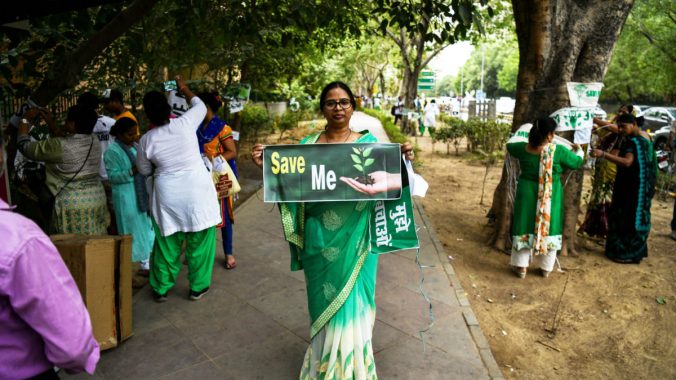
Women demonstrators protest a plan to to cut down more than 14,000 trees for a redevelopment project in New Delhi in June 2018. CHANDAN KHANNA/AFP/GETTY IMAGES

Thanks to Yale e360’s Mumbai-based Vaishnavi Chandrashekhar:

In India’s Fast-Growing Cities, a Grassroots Effort to Save the Trees

In India’s burgeoning urban areas, residents are rallying against the widespread destruction of trees to make way for development. The recent protests highlight a global issue: densely populated megacities in the developing world, which are most in need of tree cover, often have the least.

ZB_MumbaiTreesStreet_2017.jpg

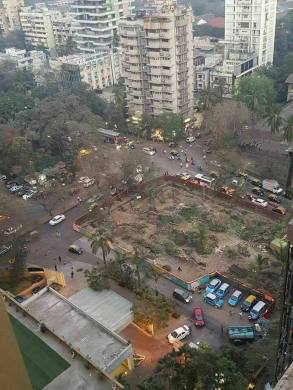
Thousands of trees have been cut down in Mumbai in recent years to make way for new housing, wider roads, and a $3.3 billion subway line. COURTESY OF ZORU BHATHENA

The funeral cortege was small. Six people shouldered the bier and others followed, clad in the traditional Indian white. As the group filed past the state assembly building, the armed guards did not give it a second glance. In a few minutes, however, the security forces caught on. The procession winding its way through Mumbai’s government district was not a real funeral: It was a protest. The shrouded body held aloft was not a human — it was the trunk of a tree, one of many, including grand old banyans, cut down for the construction of a $3.3 billion subway line.

urbantrees2.jpg

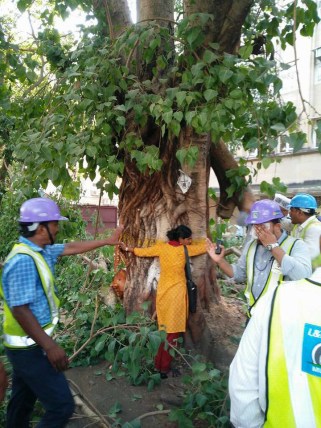
A protester hugs an old tree in Mumbai to prevent it from being cut down for a subway project. COURTESY OF ZORU BHATHENA

Mumbai’s old trees have borne the brunt of new development in the booming city, including road widening, transport projects, and housing construction. The new subway alone is destroying or damaging 5,000 trees, from hundreds of old street trees in the dense parts of the historic island city to more than 2,000 trees in a mini-forest in suburban Aarey Colony, where a rail car shed is to be built. A less visible loss lies in defunct industrial areas, where large plots with old trees and ponds are being redeveloped into residential and commercial towers. “Developers are supposed to replace the trees but no one really checks,” says Stalin D., head of local environmental group, Vanashakti. Continue reading

A Photographic Big Year

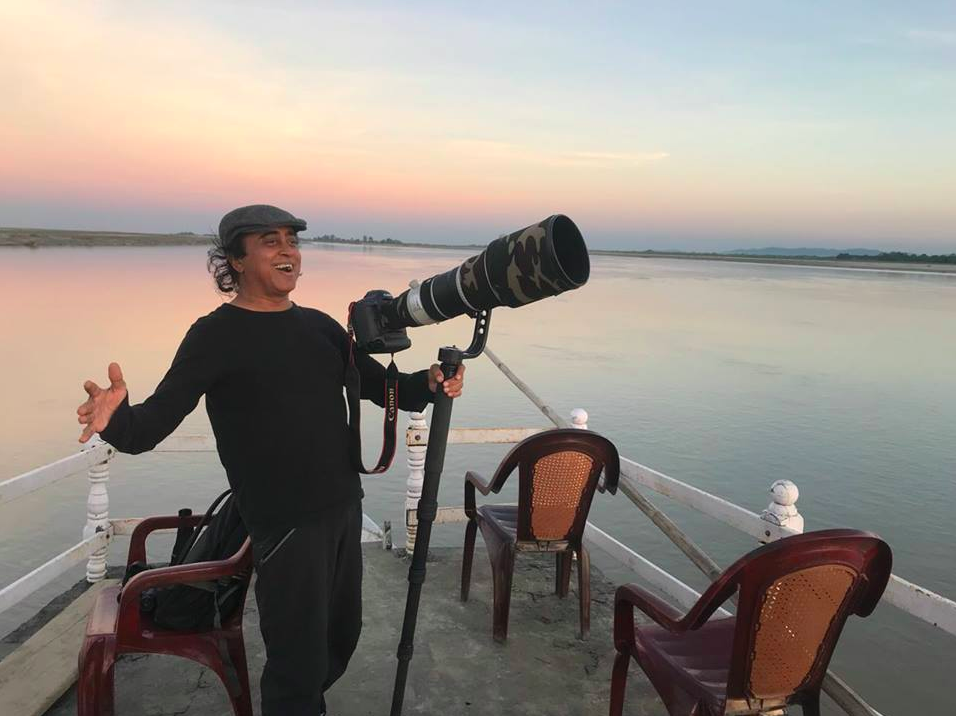
It’s a relatively small world among the birding /photography community in India, and once I saw Gururaj Moorching’s photographs I reached out for an introduction to ask him to contribute to our Bird of the Day series. He started his own birding journey in 2012 after a trip to Kaziranga and another trip to the Rann of Kutch where he came across the two books “Birding on Borrowed Time” and “Lifelist” by the late Phoebe Snetsinger. We’ve been publishing his gorgeous photos for over 3 years, and I was thrilled when he shared his plan for a Photographic Birding Big Year.

In our own way we’ve documented his birding travels within our series, and we applaud this amazing achievement of photo-documenting 951 of India’s 1,317 species of birds in just one year (2018).

Gururaj is currently working on a book expected to be published this spring, but he recently spoke with Deepthi Sanjiv from the Bangalore Mirror about his experience.

“When I had a chance meeting in April 2015 with naturalist Marmot Snetsinger in Eaglenest Wildlife Sanctuary, Arunachal Pradesh, I was elated. Her mother, the late Phoebe Snetsinger, was a legend in birdwatching circles. She was the first person to have crossed 8,000 birds on her Life List in 1995 and watched 8,398 species of birds across the world.”

When Phoebe took up bird watching, she had a rare type of melanoma and the doctors had given her a year to live. She defied death for another 17 years since her diagnosis. I was inspired and I could especially relate to her as I faced a similar health predicament. Phoebe’s book “Birding on Borrowed Time” inspired me to take up birdwatching and photographing birds with intensity and a sense of urgency…

…Ornithologist Shashank Dalvi, India’s first birder to complete one ‘Big Year’ and record 1,128 species of birds in 2015, mentored Gururaj. He helped Gururaj list out travel plans to get maximum results and devised a calendar plan, based on the seasons and locations across India.

“It is not a mean task to chase 1,317 species of bird found in India, including Adaman and Nicobar Islands. My love to travel, food and meeting new people made the journey interesting in this amazing country of huge diversity. Birding community in India is a well-knit family. I received great support from birders, guides and naturalists who were eager to share any information on bird movement and even opened their homes, kitchen and hearts to me. Rofikul Islam, a gifted naturalist from Kaziranga, stood by me throughout the year, and was the inspiration behind my decision to pursue a Photographic Big Year, which was the first of its kind,” said Gururaj.

“A deep sense of contentment comes over me at the end of this sojourn,” he said.

The entire article can be found here.


A Sense Of Costa Rica

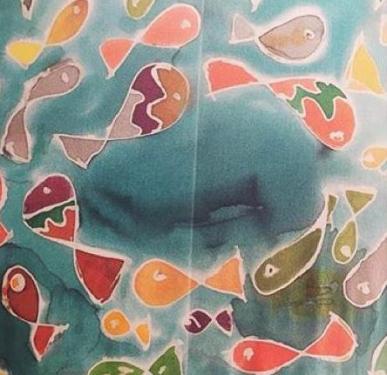
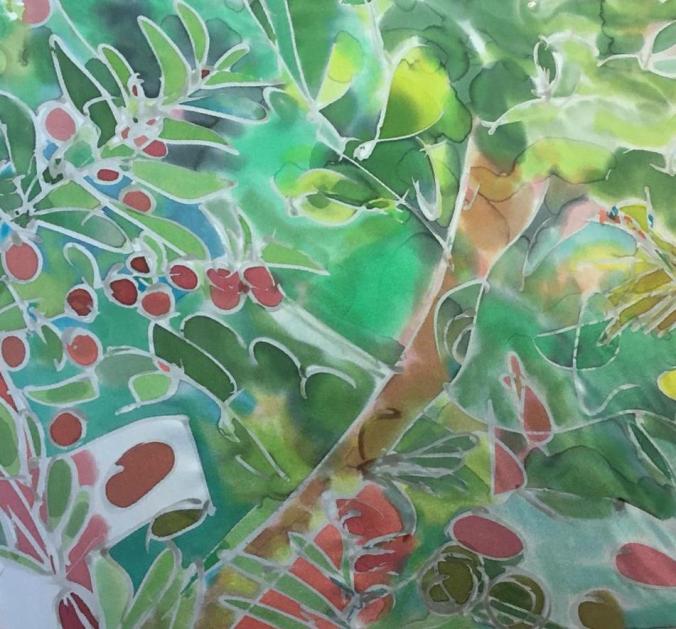
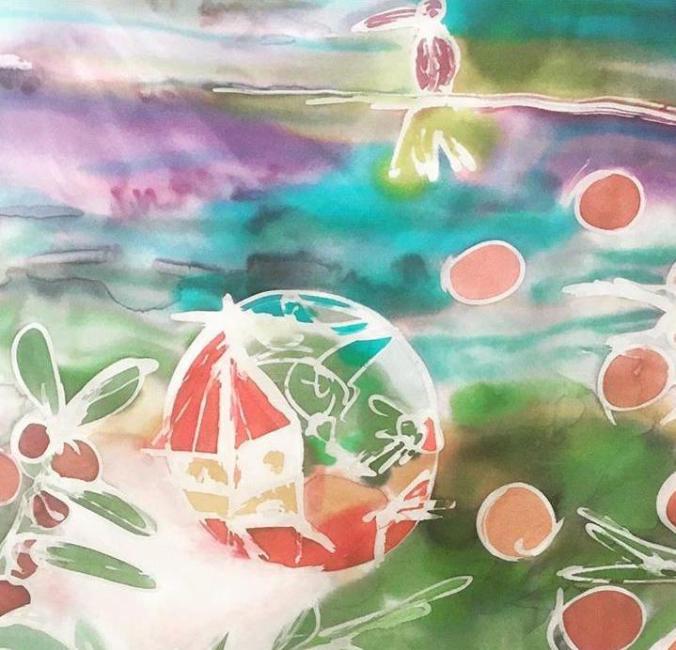
SilkCoastal1Amie and I recently met with an artist who paints on silk. In a post after that we displayed a couple of her pieces that feature coffee farm themes, and here are a couple more featuring coastal themes. Our practice of entrepreneurial conservation has allowed us to post frequently on this theme over the years. Less frequently we have mentioned sense and sensibility, words we work by.

SilkCoastal2Our assumption is that most people want to sense how a place they visit is different from where they normally live. Commonalities are also helpful for the sake of comfort and the travelers we have gotten to know through our practice in the last 2+ decades are much like us: interested in the balance between things we already understand and things that make us wonder.

When we saw these silk pieces we had a sense of Costa Rica that would be difficult to find words for. The artist has an ecological and socially responsible orientation, backed with actions that represent what make this place unique. This is the aspect of Costa Rica that inspires and motivates not only those who have chosen to live there, but those who choose to visit. Visitors should have the opportunity to take home with them items like these painted silks, that somehow represent Costa Rica. Little reminders.

Books For Early 2019

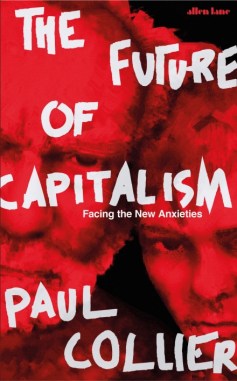
collierbookI have a few more books, in addition to this history, on my reading list. Reihan Salam, the executive editor of National Review, provides this preview of the Oxford economist Paul Collier‘s new book:

You might expect that Paul Collier, a noted development economist at Oxford who has devoted most of his professional life to the uplift of the global poor, would see himself as a “citizen of the world.” But that’s not quite right. Collier grew up in Sheffield, a once-flourishing English steel town that provided working-class families like his own with a modicum of prosperity and stability, and that has since struggled in the face of import competition and the loss of many of its most ambitious citizens to London and other dynamic cities. He attributes his prodigious accomplishments in no small part to the cooperative character of the community, and the nation, in which he was raised.

National loyalty, far from being inimical to a more just and decent world in which all, including the world’s poorest, can flourish, is seen by Collier as a firmer foundation for global cooperation than abstract cosmopolitanism, which all too often serves as a mask for unenlightened self-interest. The question animating his small but wide-ranging book “The Future of Capitalism” is whether the sense of rootedness that so defined the Britain of his youth can be restored…

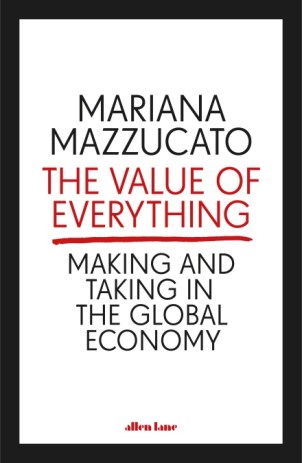
ValueBook.jpgRead the whole review here. My second encounter with Paul Collier was this panel discussion on Intelligence Squared. The way in which the world’s developing economies view capitalism is as important as the current changes in how mature developed economies view capitalism. For that reason I am also looking forward to Mariana Mazzucato’s most recent book, to the right. Surprisingly I had never heard of her before listening to her muse about various influences in her life that led to her distinct voice on how value is created by societies. Her self-introduction makes me wonder how she did not show up in our pages previously:

I’m a Professor in the Economics of Innovation and Public Value at University College London (UCL), and Director of UCL’s Institute for Innovation and Public Purpose . My work is focused on the economics of innovation; patient finance; economic growth and the role of the State in modern capitalism. I advise policy makers around the world on how to achieve economic growth that is more innovation-led, inclusive and sustainable. My 2013 book, The Entrepreneurial State: debunking public vs. private sector myths, looks at the ‘investor of first resort’ role that the State has played in the history of technological change — from the Internet, to biotech and clean-tech — and the implications for future innovation and for achieving public-private partnerships that are more symbiotic. In 2016 I co-edited a book called Rethinking Capitalism: Economics and Policy for Sustainable and Inclusive Growth focusing on the need for new economic thinking to drive more effective economic policies. My new book The Value of Everything, available in UK and US edition, looks at the need to revisit the difference between value creation and value extraction, and the problems that arise when one is confused with the other.

Buoyant Foundation’s Intriguing Architectural Innovation

This is the kind of story that displays the odd new reality of what can count for optimism–finding intriguing solutions for mankind’s self-inflicted catastrophes. From Anthropocene:

float-when-it-floods.jpg

Amphibious Architecture

Float when it floods

By Emily Anthes

amphibious-house.jpg

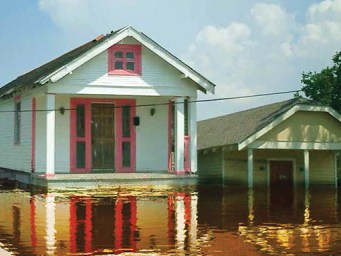
Amphibious structures are not static; they respond to floods like ships to a rising tide, floating on the water’s surface.

Last June, not long after a catastrophic thunderstorm swept through southern Ontario, bringing a month’s worth of rain in just a few hours, a group of 75 architects, engineers, and policymakers from 16 countries gathered in the city of Waterloo to discuss how humanity will cope with its waterlogged future. The timing of the conference was a fitting meteorological coincidence; in a world increasingly transformed by climate change, heavy rains and major floods are becoming more common, at least in some areas. In the summer of 2017 alone, Hurricane Harvey dumped more than 50 inches of rain over Texas; a monster monsoon season damaged more than 800,000 homes in India; and flash floods and mudslides claimed at least 500 lives in Sierra Leone. In the past two decades, the world’s ten worst floods have done more than a 165 billion dollars’ worth of damage and driven more than a billion people from their homes. Continue reading

Authentica, A Few Of Our Favorite Things

FransCoffee.jpegYesterday’s coffee sample from the Brunca region got us thinking about our interest in foods and beverages that represent the taste of a place we have gotten to know through our work. Today I am sampling a friend’s coffee grown a few hundred meters away from where I sit typing this.

It is an arabica varietal, known as Castillo, that has resisted the rust plaguing Central American highland coffee farms. And this glass of freshly brewed Castillo makes me realize that Authentica is also an outgrowth of the much broader array of work that led to our original interest in taste of place.

In 1995 I gave a lecture based on some ideas that came out of my doctoral dissertation, ideas which I now simply refer to as entrepreneurial conservation. Costa Rica had recently committed to the then-new sustainable development model. I made sure that the ideas from my dissertation could be clearly understood within Costa Rica’s framework. Based on the lecture he received an offer to lead an initiative, based in Costa Rica and serving the countries of Central America, that would facilitate the adoption of sustainable tourism development strategies in the region.

biesanzbbb6281c1oa.jpg

In 1996, tourism was limited in Costa Rica but there was enough of an industry to analyze its component parts. This highlighted pre-existing strengths on which to build a national tourism strategy. One of those components was handicrafts. We have not gone back to look at the findings, but memory tells us that handicrafts were a small but thriving sub-sector of tourism, and some of it was spectacular. The bowl to the left was the first we had seen made of the local wood called cocobolo.
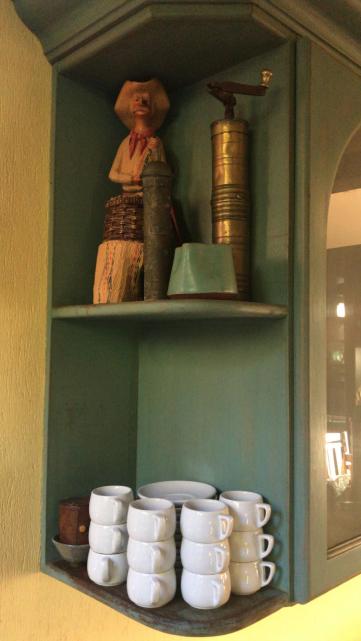
Pia pitcherIn the 2+ decades since that analysis, times have been difficult for the artisans of Costa Rica even as the tourism sector as a whole has grown dramatically. It is enough to say that something must be done in Costa Rica to valorize the artisans who have been able to hang on, and to likewise showcase the remarkable renaissance of artesania in this amazing country. The campesino in the photo to the right is from an artisan who carves coffee wood, with coffee farmers his primary subject. We received that carving as a gift in 1998 and we recently met the artisan who made it. He has managed to hang on.

On that same shelf is a small ceramic pitcher made by an artist of the next generation, who is a perfect representative of the renaissance we see, now that we are visiting Costa Rica after many years living in other parts of the world. A platform is needed to share these things that we see and love about Costa Rica, things which we believe represent this place well, and put them in a place where they can be purchased, in order to valorize the artistry and craftsmanship.
SilkCoffee1

Above is a hand-painted silk scarf made by a local artist whose life on a coffee farm inspired this particular image, and the one below. We will be more specific about these and other artists in future posts. For now it is just enough to say that we believe in local artists, artisans, farmers, roasters, chocolatiers enough that we have formed Authentica as a marketplace for their products, to be sold mostly to visitors who want to take home with them a sense of the place they have visited.
SilkCoffee2.jpeg

Looking Forward Requires Rethinking

Olympia1The new morning, the first of the new year, started just like any other. Coffee. But a theme related to looking forward was set in motion yesterday, and so it was time to taste this new coffee. Drinking mostly coffees from the Tarrazu region for all of 2018, today’s coffee is from the Brunca region.

Olympia2It is organic, washed (as opposed to natural process, or anaerobic or other new fangled methods) and medium-roasted. I use a nondescript filter brew machine, and I grind the beans slightly on the coarse side. Maybe I just woke up ready to enjoy the new year, but this tastes like one of the best new coffees I have sampled in the past 12 months. I have lost track of the count, but I have tasted several dozen varietals. This one stands out, perfect for my palate. The fact that it is organic, selected and roasted by friends for their own cafe, makes me think that we will have more of it before too long.
When we moved to Kerala, India in 2010 our flight was the day after Seth began college. We had an implicit goal of offering Milo two years of something different prior to his 18th birthday.  Dates of transition, like the first of a new year, are obviously no different from other days, but they can punctuate time with reflective review and reflexive preparation. 2019 will be a transition year. When we left India in 2017 it was without a clue of what we would do next, except our goal was to return to Costa Rica and start something that builds on our work while allowing us to learn something new. Here we go.

Outfitting For Wild Animals


Wolf.jpg

Teach a Wolf to Fish. By University Of Minnesota, Voyageurs National Park And Voyageurs Wolf Project. Nighttime footage of a wolf hunting freshwater fish in a river in Minnesota’s Voyageurs National Park. Dec. 14, 2018

I got to know Natural Habitat Adventures while our company was operating Chan Chich Lodge in Belize. I was impressed with their guides, and with the photographic and video skills of the guests who they brought to the lodge. And all of them were deeply concerned about conservation. But I never saw anything quite like the video above. When you have nine minutes to spare, it is as satisfying as any nature footage as I have seen in a long time.  I thank Jim Robbins again for this article, whose focal video about wolves fishing (to the left above) is definitely worth watching:

Watch This Wolf Go Fishing

Yes, researchers in Minnesota have recorded wolves diving into a stream to grab a meal.

Wolves are thought of as red-meat eaters, but a team of biologists in northern Minnesota, near Voyageurs National Park, has documented a pack that often enjoys a meal of fish. Continue reading

Conservation Innovation, First Nations & Caribou


1920b.jpg

Cornelia Li

Thanks to Hilary Rosner for her penetrating longform reporting on these species at the edge of existence, part of the Atlantic’s Life Up Close project (and thanks for the support provided by the HHMI Department of Science Education for such a publication):

Pulling Canada’s Caribou Back From the Brink

First Nations communities are leading the effort to rescue the last remaining caribou herds from extinction.

a88f72d05

Cornelia Li

On a family vacation last summer, driving along the empty highways of northern Idaho near the Canadian border, I saw an unlikely road sign—a relic. Diamond-shaped with a yellow background, the sign featured the familiar black silhouette of a deerlike animal. But unlike those on deer-crossing signs, the animal pictured had large antlers and appeared to be ambling toward the road, not leaping. It took me a moment to realize that it was a caribou.

Seeing a caribou wander onto an Idaho highway is about as likely as watching a UFO land there. The South Selkirk herd—the only remaining caribou herd that roamed the continental United States—has dwindled to just two animals, both female. “Not even Noah could save them,” a Canadian biologist told me. Last spring, scientists declared the herd functionally extinct. Continue reading

Birds, Beacons Of Good Fortune

1984-83-1

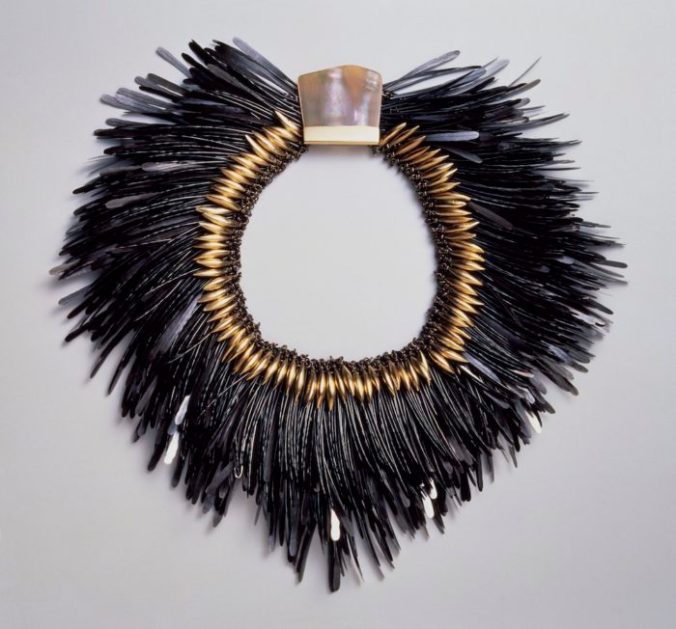
Necklace, designed by Tone Vigeland (Norwegian, born 1938)

HistoirenaturelIILeVa_0032-700x1063

Book, Histoire naturelle des oiseaux de paradis et des rolliers: suivie de celle des toucans et des barbus (Natural History of Birds of Paradise and Rollers: Followed by that of Toucans and Barbets), Volume 2; 1806; Written by François Levaillant (French, 1753–1824); Illustrated by Jacques Barraband (French, 1767–1809); Smithsonian Libraries, QL674.L65 1806

An exhibit at the Cooper Hewitt comes to my attention thanks to Dylan Kerr, whose essay The Mandarin Duck and Avian Art at the Cooper Hewitt makes an interesting link between the choices Rebeca Mendez made as a curator and a recent unusual bird sighting in New York City:

For the past several weeks, New Yorkers have been abuzz over a mysterious visitor. A mandarin duck, an intricately colored waterfowl native to East Asia, has taken up residence alongside the mallards in the Central Park Pond, drawing crowds and inspiring memes, dog costumes, and a Twitter account (bio: “I’m not from around here”). Pundits have argued that the frenzy betrays a desire for good news. But perhaps, the Mexico City-born designer Rebeca Méndez suggested the other day, something deeper is at play. “In our own normal life, we have patterns that we are so used to.

1950-111-10-700x1156

Sidewall; 1905–13; Manufactured by Zuber & Cie (Rixheim, Alsace, France); Block-printed on paper; Gift of James J. Rorimer, 1950-111-10

My immediate reaction is yes. We are bombarded with more negative information more quickly, more constantly than ever in my lifetime. We need relief, and nothing like an exotic bird coming to town to bring it:

When something”—an anatine interloper, say—“comes in and breaks that, it’s incredibly exciting,” she said. “The world suddenly collapses—it’s like a wormhole from far-east Asia to Manhattan.”

Méndez recently curated an exhibition of avian art at the Cooper Hewitt, Smithsonian Design Museum, across the street from the Park. It’s part of the “Selects” series, in which the museum invites a guest to put together a show from objects in its collection. Continue reading

Is Neutrality The Best Option?

lead_720_405A.jpg

A rending of Powerhouse Brattørkaia, an “energy-positive” building that will open to the public next year in Norway SNØHETTA

Thank you Norway, for demonstrating that we can do better than neutrality:

Norway Is Entering a New Era of Climate-Conscious Architecture

The country now has a suite of buildings that generate more energy than they use.

The European Union has a target of making all new buildings zero-energy by 2020, but in Norway, carbon neutrality isn’t enough.

A consortium in Oslo made up of architects, engineers, environmentalists, and designers is creating energy-positive buildings in a country with some of the coldest and darkest winters on Earth. “If you can make it in Norway, you can make it anywhere,” says Peter Bernhard, a consultant with Asplan Viak, one of the Powerhouse alliance members. Continue reading

Impact, Photography, Understanding

main_600m.jpg

Grand-Prize Winner: Thousands of Volkswagen and Audi cars sit idle in the middle of California’s Mojave Desert. Models manufactured from 2009 to 2015 were designed to cheat emissions tests mandated by the U.S. Environmental Protection Agency. Following the scandal, Volkswagen recalled millions of cars. By capturing scenes like this one, I hope we will all become more conscious of and more caring toward our beautiful planet. # © Jassen Todorov / National Geographic Photo Contest

I never tire of reminders of how greed is never good. It is unbecoming. But visual reminders of this are especially welcome. When the story broke about this audacious scam that showed how profit can motivate evil, it gave me pause, if momentarily, because our entrepreneurial conservation business model is premised on the possibility that profit can motivate good outcomes. Thanks to Alan Taylor for reminding us it is awards season for photography that impacts our understanding of the world, and especially for the link to this photo that tells one outcome of the VW scandal with such impact:

Winners of the 2018 National Geographic Nature Photographer of the Year Contest

National Geographic magazine has announced the winning entries in its annual photo competition. The grand-prize winner this year is Jassen Todorov, who will take home a $5,000 prize for his aerial image of thousands of recalled Volkswagen and Audi cars in the Mojave Desert. The contest organizers have shared with us the top winners and honorable mentions below, selected from a pool of  nearly 10,000 entries. Captions are written by the individual photographers and lightly edited for content.

At first, this runner up photo looks too composed to my eye, but the more I look at it the urge to weep gets stronger. Kind of like when I gaze long enough at this photo, the urge to stay still and observe grips me. Or when I look at this photo, I can explain the best of life in India. Same for any of Milo’s series. Photographic impact.

main_600 (6)

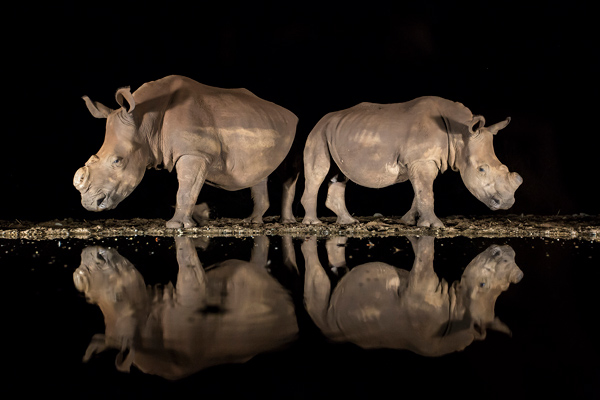
3rd Place, Wildlife: As the late-night hours ticked by and my eyelids grew heavy, two southern white rhinoceroses appeared silently from the shadows to drink from a watering hole in South Africa’s Zimanga Game Reserve. On alert, they stood back-to-back, observing their surroundings before lowering their heads. I felt privileged to share this moment with these endangered animals. While I was well prepared technically, with my camera set correctly on a tripod, I underestimated the emotional impact the magnificent beasts would have on me. I had photographed them months earlier, and now both rhinos sported a new look: They had been dehorned to deter poachers. I had heard about this development but had not yet seen them. I was full of emotion—and horror—that poaching had such a devastating effect. It must have been a hard decision to dehorn their rhinos, and I am grateful for the reserve’s efforts. # © Alison Langevad / National Geographic Photo Contest

Read the whole story here.


Liberalism, Leadership, & The Fourth Estate

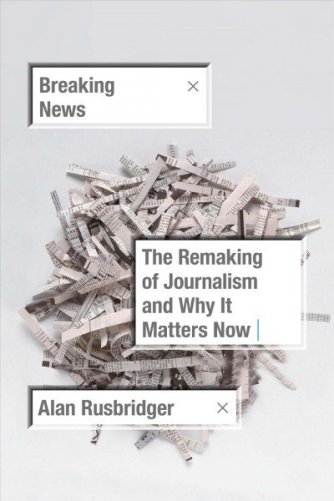
9780374279622_custom-5d7f03d8b126fd10509c68fad812ee37387aae6b-s600-c85When we started this platform in 2011 our primary interest in the Guardian was its excellent environmental reporting, and at least one opinion writer whose 2012 environmental views made him regularly welcome in our pages ever since. Today I can amplify how important this newspaper is based on an interview I just listened to with its former longtime editor, the author of this book to the right.

He mentions several points that I have been prone to believe over the last two decades, particularly about the poisoning of the well of public discourse by Rupert Murdoch’s approach to the business of media.

In the classic sense of liberal perspective that should make me think twice, so as not to lean into my own biases. He also helps me to understand the quite unique value of the Guardian, which I was also already prone to believe. Their endowment and general funding model, which I had only vaguely known about, is well explained in this interview and frankly, difficult as it is to be these days, inspiring. Careful as I may be about confirmation bias, I pass this suggestion along; listen to the interview here (just over half an hour), or read the summary below:

gettyimages-453300937_wide-6c2265f11615cc079ab72d2d1e0808c72ab720f4-s1200-c85

On Dec. 3, 2013, Guardian editor Alan Rusbridger faced questions from the British Parliament about his newspaper’s decision to publish material leaked by former NSA contractor Edward Snowden.
Oli Scarff/Getty Images

Alan Rusbridger knows a thing or two about high-stakes journalism.

During his 20-year tenure running the British newspaper The Guardian, he collaborated with NSA contractor Edward Snowden and WikiLeaks founder Julian Assange on blockbuster stories drawn from secret government documents. Though Rusbridger left The Guardian in 2015, he remembers the stress vividly.

“We were publishing every minute of the day around the world,” he says. “It’s a matter of deadlines and never enough information and people trying to sue you and generally harass you.” Continue reading

Graphics For Better Comprehension

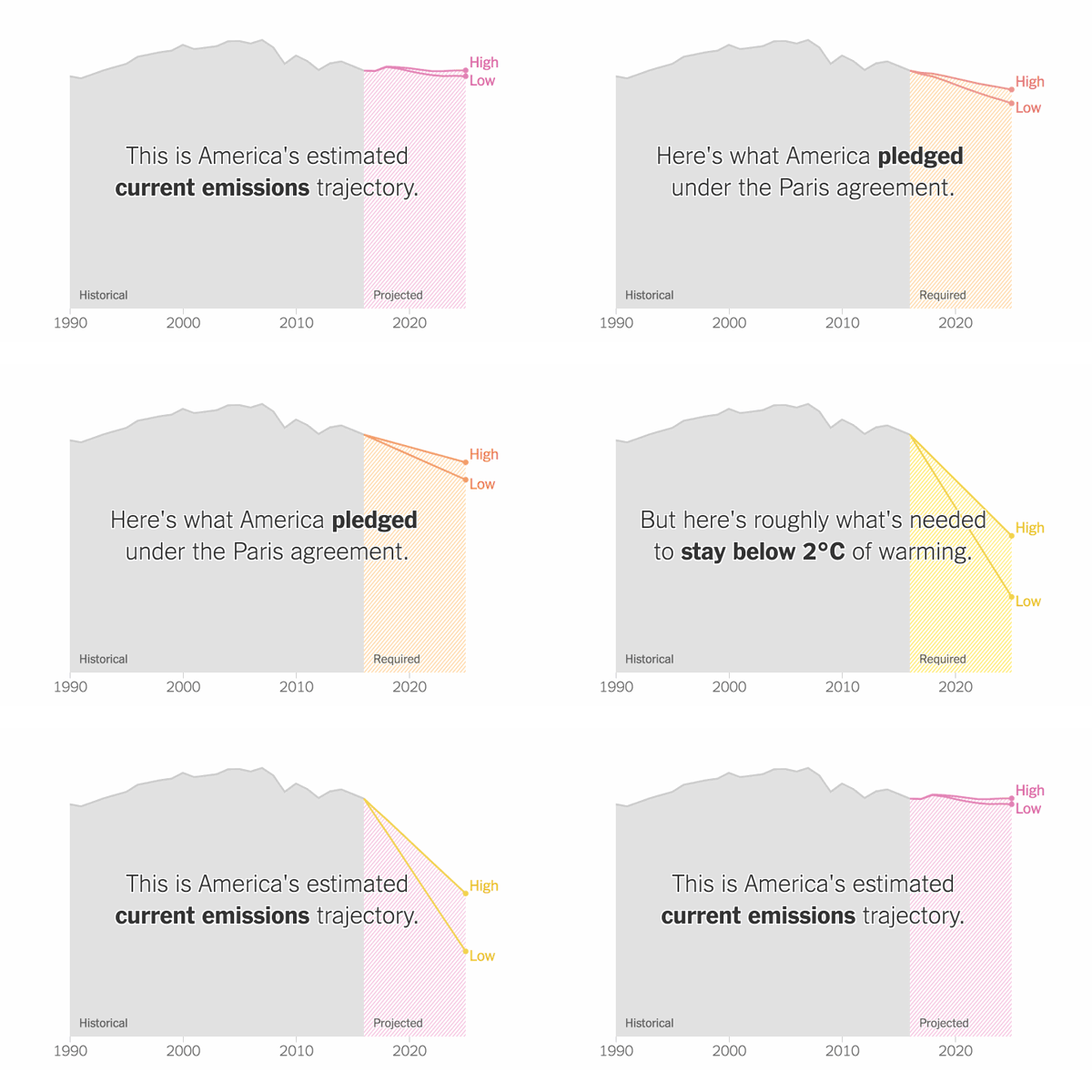
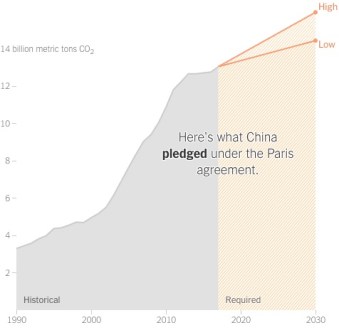
world-emissions-paris-goals-not-on-track-promo-1544191333747-threeByTwoSmallAt2X-v18.gif

Yesterday I was struck by a set of graphics that helped me see an old story in a new light. That was not a particularly important old story, as history of the planet goes; but it gave the manufacturing consent theme a new shine–in technicolor, black and white, and finer shades of gray. Today, on a story that is definitely of historic proportions related to the planet, my thanks again to Brad Plumer and his occasional writing partner Nadja Popovich, especially for its accompanying graphics:

The Little Creatures We Cannot Live Without

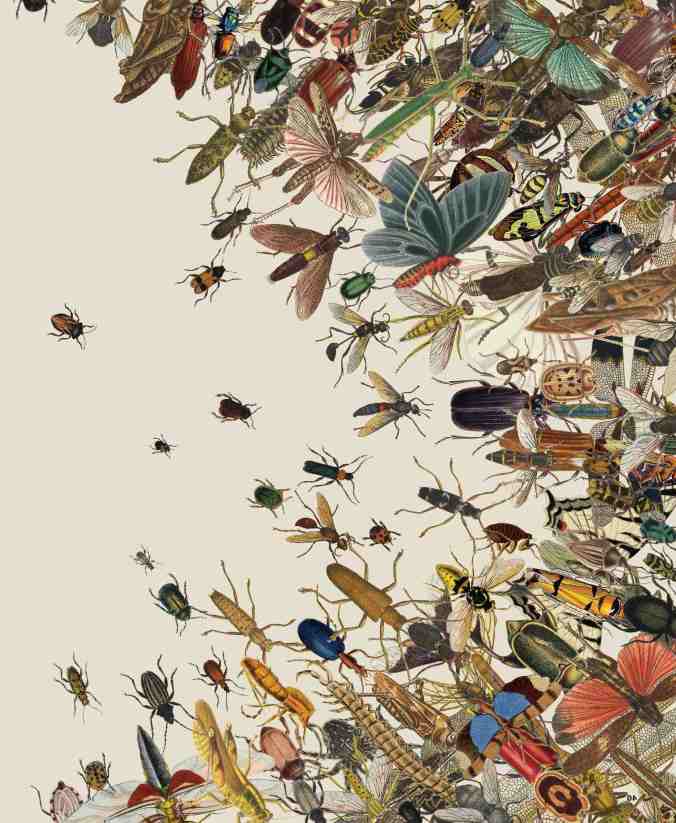
02mag-insects-image1-superJumbo-v3.jpg

Photo illustrations by Matt Dorfman. Source photographs: Bridgeman Images.

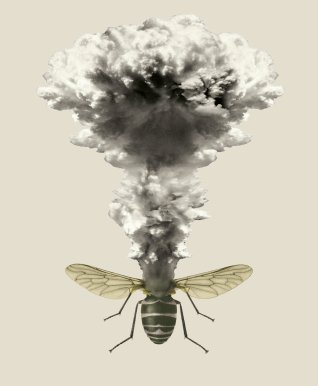
Brooke Jarvis has written a longform feature article with the word apocalypse in the title, which may make you wince and turn away. As might the word insect, even if you find the illustration above mesmerizing as I do. And reading to the end is an investment in time. But do not turn away just because the illustration below is alarming. It is another alarming topic we are responsible for taking account of.

02mag-insects-image2-superJumbo-v5.jpgSune Boye Riis was on a bike ride with his youngest son, enjoying the sun slanting over the fields and woodlands near their home north of Copenhagen, when it suddenly occurred to him that something about the experience was amiss. Specifically, something was missing.

It was summer. He was out in the country, moving fast. But strangely, he wasn’t eating any bugs.

For a moment, Riis was transported to his childhood on the Danish island of Lolland, in the Baltic Sea. Back then, summer bike rides meant closing his mouth to cruise through thick clouds of insects, but inevitably he swallowed some anyway. When his parents took him driving, he remembered, the car’s windshield was frequently so smeared with insect carcasses that you almost couldn’t see through it. But all that seemed distant now. He couldn’t recall the last time he needed to wash bugs from his windshield; he even wondered, vaguely, whether car manufacturers had invented some fancy new coating to keep off insects. But this absence, he now realized with some alarm, seemed to be all around him. Where had all those insects gone? And when? And why hadn’t he noticed? Continue reading

The Technology Of Negative Emissions

ClimeWorks_20170510DSC_6501_PhotosbyJuliaDunlop_web2.jpg

A direct air capture facility in Zurich, created by the Swiss-based technology company ClimeWorks. JULIA DUNLOP / CLIMEWORKS

I was not aware that Elizabeth Kolbert has been writing for Yale e360 for the entire time we have been linking to her New Yorker work on this platform. And then some, because she started publishing there ten years ago. This is her 17th publication for Yale e360 and it can help a layperson understand in a relatively short read whether technology has any chance of accelerating our progress on climate change mitigation:

Climate Solutions: Is It Feasible to Remove Enough CO2 from the Air?

A U.S. scientific panel reports that technologies that take CO2 out of the atmosphere could be a significant part of a strategy to mitigate global warming. In an e360 interview, Stephen Pacala, the panel’s chairman, discusses how these fast-developing technologies are becoming increasingly viable.

Is there still time to avoid runaway climate change? To a large degree, the answer depends on the feasibility of “negative emissions” — techniques or technologies that suck CO2 out of the air. In the latest report from the Intergovernmental Panel on Climate Change (IPCC), all scenarios for limiting warming to 1.5 degrees Celsius depend on negative emissions technologies, or NETs. Most 2-degree scenarios also rely on negative emissions; many call for removing billions of tons of CO2 per year by mid-century.

NETs_NationalAcademies_web.jpg

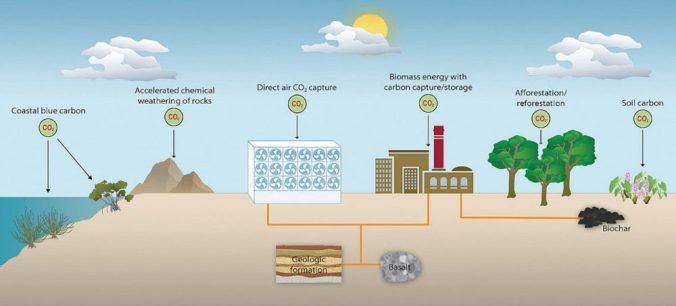
Negative Emissions Technologies (NETs) range from low-tech, such as planting more trees, to more high-tech options, such as developing machines to scrub CO2 from the air. NATIONAL ACADEMY OF SCIENCES, 2018

Yet most NETs remain either untested or unproved. To help bridge this gap, the National Academies convened a panel of scientists and asked it to propose a research agenda. The panel considered several possible techniques, ranging from the low-tech — planting more trees — to the high-tech — developing machines to scrub CO2 from the sky. It also looked at a hybrid technology that has become known as bioenergy with carbon capture and storage, or BECCS. The panel recommended several billion dollars be directed to research on NETs. Such technologies, it suggested, ought to be viewed as a “component of the mitigation portfolio,” rather than as a futuristic, last-ditch effort to reduce atmospheric CO2.

Pacala_IsometricStudios_web.jpg

Stephen Pacala. CREDIT: ISOMETRIC STUDIOS

Stephen Pacala, a professor of ecology and evolutionary biology at Princeton University, chaired the panel. In an interview with Yale Environment 360, he talks about why NETs are needed, what should be done to advance them, and why he believes that “direct air capture” technologies could come into widespread use within the next decade. Continue reading

Herbaria, Preservation & Science

062617_Herbarium_039.jpg

Charles Davis, director of the Harvard University Herbaria, looks at specimens collected by Henry David Thoreau. Davis was a co-editor of a special issue of Philosophical Transactions B, which advocates for the continued preservation of biological collections. Jon Chase/Harvard file photo

Collecting plant specimens and pressing them for further inspection is a pastime many of us have tried at least once in our lives. It was fun while it lasted. And some beautiful mementos may have survived to tell the tale. The opportunity to look at and learn from plant specimens collected by Henry David Thoreau? Priceless. Thanks to Peter Reuell, a writer and publicist at Harvard University, for this:

Critical collections

Importance of biological samples and their preservation goes beyond the obvious

062617_Herbarium_009.jpg

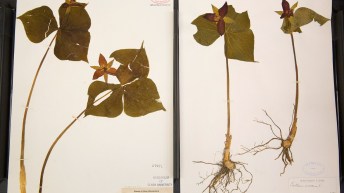
The Harvard University Herbaria holds a specimen of trillium collected by Henry David Thoreau. Jon Chase/Havard file photo

More than a century ago, when botanists and naturalists were in the field collecting plant and animal specimens, they couldn’t have imagined that scientists would one day be able to extract DNA from samples to understand how plants and animals are related to one another.

They couldn’t have imagined that their collections could one day shed light on the effects of global climate change, or the emergence and spread of pathogens, the spread of fungal-driven amphibian extinction, or the effectiveness of policies aimed at reducing pollution in the U.S. Continue reading

The Case For Being Unreasonable

merlin_146824716_5b9a3ecd-f45b-4b34-be0f-db4aecb19a14-jumbo.jpg

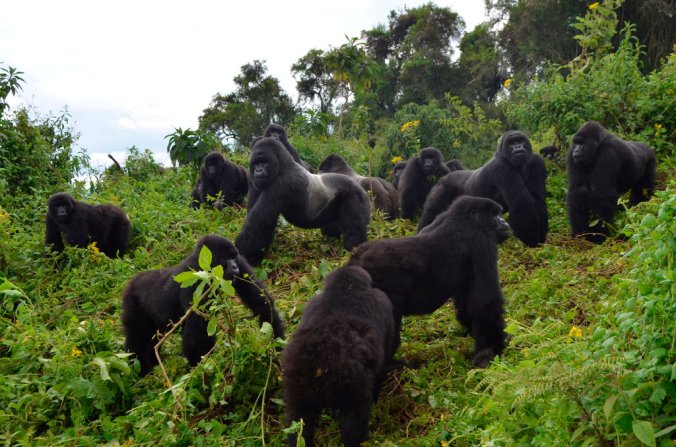
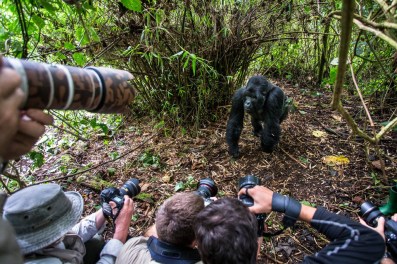
There are only about 1,000 mountain gorillas, but their numbers have risen from a low of just a few hundred. Credit Dian Fossey Gorilla Fund, via Associated Press

Thanks to James Gorman for this brief masterpiece:

Is There Hope for These Great Apes?

Mountain gorillas are faring better — perhaps because some humans just won’t listen to reason.

merlin_146945076_9f6d18ed-63df-4aec-b47a-ca915be5e8df-jumbo.jpg

Ecotourism is largely responsible for the resources to protect the mountain gorilla. Credit Christophe Courteau/NPL, via Minden Pictures

Last Thursday there was a bit of good news relating to the impending extinction and destruction of everything.

The mountain gorilla, a subspecies of the Eastern gorilla, was upgraded from critically endangered to endangered. There still are only about 1,000 of them, up from a low point of a few hundred, so it’s not like they were declared vulnerable (better than endangered), or just fine (not a real category). And the Eastern gorilla as a species overall is still critically endangered.

merlin_146945079_cd496a6f-8009-4792-925c-5da10f85160f-superJumbo.jpg

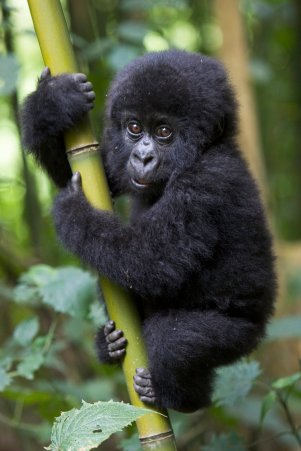
A 10-month-old mountain gorilla in Volcanoes National Park in Rwanda.Credit Credit Suzi Eszterhas/Minden Pictures

But the mountain gorillas are in fact doing better, according to the announcement from the International Union for Conservation of Nature and Natural Resources. It bases its decisions on information gathered from scientists and conservation experts.

The gorillas’ population has been increasing for about 30 years. And it has taken a tremendous amount of struggle and work to get this far.

That raises a question: If things have improved so much for an animal in such a dire situation as the mountain gorilla, should we then give in to hope?

I know this isn’t the accepted way of speaking about the planet and its creatures. In public discourse, hope is the one thing you should never give up. But in our minds (well, in my mind, anyway, and I can’t be the only one), the reasoning behind that often expressed sentiment is not so clear. Continue reading