Forest Pathways For Species Survival

22CORRIDORS2-master675

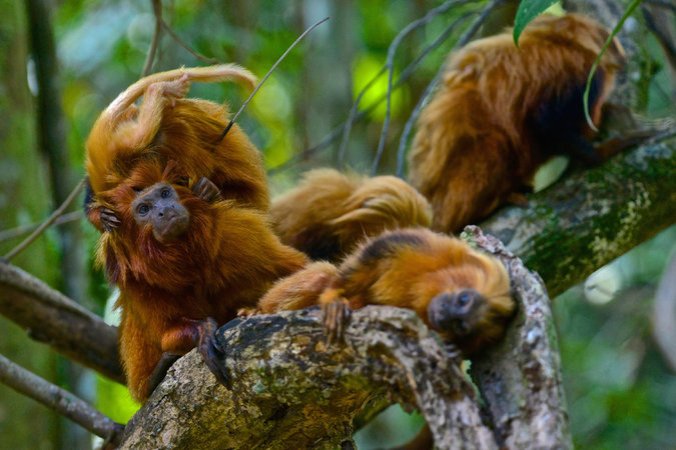
The golden lion tamarin has been observed passing through some of these corridors, an encouraging early sign for researchers. Credit Kike Calvo, via Associated Press

Thanks to Brad Plumer and the commitment of the New York Times to continue covering the complex topic of climate change in interesting, and sometimes hopeful ways:

Stitching Together Forests Can Help Save Species, Study Finds

In the 1980s, an ecologist named Thomas Lovejoy conducted an unusual experiment in Brazil’s Amazon rain forest. As loggers moved in with chain saws to clear trees for cattle pasture north of Manaus, he asked them to leave untouched several small “islands” of forest to see how the animals within them fared.

The results were unsettling. Continue reading

Weather Waves and Habitat Changes

This animation shows where the 21 species in the study occur during each week of the year. Brighter colors (yellows) indicate more species are present than darker areas (blues and purples); overall, the species spend more time in Central American wintering grounds than on their northern breeding grounds. Map and animation by Frank La Sorte.

Once again eBird data and the Cornell Lab of Ornithology studies highlight the importance of forest conservation for species survival, as seen in Climate Change Or Habitat Loss? Study Weighs Future Priorities For Conserving Forest Migrants:

Birds are among the first to let us know when the environment is out of whack. But predicting what might happen to bird populations is tricky. Studies often focus on a single issue or location: breeding grounds or wintering grounds, changes in climate, loss of habitat. But in the real world, nothing occurs in isolation. A new study just published in the journal Global Change Biology pulls the pieces together. Continue reading

A Highway For Monarchs

Monarch-migration-map

Interstate 35, which stretches from Minnesota to Mexico, lies in the heart of the monarchs’ migration route.

Thanks to Janet Marinelli and the team at YaleEnvironment360:

Can the Monarch Highway Help Save a Butterfly Under Siege?

The population of North American monarch butterflies has plummeted from 1 billion to 33 million in just two decades. Now, a project is underway to revive the monarch by making an interstate highway the backbone of efforts to restore its dwindling habitat. Continue reading

Ensuring Public Access To Climate Science

640

Sterling Library at Yale University in New Haven Connecticut, US. Photograph: Alamy

Thanks to John Abraham, and the Guardian’s team focused on the Environment, for shining the light on the good works of those who work to ensure our access to essential environmental science at a time when there are efforts to silence the science:

Yale Climate Connections: America’s beacon of climate science awareness

Stellar work by group led by Anthony Leiserowitz on putting climate change research into public domain is empowering citizens and institutions Continue reading

Conservationists And Public Servants Collaborate In South Texas

14butterfly4-master675

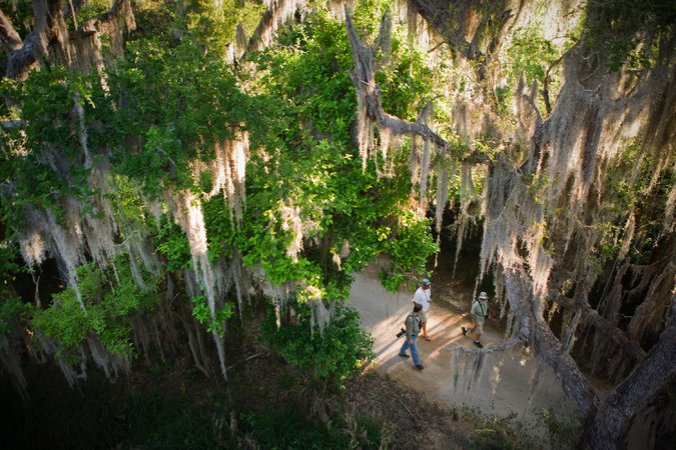
Birders walking under trees draped in Spanish moss in the Santa Ana National Wildlife Refuge near Alamo, Tex. The border wall would traverse the refuge. Credit Michael Stravato for The New York Times

Thanks to Michael Hardy and the New York Times for this coverage of an unwanted, disruptive intruder:

MISSION, Tex. — Last month, Marianna Wright, the executive director of the privately owned National Butterfly Center here, discovered survey stakes on the property marking out a 150-foot-wide swath of land.

Ms. Wright later encountered a work crew cutting down trees and brush along a road through the center. The workers said they had been hired by United States Customs and Border Protection to clear the land.

“You mean my land?” Ms. Wright asked, before kicking them out. Continue reading

Chile Finds A Better Path To Renewable Energy

Chile4

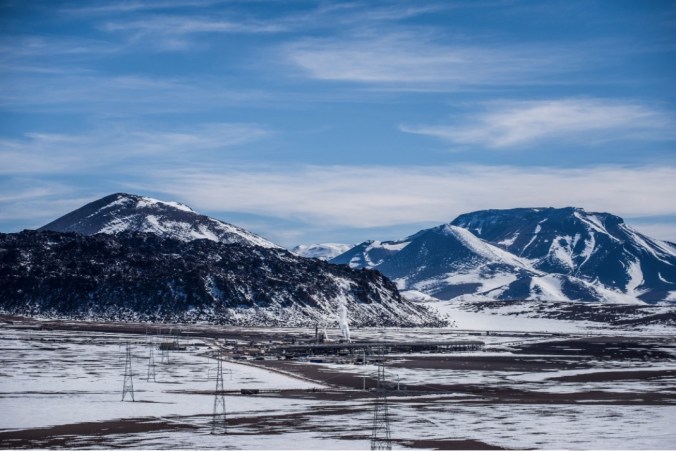
The first geothermal energy plant in South America is in Cerro Pabellón, Chile, 14,760 feet above sea level, surrounded by volcanoes. Credit Meridith Kohut for The New York Times

Chile’s near catastrophe with hydroelectric energy, averted in part thanks to the efforts of friends in the Patagonia Sin Represas campaign, made us wonder whether Chile’s path to a greener future would be straight and narrow. Thanks to the New York Times and Ernesto Londoño we think we have strong evidence helping us with the answer:

Chile’s Energy Transformation Is Powered by Wind, Sun and Volcanoes

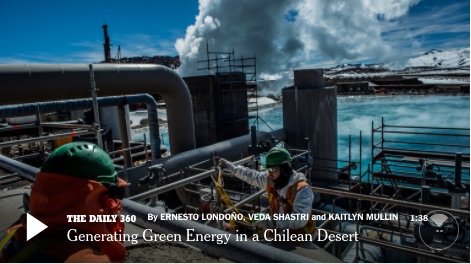
CERRO PABELLÓN, Chile — It looks and functions much like an oil drilling rig. As it happens, several of the men in thick blue overalls and white helmets who operate the hulking machine once made a living pumping crude.

Chile2

A worker inspecting solar panels in the Atacama Desert in Chile, one of the driest and sunniest places on Earth. The sun is so strong there that workers must wear protective suits and slather on thick layers of sunscreen. Credit Meridith Kohut for The New York Times

With the ability to power roughly 165,000 homes, the new plant is yet another step in Chile’s clean energy transformation. This nation’s rapidly expanding clean energy grid, which includes vast solar fields and wind farms, is one of the most ambitious in a region that is decisively moving beyond fossil fuels.

Chile1

Wind turbines in the Atacama Desert and other turbines along Chile’s 2,653-mile coast contribute to power to national grid. Credit Meridith Kohut for The New York Times

Latin America already has the world’s cleanest electricity, having long relied on dams to generate a large share of its energy needs, according to the World Bank.

But even beyond those big hydropower projects, investment in renewable energy in Latin America has increased 11-fold since 2004, nearly double the global rate, according to a 2016 report by the International Renewable Energy Agency, an intergovernmental organization. Chile, Mexico and Brazil are now among the top 10 renewable energy markets in the world.

Chile3So as Latin America embraces greener energy sources, government officials and industry executives in the region have expressed a sense of confusion, even bewilderment, with the Trump administration’s decision to withdraw from the climate changecommitments contained in the Paris Agreement, declare an end to the “war on coal” and take aim at American environmental regulations. Continue reading

Have Cause Will Travel

Ring-Your-Rep-Phone-Night

We have found that when travelers can support a cause they believe in while traveling, they will go out of their way to do so. When our hotelier colleagues make it easier for a traveler to support a cause, we can only celebrate it:

The Standard Telephone Co. Wants YOU to Ring Your Rep

Over the past few months, we’ve been thinking a lot at The Standard about what we can do to support positive, productive activism. As we’ve gone out and talked to people who are engaged in this very thing, one piece of advice we’ve heard again and again is this: speak up! There are lots of ways to take action, lots of ways to make a difference, but there is no substitute for the simple act of making your voice heard. Continue reading

Entomological Wonders Will Never Cease

Crane_Tiny-Parasite-Could-Save-Darwins-Finches

Galápagos finches, which helped inspire the theory of evolution, are under urgent threat. Will a controversial scientific technique be their deliverance? Photograph by Mint Images Limited / Alamy

Thanks to Brent Crane writing in the Elements section of the New Yorker’s website:

A Tiny Parasite Could Save Darwin’s Finches from Extinction

Five years ago, George Heimpel, an entomologist at the University of Minnesota, travelled to Trinidad in search of insect larvae. He was after several kinds in particular—Philornis downsi, a fly whose parasitic young feed on the hatchlings of tropical birds, and various minuscule wasp species whose own offspring feed on those of the fly. Continue reading

Deforestation Demystified

We know how to reduce deforestation – so where’s the money?

Paying people not to cut down trees works, evidence shows – so can we really afford not to do so? Continue reading

Some Climate Solutions Are Simple

20FOREST-master1050.jpg

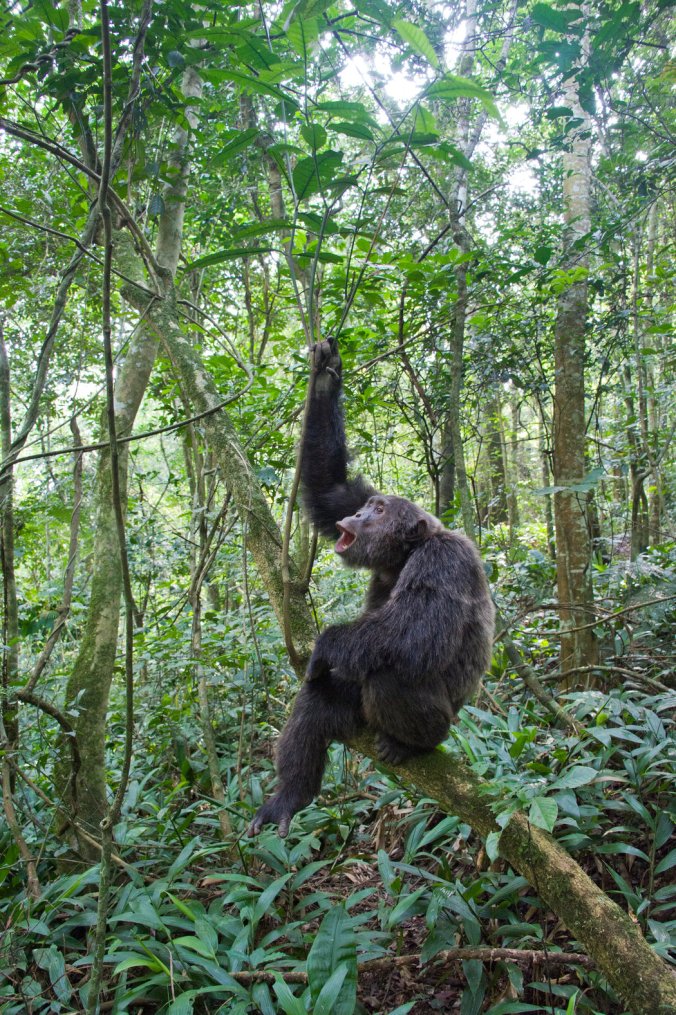
A male chimpanzee hooting in the wild forests of western Uganda. Deforestation in the country is occurring at some of the fastest rates on Earth, shrinking the habitat of this endangered species. Credit Suzi Eszterhas/Minden Pictures

Thanks to the New York Times for this refresher on the basics of climate change and what is needed that we can most easily do to counter its effects:

A Cheap Fix for Climate Change? Pay People Not to Chop Down Trees

By Brad Plumer

The tropical forests in western Uganda, home to a dwindling population of endangered chimpanzees, are disappearing at some of the fastest rates on Earth as local people chop down trees for charcoal and to clear space for subsistence farming.

Now, a team of researchers has shown that there is a surprisingly cheap and easy way to slow the pace of deforestation in Uganda: Just pay landowners small sums not to cut down their trees. Their study, published in the journal Science on Thursday, demonstrated this by conducting something all too rare in environmental policy — a controlled experiment. Continue reading

Conservation Via Valuation

When we consider that cat sightings play an important role in why our guests come to Chan Chich Lodge, this type of valuation is something we can get behind whole heartedly. Thanks again to the Anthropocene for this interesting piece of daily science. And thanks again to Panthera.org for their role in the research.

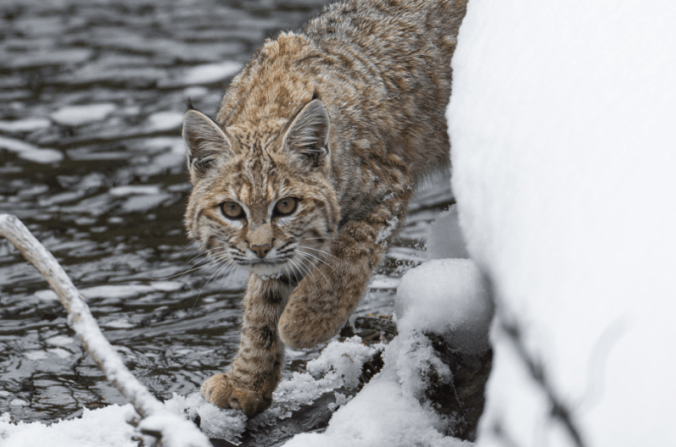
The lesson of the $300,000 bobcat

What is a bobcat worth? There’s a few ways of thinking about that question. One answer, of course, is that a bobcat’s value is intrinsic, their lives not something to signify with a price tag. Fair enough. But for the sake of discussion, and because there’s already a market for their hides, let’s run the math: in the state of Wyoming, a bobcat is worth roughly $300 dead and up to $308,000 alive. And in that vast difference is a tension — some would call it a flaw — in the way these marvelous cats, and many other species too, are presently managed in North America.

The calculations come from a study recently published in the journal Biodiversity and Conservation. Led by Mark Elbroch, a biologist with Panthera, the wild cat conservation organization, and also featuring researchers from wildlife advocacy group Wyoming Untrapped, the researchers totaled the revenues generated in 2015-2016 from selling trapping licenses in that state — $152,000 — and divided them by 1,160 bobcats killed, then added the average sale value of pelts. The final per-bobcat value came to $315.17.

Then Elbroch’s team turned to the example of a bobcat living along the Madison River in Yellowstone National Park, where his predilection for hunting waterfowl made him popular among wildlife lovers. They surveyed 46 photographers who traveled to Wyoming in winter 2015-2016 and the outfitters who guided them. Between outfitters’ fees, money spent on food, lodging and travel, and revenues from selling pictures, the bobcat generated $308,105, or a thousand-fold increase from his worth as a source of fur alone.

The researchers don’t argue that every living bobcat in Wyoming is worth more than $300,000.
Continue reading

Early Classic Period Puzzles

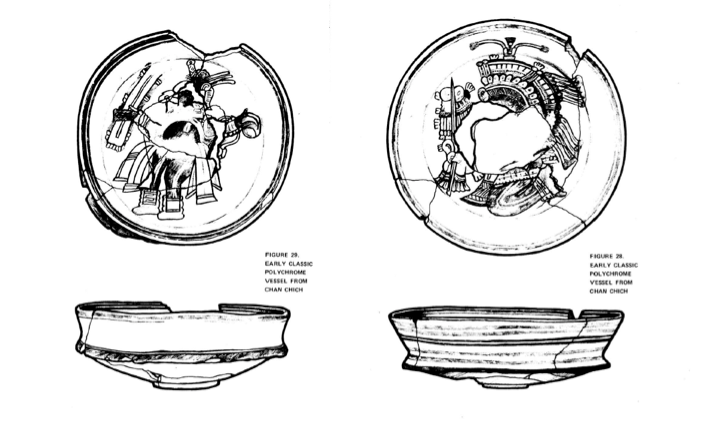
Early Classic Period Polychrome Vessels

Almost from its inception there have been archaeological studies of the Maya sites at Chan Chich by nature of the lodge’s stated purpose to protect the area from further lootering. Professor Thomas Guderjan lead some of the early field seasons (1988 and 1990) studying the Maya Settlements in Northern Belize. At that time, the two Dos-Arroyos Polychrome Vessels illustrated above were some of the only artifacts found on site, but the subsequent seasons, spanning close to 20 years at this point, have yielded extensive data and additional artifacts.

These two vessels remain on display in the restaurant area at Chan Chich Lodge. Although both had been repaired by Guderjan’s team, the one on the left had broken over the years. Just before this season’s team fully dispersed, I took the opportunity to request some puzzle practice.  Continue reading

Cod Recovery Is A Redemption Story


5277

David Milne, skipper of the MSC-certified trawler Adorn, holds a cod in Peterhead fish market. Photograph: Eleanor Church/Marine Stewardship Council

Cod seems as good as any other creature to feature in a redemption story. The editor of the Environment section at the Guardian shares good news on one lucky population of cod that got the attention they needed, seemingly just in time:

Sustainable British cod on the menu after stocks recover

A recovery from near total collapse has led North Sea cod stocks to be labelled as sustainable by the Marine Stewardship Council for the first time in 20 years Continue reading

Resolving a Politically Fraught Problem By Natural Means

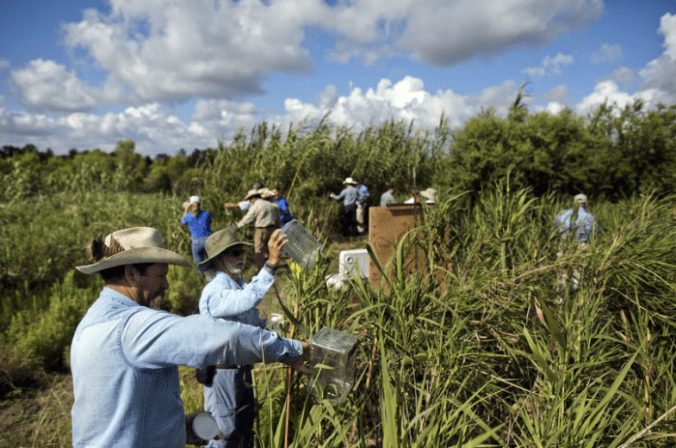
Texas officials release reed-eating Arundo wasps into a thicket of the invasive weed Arundo donaxa, also called carrizo cane, in an effort to weaken or eradicate the plant.Photograph by Victor J. Blue/Bloomberg via Getty

With all the talk about building a wall along the US/Mexico border, it’s rather refreshing to read about this joint program between the U.S.D.A. and Customs and Border Protection to attempt to tear one down.

The problem is a fast growing invasive grass that sucks up water resources, crowds out native plants, and can grow as tall as a 2-story building, . The elegant solution of using stingless wasps whose larvae happily munch on the vigorous plant is elegant compared to options such as bulldozing or aerial spraying of herbicides.

Someone wandering along the banks of the Rio Grande, on the American side, in the summer of 2009 might have been startled by a small cardboard box plummeting to the ground. Neatly sealed with blue packing tape, its paper wrapping crisp and clean, the box would have felt light, even empty. But then, on further inspection, an observer would have noticed the platoon of tiny black insects exiting a slit on one end. Slightly larger than a gnat, the insects would have buzzed off, one by one, into the South Texas heat. Continue reading

“Arks of the Apocalypse”

U.S. National Ice Core Laboratory, Lakewood, Colo. photo credit: Spencer Lowell for The New York Times

Thanks again to the New York Times for highlighting the global nature of this scientific “call to arms” to save not only data, but genetic and organic material as a back-up plan for future generations. From the Svalbard Global Seed bank in Norway, to sperm banks for coral, endangered wildlife, and even glacial ice – these archives are meant to provide both a life line to the future and answers about the past.

The fragility of each project is evident as Science itself has come under attack from current public policy, which doesn’t appear to see the irony of their denial in the face of facts about climate change.

It was a freakishly warm evening last October when a maintenance worker first discovered the water — torrents of it, rushing into the entrance tunnel of the Svalbard Global Seed Vault, a storage facility dug some 400 feet into the side of a mountain on a Norwegian island near the North Pole. A storm was dumping rain at a time of year when the temperature was usually well below freezing; because the water had short-circuited the electrical system, the electric pumps on site were useless. This subterranean safe house holds more than 5,000 species of essential food crops, including hundreds of thousands of varieties of wheat and rice. It was supposed to be an impenetrable, modern-day Noah’s ark for plants, a life raft against climate change and catastrophe.

A few Norwegian radio stations and newspapers reported the incident at the time, but it received little international attention until May, when it was becoming clear that President Trump was likely to pull the United States out of the Paris climate agreement. Suddenly the tidings from Svalbard were everywhere, in multiple languages, with headlines like “World’s ‘Doomsday’ Seed Vault Has Been Breached by Climate Change.” It didn’t matter that the flood happened seven months earlier, or that the seeds remained safe and dry. We had just lived through the third consecutive year of the highest global temperatures on record and the lowest levels of Arctic ice; vast swaths of permafrost were melting; scientists had recently announced that some 60 percent of primate species were threatened with extinction. All these facts felt like signposts to an increasingly hopeless future for the planet. And now, here was a minifable suggesting that our attempts to preserve even mere traces of the bounty around us might fall apart, too.

Continue reading

Maternal Instinct vs Species Survival

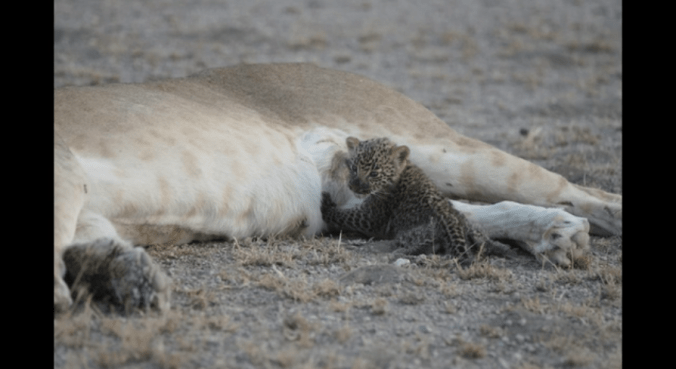
©JOOP VAN DER LINDE/NDUTU LODGE

The more time we spend at Chan Chich Lodge the more we see the seasonality of birth patterns in the wild. There clearly seems to be a “baby season”, that starts with the cats and moves down the food chain to their mammalian prey, as well as birds. Although no photo captures, several jaguar cubs were sighted earlier in the year, followed by dozens of fawns and baby collared peccary. Even the Gallon Jug Farm has welcomed 4 baby horses to the fold, with a fifth on the way…but we’ll talk about that another day.

This unusual news from Panthera.org, an important Big Cat Conservation NGO who uses our 30,000 acres as part of their Jaguar Corridor research, perhaps makes a little bit of sense within the context of those patterns.

We thank Susie Weller Sheppard for sharing these field notes.

Earlier this week, Panthera President and Chief Conservation Officer Dr. Luke Hunter received photos from our partners at KopeLion with some astonishing content: the first-ever evidence of a wild lioness nursing a leopard cub.

Taken on Tuesday by a Ndutu Lodge guest in Tanzania’s Ngorongoro Conservation Area, the images show a 5-year-old lioness, known locally as ‘Nosikitok,’ suckling a leopard cub estimated to be just 3 weeks old. Continue reading

A Fitting Celebration Of Henry David Thoreau’s Bicentennial

Today marks the birthday noted here, and I have just read another excellent essay marking the occasion. It happens to coincide with receiving a couple of excellent photographs from Richard Kostecke, a recent guest of Chan Chich Lodge who will soon be a contributor to this site. I’m confident the birthday celebrant would appreciate both the photos and the person. I am mixing things up a bit by sharing these photos with the essay, but I hope the point will be well taken:

Six years before he moved to Walden Pond in 1845 to ponder life and live deliberately, Henry David Thoreau spent two weeks canoeing rivers in Massachusetts and New Hampshire. The voyage was an epiphany for him. Continue reading

Come Back To Belize, Meg Lowman!

We have mentioned Meg more than once since we met her a few years ago, because our interests are aligned. Thanks to this public radio station for reminding me that Meg is due for a visit to Belize (I say wishfully) for a 20-years later discovery trip, and we will be happy to see her at Chan Chich Lodge when the time comes:

megmalaysiaFor over 30 years, Dr. Meg Lowman –Canopy Meg, has designed hot-air balloons and walkways for treetop exploration to solve mysteries in the world’s forests, especially insect pests and ecosystem health. Meg is affectionately called the mother Continue reading

Spaceship Earth

We recently encountered Parley for the Oceans when Doug Aitken’s water pavilion installation came onto our radar.

Both the collaborative ethos and the focus of the cause are dear to our hearts.

Parley is the Space Where Creators, Thinkers, and Leaders come together to raise awareness for the beauty and fragility of our oceans and collaborate on projects that can end their destruction.

Parley for the Oceans addresses major threats towards our oceans, the most important ecosystem of our planet.

We believe the power for change lies in the hands of the consumer – given he has a choice – and the power to shape this new consumer mindset lies in the hands of the creative industries.

Artists, musicians, actors, filmmakers, fashion designers, journalists, architects, product inventors, and scientists have the tools to mold the reality we live in and to develop alternative business models and ecologically sensible products to give us earthlings an alternative choice, an everyday option to change something.

Continue reading

Snake Kings And Other Discoveries

01-calakmul-maya-pyramid.adapt.1900.1.jpg

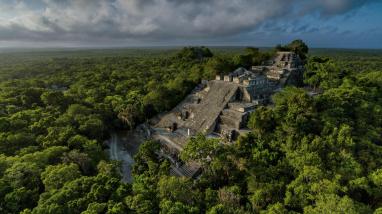
CALAKMUL In the seventh century A.D. the Snake rulers presided over this capital city—in what today is southern Mexico—and its largest structure, a pyramid 180 feet tall. From Calakmul they managed an intricate web of alliances. CONSEJO NACIONAL PARA LA CULTURA Y LAS ARTES (CONACULTA), INSTITUTO NACIONAL DE ANTROPOLOGÍA E HISTORIA (INAH), MEXICO

Discoveries in the lands once populated by the Maya continue apace. As Chan Chich Lodge completes three decades of archeological exploration, the wonders of three millennia are uncovered. The stories that capture my interest the most, related to the Maya, are about the man-nature relationship.

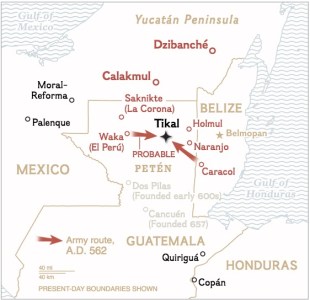
SnakeKingMap.jpg

JEROME COOKSON, NG STAFF
SOURCE: DAVID FREIDEL, WASHINGTON UNIVERSITY IN ST. LOUIS

For example, Erik Vance’s story from last year. I remember thinking that it was the best article I had ever read in National Geographic. Partly, the graphics are better, if that is possible, than the typically excellent quality the magazine is known for. Also, the topic is more topical for me now. Chan Chich Lodge is situated exactly where the o in Holmul is on the map to the left. The lodge’s Maya foundations are situated at the periphery of where the snake kings once ruled.

And we now have an ethnobotanical initiative linking Maya foodways to our surrounding nature conservation. That initiative is linked to the lodge’s food program, with some high expectations related to our abundant forests. But mainly, with regard to this article, the writing illuminating the topic is excellent:

…Two warring city-states were locked in perennial conflict, grappling for supremacy. For a brief period one of those city-states prevailed and became the closest thing to an empire in Maya history. It was ruled by the Snake kings of the Kaanul dynasty, which until just a few decades ago no one even knew existed. Thanks to sites around this city-state, including Holmul, archaeologists are now piecing together the story of the Snake kings…

35 composite of 2 and 3.adapt.1190.1.jpg

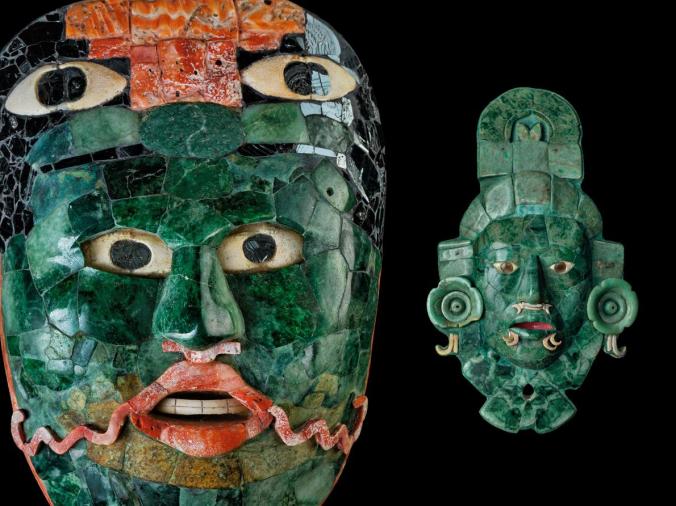
Masks from the tombs at Calakmul were meant to ease the passage of the Snake elite into the next world. Royal visages made of green jade, more valuable than gold to the ancient Maya, evoked the annual agricultural cycle and regeneration. CONACULTA, INAH, MEXICO (BOTH) PHOTOGRAPHED AT (LEFT TO RIGHT): NATIONAL PALACE, MEXICO CITY; MUSEO DE SITIO DE COMALCALCO, MEXICO