Sport Beyond The Self

The tiresome doping scandals plaguing many sports are rivaled mainly by the ego blasts emanating from winner-take-all superstar players; but this conversation with Edson Arantes do Nascimento (better known as Pelé) has a soothing effect:

Pelé, when you are the best at something how hard is it not to get arrogant about it?

I used to tease the kids because I played better than them. But my father told me, “Don’t do this with the kids because you know how to play football; God gave you the gift to play football. You didn’t do anything. You have to respect people, because it is important to be a good man, a good person.  From now on, you must be this example.” Continue reading

A Tiger’s Tale

Photo credit: Sudhir Shivaram

A few months ago I wrote about the RAXA Collective and Pixetra Photography master bird photography class held at Cardamom County. It was an amazing experience in and of itself, but it also gave us the opportunity to meet the instructor, wildlife photographer Sudhir Shivaram, and some talented participants, one of whom is now a contributor to our site. (I’m always keeping my hopes up that others will join her!)

During the 3 day workshop, between treks in the Periyar Tiger Reserve, the Megamalai Wildlife Sanctuary and a private 200 acre cardamom plantation, I spoke with Sudhir about his experiences as a photographer and an ambassador for Indian wildlife conservation.

He’s been photographing wildlife in India for well over a decade, so I asked him to describe his most memorable “capture”. He shared this experience from 2006 in the Bhadra Tiger Reserve:

10 years of wildlife photography and I had never seen a tiger in the wild, let alone photographing one. Many of my friends advised me to go to Bandhavgad if I wanted to see a Tiger. But I always had the wish to see my first Tiger in the wild in the south Indian forests. On March 17th 2006, I had seen my first tiger at BRT Wildlife Sanctuary- just the body and the tail. That too for a fraction of a second. And this visit to Bhadra along with Vijay and Yathin proved to be a lucky one. I had shot my first Leopard at Bhadra on 31 Oct 2004 (which is my website logo). And 2 years later, I was seeing and photographing my first Tiger at the same place. Here’s the sequence of events which followed then. Continue reading

Noise Pollution’s Viral Enemy

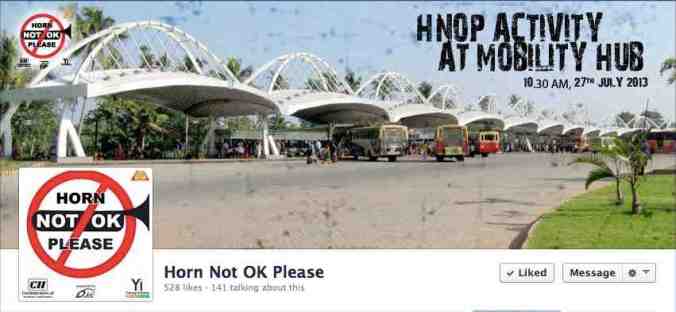
Yesterday was another milestone for anti-noise pollution’s cleverest activists in India. We have mentioned this project, introduced here when it was still just a catchy much-needed idea, but it has now become a movement. We are still hoping for an update in person from the idea’s originator, but meanwhile: don’t honk if you like HNOP, but like it on Facebook!

A Life Well Lived

This slideshow requires JavaScript.

Thanks to Paul Rosenfeld and Atlantic for this post and accompanying video, which is not just a nature-lover’s four minutes well spent, but a subtle tribute to the importance of collaboration in individual accomplishment:

“It’s in the wild places, in the damp clean air of an ancient forest, on a heaving ocean with unpredictable winds, on a snowy summit at the top of the world that I enter my own personal cathedral, and know where I fit in the vastness of creation,” says Jim Whittaker. Continue reading

Kitchen Collaboration

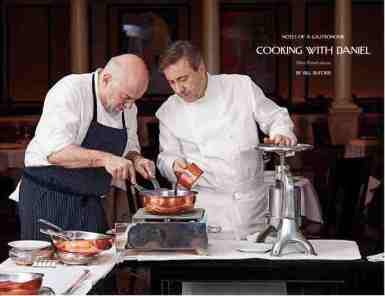
Kitchen Confidential juggled with foodies’ fascinations in new and unusual ways, and since then reality television seems to be the appropriate new home for that side show.  Oddly, it began in 1999 with an article in the New Yorker. So it is only fitting that the magazine has been balancing those dynamics with the work of less celebrity-oriented writers ever since.  None better than Bill Buford, who gets out there, and in there, like a citizen scientist for the story (though he is not shy of carny, either). Here what catches my attention is the collaboration, but plenty on the ethos of an artisan, the farm as the garden of eden, and last but not least the role of food in heritage and heritage in food (click the image above to go to the article):

Two years ago, during the summer of 2011, Daniel Boulud, the New York-based French chef, told me he had been thinking about a project that we might do together. We were both in France at the time. I was living in Lyons—I had moved there in order to learn French cooking—and Boulud was visiting his family in Saint-Pierre-de-Chandieu, a nearby village on a wooded ridge in the open countryside. Continue reading

Stuff, Change, And Examining Broke

View the video by clicking the image above, again brought to you on Cornell University’s website:

The United States isn’t broke; we’re the richest country on the planet and a country in which the richest among us are doing exceptionally well. But the truth is, our economy is broken, producing more pollution, greenhouse gasses and garbage than any other country. Continue reading

Collaborative Poaching-Patrol

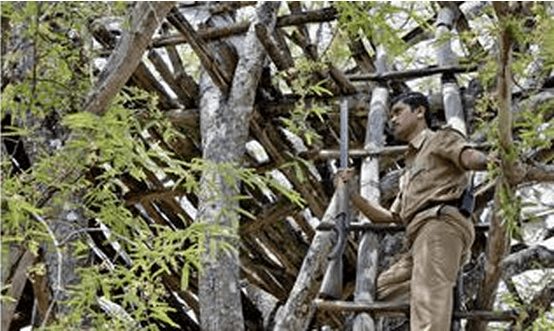
The Hindu— File Photo

We’ve written about the importance of forest stewards before, primarily because in many cases they straddle the roles of guard and guide within the territories they protect. But many of those protected areas in India are suffering from severe shortages of qualified field staff, putting enormous areas of land, not to mention the wildlife that call it home, at risk.

But the Karnataka Eco-Tourism Development Board is initiating an innovative plan to train volunteers to be forest naturalists who will assist the forestry department a minimum of two weeks per year in their anti-poaching activities.

In order to create this pool of trained volunteers, the Karnataka Eco-Tourism Development Board is offering, for the first time in the country, three- and four-day Naturalist and Volunteer Training. The board is offering the training programme in association with Jungle Lodges and Resorts Ltd. Continue reading

It’s About The Collaboration

All six minutes are a pleasure, but the last few seconds resonate across time and space:

This past fall, Yolanda Cuomo, a New York-based artist and graphic designer, learned that she had to vacate her Chelsea studio of twenty-five years. Continue reading

Student Innovation Helping Make a Better World

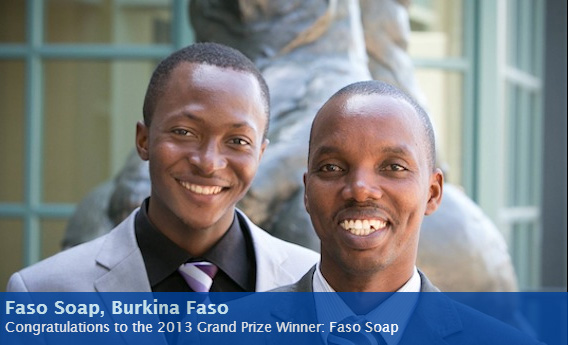
Fasoap Founders Photo courtesy of gsvc.org

Moctar Dembele and Gerard Niyondiko are this year’s grand prize winners of Global Social Venture Competition, an annual competition that awards young entrepreneurs for ideas that can have a positive impact on the world. Their idea “Fasoap” hopes to help prevent the contraction of malaria, a disease that Johns Hopkins Research Institute states over 40% of the world is at risk for, including parts of Africa and India. Malaria a disease that is contracted through bites of infected mosquitoes. Once contracted the medical treatment for the malaria can be very costly, and many of the people who contract it have trouble seeking and paying for such medical care. Continue reading

Smiling, Thinking Of Math As Language

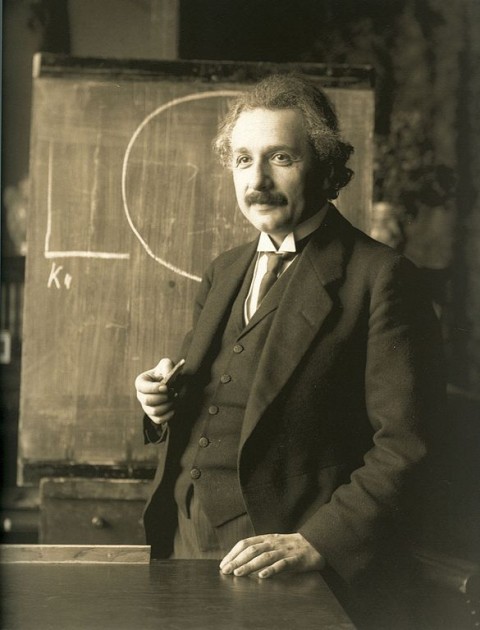
Planning our work with communities in diverse locations, language is a challenge, a puzzle. We are constantly on the lookout for new ways of thinking about how to resolve this puzzle, so when we hear this fellow speak on the topic, it makes us smile. Nothing to do with conservation, but everything having to do with community and collaboration at a very fundamental level, we thank Open Culture for bringing this wonderful recording to our attention:

The essay is called “The Common Language of Science.” It was recorded in September of 1941 as a radio address to the British Association for the Advancement of Science. The recording was apparently made in America, as Einstein never returned to Europe after emigrating from Germany in 1933. Continue reading

Reducing Waste While Contributing to Communities

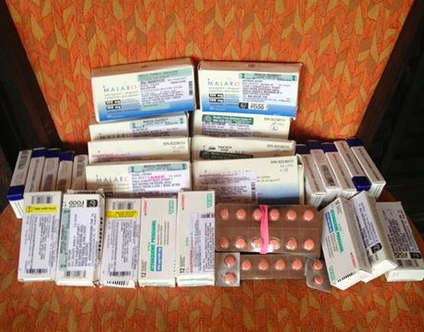
When “first world” travelers are planning a trip to the “third world”, their doctors often require them to take a handful of vaccinations, and a few prescriptions. This summer, about 40 students from a graduate program at the University of Western Ontario interned in Kerala, hosted by Raxa Collective; many of them, to err on the side of caution brought medicines for tropical diseases, including malaria. However, most of those medications are not needed in Kerala, whose health profile is comparable to Costa Rica, and which happens to be malaria-free.

As weeks progressed, many of the interns stopped taking their pills and consequently they were left with an excess, which are worth much more to those in need than in the garbage can back home. Continue reading

Search Well, Do Good, Avoid Not Being Evil

The big guns of the tech world have the financial weight to reinvest in new services, but can startups give them a run for their soul?

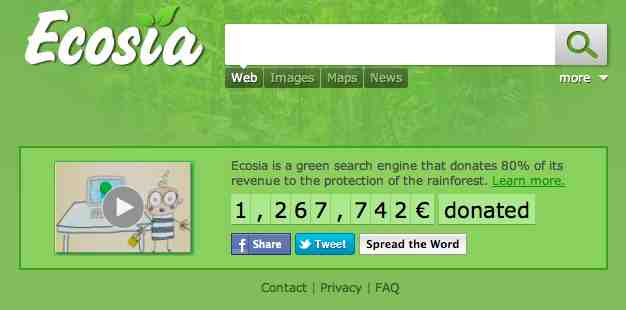
I have not tested it yet, but there is a new, alternative search engine worthy of checking out. Click the image above to go to the Guardian story about would-be giant-killing do-gooders (or is it giant-killing would-be do-gooders?):

A new breed of internet startup is taking on the big guns of the tech world. Seeking to capitalise on consumer disillusionment with the established order in the wake of headlines about tax-dodging, personal data profiteering and poor factory conditions, these startups represent the radical face of the internet.

Unusually for a tech company, however, it is not technological innovation that gives them their unique selling point. Rather it is the promise to do social and environmental good.

“They started with decent values – Google and Apple,” says Christian Kroll, founder of Ecosia, an eco-conscious search engine based in Berlin. “They wanted to build something that improves the world. But as soon as you become a public company, shareholders exert influence.” Continue reading

Communities Acting Collectively With Entrepreneurial Leadership

Screen Shot 2013-07-08 at 9.50.42 AM

Thanks to this interview podcast on Fresh Air, we learned about Ava DuVernay and through her we learned about @AFFRM (click the banner above to go to their site, and be sure to read her interview with Director Spike Lee). DuVernay is a cultural entrepreneur, par excellence, and we salute her sense of community and collaboration:

Before she started making movies a few years ago, DuVernay made a name for herself through her marketing and publicity firm DVA Media + Marketing, which has handled films by brand-name directors like Clint Eastwood and Steven Spielberg. Continue reading

Plant Collaboration, Productivity, And Waste Minimization

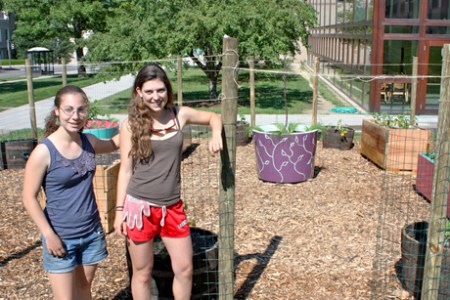
Alex Koeberle

Alex Koeberle. Plant science students Sarah Nechamen ’15 and Celine Jennison ’14 helped create a garden outside Kennedy Hall to demonstrate permaculture.

An item from Cornell University’s newspaper, the Chronicle, highlights a topic we want to know more about:

Diners at Trillium need not look farther than out the window to see where part of their meal originates.

The basil in their pasta or cilantro in their quesadilla may have been plucked from the new garden adjacent to Kennedy Hall, constructed by students last week.

The site will also enable staff and students to stroll around and learn about permaculture – a self-sustaining agricultural system in which herbs, fruits and vegetables are strategically planted so that they work together in mutual benefit. Some plants provide shade, for instance, while others offer pest resistance.

A permaculture garden is essentially a network, with each plant working together, explained plant sciences major Sarah Nechamen ’15, past president of the Cornell Permaculture Club. This increases garden productivity while minimizing waste and human interference. Continue reading

Metro Travelers Meet Mega-Fauna

Buying Illegal Ivory is Killing Me’: One of the posters from the Shanghai campaign. Credit: UNEP

Shanghai is famous as China’s “City of the Future” and in collaboration with this United Nations-backed campaign metro travelers are finding large-screen displays and posters of endangered animal species during their daily commute.

Public awareness was a key factor behind the reduction in the demand for ivory in North America and Europe in the 20th century, and it can play its part in reducing the illegal wildlife trade today as demand moves to emerging markets. Continue reading

Lonesome George Makes His NYC Debut

There’s something unsettling about taxidermy and the lifelike diaramas that I grew up seeing at museums.  But the research that goes into each zoological and botanical detail serves a monumental educational purpose for visitors and scientists alike. And in a “Last Chance to See” context, there are cases where those diaramas are the only way both current and future generations are able to have a face to face experience with extinct species.

A little over a year ago the icon of Galapagos conservation “Lonesome George” died of natural causes. Although property of the people of Ecuador, he is considered an example of World Heritage Patrimony. Researchers froze his body and shipped it to the American Museum of Natural History for preservation and a temporary exhibition in New York. Continue reading

Music, Duets, And Inspiration For Other Forms Of Collaboration

Collaboration has been central to music since the beginning of time. Most of our posts about collaboration intend to point out more unusual, but much needed, forms of collaboration related to communities and their surrounding ecosystems. Something about this album captures our intent with this word better than most news items usually do.  Credit for our finding our way to this musical collaboration goes to the interview the duet gave some time back:

Emmylou Harris and Rodney Crowell were featured on today’s episode of NPR’s Fresh Air. The two spoke with host Terry Gross about their long friendship and their new album, Old Yellow Moon, a new 12-track duets album featuring song by Crowell and others that marks the first official collaboration from the duo since Crowell joined Harris’ Hot Band as guitarist and harmony singer in 1975. The two also discuss a few of their musical Continue reading

Cornell Tech Redefines “Industrial Complex”

Architectural firm WEISS/MANFREDI project rendering

Architectural firm WEISS/MANFREDI project rendering

When President Eisenhower warned of the rising power of the hyphenated industrial complex his concerns were clearly well-founded. Cornell NYC Tech, the upcoming Roosevelt Island campus of graduate high-tech education, is in the process of rehabilitating the concept of collaboration with industry with the development of its first “corporate co-location” building.

“Cornell Tech is radically rethinking how industry can collaborate with faculty, students and researchers, and corporate co-location is vital to making that a success,” Continue reading

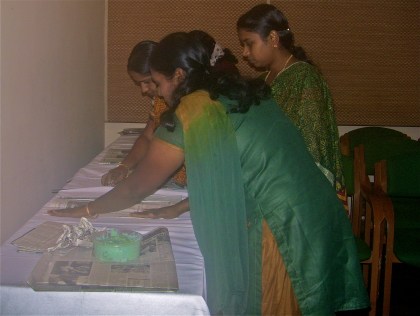
Training session at the newspaper bag unit

Our newspaper bag unit is a permanent, exciting work-in-progress. Using upcycled newspapers provides us with an alternative  to plastic bags in our two shops at Cardamom County– the Raxa Collective store and the via kerala shop. It is also a way to work with more people in our community. We have been working at making this unit a sustainable entreprise with many collaborators since the beginnings of Raxa Collective in 2011.

Newspaper bag training unit - Raxa Collective Continue reading

Cane is King

This week Isabel and I continued to survey coffee producers and visit cafetales (shade coffee plots) while we also began interviewing ex-coffee producers (people who planted coffee but either have stopped harvesting it or never did) and conducting more conversational, open-ended interviews with coffee producers. Additionally, a baby cow was born on the farm and we have officially started to become sick of rice, beans, and soup.

Last week I wrote about the technical problems with shade coffee. This week I’ve learned much more about the social elements constraining it. One of the most common things we heard people say this week was that they don’t have time to work on their cafetales. By this they mean that they don’t weed it, fertilize it, or spray it to control pests and diseases. All they do is simply harvest it when it’s ready. It also means that they’re not willing to give up time from their other crops to dedicate to coffee. “Si carga, carga. Si no carga, no carga.” If it produces, it produces. If it doesn’t, it doesn’t. This attitude shows a serious lack of commitment and is also preventing people from seeing the true economic potential of this valuable crop. In our interviews we’ve been asking what people’s main sources of income are, and not one person has mentioned coffee.

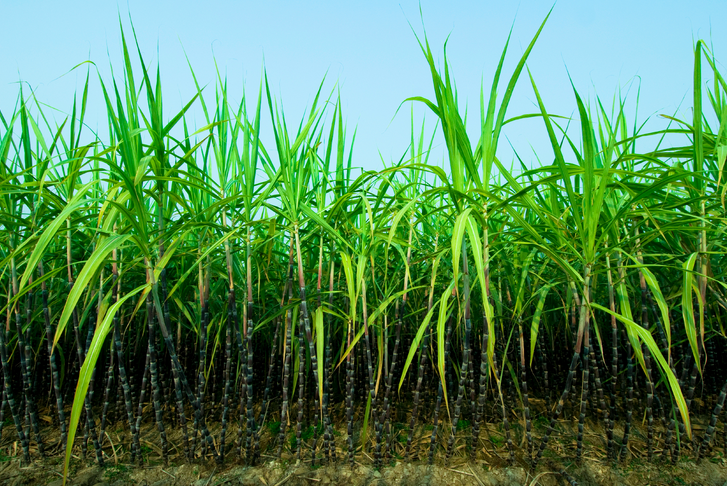
Why is this the case? Largely, because of subsistence agriculture and sugarcane. Here in Barrio Nuevo, cane is king. Continue reading