More Youth Demanding Liveable Futures

portion of the Kenai Peninsula in Alaska in 2023. The project would involve construction of a liquefaction plant to prepare the gas for export to Asia. Photograph: Richard Ellis/Alamy

Our appreciation to Dharna Noor for writing a clear story about this new legal initiative, and to the Guardian for publishing it. What started in Montana, a naturally well-endowed state with a mixed environmental record, now continues in Alaska, the biggest frontier of the American West. Our thanks to the younger generation for taking up the fight creatively:

Young Alaskans sue state over fossil fuel project they claim violates their rights

Plaintiffs claim $38.7bn gas export project, which would triple state’s greenhouse gas emissions, infringes constitutional rights

Eight young people are suing the government of Alaska – the nation’s fastest-warming state – claiming a major new fossil fuel project violates their state constitutional rights. Continue reading

Making Good Trouble In India

Another of this year’s trouble-making prize-winners:

Meet Alok Shukla

Alok Shukla led a successful community campaign that saved 445,000 acres of biodiversity-rich forests from 21 planned coal mines in the central Indian state of Chhattisgarh. In July 2022, the government canceled the 21 proposed coal mines in Hasdeo Aranya, whose pristine forests—popularly known as the lungs of Chhattisgarh—are one of the largest intact forest areas in India. Continue reading

Vermont Vote Victory

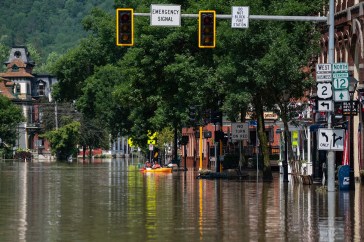
Flooding in downtown Montpelier, Vermont, in July, 2023.Photograph by John Tully / Washington Post / Getty

When you read to the end of this short commentary, you will wonder whether this is a victory at all, but when Elizabeth Kolbert says it is, it probably is. It just requires more pondering to understand how it is:

Vermont Moves to Hold Fossil-Fuel Companies Liable for Climate-Change Damage

A new constituency is willing to stand up to Big Oil (and Gas and Coal): state government.

On July 10, 2023, Vermont’s state capital, Montpelier, was hit with more than five inches of rain. Continue reading

McKibben On Responsibility & Accountability

Vermont’s capitol city, underwater in epic July flooding that wrecked most of Montpelier’s retail district

Holding the responsible accountable is part of Bill McKibben’s objective; he also provides sunshine. Subscribe to this newsletter if you can:

You flood it, you pay for it.

States are considering ‘climate superfund’ laws to hold Big Oil accountable

One prong of the climate fight involves installing so much renewable energy that fossil fuel use actually declines dramatically—a few places are finally showing that’s possible, like sunny Germany which last week said emissions in 2023 dropped more than ten percent. Continue reading

Carbon Clean 200’s Performance Update Report

A press release for this report above summarizes the findings:

Carbon Clean 200 Companies Outperform Dirty Energy by 39%

The 11th cohort of global Clean200 leaves dirty energy investments in the dust

As You Sow and Corporate Knights today released their 11th update of the Carbon Clean200™, a list of 200 publicly traded companies worldwide leading the way among global peers to a clean energy present and future. These companies generated almost double the returns of the main fossil fuel index from July 1, 2016, to January 15, 2024, despite geopolitical tensions that have favored fossil fuel stocks in the past two years. Continue reading

Activism & The Potential For Change

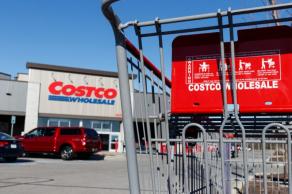
Costco is being urged to cut ties with Citi, the bank that acts as its credit card issuer.

We knew about dirty banking, and now this story from Bill McKibben’s newsletter got us reading about change activism in Progressive Grocer:

Costco Becomes Target of Climate Action Petition

Wholesaler’s credit card issuer Citi is said to have a poor climate record

Costco Wholesale CEO Ron Vachris will receive a petition signed by 40,000 of its shoppers, shareholders and many climate activists on Jan. 17 urging the retailer to drop Citi as its credit card issuer due to the bank’s problematic climate record. Continue reading

Corrupt Cop

Illustration by Isabel Seliger

Ever wondered what the Cop in Cop1-28 means? The answer is not nearly as interesting as how it came to be that a country whose lifeblood is oil is hosting Cop28. Petrostates have been biding their time, gaining momentum, and now have corrupted the Cop system from within. Weekend reading, Thanksgiving edition, from Elizabeth Kolbert, explains the stakes:

The Road to Dubai

The latest round of international climate negotiations is being held in a petrostate. What could go wrong?

Cop1 was held in 1995 in Berlin’s International Congress Center, a massive, metal-clad complex that looks like the set for a dystopian movie. Around nine hundred government delegates attended the weeklong negotiating session, along with about a thousand observers from non-governmental organizations. Daimler-Benz brought some electric cars to show off, while young activists brought a steamroller, to convey their opposition to cars. Delegates were invited to take a trip along the River Spree in a solar-powered boat. Continue reading

Letters To The Secretary

We have appreciated this newsletter since it started, and every issue since. This week it brings these handwritten letters to our attention:

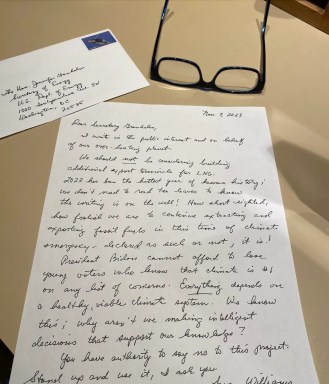
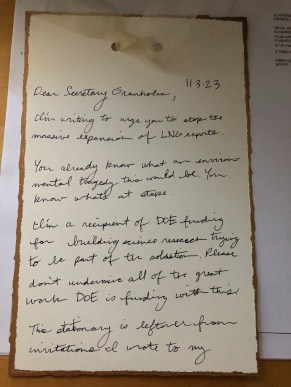
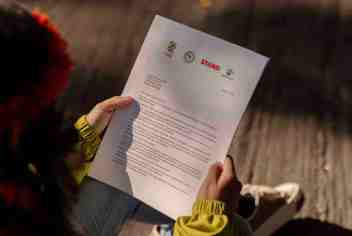
…Oh, and who’s the other group of climate voters the president needs to worry about? That would be older people, like those of us at Third Act—we codgers have been organizing mass protests all year. And while we may not be TikTok savvy, we have another weapon: pen and stationery. In the last week Third Actors have unleashed thousands of letters on DOE headquarters—which may not sound quite as sexy as petitions from the Internet, but they have their own impact, since officials know that if you’re willing to do more than click you’re probably an effective and motivated adversary.

So consider [image above left]

Or [image to the right]

What I’m trying to say is, the Department of Energy has a real problem—an increasingly aware and activated posse of youngsters and oldsters. And a solution: announce CP2 is going nowhere, and that no other project will be approved, or even considered, until there’s been an exhaustive rewrite of the criteria taking into account the latest science and economics. It’s not hard. Continue reading

Pricing Flights Realistically

United Airlines wants to zero out its greenhouse gas emissions by 2050, but without using conventional carbon offsets. Nicolas Economou/NurPhoto via Getty Images

If airlines can quantify what it would cost to become carbon neutral within a relevant timeframe, it implies that we know by how much they are currently fudging their investment model. If it is going to require an investment of X number of dollars over Y number of years to achieve carbon neutrality then they should invest, and price their flights accordingly. Then we will all know the real cost of flying, including the environmental cost. Thanks to Umair Irfan (long time since we last saw his work) and to Vox for this:

Emirates demonstrated a Boeing 777 flight fueled with SAF earlier this year. Giuseppe Cacace/AFP via Getty Images

Airlines say they’ve found a route to climate-friendly flying

Cleaner, faster, cheaper — the aviation industry’s plan to decarbonize air travel, explained.

If you’ve caught an ad for an airline lately on TV, a podcast, or the entertainment display on your flight, you’ve probably heard the company brag about what it wants to do about climate change.

Major airlines like AmericanDeltaSouthwest, and United have all set targets of achieving net-zero greenhouse gas emissions by 2050. They’re using a suite of tactics including buying more fuel-efficient aircraft, electrifying their ground vehicles, and increasing the efficiency of their operations. They’re also testing the winds on battery- and hydrogen-powered planes, as well as some radically different aircraft designs. Continue reading

Really, Cargill?

Beka will hand-deliver a letter to the Cargill-MacMillian dynasty in Minneapolis on Thursday, calling on the billionaire owners of America’s biggest private company to stop destroying the Amazon rainforest and its people. Photograph: Thalia Juarez/The Guardian

Cargill has appeared a few times in our pages over the years, not always showing poor stewardship. But today, we have to ask whether they really are trying as diligently as possible to do the right thing. We applaud Beka and her community for this letter, and hope the recipients respond with the sense of responsibility that comes with their wealth:

A Cargill transshipment port for soy and corn projects on the Tapajos River in Itaituba, Para state, Brazil, in 2019. Photograph: Léo Corrêa/AP

‘Our world hangs by a thread’: Indigenous activist asks US agri giant to stop destroying Amazon rainforest

Beka Saw Munduruku , 21, traveled 4,000 miles to deliver letter and confront family behind Cargill empire over what she says amounts to a litany of broken promises

A 21-year-old Indigenous activist from a remote Amazonian village will hand deliver a letter to the Cargill-MacMillan dynasty in Minneapolis on Thursday, calling on the billionaire owners of the US’s biggest private company to stop destroying the Amazon rainforest and its people. Continue reading

Small Win For Limited Right To Trespass In The UK

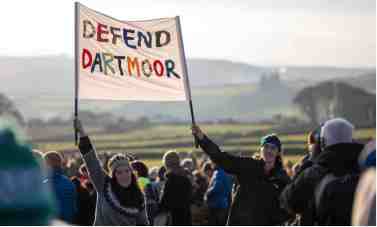
Wild camping campaigners on Dartmoor earlier this year. Photograph: Jim Wild

We thank Helena Horton for her update on this story we linked to just a few days ago:

Wild camping allowed on Dartmoor again after court appeal succeeds

Dartmoor National Park Authority had appealed against January high court ruling that outlawed practice

Wild camping is once again allowed on Dartmoor after the national park won a successful appeal against a ruling in a case brought by a wealthy landowner. Continue reading

To Dye For Author Interviews

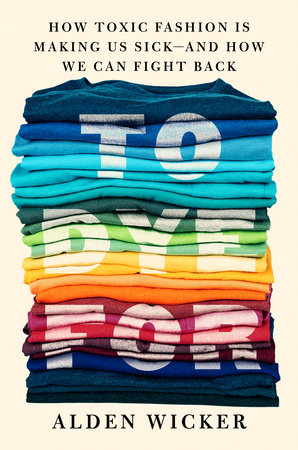
None of us wants yet one more environmental hazard to worry about. But ignorance is not bliss. Wired offers an interview with Alden Wicker about the book to the right, and the Fresh Air podcast with her is also worth the listen, especially if you have sensitive skin and/or have ever wondered if your clothing was the cause of certain kinds of discomfort. Women of reproductive age, especially, listen to both:

Your Clothes Are Making You Sick

This week, we talk to the author of To Dye For, a new book about toxic fashion and the abundance of harmful chemicals in our clothing.

HOTOGRAPH: ALFIAN WIDIANTONO/GETTY IMAGES

HAVE YOU EVER put on a new shirt and discovered that it makes you feel itchy? Or taken off a new pair of pants at the end of the day to find that the fabric has given you a rash? This problem is increasingly common as more chemicals are added to our clothing when they’re dyed or treated with additives that make them resistant to stains, wrinkles, and odors. Some of these chemicals are irritants that can cause breathing problems or skin issues. Others are toxic enough to trigger life-altering autoimmune diseases. Since the fashion industry operates within loose regulations, the problem of toxic apparel isn’t going away anytime soon.

Youth Is Not To Be Wasted In Montana

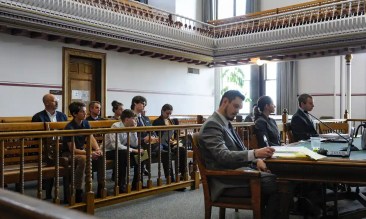
The plaintiffs look on during a status hearing for Held v Montana in the Lewis and Clark county courthouse in Helena, Montana, last month. Photograph: Thom Bridge/AP

At first it sounded like a gimmick, but listen to and read about it: there is a useful half hour podcast on this topic, and here we thank the Guardian for a bit more detailed coverage:

‘My life and my home’: young people start to testify at historic US climate trial

Some of the plaintiffs listen to arguments during the hearing in Montana. Photograph: Thom Bridge/AP

The plaintiffs note that Montana’s constitution pledges a healthy environment ‘for present and future generations’

The US’s first-ever trial in a constitutional climate lawsuit kicked off on Monday morning in a packed courtroom in Helena, Montana.

The case, Held v Montana, was brought in 2020 by 16 plaintiffs between the ages of five and 22 from around the state who allege state officials violated their constitutional right to a healthy environment by enacting pro-fossil fuel policies. Continue reading

Taking Better Care With Help From Kate Raworth

What? We never posted on this book or its economist author before? We correct that now with Hettie O’Brien’s article in the Guardian :

The planet’s economist: has Kate Raworth found a model for sustainable living?

Her hit book Doughnut Economics laid out a path to a greener, more equal society. But can she turn her ideas into meaningful change?

Raworth in Oxford. Photograph: Graeme Robertson/The Guardian

Consider the electric car. Sleek and nearly silent, it is a good example of how far the world has progressed in fighting the climate crisis. Its carbon footprint is around three times smaller than its petrol equivalent, and unlike a regular car, it emits none of the greenhouse gases that warm the planet or noxious fumes that pollute the air. That’s the good news. Then consider that the battery of an electric car uses 8kg of lithium, likely extracted from briny pools on South America’s salt flats, a process that has been blamed for shrinking pasturelands and causing desertification.

A bike park in Amsterdam which offers free parking for more than 2,500 bicycles. Photograph: Jochen Tack/Alamy

The 14kg of cobalt that prevent the car’s battery from overheating have probably come from the Democratic Republic of the Congo, where cobalt mines have contaminated water supplies and soil. As the demand for electric vehicles grows, the mining and refining of their components will intensify, further damaging natural ecosystems. By 2040, according to the International Energy Agency, the global demand for lithium will have increased more than fortyfold. Continue reading

Out With PFAS, Considering Alternatives

PFAS are used as a coating on food packaging and are prevalent in other everyday items like personal care products and textiles.

Triple Pundit, and writer Riya Anne Polcastro, are new to us, and we appreciate their coverage of this complex topic, important both for health and environmental reasons:

Nixing PFAS is a Real Possibility: Here’s One Company That’s Doing It

Per- and polyfluorinated substances (PFAS) have been getting a lot of negative publicity. And with good reason. Classified as “forever chemicals,” they’ve been found in food, water, soil, animals and even our blood. Although the extent of their effects is not fully understood, they are known to negatively impact human health in a variety of ways. But while many are calling for an overall ban on the chemicals, pushback from the industry seeks to simply switch out the PFAS we already know are harmful with lesser-known ones that likely have the same — or possibly even worse — effects. Continue reading

Chilekwa Mumba, 2023 Goldman Environmental Prize Winner

https://youtu.be/8TG_1ILhxcU

The 2023 Goldman Prize goes to this man:

Alarmed by the pollution produced by the Konkola Copper Mines operation in the Copperbelt Province of Zambia, Chilekwa Mumba organized a lawsuit to hold the mine’s parent company, Vedanta Resources, responsible. Chilekwa’s victory in the UK Supreme Court set a legal precedent—it was the first time an English court ruled that a British company could be held liable for the environmental damage caused by subsidiary-run operations in another country. This precedent has since been applied to hold Shell Global—one of the world’s 10 largest corporations by revenue—liable for its pollution in Nigeria.

Our thanks to Jocelyn C. Zuckerman for this conversation with him:

The Nchanga copper mine, operated by Konkola Copper Mines, in Chingola, Zambia. WALDO SWIEGERS / BLOOMBERG VIA GETTY IMAGES

This Zambian Took on a U.K. Mining Giant on Pollution and Won

Chilekwa Mumba led a court battle to hold a U.K.-based company responsible for the gross pollution from a copper mine it owns in Zambia. In an interview, he talks about how he and local villagers faced arrest to overcome long odds and finally win a landmark legal victory.

The southern African nation of Zambia is home to a wealth of minerals — in particular, lots of the copper and cobalt that the world will require to power a green economy. Continue reading

Lie-Liable Fossil Fuel Companies

Following record rains in April of 2014, a section of Baltimore street simply collapsed. Now there’s some chance of holding the culprits accountable.

Thanks to Bill McKibben for this legal news following plenty of precursor stories on the same topic:

High court lets cities and states sue Exxon et al

…But something else happened yesterday too, with a price tag that may eventually dwarf that settlement, and with even larger potential implications for the future of the planet. The Supreme Court, also tersely, declined to grant cert in a case brought by oil companies desperately trying to hold off state court trials for their climate crimes. Continue reading

McKibben Embraces Green Building Boom

Grace J. Kim

We link to one person more than anyone else, for good reason:

ELECTRIFY EVERYTHING

Yes in Our Backyards
It’s time progressives like me learned to love the green building boom.

The United States is on the brink of its most consequential transformation since the New Deal. Read more about what it takes to decarbonize the economy, and what stands in the way, here

I’m an environmentalist, which means I’ve got some practice in saying no. It’s what we do: John Muir saying no to the destruction of Yosemite helped kick off environmentalism; Rachel Carson said no to DDT; the Sierra Club said no to the damming of the Grand Canyon. Continue reading
Who Is Protesting Banks That Fund Oil Companies?

When he points us to people like this, we can only celebrate it and pass it on:

Rock On

So many thanks to all who work for change

BILL MCKIBBEN
MAR 25

The white-haired woman in the picture above is one of my great heroes in the world. Her name is Heather Booth, she’s 77, and a board member at Third Act, which helped organize last Tuesday’s massive day of protest against the fossil-fueled banks, coordinating 102 demonstrations in 30 states and (see above) the District of Columbia, where the Rocking Chair Rebellion shut down four banks for the day. Continue reading

Small But Meaningful Legal Support Of Protest

Insulate Britain supporters protesting in London this month. Photograph: Daniel Leal/AFP/Getty Images

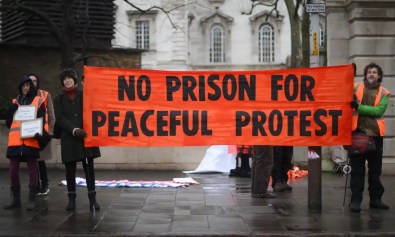
Strange that this requires a protest, but that’s how it is. Our thanks to Damien Gayle of the Guardian for this coverage:

Top lawyers defy bar to declare they will not prosecute peaceful climate protesters

Six KCs among more than 120 mostly English lawyers to sign pledge not to act for fossil fuel interests

Leading barristers have defied bar rules by signing a declaration saying they will not prosecute peaceful climate protesters or act for companies pursuing fossil fuel projects. Continue reading