Community, Collaboration & Bees

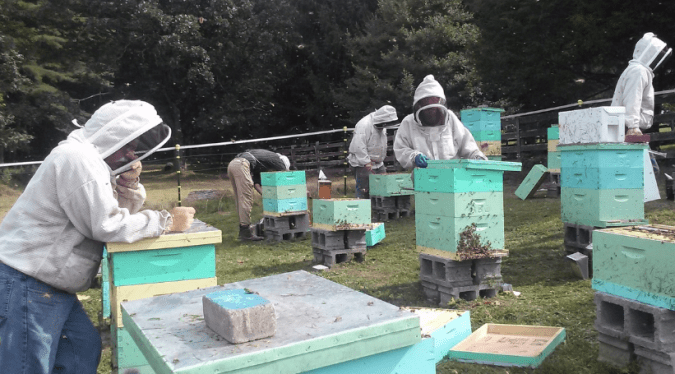
Members of the Appalachian Beekeeping Collective inspect one of their apiaries. The collective trains displaced coal miners in West Virginia on how to keep bees as a way to supplement their income. Courtesy of Kevin Johnson

We never tire of highlighting good news about bees. Thanks to NPR, Jody Helmer, and the Salt for bringing us this to our attention.

Out-Of-Work Appalachian Coal Miners Train As Beekeepers To Earn Extra Cash

Just like his grandfather and father before him, James Scyphers spent almost two decades mining coal in West Virginia.

“These were the best jobs in the area; we depended on ’em,” he recalls.

But mining jobs started disappearing, declining from 132,000 in 1990 to 53,000 in 2018, devastating the area’s economy. In a state that now has the lowest labor-force participation rate in the nation, the long-term decline of coal mining has left West Virginia residents without new options to make a living.

Scyphers was fortunate to find a construction job, but it paid 2/3 less than what he earned underground. He often took odd jobs to make ends meet. One of those odd jobs included building hives and tending bees for the Appalachian Beekeeping Collective.

“I wish this group had been here 30 years ago,” he says. “Our region needs it.” Continue reading

Hill Culture Contemplation

surfacing-bothies-1-jumbo-v2.jpg

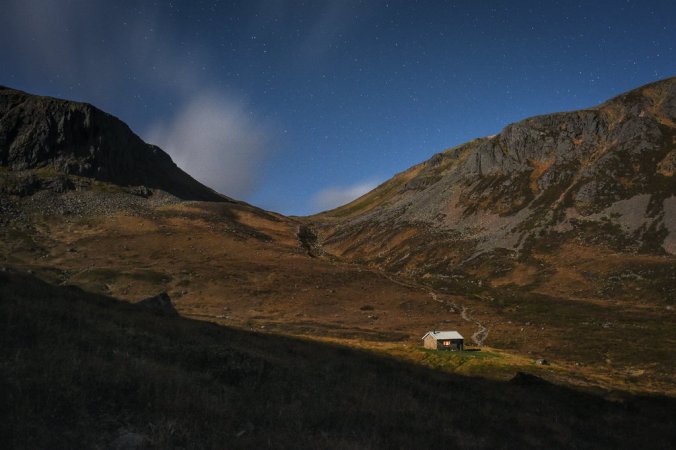
The Hutchison Memorial Hut, colloquially called the Hutchie Hut, illuminated by moonlight in Scotland’s Cairngorms National Park. Stephen Hiltner/The New York Times

How did Stephen Hiltner know? I was just looking through photos from the 2009 edition of the Patagonia Expedition Race, and remembering the huts along the way. They were perfect places to escape the realities of the rest of the world, in order to contemplate more clearly. With perspective. They could come in handy for plenty of folks these days, I am sure. Seems certain to me now that those huts at the southern tip of the South American continent were built by folks from the hills sampled in the story below:

In Britain, Enraptured by the Wild, Lonely and Remote

Rustic shelters called bothies — more than 100 of which are scattered throughout England, Wales and Scotland — are an indispensable, if little-known, element of British hill culture.

27surfacing-bothies8-jumbo-v3

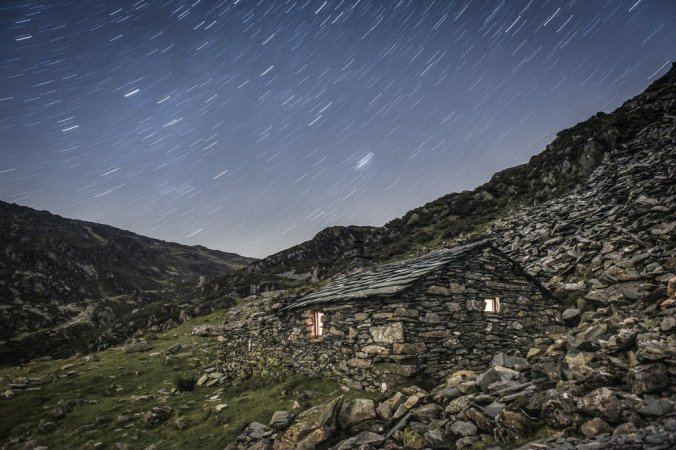
Warnscale Head at night. Since bothies are often built with local stones, they’re easily camouflaged in their surrounding landscapes. Stephen Hiltner/The New York Times


surfacing-bothies-window-6-jumbo-v2.jpg

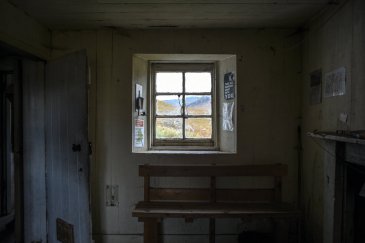
Shenavall Stephen Hiltner/The New York Times

By the time the tiny hut came into view, nestled high in a corrie in Scotland’s 1,748-square-mile Cairngorms National Park, I’d trekked for nearly nine miles, three of which, regrettably, I’d had to navigate after nightfall. The hike, through a broad valley in the Eastern Highlands called Glen Derry, carried me past groves of Scots pines and over a series of streams, some of which, lined with slick steppingstones, made for precarious crossings. All the while, two rows of smooth, eroded mountain peaks enclosed me in an amphitheater of muted colors: hazel-hued heather, golden grasses. Though much of my walk was solitary, the flickering glow in the hut’s main window, I knew, meant I’d have some company for the night and the warmth of a fire to greet me. Continue reading

Golf & Its Discontents

Thanks to Yale e360, with this headline below I found my way to the video above and the website where the video is hosted:

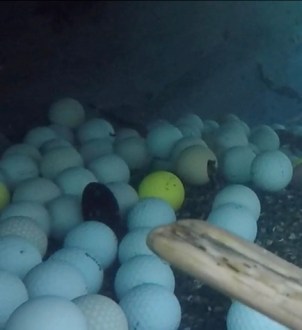
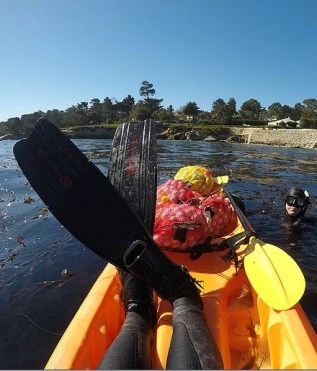
California Teen Finds Thousands of Golf Balls Releasing Microplastics into Ocean

Reading further, I sensed that Yale e360 was being a bit polite saying “thousands” — more than 50,000 balls have already been extracted over two years. The article linked to National Public Radio’s coverage of the same story, with this slightly more aggressive headline:

Teenage Diver Finds Tons Of Golf Balls Rotting Off California

During my PhD years I got to be reasonably competent at the game of golf. I can say I even loved the game. One odd bi-product of my dissertation was that I learned of the perils to the planet from out of control golf course development. Then I felt compelled to give up the game. (I did play a bunch during the mid-1990s, in Costa Rica, as I slowly learned of those perils.) Recently I found the clubs I used to play with, and the shoes, while cleaning out a store room in Costa Rica. I left them there.

To this day I have some close friends who play golf. I never comment on this topic in front of them, because my message is easily misconstrued. I am not against all golf. I just think there are more than enough courses already built on this planet. A moratorium on building more would make me happy. My friends already have more than enough courses to play on. Anyway, this topic is of interest now for a new, very specific reason. And it comes as a bit of a surprise what a big problem golf balls are in the ocean. The website of the organization that is featured in both articles can be reached by clicking the image below:

GolfOcean.jpg

I remember advertisements from not that long ago that encouraged you to daydream about hitting balls endlessly into the ocean from cruise ship voyages with golf tees on the back of the ship. At first I thought maybe that kind of weird pleasure was the culprit, considering all the other dirty outcomes of cruising. But it’s complicated, as I learned from The Plastic Pickup website:

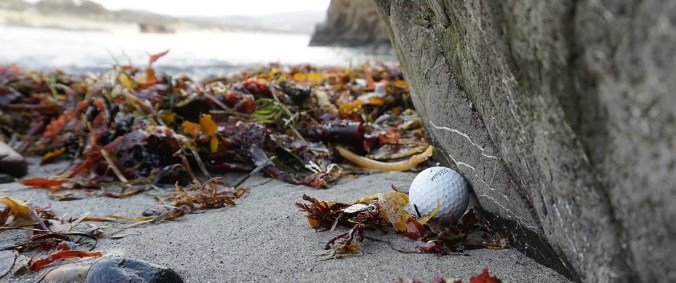
Golf1.jpgIn the spring of 2016, my dad (Mike Weber) and I (Alex Weber) were freediving along the central coast of California in the shallow waters adjacent to the Pebble Beach golf course, when we came across a discovery that had never been reported before. Thousands of golf balls blanketed the seafloor, and inhabited nearly every crack and crevice in the underwater and onshore environment. The overabundance of inorganic materials was overwhelming but for a second it did not phase us. As we began diving to the bottom to collect the balls, we realized what perfect freediving training it was and the whole operation felt like a fun game; we were having a blast. But soon, the enormity and vast scale of the pollution set in and it made me feel sick to my stomach. To preface this day, for a few years prior I had been spending at least an hour a day down at the beach collecting golf3microplastics and nurdles after heavy storms would wash them ashore. As a kid I was raised in the sea, boogie boarding everyday after school in kindergarten, scuba diving as soon as I was allowed to, and spending each summer day swimming offshore to hang out with dolphins and swim through giant kelp forests. To me the ocean was a peaceful home as well as my favorite teacher, so the discovery of such a large scale underwater plastic problem both shocked me and also captivated my curiosity. What began as a day of freediving resulted in a project that has changed my life ever since.

golf2The next dive-able day, we were underwater early in the morning equipped with mesh bags and a new diver, Jack Johnston. Jack and I had been long time friends since middle school, and spent all our time together either underwater or on mountains, so he didn’t need much convincing to come along. Jack’s reaction was similar to mine, but his wildly curious mind helped him stay positive and motivated. That day we collected nearly 2,000 golf balls which was just the start of what grew into The Plastic Pick-Up. As we continued diving, we were not only collecting golf balls, but data too…

Read the whole story here. And if that interests you, there is another website that mentions a different Alex and his buddy Andrew who have also found a mission-driven business focused on ocean cleanup:

4Ocean1.jpg

The story begins when Alex and Andrew take a surf trip…

to Bali Indonesia that would inevitably change their lives and the fate of the ocean. Devastated by the amount of plastic in the ocean, they set out to find out why no one was doing anything about it. Continue reading

Hunting Wild Coffee

merlin_149142180_e389d902-4d9f-4559-b2f6-687d704e15eb-jumbo.jpg

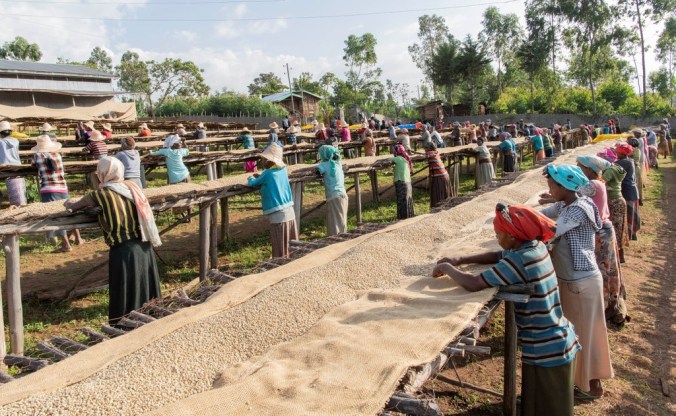
Drying coffee beans in Ethiopia. More than half of all species are at risk of vanishing in the wild because of climate change and deforestation. Maheder Haileselassie/Reuters

As much as I thought I learned in the last year about coffee, I got a hint just now, reading the article below, how steep my learning curve remains. 124 species of coffee? So much to hunt, so little time! Thanks to Somini Sengupta for this story:

15CLI-COFFEE2-jumbo.jpg

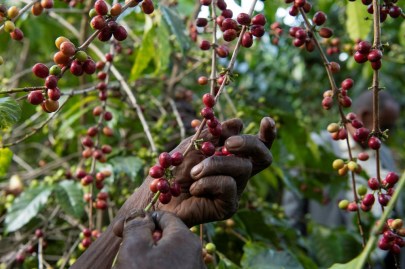
Picking coffee berries on a farm in Ethiopia. Maheder Haileselassie/Reuters

Aaron Davis, a British botanist, has spent 30 years trekking across forests and farms to chronicle the fate of one plant: coffee.

He has recorded how a warming planet is making it harder to grow coffee in traditional coffee-producing regions, including Ethiopia, the birthplace of the world’s most popular bean, arabica. He has mapped where farmers can grow coffee next: basically upcountry, where it’s cooler. He has gone searching for rare varieties in the wild. Continue reading

The Art of Inclusivity


A visitor takes a close look at “Missing Route 4,” a hand-stitched embroidery by Bapi Das.Credit Atul Loke for The New York Times

The history of our work in Kerala, and specifically in Kochi, has long been intertwined with Art, and how the surrounding community interacts with it. Biennales, by nature, often blur the line between street art and gallery space, as multi-dimensional and multi-media installations begin to appear on walls, pop-up spaces, cavernous warehouse buildings, and classic museum halls.

Now in it’s 4th edition, the Kochi-Muziris Biennale, has grown continually in both the breadth of the artists involved, and the depth of its work toward community outreach. This sense of inclusivity extends to gender equality, a longstanding issue that India as a country has battled with;  the curator and more than half of the artists are female.

As with the previous editions, the installations are thought provoking and moving, at times asking viewers to acknowledge and honor the difficult history of a colonial past.

In India, Building Bridges Between Life and Art

The Kochi-Muziris Biennale, South Asia’s biggest art show, uses interactive exhibits and live performances to help Indians connect with contemporary art.

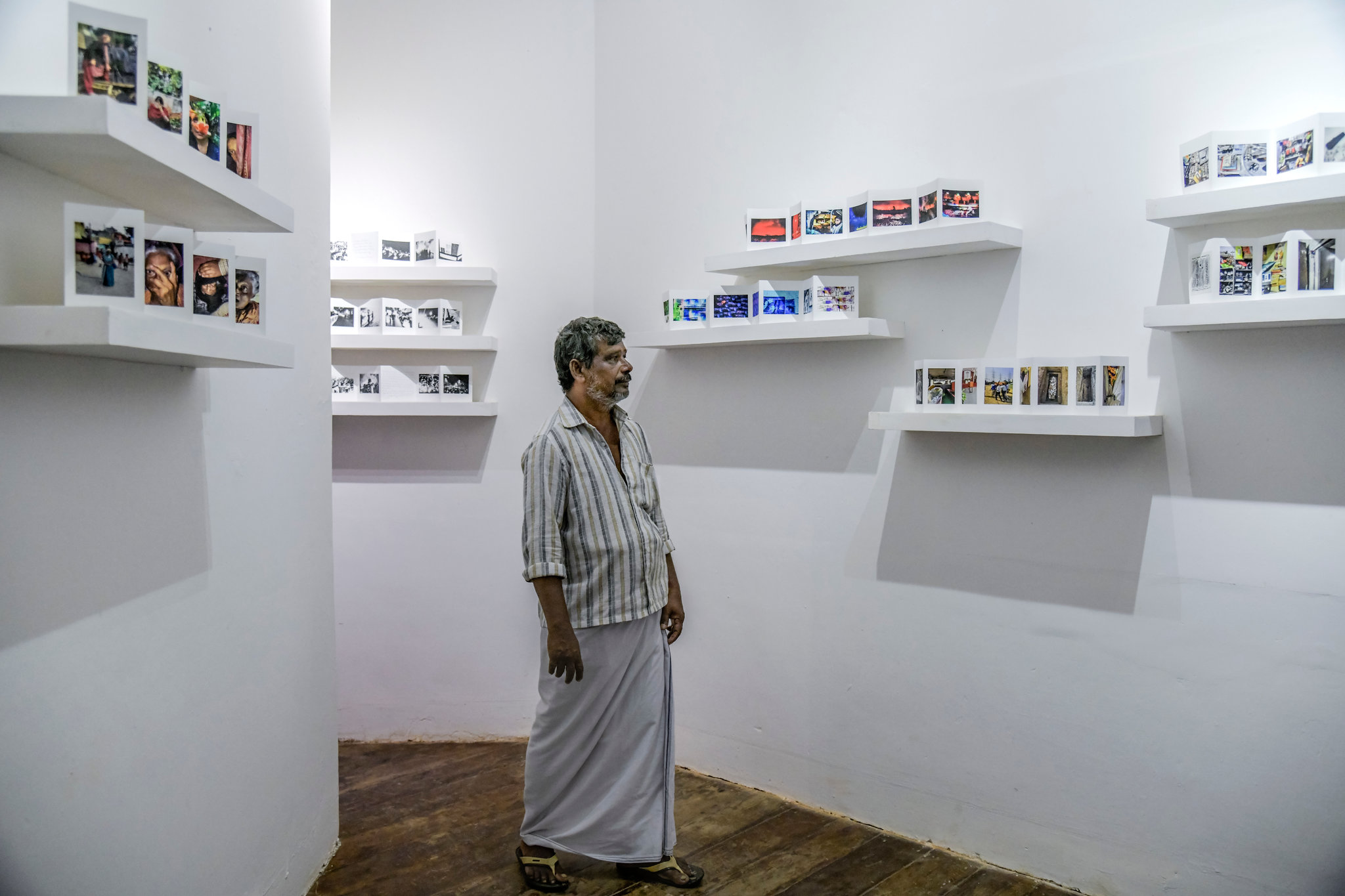
KOCHI, India — Clad in a simple striped shirt and the white mundu of the city’s fishmongers, Bashir stood out from the well-heeled throng at the warehouse galleries and tree-filled courtyards on the first day of India’s biggest contemporary art show, the Kochi-Muziris Biennale.

Bashir, a fishwrapper who works nearby, visited the Kochi-Muziris Biennale on opening day because entry was free. He lingered over the photographs, including these photo essays by Chandan Gomes, a Delhi photographer. Credit: Atul Loke for The New York Times

Keeping to himself, he moved from room to room, stopping to study moody landscapes by the Delhi photographer Chandan Gomes that were paired with imaginary scenes drawn by a girl who died at age 12.

“I don’t understand the inner meaning of the art,” said Bashir, who uses one name and makes a living wrapping and delivering fish. “I just like to see beautiful things.”

Bashir’s willingness to engage with the artwork, no matter how challenging, was a victory for the show’s organizers. The southern state of Kerala, and India as a whole, have very few public venues to see art. So the organizers of the biennale, which runs until March 29, strove to create an event that would appeal to everyone — from untutored day laborers to veteran museum curators.

“We are making a cultural festival,” said Bose Krishnamachari, a painter from Kerala who co-founded the show eight years ago. “We have tried to penetrate to the people’s minds so that they feel that it is their biennale.”…

Continue reading

Urban Tree-Huggers

IndiaDehli_Trees_GettyImages-984331388_web.jpg

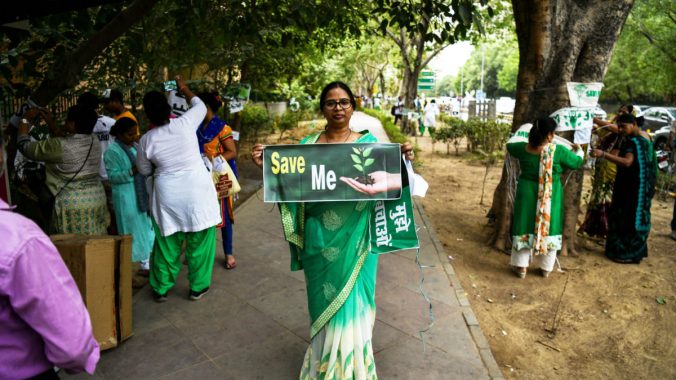
Women demonstrators protest a plan to to cut down more than 14,000 trees for a redevelopment project in New Delhi in June 2018. CHANDAN KHANNA/AFP/GETTY IMAGES

Thanks to Yale e360’s Mumbai-based Vaishnavi Chandrashekhar:

In India’s Fast-Growing Cities, a Grassroots Effort to Save the Trees

In India’s burgeoning urban areas, residents are rallying against the widespread destruction of trees to make way for development. The recent protests highlight a global issue: densely populated megacities in the developing world, which are most in need of tree cover, often have the least.

ZB_MumbaiTreesStreet_2017.jpg

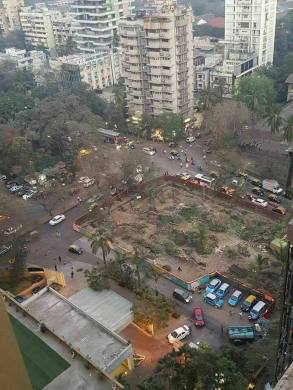
Thousands of trees have been cut down in Mumbai in recent years to make way for new housing, wider roads, and a $3.3 billion subway line. COURTESY OF ZORU BHATHENA

The funeral cortege was small. Six people shouldered the bier and others followed, clad in the traditional Indian white. As the group filed past the state assembly building, the armed guards did not give it a second glance. In a few minutes, however, the security forces caught on. The procession winding its way through Mumbai’s government district was not a real funeral: It was a protest. The shrouded body held aloft was not a human — it was the trunk of a tree, one of many, including grand old banyans, cut down for the construction of a $3.3 billion subway line.

urbantrees2.jpg

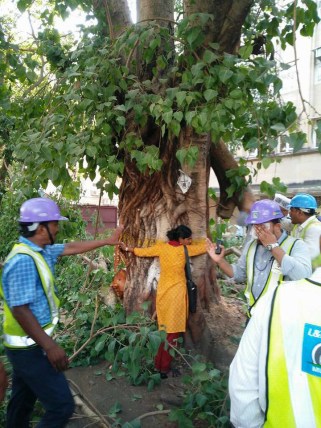
A protester hugs an old tree in Mumbai to prevent it from being cut down for a subway project. COURTESY OF ZORU BHATHENA

Mumbai’s old trees have borne the brunt of new development in the booming city, including road widening, transport projects, and housing construction. The new subway alone is destroying or damaging 5,000 trees, from hundreds of old street trees in the dense parts of the historic island city to more than 2,000 trees in a mini-forest in suburban Aarey Colony, where a rail car shed is to be built. A less visible loss lies in defunct industrial areas, where large plots with old trees and ponds are being redeveloped into residential and commercial towers. “Developers are supposed to replace the trees but no one really checks,” says Stalin D., head of local environmental group, Vanashakti. Continue reading

A Sense Of Costa Rica

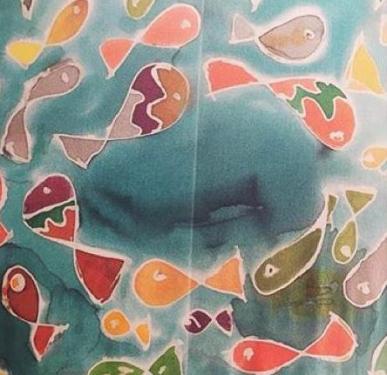
SilkCoastal1Amie and I recently met with an artist who paints on silk. In a post after that we displayed a couple of her pieces that feature coffee farm themes, and here are a couple more featuring coastal themes. Our practice of entrepreneurial conservation has allowed us to post frequently on this theme over the years. Less frequently we have mentioned sense and sensibility, words we work by.

SilkCoastal2Our assumption is that most people want to sense how a place they visit is different from where they normally live. Commonalities are also helpful for the sake of comfort and the travelers we have gotten to know through our practice in the last 2+ decades are much like us: interested in the balance between things we already understand and things that make us wonder.

When we saw these silk pieces we had a sense of Costa Rica that would be difficult to find words for. The artist has an ecological and socially responsible orientation, backed with actions that represent what make this place unique. This is the aspect of Costa Rica that inspires and motivates not only those who have chosen to live there, but those who choose to visit. Visitors should have the opportunity to take home with them items like these painted silks, that somehow represent Costa Rica. Little reminders.

Books For Early 2019

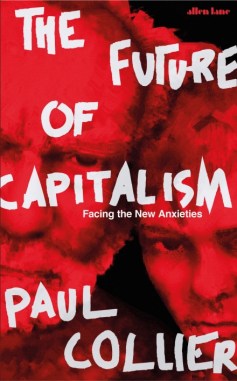
collierbookI have a few more books, in addition to this history, on my reading list. Reihan Salam, the executive editor of National Review, provides this preview of the Oxford economist Paul Collier‘s new book:

You might expect that Paul Collier, a noted development economist at Oxford who has devoted most of his professional life to the uplift of the global poor, would see himself as a “citizen of the world.” But that’s not quite right. Collier grew up in Sheffield, a once-flourishing English steel town that provided working-class families like his own with a modicum of prosperity and stability, and that has since struggled in the face of import competition and the loss of many of its most ambitious citizens to London and other dynamic cities. He attributes his prodigious accomplishments in no small part to the cooperative character of the community, and the nation, in which he was raised.

National loyalty, far from being inimical to a more just and decent world in which all, including the world’s poorest, can flourish, is seen by Collier as a firmer foundation for global cooperation than abstract cosmopolitanism, which all too often serves as a mask for unenlightened self-interest. The question animating his small but wide-ranging book “The Future of Capitalism” is whether the sense of rootedness that so defined the Britain of his youth can be restored…

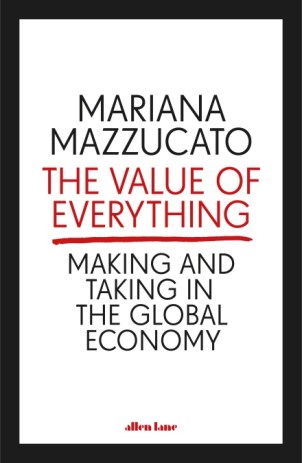
ValueBook.jpgRead the whole review here. My second encounter with Paul Collier was this panel discussion on Intelligence Squared. The way in which the world’s developing economies view capitalism is as important as the current changes in how mature developed economies view capitalism. For that reason I am also looking forward to Mariana Mazzucato’s most recent book, to the right. Surprisingly I had never heard of her before listening to her muse about various influences in her life that led to her distinct voice on how value is created by societies. Her self-introduction makes me wonder how she did not show up in our pages previously:

I’m a Professor in the Economics of Innovation and Public Value at University College London (UCL), and Director of UCL’s Institute for Innovation and Public Purpose . My work is focused on the economics of innovation; patient finance; economic growth and the role of the State in modern capitalism. I advise policy makers around the world on how to achieve economic growth that is more innovation-led, inclusive and sustainable. My 2013 book, The Entrepreneurial State: debunking public vs. private sector myths, looks at the ‘investor of first resort’ role that the State has played in the history of technological change — from the Internet, to biotech and clean-tech — and the implications for future innovation and for achieving public-private partnerships that are more symbiotic. In 2016 I co-edited a book called Rethinking Capitalism: Economics and Policy for Sustainable and Inclusive Growth focusing on the need for new economic thinking to drive more effective economic policies. My new book The Value of Everything, available in UK and US edition, looks at the need to revisit the difference between value creation and value extraction, and the problems that arise when one is confused with the other.

Authentica, A Few Of Our Favorite Things

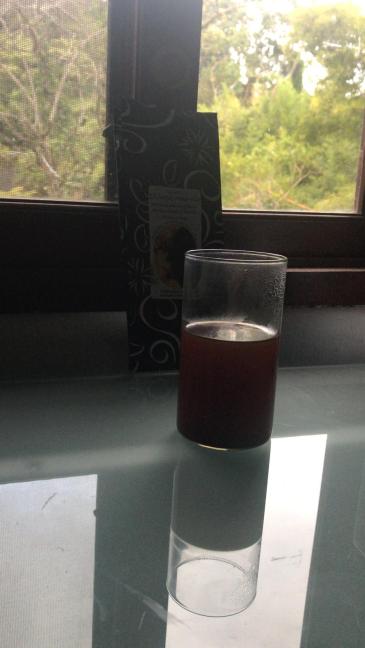
FransCoffee.jpegYesterday’s coffee sample from the Brunca region got us thinking about our interest in foods and beverages that represent the taste of a place we have gotten to know through our work. Today I am sampling a friend’s coffee grown a few hundred meters away from where I sit typing this.

It is an arabica varietal, known as Castillo, that has resisted the rust plaguing Central American highland coffee farms. And this glass of freshly brewed Castillo makes me realize that Authentica is also an outgrowth of the much broader array of work that led to our original interest in taste of place.

In 1995 I gave a lecture based on some ideas that came out of my doctoral dissertation, ideas which I now simply refer to as entrepreneurial conservation. Costa Rica had recently committed to the then-new sustainable development model. I made sure that the ideas from my dissertation could be clearly understood within Costa Rica’s framework. Based on the lecture he received an offer to lead an initiative, based in Costa Rica and serving the countries of Central America, that would facilitate the adoption of sustainable tourism development strategies in the region.

biesanzbbb6281c1oa.jpg

In 1996, tourism was limited in Costa Rica but there was enough of an industry to analyze its component parts. This highlighted pre-existing strengths on which to build a national tourism strategy. One of those components was handicrafts. We have not gone back to look at the findings, but memory tells us that handicrafts were a small but thriving sub-sector of tourism, and some of it was spectacular. The bowl to the left was the first we had seen made of the local wood called cocobolo.
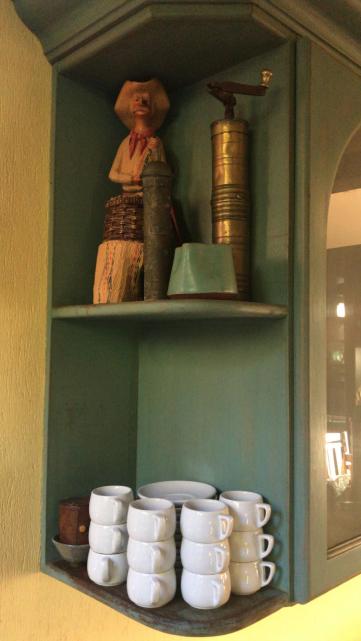
Pia pitcherIn the 2+ decades since that analysis, times have been difficult for the artisans of Costa Rica even as the tourism sector as a whole has grown dramatically. It is enough to say that something must be done in Costa Rica to valorize the artisans who have been able to hang on, and to likewise showcase the remarkable renaissance of artesania in this amazing country. The campesino in the photo to the right is from an artisan who carves coffee wood, with coffee farmers his primary subject. We received that carving as a gift in 1998 and we recently met the artisan who made it. He has managed to hang on.

On that same shelf is a small ceramic pitcher made by an artist of the next generation, who is a perfect representative of the renaissance we see, now that we are visiting Costa Rica after many years living in other parts of the world. A platform is needed to share these things that we see and love about Costa Rica, things which we believe represent this place well, and put them in a place where they can be purchased, in order to valorize the artistry and craftsmanship.
SilkCoffee1

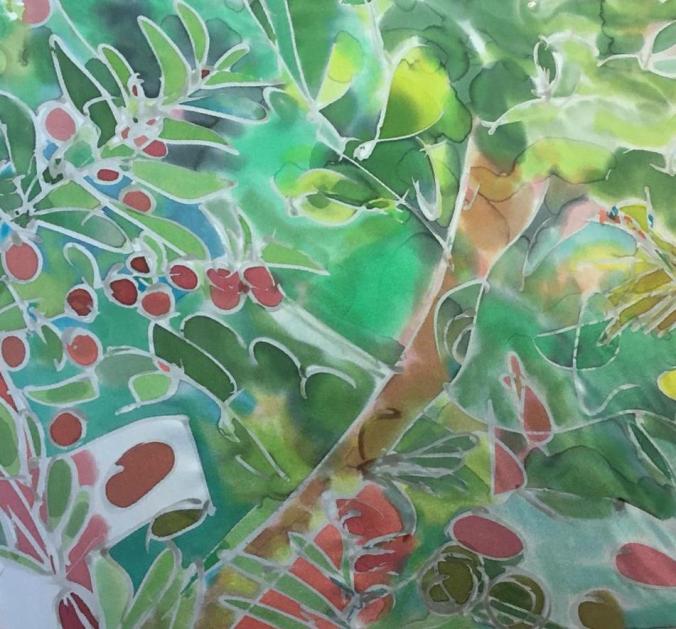
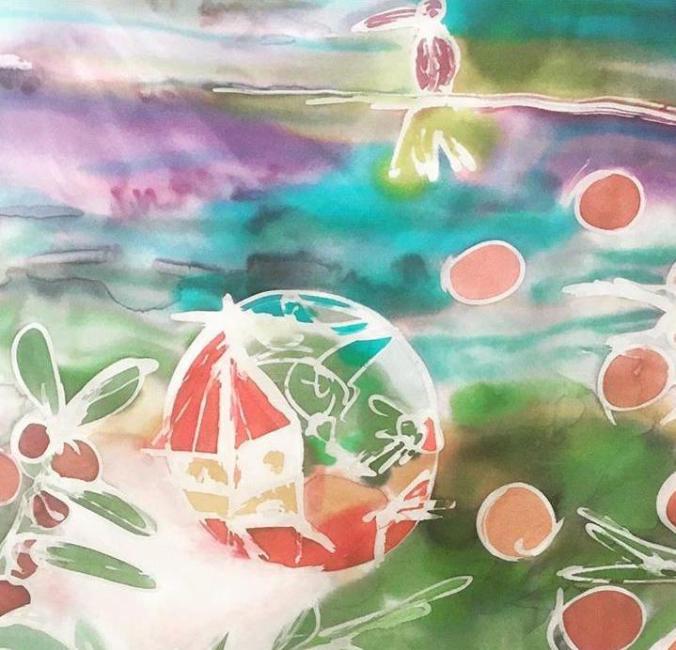
Above is a hand-painted silk scarf made by a local artist whose life on a coffee farm inspired this particular image, and the one below. We will be more specific about these and other artists in future posts. For now it is just enough to say that we believe in local artists, artisans, farmers, roasters, chocolatiers enough that we have formed Authentica as a marketplace for their products, to be sold mostly to visitors who want to take home with them a sense of the place they have visited.
SilkCoffee2.jpeg

Fortune & Misfortune On Kerala’s Backwaters

Reuters_KeralaFloodingAugust2018_web.jpg

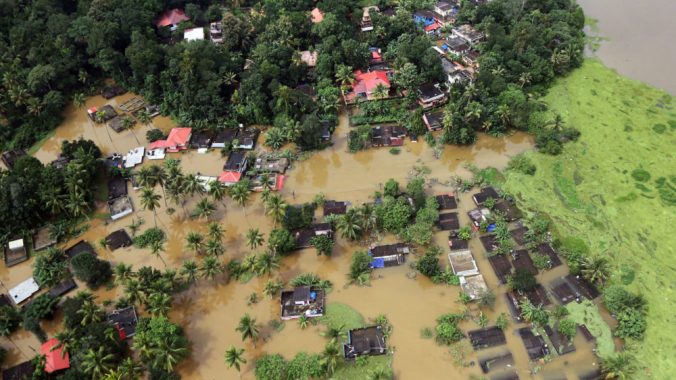
Partially submerged houses in Kerala, India last August. REUTERS / SIVARAM V

Any picture of a houseboat reminds me of our good fortune to live among the people of Kerala’s backwaters from 2010-2017. The photo below is no exception and I thank Fred Pearce, writing for Yale e360, for bringing to my attention the scale of misfortune facing our old neighbors from the most recent flooding. I knew about the disaster, but had not read in any detail until now what this implies for the future. Maybe this fortune could be applied to address those challenges:

In India, Nature’s Power Overwhelms Engineered Wetlands

The picturesque Kerala backwaters in southern India, increasingly popular with tourists, form a network of engineered canals, lagoons, lakes, and rice paddies. But a fatal monsoon deluge has highlighted the global problem of how developed wetlands often lose their capacity to absorb major floods.

GettyImages-1020694038_Kerala-Flooding_web.jpg

Floodwaters inundated much of Kerala’s low-lying coastal plain, including the village of Pandanad, pictured here. MANJUNATH KIRAN / AFP / GETTY IMAGES

In India, they call the state of Kerala in the country’s far south “God’s own country.” That wasn’t how it felt last August, when monsoon floods devastated its densely populated low-lying coastal plain. Around 500 people drowned, in an area best known to outsiders for its placid backwatersa network of brackish lakes, lagoons, and canals where growing numbers of Western tourists cruise the picturesque waterways aboard luxury houseboats.

Pearce_IMG_5233_Houseboat_web (1)

A luxury houseboat moored along Lake Vembanad near the tourist town of Kumarakom in Kerala. FRED PEARCE / YALE E360

Now that the floodwaters have abated, questions are being raised about whether the disaster was made worse by water engineering projects in the backwaters designed to feed the state’s population and attract tourists. Increasingly, Kerala residents are wondering if “God’s own country” is damned as well as dammed.

The floods came out of the Western Ghats. This chain of mountains down the west side of India is one of the country’s wettest places, drenched from June to September in monsoon. In early August, the rains there were exceptionally intense and unremitting. The rivers flowing from the mountains west toward the Arabian Sea dumped their water into the backwaters on a coastal plain that is largely below sea level.

Sixty-mile-long Lake Vembanad, at the heart of the backwaters, rose up and flooded surrounding wetlands and rice paddies, cities, and farming villages. A quarter-million people took refuge in 1,500 relief camps; 6,200 miles of roads and 115 square miles of farmland were damaged. Cochin International Airport was awash. Continue reading

Japan, Paper & Tradition

16tmag-tel-slide-3FR1-superJumbo.jpg

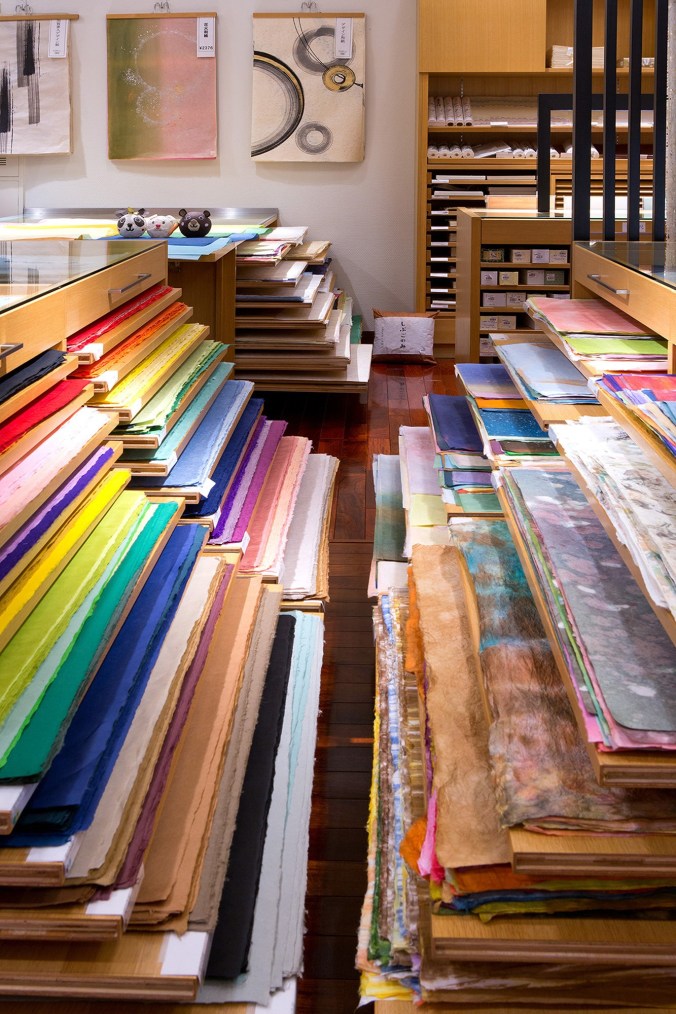
Washi paper at the store Ozu Washi in Tokyo. Credit Courtesy of Ozu Washi

Thanks to Nikil Saval for asking, and to the New York Times for publishing his answer to this question:

Why Is Japan Still So Attached to Paper?

Washi is to the Japanese something like what wine is to the French — a national obsession and point of pride.

16tmag-tel-slide-PRKU-superJumbo.jpg

The architect Shigeru Ban’s emergency shelters are made mostly of paper.CreditBrent Boardman/courtesy of the Sherman Contemporary Art Foundation (SCAF)

ONE OF THE CLICHÉS of modernity — but a cliché we nonetheless have to live through — is that new forms of technology make us nostalgic for prior ones and the eras they connote. When smartphones emerged, they brought the internet into spaces that were once free of them, so that a poorly functioning flip phone now inspires a hint of wistfulness. The pileup of digitized music since the emergence of the MP3 has prompted a retreat, however niche and ultimately minor, into the world of vinyl records and even tapes. The ransacking of the physical texture of the world — books, newspapers, retail stores, maps — has been so enormous and sudden that it becomes possible to see what we are losing and no longer regard the onrushing future as progress.

tktmag-paper-slide-SQBO-jumbo.jpg

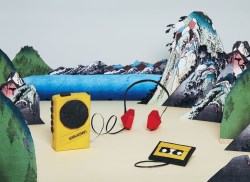
Japan’s centuries-long fascination with traditional papermaking means there’s still a robust analog culture in a country known for its embrace of the modern. Credit Photograph by Kyoko Hamada. Set Design by Arielle Casale and Maxwell Sorensen. Altered images: Daj/Getty Images; Bernard Allum/Getty Images. Origami: Beth Johnson. Photographer’s assistant: Jonah Rosenberg

Because of the sheer accumulated weight of its past, and the velocity of its rush into the future, Japan offers these contradictions and anxieties of modernity in particular abundance. Japan was geographically isolated for centuries, so the time between the country’s opening — thanks to the gunboat diplomacy of American warships’ arrival in 1853 — and the postwar miracle of reconstruction produced a linear and especially propulsive narrative of an agrarian society becoming one defined by urban futurism. The contrast (and conflict) between ancient and modern is the primary tension in Japan’s modern literary and filmic traditions: rural families experiencing the shock of the city in Yasujiro Ozu’s films of the ’40s and ’50s, or Noh drama in the novels of the Showa-era writer Fumiko Enchi. Everything, from the perfervidness of the country’s electronic manufacturing, the proliferation of its pop culture, the aggressiveness of its building booms — even as a three-decade-long economic decline strips these characteristics of their sheen — seems to serve as a reminder that throughout the postwar era, Japan was a byword for the future. Continue reading

Putting The Whole Earth Catalog Where It Belongs

Wiener-WholeEarth.jpg

Stewart Brand published the final issue of the “Whole Earth Catalog” in 1971. Upon the title’s fiftieth anniversary, he reports feeling little nostalgia for the project. Photograph by Richard Drew / AP

The intersection of mammoth and passenger pigeon had a quirky ring the first time I read about it. Stewart Brand, mentioned plenty previously in our pages, is a kind of genius of quirk, and deserves more attention. Not to pin present problems on him, but to understand the legacy of his masterpiece. I count myself an admirer. But an admirer with deep concern, not unlike what I feel about this other genius. Anna Wiener’s Letter from Silicon Valley, titled The Complicated Legacy of Stewart Brand’s “Whole Earth Catalog,” provides a perspective on Brand and his Catalog that captures my own concerns about the spawn of his quirk:

Wiener-WholeEarth-Secondary.jpg

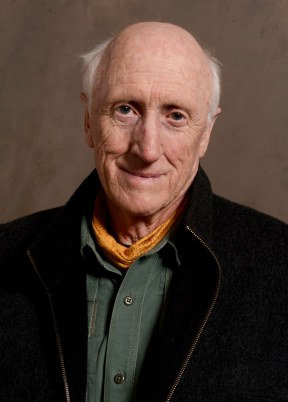
Stewart Brand, in 2013. Larry Busacca

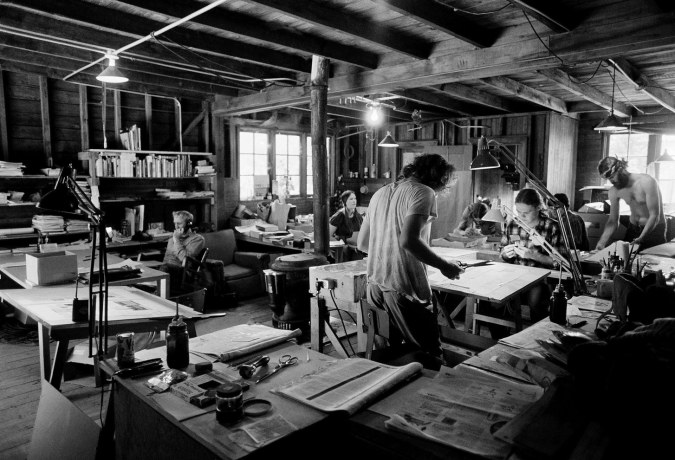
In the fall of 1968, the Portola Institute, an education nonprofit in Menlo Park, California, published the first edition of the “Whole Earth Catalog”: a compendium of product listings, how-to diagrams, and educational ephemera intended for communards and other participants in the back-to-the-land movement. The catalogue’s founder, Stewart Brand––a photographer, writer, former army lieutenant, impresario, and consummate networker––had spent part of the summer driving a pickup truck to intentional communities in Colorado and New Mexico and selling camping equipment, books, tools, and supplies to the residents. Brand returned to the Portola Institute (a gathering place and incubator of sorts for computer researchers, academics, career engineers, hobbyists, and members of the counterculture), hired a teen-age artist to handle layout, and began production on the catalogue’s first edition.

At the height of the civil-rights movement and the war in Vietnam, the “Whole Earth Catalog” offered a vision for a new social order—one that eschewed institutions in favor of individual empowerment, achieved through the acquisition of skills and tools. The latter category included agricultural equipment, weaving kits, mechanical devices, books like “Kibbutz: Venture in Utopia,” and digital technologies and related theoretical texts, such as Norbert Wiener’s “Cybernetics” and the Hewlett-Packard 9100A, a programmable calculator. “We are as gods and might as well get used to it” read the first catalogue’s statement of purpose. “A realm of intimate, personal power is developing—power of the individual to conduct his own education, find his own inspiration, shape his own environment, and share his adventure with whoever is interested.” Continue reading

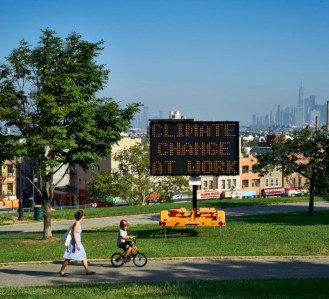
The Climate Museum’s Climate Signals


My only wish is to have been able to share this earlier, during the exhibition’s run. But better late than never.

Kormann-Queens-Climate-Signals.jpg

The “Ask a Scientist” event gives curious passerby the chance to pose their climate-related questions to scientists stationed around New York City. Photograph by Justin Brice Guariglia

Thanks to Carolyn Kormann for another fresh dose of creative rational thinking, with her short piece Ask a Scientist: How to Deal with a Climate-Change Skeptic:

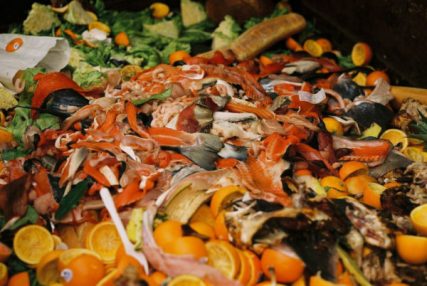
2018, The Year Food Waste Was Finally Taken Seriously

GI_Market_food_waste_web

Americans throw away 133 billion pounds of food annually. TAZ/WIKIMEDIA COMMONS

This is the time of year, in the days prior to the USA Thanksgiving holiday, when I tend to recall the first time food waste, one of the oddest of plagues, came to my attention. Thank you Meg. And thanks to Yale e360 for reporting this heartening news:

In the first 10 months of 2018, investors poured $125 million into U.S. companies whose mission is to prevent food from going to waste, according to a new report.

ReFED, a non-profit dedicated to drastically cutting the amount of food that becomes spoiled or is wasted in the U.S., said that the investments spanned a wide variety of companies focusing on new technologies, software, and business-to-business solutions. They include Apeel Sciences, which received $70 million in private financing to produce a natural second skin to extend the life of produce; Food Maven and Full Harvest, each of which received $8.5 million to help businesses sell excess or less visually appealing produce; Spoiler Alert, which helps businesses better manage unsold food inventory; and ReGrained, which makes flour out of spent distillers grains. Continue reading

Get Your Biome On

merlin_145518831_d9814803-584c-487f-afa1-35489af25baa-jumbo.jpg

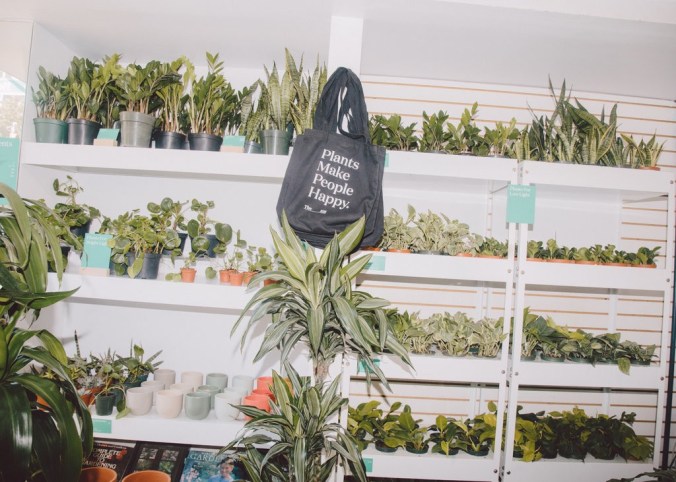
The Sill sells ceramic planters, watering cans, misters with arch sayings on them, fertilizer and soil mixes, totes and T-shirts. It also hosts movie nights, “sip and shop” cocktail parties and workshops (in store and online). Credit Nathan Bajar for The New York Times

Thanks to Penelope Green for brightening up our Sunday:

Meet the Plantfluencers

In a world of climate change, creating a biome of one’s own.

Plant1.jpg

Eliza Blank has conceived The Sill as a plant lifestyle company, or a global plant brand — a Glossier of plants. Credit Nathan Bajar for The New York Times

Horticulture and red wine were served up the other night at the Sill, a boutique on Hester Street, as Christopher Satch, a botanist wearing a T-shirt that read, “Plants Make People Happy,” the company motto, led a workshop on carnivorous plants.

It was plant stand-up — slightly blue patter with quick takes on Linnaeus and Darwin; binomial nomenclature (note the shape of the Venus fly trap for cues to how it got its name); detailed care instructions (carnivorous plants evolved in acidic bogs, which means they need distilled water, not tap, and lots of it); and a show-and-tell of Mr. Satch’s collection of butterworts and sundews.

Plant2Among the rapt attendees were Madison Steinberg and Lindsay Reisman, both 23 and working in public relations, and Brayan Poma, also 23, who works in construction; afterward they each took home an attractive tropical pitcher plant. “I like plants, but I kill so many of them,” said Mr. Poma, who wore a green hoodie and a goatee. “Maybe that’s why I find them so alluring.”

Plant3.jpg

The Sill began when Ms. Blank was trying to brighten up her sunless, sixth-floor walk-up with a plant or two, and was turned off by the wares at Home Depot, one of the few sources for plants and containers in the city. Credit Nathan Bajar for The New York Times

Mr. Poma is not the only millennial to feel that allure. Buoyed by Instagram, his generation’s obsession with houseplants is growing faster and more tenaciously than English ivy. Plant influencers, the horticultural stars of that medium, now have book deals, sponsors and hundreds of thousands of followers.Their apartment living rooms are the new urban jungles, spilling over with philodendrons, pilea (this year’s “It” plant) and bird’s nest ferns. Plant parents, as they call themselves, fuss over their plant babies with the attention once given to kimchi or coffee connoisseurship. (Such anthropomorphism — ironic though it may be — recalls the 1970s, when “The Secret Life of Plants” proposed plant sentience based on dubious science and convinced New Agers to chat up their spider ferns.)

Unlike George Orwell, these houseplant lovers see the lowly aspidistra as an aspirational totem, not a bourgeois cliché, and post money shots of their monsteras on #monsteramonday. That hashtag was propagated in 2016 by Morgan Doane, a director of analytics for an art company in Florida. Continue reading

Books In Need, People To The Rescue

01britain-bookstore1-jumbo

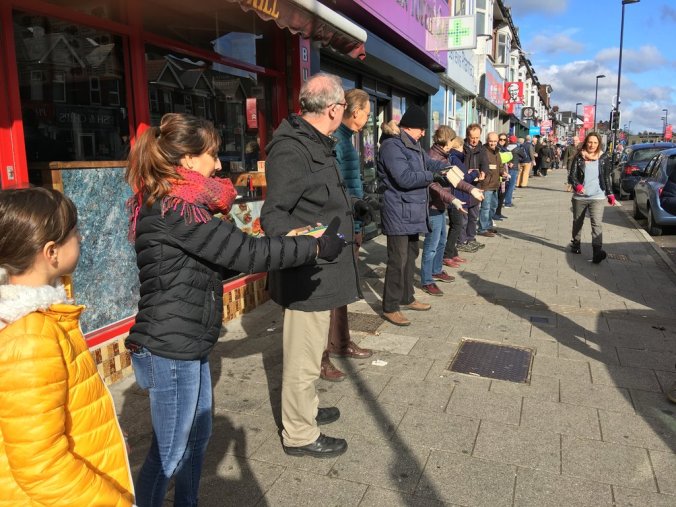
Hundreds of volunteers formed a human chain to help move October Books to its new location in Southampton, England. Credit October Books

It is probably not accurate to say books are in need. People are in need of books. And people who have been enlightened, educated, even saved by books are the kind of people we might expect to believe that the repositories of books, libraries and bookstores for example, need all the help we can give them. In the spirit of yesterday’s post, another today related to books and volunteers and the generosity of bookish people:

A Store Had to Move Thousands of Books. So a Human Chain Was Formed.

31britain-bookstore2-jumbo.jpg

“We wanted something that was accessible for the whole family, for children and people who were older who wouldn’t necessarily be able to paint or move heavy pieces, to help out,” a member of the October Books collective said.

LONDON — The plea went out a few weeks ago from the bookstore in a port city in southern England: “Care to lend a hand?”

Volunteers were needed for “heavy manual work” in shifts. It was “essential” that they be able to lift and carry boxes and office supplies.

Among the supplies: thousands upon thousands of books.

The appeal from October Books, a nonprofit that began 40 years ago as a “radical” bookshop, came after a rent increase forced it from its old home in Southampton, Jess Haynes, a member of the collective and one of the few paid employees, said on Wednesday.

The shop was looking to move lock, stock and barrel about 150 meters (just under 500 feet) to a three-story building that used to house a bank. Would anybody respond to the call for help? Continue reading

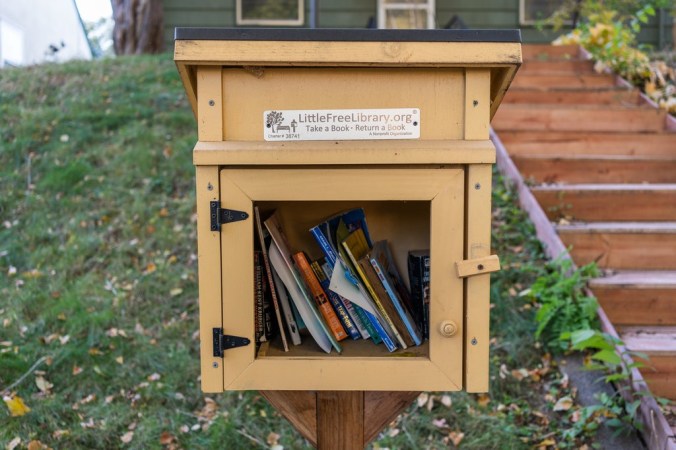
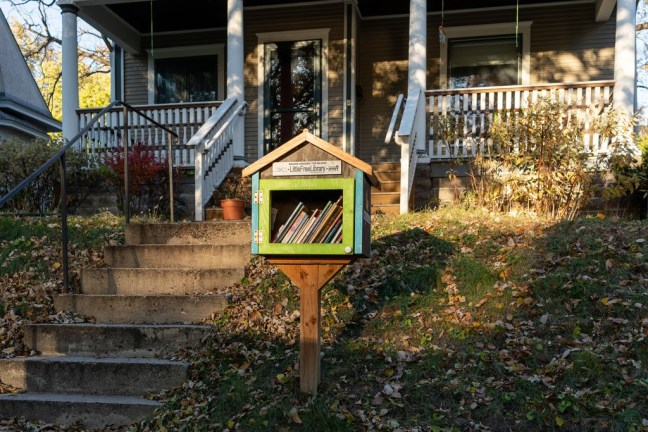
Consider The Little Free Library


merlin_145782510_153e132c-f7fb-49f0-a653-fb995e50eefb-jumbo.jpg

This Little Free Library in the McKinley neighborhood of Minneapolis appears to have a small reading loft, big enough for a city mouse.

merlin_145782399_fb9973eb-f313-455f-b5bd-bf309fe301e8-superJumbo

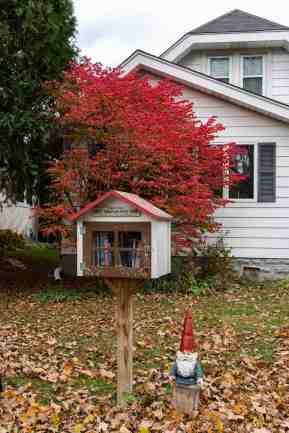
Father Time stands sentry at a Little Free Library in the rough-hewn Payne-Phalen neighborhood of St. Paul.

We made a decision early on, for reasons I do not recall clearly, to avoid linking out to obituaries–even for heroes whose lives have resonance in our pages. This one made me think twice about that decision.

In part it is because we have paid an enormous amount of attention to libraries over the years. Also, this man’s innovation (did we really never feature it in our pages before?) was clearly in the realm of what we call entrepreneurial conservation. And maybe, just a bit, I like the idea that the first little free library (the last one displayed below) was a tribute to the innovator’s mom.

Thanks to the New York Times for getting this story just right:

Libraries, Writ Small

merlin_145782294_bdbd9ee4-8a2e-44b1-bd0b-727c7302e59b-jumbo

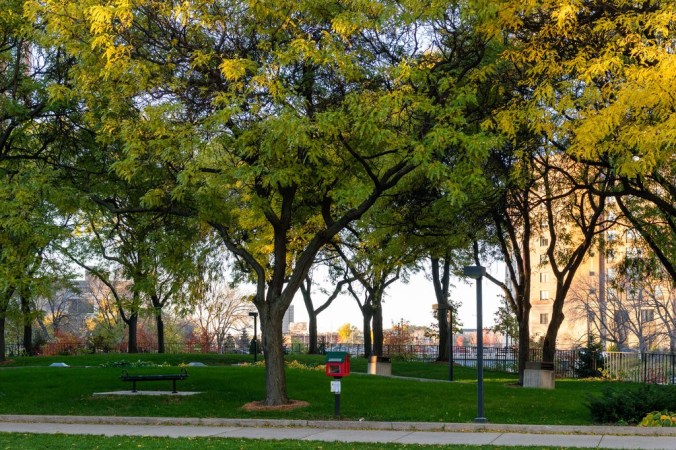
This Little Free Library enjoys the open space of Triangle Park in Minneapolis.

Todd Bol’s Little Free Library boxes, which blend the form of folk art with the function of a community water cooler, have popped up in all 50 states and in 88 countries.

By Katharine Q. Seelye Photographs by Ethan Jones

merlin_145782540_8b4f0381-47bd-470d-9cbc-c1b34745c787-jumbo.jpg

This Minneapolis library is a classic of the genre, with its Plexiglass front and gable roof, supported on a sturdy post.

Todd Bol was simply paying homage to his mother, a schoolteacher and lover of books. He built a doll-sized schoolhouse, filled it with his mother’s books and put it out for his neighbors in Hudson, Wis., as a book exchange.

Today, just nine years later, more than 75,000 such “Little Free Libraries” dot the globe, from San Diego to Minneapolis, and from Australia to Siberia.

merlin_145782390_b76569b1-e928-4a57-b546-1162ae75ae3f-superJumbo.jpgWhy did they catch on? For starters, they promote a friendly, sharing economy. No one tracks who took what. There’s no due date. No fines. You might never return a book. You might leave another instead. And, they are inherently cute. As Mr. Bol recalled, his neighbors “talked to it like it was a little puppy.”

This week, many bore a white ribbon in tribute to Mr. Bol, who died Oct. 18, in Minnesota at the age of 62. Here, a photo-essay of some of the little libraries near his hometown.

See all the other photos here.

Urban Farming Meets Upmarket Retail

merlin_144673629_88cac911-5145-4958-a6d9-886fabf52da5-jumbo.jpg

Delia Danciu, 24, a gardener, works at the Galeries Lafayette department store rooftop in Paris. Credit Dmitry Kostyukov for The New York Times

In our quest to brighten up each day with a story, a picture, or personal observation that helps us better understand the world around us, Doreen Carvajal is our source for this story in the New York Times from the former hometown of several of our long-time contributors:

Rooftop Gardens Are Turning the Urban Shopping Scene Green

merlin_144673632_dfabac81-c188-4367-b046-3873ebcf1817-jumbo

Galeries Lafayette rooftop garden is part of a plan to transform city farming into a deluxe shopping attraction. Credit Dmitry Kostyukov for The New York Times

PARIS — It’s a swift ride by elevator from Galeries Lafayette’s perfume section to the grand department store’s 10th-floor luxury farm with its signature scent of sage, rosemary and compost.

The rooftop garden, lush with climbing plants, tomatoes, marigolds and strawberries, is part of a plan to transform city farming into a deluxe shopping attraction for customers yearning for an exclusive green refuge — and perhaps a taste of beer brewed from the store’s homegrown hops. Continue reading

Orhan Pamuk’s Istanbul Is My Workplace

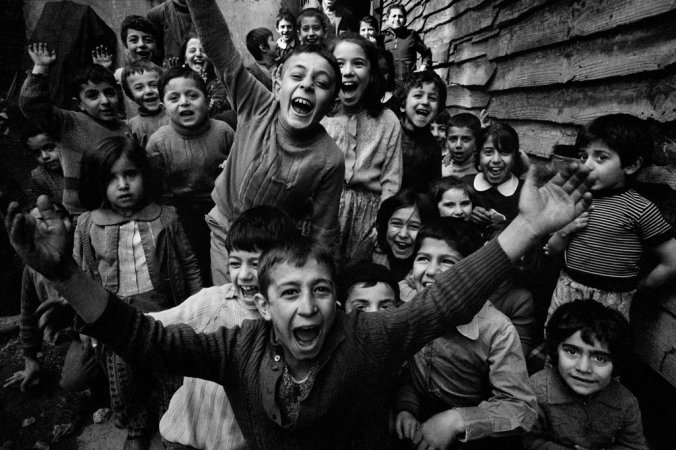
04Pamuk-slide-MMM9-jumbo.jpg

In the Tophane quarter, 1986. Credit Ara Guler/Magnum Photos

The third of three previous posts invoking Orhan Pamuk mentions an experience in a museum a couple years ago in Istanbul. I did not write much about it in that post because I did not know what to say, or if there was anything to say about how the museum affected me. But reading Orhan Pamuk’s words in the essay below about his friend, and the photographs that man took, evoked strong memory of the effect that museum had on me. It evoked a strong sense of the value of memory, in all its limits and even imperfections.

Just prior to that museum experience I had written a dozen posts about the work we had been doing in India since 2010, which was connected to work we began in Costa Rica many years earlier. I think what that museum visit put into focus for me was how, in our work crafting experiences with sense and sensibility, we were creating our own museums of innocence. Our mission is to create authentic, distinctive and valuable life experiences, to build profitable businesses around these, and then to direct the associated economic benefits to the conservation and prosperity of unique natural and cultural heritage and to the improvement of the quality of life of the local host communities. That work is about crafting memories, just as books, museums and photographs do in their own way. Seeing these pictures and reading these words reminds me of that:

‘I Like Your Photographs Because They Are Beautiful’

Orhan Pamuk remembers his friend Ara Guler, the great photographer, who lovingly captured Istanbul and its people.

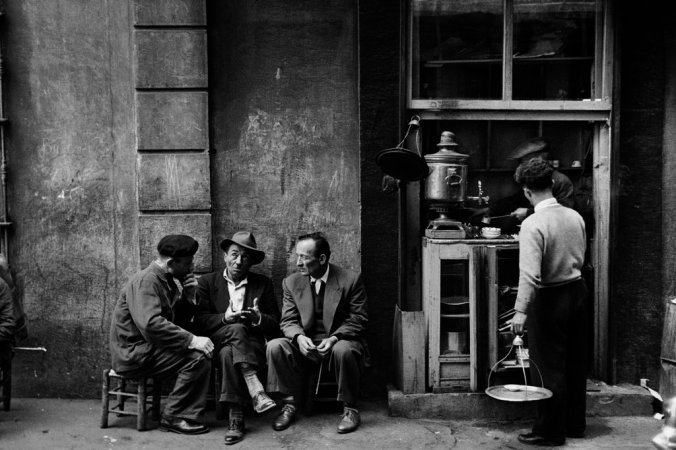
04Pamuk-slide-PTPC-jumbo.jpg

A coffee bar in a Beyoglu arcade, 1958. Credit Ara Guler/Magnum Photos

Ara Guler, who died on Oct. 17, was the greatest photographer of modern Istanbul. He was born in 1928 in an Armenian family in Istanbul. Ara began taking photographs of the city in 1950, images that captured the lives of individuals alongside the city’s monumental Ottoman architecture, its majestic mosques and magnificent fountains. I was born two years later, in 1952, and lived in the same neighborhoods he lived in. Ara Guler’s Istanbul is my Istanbul. Continue reading

A Big Step To Reduce Plastic Pollution


gettyimages-984354822-1cd9174e52fd0dc14cf00ca4ec859b0ee256e09a-s1300-c85.jpg

Volunteers cleared trash from the banks of the River Thames during the annual Big Bottle Count in London last month. Credit Matt Dunham/Associated Press

Thanks to Ceylan Yeginsu and the New York Times for this news:

European Parliament Approves Ban on Single-Use Plastics

merlin_145766505_d571d0f9-8739-4a8d-b1cb-691bce23acf5-jumbo.jpg

Under the proposal, 10 single-use plastics that most often end up in the ocean will be prohibited in the European Union. Credit Rafael Marchante/Reuters

LONDON — The European Parliament has overwhelmingly approved a ban on single-use plastics such as straws, plates, cutlery and cotton-swab sticks in Europe by 2021, joining a global shift as environmentalists emphasize the urgency of halting the use of materials that are detrimental to the planet.

Under the proposal, approved on a vote of 571 to 53 on Wednesday, 10 single-use plastics that most often end up in the ocean will be prohibited in the European Union, as well as oxo-degradable plastics, such as bags or fast-food container packaging. Continue reading