Reviving A Garden Can Revive More Than A Garden

Among the reasons we have stayed  committed once we embarked on restoration of a parcel of a coffee farm buried two decades ago, it is a welcome distraction. Also, it is good exercise. Those side benefits add motivation to continue uncovering and then reviving a buried agricultural treasure. If you are not in a place where you can do such a thing, but are in need of a breath-slowing, jaw-unclenching respite, other options exist. Do gardens and/or stories of agricultural revival get you there? The video above, or the classic to the right might be options to consider. Thanks to Helen Rosner for bringing them to our attention in this essay:

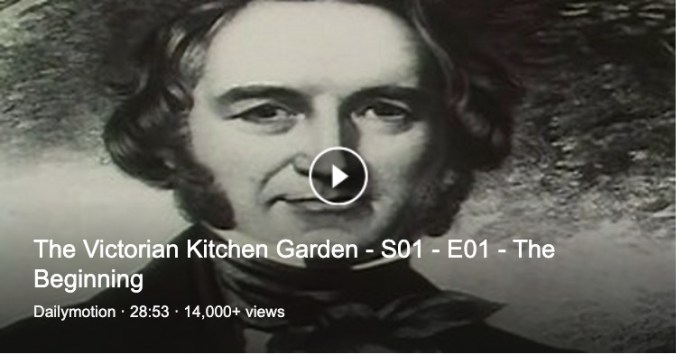
The Soothing Pleasures of “The Victorian Kitchen Garden,” a Vintage BBC Docuseries

“The Victorian Kitchen Garden,” a thirteen-part series on the particularities of Victorian horticulture, is a serene display of domestic competence.Photograph by Anne Gilbert / Alamy

Some time this past spring, I had my annual realization that if I wanted to plant a garden this year I should have got started weeks, maybe months, earlier. Then I set about my annual task of Googling how to make a garden happen. A few days later, clearing out my hundreds of open browser tabs of horticultural-advice forums, I paused over an open Web page that I hadn’t noticed: a grainy upload on the mysterious and vaguely European video-hosting Web site Dailymotion. “The Victorian Kitchen Garden – S01 – E01 – The Beginning,” it said. Curious, I pressed play, and a gentle wave of clarinet arpeggios sounded from my laptop speakers, and a mist-veiled greenhouse appeared on the screen. My breathing slowed, my jaw unclenched. Continue reading

Centuries-Old Government Agency, Mission Still Intact, Widely Appreciated

opening-image-levimandel_usps

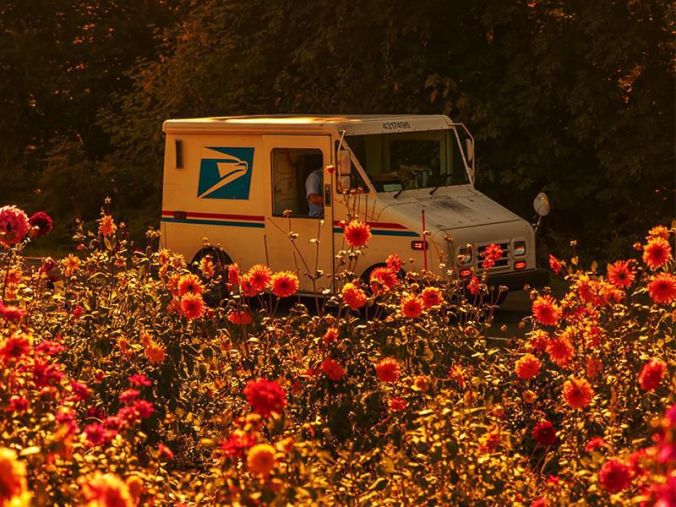
“The postal service is one of the oldest federal agencies,” says Daniel Piazza, a curator of philately at the Smithsonian’s National Postal Museum. “Maybe for that reason, we tend to take it for granted. But we have always relied on it, whether for news from home, prescription medications or e-commerce.” (Levi Mandel)

We have committed to using the US Postal Service for delivery of our coffees in the USA We already believed it to be a historically essential institution in that country and we want to support it as much as we want to benefit from its services. We have no second thoughts about this commitment, even while it is in the news for all the wrong reasons. We have known the agency needs attention, but we have not known exactly what that attention should look like. So, it is helpful to read this background history:

A Brief History of the United States Postal Service

To forge a nation, the founders needed an efficient communications network

From 1753 to 1774, as he oversaw Britain’s colonial mail service, Benjamin Franklin improved a primitive courier system connecting the 13 fragmented colonies into a more efficient organization that sped deliveries between Philadelphia and New York City to a mere 33 hours. Franklin’s travels along the post roads would inspire his revolutionary vision for how a new nation could thrive independent of Britain. But not even he imagined the pivotal role that the post would play in creating the Republic. Continue reading

Samfundssind, A Word For These Times

p08mjtp0

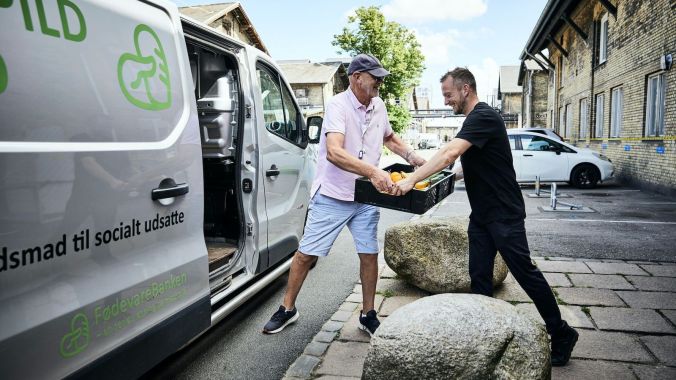
The JunkFood project is to continue, even though Alchemist has now reopened its doors (Credit: Soren Gammelmark)

How words matter is a longstanding theme here, and I have occasionally let a Danish word capture my attention. I am susceptible to stories about modern Danish norms, much as I was by Norse mythology as a kid. So, thanks to Mark Johanson and the BBC for bringing this to our attention:

How a long-forgotten word rallied a nation

A word buried in the history books helped Danes mobilise during the pandemic, flattening the curve and lifting community spirit.

Danish chef Rasmus Munk shocked the culinary world last year with the opening of his audacious Copenhagen restaurant Alchemist, which offers a multisensory food and entertainment experience across 50 courses and five acts. More surprising, still, was what the Michelin-starred chef did next when the pandemic brought his marathon meals to an abrupt halt on 15 March.

p08mjt8h

By 19 March, Munk had pivoted from serving 2,900kr ($450) worth of molecular gastronomy (think wood ants preserved in candy ‘amber’ and cherry-infused lamb brains) for 48 nightly guests to whipping up 600 daily portions of down-to-earth staples (such as pasta carbonara and chicken puff pie) for Copenhagen’s homeless and socially vulnerable residents.

“I put out a call for help on Instagram, and the next day I had nearly 1,000 emails from fellow chefs and everyday people who offered to drive the food out to the 14 shelters we now work with,” he explains. Hotels and restaurants also got in touch to donate food that would have otherwise gone to waste. Soon, Alchemist’s four kitchens were buzzing with masked volunteers, and the nascent social responsibility project JunkFood, which Munk had started as an experiment before the pandemic, took root. Continue reading

Organikos, Coffee & Community

Walking yesterday’s theme further down a country road: since late March Community Supported Agriculture (CSA) has been a constant topic of interest. Initially my thoughts were with the family farms supplying our fruits and vegetables. We spent the month of April and much of May looking closely at how we might support them. Concerned that the social distancing and lockdown measures that were sure to come would close the farmers’ markets, putting unbearable pressure on those families and their farms we thought a limited time, limited purpose CSA would help these farmers. It was a good idea, but it was not for us to do. The municipalities, farmer cooperatives and other organizers of the farmers’ markets in Costa Rica proved creative and resilient. So far, so good.

Now, as we prepare to launch our coffee roasting and delivery service in the USA, I see Organikos offering a community the opportunity to support coffee farmers in Costa Rica. Last year, prior to opening, we had projected that in 2020 Organikos would sell 7,000 pounds of coffee in the two Authentica shops. Those two shops were designed to serve the travelers who have been arriving and departing by the millions for the last two decades. We entered into supply contracts based on those projections, and invested in the infrastructure to make it happen. We were on track, through mid-March, to meet the projections. Needless to say, now that will not happen as planned.

We may yet get to 7,000 pounds of coffee sold in 2020. With 4+ months to go, with the website ready to go live and the roaster fired up we will see how quickly we can build a community to support this particular form of agriculture.

Platform Name Change

La Paz Group, having sponsored and administered this site since its inception, was the name up top until yesterday. Now the name Organikos makes more sense up there. For those of you who have been following us for any length of time, this probably does not come as a surprise. We have been talking about Organikos more and more frequently in the last two years. In late August, 2019 La Paz Group opened two Authentica shops in Costa Rica and that is when and where Organikos started selling coffee. As Organikos prepares to sell coffee in both the USA and Costa Rica with its own virtual shop, sponsorship of this platform makes sense. The themes–entrepreneurial conservation especially, and you can see the others on the right column–remain the same. Thanks for visiting.

Costa Rica Coffee Terrain: Tarrazu

Costa Rica has a remarkably diverse landscape for such a small country. And that diversity translates into an excellent variety of high quality coffees, each unique according to the region of origin, and the particular farms within those regions. We have chosen twelve coffees from the regions that international tasting competitions have consistently prized the most, including four single estate coffees that stand out for their quality. Continue reading

Hats, History, Heritage

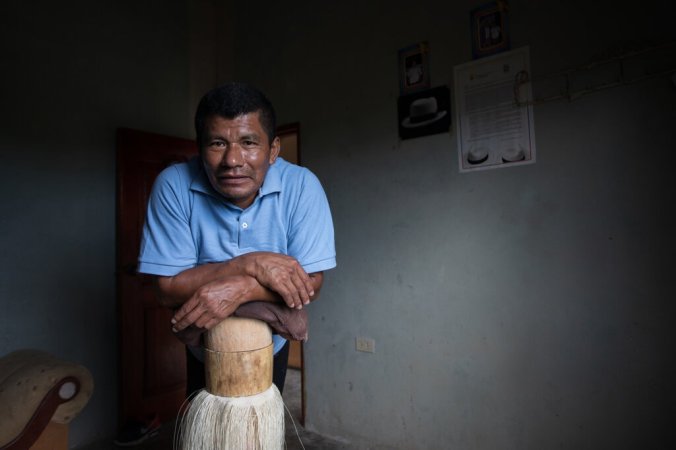
Mr. Espinal, 52, is widely regarded as the greatest living Panama hat weaver. All photographs by Roff Smith

Having lived and worked in Central America and South India, weaving with palms for shelter and adornment has been part of cultural norms. But in most cases, the craftsmanship has been simplified versions that lacked permanence – for the sake of festivals, traditional artesania , or with the knowledge that the woven shelter would last several seasons of rain before requiring replacement.

The artisan ethos described here mirrors both the fine work and collaborative efforts of Kerala sari weaving communities like Chendamangalam. In all cases, the “stuff of royalty.”

A Glimpse Inside the Workshops of the World’s Finest Panama Hat Makers

Creamy as silk and costlier than gold, a Montecristi superfino Panama hat is as much a work of art as it is of fashion.

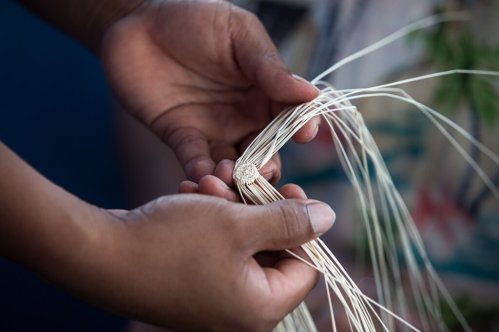
Creamy as silk, costlier by weight than gold, the color of fine old ivory, a Montecristi superfino Panama hat is as much a work of art as it is of fashion. The finest specimens have more than 4,000 weaves per square inch, a weave so fine it takes a jeweler’s loupe to count the rows. And every single one of those weaves is done by hand. No loom is used — only dexterous fingers, sharp eyes and Zen-like concentration.

“You cannot allow your mind to wander even for a second,” says Simón Espinal, a modest, soft-spoken man who is regarded by his peers as the greatest living weaver of Panama hats, possibly the greatest ever. “When you are weaving it is just you and the straw.”

Mr. Espinal’s hats average around 3,000 weaves per square inch — a fineness few weavers have ever even approached. His best has just over 4,200 weaves per square inch and took him five months to weave.

The 52-year-old Ecuadorean is one of a dwindling number of elite Panama hat weavers, nearly all of whom live in Pile, an obscure village tucked away in the foothills behind Montecristi, a low-slung town about 100 miles up the coast from Guayaquil.

Continue reading

Rewilding, A Good Idea Scaling

5000 (1)

Hugh Somerleyton, right, and Argus Hardy on the Somerleyton estate in Suffolk. Photograph: Si Barber/The Guardian

This idea has caught on, spreading like a good alternative to wildfire:

Farmers hatch plan to return area the size of Dorset to wild nature

WildEast aims to convince farmers, councils and others across East Anglia to pledge land to wildlife

5000 (2)

View over the Somerleyton estate. Photograph: Si Barber/The Guardian

Returning an area the size of Dorset to wild nature, reintroducing extinct lynx, pelicans and beavers and championing regenerative farming to restore soil health are the radical aims of a new charitable foundation.

But the most revolutionary feature of WildEast may be that it is founded by three farmers in the most intensively farmed region of Britain.

Hugh Somerleyton, Argus Hardy and Olly Birkbeck, who own more than 3,200 hectares (8,000 acres) on their family farms in Suffolk and Norfolk, are seeking to persuade farmers and also councils, businesses, schools and ordinary people across East Anglia to pledge a fifth of their land to wildlife. Continue reading

Scaling The Urban Farm, In Paris

8256

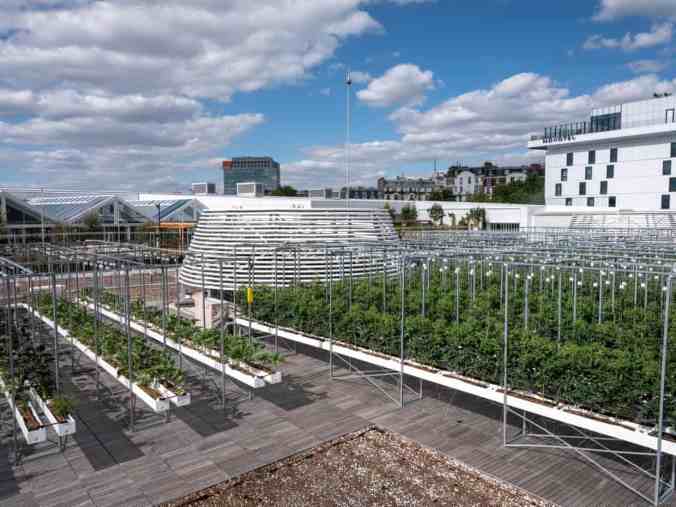
Nature Urbaine. Photograph: Magali Delporte/The Guardian

The future of food: inside the world’s largest urban farm – built on a rooftop

In Paris, urban farmers are trying a soil-free approach to agriculture that uses less space and fewer resources. Could it help cities face the threats to our food supplies?

Thanks to the Guardian for keeping stories like this  coming:

5568 (1)

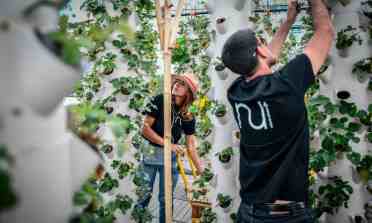
Urban farming on a Parisian rooftop. Photograph: Stéphane de Sakutin/AFP/Getty Images

On top of a striking new exhibition hall in the southern 15th arrondissement of Paris, the world’s largest urban rooftop farm has started to bear fruit. Strawberries, to be precise: small, intensely flavoured and resplendently red.

They sprout abundantly from cream-coloured plastic columns. Pluck one out to peer inside and you see the columns are completely hollow, the roots of dozens of strawberry plants dangling into thin air.

From identical vertical columns nearby burst row upon row of lettuces; near those are aromatic basil, sage and peppermint. Opposite, in narrow, horizontal trays packed not with soil but coco coir (coconut fibre), grow heirloom and cherry tomatoes, shiny aubergines and brightly coloured chards. Continue reading

Sensory Heritage Is The New Green

20200620_EUP501

For some time now green has been the new thing and we live in one of its showcases, with access to all kinds of tropical nature within easy driving distance. But it has been where we live that, for the last few months, has had us greening our own living patterns. There will be a fuller post on that soon, but for now I just smile at my friends across the Atlantic, on a day when our rooster woke me as usual well before the sunrise. And opening the gallinero (chicken coop) on my way to the lower land we are planting, I was sensitive to the smell that I had otherwise stopped noticing until I read this short piece. I appreciate the imaginative approach, probably unique to France, to protecting heritage that some at best take for granted and others find a nuisance:

Townies v tractors

French urbanites fuss about rustic noises and smells

Some second-home owners have sued over loud livestock and church bells

France’s sense of itself has long been rooted in the land, even though three-quarters of French people live in towns. Now, however, having locked down in small airless spaces, many city-dwellers feel the call of the wild. Estate agents report an uptick in searches for homes with gardens. Diehard urbanites talk wistfully of a bucolic existence in la France profonde. In a poll, 61% of the French think confinement will encourage people to move to the country or buy a second home. But do today’s townsfolk know what rural life really entails?

The question arose late last year, when Pierre Morel-À-L’Huissier, a deputy from the Lozère, a remote rural area, introduced a bill to protect France’s “sensory heritage”. By this, he meant “the crowing of the cockerel, the noise of cicadas, the odour of manure”, and other rural sounds and smells. Continue reading

Citizen Farming & Victory Gardens, 2020

WW1-and-WW2-posters

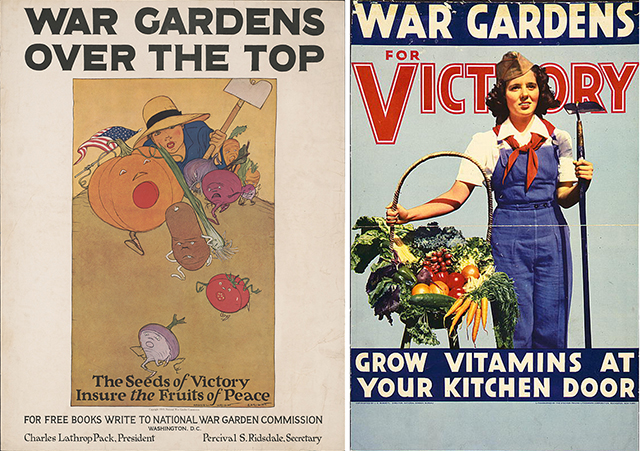
LEFT: “War gardens over the top. The seeds of victory insure the fruits of peace,” Maginel Wright Enright, National War Garden Commission, 1919 (Library of Congress). RIGHT: “War gardens for victory—Grow vitamins at your kitchen door,” lithographed by the Stecher-Traung Lithograph Corporation, Rochester, New York, between 1939 and 1945 (Library of Congress).

In the latest Gastropod episide, Dig for Victory, we get some new background on an old topic that has been on our minds lately:

VicGarden

You’ve seen the news: vegetable seeds are selling out. All that quarantine ennui has combined with anxiety about the gaps on supermarket shelves to create a whole new population of city farmers in backyards and windowsills across America. And everyone from the Los Angeles Times to Forbes to CBS has dubbed these brand new beds of beets and broccoli “COVID-19 Victory Gardens.” Continue reading

BirdsCaribbean Global Big Day in a Big Way

Birders, in general, tend to be an enthusiastic bunch – and the constraints of the current circumstances actually added extra incentive to find creative problem solving solutions, in finding new birding locations or ways to be safely be in familiar ones.

The BirdsCaribbean Global Big Day video compilation provides proof positive. Enjoy!


Akira Miyawaki, More On Small Forests

2048 (1)

A Miyawaki forest being planted on the outskirts of Paris, France. Photograph: Courtesy of Boomforest

We knew from a recent post about the importance of small tracts of tree cover, based on reporting in the USA. Here is more from Europe, and about the botanist inspiring an acceleration of planting:

Fast-growing mini-forests spring up in Europe to aid climate

Miyawaki forests are denser and said to be more biodiverse than other kinds of woods

4608 (2)

A three-year-old forest in Ormeignies, Belgium. Photograph: Urban Forests

Tiny, dense forests are springing up around Europe as part of a movement aimed at restoring biodiversity and fighting the climate crisis.

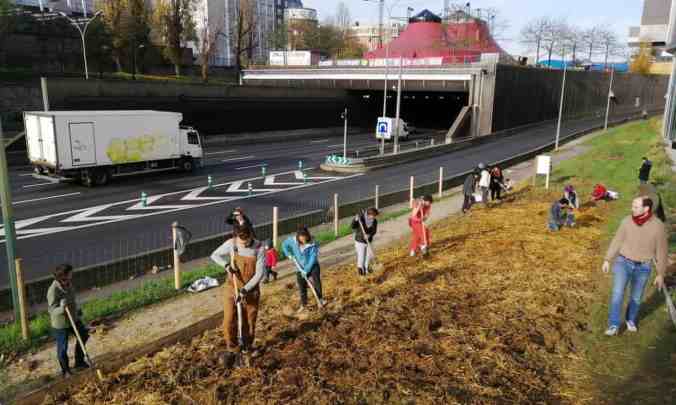
Often sited in schoolyards or alongside roads, the forests can be as small as a tennis court. They are based on the work of the Japanese botanist Akira Miyawaki, who has planted more than 1,000 such forests in Japan, Malaysia and elsewhere. Continue reading

Threads

The threads of handloom speak to me every time I enter my closet, despite the fact that it’s a rare occurrence for me to wear a sari now that we no longer live in India. Even without that particular garment, half of my wardrobe is comprised of beautiful pieces of extraordinary workmanship, in handloom, shibori dying, and embroidery; designed in Kerala by Sreejith Jeevan for Rouka, and crafted in collaboration with numerous weaving and dying clusters.

Anoodha Kunnath and the Curiouser team once again bring this craft to life in inspiring ways. The excerpt above is from a longer film shot for Sahapedia, an online interactive encyclopedia on the arts, cultures and histories of India (and broadly South Asia). It aims to highlight the interdisciplinary and interconnected nature of cultural expression that cut across various domains.

The threads have to be strung across an open field before 8 am at least, so that they are dried by the morning breeze and warmed just enough by the tender sunlight found only at those hours. Street warping, just like everything that is done with great love and care, is painstaking; so much so that the author Sethu compares it to caring for a child. Continue reading
Fixing Farms In Ireland

4494

Michael Davoren with his cattle in the Burren, Co Clare. Photograph: Eamon Ward/Burrenbeo Trust

Thanks to Ella McSweeney for this story about a young academic’s hands on, entrepreneurial approach to solving problems caused by Ireland’s farmers, who had followed incentives to their economically logical but environmentally disastrous conclusions:

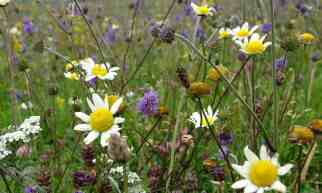
‘Life attracts life’: the Irish farmers filling their fields with bees and butterflies

Rewarding positive environmental impact has revitalised an area of west Ireland. Is this a solution to the country’s ‘acute’ nature crisis?

2848

In late spring, the Burren is transformed into an explosion of colour. Photograph: Burrenbeo Trust

Michael Davoren shudders when he thinks of the 1990s. He’d been in charge of his 80-hectare farm in the Burren, Co Clare, since the 1970s, and the place was in his blood. The Davorens had worked these hills for 400 years.

But growing intensification fuelled by European subsidies meant that most farmers in this part of Ireland were having to decide between getting big or getting out. Hundreds were choosing the latter.

2848 (1)

Hundreds of farmers have signed up to a scheme that pays them to create healthier fields and clean waterways. Photograph: Burrenbeo Trust

Davoren followed the advice to specialise and chase the beef markets. “The more animals I kept, the more money I got,” he says. “I put more cattle out, bought fertiliser, made silage. Slurry run-off was killing fish. But if I kept fewer animals I’d be penalised 10% of my subsidy.”

The austere appearance of the Burren landscape belies its rich diversity. The thick rocks were laid down 300 million years ago when warm tropical seas covered the area, and the bodies of billions of marine creatures cascaded to the sea floor to form the Burren limestone. Continue reading

Rethinking What Comes Next

shutterstock_308990846_FloridaHouses_web

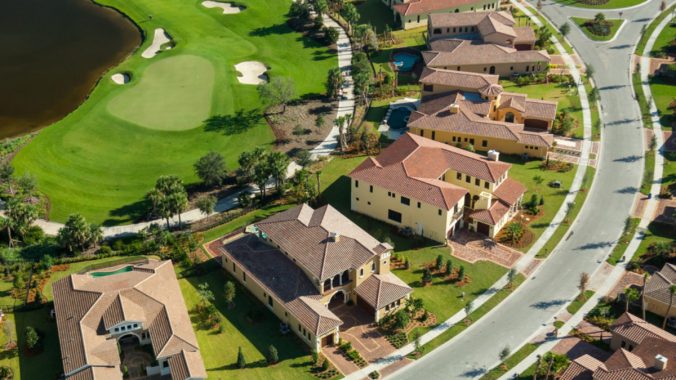
The average size of a new house in the U.S. has doubled since 1970. SHUTTERSTOCK

Thanks as always to Bill McKibben for his view on ways of thinking differently about our shared future:

When Social Distancing Ends, Will We Rethink the World We Want?

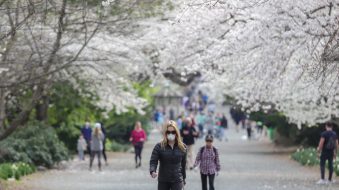
Long before the virus, Americans had become socially isolated, retreating into sprawling suburbs and an online world of screens. When we emerge from our pandemic-mandated separation, can we reconnect with each other and reconsider how the way we live impacts the natural world?

2BCWX7G_alamy-central-park_web

Patterns are notoriously hard to break, even when you have to. Studies find that more than half of smokers diagnosed with lung cancer keep on smoking, even though their odds of survival would go way up if they stopped. Nicotine is powerfully addictive, of course — but we’re beginning to suspect that’s true of lots of other human behaviors too: checking your phone, for instance, which seems strongly linked to the supply of dopamine (which is what nicotine affects as well). One tells oneself that one will change — but change is hard. Continue reading
Looking Again At Tegucigalpa, Seeing Why Place Matters

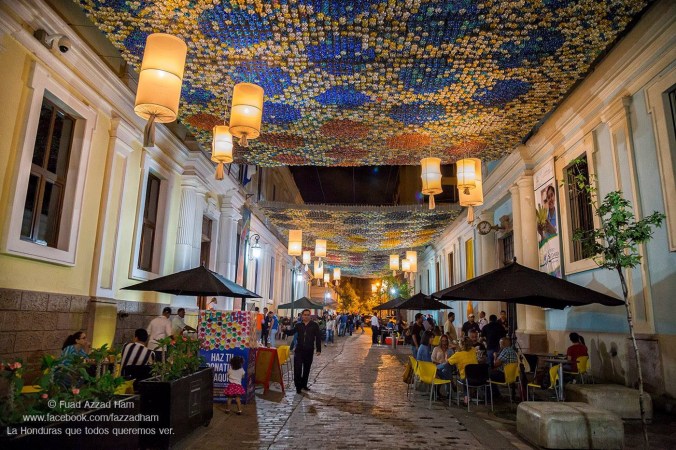
Starting in 1997 I got to know the entire country of Honduras over two years while working on a sustainable tourism development project for the government. I spent more time in Tegucigalpa than anywhere else because my monthly meetings with the Ministry of Tourism were held there. While poverty was visible, the city had a charm, unique in Central America, based on its particular history. At the time I also had many students from Honduras, most from Tegucigalpa, so it was more than a workplace for me. When hurricane Mitch descended on Central America in 1998, nowhere was more devastated than Tegucigalpa; by the time my project ended in 1999 I could not picture how or if the city would recover. I have not been back since, but continued to wonder. Nando Castillo has given me part of the answer, and I thank him for the clarity of his presentation on Medium, which I recommend taking five minutes to read:

Why Place Matters, Part I.

Can our cities evolve into the places we truly need?

1_U-iCEsQyUwFwdbL0H7CgfQ

Image: Fuad Azzad Ham

At Raíz Capital our mission is sustainable urban revitalization. Our vision is for Tegucigalpa, a community with a neglected urban core, to become the creative capital of Central America and regain its glory as a prosperous city. We are still a ways from realizing it, but this is the story of how we found that vision and began to make it come true. Continue reading
From Brooklyn to Beyond

The Brooklyn Film Society has been organizing the Brooklyn Film Festival for decades, providing a public forum for the local community to view an extraordinarily wide range of national and international films. Scheduled from May 29 – June 7th, the 23rd edition of the festival features 6 categories of films: Narrative Feature, Narrative Short, Documentary Feature, Documentary Short, Animation, and Experimental.

The primary difference from past editions is the venue… all the films will be available on line, free of charge. So sign up following this link – and enjoy!

THEME: Turning Point

Just a few months ago, nobody, not even the most daring sci-fi screenwriter, could have predicted the current situation and/or the extent of the COVID-19 takeover. Besides the fact that we are all still dealing with the basics and a resolutive approach feels still far away, one thing seems certain: we won’t be able to go back to the pre-virus thinking and lifestyle anytime soon. The fear of the “invisible danger” that threatens our life is radically modifying our own life routine and the way we deal with our neighbors. It is a “Turning Point” in history. It is a moment that will ultimately reveal who we are as human beings. The Brooklyn Film Festival, with its 2020 event, plans to highlight and dissect people’s character and problem solving attitude as it shifts from one time zone to the next. The international role BFF has always played on the world’s stage, will now come truly handy while with our film lineup we travel from one corner of the planet to another. “Turning Point” is about refreshing our own point of view. It’s about rethinking our old assumptions and learning from the people who share our screen whether they live in a different continent or across the street. “Turning Point” is about reinventing our planet and our life.


Planting Trees, A Two-For-One Deal

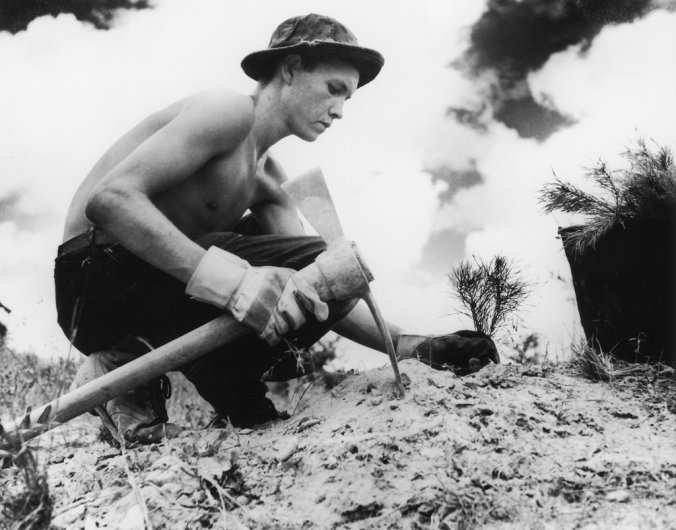
A Civilian Conservation Corps enrollee planting a tree circa 1938. Fotosearch/Getty Images

Thanks to Collin O’Mararough, president and C.E.O. of the National Wildlife Federation, for his idea about how to employ some of the unemployed. Deploy them. Planting trees is not sufficient to solve the looming crisis of climate change, but it is a start:

7.7 Million Young People Are Unemployed. We Need a New ‘Tree Army.’

The Depression-era Civilian Conservation Corps helped build America at a time of national crisis. Let’s do it again.

Nearly 7.7 million American workers younger than 30 are now unemployed and three million dropped out of the labor force in the past month. Combined that’s nearly one in three young workers, by far the highest rate since the country started tracking unemployment by age in 1948.

Nearly 40 percent worked in the devastated retail and food service sectors. And as the most recently hired, young workers are typically the first let go and often the last rehired, especially those of color.

As our country’s leaders consider a range of solutions to address this crisis, there’s one fix that will put millions of young Americans directly to work: a 21st-century version of the Civilian Conservation Corps.

In 1933, when President Franklin Roosevelt created the C.C.C., he was facing, as we are today, the possibility of a lost generation of young people. The conservation-minded president’s idea was to hire young unemployed men for projects in forestry, soil conservation and recreation. By 1942, the 3.4 million participants in “Roosevelt’s Tree Army” had planted more than three billion trees, built hundreds of parks and wildlife refuges and completed thousands of miles of trails and roads.

Continue reading

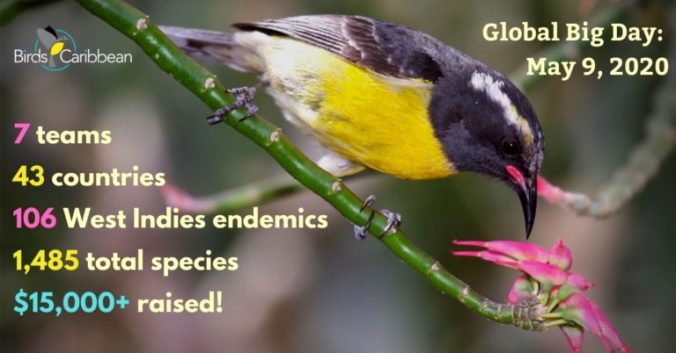
Birds Caribbean Global Big Day Results

Happy to see the results and first post from Birds Caribbean about the various teams’ contributions to the 2020 Global Big Day. Looking forward to reading the highlights of all the teams.

BirdsCaribbean Takes Global Big Day by Storm, Despite COVID-19

The biggest birding day of the year — Global Big Day —took place on Saturday May 9, 2020. More than 50,000 people from around the world joined in to record their sightings. Close to 300 participants from throughout the West Indies recorded 345 different species of birds! Cuba had the most species by country (135) followed closely by the Bahamas (126) and Puerto Rico (125). Regionally1,051 checklists were submitted, 205 more than last year. That’s an incredible achievement — way to go birders!

Birders from Cuba looking great with their BirdsCaribbean buffs in Zapata Swamp on Global Big Day. We will share more about the birding experiences on the different teams in a second blog post

This year was quite a different experience as much of the world remains under stay at home orders or is following social distancing guidelines. Certainly many of the great open spaces that are go-to spots for birders were not open to the public for safety reasons. Nevertheless, eBird recorded a 32% participation increase from Global Big Day 2019 and more than 120,000 eBird checklists were submitted.   Continue reading