If You Must Bet, Bet On This

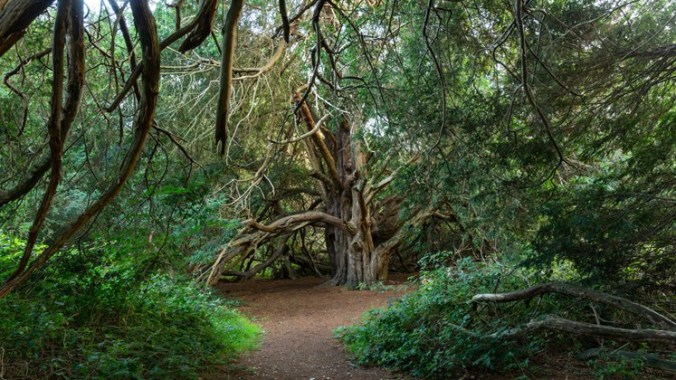
great-yew-kingley-vale-edward-parker.jpg

Woodland Trust has not been mentioned in these pages before, surprisingly. Its origins and its mission make us feel at home:

Stand up for trees

We want to see a UK rich in native woods and trees, for people and wildlife.

But we can’t achieve our vision without you.

And its accomplishments are awesome:

43,069,424
trees planted,
1089 woods saved,
34,075 hectares of ancient
woodland under
restoration.

And now it is possible to place a bet on their behalf in a fun contest:

Now is your chance to vote for your favourite trees in England, Scotland, Wales and Northern Ireland as we reveal the shortlists in our Tree of the Year contest. Continue reading

Camera Trap Treasure

triplets-1260x708.jpg

A black bear mother with three cubs. Photo © TNC

Camera traps have proven valuable in the work we have been doing in Belize, India and elsewhere in the wilderness areas of the developing world. But equally important are the photos captured in areas closer to urban settlements. Thanks to The Nature Conservancy’s publication of these photos with the article below:

As a Nature Conservancy forester in Pennsylvania, Mike Eckley spends a lot of time assessing the health of woodlands. That means he spends as much time thinking about white-tailed deer as he does trees.

Many conservation biologists consider over-abundant deer to be an even bigger threat to eastern forests than climate change. Deer can fundamentally change the forest ecosystem, threatening everything from rare wildflowers to migratory songbirds. These deer also can cause deadly vehicle collisions, increase risk of Lyme disease, and cause significant agricultural and property damage.

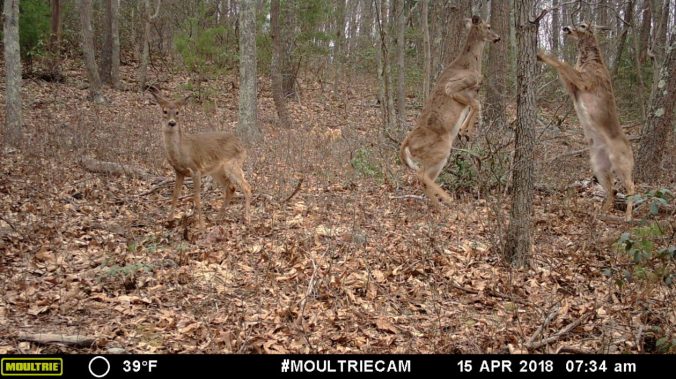
MOULTRIE DIGITAL GAME CAMERA

Two white-tailed deer boxing. Photo © TNC

Eckley educates hunting clubs and landowners on deer management issues, and recently co-edited a book on the topic. He also works to make sure the deer herd is healthy on Conservancy projects like the West Branch Forest Preserve, a 3,000-acre preserve in north central Pennsylvania. Continue reading

Passamaquoddy Patrimony Preserved

dwayne-tomah-1-2_custom-90be2526bbc56d67fa337724dafa72ca52cf38fc-s1400-c85

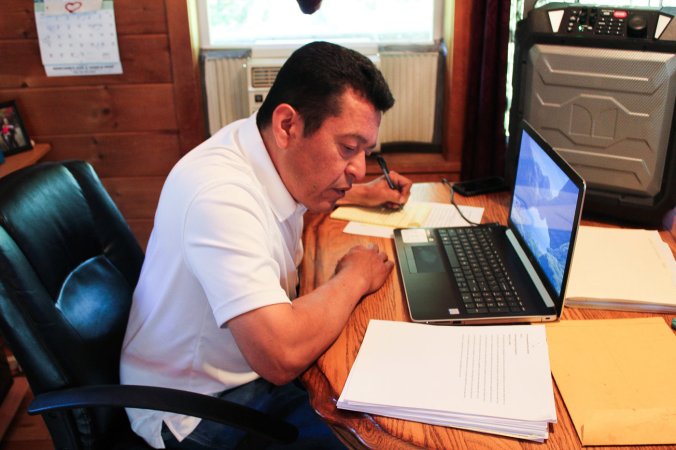
Dwayne Tomah, the youngest fluent Passamaquoddy speaker, sings a Passamaquoddy song outside of his home in Perry, Maine. Tomah is translating and interpreting songs and stories from wax cylinders recorded nearly 130 years ago. Robbie Feinberg/Maine Public

It has been years since we read a story with a theme like the one in this story below (our thanks to National Public Radio for sharing it):

Historic Recordings Revitalize Language For Passamaquoddy Tribal Members

Dwayne Tomah sits at his kitchen table in Perry, Maine, and pulls up an audio file on his computer. When he hits play, the speakers emit a cracked, slightly garbled recording. Through the white noise, Tomah scratches out the words he hears, rewinding every few seconds.

Word by word, Tomah is attempting to transcribe and interpret dozens of recordings of Passamaquoddy tribal members, some of which are only recently being heard and publicly shared for the first time in more than a century.

“I really, I wept. Hearing their voices. Knowing that I’m probably one of the last fluent speakers on the reservation,” Tomah says. “And that we’re still continuing this process, to be able to revitalize our language and bring it back to life again, so to speak. And give it some attention that it really deserves.”

“It’s language”

dwayne-tomah-6-3_custom-639d7bf975d58151c464bed7a630f18ae7530db0-s1400-c85.jpg

Dwayne Tomah listens to and transcribes an old Passamaquoddy story from a digital copy of a wax cylinder recording. Tomah and others in the Passamaquoddy tribe are translating and interpreting the 129-year-old wax cylinder recordings, which have been digitally restored. Robbie Feinberg/Maine Public

The story behind these recordings goes back to 1890, when an anthropologist named Walter Jesse Fewkes took a research trip to Calais, Maine. He borrowed an early audio recording device: a phonograph from Thomas Edison that recorded sounds on large, wax cylinders — about two-and-a-half to three minutes each. Continue reading

If Those Fires Are Disturbing You, Read This

merlin_159715152_7ddac8a4-f80a-4074-834c-ac0fc2b7302a-jumbo.jpg

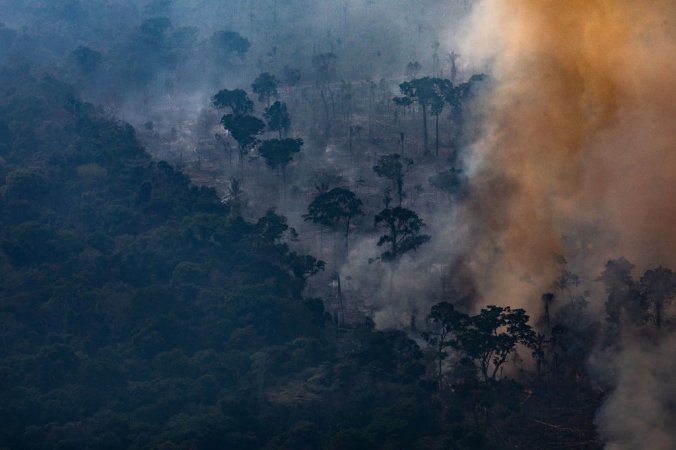
ictor Moriyama/Getty Images

Roberto Mangabeira Unger was responsible for Amazonian policy from 2007 to 2009. We assume he knows what he is talking about, and so it is worth reading his recommendation:

The Amazon Is Still Burning. Here’s How You Can Save It.

We need to figure out how to sustainably use the rain forest for the benefit of its inhabitants and the world. Give Brazil a hand without disrespecting its sovereignty.

The Amazon, the greatest reservoir of fresh water and biodiversity on the planet, is burning. Its degradation, which threatens to reach a catastrophic tipping point, means less oxygen and rain as well as warmer temperatures. Human actions have been the driving cause. In Brazil, which holds 60 percent of the Amazonian rain forest, wildcat land grabbers and ranchers, who set fires to clear land in implicit partnership with a lenient government, are the main culprits.

We have been here before. In 2004 deforestation rates were much worse than they are today. In the last years of that decade Brazil stepped back from the brink and imposed constraints on what had been a free-for-all in the region. We now need to be more ambitious than we were then. Continue reading

My time in Costa Rica

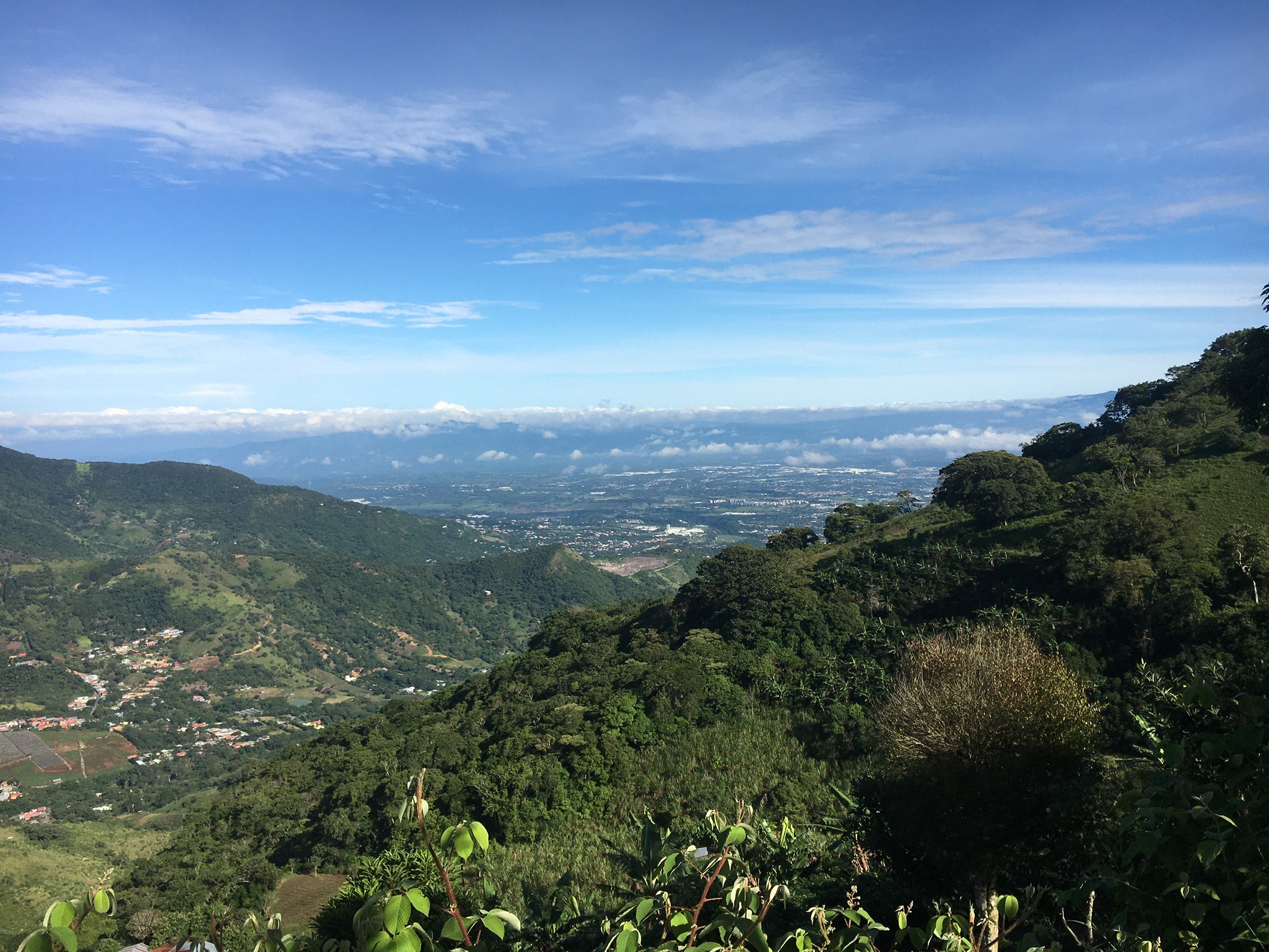
Yesterday I got back from my three week internship in Costa Rica. During my time there, I learned a lot about eco tourism, Costa Rica, and sustainable business practices. I got to take hikes through the back hills and see many of the bird species I had hoped to encounter. Three weeks in one location is a lot longer than most vacation visits to a country, and I got to really know the local area. While I was there we made frequent use of the bus to get around, which provided a more personal look at the San Jose area than driving would have. One thing I grew to appreciate was how green it was compared to the US. As soon as you leave the downtown area, the urban landscape is covered with trees and tall gras between buildings. Up in the hills there are farms mixed with residential housing and completely overgrown with forest.

Continue reading

Urban Avian Satisficing

web_kma9100.jpg

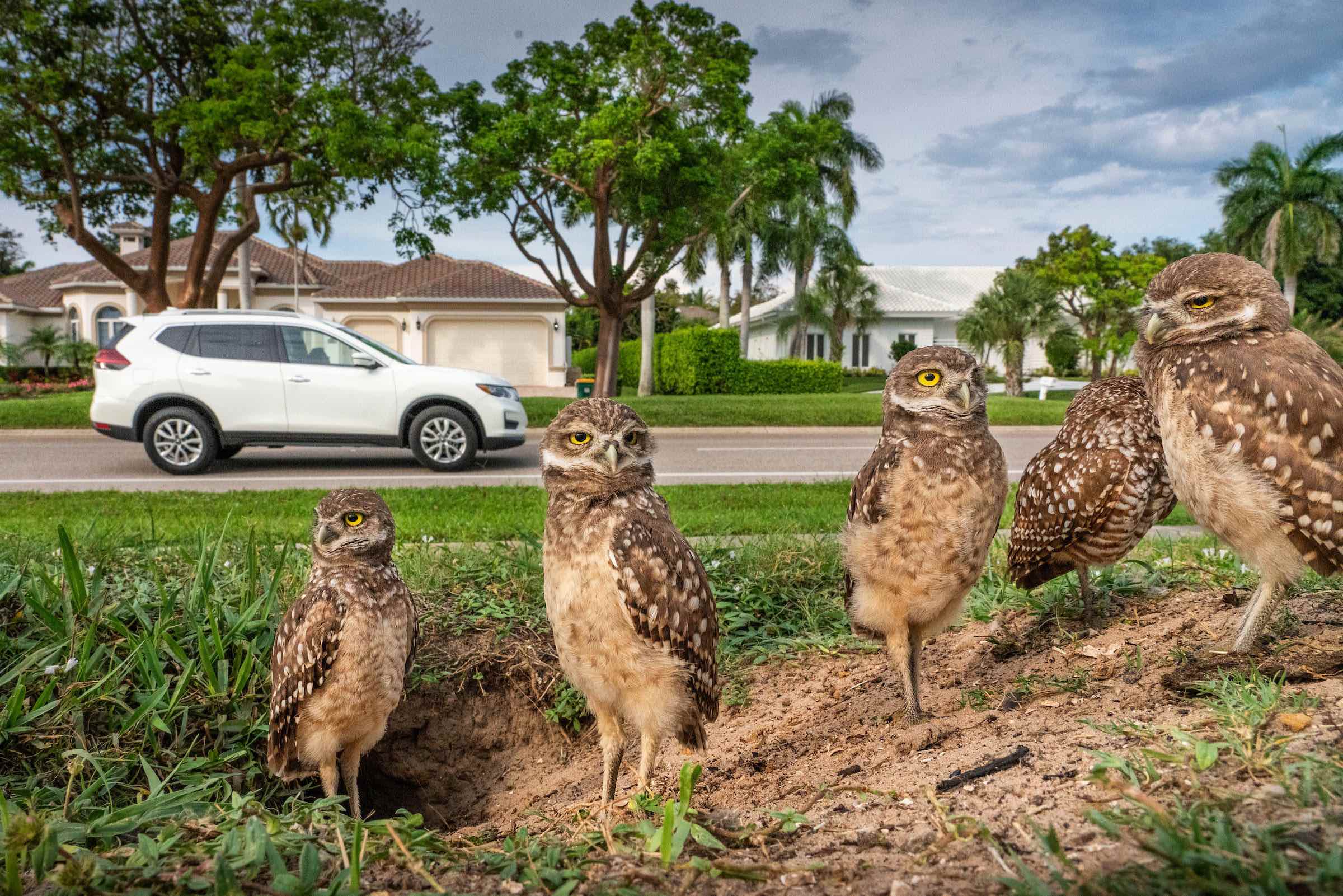
These owls have adoring human neighbors. Their burrow is dug on the lawn of a couple who, along with their grandson, delight in seeing the birds nest year after year on the property; they even intentionally leave one of their cars parked outside the garage, to offer the tiny owls shade. This year the owl pair had six chicks, five of which survived to fledge. Photo: Karine Aigner

Thanks to Audubon’s great team for this story of urban adaptation:

Burrowing Owls Are the Family Next Door in this Florida Boom Town

Locals and researchers are working to keep Marco Island hospitable to the birds, which are declining across the state, as development devours the vacant lots where they make their homes.

web_kma9100q

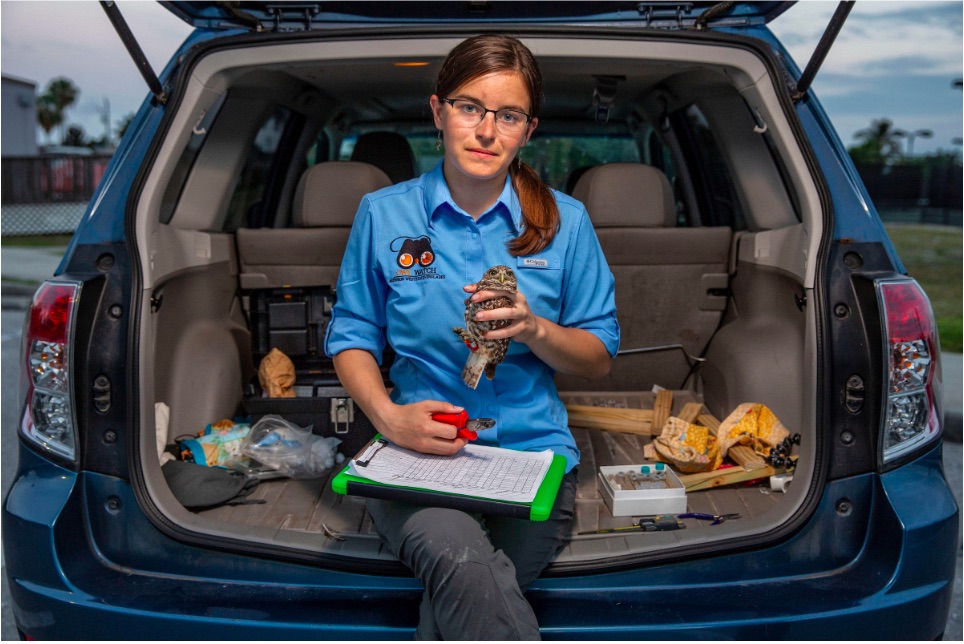
Biologist Allison Smith’s car serves as a mobile workspace for monitoring owls on Marco. She temporarily transfers birds she captures to the back, where she weighs, measures, and bands them before returning them to their burrows. Photo: Karine Aigner

Fate would not smile kindly on the six feathered inches of furious resignation splayed belly up in the left hand of Allison Smith. Wings slightly spread, the young Florida Burrowing Owl’s penny-wide green eyes remained unblinking at the indignity of such a position. Intent on banding and measuring the chick before taking a blood sample from an under-wing vein, Smith couldn’t foresee its future.

Neither could volunteer Jean Hall. She was helping Smith, a graduate student in wildlife ecology at the University of Florida, band several offspring from the same family as part of Owl Watch, a community-scientist research collaboration funded by Audubon of the Western Everglades.

The Gulf Coast barrier island of Marco, a 7,700-acre dry-land dollop of one-time mangroves lying in turquoise and azure waters south of Naples, is now thick with houses, condominiums, strip malls, resort hotels, marinas, and golf courses, along with 18,000 year-round residents. The population swells to some 40,000 each winter. Continue reading

Mexico, Mapping Memory

Blanton Museum of Art, for one more day, offers this:

Exactly 500 years ago, in August of 1519, an expedition led by the Spanish explorer Hernando Cortés began marching inland into Mexican territory. Just two years later, what today is Mexico City fell to an ethnically diverse army composed of both Spanish and local peoples from other cities, starting a long period of European colonization. This exhibition aims to expand our perspective on these events by featuring a selection of maps, known as Mapas de las Relaciones Geográficas, created by Indigenous artists around 1580. These unique documents show some of the visual strategies used by native communities for the endurance and perseverance of their cultures throughout the so-called colonial period and well beyond.

To learn more about the map click Teozacoalco Map. Thanks to National Public Radio (USA) for bringing this to our attention:

1.-meztitl-n_custom-76d71392f43cf17eb677f3a356088e82632e53ce-s1400-c85.jpg

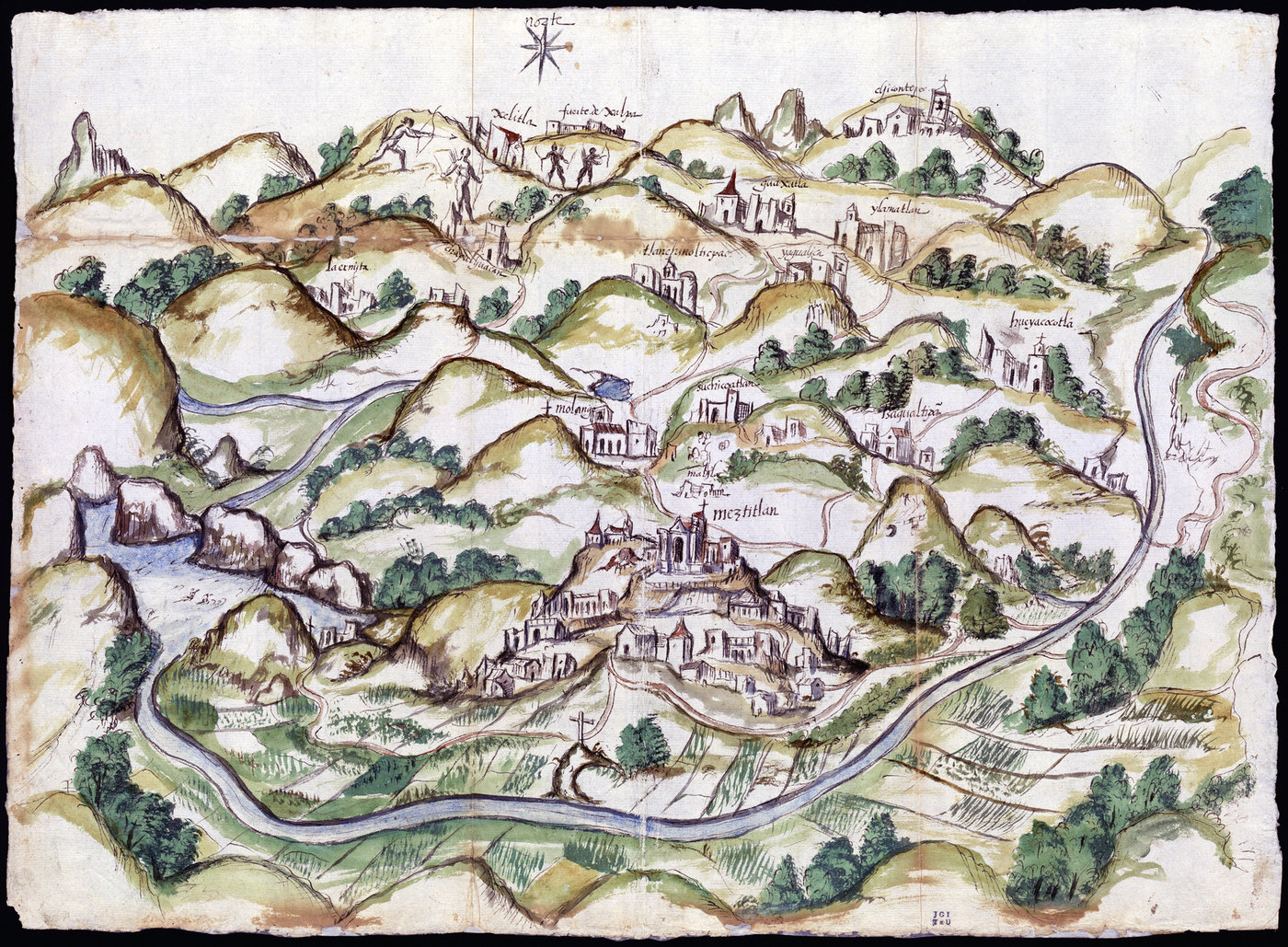
The Mapping Memory exhibition in at the Blanton Museum of Art in Austin, Texas, displays maps made in the late 1500s of what is now Mexico. They were created by indigenous peoples to help Spanish invaders map occupied lands. This watercolor and ink map of Meztitlán was made in 1579 by Gabriel de Chavez. Blanton Museum of Art

440 Years Old And Filled With Footprints, These Aren’t Your Everyday Maps

4.-culhuac-n_custom-a07202fd250a7d6dc16ed2124d2c4e0adf01ec99-s1400-c85.jpg

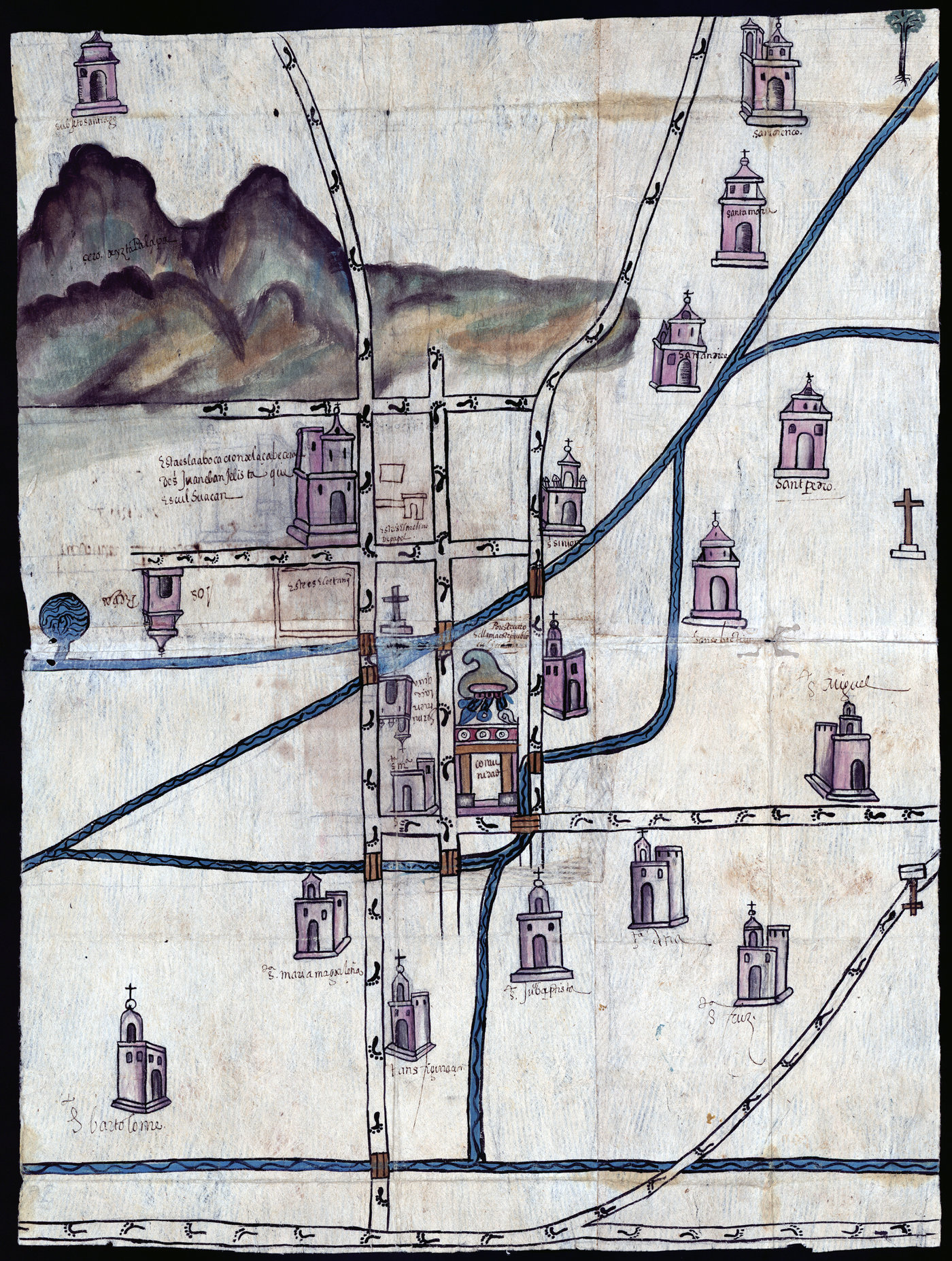
Pedro de San Agustín created this watercolor map of Culhuacán in 1580. He was a judge — a powerful figure in the town. “Before the conquest, nobles were the only ones trained as painters,” exhibit curator Rosario Granados explains. She notes that this map is made on bark paper, the traditional material used before the Spaniards arrived. Blanton Museum of Art

At the Blanton Museum of Art in Austin, Texas, 19 maps, nearly 440 years old, are on display — and they look spectacular. “Works on paper are delicate so we’re only allowed to put them on display for nine months out of 10 years,” says Blanton Museum communications director Carlotta Stankiewicz.

The Mapping Memory exhibition contains work by indigenous mapmakers from the late 1500s. The maps demonstrate a very different sense of space than maps drawn by Europeans. They’re not drawn to scale; instead, they’re deeply utilitarian.

A map of Culhuacán, for example, shows rivers running straight, with tiny arrows in the middle, indicating which way they flow. The pathways curve like snakes, with footprints or hoofprints indicating whether the paths can be walked or ridden. Continue reading

Python Prey


4608 (1)

An American alligator in its natural habitat in the Florida Everglades. Burmese pythons have been know to prey on alligators in the area. Photograph: Charles Ommanney/Getty Images

Thanks to the Guardian’s Lance Richardson for updating us on the Everglades python saga we have been reading about for some years now, thanks to this story:

Python wars: the snake epidemic eating away at Florida

There are tens of thousands of pythons in the Florida wild, attacking animals and damaging ecosystems – and the quest to stop them has become a collective crusade

3072

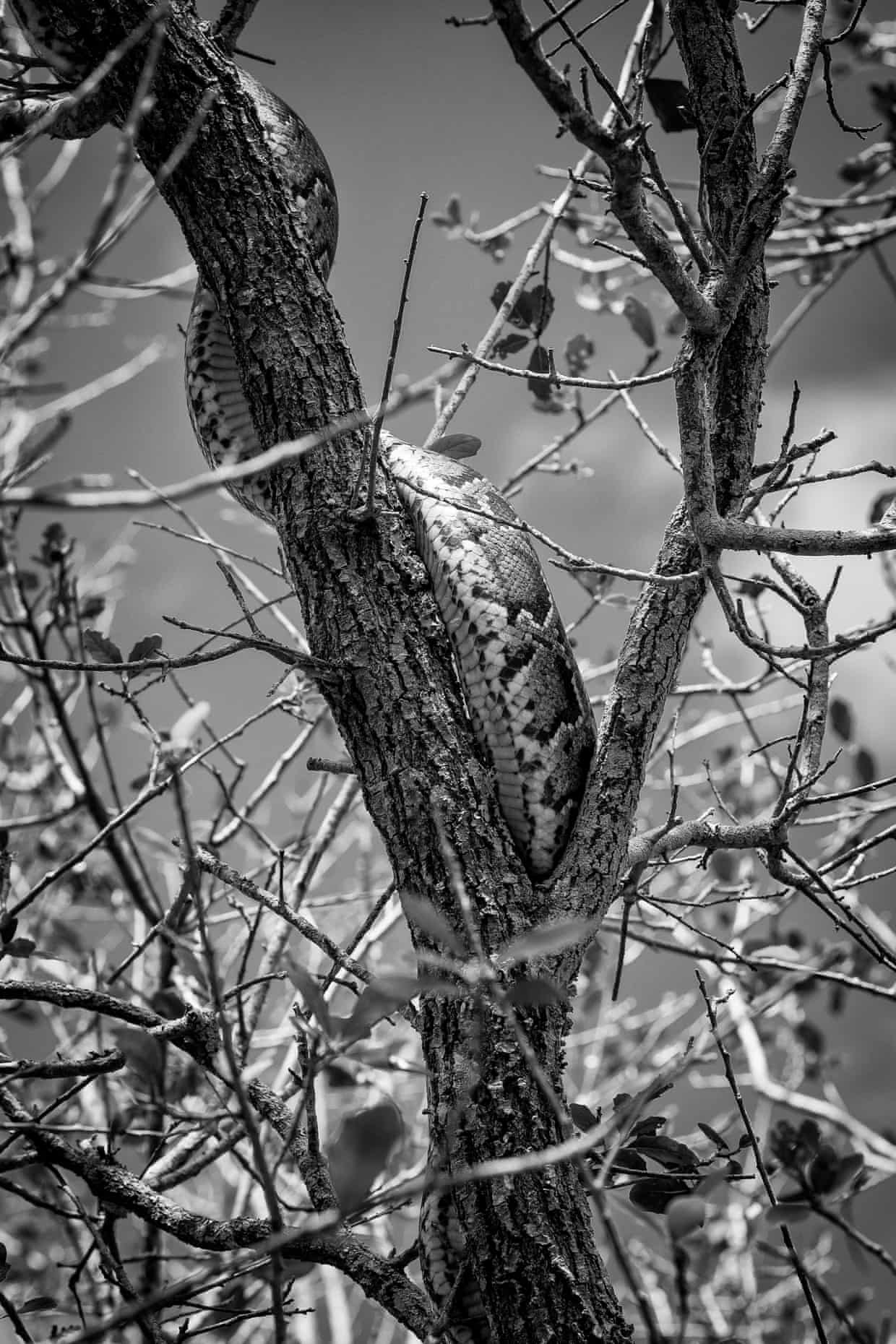
A python in a tree. Photograph: Charles Ommanney/Getty Images

On a Thursday afternoon in St Petersburg, Florida, Beth Koehler crouches over a cairn terrier named Ginger, trimming intently as fur collects around her feet. On Koehler’s arm is a scratch – red, jagged and freshly acquired, though not in the way one might expect of a dog groomer.

“There was no way I could pin the head,” Koehler says, referring to the snake that was partly responsible. She had grabbed hold however she could, which made it “pissed”: “It decided to coil up and just throw itself at me.” Startled, Koehler had fallen backwards, cutting herself on a vine – an injury far preferable to the bite of a Burmese python.

“I have never been bit,” she proudly adds. “Peggy’s been bit once, but really, we’re very careful.”

Three days a week, Koehler runs Hair of the Dog with her partner of 31 years, Peggy van Gorder. The other four days the couple are usually out chasing pythons as members of Patric: the Python Action Team – Removing Invasive Constrictors, which is managed by the Florida fish and wildlife conservation commission (FWC). Continue reading

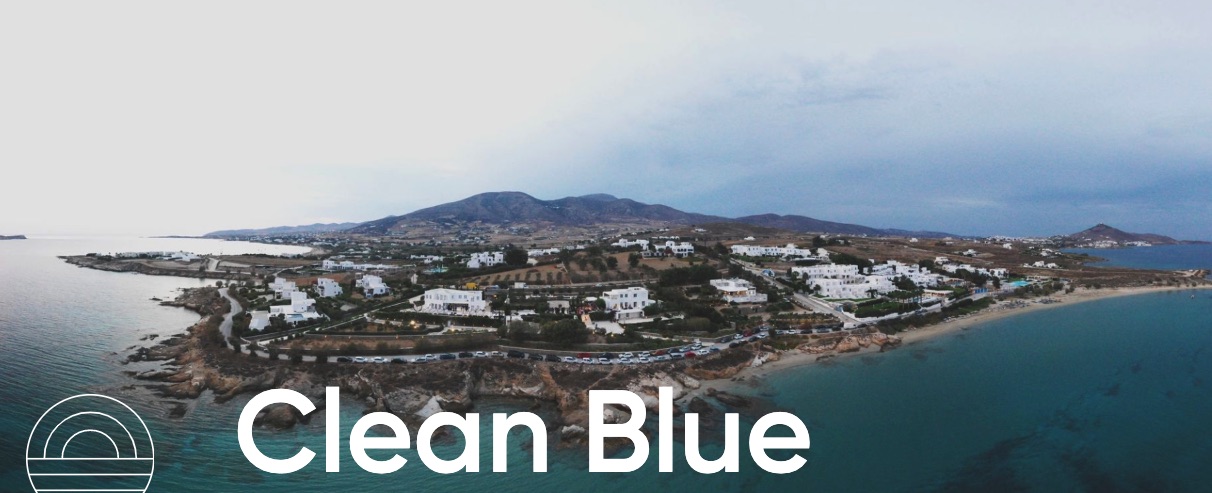
Clean Blue Paros

CleaanParos

One of the places where La Paz Group has visited but not carried out any work (yet), this website/initiative is likely worth a few minutes of your time:

Clean Blue Paros will support this Greek island in becoming the first plastic-waste free Mediterranean island and a global leader in the fight against plastics in our seas. Continue reading

Mayors Mitigating Climate Change Impacts

(Credit: CarbonCure )

Interesting technology innovation for addressing climate change. We’re glad to hear that local level leaders have this on their radar.

How ‘green’ concrete can help cities fight climate change

The built environment produces over 40% of global CO2 emissions. U.S. mayors are taking the lead to cut emissions with CO2 mineralized concrete.

As cities look to cut carbon emissions in their construction sector, the use of low-carbon concrete over other alternatives could help them do just that.

“Green” or carbon dioxide (CO2) mineralized concrete has received support from the U.S. Conference of Mayors (USCM) and private companies for its use in public projects as part of the national response to climate change. A resolution passed at this year’s USCM annual meeting in Honolulu urged its members to use the concrete over less environmentally-friendly alternatives.

Low-carbon concrete involves injecting recycled CO2 from industrial emitters like fertilizer and power plants into concrete. The CO2 then chemically converts into a mineral and gets embedded in the concrete, making it stronger and helping concrete producers use less cement for roads and buildings.

The built environment is responsible for over 40% of the world’s CO2 emissions and global building stock is expected to double by 2060. Concrete is the most widely used construction material in the world due to its affordable and durable nature. And its key ingredient, cement, contributes to up to 7% of the world’s CO2 emissions. Companies like CarbonCure are helping lead that charge with CO2 mineralized concrete.

“The cliche really stands that cities are the laboratory of innovation,” CarbonCure CEO Robert Niven told Smart Cities Dive. “And cities are really committed to taking a leap on solving this climate change issue.”

Continue reading

Fishermen Helping to Protect Fish

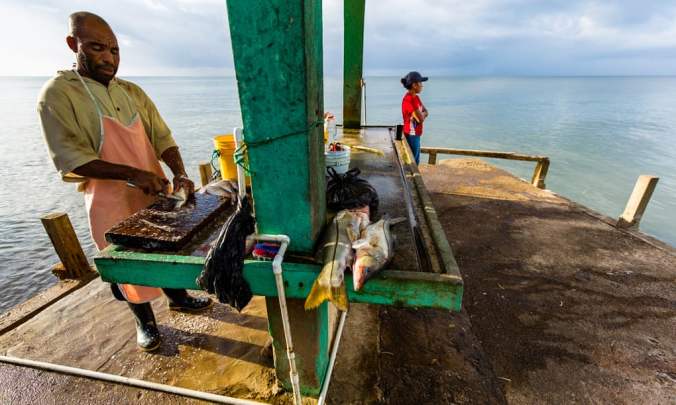
Belize’s system gets fishermen on side in helping to maintain the health of the ocean. photo credit: Tony Rath

Thanks to the Guardian for this story about Belize’s marine conservation efforts and how they can serve as a model for other countries.

Why tiny Belize is a world leader in protecting the ocean

Fish stocks are stable and reef health improving, in part thanks to Belize’s substantial ‘no-take’ zones. Now greater legislation is needed to secure progress

Across the turquoise water by the mangrove, forest ranger Allan Halliday spots a fishing skiff. “We’re going over to say hello,” he says, before abruptly changing the boat’s direction. But his real task is to check the couple on board have the license to fish in this part of the Port Honduras Marine Reserve, one of nine designated zones in Belize.

“We aren’t complaining but others do,” says Alonzo Reymundo, of the rules that now restrict Belize’s 3,000 commercial fishers to two geographic areas each. He and his wife Anselma have been fishing off southern Toledo for 30 years and their boat is laden with 50 or so pounds of shrimp – more than enough, he says, flashing his license. Today’s catch will be sold as bait and fetch around 330BZ$ (£135), he says.

But not all encounters are as friendly for the rangers from the Toledo Institute for Development and Environment (Tide), whose job includes enforcing the managed access (MA) programme that since 2016 has given traditional fishers the rights to secured grounds if they obtain licenses and report their catch. Illegal fishing has declined, says Halliday, but at night there are illicit incursions from Guatemala and high-speed chases around the reserve’s 500-square miles of pristine sea – a vast space to monitor for just four rangers alternating shifts at their station on Abalone Caye.

Covering all of Belize’s waters, the MA scheme is unique, says fisheries administrator Beverly Wade. “Belize is the only country in the world that has successfully divided all its territorial waters, including functional fishing waters. We direct all fishermen into two of nine areas to build an architecture from the ground up, where a constituent takes ownership of resources because their livelihood depends on it.”

The programme is just part of a groundbreaking approach to ocean protection that has won the tiny country in Central America a reputation as a world leader. Continue reading

Perennial Grain’s Future

Field-Work-July-2019-11_web.jpg

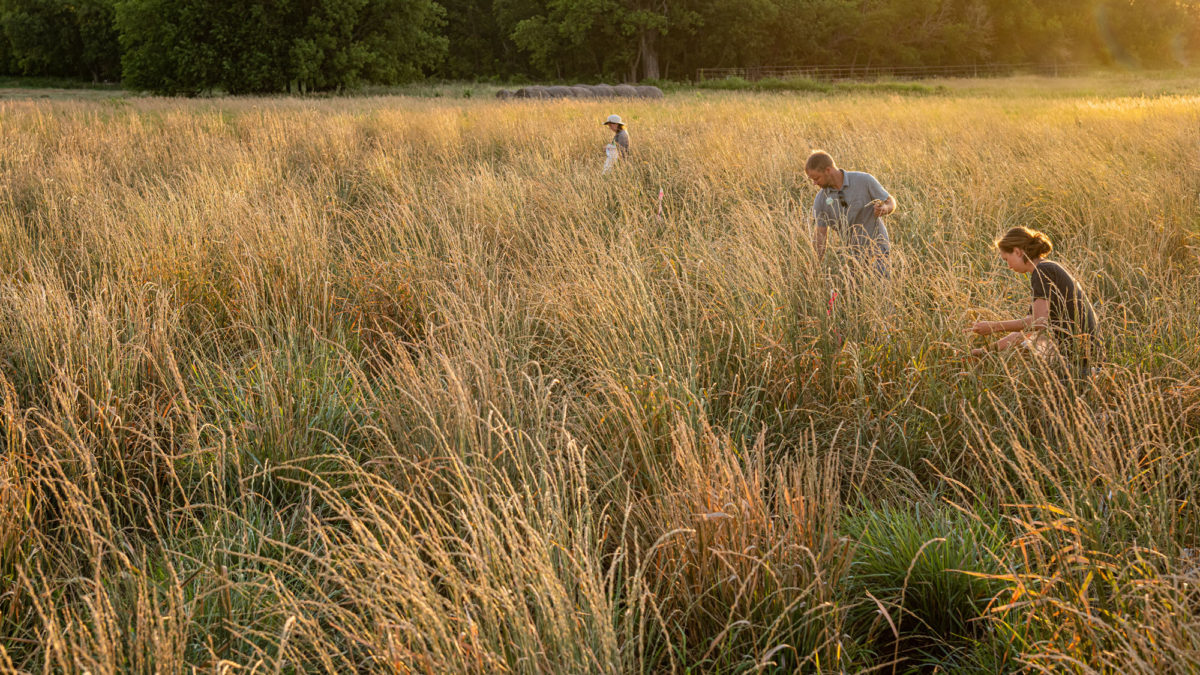
Harvesting heads of Kernza, a newly developed perennial grain, on a research plot in Salina, Kansas. THE LAND INSTITUTE

Thanks to Jim Robbins, as always, and Yale e360 for brightening our day just a bit:

With New Perennial Grain, a Step Forward for Eco-Friendly Agriculture

A cereal and beers are now being made with a new variety of perennial grain known as Kernza. Proponents say this marks a significant advance for a new agriculture that borrows from the wild prairie and could help ensure sustainable food production in a warming world.

Tractor-Tilling_Washington_BF2X7Y_web.jpg

A tractor plows a field of wheat stubble on a traditional farm near Pullman, Washington. RICK DALTON/ALAMY

Some 40 years ago, Wes Jackson, a plant geneticist, founded The Land Institute on the prairie near Salina, Kansas. Concerned that modern agriculture destroyed native grasslands, he asked a question that came to define his life: How can we harness the inherent strengths of the prairie ecosystem — the natural resistance of native plants to insects and weeds, the ability of those plants to grow perennially, and their evolved resistance to cold and drought — and marry those traits to the task of growing domesticated crops for food?

Kernza-Roots-Sept-2017-2_web.jpg

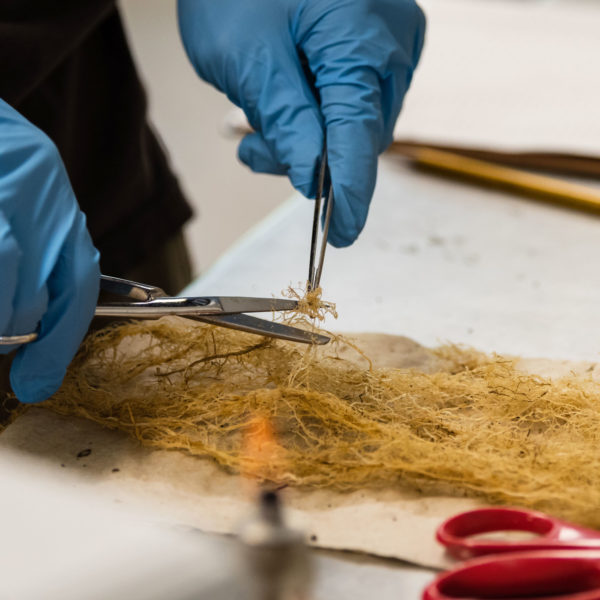
Kernza’s long roots stabilize soil and prevent erosion. THE LAND INSTITUTE

Jackson, the recipient of a 1992 MacArthur “genius grant,” set out to create a new kind of farming he called “natural systems agriculture,” which has the “ecological stability of the prairie and a grain and seed yield comparable to that from annual crops.”

After four decades of breeding and testing, the institute has introduced its first commercial grain, a trademarked variety called Kernza, a domesticated wild grass — intermediate wheatgrass — that has a long, slender head that resembles wheat seeds. Described as sweet and nutty, it is now being made into a cereal called Honey Toasted Kernza by Cascadian Farms, and Patagonia Provisions — an offshoot of the clothing company — has brewed it into beers, including Long Root Pale Ale. Both are being produced now in limited runs.

Kernza-Seeds-and-Milled-Flour-Oct-2017_web.jpg

The perennial grain is currently being used to make small batches of cereal and beer. THE LAND INSTITUTE

The development of Kernza is being held out as a prime example of a new way of doing agriculture that borrows from the perennial nature of the wild prairie. “The goal is to mitigate a lot of the problems inherent in annual grain farming systems,” said Tim Crews, research director at The Land Institute. For example, he noted, “Farmers write off 50 percent of their fertilizer as not being taken up by the crop.” Continue reading

Co-habitation Questions Down Under

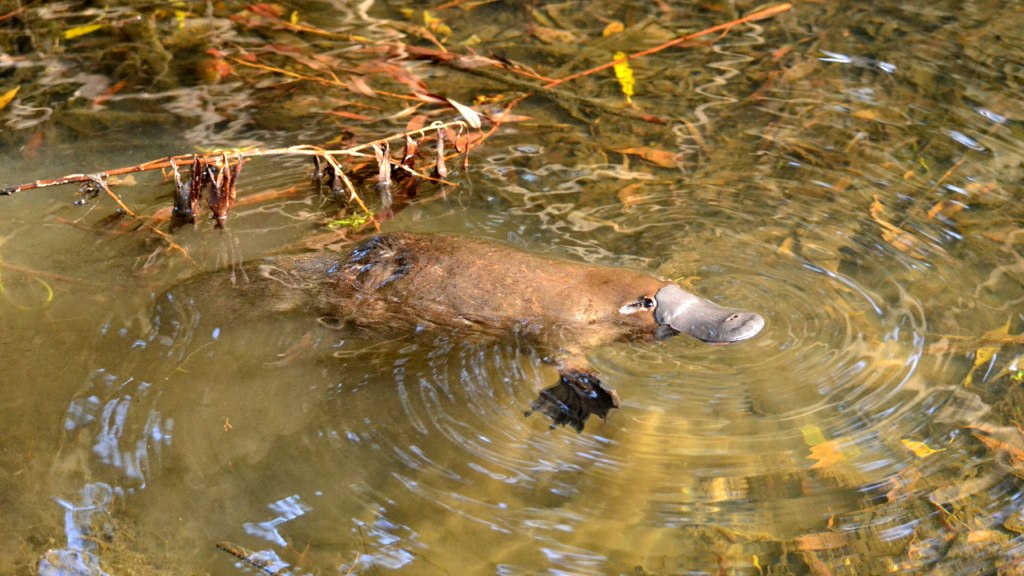
A platypus in Tasmania. Photo © Klaus / FlickrJustine E. Hausheer

Thanks to TNC’s Justine E. Hausheer for this story:

Can Platypus Persist Alongside People?

Most of us are familiar with the bizarre and improbable platypus: a mammal that lays eggs, secretes milk from its skin, and defends itself with a venomous spur on its hind leg.

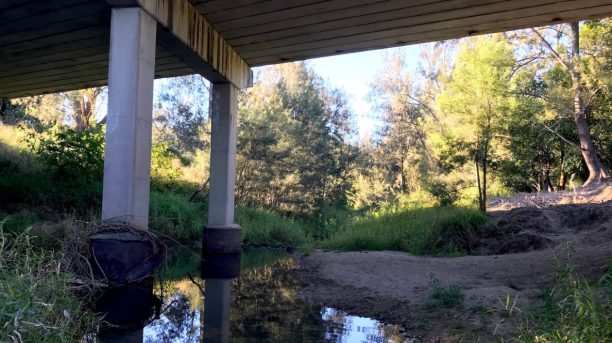
Urban platypus habitat. Photo © Justine E. Hausheer / TNC

But the incredible little mammal wriggling in the net at my feet is all too real, and — like much of Australia’s iconic wildlife — it’s also in deep trouble. As urban development alters waterways, platypus populations are declining and their range is shrinking, putting the future of this wildlife wonder at risk.

“An Animal of All Time”

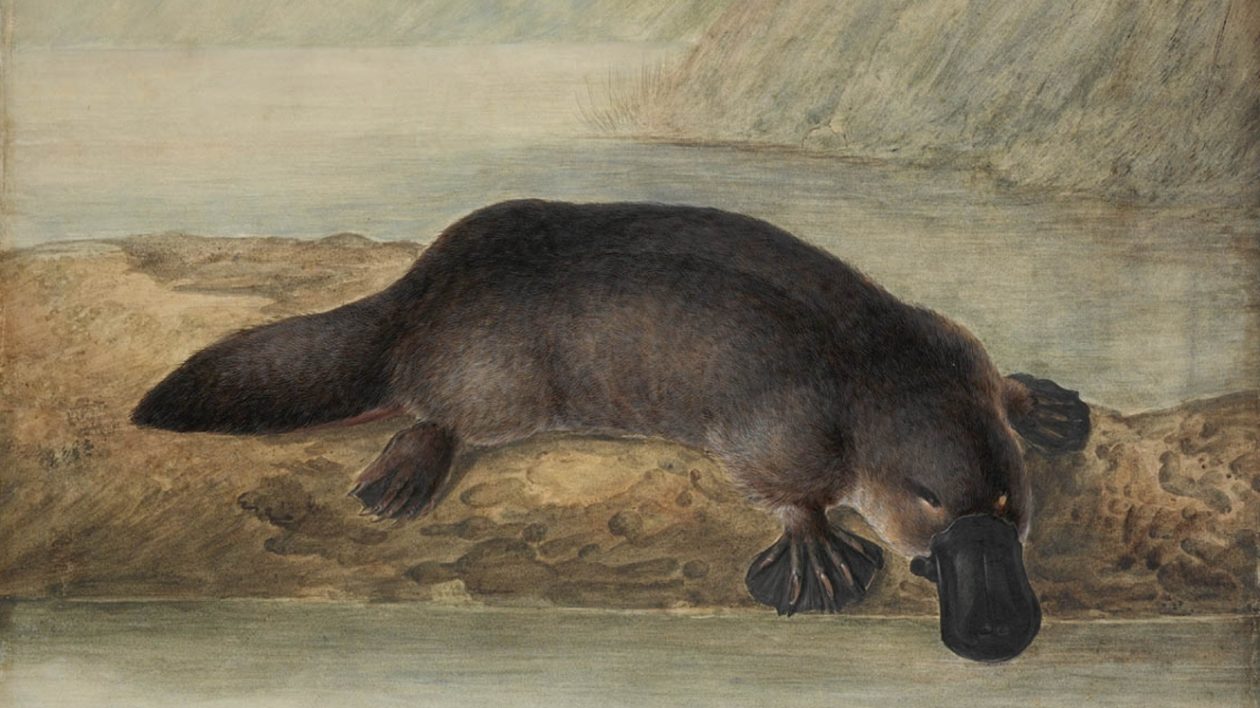
One Aboriginal story says that platypus originated from the union of a duck and a water-rat, which is rather apt. British naturalist George Shaw infamously thought the first platypus specimens sent back from Australia were a hoax, cutting the taxidermied corpse apart to try and find the stitching.

A painting by of a platypus by John Lewin, 1808. Photo © State Library of New South Wales / Wikimedia Commons

But the animal’s oddity afforded little protection from European settlers. Continue reading

Our Favorite Form Of Prospecting

web_madagascar_highres_spinski_576.jpg

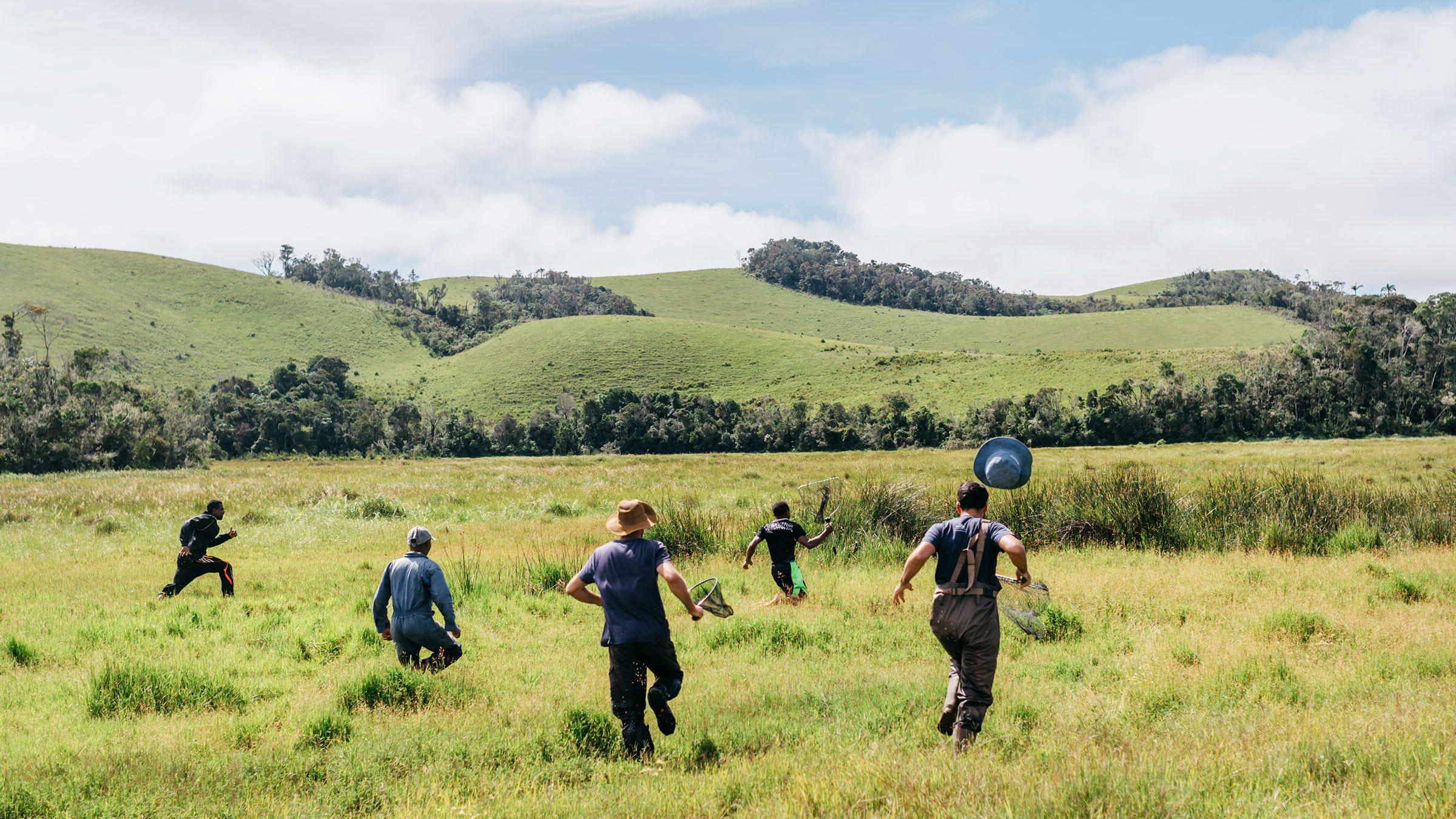
Expedition members sprint to flush Slender-billed Flufftails, among the world’s most elusive birds, in a marsh in Bemanevika reserve. Photo: Tristan Spinski

Bioprospecting, a topic we have not posted enough about, came to our attention in the mid-1990s through Costa Rica’s National Institute of Biodiversity. Kimon de Greef, writing for Audubon Magazine, offers an inside view of a prospecting expedition in one of the most wondrous, and at-risk natural habitats on the planet:

Scientists Race to Uncover the Secrets of Madagascar’s Treasure-Filled Forests

The rediscovery of a long-lost duck spurred the creation of two protected areas in the country. Now researchers are scouring these spots for other endemic species before it’s too late.
web_madagascar_highres_spinski_227

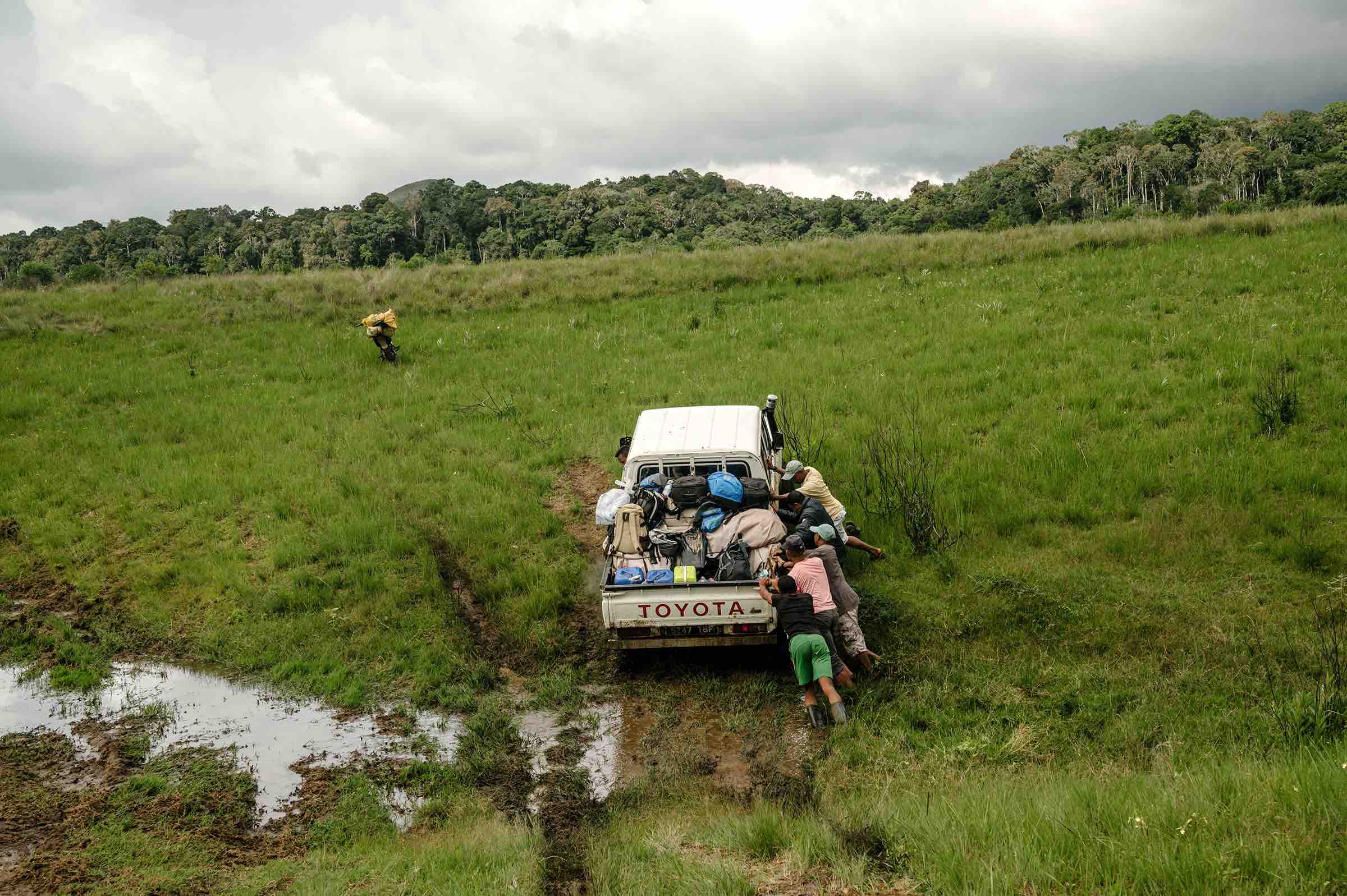
With only a few kilometers to go during day-long to Bemanevika, challenging road conditions forced the group to disembark from the two Toyota Land Cruisers and push them through the deep mud. Much of the terrain required the forest technicians to utilize the wench, which they fastened to tree stumps to wind the vehicles up the muddy mountain roads. Photo: Tristan Spinski

We had come this far and now we were stuck, dug in on a dirt track high above the plains. It was monsoon season in Madagascar, and thunderstorms had laid waste to the deeply rutted road. Already we had traversed seemingly unnavigable passes on our way to the remote northern mountains, mud churned to slurry by each passing set of wheels. Almost 24 hours later, this slope flanked by agave plants had defeated us. Our drivers took up shovels: There were ruts to flatten, boulders to excavate and heave into the bushes. As the workers toiled, cicadas hissed from the treetops.
web_madagascar-map.jpg

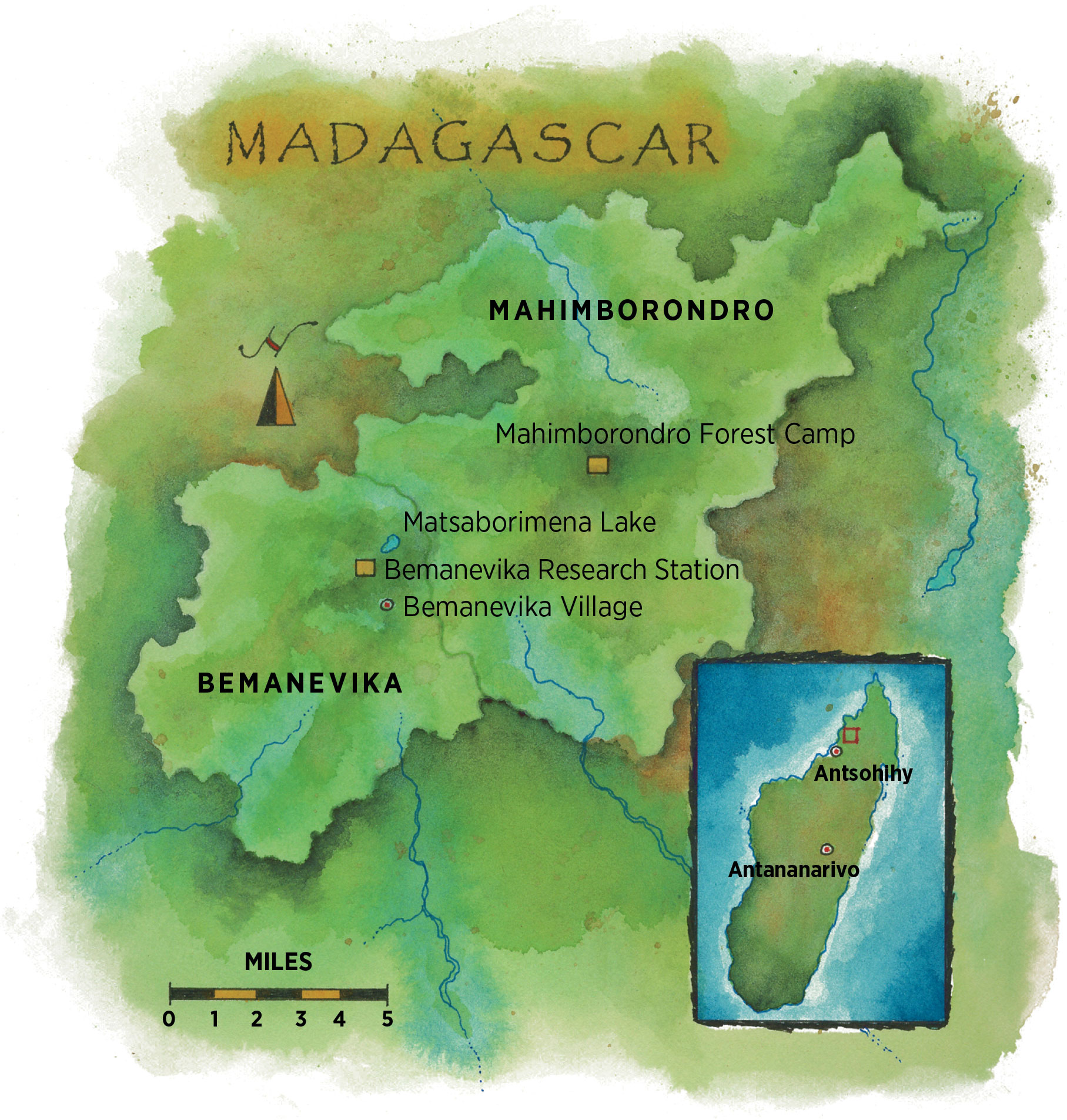
Map: Mike Reagan

For the field biologists I was accompanying, this breakdown of rural infrastructure held great promise. They were on their way to survey some of the island’s last remaining virgin rainforests—shrinking havens of exceptional biodiversity, including some of Earth’s rarest birdlife. “There’s definitely a correlation with how hard it is to get in,” said John Mittermeier, an expedition leader, ornithologist, and geography Ph.D. student at Oxford University, “and how likely you are to find new stuff.”
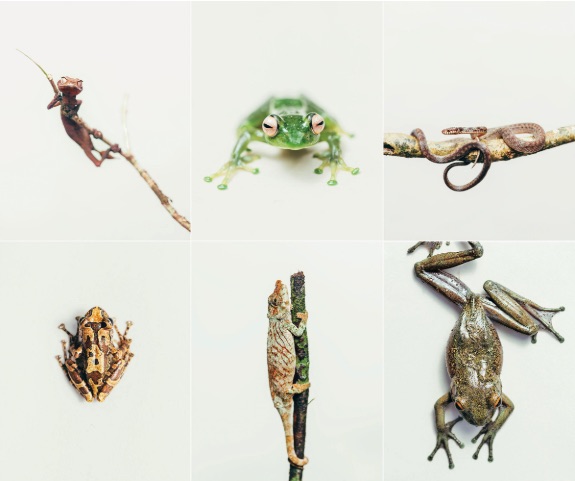
madagascar3

Clockwise from top left: Spearpoint leaf-tail gecko; Andreone’s tree frog; Compsophis fatsibe snake; Boophis goudot frog; Calumma nasutum chameleon; Spinomantis nussbaumi frog. Photos: Tristan Spinski

Now a cry went up among the team. A snake was moving its way through the undergrowth, and with abandon they leapt after it. Luke Kemp, the herpetologist on the expedition, crouched beside the bushes, poking around but coming up empty. “It’s like an addiction,” he told me. “I can’t stop.”

The biologists had congregated from four countries, united by a relentless, even maniacal fascination with wildlife. They wore faded shirts from scientific conferences and were never without their binoculars. Instead of making small talk, they discussed bird calls and sampling methods, animated by purpose and shared expertise. In unison, like meerkats, Mittermeier and the other two birders swung their binoculars from side to side, trying to glimpse what sounded to them like an endemic robin. The two entomologists swept the air with butterfly nets; they would not hesitate, when their hands were full, to pop wriggling insect specimens between their lips. Continue reading

Libraries Roaring Back

00libraries-danish-superJumbo.jpg

A rendition of the new main branch of Deichman, Oslo’s public library. This library is designed to see and be seen. Atelier Oslo and Lund/Hagem architects

Alyson Krueger, who we have not seen in our pages for nearly two years, has a story that indulges one of our favorite pastimes, library-celebrating, in a round-the-world review of the latest, greatest:

Where Libraries are the Tourist Attractions

Libraries are having a moment. In the past few years dozens have opened across the world, resembling nothing like the book-depot versions from the past.

00libraries-texas-superJumbo.jpg

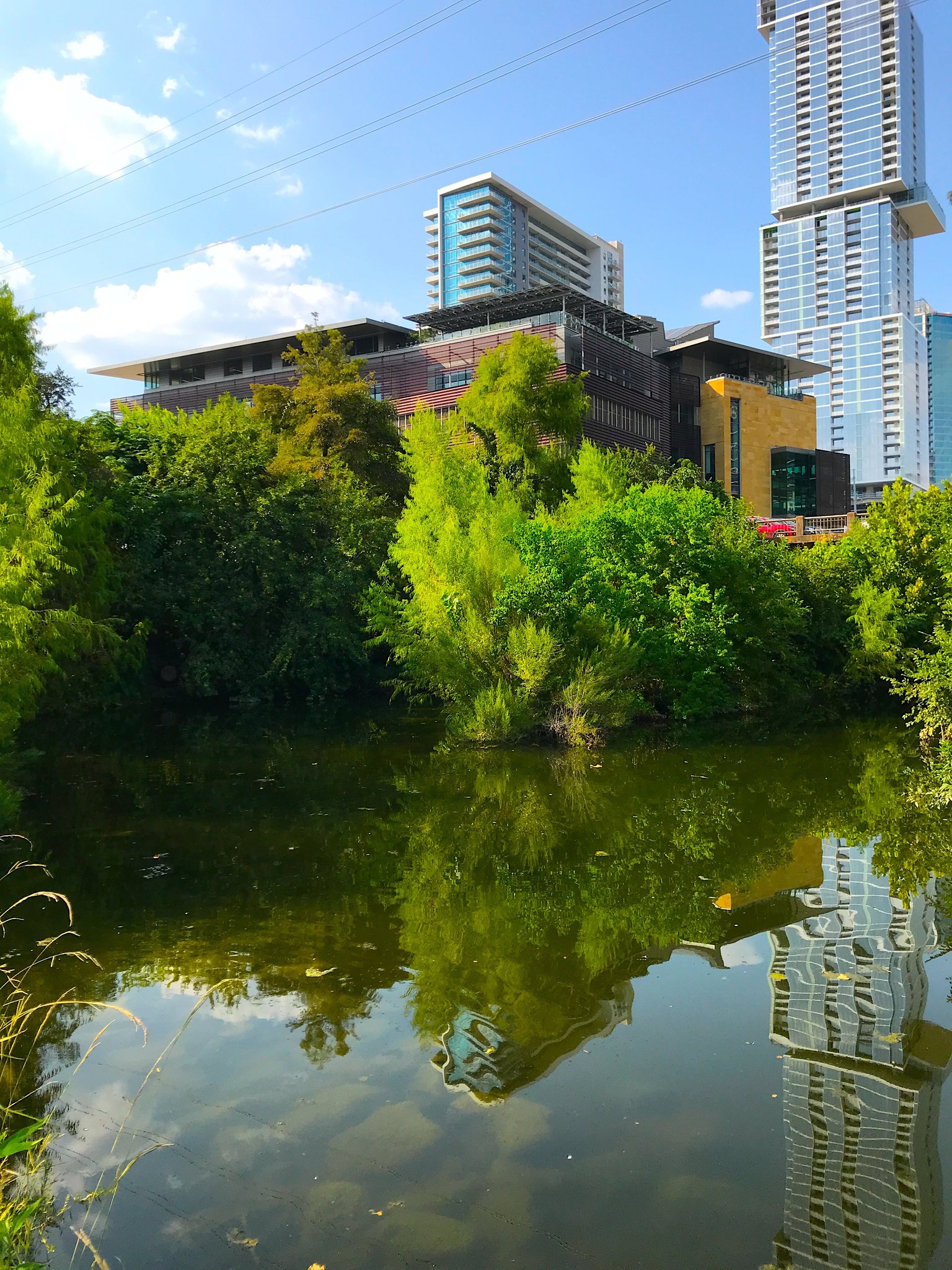
Austin Public Library

About a decade ago libraries across the world faced a dilemma. Their vital functions — to supply books and access to information for the public — were being replaced by Amazon, e-books and public Wi-Fi.

To fight for their survival, said Loida Garcia-Febo, president of the American Library Association, libraries tried to determine what other role they could play. “They invented these amazing new initiatives that are finally launching now,” she said. It took them this long to raise money and build them.

00libraries-muli-jumbo.jpg

Museum of Literature Ireland

Libraries are certainly having a moment. In the past few years dozens of new high-profile libraries have opened close to home and across the world. And they certainly don’t resemble the book-depot vision of libraries from the past.

To attract visitors from home and abroad, many libraries have advanced, even quirky amenities. They have rooftop gardens, public parks, verandas, play spaces, teen centers, movie theaters, gaming rooms, art galleries, restaurants and more. The new library in Aarhus, Denmark, has a massive gong that rings whenever a mother in a nearby hospital gives birth.

00libraries-oslo-jumbo

Tuomas Uusheimo

In March, Oodi welcomed its one millionth visitor. “We have tourists from all over the world visiting, but mainly from Europe mostly, China, Japan and America,” said Anna-Maria Soininvaara, the library’s director. “Usually they want to experience the Maker Space and ask where all the books are because the shelves are always half empty because they’re all on loan.”…

Read the whole story here.

Bats as Climate Change Canaries

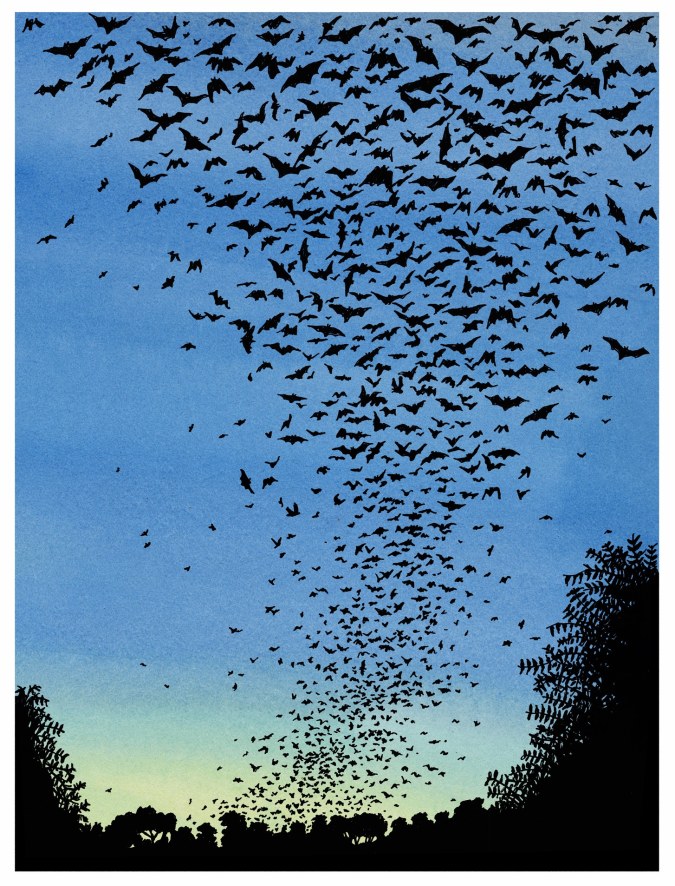
Illustration by Edward Steed

The impact of changing weather patterns becomes particularly evident when looking at the interrelationships of animal life cycles based on season. When it comes to habitat, conservationists are winning some battles, but climate change will require longer range goals.

The Changing Climate Inside the World’s Largest Bat Colony

The migration patterns of the Bracken Cave bats are changing, adapting to the rapid rate of warming, but experts say these adaptations won’t be enough to counter the effects of climate change.

Continue reading

If You Happen To Be In Or Going To Cornwall

A great writer can get you to consider doing something you normally would not consider doing:

Mendelson-HeliganGarden.jpg

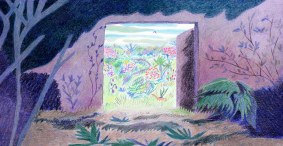
After nine Heligan men died in the First World War, the grounds of the estate, in southwestern England, grew unkempt, then neglected, then were abandoned. Illustration by Daniel Salmieri

I don’t understand the point of garden visits. Why do ordinary people, the owners of mere balconies and tiny yards, torment themselves by touring other people’s grand estates? Nut trees, stables, ancestral compost heaps: I need no reminder of what I am missing. So, unlike virtually every other gardener in Britain, I had no intention of spending my summer wandering among aristocratic roses and marvelling at the fine tilth of Lord Whatsit’s sandy carrot beds. All those rambling sweet peas make me furious; yes, Tristram, it is a handsome cardoon bed, but some of us are struggling to find space for a single extra lettuce. And then, wholly by accident, I found myself in the Lost Gardens of Heligan…

And suddenly you cannot resist virtually doing that thing:

And the rabbit hole in this case gets you thinking about Cornwall:

Opening Hours and Prices

The Lost Gardens are open every day*, all year round, for your enjoyment and exploration.

*except Christmas Day.

We’re one of the most unique and fascinating places to visit in Cornwall, with an incredible 200 acres of gardens and estate awaiting your exploration. We therefore recommend that you allow as much time as you can, to see as much as possible; ideally a whole day. However, please don’t expect to see everything in the one visit!

If you would like to plan your route before you visit, click here to download our map or a German map can be found here.

Sometimes, restoration work, events or adverse weather conditions may restrict access and opening times. In these events we will keep you up to date with details of any restrictions via our News page.

Garden Admission Single Visit Charges
Adults £15.00
Students £9.00
Children (5 – 17) £7.00
Children (Under 5) Free
Family (2 adults & up to 3 children) £40
Companions who are required to assist disabled visitors Free

Wild Cats And The Activists Who Work For Their Protection

SnowLeopard_Mongolia_alamy_T8JMBM_web.jpg

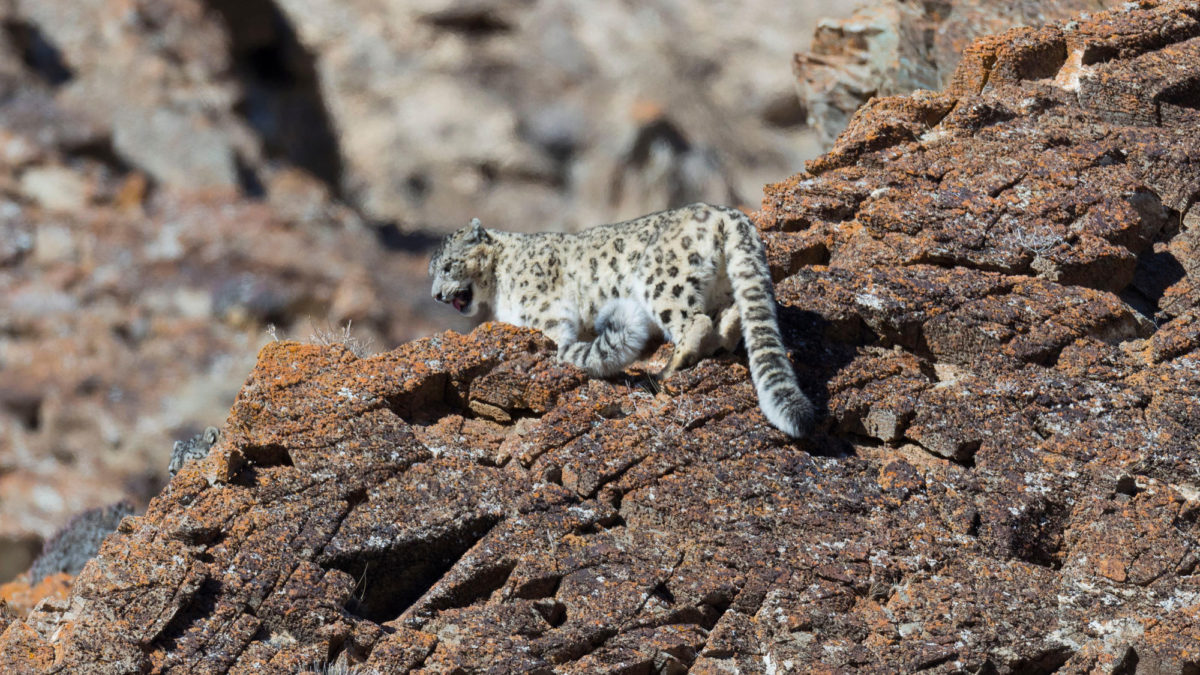
There are an estimated 1,000 snow leopards in Mongolia. HEMIS / ALAMY STOCK PHOTO

Our thanks to the activists who take on the cause of endangered wild cats around the world, and to Fred Pearce and Yale e360 for bringing them to our attention:

How a Mongolian Activist Is Helping Snow Leopards and Herders Coexist

Mongolian activist Bayarjargal Agvaantseren spearheaded the creation of the world’s first reserve for endangered snow leopards. In an e360 interview, she describes how she helped win over the local herders who once sought to kill the leopards but now patrol the reserve to protect them.

Bayara-banner-2_web

Bayarjargal Agvaantseren. GOLDMAN ENVIRONMENTAL PRIZE

Bayarjargal Agvaantseren has spent 20 years traveling to remote regions of Mongolia’s Gobi Desert, fighting to protect native snow leopards. The 50-year-old teacher-turned-activist persuaded Mongolia’s parliament in 2016 to create the world’s first national reserve specifically for the endangered animal. It links two existing protected areas to create a continuous safe zone for the species covering 31,000 square miles, where over a third of the country’s estimated 1,000 snow leopards live.

The creation of the reserve led to the banning of all mining in one of the animal’s key habitats. In a country so dependent on extractive industries — coal and minerals make up 85 percent of exports — her achievement is astounding. She attributes it to the support of remote goat-herding communities, people who she converted from regarding leopards as their enemies to patroling the reserve to protect them. Continue reading

Tiger Census as Bright Star


photo credit: Dr. Eash Hoskote

Tigers and other megafauna felines have frequently held pride of place on this site, beginning long before our company was based in India.

Thank you to NPR for reporting on the good news of this census, although in full disclosure their choice of cover photos is quite disappointing and we are happy to highlight a stunning photo by Dr. Eash Hoskote, one of our regular nature photography contributors instead.

Census Finds Nearly 3,000 Tigers In India

In 2010, India sought to double its tiger population by 2022. But on International Tiger Day, the country announced it met its goal four years earlier than expected.

Nearly 3,000 tigers now reside in India, that’s more than 70% of the world’s tiger population.

Prime Minister Narendra Modi released the 2018 All India Tiger Estimation count on Monday, attributing the figures to India’s hardworking wildlife officials and advocates.

“Once the people of India decide to do something, there is no force that can prevent them from getting the desired results,” Modi announced at a news conference. “Today we reaffirm our commitment towards protecting tigers.”

He added that India now takes the lead in being the biggest and safest habitat in the world for tigers. The population, now at 2,967, is up from 2,226 since 2014.

“There are several plants and animals out there that need our help,” Modi said. “What is it that we can do? Either through technology or human action to give them … a life so that they can add beauty and diversity to our planet.” Continue reading

Plastic, Back At Work, Building Schools

merlin_157515186_a5507d98-988d-47f3-9b7e-81d1fb8a718f-jumbo.jpg

 Yagazie Emezi for The New York Times

For the two decades our company has been managing conservation-focused enterprises. Elimination of plastic has been a passion, and finding ways to reduce its use has been an obsession. While based in India, and working on a project in Ghana, we got a close look at entrepreneurial plastic re-use for the first time. We have been on the lookout for more ever since and this story gives hope for a whole new level of solution:

Less Trash, More Schools — One Plastic Brick at a Time

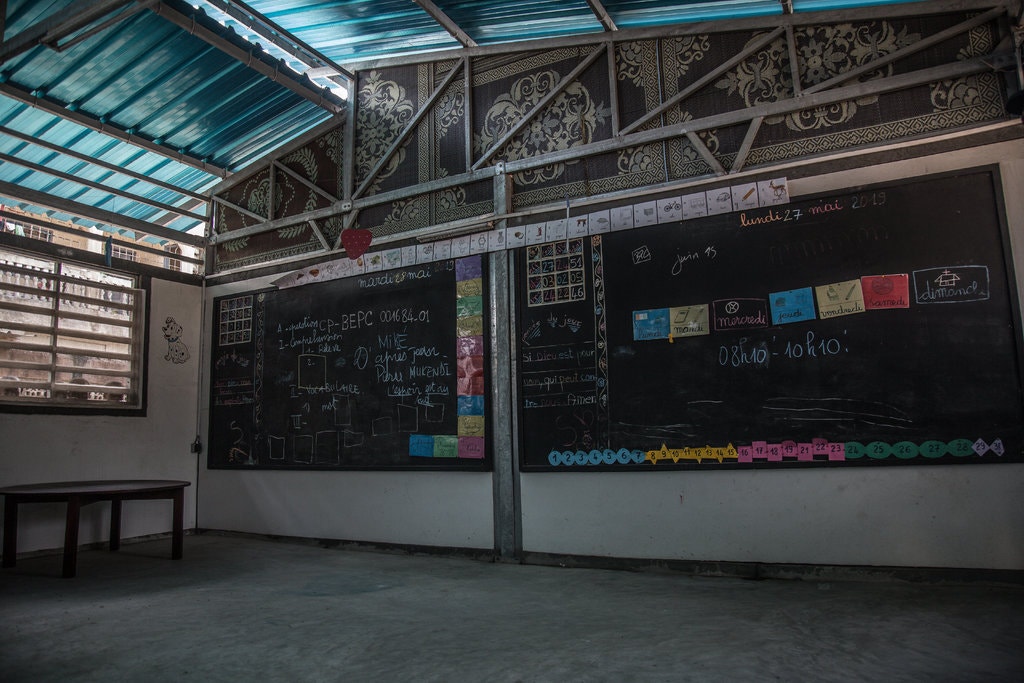
Plastic garbage collected by a women’s group is being recycled into bricks and used to build schools in West Africa.

merlin_157515216_f506bbda-79f7-48de-a48e-df2c3acc23cc-jumbo.jpg

Yagazie Emezi for The New York Times

ABIDJAN, Ivory Coast — She left home before dawn. Her four children were still asleep in her cement block house in Abobo, a maze of shops and houses occupied by dockworkers, taxi drivers, factory laborers and street sellers.

She and a friend crossed into the upscale neighborhood of Angré, home to doctors and businessmen. They tossed the plastic castoffs of the consumer class into bags slung over their shoulders as the cocks crowed and the sun peeked over villa walls draped with bougainvillea.

merlin_157515387_a493608b-0bcb-4662-9036-0839d219ce35-jumbo.jpg

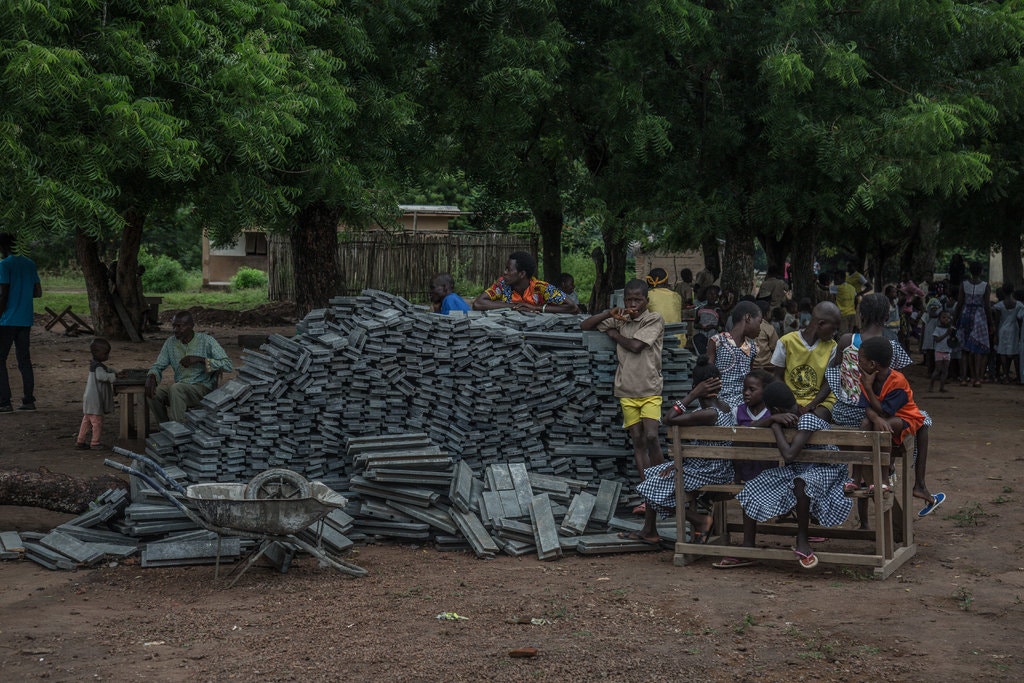
Students and residents gathered by plastic bricks outside their school in the Sakassou village. Yagazie Emezi for The New York Times

Mariam Coulibaly is part of a legion of women in Abidjan who make their living picking up plastic waste on the city streets and selling it for recycling. Now they are lead players in a project that turns trash into plastic bricks to build schools across the country.

merlin_157515282_8bf13b00-0c4f-4f76-bbb9-70eb4ccf6548-jumbo

Pre-school principal Tirangue Doumbia ushering students into a new classroom built of recycled plastic bricks at the Gonzagueville school. Yagazie Emezi for The New York Times


They are working with a Colombian company to convert plastic waste — a scourge of modern life — into an asset that will help women earn a decent living while cleaning up the environment and improving education.

She sees it as a chance to better her life, maybe even to rise into the middle class.

“We don’t get good prices” from the current buyers, Ms. Coulibaly said. “This will help us.”

In the past year, the venture has built nine demonstration classrooms out of recycled plastic bricks in Gonzagueville, a scrappy neighborhood on the outskirts of Abidjan, and in two small farming villages, Sakassou and Divo. The first schools were built with bricks imported from Colombia. But in the fall, a factory now rising in an Abidjan industrial park will begin making the bricks locally. Continue reading