South-South Cooperation In The Fight Against Invasive Species

2759.jpeg

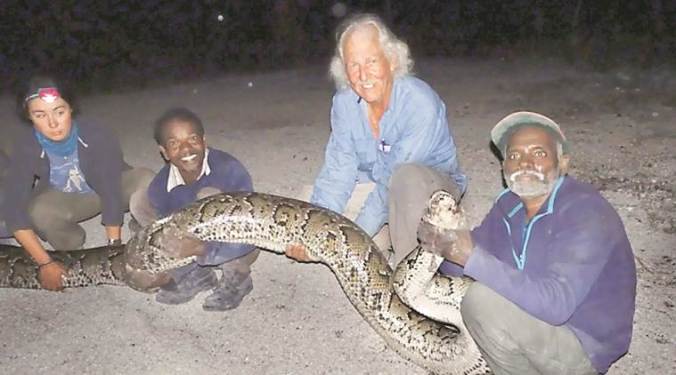
We missed the story last year about two men in the photo above, from southern India, who were brought to the Florida habitat where invasive pythons are doing enough damage that we started paying attention eight years ago. We are thinking about it again, thanks to the Guardian:

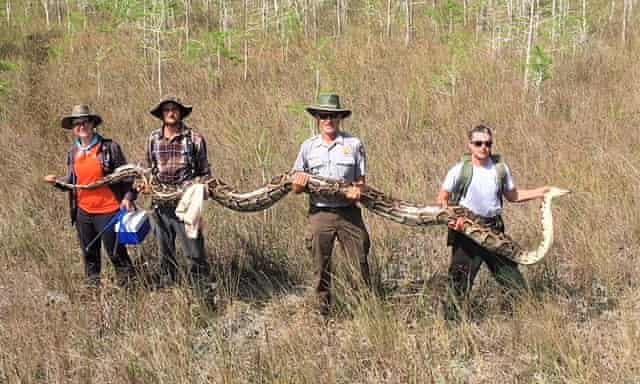
Snake hunters have captured what they say is the largest python ever found in the swamps of the Florida Everglades: a pregnant female more than 17ft (5.2 metres) long and weighing 140lb, or 63.5kg.

The team from the Big Cypress National Preserve posted news of their record-setting catch in a Facebook post that also noted the giant reptile was carrying 73 eggs.

640 (1).jpg

Big Cypress National Preserve group captures 17ft female python on 4 April. Photograph: Big Cypress National Preserve/Facebook

Environmentalists have been struggling to find ways to eradicate Burmese pythons, a non-native species, from the 1.5m-acre wilderness since the 1980s, when some were released into the wild as overgrown pets. Others escaped from a breeding facility wrecked by Hurricane Andrew in 1992. Continue reading

Hermes, Circa 2019

Vourthonia School.jpg

I have shared the photo above on this platform once before. I wrote a series of reflections on the village where that photo was taken, and today I share a riff on all that. That photo was enlarged to take up an entire wall of our office in India, as a reminder to me each day of the purpose behind what I was doing. Our company’s mission includes education. It is mostly about conservation. That building, which I photographed 10+ years ago, after it had recently been abandoned, has been a reminder for me that one of these days I am determined to share whatever I can from our work in that village.

thumbnail_thumbnail_IMG_0032

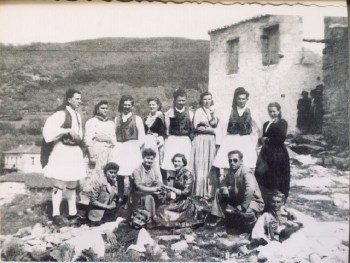
This photo was taken of Bangor Vamvakou immigrants in 1949 as they returned to their village. Top left is Nikos Niarchos, a relative of the Greek shipping tycoon. From Top Left, the others are: Vasso Anglesi; George Limberogiannis; Eleni Markos; Panayiotis Servetis; Vasso Kokini; Katsilis Demetrios and Anna Leakou. Middle Row, from Left: Pota Anglesi; Angeliki Skoufi; Eleni Hatzi and Panos Dialialis. At bottom, Left to Right, are Yiannis Limberogiannis and Harris Belbekis.

Thanks to an online publication I follow for news from Greece I found this story that helps explain why I thought of the photo above just now. It gives me both hope and tangible ideas of what might be done. It starts with a group of immigrants in Bangor, Maine whose life trajectory was like that of so many others from the Lakonia region of Greece, including my mother. And the story leads back to a foundation that has been referenced once before in our pages, but this time the foundation’s work hits closer to home:

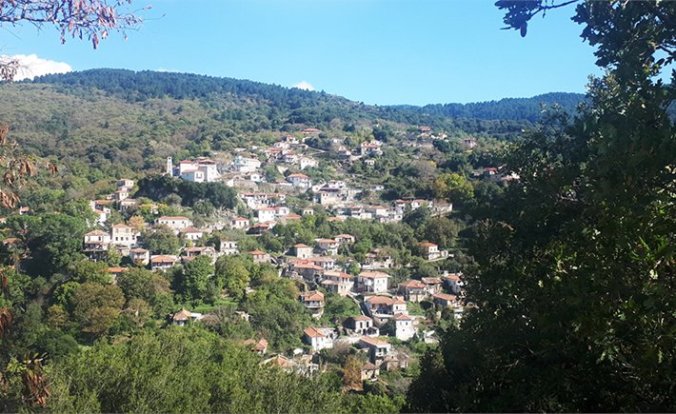
The saying goes that it takes a village to raise a young person. But sometimes it takes young people to raise up a village, and this is exactly what’s happening in the Laconian village of Vamvakou.

Vamvakou is a short drive from Vourthonia, my mother’s village. So this video below strikes a chord.


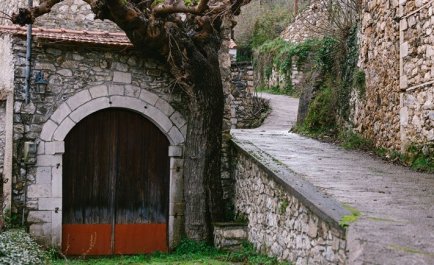
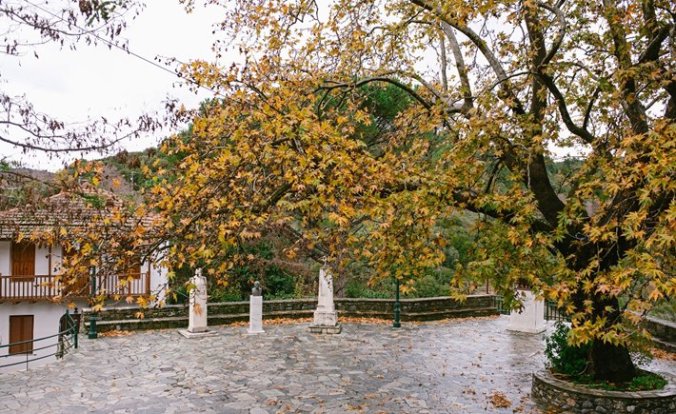
Some of the images from Mamvakou could as easily have been taken in Vourthonia.

picture1_Responsive.jpg

Source: SNF

Vamvakou-Revival-3_Responsive.jpg

Source: SNF

But it is the story of what is happening in that village that captures my imagination:

Can a once-thriving mountain village, today home to only nine inhabitants, come to life again?

Can it fill with visitors, permanent inhabitants, and model businesses while retaining its traditional character? This is the wager laid by a group of five young people who want to revitalize the village of Vamvakou, 900 meters up the slopes of Mount Parnon in the southeastern Peloponnese.

Vamvakou-Revival-4_Responsive

Source: SNF

To realize this ambitious project, the five friends, Haris Vasilakos, Anargyros Verdilos, Eleni Mami, Tasos Markos, and Panagiotis Soulimiotis established the “Vamvakou Revival” Social Cooperative Enterprise and decided to move to the village. Continue reading

Renewables For Communities In Need

CEF_Shiloh-Temple_IMG_20180503_133709053_HDR_web.jpg

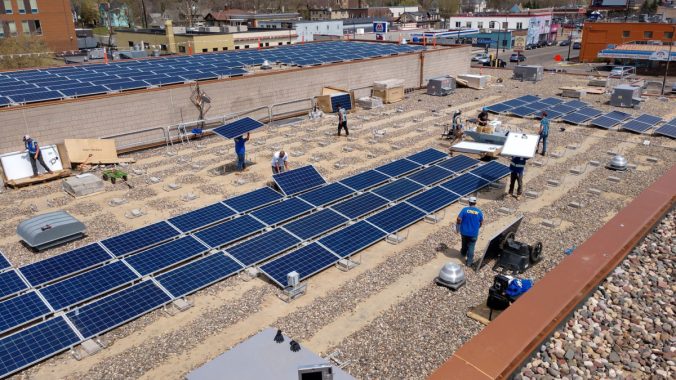
EnterA 204-kilowatt community solar array being installed on the roof of the Shiloh Temple International Ministries in Minneapolis. COURTESY OF COOPERATIVE ENERGY FUTURESa caption

Thanks to Maria Gallucci and Yale e360 for this:

Energy Equity: Bringing Solar Power to Low-Income Communities

Millions of Americans lack access to solar energy because they cannot afford the steep upfront costs. Now, more than a dozen states are adopting “community solar” programs that are bringing solar power and lower energy bills to low-income households from New York to California.

GRID-Alternatives_CO-Solar-Training-Academy-Platteville-0818-03_web.jpg

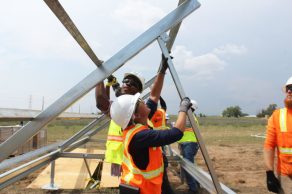
Workers receive job training while building a shared solar farm in Platteville, Colorado. COURTESY OF GRID ALTERNATIVES

Isbel “Izzy” Palans lives in a small cabin nestled among mountain peaks and towering trees in the Colorado Rockies. Her home is often shaded and, during the long winters, buried under heaps of snow. Her monthly utility bills show credits for solar electricity production, but no solar panels are affixed to her roof. Instead, the power comes from a solar array some 60 miles away in a nearby valley.

Last year, the panels nearly slashed her energy bill in half. “I’ve been thrilled,” said Palans, a 76-year-old retired waitress who relies partly on Social Security benefits to make ends meet.

Groundswell_DC_Dupont-Church_IMG_1237_web2.jpg

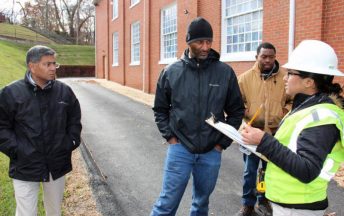
Solar contractor Brad Boston (center) and utility representatives meet with engineer Pranay Kohli to discuss a community solar project at DuPont Park Seventh Day Adventist Church in Washington, D.C. COURTESY OF GROUNDSWELL

Palans is a subscriber to a 145-kilowatt solar array project run by Holy Cross Energy, a rural utility cooperative. Built with state funding, the program provides solar credits to more than 40 low-income households in western Colorado that otherwise wouldn’t have the financial or technical means to access renewable energy. The venture is just one of a growing number of so-called “community solar” projects across the United States focused on delivering renewable energy — and the cost-savings it can provide — to low-income households, from California to Minnesota to Massachusetts. Continue reading

Authentica & Organikos

Organikos2019LogoAuthentica, mentioned a couple of times prior to the current series of posts, has the character of a startup but its goal is the opposite of disruption.

A major disruption already happened, and if one of the antonyms of disrupt is organize, then that is what we are doing. Authentica is part of a nascent movement in Costa Rica to provide market opportunities to artisans, farmers, food producers and others who design, craft, grow and cook things that are essentially Costa Rican. The disruption they faced is not the story we want to tell. The reversal of that disruption is the story.  One example is Organikos. Continue reading

Making Something The Traditional Way

Last week, we visited producers of various arts and crafts on the eastern side of Costa Rica. Our first stop was in the Central Valley, just before crossing over to the Caribbean slope, in a coffee shop. There, a man showed us his ceramic work, which we had seen one example of previously. All of it was beautiful, but the one below was the one we chose to purchase as a sample. And here it is, in the morning sun.

Bandolera.jpg

It brought to mind the old documentary above, which anyone in the USA public school system might have seen in their 7th grade art class. In less than half an hour, that film clinically explains and demonstrates visually what goes into making something the traditional way. This man, here and now in Costa Rica, is hand-crafting these coffee makers. The material is organic, as is the design, which pays tribute to Costa Rican tradition, as well as to pre-Colombian indigenous tradition. The coffee seems to taste the better for it.

From South-South To North-North

merlin_150668253_8478433b-acb1-4e50-ad5c-07753a4a7545-jumbo.jpg

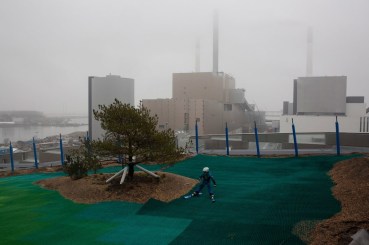
The beginning of a ski run on the roof of Copenhagen’s new trash incinerator, which will help heat buildings in the city. Photograph by Charlotte de la Fuente

South-south cooperation has been an important learning mechanism for some time and we have shared plenty of those stories in part because those places are where we work. According to Somini Sengupta Copenhagen Wants to Show How Cities Can Fight Climate Change,  so we now also should be paying attention to the northern counterpart of the cooperation that has been getting all our attention:

merlin_150668361_cc20049e-a87c-46f1-a7d1-8dcb474d3f5f-jumbo.jpg

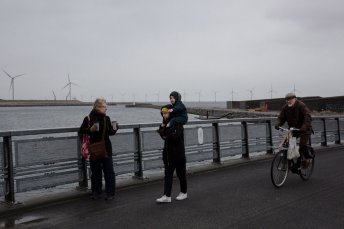
Wind turbines along the strait that separates Denmark from Sweden, seen from the Amager Strandpark in Copenhagen. Photograph by Charlotte de la Fuente

COPENHAGEN — Can a city cancel out its greenhouse gas emissions?

Copenhagen intends to, and fast. By 2025, this once-grimy industrial city aims to be net carbon neutral, meaning it plans to generate more renewable energy than the dirty energy it consumes.

merlin_150668178_4d6ca480-2e7d-41c4-b2ca-263eb31c8490-jumbo.jpg

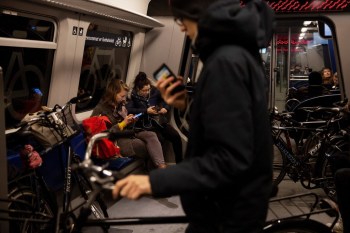
The Copenhagen Metro. A new line, scheduled to open this year, will put most residents less than half a mile from a station. Photograph by Charlotte de la Fuente

Here’s why it matters to the rest of the world: Half of humanity now lives in cities, and the vast share of planet-warming gases come from cities. The big fixes for climate change need to come from cities too. They are both a problem and a potential source of solutions.

The experience of Copenhagen, home to 624,000 people, can show what’s possible, and what’s tough, for other urban governments on a warming planet.

merlin_150668325_10e1c59f-32f1-40bb-8099-87326409a305-jumbo.jpg

Recycling bins in the Christianshavn district of Copenhagen. The city requires residents to sort recycling into eight separate categories. Photograph by Charlotte de la Fuente

The mayor, Frank Jensen, said cities “can change the way we behave, the way we are living, and go more green.” His city has some advantages. It is small, it is rich and its people care a lot about climate change.

Mr. Jensen said mayors, more than national politicians, felt the pressure to take action. “We are directly responsible for our cities and our citizens, and they expect us to act,” he said. Continue reading

Regeneration & Food Futures

tnc_67697146_preview-1260x708.jpg

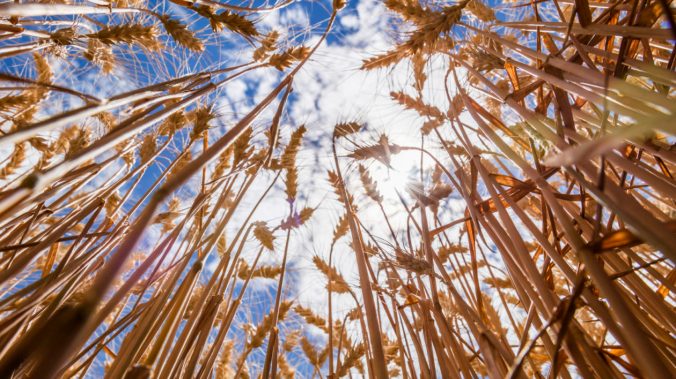
A view of wheat grown on Meaker Farm, Montrose, Colorado. Photo © Ken Geiger/TNC

While on the topic of food, thanks to Dustin Solberg and Cool Green Science for this:

Dirt to Soil: A Farmer’s Tell-all Puts Soil First

tnc_92212427_preview-1260x708.jpg

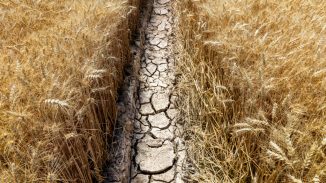
Circle irrigation tire tracks remain in the challenging soil conditions on a wheat farm in Colorado. Photo © Ken Geiger/TNC

Quite a few years back, while working the wheat harvest in the middle of Oklahoma, I met a leathery skinned farmer. He lived through the dusty, hardscrabble, droughty years of the Great Depression, and experience had taught him plenty. I still recall his silver belt buckle, his straw cowboy hat, and the funny joke he told me about the buffalo on a buffalo nickel, which I can’t repeat here. He wanted me to know, and so told me in no uncertain terms, that there’s one way, and one way only, to plow a field.

We were standing then in the fresh golden stubble of a wheat field. It was hot. We’d just finished combining and after a day of steady motion we were finally still, the diesel engines at rest. I can still recall the animated force in his muscly hands – he made his fingers into the tines of a chisel plow – to make his point as vividly as I recall what he said: “You’ve got to set the plow deep.”

The trouble was, he was wrong.

Continue reading

Citizen Science Goes Far Afield

lr-yalee360-print_websized.jpg

LUISA RIVERA / YALE E360

We have been on watch for citizen science stories since the early days of this platform. Seth had just accepted an offer to work at the Cornell Lab of Ornithology, and typical of him, did his homework on what he had committed to. Since then, dozens of first person and linked-to citizen science stories from other members of our community have appeared in these pages. Thanks to Yale e360 and Jessica Leber for this story about how far and wide the practice has spread, and a few of its more amazing discoveries:

Species Sleuths: Amateur Naturalists Spark a New Wave of Discovery

Scientists have not kept pace with the work of discovering new species. Now, a growing number of committed hobbyists – ranging from a Belgian bus driver to a California cybersecurity expert – are out in the field, igniting a boom in documenting the world’s biodiversity.

Clements_7400192_web.jpg

COURTESY OF TERRI CLEMENTS

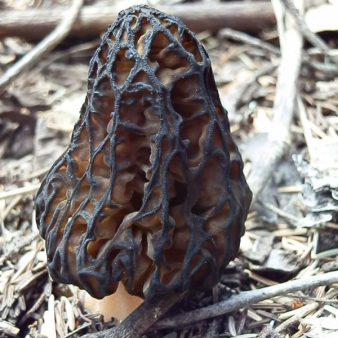
When mushroom hunter Terri Clements found a unique specimen near her home in Arizona, she couldn’t be certain by its appearance that she’d stumbled across a new species. She tracked down a commercial lab that would process DNA from samples she collected and studied the resulting sequences. Only later did she cold email a mycological scientist, who confirmed her work. As a result, this December, she became part of a team publishing a scientific paper describing her new mushroom species, Morchella kaibabensis, along with three others.

Clements_IMG_1300-2_web.jpg

Mushroom hunter Terri Clements used DNA sequencing to confirm a new species of black morel, Morchella kaibabensis, she found near her home in Arizona.

A former restauranteur and real estate executive who retired in 2012, Clements has no formal scientific training beyond her college microbiology minor. But using a combination of traditional taxonomy — the science of describing, naming, and classifying life on earth — and increasingly accessible DNA classification tools, she’s now hooked on documenting fungi either previously unknown in her region, or, just as often, new to science. “I spend hours and hours on it,” she says. “It’s like a full-time job for which I don’t get paid.”

Her work puts her in the ranks of an increasingly vibrant group of hobbyists busy documenting unexplored species on the planet, ranging from a chemical engineer in France, to a cybersecurity specialist in California, to retirees like Clements. Many study organisms from specific groups of fungi, insects, and other invertebrates that are less charismatic and surveyed than the orchids, birds, and butterflies that have long attracted the public’s interest. Continue reading

Green Is The New Black & Costa Rica Is Evergreen

merlin_151348896_9c4c515c-54c6-4612-a114-deaec4c35159-jumbo

Costa Rican wildlife was the theme of reception in February to formally introduce the government’s decarbonization strategy.

Somini Sengupta and her colleague Alexander Villegas published a story yesterday that resonates with the explanations Amie and I gave friends and family about our original decision to live in Costa Rica. It also resonates with the decision we made recently to return. In 2010 when we moved to Kerala it was not clear when, or even if, we would be back here. But our work in India was intertwined with Costa Rica’s evergreen pioneering role in the global conversation about conservation. So we are back. And the evergreen is appreciated, especially in the way Costa Rica’s president and his wife tell the story within a story.

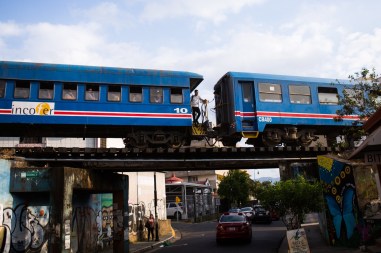
A diesel commuter train in San José. The government plans to replace older trains with electric models.

Despite it’s diminutive size, Costa Rica been at the forefront of the climate change conversation. While the country has only about 0.25% of the world’s landmass, it contains almost 5% of the world’s biodiversity. These statistics give both an added incentive to focus energies on shifting the juggernaut of climate change and the ecological soapbox from which to be heard.

Costa Rica has an infrastructural uphill climb, most specifically with transportation as is illustrated below, but the country has stood its ground successfully in the past. When we think of the country’s road network in the mid-1990s relative to the roads today, it gives one of many reasons to be optimistic:

Tiny Costa Rica Has a Green New Deal, Too. It Matters for the Whole Planet.

SAN JOSÉ, Costa Rica — It’s a green big deal for a tiny sliver of a country. Costa Rica, population 5 million, wants to wean itself from fossil fuels by 2050, and the chief evangelist of the idea is a 38-year-old urban planner named Claudia Dobles who also happens to be the first lady. Continue reading

Taking Responsibility For Stuff

GettyImages-1072467826_PR-plastics_web

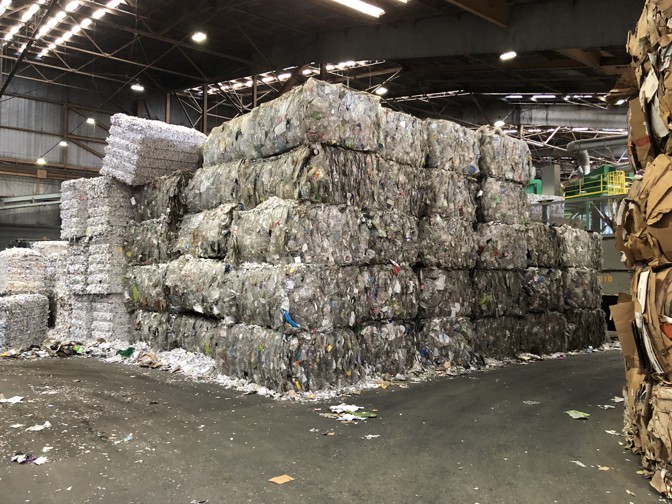
Recycled materials being stacked at facility in Costa Rica last June. EZEQUIEL BECERRA/AFP/GETTY IMAGES

Some time a millennium or so from now, an article like this one, or perhaps like this one, will be written with wonderment about the waste management practices of the early 21st century. They will not be as amazed by how we digitally stored our most prized possessions, but curious what we did with all our unwanted stuff.

GettyImages-1070623890_UK-plastics_web

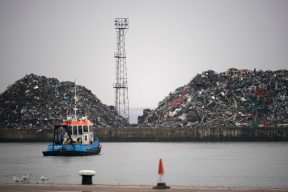
Scrap metal at a dock in Liverpool, England, waiting to be exported. CHRISTOPHER FURLONG/GETTY IMAGES

And we have known for some time now that we have not been so clever. We have mostly been hiding that stuff. Out of sight, out of mind. If it seemed too good to be true, there was a reason for that. The long stretch of time during which China’s labor costs and their resource input equations made importing our unwanted stuff a win-win created a kind of mirage. Thanks to Cheryl Katz, writing in Yale e360, for making that clear in this story:

GettyImages-967157238_VietnamPlastics_web.jpg

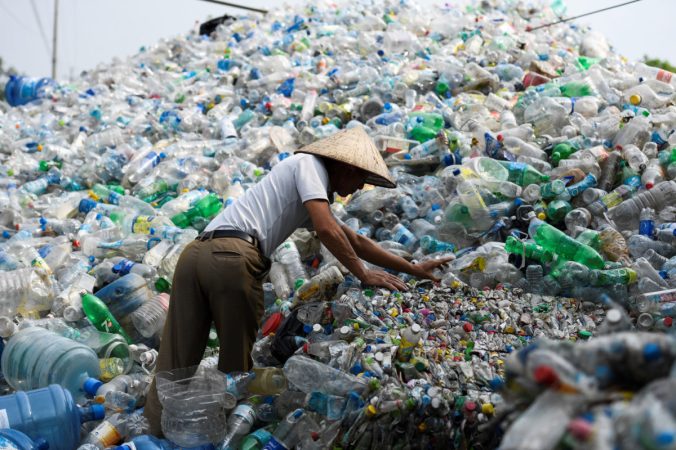
A worker sorts through plastic bottles at a waste facility in Vietnam. Other Asian countries have increased their waste imports in response to China’s ban. NHAC NGUYEN/AFP/GETTY IMAGES

Piling Up: How China’s Ban on Importing Waste Has Stalled Global Recycling

China’s decision to no longer be the dumping ground for the world’s recycled waste has left municipalities and waste companies from Australia to the U.S. scrambling for alternatives. But experts say it offers an opportunity to develop better solutions for a growing throwaway culture.

The story is big, which is why I was not surprised to see Alana Semuel’s story on the same topic. Both are worth reading, but this one takes a starker view, and the disturbance its title question causes provides an effective added prod to reduce how much unwanted stuff gets created in the first place.

8bea8d007

Bales of plastic are piled at a Recology facility in San Francisco. (Alana Semuels / The Atlantic)

Is This the End of Recycling?

Americans are consuming more and more stuff. Now that other countries won’t take our papers and plastics, they’re ending up in the trash.

After decades of earnest public-information campaigns, Americans are finally recycling. Airports, malls, schools, and office buildings across the country have bins for plastic bottles and aluminum cans and newspapers. In some cities, you can be fined if inspectors discover that you haven’t recycled appropriately. Continue reading

The Mouth of the Well

The archaeologist Guillermo de Anda next to pre-Columbian artifacts in a cave at the Maya ruins of Chichén Itzá. Credit Karla Ortega/Mexico’s National Institute of Anthropology, via Associated Press

This new discovery in Mexico’s Yucatán Peninsula came to our attention just when we’re on an archaeological roll. It definitely gives us pause that there are still such important finds in the world.

In a cave under the ancient city of Chichén Itzá, Mexican archaeologists discovered a trove of ceramic artifacts that appear to be over 1,000 years old.

Archaeologists announced this week that they had discovered an extraordinary trove of well-preserved Maya artifacts under the ancient city of Chichén Itzá in Mexico’s Yucatán Peninsula.

The artifacts were found in a cave called Balamkú, less than two miles from the famed pyramid known as the Temple of Kukulcan, or The Castle, which sits in the center of the site.

Guillermo de Anda, an investigator with the National Institute of Anthropology and History, said in a statement on Monday that the remarkable discovery could help researchers rewrite the history of Chichén Itzá, which flourished from roughly A.D. 750 to 1200.

The city was built on top of a network of waterways, including sinkholes called cenotes, which the ancient Maya believed were sacred places that provided a portal to the underworld. Its name is sometimes translated as “the mouth of the well of the Itza,” the name of the main ethnic group in the area at the time.

Continue reading

Urban Archaeology


We’ve had friends and family members living in Atlanta for close to 30 years, and although I knew it was the hub of important aspects of American history, it never occurred to me to think of it in archaeological terms. At first consideration, I think about archaeology as the study of ancient cultures in far away places. Yet, with family in countries like Greece, I acknowledge that awesome layers of history can be just under the surface, or deeply buried and unearthed as cities grow with constructions of buildings and transit infrastructure.

This piece in the Georgia State University Magazine made that quite clear.

Treasures of Terminus

From its days as a railroad boomtown to Sherman’s tinderbox to one of America’s great cities, Atlanta’s history runs deep. The Phoenix Project, more than 100,000 artifacts collected by a team of Georgia State archaeologist in the 1970s, tells the city’s story through unearthed historical objects.

There is buried treasure at Georgia State University. Stacked high and deep in more than 500 boxes stashed throughout the labyrinths of Kell Hall, more than 100,000 artifacts tell the story of Atlanta’s history.

These boxes contain the lost pieces of a tumultuous past that dates to the city’s earliest days — bullet casings from the Civil War, mystery tonics in antique glass bottles, creepy toys, fashion accessories, ancient grooming tools and much more. Many of them still await examination and haven’t been opened since archaeologists first packed them four decades ago.

This massive array of objects is called the Phoenix Project, and Georgia State professors and students have been methodically studying, cataloging and mapping each item since 2011.

Collected all over the city between 1976 and 1980, the objects belong to the largest archeological collection ever associated with Atlanta. They are the fruit of one of America’s earliest urban archaeological projects — the roving excavation that followed construction crews as the Metropolitan Atlanta Rapid Transit Authority (MARTA) cleared land, leveled blocks and tunneled underground to build the first iteration of its rail system.

Jeffrey Glover, associate professor of anthropology, has curated the Phoenix Project for years in hopes of providing the public with a different kind of city history, a slice of Atlanta’s past through the lens of historical objects.

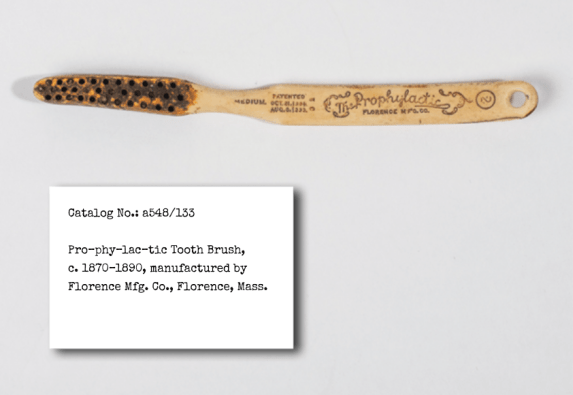
Catalog No.: P1848/170 Swamp Root Kidney, Liver and Bladder Cure, c. 1890, manufactured by Dr. Kilmer & Co., Binghamton, NY.

Choosing one box among hundreds, Glover removes a small amber bottle that once held Valentine’s Meat Juice, a concentrated beef tonic from the 1870s. Advertisements said it could help with gastroenteritis, dysentery and even cholera.

“It was supposed to bring vitality,” Glover says, “like an early energy drink.”

From another box, he takes out the misshapen head of a porcelain doll. Featuring dark, empty eye sockets and covered in burn marks, the scary toy looks hungry for souls. While Glover affectionately calls it the “creepy doll head,” its official artifact ID is “a3161,” written in impeccable script with archival ink across its neck.

That’s because the archaeologists who bagged all this stuff in the 1970s methodically described and organized each item using a numbering system adapted from the Georgia Department of Transportation. For example, the “a” in “a3161” stands for “general artifact” while the number indicates the item was the 3,161st general artifact to be cataloged from that accession. (And there are about 100 accessions.) Containers, such as glass and pottery, begin with “p,” and building materials with “m.” Plant remains use “eb” for “ethnobotanical” while animal bones start with “ez” for “ethnozoological.”

Just one of the standard cardboard bankers boxes can contain dozens, if not hundreds, of artifacts, each wrapped in brown paper and labeled with a unique artifact ID. Though they’ve all been recorded in a logbook alongside a one-line description, unwrapping each one is like opening a birthday present because you don’t know exactly what you’ll get.

“It’s an excavation of boxes,” says Lori Thompson (M.A. ’16), assistant laboratory director at New South Associates.
Continue reading

Fighting Climate Change With Ecosystem Restoration

Photo by Pexels

Throughout the history of this site we’ve focussed on accentuating positive steps in conservation, while also pointing out the negative forces with the intention that knowledge is power that leads to action.

We applaud the UN Environment Assembly for pressing further into the remaining window of opportunity to restore ecosystem health.

New UN Decade on Ecosystem Restoration to inspire bold UN Environment Assembly decisions

The UN Environment Assembly in Nairobi, Kenya, is the world’s leading decision-making forum. From 11 to 15 March 2019, it will be considering how best to improve outcomes for people and planet. Ecosystems will be high up on the agenda.

The timing looks good. The UN Decade on Ecosystem Restoration 2021-2030, declared on 1 March 2019 by the UN General Assembly, aims to massively scale up the restoration of degraded and destroyed ecosystems as a proven measure to fight climate change, and enhance food security, water supply and biodiversity.

The degradation of land and marine ecosystems undermines the well-being of 3.2 billion people and costs about 10 per cent of the annual global gross domestic product in loss of species and ecosystems services. Key ecosystems that deliver numerous services essential to food and agriculture, including supply of freshwater, protection against hazards and provision of habitat for species such as fish and pollinators, are declining rapidly.
Restoration of 350 million hectares of degraded land between now and 2030 could generate US$9 trillion in ecosystem services and take an additional 13 to 26 gigatons of greenhouse gases out of the atmosphere.

UN Environment and the Food and Agriculture Organization of the United Nations will lead implementation of the UN Decade on Ecosystem Restoration. Continue reading

From Panama, Of Bushwick, Reducing The Impact Of Food Waste

Food waste, a problem whose partial solutions are myriad, has been on my radar since Milo posted about it. Its root seems obviously related to not properly pricing the input resources, like land, water, etc., which paradoxically makes it possible to produce an abundance sufficient to waste. But dealing with the problem at the tail end of the value chain is another partial solution so the video above is worth a few minutes of your time.

BKRotIf, when you finish that, you want to learn more, click the logo to the left. And if you live in Brooklyn you might want to participate in some manner.

BKRot2.jpg

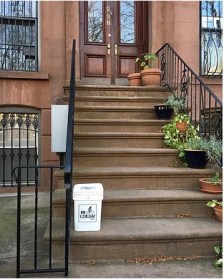
Home Composting.  Rabbit Roots is a home food scraps pick up service. For a monthly rate our bikers will collect straight from your door to our compost site.

If you live nearby, get more information about how to subscribe to their home composting program by clicking here. Sandy and her operation tell me that waiting for someone else to solve the collective action problem is wasted time. David Owen brought her and it to my attention in this short profile:

…BK ROT was founded, in 2013, by Sandy Nurse. She was born in Panama, in 1984—both her parents were in the U.S. Navy—and grew up mainly there and in South Korea and Japan. She studied international affairs at the New School and assumed that she was headed for a diplomatic career. But she changed her mind after working on food assistance in Haiti after the big earthquake there in 2010.

190311_r33860web.jpg

This article appears in the print edition of the March 11, 2019, issue, with the headline “Sacred Rot.”

“I came back to New York and got really excited about urban resiliency and food sovereignty and disaster recovery,” she said recently. BK ROT was one of the results. “We have a very specific mission of environmental and social-justice values, and grassroots accountability to the neighborhood, and transparency, and giving our output, the compost, back into food-growing and soil-building operations.” BK ROT is partly a grant-supported jobs program for young people. (Ibarra and his co-workers, most of whom live in the neighborhood, earn fifteen dollars an hour.) Nurse also teaches community activism and basic construction skills, which she studied as a trainee of the New York City District Council of Carpenters.
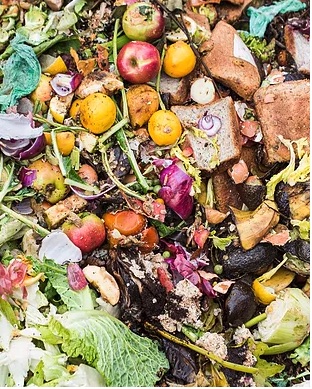
BKRot1.jpgAt BK ROT, food waste is mixed with wood chips and sawdust, then moved, over a period of weeks, through a succession of wooden bins the size of washing machines. By the time it reaches the final bin, it’s black and bug-covered and unrecognizable as former food. Then it’s heaped into sloping, loaflike piles, called windrows. “Convection sucks in air from the bottom and pulls it to the top,” Nurse said. “That keeps the microorganisms inside the windrows healthy.” The resulting mass is eventually shovelled into a rotating cylindrical sifter that looks like something you might pull bingo numbers out of; the original version was built by a friend of Nurse’s, who found instructions on YouTube. The compost is sold in local stores and directly to individuals—“Somebody came from Staten Island yesterday and took a bunch,” Nurse said—but most of it goes to nearby urban farms and community gardens, a few of which Nurse herself helped to start.

Adaptation & South-South Cooperation

Ethiopia_Wheat_23496722552_5868e72816_k_web

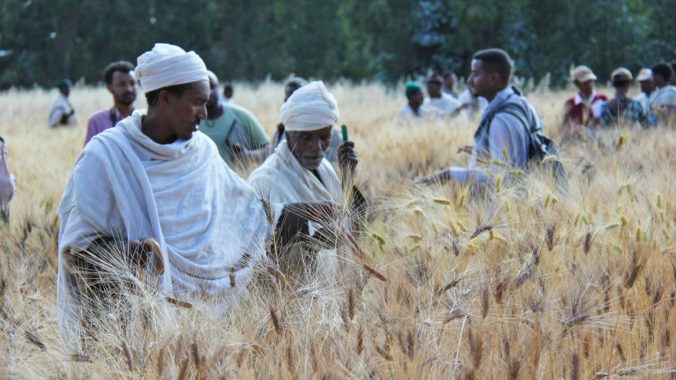
Ethiopian farmers examine the results of a trial of wheat varieties. BIOVERSITY INTERNATIONAL

The bread we eat in the not so distant future may depend on the type of cooperation described below. Thanks to Yale e360 and Virginia Gewin for this story:

How Crowdsourcing Seeds Can Help Farmers Adapt to Climate Change

In Ethiopia and other developing nations, scientists are working with small-scale farmers on trials to see which seed varieties perform best in changing conditions. These initiatives are enabling farmers to make smarter crop choices in the face of rising temperatures, drought, and more extreme weather.

Ethiopia_Wheat_23605266175_c076fa1be7_k_web.jpg

Durum wheat varieties grow in trial plots in Ethiopia’s Amhara region. Thousands of farmers participated in the project, testing how various wheat strands performed under changing climatic conditions. BIOVERSITY INTERNATIONAL

In Ethiopia’s undulating, high-elevation grasslands, farmers — most of them working parcels of only two to three acres — produce more wheat than anywhere else in sub-Saharan Africa. They accomplish this feat in the face of chronically short supplies of high-quality seed. Still, Ethiopia’s record harvest of 4.6 million metric tons in 2017 didn’t satisfy the country’s needs, forcing it to import an additional 1.5 million tons of wheat. Continue reading

Elephants By The Sea

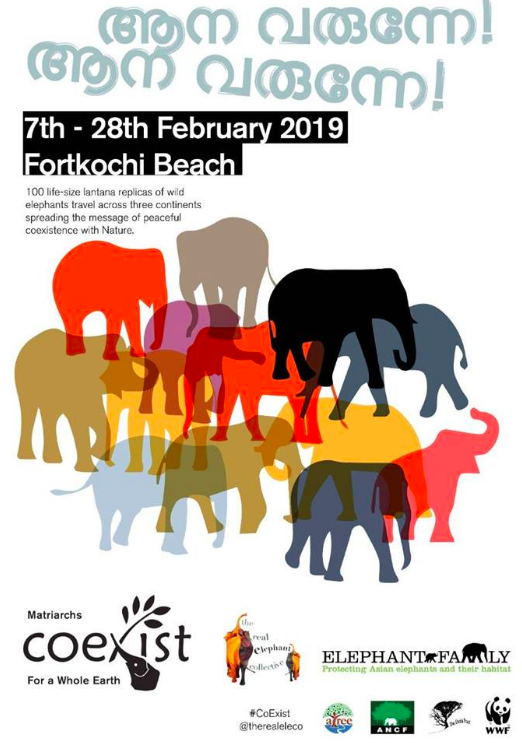
100 life-size lantana replicas of wild elephants will travel across three continents spreading the message of peaceful coexistence with nature.

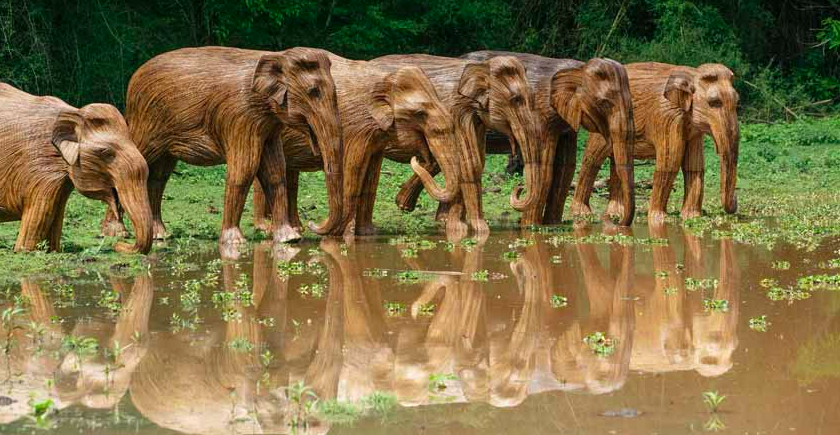
The beautiful herd of Asian Elephants calmly drinking from this watering hole poses no threat to any onlooker. They’re actually sculptures made from the invasive lantana, introduced to the Indian subcontinent as an ornamental shrub by the British. The harmless looking plant is a scourge to native flora, animals and people of the regions where it’s taken over, as it literally poisons its surroundings so nothing else can survive there, destroying the natural biodiversity of the area.

30 of these extraordinary, life-sized works of art have been on display in Kerala, at Kochi’s South Beach, coinciding with the Kochi-Muziris Biennale. The outdoor exhibit, entitled Co-Exist: Matriarchs for a Whole Earth, is on display for only until the end of February, after which it will travel to Bangalore and New Delhi. In 2020, the elephant models will be taken to England where they will be displayed at the Victoria and Albert Museum and the Royal Parks, both in London. In 2021, they will travel by truck across the USA, where they will finally be auctioned, the proceeds of which will go to preservation of wild animals.

The project is a collaboration between multiple organizations, designers and indigenous community artisans. Members of the Ashoka Trust Trust for Research in Ecology & the Environment (ATREE) devised a way to safely craft with lantana as a raw material and support for the making and display of lantana elephants is through the NGOs Elephant Family, The Real Elephant Collective (TREC), and The Shola Trust.

Fort Kochi To Have 100 ‘Lantana’ Elephants. And Here’s Why You Need To See Them

Highlighting the cause of nature and wildlife conservation at a global scale, the Lantana elephants are part of a greater initiative to raise funds for conservation and help people and elephants live together more harmoniously.

On February 7, if you are wandering around the popular South Beach in Fort Kochi, you are sure to come across a magnificent herd of 100 Asian elephants.

If you are wondering about the possibility of such a huge congregation of these beings at one place, let us break the news.

These are beautifully sculpted life-size elephants that have been made by tribal artisans from Thorapalli in Gudalur using Lantana camara or Lantana, a toxic invasive weed.

Lantana elephants are part of a greater initiative to raise funds for conservation and help people and elephants live together more harmoniously.

“Our vision is to bring Asia’s elephants and the issues they face out of India and the shadow cast by the African ivory crisis. With Asian elephants numbering only a tenth of their African counterparts, the importance of this unique migration cannot be underplayed. The survival of a species is at stake,” says Ruth Ganesh, principal trustee and the creative force of Elephant Family.

She had conceptualised the Lantana herd along with Shubhra Nayar of TREC. Modelled on real elephants from the Gudalur-Pandalur region, in its bid to raise awareness and funds for the conservation of Asian elephants, this unique project is also clearing the harmful Lantana from the Nilgiri forests while providing livelihoods to about 70 artisans from the Paniya, Bettakurumba and Soliga communities.

With their inherent knowledge of wild elephants and their exceptional crafting skills with Lantana, these artisans are bringing life to the elephant forms, while earning a dignified income. The elephants are designed by Shubhra Nayar and Tariq T of TREC, with Subhash Gautam overseeing the process. Continue reading

Anything But Sweet

ScioForest_Better_Cocoa-0689_web2.jpg

Trees felled for a cocoa plantation inside the Scio Forest Reserve in western Ivory Coast. MIGHTY EARTH

Fred Pearce provides puzzling yet somehow understandable examinations of environmental challenges, that make it impossible to look away with a clear conscience. Since reading this (note the photo above and in that story) I have been paying more attention to chocolate and its origins. I appreciate Mr. Pearce’s deep dive into the dark reality documented in this story:

The Real Price of a Chocolate Bar: West Africa’s Rainforests

Ivory Coast has lost more than 80 percent of its forests in the last 50 years, mainly to cocoa production. The government has a plan to turn over management of former forest to international chocolate manufacturers: Is it a conservation strategy or a land grab?

IvoryCoast_Cocoa_GettyImages-77612143_web.jpg

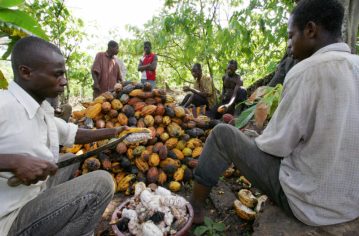
Workers cut cocoa in the Ivory Coast village of Godilehiri. Most of the country’s cocoa is grown by small farmers, on plots of 7 to 10 acres. ISSOUF SANOGO/AFP/GETTY IMAGES

How can you save the last rainforests from rampant deforestation in one of Africa’s most biodiverse countries? A crackdown on those responsible — in this case, chocolate growers and traders? In the Ivory Coast, the government thinks differently. It is unveiling a plan instead to remove protection from most of its remaining forests and hand them over to the world’s chocolate traders. Is this madness, a brutal land grab, or the only way out?

Best-Cocoa-Photos-03_SODEFOR-park-ranger-in-charge-of-Cavally-protected-area-standing-over-illegal-cocoa-found-during-a-patrol_web.jpg

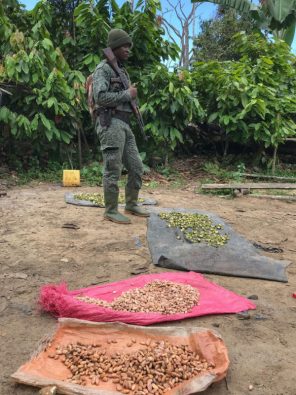
A park ranger stands over illegally harvested cocoa, found during a routine patrol of the Cavally Classified Forest in Ivory Coast. MIGHTY EARTH

In the past half-century, few countries have lost rainforests as fast as the Ivory Coast. More than 80 percent of its forests are gone, most following an illegal invasion by as many as a million landless people into national parks and other supposedly protected forests. The Marahoue National Park alone has 30,000 illegal inhabitants. The invaders are growing cocoa to supply the global chocolate business.

The Ivory Coast, a West African country the size of New Mexico, produces more than a third of the world’s cocoa. The crop contributes around a tenth of the nation’s GDP. But around 40 percent of the country’s cocoa crop — more than a tenth of the world’s chocolate bars — is grown illegally in the country’s national parks and 230 supposedly protected government-owned forests, known as forêts classée, says Etelle Higonnet of Mighty Earth, a United States-based environmental group active in cataloging the footprint of key global commodities.

Most cocoa is grown in monocultures of what is known as the full-sun system, requiring the removal of all surrounding trees. Meeting the world’s insatiable demand for the beans that make chocolate has resulted in many protected areas being “completely converted to farms,” according to Eloi Anderson Bitty of the University Felix Houphouet-Boigny in Abidjan. Continue reading

Preparing For Global Big Day 2019

GBD-world-map_2-1024x624.jpg

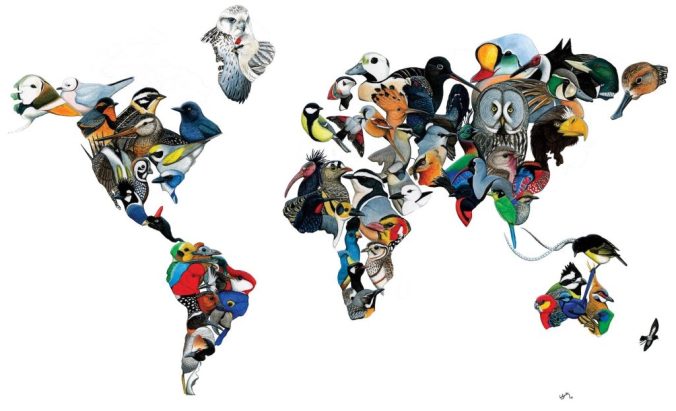
Global Big Day artwork by Luke Seitz

The first time we took part in this annual event, we had already had several years of advance prepping. For example, we had this young man as an intern who was something of a birding wunderkind. Ben helped us determine whether our region of the Western Ghats was likely to appeal to birdwatchers. Short answer, yes. That same summer, 2012, Seth was in his second year working for the Lab of Ornithology and we could see that not only our company’s work but our own family was becoming more birdy, if not yet bird-nerdy.

This year will be the best year yet for birding, and to prove it I am starting today to get ready for the next Global Big Day. I do not know where we will be that day, yet, but I am working on plan. May I suggest you do the same?

Global Big Day—4 May 2019

By Team eBird 

Last May, more than 30,000 people took to fields and forests around the world, noting more than 7,000 species in a single day—Global Big Day. In less than 3 months, birding’s biggest day is coming back. Wherever you are in the world, you can be a part of birding’s next world record!

On 4 May, will you join more than 20,000 others and become a part of Global Big Day? You don’t have to commit to birding for 24 hours—an hour or even 10 minutes of watching birds makes you part of the team. Visit your favorite spot or search out someplace new; enjoy a solo walk or get some friends to join in the Global Big Day fun.

How to participate

  • Get an eBird account: eBird is a worldwide bird checklist program used by millions of birders. It’s what allows us to compile everyone’s sightings into a single massive Global Big Day list—while at the same time collecting the data for scientists to use to better understand birds. Sign up here. It’s 100% free. Continue reading

In Case Of Emergency, Plant Trees

Fox-Maple-Woods_Wisconsin_JoshuaMayer_web.jpg

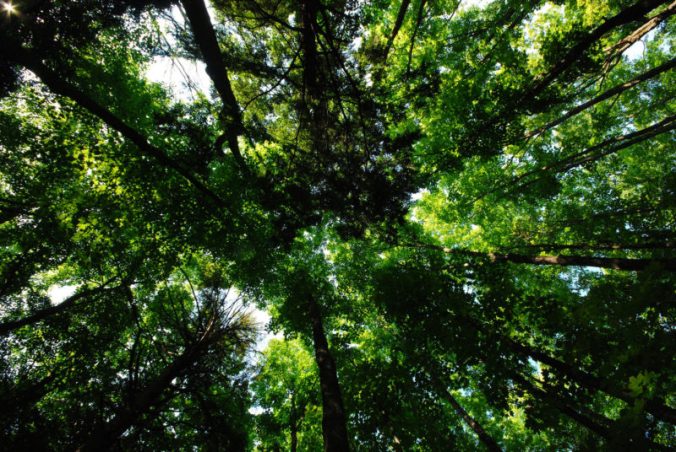
Fox Maple Woods in Wisconsin. JOSHUA MAYER / FLICKR

Emergency? The evidence is clear in the case of the environment, and it is a global emergency with a global solution. Thanks to Yale e360 for this summary of a new finding:

Planting 1.2 Trillion Trees Could Cancel Out a Decade of CO2 Emissions, Scientists Find

There is enough room in the world’s existing parks, forests, and abandoned land to plant 1.2 trillion additional trees, which would have the CO2 storage capacity to cancel out a decade of carbon dioxide emissions, according to a new analysis by ecologist Thomas Crowther and colleagues at ETH Zurich, a Swiss university. Continue reading

Home Team Great Backyard Bird Count 2019

It’s been 5 years since we first began highlighting the Great Backyard Bird Count, a citizen science collaboration between the Cornell Lab of Ornithology, the Audubon Society and Bird Studies Canada. Since then, we’ve participated in 3 countries, on 2 continents, primarily in birding hotspots such as the Periyar Tiger Reserve in Kerala, India, a special corridor of avian biodiversity in the foothills of Poas Volcano in Costa Rica, and Baja California Sur, Mexico.

The data that is collected by thousands of individual birders for eBird has long range benefits for monitoring both the health and range of particular species, as well as the state of the planet as species have to adapt to changing climate.

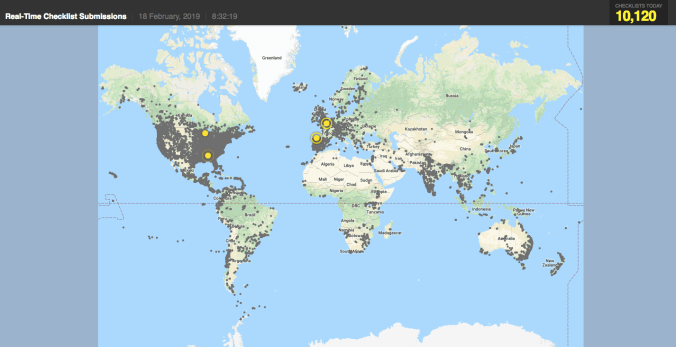
The map above indicates the locations from which checklists have been submitted (each gray dot represents a list, and the larger yellow dots are a moment frozen in time when a list has just been submitted. I highly recommend clicking on the image to view the site and watch the “lists” pop through the map!) Initially the GBBC only took place in North America, and birders worldwide rejoiced when it was expanded into a global event. (We were in India at the time, so I kid you not.) Continue reading