Franzen, Watching Out For Birds

5760 (2).jpg

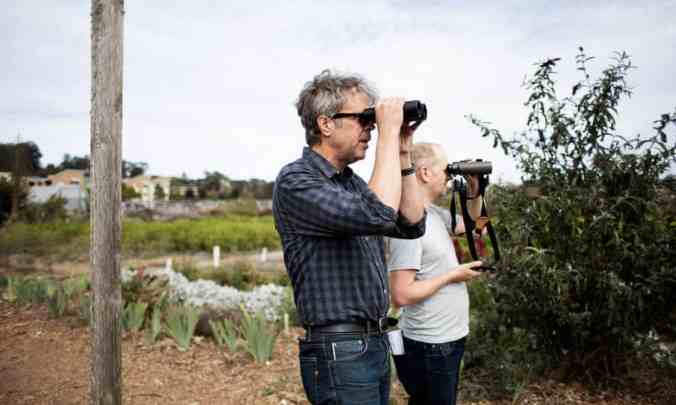
Freedom … Jonathan Franzen (left), birdwatching with Guardian writer Oliver Milman (right) at Natural Bridges Farm, Santa Cruz, California. Photograph: Talia Herman for the Guardian

Thanks to Oliver Milman writing for the Guardian from Santa Cruz, California with someone whose concerns about the intersection of books and technology, combined with his interest in birds and the art of watching, have led to us featuring him more frequently in these pages than most other people:

Jonathan Franzen: ‘Climate change isn’t the only danger to birds’

‘The two things I love most are novels and birds, and they’re both in trouble,’ says The Corrections author, one of the world’s most famous birdwatchers

1300.png

Illustration: Sarah Mazzetti

Birdwatching was once an activity that elicited a sense of mild shame in Jonathan Franzen. The author stalked New York parks with binoculars in hand, rather than on a strap, carefully hiding from view the word “birds” on his field guide. Debonair friends in London recoiled in horror when told of his pastime. Franzen was furtive, almost embarrassed. Now, he is one of the most famous birdwatchers in the world.

5648.jpg

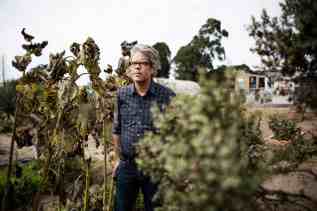
 Author and birdwatcher Jonathan Franzen, at Natural Bridges Farm where he goes to birdwatch in Santa Cruz, California, September 30th, 2018. Photograph: Talia Herman for the Guardian

“I totally let my freak flag fly now,” Franzen says as he scans for birds at a community garden near his home in Santa Cruz, California. His phone has an app that deciphers bird sounds. He travels the world to see recondite species. He has written about birds in essays, op-eds and novels.

“I was so socially unsuccessful in my youth and such a pariah in junior high that I really didn’t want to look like a dork,” says Franzen, the 59-year-old author whose best known works include The Corrections and Freedom. “I got over that. The success started to make me think: ‘Hey, it’s not me who’s got the problem.’” Continue reading

The Great Lakes And Unexpected Consequences Of Human Interventions

9780393355550_300.jpegI was not aware of this book until listening today to its author spend an hour talking about it. And that happened because of a radio program that I listened to during graduate school, which like most radio shows is now available as a podcast. The discussion was all about unintended ecological consequences of what seemed like smart decisions at the time, going back centuries and up to the present day.

It was interesting enough to search for more information about the book. In the process I found a book club that in turn led me to the book review that is just what I was looking for to complement the author interview:

In the oceanic depths of the Great Lakes, life and death swirl like coffee and cream. Growing up on the western shores of Lake Michigan, I knew this instinctively. The lake provided our drinking water and a place to cool off in the summer, but it also occasionally coughed up millions of small dead fish called alewives, which littered the shoreline, giving off an aquarial reek.

28Moor-articleLarge.jpg

Great Lakes vampires: Lampreys latch on to a brown trout.
 Credit James L. Amos/National Geographic, via Getty Images

As long as the town deemed the water’s bacteria count low enough, we kids would go swimming or fishing (though we weren’t allowed to eat what we caught). Our moms would sit on towels on the pebbled beach, misted with sweat, paging through magazines. “Do you go in?” they would ask one another, with widened eyes and a half-ironic cringe. Oh no, it was much too cold, or too polluted, they inevitably replied. Nevertheless, the lake served as the axis mundi of our little universe; when people gave directions, they were often oriented “toward the lake” or “away from the lake.” The name of our town had “lake” in it; the town next door did too. Both lay within Lake County. We were lake people. Continue reading

Trust & Responsibility

4284

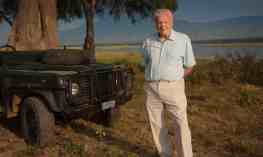
Sir David Attenborough on location for the new series. Photograph: Nick Lyons/BBC NHU

There are few people featured as frequently in our pages since 2011. His documentation of the wonders of nature surely qualifies as a major contribution to humanity. He has a new series and as always we link out to it here. But with it, some questions arise based on an interview he recently gave to Jonathan Watts, the Guardian’s Global Environment Editor, to promote the series:

David Attenborough: too much alarmism on environment a turn-off

Veteran broadcaster says Dynasties, his new BBC wildlife series, will be gripping, truthful and entertaining but not overtly campaigning

I am susceptible to those questions, especially after reading Guardian columnist (another frequent subject in our pages) George Monbiot’s editorial below. Just because David Attenborough is a hero does not mean he is always right. These two items are both worth a read and further consideration about the responsibility that comes with trust, well-earned, but whose value perhaps should be employed for campaigning considering what is at stake. I find myself surprised to reflexively lean in to this editorial argument, because the mission of our platform here is to emphasize creative, entrepreneurial approaches to conservation. While we chose at the outset to not focus exclusively on feel-good stories, we also do not serve up excessive doom and gloom because there is plenty of reporting on that for anyone paying attention. Maybe my surprise is more that a hero of nature-lovers reveals himself to explicitly avoid campaigning when he knows better than most from decades of close observation what the planet has been losing during his lifetime.

David Attenborough has betrayed the living world he loves

By downplaying our environmental crisis, the presenter’s BBC films have generated complacency, confusion and ignorance

3909

David Attenborough filming the BBC series Africa in the Suguta Valley, northern Kenya. Photograph: David Chancellor/BBC

Knowingly creating a false impression of the world: this is a serious matter. It is more serious still when the BBC does it, and yet worse when the presenter is “the most trusted man in Britain”. But, as his latest interview with the Observer reveals, David Attenborough sticks to his line that fully representing environmental issues is a “turn-off”.

His new series, Dynasties, will mention the pressures affecting wildlife, but Attenborough makes it clear that it will play them down. To do otherwise, he suggests, would be “proselytising” and “alarmist”. His series will be “a great relief from the political landscape which otherwise dominates our thoughts”. In light of the astonishing rate of collapse of the animal populations he features, alongside most of the rest of the world’s living systems – and when broadcasting as a whole has disgracefully failed to represent such truths – I don’t think such escapism is appropriate or justifiable. Continue reading

Books In Need, People To The Rescue

01britain-bookstore1-jumbo

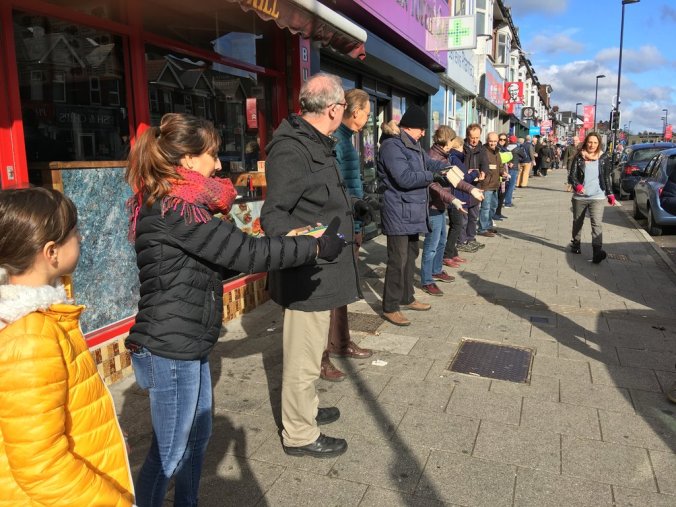
Hundreds of volunteers formed a human chain to help move October Books to its new location in Southampton, England. Credit October Books

It is probably not accurate to say books are in need. People are in need of books. And people who have been enlightened, educated, even saved by books are the kind of people we might expect to believe that the repositories of books, libraries and bookstores for example, need all the help we can give them. In the spirit of yesterday’s post, another today related to books and volunteers and the generosity of bookish people:

A Store Had to Move Thousands of Books. So a Human Chain Was Formed.

31britain-bookstore2-jumbo.jpg

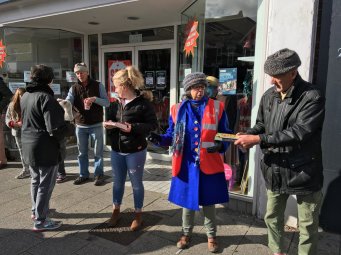
“We wanted something that was accessible for the whole family, for children and people who were older who wouldn’t necessarily be able to paint or move heavy pieces, to help out,” a member of the October Books collective said.

LONDON — The plea went out a few weeks ago from the bookstore in a port city in southern England: “Care to lend a hand?”

Volunteers were needed for “heavy manual work” in shifts. It was “essential” that they be able to lift and carry boxes and office supplies.

Among the supplies: thousands upon thousands of books.

The appeal from October Books, a nonprofit that began 40 years ago as a “radical” bookshop, came after a rent increase forced it from its old home in Southampton, Jess Haynes, a member of the collective and one of the few paid employees, said on Wednesday.

The shop was looking to move lock, stock and barrel about 150 meters (just under 500 feet) to a three-story building that used to house a bank. Would anybody respond to the call for help? Continue reading

Consider The Little Free Library


merlin_145782510_153e132c-f7fb-49f0-a653-fb995e50eefb-jumbo.jpg

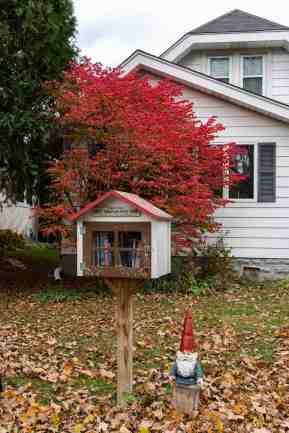
This Little Free Library in the McKinley neighborhood of Minneapolis appears to have a small reading loft, big enough for a city mouse.

merlin_145782399_fb9973eb-f313-455f-b5bd-bf309fe301e8-superJumbo

Father Time stands sentry at a Little Free Library in the rough-hewn Payne-Phalen neighborhood of St. Paul.

We made a decision early on, for reasons I do not recall clearly, to avoid linking out to obituaries–even for heroes whose lives have resonance in our pages. This one made me think twice about that decision.

In part it is because we have paid an enormous amount of attention to libraries over the years. Also, this man’s innovation (did we really never feature it in our pages before?) was clearly in the realm of what we call entrepreneurial conservation. And maybe, just a bit, I like the idea that the first little free library (the last one displayed below) was a tribute to the innovator’s mom.

Thanks to the New York Times for getting this story just right:

Libraries, Writ Small

merlin_145782294_bdbd9ee4-8a2e-44b1-bd0b-727c7302e59b-jumbo

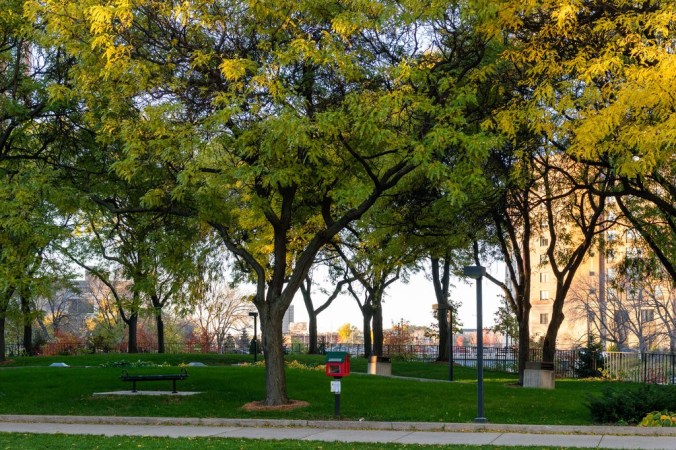
This Little Free Library enjoys the open space of Triangle Park in Minneapolis.

Todd Bol’s Little Free Library boxes, which blend the form of folk art with the function of a community water cooler, have popped up in all 50 states and in 88 countries.

By Katharine Q. Seelye Photographs by Ethan Jones

merlin_145782540_8b4f0381-47bd-470d-9cbc-c1b34745c787-jumbo.jpg

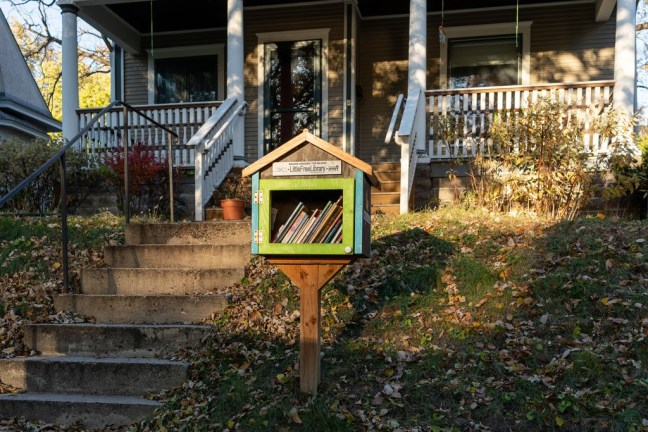
This Minneapolis library is a classic of the genre, with its Plexiglass front and gable roof, supported on a sturdy post.

Todd Bol was simply paying homage to his mother, a schoolteacher and lover of books. He built a doll-sized schoolhouse, filled it with his mother’s books and put it out for his neighbors in Hudson, Wis., as a book exchange.

Today, just nine years later, more than 75,000 such “Little Free Libraries” dot the globe, from San Diego to Minneapolis, and from Australia to Siberia.

merlin_145782390_b76569b1-e928-4a57-b546-1162ae75ae3f-superJumbo.jpgWhy did they catch on? For starters, they promote a friendly, sharing economy. No one tracks who took what. There’s no due date. No fines. You might never return a book. You might leave another instead. And, they are inherently cute. As Mr. Bol recalled, his neighbors “talked to it like it was a little puppy.”

This week, many bore a white ribbon in tribute to Mr. Bol, who died Oct. 18, in Minnesota at the age of 62. Here, a photo-essay of some of the little libraries near his hometown.

See all the other photos here.

Orhan Pamuk’s Istanbul Is My Workplace

04Pamuk-slide-MMM9-jumbo.jpg

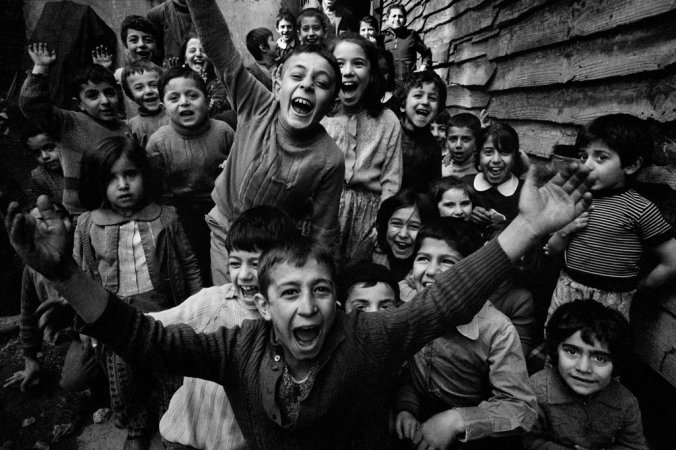
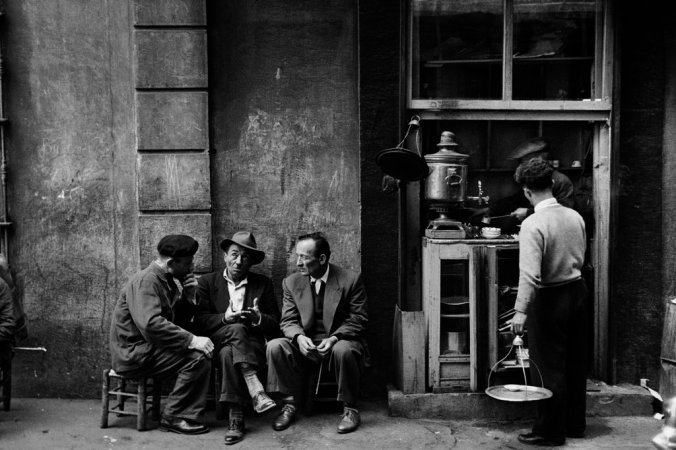
In the Tophane quarter, 1986. Credit Ara Guler/Magnum Photos

The third of three previous posts invoking Orhan Pamuk mentions an experience in a museum a couple years ago in Istanbul. I did not write much about it in that post because I did not know what to say, or if there was anything to say about how the museum affected me. But reading Orhan Pamuk’s words in the essay below about his friend, and the photographs that man took, evoked strong memory of the effect that museum had on me. It evoked a strong sense of the value of memory, in all its limits and even imperfections.

Just prior to that museum experience I had written a dozen posts about the work we had been doing in India since 2010, which was connected to work we began in Costa Rica many years earlier. I think what that museum visit put into focus for me was how, in our work crafting experiences with sense and sensibility, we were creating our own museums of innocence. Our mission is to create authentic, distinctive and valuable life experiences, to build profitable businesses around these, and then to direct the associated economic benefits to the conservation and prosperity of unique natural and cultural heritage and to the improvement of the quality of life of the local host communities. That work is about crafting memories, just as books, museums and photographs do in their own way. Seeing these pictures and reading these words reminds me of that:

‘I Like Your Photographs Because They Are Beautiful’

Orhan Pamuk remembers his friend Ara Guler, the great photographer, who lovingly captured Istanbul and its people.

04Pamuk-slide-PTPC-jumbo.jpg

A coffee bar in a Beyoglu arcade, 1958. Credit Ara Guler/Magnum Photos

Ara Guler, who died on Oct. 17, was the greatest photographer of modern Istanbul. He was born in 1928 in an Armenian family in Istanbul. Ara began taking photographs of the city in 1950, images that captured the lives of individuals alongside the city’s monumental Ottoman architecture, its majestic mosques and magnificent fountains. I was born two years later, in 1952, and lived in the same neighborhoods he lived in. Ara Guler’s Istanbul is my Istanbul. Continue reading

Mapping Earth’s Remaining Intact Ecosystems

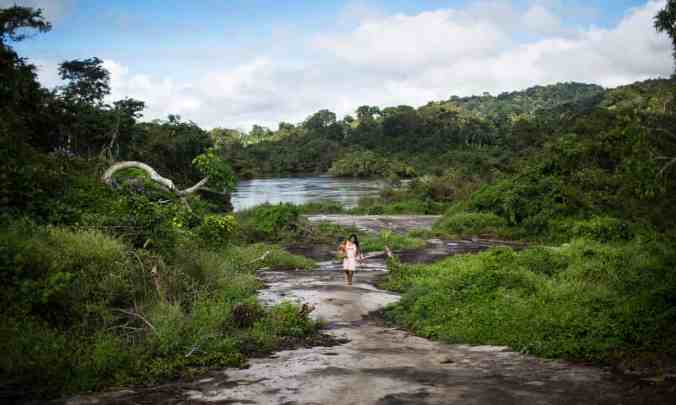
A Xikrin woman walks back to her village from the Cateté River in Brazil. Photograph: Taylor Weidman/Getty Images

Thanks to Lisa Cox, the Guardian’s Australia correspondent for environment, for this:

Five countries hold 70% of world’s last wildernesses, map reveals

First map of Earth’s intact ecosystems shows just five nations are responsible for most of them – but it will require global action to protect them

1048.jpg

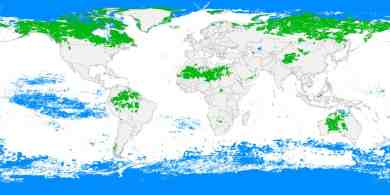
Map of the world’s remaining wilderness. Green represents land wilderness, while blue represents ocean wilderness. Photograph: Nature

Just five countries hold 70% of the world’s remaining untouched wilderness areas and urgent international action is needed to protect them, according to new research.

Researchers from the University of Queensland (UQ) and the Wildlife Conservation Society (WCS) have for the first time produced a global map that sets out which countries are responsible for nature that is devoid of heavy industrial activity.

It comes ahead of the conference of parties to the Convention on Biological Diversity in Egypt in November where signatory nations are working towards a plan for the protection of biodiversity beyond 2020.

Conservationists are calling for a mandated target for wilderness conservation that will preserve the planet’s vulnerable ecosystems. Continue reading

For The Last Tigers, What Is Next?

merlin_145827315_a41e80a9-2f6c-49c8-ba24-ea8c7f20d280-superJumbo.jpg

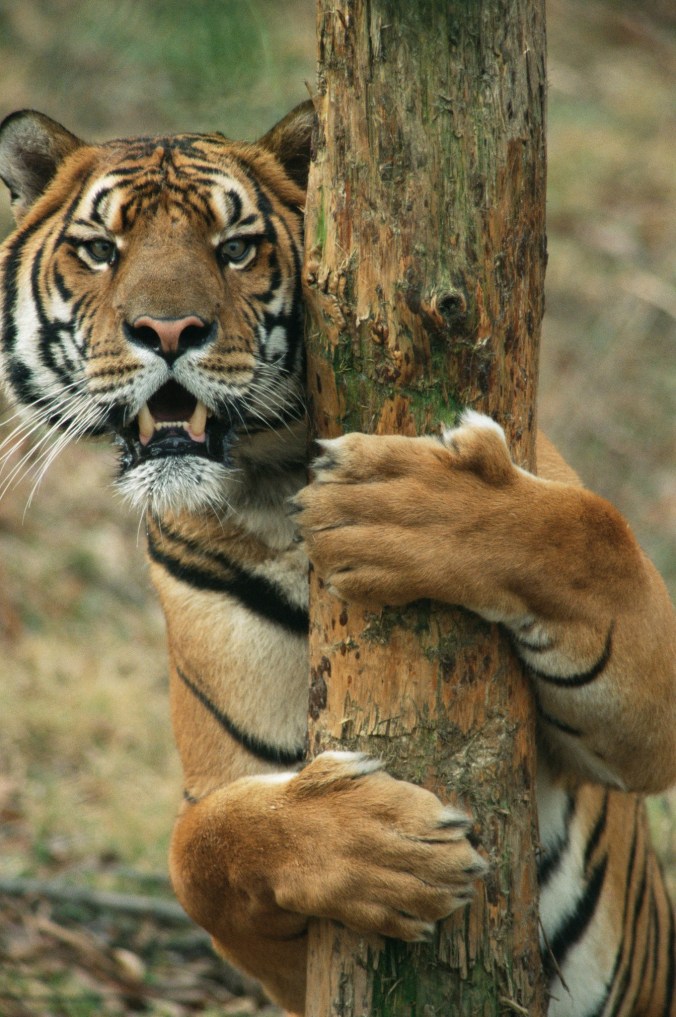
A South China tiger, a subspecies that only survives in captivity. Credit Francois Savigny/Minden Pictures

Some of these photos we have featured in earlier stories. That is a testament to the seriousness of the subject. Thanks to Rachel Nuwer for this:

Divide and Preserve: Reclassifying Tigers to Help Save Them From Extinction

Are there many subspecies of tiger, or only two? A correct accounting is the only way to preserve what is left of the animal’s genetic diversity, some scientists say.

26TIGERS4-jumbo.jpg

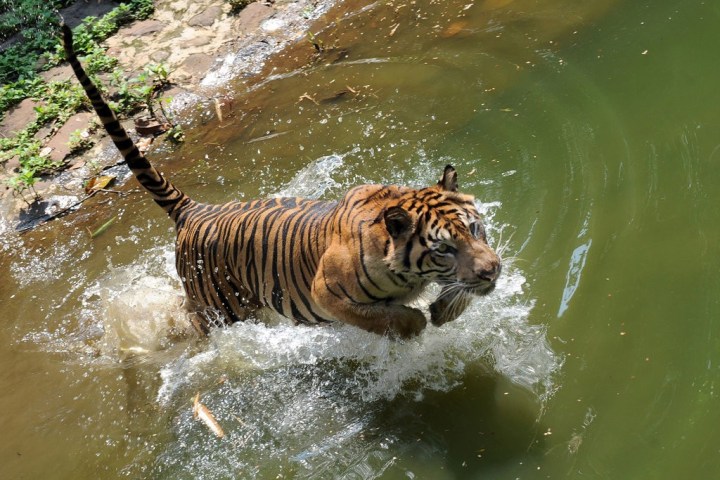
A Sumatran tiger at the Ragunan Zoo in Jakarta, Indonesia. Sumatran tigers were the first to evolve from all tigers’ common ancestor. Credit Romeo Gacad/Agence France-Presse — Getty Images

Fewer than 4,000 tigers remain in the wild. New research aims to give conservationists an improved understanding of their genetics in order to help save them.

After years of debate, scientists report in the journal Current Biology that tigers comprise six unique subspecies. One of those subspecies, the South China tiger, survives only in captivity.

“The results presented in this paper are important because they contradict the currently accepted international conservation classifications for tigers,” said Uma Ramakrishnan, a molecular ecologist at the National Center for Biological Sciences in Bangalore, India, who was not involved in the study. Continue reading

A Big Step To Reduce Plastic Pollution


gettyimages-984354822-1cd9174e52fd0dc14cf00ca4ec859b0ee256e09a-s1300-c85.jpg

Volunteers cleared trash from the banks of the River Thames during the annual Big Bottle Count in London last month. Credit Matt Dunham/Associated Press

Thanks to Ceylan Yeginsu and the New York Times for this news:

European Parliament Approves Ban on Single-Use Plastics

merlin_145766505_d571d0f9-8739-4a8d-b1cb-691bce23acf5-jumbo.jpg

Under the proposal, 10 single-use plastics that most often end up in the ocean will be prohibited in the European Union. Credit Rafael Marchante/Reuters

LONDON — The European Parliament has overwhelmingly approved a ban on single-use plastics such as straws, plates, cutlery and cotton-swab sticks in Europe by 2021, joining a global shift as environmentalists emphasize the urgency of halting the use of materials that are detrimental to the planet.

Under the proposal, approved on a vote of 571 to 53 on Wednesday, 10 single-use plastics that most often end up in the ocean will be prohibited in the European Union, as well as oxo-degradable plastics, such as bags or fast-food container packaging. Continue reading

Keeping Track Of Renewables

Kormann-Prop-127.jpg

Despite the rapid decline in the cost of solar-energy technology and battery storage, Arizona gets only six per cent of its electricity from solar. Photograph by Joshua Lott / Bloomberg / Getty

Thanks to Carolyn Kormann, making her fifth appearance since early 2016 in our pages, including this recent item that I particularly favored, for the article below that helps us understand what is happening with renewable energy these days in the USA. It is easy to forget, amidst all the noise of a federal government working to deregulate and reduce environmental protection, that important work continues:

The Battle for Solar Energy in the Country’s Sunniest State

In late September, the Heartland Institute, a libertarian think tank that receives donations from fossil-fuel companies, published a blog post titled “California Billionaire’s Renewable Energy Initiative Makes Arizona Ballot.” The billionaire in question was Tom Steyer, whose year-long effort to pass Proposition 127, an amendment to Arizona’s constitution that would require power companies to generate fifty per cent of their electricity from renewable sources by 2030, has faced aggressive opposition from the state’s largest utility, Arizona Public Service, or A.P.S. The blog post lamented a failed lawsuit filed by Arizonans for Affordable Energy, a political-action committee funded by A.P.S.’s parent company, to keep Prop 127 off the ballot, and quoted several opponents who believed the measure, now up for a vote in November, would be a costly mistake. “Prop 127 would tie Arizona’s future to technologies that do not deliver baseload electricity,” Mark Finchem, a Republican state representative, said, “and are arguably worse for the environment as a whole than the dependable technologies we already have.” The photograph accompanying the post depicted a wind-turbine farm, and, in the foreground, a dead bald eagle.

Arizona is the sunniest state in the country, with more than three hundred bluebird days per year. It is also projected to endure an additional month of hundred-degree days in the coming decades owing to climate change. Yet, despite the rapid decline in the cost of solar-energy technology and battery storage—to the point that, as an A.P.S. director told me, it now frequently outbids fossil fuels, even natural gas—in 2017, Arizona generated only six per cent of its electricity from solar, according to the ballot initiative’s advocates. The state currently requires utilities to generate eight per cent of their power from sources like solar and wind, scaling up to fifteen per cent by 2025. Natural gas, the largest source of Arizona’s net electricity generation, is imported from out of state. “Our most abundant resource in Arizona is our sunshine,” D. J. Quinlan, a spokesman for Clean Energy for a Healthy Arizona, the Phoenix-based political-action committee that Steyer is funding, said. “We need a nationwide transition to renewables. One of the first places we should be doing it is where it’s most efficient and cost-effective, and that’s here.” Continue reading

Charisma & Conservation

Steve-Pearlman-32_FLUXMAG_WEB

Botanist Steve Perlman rappels into the Kalalau Valley, a biodiversity hotspot on the Hawaiian island of Kauai. COURTESY OF BRYCE JOHNSON/FLUX HAWAII

Thanks to Janet Marinelli and the team at Yale e360 for a reminder that charisma is not all that matters in decisions about conservation:

Extreme Botany: The Precarious Science of Endangered Rare Plants

They don’t make the headlines the way charismatic animals such as rhinos and elephants do. But there are thousands of critically endangered plants in the world, and a determined group of botanists are ready to go to great lengths to save them.

B.insignis-outplanted-in-former-range-at-LImahuli-Garden-2_web

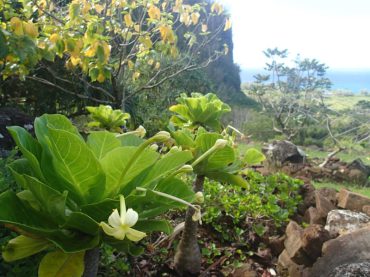
The plant known as cabbage-on-a-stick (Brighamia insignis) has been grown at Limahuli Garden & Preserve on Kauai, which is within the historic range of the species. SEANA WALSH

To save plants that can no longer survive on their own, Steve Perlman has bushwhacked through remote valleys, dangled from helicopters, and teetered on the edge of towering sea cliffs. Watching a video of the self-described “extreme botanist” in actio­­n is not for the faint-hearted. “Each time I make this journey I’m aware that nature can turn on me,” Perlman says in the video as he battles ocean swells in a kayak to reach the few remaining members of a critically endangered species on a rugged, isolated stretch of Hawaiian coastline. “The ocean could suddenly rise up and dash me against the rocks like a piece of driftwood.”

RS40032_Limahuli-Garden_Brighamia-insignis_Nov-8-2016-2_web

A botanist collects pollen from the flower of Brighamia insignis. NATIONAL TROPICAL BOTANICAL GARDEN

When he arrives at his destination, Perlman starts hauling himself up an impossibly steep, razor-sharp cliff 3,000 feet above the sea without a rope, his fingers sending chunks of rock tumbling down to the waters below. Finally, he reaches the plants and painstakingly transfers pollen from the flowers of one to those of another to ensure that the species can perpetuate itself. At the end of the season, he will return to collect any seeds they were able to produce. Continue reading

Lost & Found, Apples & Ciders

merlin_142713882_be9ebc0e-dd46-437b-98c1-b3318b6157b2-jumbo

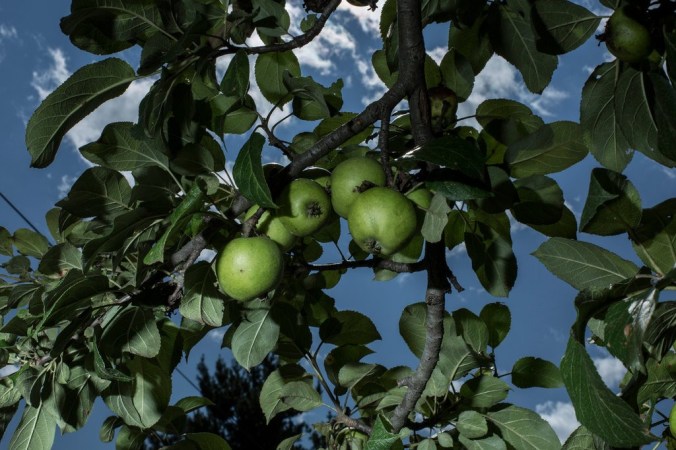
The Harrison apple tree that Thomas Vilardi found near Newark in the fall of 2015. “I knew I had seen apples on a tree,” he said. “I wasn’t expecting to find a Harrison.” Credit Bryan Anselm for The New York Times

Thanks for this article to Rachel Wharton, who is batting 1000 for our taste in food writing:

Finding Lost Apples and Reviving a Beloved Cider

George Washington was among the many fans of Newark cider, a long-missing treat now being recreated by a former ad man on a mission.

merlin_142713408_bab1e622-f74d-40b1-8bce-3ee6fe4b1ae6-jumbo

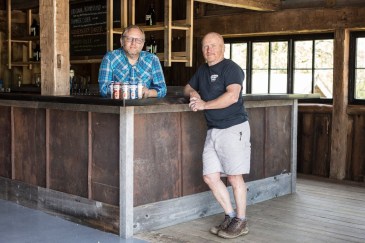
Charles Rosen, left, and Cameron Stark in the new taproom they opened last week at Ironbound Hard Cider in Asbury, N.J. It will serve limited-edition ciders made by Mr. Stark, the head cider maker.CreditBryan Anselm for The New York Times

ASBURY, N.J. — Ironbound Hard Cider may seem an odd name for the business Charles Rosen has built here on 108 acres in central New Jersey. The farm, where a new taproom offers pastoral views of the still-ripening fruit, doesn’t appear to share much with the Ironbound, an industrial neighborhood 50 miles to the east in Newark.

Yet they do have common roots, thanks to four very old apple varieties now growing on Mr. Rosen’s land.

merlin_142713801_a087507e-571c-47c8-a090-d896063758d1-jumbo

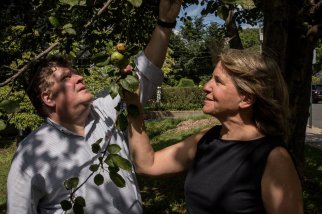
Mr. Vilardi and Fran McManus at the old apple tree he found three years ago. An apple expert connected him to Ms. McManus, who had written an article about Newark cider in 2010. Credit Bryan Anselm for The New York Times

Mr. Rosen, the former chief executive of a Manhattan advertising agency that promoted Svedka vodka and Mike’s Hard Lemonade, wants to reintroduce Newark cider, an 18th- and 19th-century alcoholic drink once famously compared to Champagne.

Newark cider was both a point of pride and big business for the region — requested by name, reportedly lauded by George Washington and produced by dozens of Newark-area cideries with acres of orchards. The secret wasn’t a recipe, but the blending of a quartet of superior apples born in the region: Campfield, Poveshon, Granniwinkle and Harrison, the most celebrated of the four.

merlin_142713792_582225fa-f36e-4060-bf8f-fec10923a552-jumbo

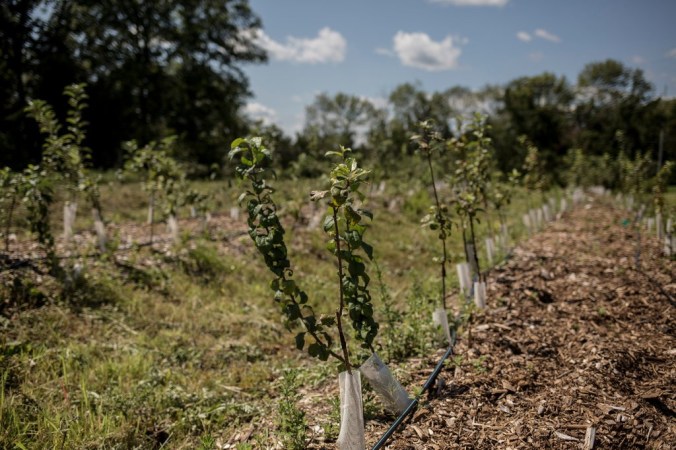
The 1- and 2-year-old apple trees in Ironbound Hard Cider’s nursery include the Harrisons shown here and Poveshons, a New Jersey-born variety thought to be extinct until 2015. Credit Bryan Anselm for The New York Times

As a result of urbanization and then Prohibition, when many of the nation’s remaining cider orchards were destroyed, Newark cider hasn’t been made for at least a century. But after years of planning and planting — not to mention the accidental discovery of two lost apple trees and the investment of what Mr. Rosen called “100 percent of all the money I ever had in my entire life” — Ironbound Hard Cider is on the precipice of bringing it back. Continue reading
110 Million Years And Counting

16SCI-TURTLES2-jumbo

In a village near Watamu, Kenya, a sea turtle accidentally caught by a fisherman was turned over to Local Ocean Conservation. Credit Amy Yee

These creatures have been around forever, more or less. Survived everything that nature threw at them over the epochs. Until mankind and its addiction to plastic. And now it is clear their days are numbered, so any initiative anywhere that tries to slow the clock and keep the species going, we are happy to hear about it and share on this platform. Thanks to Amy Yee for bringing this to our attention:

Rescuing Sea Turtles From Fishermen’s Nets

An organization on the coast of Kenya tries to persuade local residents to help return the trapped reptiles to the ocean, rather than sell their meat and shells for a living.

merlin_145220637_c2a0c017-6041-44e3-9aef-e066644ccaa8-superJumbo

A green sea turtle trapped in a gill net. Scientists estimate the global green turtle population has declined 50 to 70 percent since 1900. Credit Jeff Rotman/Science Source

WATAMU, Kenya — The young hawksbill turtle was accidentally caught in a net in the Indian Ocean off Kenya’s coast.

The fisherman called Local Ocean Conservation, a nonprofit based in the town of Watamu that is the only turtle rescue and rehabilitation center on the East African seaboard. The hawksbill, critically endangered in this region, was a mere seven pounds; adults can weigh up to 160 pounds.

X-rays showed that the reptile’s intestinal tract was clogged with plastic. Hogaar, as Local Ocean named her, floated and couldn’t dive. Gas had built up in her innards after she had eaten small pieces of plastic mistaken for food such as jellyfish. Local Ocean staff members placed Hogaar in a rehab pool and gave her laxatives. She passed feces laced with shreds of packaging and had little appetite. After more than four months at Local Ocean, Hogaar died. A necropsy revealed her gut was also full of sharp shards of white, blue and pink plastic and tangles of blue and gray string.

Turtles are reptiles that have existed for at least 110 million years and survived the mass extinction that killed off dinosaurs. But today, sea turtles worldwide are threatened with extinction. And it’s estimated that only one of 1,000 turtle eggs laid survive to adulthood. Continue reading

Forests, Deforestation & Climate Change

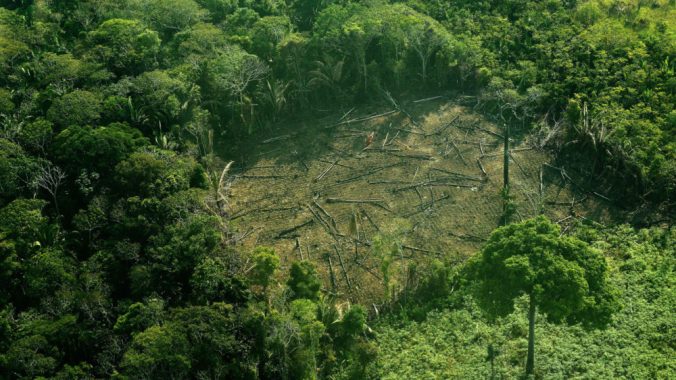
Trees cleared in the western Amazon region of Brazil in September 2017. CARL DE SOUZA / AFP / GETTY IMAGES

If you have been following the news recently, you may have noticed a report that indicates the urgency from climate change is greater than scientists previously thought. Everyone who cares has been digesting the science and we appreciate every effort to clarify what the science is saying. Fred Pearce, writing for Yale e360, has this:

Conflicting Data: How Fast Is the World Losing its Forests?

GP0STRVIX_PressMedia_web.jpg

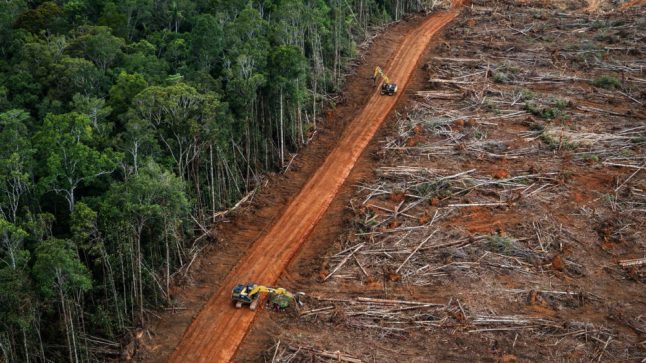
Forest cut to make way for an oil palm plantation in Papua, Indonesia in April 2018. ULET IFANSASTI / GREENPEACE

The latest UN report on climate says reducing deforestation is crucial to slowing global warming. But researchers must first reconcile two contradictory sets of statistics on tree loss in order to determine whether promises made by nations to protect and restore forests are on target.

The world is losing trees faster than ever. An area the size of Italy disappeared last year. Or did it? New research suggests three-quarters of those lost forests may already be regrowing. That hardly means we are out of the woods. Fighting climate change and protecting biodiversity still needs a global campaign to reforest the planet. But it does suggest that, given the chance, nature will do much of the work. Continue reading
Citizen Science, Children & Bees

11TB-BEES2-jumbo.jpg

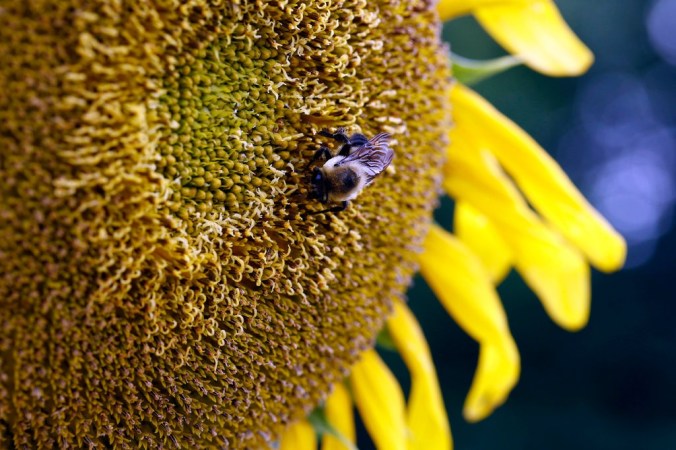
Scientists expected bees to gradually cease buzzing as the sky darkened during an eclipse. Instead, they stopped altogether. Credit Rogelio V. Solis/Associated Press

After following the work of Nicholas St. Fleur for a couple years now–his beat includes archaeology, paleontology, and space among other of the things we care about on this platform, including conservation–his most recent story below is my favorite for one reason, namely citizen science. Specifically the participation of youth in such an important scientific investigation:

The Moon Eclipsed the Sun. Then the Bees Stopped Buzzing.

Researchers worked with a small army of elementary school children to collect audio recordings of bees as they visited flowers along the path of last summer’s total eclipse.

merlin_145121940_aa0e5867-a947-44eb-9851-f90f39f77723-jumbo

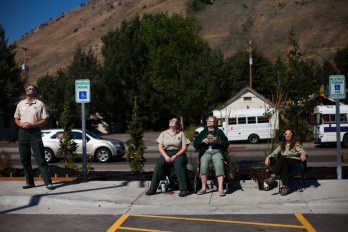
National Forest Service workers at the Bridger-Teton National Forest Office in Jackson, Wyo., took a break to watch the Great American Eclipse last year. Credit Celia Talbot Tobin for The New York Times

Last year’s Great American Eclipse drew hundreds of millions of eyes to the sky. But while people across the country “oohed” and “aahed” at the phenomenon, it appears the bees went silent.

So found a new study that monitored the acoustic activity of bees before, during and after totality — the moment when the moon completely blocked the sun — during the solar eclipse on Aug. 21, 2017. Researchers at the University of Missouri, along with a small army of elementary school children and other volunteers, collected audio recordings of honeybees, bumblebees and other types of bees as they visited flowers along the path of totality Continue reading
Carbon Insurance As Heritage Insurance

Kormann-YurokCarbonCredits-Primary.jpg

A carbon-offset project, the first of its kind in the United States, has become the Yurok’s main source of discretionary income, helping the tribe buy back thousands of acres of land. Photograph by Joel Redman

Carbon trading has featured, or at least been mentioned, only rarely on this platform, now that I stop to check. That seems impossible. But the scheme with so much promise has simply not taken off. Indigenous heritage, on the other hand, has featured in dozens of stories here since we started in 2011. Thanks to Carolyn Kormann for bringing this story to my attention, helped by two captivating photos and the fact that it highlights the approach of the Yurok Tribe (a community I had not heard of before):

Kormann-YurokCarbonCredits-Secondary2

“I think we did a good thing by saving the trees, but I’m not happy with it,” Jene McCovey, a tribal elder, said. “It’s not viable. It allows polluters to pollute.” Photograph by Joel Redman

How Carbon Trading Became a Way of Life for California’s Yurok Tribe

When Marty Lamebear is not fighting fires, he is starting them. In the past few years, as a member of the Yurok Tribe Forestry Program’s fire department, he has been helping revive the controversial practice of prescribed burns to protect and restore the coastal redwood forests of northern California. Lamebear is also a hunter, fisherman, and dancer. In his free time, he makes tribal regalia for ceremonial dances from parts of elk, deer, minks, and porcupines, which he shoots or finds already dead, and from frozen eagles that he orders from the U.S. Fish and Wildlife Service. A prescribed burn, what Lamebear calls a culture burn, creates prairies within the forest, which attract those animals. “At first, we couldn’t really tell its effects,” he said. “But, after about six years now, we can honestly start seeing the landscape open up, animals come around.” They also serve another purpose, he said. “It’s insurance for our carbon.” Continue reading
Billion Oysters And Counting

BillionOysters

HarborClass

Our school programming puts students at the center of the movement to restore oysters to New York City waters. Explore our Billion Oyster Classroom program, currently in 70+ New York City schools, and high school at the Harbor School.

Every week or so since we started this platform in 2011 we have had too many opportunities to highlight water-based ecological challenges and they seem to outnumber solutions. But it has been our goal to balance the highlighting, neither hiding our head in the sand nor claiming false equivalence between bad news and good.

Given all the challenges facing our oceans and waterways we are always heartened to hear of another initiative that involves collaboration between enterprise, youth and civic organizations. Click the image above or the one to the right to see what the Billion Oyster Project is doing in this regard.   Thanks to National Public Radio (USA) for bringing this initiative to our attention:

Oysters On The Half Shell Are Actually Saving New York’s Eroding Harbor

20180626-dsc_8730_custom-017620689c347e9ace4501eb1e5f40b39875a047-s1400-c85

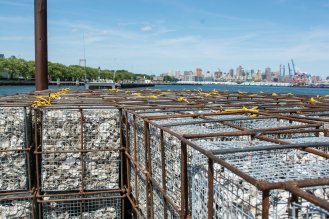
The shells are trucked over to Brooklyn’s Greenpoint neighborhood and once a month are brought en masse to Governors Island in the heart of the New York Harbor. Billion Oyster Project has collected more than 1 million pounds of oyster shells so far. Courtesy of Agata Poniatowski

Across New York City, more than 70 restaurants are tossing their oyster shells not into the trash or composting pile, but into the city’s eroded harbor. It’s all part of Billion Oyster Project’s restaurant shell-collection program.

The journey from trash to treasure begins after an oyster half shell is turned upside down and left on an icy tray. Once discarded, it joins hundreds of thousands of other half shells collected in blue bins and picked up (free of charge) from restaurants five days a week by Billion Oyster Project’s partner, The Lobster Place, a seafood supplier. The shells are trucked over to Brooklyn’s Greenpoint neighborhood and once a month are brought en masse to Governors Island in the heart of the New York Harbor, just yards away from both Brooklyn and Lower Manhattan. There, rolling shell hills sparkle in the sun while “curing” out in the elements for one year, a process that rids them of contaminants.

zadies_morganioneyeager-231_custom-8561dab3ee768ba35d5c28f16d698c2144cc7889-s1400-c85

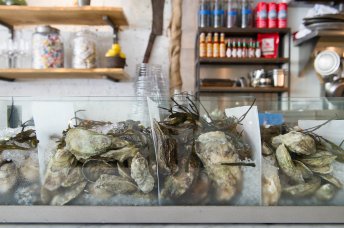
Oysters at Zadie’s Oyster Room, one of the New York City restaurants participating in Billion Oyster Project’s shell-collection program.
Courtesy of Morgan Ione Yeager

The shells then get a final cleaning and are moved to Billion Oyster Project’s hatchery at the Urban Assembly New York Harbor School, a public high school on Governors Island that offers technical and vocational training in the marine sciences. In an aquaculture classroom’s hatchery, student-grown oysters produce larvae in an artificially induced springtime environment. In one to two weeks, each larvae grows a “foot” — a little limb covered in a kind of natural glue — and then is moved to a tank full of the “cured” restaurant shells, which serve as anchors for all of those sticky feet. This phase is critical: If larvae can’t find a place to attach, they die. One reclaimed shell can house 10 to 20 new live oysters, depending on shell size. Continue reading
Trees, Cities & Happiness

merlin_144034221_4ee0b063-798b-4669-80dc-817bcbc10dfe-superJumbo.jpg

A tree in Riverfront Park competes for grandeur with Nashville’s iconic At&T building. Credit William DeShazer for The New York Times

PlantTreeCity.jpgI just learned of an urban tree-planting initiative on a day when the news shows purposeful indifference about climate change on the part of a powerful country’s elected leader, on the same day when the news also shows that an economist considered a pioneer of environmental economics is receiving a prestigious prize and what he said when he learned of his being awarded the prize:

“Once we start to try to reduce carbon emissions, we’ll be surprised that it wasn’t as hard as we anticipated. The danger with very alarming forecasts is that it will make people feel apathetic and hopeless.

“One problem today is that people think protecting the environment will be so costly and so hard that they want to ignore the problem and pretend it doesn’t exist. Humans are capable of amazing accomplishments if we set our minds to it.”

PlantTreesCity2Let’s decide together to do something, seems to be his message. I learned about this urban tree-planting initiative, news of a president’s abdication of responsibility, and this economist’s optimistic message on the same day I read about a 15-year old climate activist who has decided to do something where she sees her government failing to take action. She has decided at a very young age to do what she can regardless of the daunting odds. So thanks to Margaret Renkl a Nashville-based contributing opinion writer for The New York Times, for bringing this initiative to my attention, as a reminder to do something:

More Trees, Happier People

When cities grow, green space dies. Replanting it has been shown to lift the human spirit.

merlin_144034215_0e5eb0e9-e3ad-4046-b39b-a6189d715df7-superJumbo

A tale of two trees in Nashville. A mature tree in England Park, left, and a newly planted tree at Wright Middle School.

NASHVILLE — The scene in a tiny pocket park outside Plaza Mariachi here on Nolensville Pike last Wednesday was like a tableau from a Norman Rockwell painting, 21st-century style. Surrounded by signs advertising the Hispanic Family Foundation, Dubai Jewelry, the Dominican Barber Shop and restaurants offering Peruvian, Chinese, Mediterranean and Indian food — as well as a Game Stop franchise and H&R Block — was a small sign that read, “Today: Free trees.”

merlin_144034152_9a1c43d3-ccb7-42c0-bfd7-979917608536-superJumbo

Photographs by William DeShazer for The New York Times

The arrow on the sign pointed to a pop-up canopy where the Nashville Tree Foundation was hosting its fourth tree giveaway of October. A family standing under the canopy was posing for a photo with the sapling they had just adopted. Carolyn Sorenson, executive director of the foundation, was taking the picture: “Say ‘trees’!” she said.

The tree giveaway at Plaza Mariachi happened to fall on the very day that Nashville’s mayor, David Briley, announced a campaign to restore and enlarge the city’s tree canopy. The effort, called “Root Nashville,” will be overseen by the city and the Cumberland River Compact, an environmental nonprofit, and funded through a combination of public, corporate, foundation and private dollars. Together with several municipal departments and other nonprofit organizations, the initiative aims to plant 500,000 trees in Davidson County by 2050.

Many of these newly planted saplings will replace very large, very old trees that have been lost to Nashville’s meteoric growth — a population increase of more than 45 percent since 2000. As the city has grown, the city’s trees have fallen: deliberately felled by developers to make room for new construction or unintentionally killed as a side effect of nearby building. Just since 2008, the tree canopy in the urban core has dropped from 28 percent to 24 percent, a loss of roughly 9,000 trees a year. Continue reading

A Place And A Time For Learning To Read, And To Appreciate Books As Things

from-the-mixed-up-files-of-mrs-basil-e-frankweiler-9781416949756_hr.jpg

Just this moment, as I started today’s post, I learned I had missed a 50th birthday party. We tend to like round numbers, even if they do not mean much–why should the 50th be any more important than the 49th or 23rd? For whatever reason, a centenary or half-centenary, or bicentennial all seem to have a bigger ring. So, happy birthday to this book (last year) that I searched for after reading Susan Orlean’s essay on her personal history with libraries and books:

…My family was big on the library. We were very much a reading family, but we were more a borrow-a-book-from-the-library family than a bookshelves-full-of-books family. My parents valued books, but they had grown up in the Depression, aware of the quicksilver nature of money, and they had learned the hard way that you shouldn’t buy what you could borrow. Because of that frugality, or perhaps despite it, they also believed that you should read a book for the experience of reading it. You shouldn’t read it in order to have an object that had to be housed and looked after forever, a memento of the purpose for which it was obtained. The reading of the book was a journey. There was no need for souvenirs…

I have just recently finished unpacking from storage a lifetime’s worth of books–actually multiple lifetimes because in addition to my own family of four’s lifetimes there are also books from our parents’ and grandparents’ personal collections. And the essay got me thinking about whether I had a personal favorite book, and if so whether I have a “souvenir” of it.
I had taken a moment after emptying a box to leaf through this book that qualifies as a contender. I remember where I was when I purchased it, and where I first read it. But the essay I just read got me thinking about the importance of libraries to my own history with reading, so I focused my thought on the question what was my first favorite book. And the book above was that book, without question, in part because it was what got me to return to the library for more books. Not much more to say on that, but if you are a bibliophile or a libraryphile, if you consider librarians heroes, or any such thing, the essay may be for you.

Helping Coral Repopulate

lead_720_405 (3).jpg

Valérie Chamberland and Erik Houtepen look for signs of spawning in grooved brain coral colonies. EXPOSURE LABS

Thanks to Michelle Nijhuis, whose science writing we have been following since 2014 but up to now mostly in another magazine we source from; this is as fine as it comes:

b8f1093ff.jpg

EXPOSURE LABS

Valérie Chamberland swims like a dolphin, quickly and fluidly, and for most of the past hour she has been darting through the warm, shallow water off the Caribbean island of Curaçao. Now, she is dangling upside down, hovering above a pillow-sized brain coral. Her rubber fins twitch steadily overhead, and as she sips air from the aluminum tank on her back, a stream of bubbles rises from her regulator’s mouthpiece.

The reef spread below Chamberland isn’t one of those flashy, fluorescent gardens seen in calendar photos and nature documentaries. Only a few dozen yards from shore, it lies almost literally in the shadows of a stone jetty, a busy casino, and a Denny’s restaurant. The waters that surround it are murky, and most of its corals are brown and lumpy, sparsely accessorized with bright-purple vase sponges and waving, rusty-red sea fans. Continue reading