For The Love Of Baobab!

merlin_142358673_6ed9ddd5-d873-47cb-8191-7a0ab1b3f9b7-jumbo

Selbe Dione and her sister harvesting baobab leaves to cook with couscous in the countryside of western Senegal.CreditCreditTomas Munita for The New York Times

Thanks to Dionne Searcey for reminding me of the first time I encountered one of these trees, which happened to be in Senegal (so why have we not featured Senegal more in these pages?) and was the location for the first field course I taught for Cornell focused on sustainable development. For the love of baobab, so to speak, I am more sensitive than ever to the ravages of palm oil plantations:

Across Senegal, the Beloved Baobab Tree Is the ‘Pride of the Neighborhood’

Baobabs have endured for centuries as essential cultural symbols. But increasingly, they are threatened by climate change, urbanization and a growing population.

merlin_142358517_50b1c5e5-ca69-478d-92ae-9cc754930e3d-jumbo

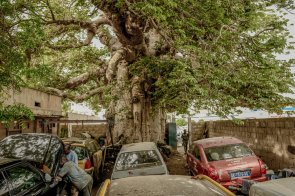
In Dakar, baobabs blend into the cityscape, like this one in the center of a taxi garage near a freeway on ramp. Credit Tomas Munita for The New York Times

DAKAR, Senegal — Wide, awkward baobab trees blend into the cityscape of Dakar, the busy capital of Senegal, almost without notice.

Drivers wash a fleet of taxis parked beneath one giant tree near a freeway on ramp. Rusting cars with open hoods are parked in a mechanic’s shop under the shade of another. A leathery trunk is a community billboard, with ads nailed to it for a plumber and an apartment for rent.

Aliou Ndour stood on a crowded corner, pulled out his phone and scrolled past the pictures of friends and family to another precious photo: the baobab in his home village.

merlin_142358277_052946e4-1f8f-4fe7-a85c-de8ec38cdb23-jumbo.jpg

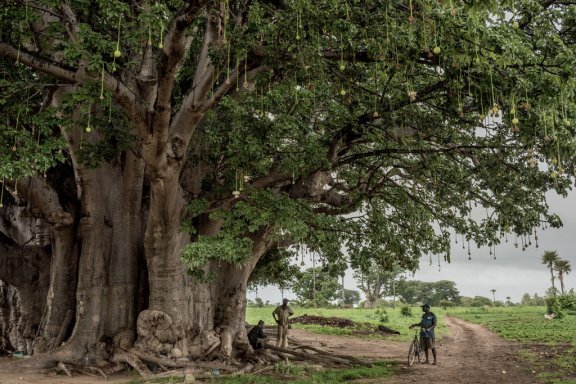
One of the largest baobab trees in Senegal is in the Fatick region, southwest of the capital. Credit Tomas Munita for The New York Times

Fat baobabs, some more than half a millennium old, have endured across Senegal, passed over for lumber largely because their wood is too brittle and spongy for use in furniture. Baobab leaves are mixed with couscous and eaten, the trees’ bark stripped to make rope, their fruit and seeds used for drinks and oils.

Something else has helped preserve these giants: They are beloved.

“This,” said Adama Dieme, craning his neck to look up at the spread of branches of the baobab on his block, “is the pride of the neighborhood.”

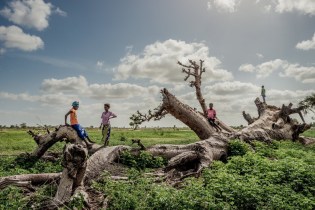
merlin_142358064_adba030f-b0fd-4d1f-bf7e-501cb141f23c-jumbo.jpg

Children playing over a fallen baobab in southwestern Senegal. Credit Tomas Munita for The New York Times

But baobabs, like many of the region’s trees, are in jeopardy, threatened by the same forces upending numerous facets of society — climate change, urbanization and population growth.

West Africa has lost much of the natural resources once tied so closely to its cultural identity. Poaching has stolen most of its wildlife; lions, giraffes and desert elephants are sorely endangered.

Huge swaths of forest are being razed to clear space for palm oil and cocoa plantations. Mangroves are being killed off by pollution. Even wispy acacias are hacked away for use in cooking fires to feed growing families. Continue reading
Nature Lovers Versus Nature Lovers Versus Reality

In just under half an hour, hear a very complex question answered (or not) from two very compelling, and very different perspectives:

Into the Woods with Scott Carrier

In Montana’s Yaak Valley, a hiking trail that cuts through a grizzly-bear habitat pits nature lover against nature lover in an unwinnable fight over the environment.

A Visual Requiem, And A Call For Quiet Grace At The Grand Canyon

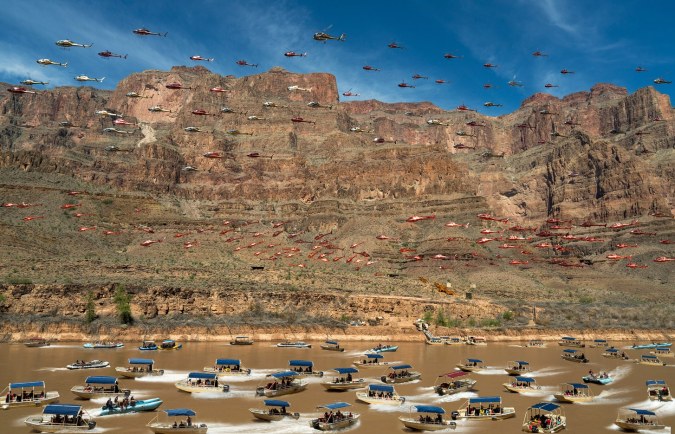
Paumgarten-Grandy-Canyon_01.jpg

In a merged image, the photographer Peter McBride captured a vision of the Grand Canyon choked by noise and exhaust. Photograph by Pete McBride

Noise pollution was the topic of several of the first posts on this platform when we started it in 2011, and has been a persistent theme ever since then. We especially appreciate those related to noise in wilderness areas, so thanks to Nick Paumgarten for this story:

The Grand Canyon Needs to Be Saved By Every Generation

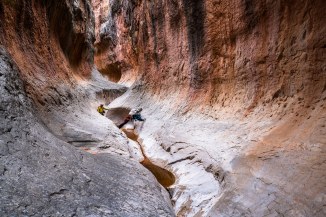
Paumgarten-Grandy-Canyon_03.jpg

Hiking in the Grand Canyon can be a perilous pursuit. Photograph by Pete McBride

Three years ago, in the course of thirteen months, the photographer Peter McBride and the writer Kevin Fedarko hiked from one end of the Grand Canyon to the other. They did it in eight sections, mainly so that McBride could shoot in different seasons. In all, it took them seventy-one days to cover two hundred and seventy-seven river miles and some eight hundred shoe-leather miles, through some of the continent’s roughest hiking terrain—“a whole lot of scratching around the rock puzzles in that giant abyss,” as McBride put it recently.

Before they set off, the Grand Canyon had been hiked nose to tail only nine times in recorded history. There is also a handful of obsessives who have chipped away at it, piece by piece, in the course of decades. “Maybe some crazy ancestral Puebloan did the whole thing, but that wouldn’t make logical sense—they wouldn’t have had any reason to,” McBride said.

Paumgarten-Grandy-Canyon_02.jpg

 panoramic view of the confluence of the Colorado and the Little Colorado. Photograph by Pete McBride

McBride, a native Coloradan who shoots for National Geographic, has been documenting the Colorado River for a decade, sometimes from a perch in an ultralight aircraft. Fedarko, who lives in Flagstaff, Arizona, has guided on the river and is the author of “The Emerald Mile,” an account (with many historical tributaries) of a harrowing speed run of the Grand in a dory during the biggest flood in generations. (As it happens, Kenton Grua, the boatman in the book, was also the first person to walk the canyon, in 1976.) McBride and Fedarko have both become persistent, ardent advocates for preserving the place, in all its spellbinding, inhospitable glory, in abidance with Teddy Roosevelt’s famous dictum, issued during his one visit, in 1903: “Leave it as it is. Man cannot improve on it; not a bit.” Still, this was the first time, and surely the last, that either of them had tried to walk it. Continue reading

Science Writing, A Genre That Keeps Improving, Is The Best Way To Explain A Conservation Paradox

1920 (2).jpg

Eric Nyquist

Two years of working in southern Chile taught me just enough about the complexity of this particular issue (among the many complex issues in our practice)to appreciate the article below by Emma Marris, who we already knew to be provocative, enough that she could challenge Bill McKibben two minutes into her TED talk, and does so convincingly. The primary reason I appreciate this article, is the same reason this platform has showcased the best of this genre of writers over the years. Scientists, translated into regular language we non-scientists can understand:

When Conservationists Kill Lots (and Lots) of Animals

Invasive species are sometimes trapped, poisoned, and shot in large numbers to save native species from extinction. Some scientists say the bloodshed isn’t worth it.

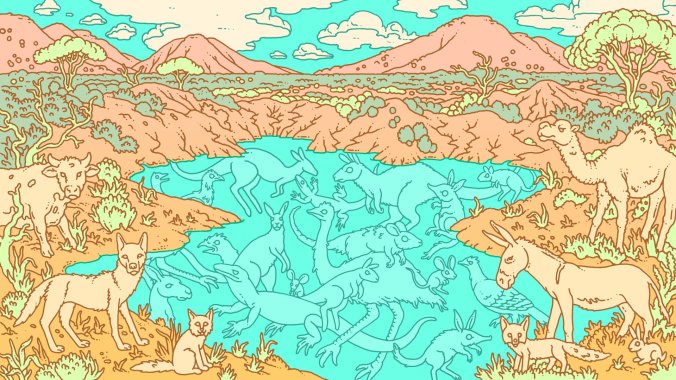
dcafc084c

Eric Nyquist

The desert of south-central Australia is crenellated with sandstone hills in shades of ivory, crimson, and apricot. The ground is littered with dead trees and tree limbs, big hunks of transparent mica, dried cow dung, and thousands of stone spearheads and blades made by the Aboriginal people who lived here for tens of thousands of years—and live here still. Around the few water holes are the doglike tracks of dingoes, wild canines that were brought to Australia thousands of years ago and are now the country’s top predators.

I have come to the Evelyn Downs ranch, on the famously remote highway between Adelaide and Alice Springs, to meet Arian Wallach, a conservationist who thinks there is too much killing in conservation. Wallach has come to this massive 888-square-mile ranch because it is one of the few places in Australia where people aren’t actively killing wild animals. Tough, outback Herefords share the landscape with kangaroos, wild horses, wild donkeys, camels, emus, cats, foxes, native rodents, dingoes, and very large antediluvian-looking reptiles called perenties. Of the animals on this list, dingoes, cats, foxes, horses, camels, and donkeys are all killed in large numbers throughout Australia—but not here. Wallach has convinced the owners to experiment with a more hands-off approach. Continue reading

Climate Change’s Other Casualties

Scotland.jpg

Some of the world’s oldest structures have survived for 5,000 years in the Orkney Islands. Kitchens. Forges. Round houses. Now they face dire threats from climate change.

The Most Important Infrastructure

New York Library Historic Rooms

People read in the Rose Main Reading Room of the New York Public Library MARK LENNIHAN / AP

This podcast featuring Eric Klinenberg resonated with many of our readers, and this article he wrote for the Atlantic may be the next best step in advance of reading his book:

Worry Less About Crumbling Roads, More About Crumbling Libraries

America’s social infrastructure is falling apart, and it’s hurting democracy.

Every four years, the American Society for Civil Engineers issues grades for the nation’s infrastructure. In the most recent evaluation, released in 2017, America’s overall infrastructure score was a D+, the same as in 2013. Although seven systems, including hazardous waste and levees, received modestly better grades than in the previous assessment, transit and solid waste, among others, did worse. Aviation (D), roads (D), drinking water (D), and energy (D+), retained their miserably low scores. Continue reading

Protecting Nature & Defying The Odds

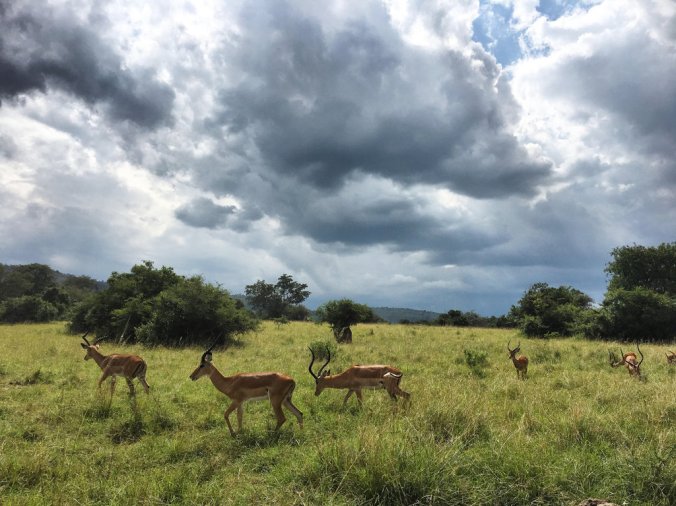
23akagera2-jumbo-v2.jpg

On a game drive in Akagera. Shannon Sims

Thanks to Shannon Sims for this story of a refuge defying the odds:

A Rwandan Game Park Defying the Odds

Despite modest tourism numbers, Akagera National Park is a success story in the making, particularly considering that, like its host country, it survived catastrophe.

23akagera-jumbo-v2

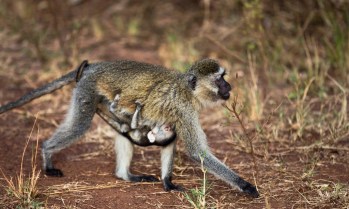
A velvet monkey and her baby in Akagera National Park. The Rwandan park is a success story, despite modest tourism numbers. Credit Ben Curtis/Associated Press

The road through Akagera National Park in eastern Rwanda was blocked. Two giraffes had positioned themselves smack in the middle of the dirt road and were rubbing their necks together. In the car, with a driver and a guide, my cell service was long gone; there was nothing to do but sit back, relax and enjoy the show.

Right around this time of year, to the east of Rwanda’s borders, in Tanzania and Kenya, big packs of tourists are stumbling over each other to get the perfect photo of a scene like this. They’re driving through protected areas like Serengeti National Park and the Maasai Mara National Reserve in caravans of Land Rovers, each packed so tightly that peoples’ binocular straps get tangled up. It makes sense: the animal migrations that occur in this part of the world these months are rightly considered by many to be the greatest natural show on earth. Continue reading

Be Aware, Big Boom & Beware

csm_TOC_Computer_Renderings_Profileview_2942c52c93.jpg

Thanks to Christina Caron for this story that raises important questions about an awesome-sounding technology. Best to first read from The Ocean Cleanup website, and if you have been following the stories we pay attention to you will understand how we might get hooked on the idea:

TOC_map-gyres-02

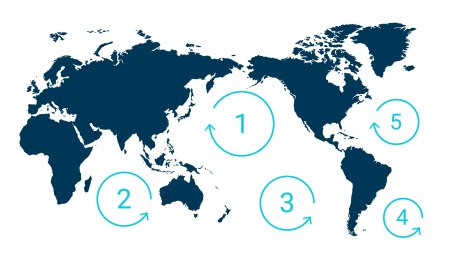
Ocean garbage patches are vast and dispersed

Ocean currents concentrate plastic in five areas in the world: the subtropical gyres, also known as the world’s “ocean garbage patches”. Once in these patches, the plastic will not go away by itself. The challenge of cleaning up the gyres is the plastic pollution spreads across millions of square kilometers and travels in all directions. Covering this area using vessels and nets would take thousands of years and cost billions of dollars to complete. How can we use these ocean currents to our advantage?

THE IMPACT OF CLEANUP

Concentration_microplasticsOur models indicate that a full-scale system roll-out could clean up 50% of the Great Pacific Garbage Patch in 5 years.
Research shows the majority of plastic by mass is currently in the larger debris. By removing the plastic while most of it is still large, we prevent it from breaking down into dangerous microplastics.

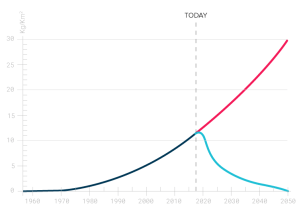
Combining the cleanup with source reduction on land paves the road towards a plastic free ocean by 2050.

The story in the New York Times raises important questions, not least of which is that Peter Thiel is involved:

merlin_143438058_1dbdff34-c291-498d-a8a9-572419767520-jumbo (1).jpg

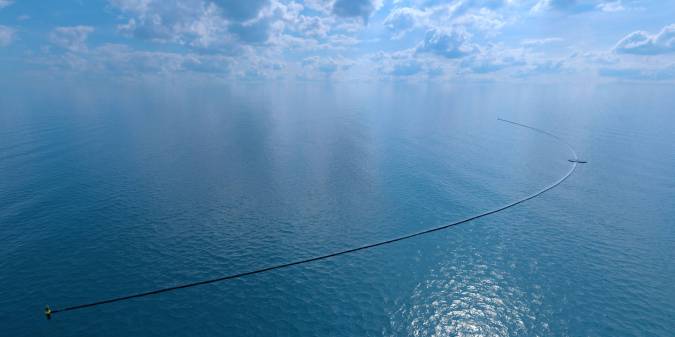
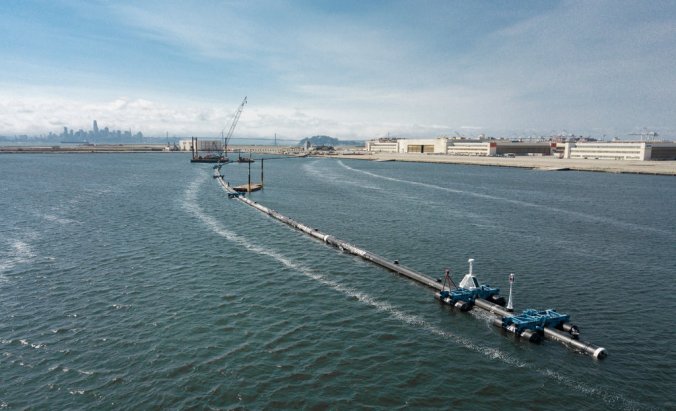
A 2,000-foot-long floating boom, designed by the Ocean Cleanup, a nonprofit, will be used to corral plastics littering the Pacific Ocean. Credit The Ocean Cleanup, via Associated Press

…But the ocean can be unpredictable, and simulation models are no guarantee of future performance.

“There’s worry that you can’t remove the plastic without removing marine life at the same time,” said George Leonard, chief scientist at the Ocean Conservancy. “We know from the fishing industry if you put any sort of structure in the open ocean, it acts as a fish-aggregating device.” Continue reading

One More Reason To Eliminate As Much Plastic As You Can From Your Daily Routines

14TB-SEATURTLES1-jumbo.jpg

A green sea turtle off the eastern coast of Australia. Researchers estimate that more than half of all sea turtles have ingested plastic debris. Credit Kathy Townsend

Thanks to Karen Weintraub for this stark reminder, one of countless examples, of why so many places, and some big companies and many individuals are doing their best to get plastic out of daily routines:

Just a Few Pieces of Plastic Can Kill Sea Turtles

A new study shows that especially for young turtles, ingesting just a little more than a dozen pieces of plastic in the ocean can be lethal.

14SCI-SEATURTLES2-jumbo.jpg

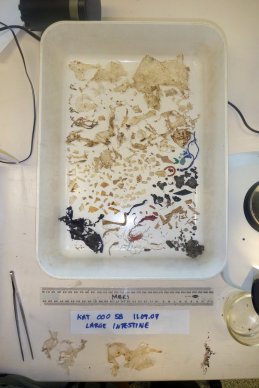
Plastics removed from the intestine of a sea turtle. The study found that half of juvenile turtles would be expected to die if they ingested 17 plastic items. Credit Kathy Townsend

All over the world, sea turtles are swallowing bits of plastic floating in the ocean, mistaking them for tasty jellyfish, or just unable to avoid the debris that surrounds them.

Now, a new study out of Australia is trying to catalog the damage.

While some sea turtles have been found to have swallowed hundreds of bits of plastic, just 14 pieces significantly increases their risk of death, according to the study, published Thursday in Scientific Reports.

Young sea turtles are most vulnerable, the study found, because they drift with currents where the floating debris also accumulate, and because they are less choosy than adults about what they will eat.

Worldwide, more than half of all sea turtles from all seven species have eaten plastic debris, estimated Britta Denise Hardesty, the paper’s senior author and a principal research scientist with the Commonwealth Scientific and Industrial Research Organization in Tasmania. “It doesn’t matter where you are, you will find plastic,” she said. Continue reading

Libraries As Palaces For The People

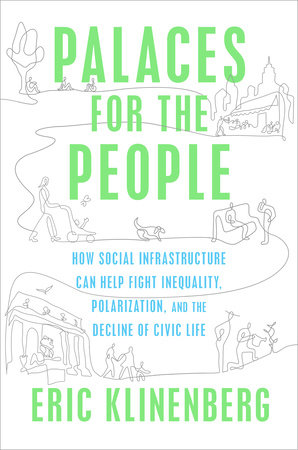
9781524761165We have had more stories in seven years about libraries, and librarians and books than most other topics, so we are pleased to pass along this reference to a book about libraries (among other essential elements of social infrastructure). In 20 minutes on this podcast the ideas in this book are discussed by the author:

Eric Klinenbergprofessor of sociology and director of the Institute for Public Knowledge at New York University and the author of Palaces for the People: How Social Infrastructure Can Help Fight Inequality, Polarization, and the Decline of Civic Life (Crown, 2018), argues that the future of democracy lies in shared spaces, like libraries and parks.

Behavioral Science & Green Innovation

5749.jpg

Green registration plates are already in use in China. Photograph: Roman Pilipey/EPA-EFE/Rex/Shutterstock

The UK, whatever other challenges it may be experiencing, is proving itself creatively committed to green innovation:

Green number plates ‘could boost sales of electric cars’ in UK

Behavioural insights unit proposes new colour for registration plates to help ‘normalise the idea of clean vehicles’

Superpods & Ocean Heroes

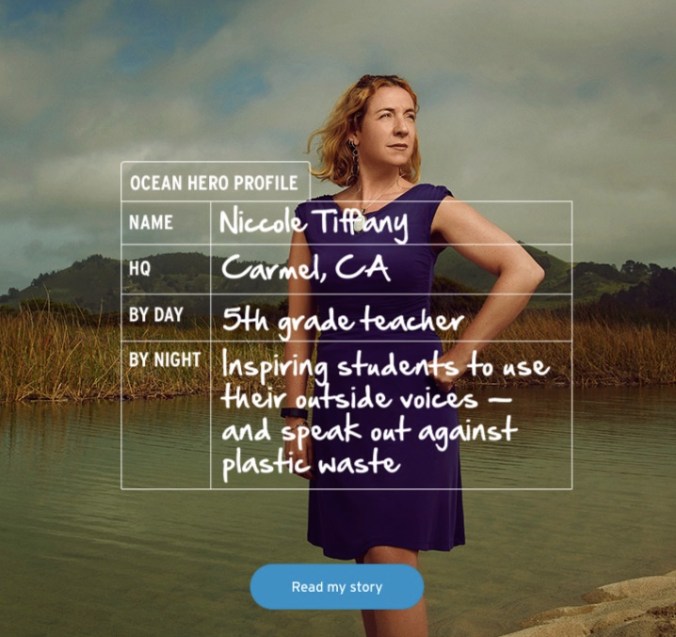
OHeroes.jpgThis National Public Radio (USA) story led us to the video above, and then the source website, where we discovered several initiatives that are worth a closer look:

Ocean action: In 2017, Carmel-by-the-Sea’s City Council voted to require that restaurants stop using single-use plastic straws and utensils and instead provide only compostable to-go serviceware—and only upon request. The law took effect in the spring of 2018. The impetus came from a group of fifth-grade students from Carmel River Elementary School. They spoke at community forums and Carmel City Council meetings to advance the idea. Mayor Steve Dallas later credited them with playing a pivotal role in getting the ordinance enacted. “When it finally passed, the students were ecstatic,” says teacher, Niccole Tiffany, of her students. “It was a big lesson on the power of kids’ voices in actively creating change.” (Read more of her story here)

OceanHero.jpg

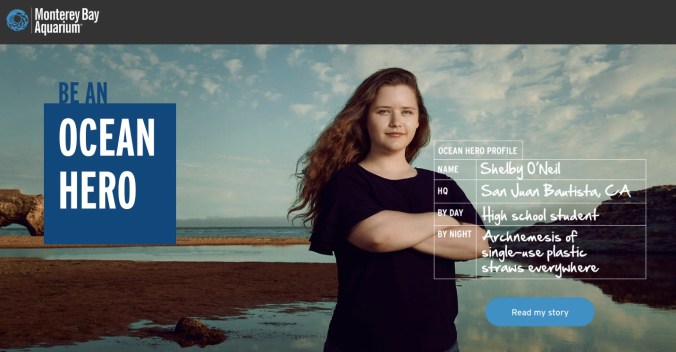
Thanks to the Monterey Bay Aquarium for programs that inspire local citizens, especially youth, to environmental activism like this:

Saving Our Seas One Sip at a Time with “No Straw November”

Ocean action: Shelby O’Neil, a high school student from San Juan Bautista, created a successful campaign called “No Straw November,” asking people to pledge not to use plastic straws for one month. She’s earned national exposure through the Martha Stewart Living magazine and the Leonardo DiCaprio Foundation. She convinced Alaska Airlines to ditch plastic straws and toothpicks on all its flights (a story picked up by Fortune magazine). Shelby was even flown to the headquarters of Delta Airlines to promote her campaign; spoke at Dreamforce, the annual user conference hosted by Salesforce.com in San Francisco; and won unanimous California Coastal Commission support for “No Straw November.” But she didn’t stop there. “For a Girl Scout Gold Award, I created a nonprofit called Jr Ocean Guardians,” says Shelby, “teaching younger schoolchildren the importance of the oceans and how they can help.” Continue reading

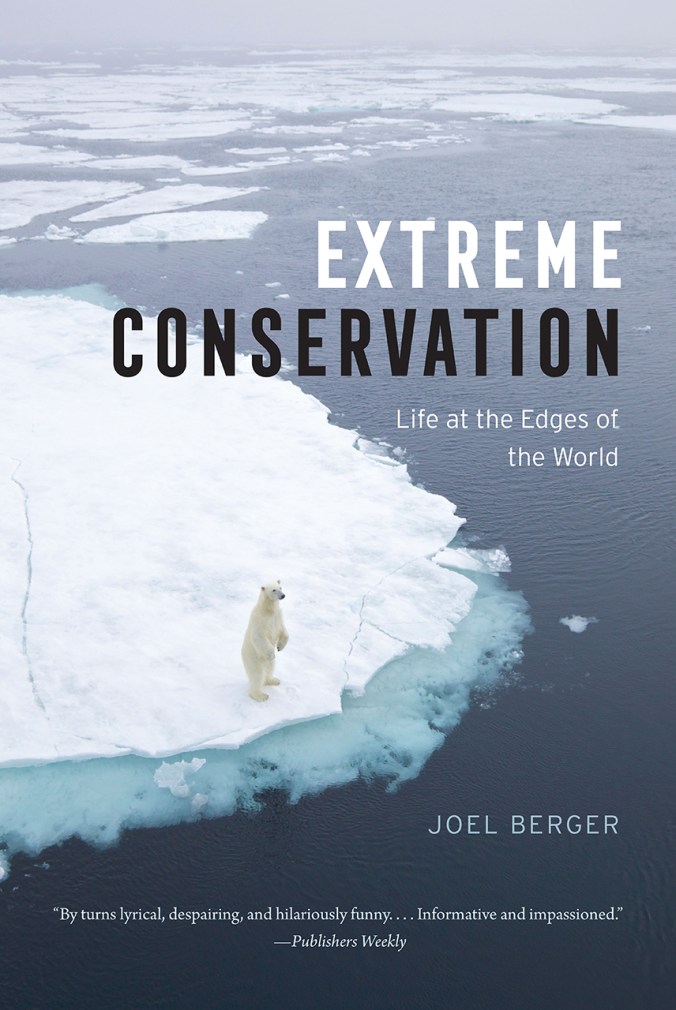
Author of Extreme Conservation, Interviewed

9780226366265.jpg

We recommend this interview in the Atlantic, with the author of the book above, a veteran conservationist reckoning with his career studying animals in the most extreme places on Earth:

In the winter of 2011, Joel Berger and his colleague Marci Johnson happened upon a ghostly Arctic death scene. Body parts and tufts of brown fur poked out of a frozen lagoon. This was all the biologists could find of a herd of 55 musk oxen they had been following.

The cause of mass mortality, they later determined, was an ice tsunami, the result of an unusual storm that slammed seawater and ice into the lagoon where the unfortunate musk oxen stood. Berger is a conservationist who works in some of the most hostile environments in the world, and he studies the enigmatic species, like musk oxen, that live there. His new book, Extreme Conservation, chronicles his career in Alaska, Siberia, Namibia, Tibet, Mongolia, and Bhutan. He is now a biologist at Colorado State University and a senior scientist at the Wildlife Conservation Society. Continue reading

Color Conservation

The hues in the Forbes Collection include the esoteric, the expensive, and the toxic. Photograph by Jason Fulford for The New Yorker

Color is such a constant in our lives that it seems odd to consider any need for it’s conservation. How it exists in nature, how we humans perceive it, and how we’ve use the technology of the time to preserve it, has been relevant for tens of thousands of years. The Forbes Collection archives in the Harvard University’s Fogg Art Museum highlights the work of it’s founder, Edward Waldo Forbes, for whom “pigment hunting and gathering was not just a matter of creating an archive of lost or languishing color. It was about the union of art and science.”

Treasures from the Color Archive

The historic pigments in the Forbes Collection include the esoteric, the expensive, and the toxic

How blue can it get? How deep can it be? Some years ago, at the Guggenheim Bilbao, I thought I’d hit on the ultimate blue, displayed on the gallery floor. Yves Klein, who died at thirty-four, was obsessed with purging color of any external associations. Gestural abstraction, he felt, was clotted with sentimental extraneousness. But, in search of chromatic purity, Klein realized that even the purest pigments’ intensity dulled when combined with a binder such as oil, egg, or acrylic. In 1960, he commissioned a synthetic binder that would resist the absorption of light waves, delivering maximum reflectiveness. Until that day in Bilbao, I’d thought Klein a bit of a monomaniacal bore, but Klein International Blue, as he named the pigment—rolled out flat or pimpled, with saturated sponges embedded in the paint surface—turned my eyeballs inside out, rods and cones jiving with joy. This is it, I thought. It can’t get any bluer.

Until YInMn came along: the fortuitous product of an experiment in the materials chemistry lab at Oregon State University in 2009. Intending to discover something useful for the electronics industry, Mas Subramanian and his team heated together oxides of manganese, yttrium, and indium at two thousand degrees Fahrenheit. What emerged was a new inorganic pigment, one that absorbed red and green light waves, leaving as reflected light the bluest blue to date. Subramanian sent a sample to the Forbes Collection in the Straus Center for Conservation and Technical Studies, at Harvard University, where it sits with twenty-five hundred other specimens that document the history of our craving for color.

Among the other blues on the Forbes’s shelves is Egyptian Blue, a modern approximation of the first synthetic pigment, engineered five millennia ago, probably from the rare mineral cuprorivaite, a soft mid-blue used for the decoration of royal tomb sculpture and the wall paintings of temples. Later, blues strong enough to render sea and sky were made from weathered copper-carbonate azurite—crystalline bright but sometimes darkening in an oil binder. In 1271, Marco Polo saw lapis lazuli quarried from a mountain at Badakhshan, in what is now Afghanistan. Laboriously prepared by removing impure specks of glinting iron pyrite, it became ultramarine—as expensive, ounce for ounce, as gold, and so precious that it was initially reserved for depictions of the costume of the Virgin. In addition to these, the Forbes Collection has a poor man’s blue—smalt made from crushed cobalt containing potassium glass, which weakens, eventually, to a thin greeny-brown gray.

The Forbes Collection owes its existence to a belief in the interdependence of art and science, but it is also an exhaustive archive of cultural passion. A display features Vantablack, which absorbs 99.96 per cent of light, and has to be grown on surfaces as a crop of microscopic nanorods. In 2016, the sculptor Anish Kapoor saw the pigment’s potential for collapsing light, turning any surface into what appears to be a fathomless black hole, and he acquired the exclusive rights to it. An outcry from artists, who objected to the copyright, prompted the Massachusetts manufacturer NanoLab to release Singularity Black, created as part of the company’s ongoing research with nasa, to the public, and the artist Stuart Semple to make the World’s Pinkest Pink available to any online buyer willing to declare himself “not Anish Kapoor.” But Kapoor obtained a sample of the pink pigment, and used it to coat his middle digit, which he photographed and posted online for Semple.

Narayan Khandekar, the head of the Straus Center for Conservation and Technical Studies, takes pleasure in such skirmishes, secure in the knowledge that he presides over something weightier: a priceless resource for understanding how works of art are made, and how they should be preserved. The Department of Conservation and Technical Research was founded, in 1928, by Edward Waldo Forbes, the director of Harvard’s Fogg Museum from 1909 to 1944. Today, the Forbes’s vast library of color and its technical laboratories are housed in the museum’s steel-and-filtered-glass rebuild, designed by Renzo Piano. Rows of pigments in tubes, jars, and bowls are visible through the doors of floor-to-ceiling cabinets. Khandekar had the winning idea of displaying them as if unspooled from a color wheel: reds at one end, blues at the other. There are the products of nineteenth-century chemical innovation—viridian green, cadmium orange, and the chrome yellow with which van Gogh was infatuated but which, over time, has begun to darken his sunflowers. But at the heart of the Forbes Collection are the natural pigments that were the staples of painters’ inventories before chemically synthesized paints replaced the impossibly esoteric, the dangerously toxic, the prohibitively expensive, and the perilously fugitive. Continue reading

Plastics Conservation Science

Dr. Odile Madden, of the Getty Conservation Institute in Los Angeles, holding a piece of degrading plastic for use in trying out new methods of preservation. Credit Melissa Lyttle for The New York Times

The irony of the need to conserve aging national treasures or works of art configured from plastics and other petroleum-based materials in the time of the “Pacific Vortex” and other plastic-created environmental disasters is difficult to miss. It never would have occurred to any of us that a field called “Plastics Conservation Science” has any need to exist.

And yet, it does…

These Cultural Treasures Are Made of Plastic. Now They’re Falling Apart.

Museum conservators are racing to figure out how to preserve modern artworks and historical objects that are disintegrating.

The custodians of Neil Armstrong’s spacesuit at the National Air and Space Museum saw it coming. A marvel of human engineering, the suit is made of 21 layers of various plastics: nylon, neoprene, Mylar, Dacron, Kapton and Teflon.

The rubbery neoprene layer would pose the biggest problem. Although invisible, buried deep between the other layers, the suit’s caretakers knew the neoprene would harden and become brittle with age, eventually making the suit stiff as a board. In January 2006, the Armstrong suit, a national treasure, was taken off display and stored to slow the degradation.

Of an estimated 8,300 million metric tons of plastic produced to date, roughly 60 percent is floating in the oceans or stuffed in landfills. Most of us want that plastic to disappear. But in museums, where objects are meant to last forever, plastics are failing the test of time.

“It breaks your heart,” said Malcolm Collum, chief conservator at the museum. The Armstrong suit’s deterioration was arrested in time. But in other spacesuits that are pieces of astronautical history, the neoprene became so brittle that it shattered into little pieces inside the layers, their rattling a brutal reminder of material failure.

Art is not spared either, as Georgina Rayner, a conservation scientist at Harvard Art Museums, showed at the American Chemical Society’s national meeting in Boston this month.

Claes Oldenburg’s “False Food Selection,” a wooden box containing plastic models of foods like eggs and bacon, a banana and an oatmeal cookie, now appears to be rotting. The egg whites are yellowing, while the banana has completely deflated.

In museums, the problem is becoming more apparent, Dr. Rayner said in an interview: “Plastics are reaching the end of their lifetimes kind of now.”

Of all materials, plastics are proving to be one of the most challenging for conservators. “I find plastics very frustrating,” said Mr. Collum. Because of the material’s unpredictability and the huge variation in forms of deterioration, he said, “it’s just a completely different world.”

Continue reading

Option Bee

21sci-bees-illo-superjumbo

Heidi Younger

The Blue Orchard Bee recently came to our attention thanks to Natalie Boyle. However, it seems the species has some competition as potential saviors of the farming industry.  This article by Catherine M. Allchin,  Honeybees Are Hurting. What Else Can Pollinate Our Food?, illustrates how…

…The dominant pollinator is under siege, straining the business of farming. Now growers are turning to alternative species to help their crops.

Jim Freese grows apples, pears and cherries on 45 acres in the north-central part of this state, on sagebrush-studded land his grandfather bought in 1910.

Walking among trees laden with shiny red cherries, Mr. Freese recalled that four years ago his trees were not producing well and his farm was financially struggling. Like many growers, he had been relying on rented honeybees to pollinate his cherry trees every spring, along with wild bees and other insects.

But that year, spring was expected to be cool. “Honeybees will just sit in the hive in cooler weather,” Mr. Freese said. He needed a way to ensure more flowers would develop into fruit than in the past.

At a horticulture meeting, he learned that blue orchard bees — a native species that doesn’t make honey or live in hives — could be used to supplement honeybee pollination. Blue orchard bees will fly at cooler temperatures.

Mr. Freese bought 12,000 cocoons and set them in his orchard to emerge when the trees bloomed. His investment paid off. “We doubled our cherry production from any previous record year,” he said.

His wife, Sandee Freese, said: “The little bees have been a godsend.”…
Continue reading

Local Knowledge Aids Scientific Understanding

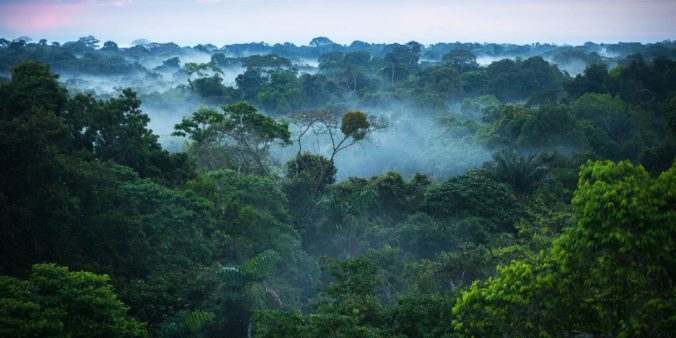
Brazilian_amazon_rainforest_web

WIKIMEDIA COMMONS

In a perfect dovetail with yesterday’s nod to one science writer, today we nod to the contributions of ancestral ways in helping scientists better understand the life cycles of forests. Thanks to Richard Schiffman for this interview:

Lessons Learned from Centuries of Indigenous Forest Management

CMPeters_web.jpgIn an interview with Yale Environment 360, botanist Charles M. Peters discusses how, in an era of runaway destruction of tropical forests, the centuries-old ecological understanding of indigenous woodland residents can help point the way to the restoration of damaged rainforests.

Over centuries, even millennia, indigenous communities have developed interdependent systems of agriculture and forestry that are uniquely suited to the ecological requirements of the land they inhabit. Yet even today, says Charles M. Peters, the Curator of Botany at the New York Botanical Gardens, that skill and knowledge often remain unacknowledged, with some government officials and conservationists arguing that indigenous communities should sometimes be excluded from protected lands that are part of their historical territory.

Field-crews.002_web

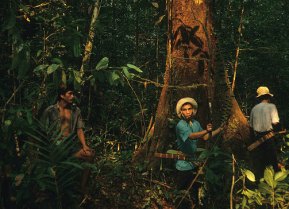
Members of the Kenyah Dayak indigenous group conducting forest surveys in Western Borneo in the early 1990s. CHARLES PETERS

In an interview with Yale Environment 360, Peters — author of the recently published bookManaging the Wild: Stories of People and Plants and Tropical Forests — discusses what he has learned from 35 years of working with indigenous forest communities; explains how indigenous farming, even slash-and-burn agriculture, can actually improve forest health; and reflects on the need to enlist indigenous groups as allies in the struggle to preserve and restore tropical forests. Continue reading

Bee Awesome

19mag-bees-slide-5XCH-jumbo

Will Nissen’s bees north of Bakersfield, Calif. Credit Ilona Szwarc for The New York Times

Thanks to Jaime Lowe for this:

Waterways, Persons & Rights

BakerRiver_Chile_Louis-Vest-Flickr_web.jpg

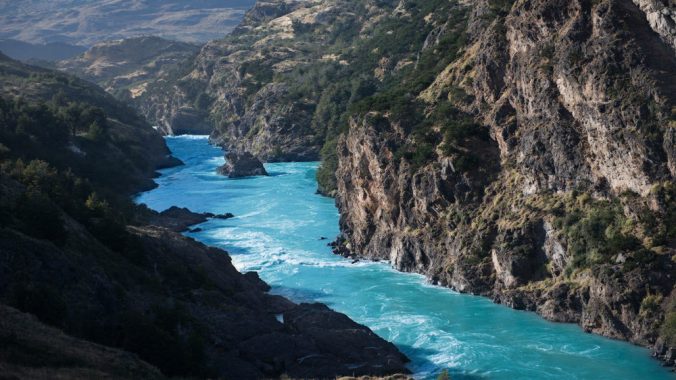
The free-flowing Baker River in Chile’s Patagonia region. Permits for a major hydroelectric project on the waterway were revoked in 2014 amid protests. LOUIS VEST/FLICKR

Dams in Patagonia are the gift that keep on giving, in terms of awakening activism and forcing raised awareness of the value of waterways. I first mentioned my experience in Chile here. I came back to the idea a few more times. Thanks to Jens Benohr and Patrick Lynch for this reminder, and for letting us all know where this seems headed from a legal point of view:

Should Rivers Have Rights? A Growing Movement Says It’s About Time

Inspired by indigenous views of nature, a movement to grant a form of legal “personhood” to rivers is gaining some ground — a key step, advocates say, in reversing centuries of damage inflicted upon the world’s waterways.

San-Pedro-Dam_Carlos-Lastra_web.jpg

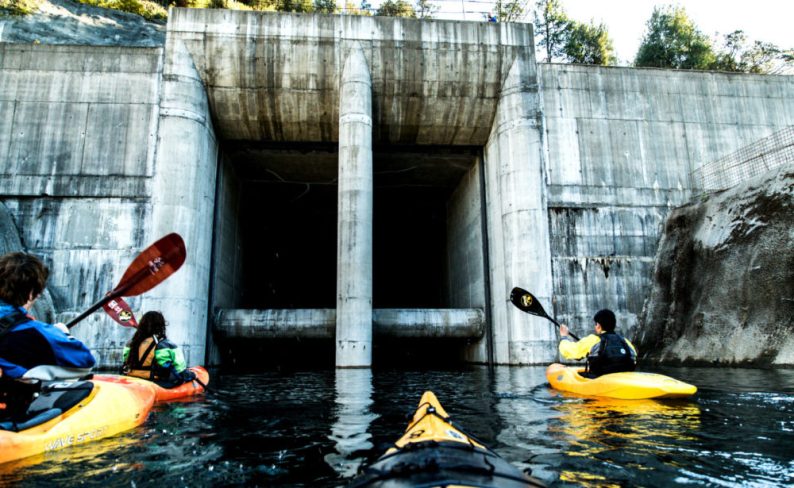
A Chilean energy company is seeking permits to restart the building of an unfinished dam along the San Pedro River. CARLOS LASTRA

Chile is a land of rivers. Along its narrow 3,000-mile length, thousands of rivers and wetlands bring freshwater and nutrients down from the Andes Mountains to the Pacific Ocean. Together, these river systems drain 101 major watersheds that support both terrestrial and marine ecosystems, ranging from arid lands in the north to blue whale nurseries off of Patagonia in the south.

Chile’s second-longest river, the 240-mile Biobío, once tumbled fast and wild through deep gorges and spectacular scenery on its way from the Andes to the sea. The Biobío was one of the world’s great whitewater rafting venues — until the 1990s, when the first of three large hydroelectric dams was built across the river. Over the past two decades, the Biobío dams have flooded more than 13,000 acres, displaced hundreds of families of the indigenous Mapuche people, turned long stretches of this once-unruly river into placid reservoirs, and caused abrupt fluctuations in water levels that have wrecked nesting habitat for native birds and disrupted the river’s natural rhythms. Continue reading

The Value Of Pollinating Bees

We love all creatures great and small, even (we try as best we can) the pesky ones. It is not because we are generous, though we hope we are. It is because we see their value. For hopefully obvious reasons, pollinators are our favorite bees. Our lives depend on them. That is why we have featured dozens of stories about them. Thanks to National Public Radio (USA) for this one:

Watch This Native Pollinator Build Her Bee-Jeweled Nest

dl_514blueorchardbees_bee_on_phacelia_tanacetifolia_wide-026b809eb16b094939e36911aa87b02aad62ddca-s1400-c85

A female blue orchard bee forages for nectar and pollen on Phacelia tanacetifolia flowers, also known as blue or purple tansy. Blue orchard bees are solitary bees that help pollinate California’s almond orchards. Josh Cassidy/KQED

While honeybees and their buzzing hives and hyper-fertile queens get all the press for pollinating our food supply, the hard-working blue orchard bee is one of 4,000 bee species native to North America that does its solitary work in relative obscurity. That is, until now.

In the video, you can see how this bee builds its nests, alternating mud and a purple nectar-pollen mixture in hollow, skinny spaces. The blue orchard bees are preparing a purple lunch box of sorts for their offspring so they have food to eat in the tunnel. The blue orchard bees’ work looks more like jewelry or even scoops of trendy ube ice cream than a nest. Continue reading