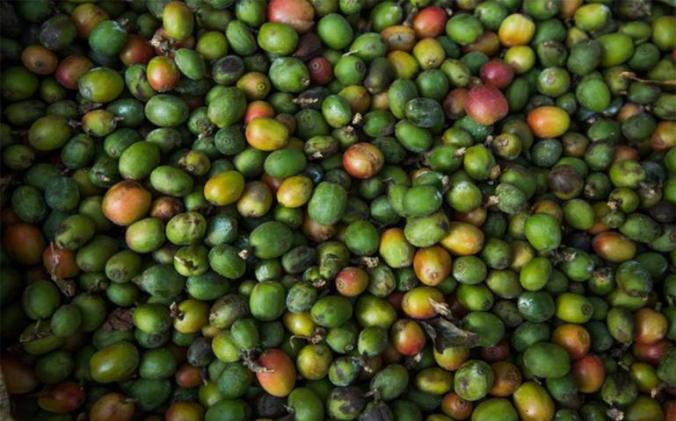
Nonetheless, Arabica

SIERRA Coffee Biodiversity WB

PHOTO COURTESY OF PRAKASH MATADA

I have spent most of the last year expanding my coffee knowledge. One thing I was already confident about, and remain so, is that arabica is better than robusta on two scales that matter most to me: taste, and environmental impact. From 2010-2017 during our residency in the Western Ghats, we developed and opened a series of properties where both taste and environmental impact were brand signatures formed in Costa Rica.
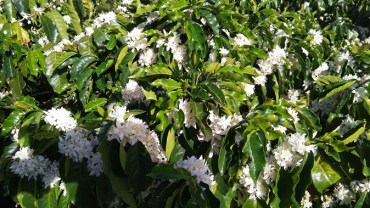
image002

 Instituto del Café de Costa Rica

With regard to coffee, I knew there was more than one good reason why Costa Rica only permits arabica coffee to be grown in the country. And we sourced the highest grade arabica coffee produced in the Western Ghats as much as we could.

17TB-COFFEE6-superJumbo

A Malabar pied hornbill, one of 204 species of bird found on coffee plantations in a new study, which found that the tree cover from shade-grown coffee farms provides a welcome habitat for all kinds of animal species. Credit Shashank Dalvi

I took to India a conviction that robusta coffee was to be avoided, but a few months ago started learning otherwise. Today I have read an article that reminds me to keep rethinking.

Thanks to Jason Daley in Sierra magazine for this look at the same scientific findings as those I first read in February in the New York Times,  (as I drink an organic arabica that I am sampling from a roaster in Atlanta, and even with this news about robusta I expect to remain committed to arabica for my own consumption, as well as our commercial purposes):

Which Coffee Is Better for Biodiversity?

A new study shows sun-loving robusta coffee doesn’t have to hurt biodiversity

SIERRA Coffee Biodiversity 2 WB

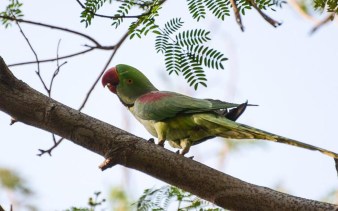
Alexandrine parakeet | Photo courtesy of Manish Kumarhoto

When coffee consumers think about the most sustainable way to manage their caffeine habit, they normally think about the cup it’s in—is it recyclable? But what about the coffee itself? Some coffee plantations require clear-cutting—will drinking one type of coffee have a bigger impact on the environment than another? Continue reading

Zero-Waste Shopping

180509-zero-waste-shopping-hetu-london

Bulk food bins at Hetu, an all-bulk / zero-waste grocery store in London. (Photo credit: Celia Ristow)

Thanks to Cathy Erway and colleagues at Civil Eats for this story on where and how the boundaries of shopping waste-reduction is being pushed:

Zero-Waste Stores Ask Shoppers to Bring Their Own Everything

As record amounts of plastic waste pollutes the planet, some grocers are helping shoppers do without.

180509-zero-waste-shopping-ekoplaza-plastic-free-aisle-credit-Ewout-Huibers.jpg

Ekoplaza’s plastic-free aisle. (Photo credit: Ewout Huibers)

Tom and Katrin Helmick live in New York’s Hudson Valley region with their 2-year-old son. They cook and grow vegetables in their backyard during the summer months, bring reusable totes to the grocery store or farmers’ market, and never buy plastic bottled water. Although they try to avoid buying foods that come in non-recyclable packaging, their landfill waste bin still receives a hearty diet of disposable baby food pouches and “lots of thin plastic,” says Tom.

“When we do buy grocery store meat, I hate that it still comes wrapped in Styrofoam. That’s why I love going directly to the source for our meat from a farm nearby that is simply vacuumed-packed,” says Tom. “We find it ridiculous that three people can create so much waste,” adds Katrin. Continue reading

Invasive Species, Eradication Efforts, Success Story

sght-monitoring-credit--oli-prince-230-2859dbe05902ffba6a40bf580c0c137db5803219-s1400-c85

Jane Tansell, one of the two handlers responsible for the rodent detection dogs, looks on from the background as a seal stares down the camera on South Georgia Island earlier this year.
Oliver Prince/Courtesy of South Georgia Heritage Trust

These three pairs of words in the post title, placed together in this order in a search engine, produce some interesting results from around the world. And today we find one more to add to the database. Thanks to National Public Radio (USA)’s Colin Dwyer for sharing this story:

south-georgia-pipit_credit-ingo-arndt_custom-2b8f235f1d7d80e43a778471718118bae53dd8d4-s1400-c85.jpg

The South Georgia pipit, seen posing for a glamour shot earlier this year, had been among the species hardest hit by the island’s invasive rodents.
Ingo Arndt/Courtesy of South Georgia Heritage Trust

There are no other birds quite like them in the world. The South Georgia pipit and pintail are so distinctive in the grand pantheon of ornithology, in fact, they draw their names from the one place they’ve made their home: South Georgia Island, sitting lonely in the forbidding South Atlantic not far from Antarctica.

Yet even in such a remote location, surrounded by penguins, fur seals and seemingly endless ocean, the birds have long been besieged by tiny alien invaders: rodents. Since the first European ships arrived in the late 18th century bearing rodents as stowaways, the voracious predators have devastated the South Georgia birds — which, with no trees to nest in, must make their vulnerable homes on the ground or in burrows.

Now, after more than two centuries, those invaders have been rebuffed. Continue reading

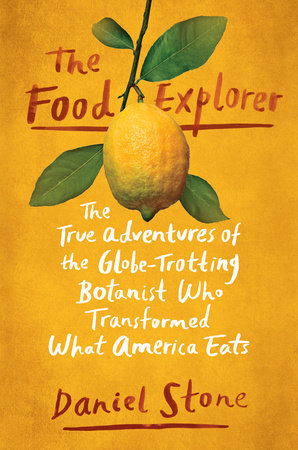
The Food Explorer, Explored

GastroTaking a cue from yesterday’s post, another recent Gastropod can be combined with a review in the New York Times of a book that fits well in our pages:

You’ve probably never heard of David Fairchild. But if you’ve savored kale, mango, peaches, dates, grapes, a Meyer lemon, or a glass of craft beer lately, you’ve tasted the fruits of his globe-trotting travels in search of the world’s best crops—and his struggles to get them back home to the United States.

This episode, we talk to Daniel Stone, author of The Food Explorer, a new book all about Fairchild’s adventures. Listen in now for tales of pirates and biopiracy, eccentric patrons and painful betrayals, as well as the successes and failures that shaped not only the way we eat, but America’s place in the world.

9781101990582Daniel Stone, an author I had not known of 24 hours ago, fits well within our pages as part of a mix of historical sleuthing and present-day food activism that have been central themes here since we started.  Thanks to his book being the subject of that podcast, as well as its review last month, allow us to recommend that if you have an hour for the both, combine the listen with the read:

In a photograph dated Christmas 1896, featured in “The Food Explorer,” Daniel Stone’s biography of the botanist and explorer David Fairchild, his subject is sitting with his patron and friend Barbour Lathrop, in what looks like an empty saloon or a lounge on a steamship. The caption informs us that they’re off the coast of Sumatra; both are dressed in white and have mustaches that border on the extravagant.

Continue reading

Fishes, Fishing & Fishermen, Reviewed

Untitled-1

Book covers left to right: Fishes in the Fresh Waters of Florida, Fly Fishing for Redeye Bass, and Born to Fish

Thanks to Mathew L. Miller for an honest take on these three books:

Review: Fishing and Conservation

The mayflies are hatching, river levels are dropping and the evenings are getting longer. It’s the most wonderful time of year for those of us in North America who love to fish.

And if you can’t be out fishing? Well, you can always read a fish book. Here are three great new reads: a biography of an obsessed angler turned conservationist, a how-to book about overlooked species that need some attention, and an invaluable reference guide.

I have no interest in competitive fishing, and even less in books by and about celebrity anglers. I find most of them to be self-congratulatory and poorly written. So I’d normally have little inclination to read a book about a record-breaking striped bass angler, one who gained fame by appearing on the show Shark Tank.  Such a book would also appear to be a poor fit for a conservation blog. Continue reading

Commerce, Conscience & Conservation

06Patagonia1-jumbo

Yvon Chouinard, the founder of Patagonia, with its chief executive, Rose Marcario, in the tin shed where he once forged and hammered metal. The outdoor-clothing company has mixed commerce and activism since the early 1970s. Credit Laure Joliet for The New York Times

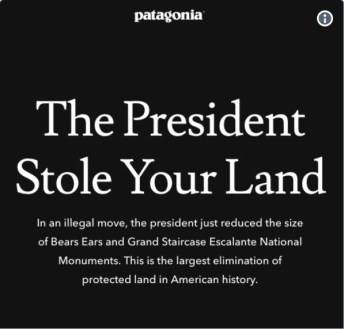
Since the early days of this platform we have linked to stories about this company many times, and its founder in particular is in our pantheon of role models. During these seven years we have also studiously avoided linking to stories involving politics, other than highlighting activism that holds public officials accountable. This story below borders on  too much politics, but I find the company’s position not only acceptable, but as usual about this company, aspirational. Thanks to David Gelles for this story about how Patagonia has supported grass-roots environmental activists for decades and how it is suing the president in a bid to protect Bears Ears National Monument:

merlin_136030764_da829491-ce0c-4974-a0f9-b170acc558c4-superJumbo

Patagonia employees at the Ventura, Calif., headquarters, where there are picnic tables in the parking lot, on-site day care and easy access to the beach.CreditLaure Joliet for The New York Times

VENTURA, Calif. — The offices of Patagonia occupy a low-slung complex of stucco buildings in this sleepy beachside town in Southern California. There are solar panels and picnic tables in the parking lot, day care with a jungle gym by the main lobby and easy access to the beach, where employees surf during lunch break. It is a corporate Eden of sorts, where idealistic Californians run a privately held company that sells about $1 billion of puffy down jackets and organic cotton jeans each year.

Screen Shot 2018-05-05 at 7.06.08 AMBut on an unseasonably hot and windy Monday morning in early December, Patagonia headquarters were transformed into something that quickly resembled a war room. There were emergency conference calls with Washington lawyers. Court filings were prepared. Web designers remade the company’s home page.

It wasn’t a business crisis that had mobilized the company, however. It was politics. Continue reading

Humpback Comeback, Brink To Boom

merlin_137560146_04720b59-267d-4943-82e7-2da5e9f11e4d-master768

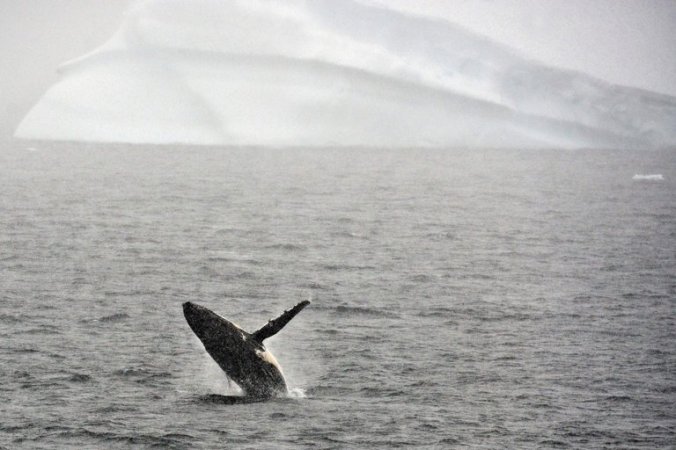
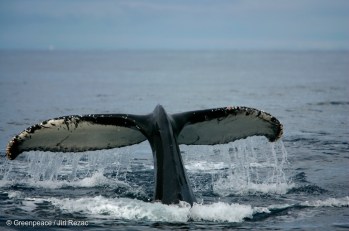
Humpback whales in the southern oceans around Antarctica appear to be breeding successfully, recovering their population. Credit Eitan Abramovich/Agence France-Presse — Getty Images

Ford does what it thinks to be in the best interest of its shareholders, and other companies follow suit as they sense the opportunity to do so, reducing their environmental responsibilities. Meanwhile and nonetheless, thanks to the work of organizations like WWF and Greenpeace, we have the opportunity to witness, if from afar, the rebirth of a population that signals some intact corners of the earth’s environment:

Humpback Whale Baby Boom Near Antarctica

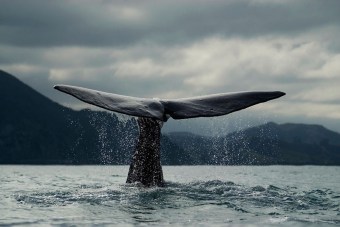
Blue whale, New Zealand

© naturepl.com/Mark Brownlow/WWF

In a rare piece of good news for whales, humpbacks who live and breed in the southern oceans near Antarctica appear to be making a comeback, with females in recent years having a high pregnancy rate and giving birth to more calves.

Humpback whales were nearly hunted out of existence in the late 19th and most of the 20th centuries until treaties were signed to stop killing them and protections were put in place for the world’s coldest, least accessible continent.

Humpback Whales in the Southern OceanThe end of hunting has fostered the recovery of the school-bus-sized animals whose life spans are roughly comparable to ours, according to Ari Friedlaender, an associate researcher at the University of California Santa Cruz, who led the new study.

The population was believed to have been reduced to less than 10 percent of it pre-whaling levels. Continue reading

Polar Bears, Hudson Bay & Informed Opinion

Polar.jpg

Polar bears haunt the landscape around the remote town of Churchill in northern Manitoba.Published On Credit Image by Ian Kerr

Thanks to Ian Kerr, a filmmaker who has spent years documenting polar bears in Churchill, Manitoba and shared this op-ed in the New York Times:

Polar Bears of Hudson Bay

Polar bears sleep a lot. That sight can leave an observer feeling disappointed, even insulted — it’s like watching a superhero clean his nails while you’re wishing he’d fly or pick up a car.

Keep watching, though, and you begin to notice interesting things about the sleeping bear’s world: the hard, cold snow blown across ice or the sun turning into a vertical streak through sheets of sleet; the odd, sticky sensation of frost slowly growing over your beard. Continue reading

Two Op-Eds Arguing The Same Powerful Case In Two Different Ways

23Englander-superJumbo.jpgNathan Englander came to my attention nearly six years ago. A novelist who lives in Brooklyn, he got me thinking about story-telling in a way that was very important to me, two years into our residency in India. He did something important for me again this last week, focusing my attention on an act I would normally ignore. But his point resonated with me because of the subject’s connection to the state of nature. So I thought about how to link to his op-ed in a manner consistent with our objectives on this site.

22conniff-superJumbo.jpg

Credit Lan Truong

Four years ago Richard Conniff, who writes about wildlife and human and animal behavior, started a long series of regular appearances in our pages. The day after Nathan Englander published the op-ed I mentioned above, Richard Conniff published an op-ed referencing the same act, a day in advance of Earth Day. And it is powerful. So I knew how to proceed, and with this excerpt you may be inclined to read both op-eds in full:

I was thinking about Mr. Buckel and about despair a few nights later, over a drink with Joe Walston of the Wildlife Conservation Society. As director of that organization’s worldwide field conservation work, Mr. Walston routinely comes face-to-face with the dark forces of human overpopulation, mass extinction of species, climate change and pollution. But he is also the co-author of a paper being published this week in the journal BioScience that begins with the uplifting words of Winston Churchill to the British nation in June 1940, under the shadow of the Nazi conquest of France: “In casting up this dread balance sheet and contemplating our dangers with a disillusioned eye,” Churchill declared, “I see great reason for intense vigilance and exertion, but none whatever for panic or despair.” Continue reading

Global Problems, Forests & Solutions

19lovejoy-reid-jumbo.jpg

Thomas E. Lovejoy a pioneer in the use of economics to conserve forests and other ecosystems globally is joined by John Reid, who has worked in the Amazon since 1965, in presenting a case for:

How Big Forests Solve Global Problems

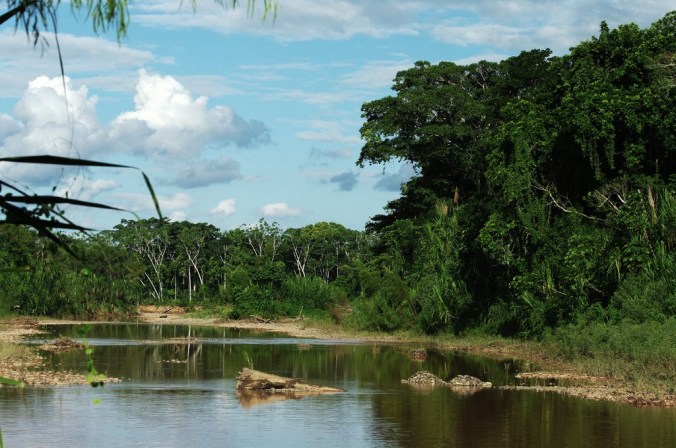
Sit on a log by the Madidi River in Bolivia at dusk and you can hear what an Amazon forest should sound like. The music includes red howler monkeys, breathy thumps from the mutum jungle fowl, droning cicadas, eerie calls locals attribute to deadly bushmaster vipers and the unhinged excitement of elusive titi monkeys. Around your feet, the beach is crisscrossed by jaguar tracks and those of the pony-size tapir, a shy beast that, if you keep quiet, will saunter out of the forest and swim across the river.

This is what scientists call an “intact forest landscape.” It’s a swath of at least 500 square kilometers (about 193 square miles, equal to 70,000 soccer fields) of unbroken forest. Because of their size, these areas have maintained all their native plant and animal life and biophysical processes. These forests still adorn parts of our planet’s tropical midsection, notably the Amazon, Congo Basin and the island of New Guinea. And they form a northern belt, the boreal forests of Canada, Russia, Alaska and Scandinavia. Continue reading

Trees For Life In Scotland

4000m.jpg

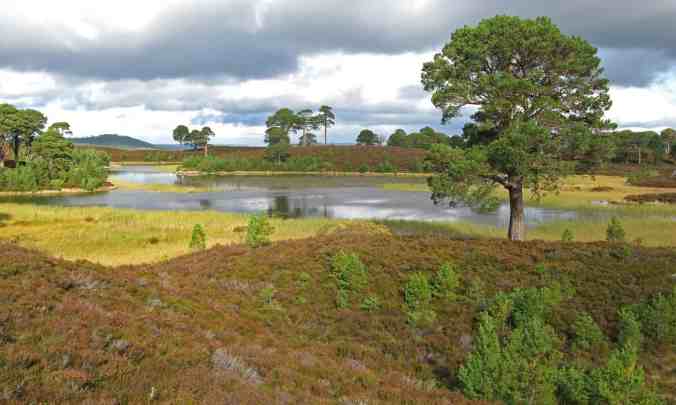
Trees for Life have planted 1.5m native trees in Glenmoriston and nearby Glen Affric since being founded 30 years ago. Photograph: Desmond Dugan/RSPB/PA

Thanks to Damian Carrington, the Guardian’s Environment editor, for this:

‘Magical’ mushroom mix to boost regrowth of lost Scottish forests

Return of Great Caledonian forest speeded up with fungi spores to help saplings flourish

The return of the Great Caledonian forest that once covered much of Scotland’s highlands is being boosted with a special mix of mushroom spores that should help saplings survive better on the hills.

Fungi living on the roots of trees play a vital role in the ecology, helping to break down nutrients in the soil. But trees were lost in much of the Highlands many years ago so the fungi vanished too.

The new project, run by Trees for Life, is adding the spores when young trees are planted. Continue reading

Entrepreneurial Conservation & Armenian Foodways

04_preview_wide-17fa88f30bcf886db25337ed12b9accfbc084db0-s1400-c85

Motal cheese is a fresh goat’s milk cheese made primarily in remote mountain areas in Armenia. Cross of Armenian Unity/Ruslan Torosyan

We are on the lookout for stories that combine our interest in topics such as conservation, and entrepreneurship, and traditional foodways, and innovation (among other things) and this story touches on several of our favorite themes. Thanks to the salt team at National Public Radio (USA):

Armenia’s Ancient Motal Cheese Makes Its Way Into The Modern Age

In the mountains of eastern Armenia, about 75 miles north of the capital Yerevan, motal means change.

Motal cheese is like a business card for our region,” says Arpine Gyuluman, who owns Getik Bed and Breakfast in Gegharkunik. “[Because of it], we’re seeing more and more visitors annually.”

Motal is a white goat cheese flavored with wild herbs that is similar to homestyle country cheeses in Iran and Azerbaijan. Motal is prepared in locally made terra cotta pots sealed with beeswax ― a method that dates back at least 5,000 years. A little more than a decade ago, it was in danger of disappearing. That is, until a local university student named Ruslan Torosyan embarked on a personal crusade to save motal. Continue reading

Meanwhile, North Of The Border

Kormann-Ryan-Zinke.jpg

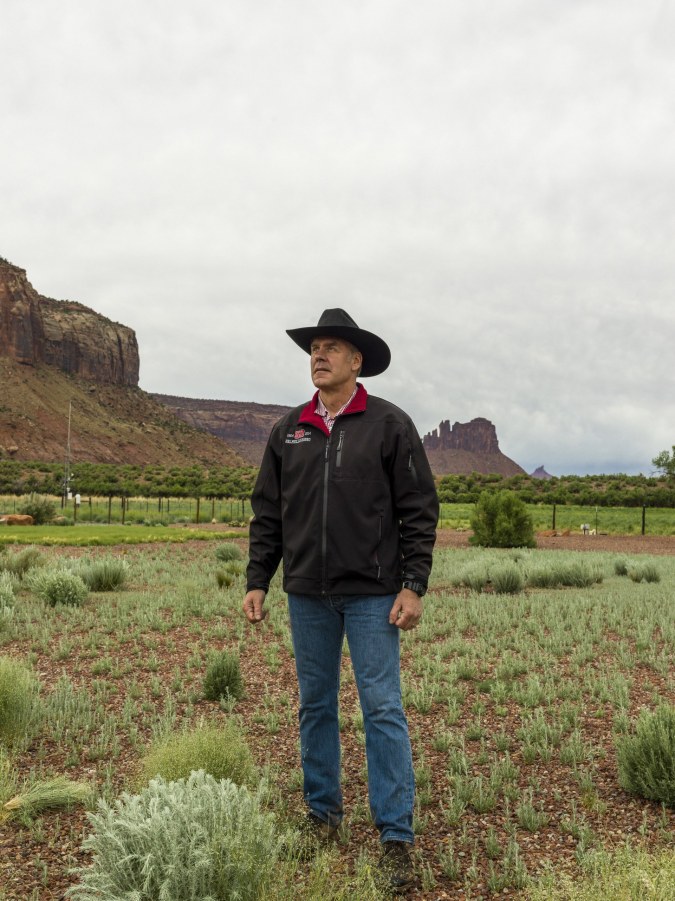
The Interior Secretary, one of President Trump’s most loyal allies, sees public lands as the key to an “energy-dominant” future. Photograph by Morgan Rachel Levy / Redux

Yesterday’s rich south of the border story is complemented, not flatteringly, by this note by Carolyn Kormann:

Ryan Zinke’s Great American Fire Sale

Not long ago, the Bureau of Land Management, an agency within the U.S. Department of the Interior, began distributing “vision cards” to its employees. The front of each card features the B.L.M. logo (a river winding into green foothills); short descriptions of the Bureau’s “vision,” “mission,” and “values”; and an oil rig. On the flip side is a list of “guiding principles,” accompanied by an image of two cowboys riding across a golden plain. Amber Cargile, a B.L.M. spokeswoman, told me that the new cards are meant to reflect the agency’s “multiple-use mission on working landscapes across the West, which includes grazing, energy, timber, mining, recreation, and many other programs.” Individual employees, she added, can opt to wear or display the cards at their own discretion. But, according to the advocacy group Public Employees for Environmental Responsibility, which obtained photos of the cards and shared them with the Washington Post, supervisors in at least two B.L.M. field offices have been verbally “advising that employees must clip them to their lanyards.” Some workers, speaking to the Post anonymously, said that they felt they had no choice but to comply. Continue reading

Legume’s Lost Legacy, Found

180423_r31919.jpg

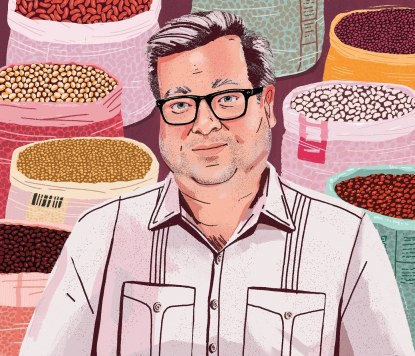
Rancho Gordo’s heirloom beans look like gems in a jewelry case. The company sells half a million pounds of them a year.Illustration by Cari Vander Yacht

180423_r31939

“My favorite bean is always the last one I ate,” Steve Sando says.Illustration by Cari Vander Yacht

If you only had read the first sentence in this story, you might move right on to something more promising.

Look at the author and look at the title, both familiar to those visiting this platform over the years, and it is certain not to disappoint. It is about this man to the right, and his culinary/cultural mission:

The Hunt for Mexico’s Heirloom Beans

Rare varieties discovered by Rancho Gordo’s Steve Sando have turned the humble legume into a gourmet food.

By Burkhard Bilger

The best meal of my life, or at least the most memorable, came from a can. I was thirteen at the time and living in France, so that may have had something to do with it. But I credit the beans. My older sisters and I were at a hippie camp in the Alps that summer, not far from the Italian border. My parents had stashed us there while they went home to Oklahoma to check on our house, which they’d rented to some graduate students while my father was on sabbatical. The camp was the cheapest one they could find, and they seemed to have done next to no research before signing us up. My mother just loved the name: Jeunesse du Soleil Levant, Youth of the Rising Sun. Continue reading

Mary River Turtle, Hang On!


Thanks to the Guardian for bringing this to our attention:

Green-haired turtle that breathes through its genitals added to endangered list

With its punky green mohican the striking Mary river turtle joins a new ZSL list of the world’s most vulnerable reptiles

3500 (3)

The Mary River turtle, found in Queensland, Australia, features on a new list of the most vulnerable reptile species on the planet. Photograph: Chris Van Wyk/ZSL/PA

It sports a green mohican, fleshy finger-like growths under its chin and can breathe through its genitals.

The Mary river turtle is one of the most striking creatures on the planet, and it is also one of the most endangered.

The 40cm long turtle, which is only found on the Mary river in Queensland, features in a new list of the most vulnerable reptile species compiled by the Zoological Society of London (ZSL). Continue reading

Us & Them Instead Of Us Versus Them

Thanks to Emily Buder at the Atlantic for this five minute recommended viewing. In the video above, by Nani Walker and Alan Toth, the question is:

Can Humans and Lions Get Along?

“Lions are really causing us havoc,” laments an African pastoralist in Nani Walker and Alan Toth’s short documentary, Living with Lions.  Continue reading

Sweet Potato Origin Story


merlin_136754454_c4302230-80b3-4890-af60-f6030c8dde14-master675.jpg

A chromolithograph of Christopher Columbus arriving at the Caribbean. Credit Louis Prang and Company/Getty Images

Thanks to Carl Zimmer for this 1493-ish story:

All by Itself, the Humble Sweet Potato Colonized the World

Many botanists argued that humans must have carried the valuable staple to the Pacific from South America, a hidden chapter in human history. Not so, according to a new study.

merlin_136706727_2ce09f86-757c-4b1a-9282-57e2695eda29-jumbo

The distribution of the sweet potato plant has baffled scientists. How could the plant arise from a wild ancestor in the Americas and wind up on islands across the Pacific? Credit Karsten Moran for The New York Times

Of all the plants that humanity has turned into crops, none is more puzzling than the sweet potato. Indigenous people of Central and South America grew it on farms for generations, and Europeans discovered it when Christopher Columbus arrived in the Caribbean.

In the 18th century, however, Captain Cook stumbled across sweet potatoes again — over 4,000 miles away, on remote Polynesian islands. European explorers later found them elsewhere in the Pacific, from Hawaii to New Guinea.

The distribution of the plant baffled scientists. How could sweet potatoes arise from a wild ancestor and then wind up scattered across such a wide range? Was it possible that unknown explorers carried it from South America to countless Pacific islands? Continue reading

Conservation Aided By Lowliest Of Creatures

merlin_136489011_2126accc-97cc-4224-813c-e09bb5e980a0-jumbo.jpg

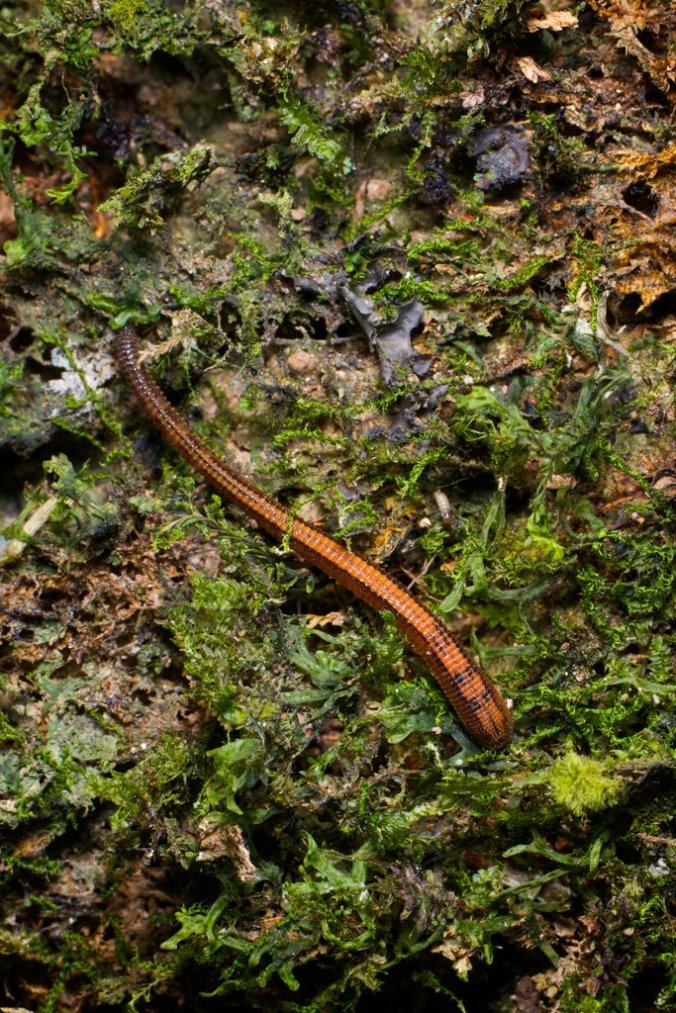
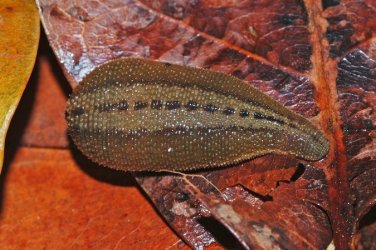
A leech, Haemadipsa zeylanica, in Thailand. Scientists have found they can survey the biodiversity of a forest with DNA analysis of leeches’ last blood meals. Credit Thailand Wildlife/Alamy

Alladale & Apex Wildlife

4019.jpg

Eurasian grey wolves at the Highland Wildlife Park, Kingussie, Scotland.
Photograph: Alamy

Thanks to Kevin McKenna and the Guardian for this profile of an entrepreneurial conservation project that is quite in the spirit of our work over the last two decades. We salute Paul Lister and his team for this wonder:

One man’s plan to let wolves roam free in the Highlands

The ‘custodian’ of the Alladale estate wants to turn it into a fenced-off wildlife reserve

4992.jpg

The Alladale estate. Photograph: Alamy

The echoes of Scotland’s predator prince faded into silence three centuries ago. The wolf was once lord of these Sutherland slopes and the forest floors beneath and now a voice in the wilderness is calling him home.

Paul Lister acquired the Alladale estate, 50 miles north of Inverness, in 2003 and immediately set about creating a wilderness reserve according to his perception of what these wild and beautiful places ought to look like. He can’t imagine them without the packs of wolves that once roamed free here.

But his views are considered eccentric by ramblers and conservationists, who view them as a rich man’s caprice, centring their objections on his plans to fence off the vast reserve. Continue reading
Thermal Imaging For Species-Level Learning

merlin_136343916_184e67ea-b2c7-4c2d-8cf5-2dbc257b126a-superJumbo.jpg

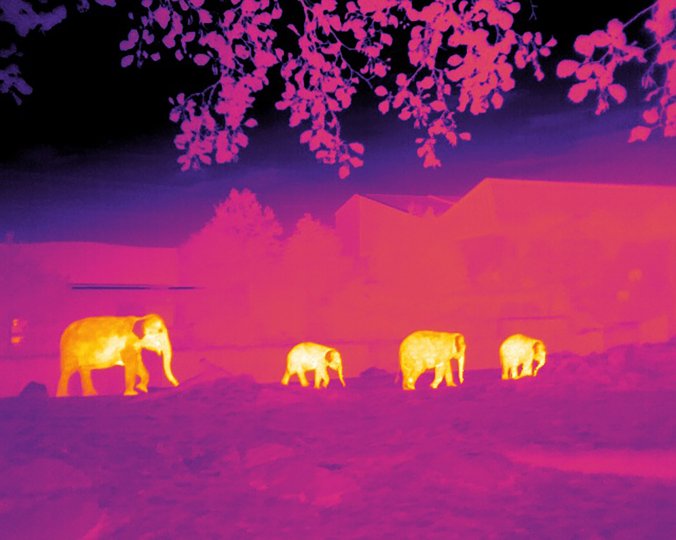
A thermal image of elephants, part of an effort to apply tools from astronomy to help conservationists and fight poaching. Credit Endangered Wildlife Trust/LJMU

We have noted this technology more than once in recent years, and who can resist the images? But Joanna Klein’s story here is a bit different from our earlier notes:

How Do You Count Endangered Species? Look to the Stars

06TB-INFRARED2-superJumbo.jpg

The research team has been working with a local safari park and zoo to film and photograph animals, like these chimpanzees, to build up a reference library of different animals. Credit Endangered Wildlife Trust/LJMU

The conversation started over a fence dividing two backyards. On one side, an ecologist remarked that surveying animals is a pain. His neighbor, an astronomer, said he could see objects in space billions of light years away.

And so began an unusual partnership to adapt tools originally developed to detect stars in the sky to monitor animals on the ground. Continue reading