Ecosystem Services in Paris Agreement

We’ve reviewed ecosystem services several times over the years, including payment for them, the potential for ecotourism as a service, and we’re glad to read that the idea is becoming popular again with the new Paris Agreement. Kelly Barnett reports for GreenBiz, starting with coverage on the Adaptation Futures conference in Rotterdam:

In just three days here, roughly 40 presentations focused on the subject of “ecosystems and ecosystem based-adaptation,” and they focused on everything from the restoration of salt marshes that protect coastal communities from rising tides to the protection of Brazil’s Atlantic Forest, which supports a massive agricultural economy.

The event comes just two weeks after Earth Day, when 175 countries signed the Paris Agreement to combat climate change   in part by “ensuring the integrity of all ecosystems, including oceans, and the protection of biodiversity, recognized by some cultures as Mother Earth.”

Continue reading

Lost & Found, Geological Trickery, Conservation

looters_trench02

I had the opportunity to visit a site in Belize that had been on my radar for most of the last two decades. On my radar, but chance had conspired to keep me away, until last week. I will write more about that visit soon, but for now I want to share a thought on the photo above, and the one below (since I neglected to snap photos while standing in exactly the same location as the photographer who took these two, my thanks to him for his website’s provision of these two images).

looters_trench

These are commonly referred to as looter’s trenches, on opposite sides of a Mayan burial site. They are relatively fresh. The family that owns the property on which these trenches were dug, by tomb raiders looking for valuables, decided that the best way to protect the patrimony of this site was to ensure that there were always people nearby to keep looters away. A lodge was built, and it became a pioneering success story in protecting both archeological and natural patrimony. In other words, what we call entrepreneurial conservation. Continue reading

Please Do Not Close The Door, Iceland

lead_large (2)

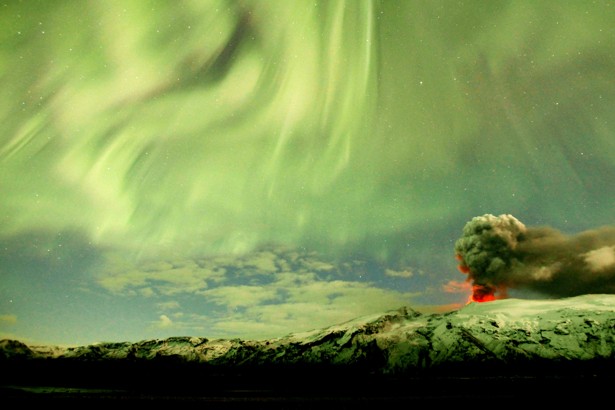
The Northern Lights above the ash plume of Iceland’s Eyjafjallajokull volcano Lucas Jackson / Reuters

We have had a thing for Iceland for a few years now, mainly due to Seth’s honors thesis. But none of us currently contributing to this blog have actually been there, yet. There is a plan in the air, very vaguely, for several of us to meet up there one day soon. Thanks to writers such as the Atlantic‘s Feargus O’Sullivan, and our own ongoing discussion on travel conundrums, we are not rushing into the plan, but contemplating it in back burner mode. We know we cannot wait forever:

Iceland vs. Tourists

It’s not easy fitting 1.2 million annual visitors onto an island of 330,000 residents.

Fighting Flouting Fishing Fleets

3888

Chinese boats banded together with ropes, after alleged illegal fishing in South Korean waters in the Yellow Sea off the southwestern coast county of Buan. Photograph: Dong-A Ilbo/AFP/Getty Images

Tragedy of the commons on the high seas, fought by those who perceive their interests in common enough to do something about it (a tricky thing, as we note frequently), once again in the news.  Thanks to the Guardian, and environmental reporter Emma Bryce, for this reportage:

Tens of countries sign up to shut pirate fishers out of their ports

The first of its kind, a new international treaty obliges signatories to intercept pirate fishers before they can sell their catch

In March, the Argentinian coast guard shot at and sank a Chinese vessel that was alleged to be fishing illegally in Argentinian waters (the crew were all rescued). While it’s unclear whether the boat was committing crime, the incident showed that the tension surrounding pirate fishing is reaching a peak, marked elsewhere by increasing conflict, and the detainment and scuttling of illegal fishing fleets. But for pirate fishers, the financial gains appear to be worth these risks. Continue reading

Cacti in Trouble from Collectors

Mammillaria herrerae. Photo © Jardín Botánico Regional de Cadereyta

While we have amateur ornithologists, herpetologists, mycologists, and entomologists who contribute to this blog, we haven’t had many botanists around, and therefore we learned something new today about cacti: they’re a group of plants that’s only present in the Americas, apart from one species that grows in Madagascar, Sri Lanka, and South Africa. We also read some bad news from a Cool Green Science blog post by Christine Peterson, which is that 31% of cacti species have a threatened status, a terribly high proportion. Peterson writes,

The smugglers carried their tiny prizes tucked away in suitcases of jalapeños and dirty laundry. The spicy fruit was supposed to deflect inspections. Perhaps they thought the dirty laundry would do the same. Another rare item sat nestled in a new box of Uncle Ben’s Rice. Russians had a hard time finding Uncle Ben’s Rice back home, says Nicholas Chavez, Special Agent in charge of the Southwest Region for the U.S. Fish and Wildlife Service.

From the Los Angeles airport, the six Russian men weren’t carrying precious art or poached ivory. They were smuggling cacti stolen from National Parks and Indian Reservations. Some of the cacti they had were labeled appendix two, which means they aren’t currently “threatened with extinction but may become so unless trade is closely controlled,” according to the Convention on International Trade in Endangered Species of Wild Fauna and Flora.

Continue reading

Intangible Heritage Worthy Of Conservation

9-690

Who gets to decide what is worthy of conservation, and what is not? I am given reason to think about this on a regular basis, given the work that we have been doing for the last two decades. There is no one answer, of course, but I conclude regularly that it comes down to very deep personal experiences–those which lead individuals to alter the path of their lives and thereby have an impact on the conservation of something they have come to care deeply about. John Muir, Teddy Roosevelt and others come to mind on the larger scale of this line of thinking.

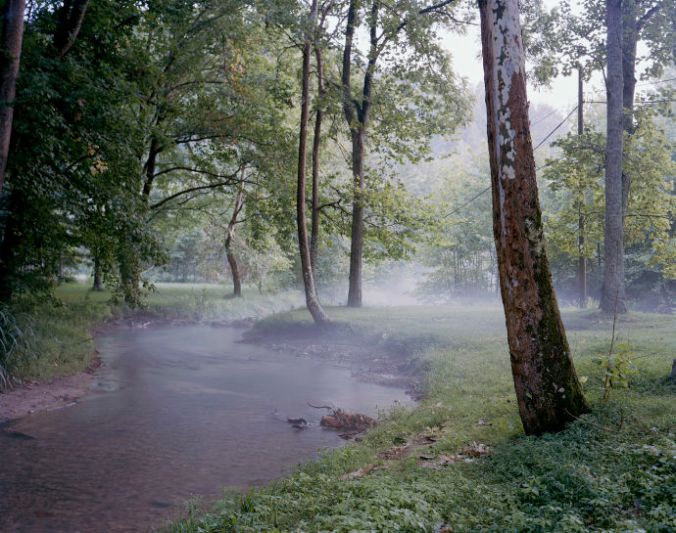
Reading one of our other blog posts today, I was taken back in time to pre-India workdays, 2008-2010. Milo, I had forgotten until just now, had a chance to wrestle firsthand with one of Patagonia’s most important conservation issues, and it is fair to say that what he is doing today is influenced by intense experiences he had in Patagonia, followed by a couple of years living with us in India. That would be an example of a smaller scale of this line of thinking. Same goes for the story I just read, and when I look at the photo above, and the one below, I am reminded that sometimes an image alone, or a series of images like these, can lead to this same path-changing epiphany.

4-690

I have family in the vicinity of this story’s subjects, and am thinking just now that I have not made a visit to that family in too long; time to plan a visit? The thought is now lodged deeply in my thinking.
Continue reading

More than 1/3 of North American Bird Species at Risk of Future Extinction

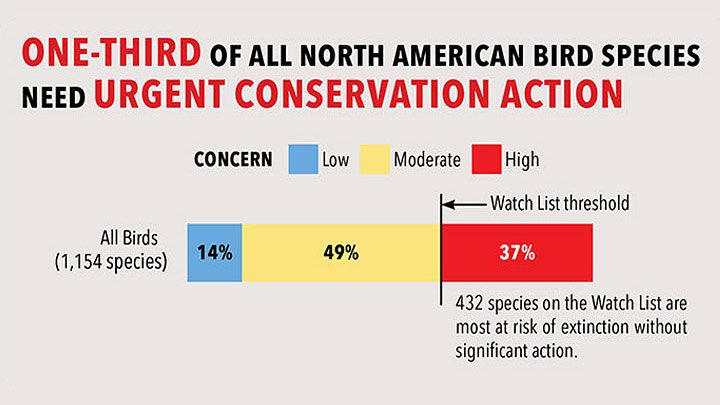
The analysis of all 1,154 bird species in Canada, the U.S., and Mexico identified 432 species that meet the criteria for the Watch List © NABCI

Climate change, habitat loss, and predation are all threats to birds in Canada, the United States, and Mexico, among other challenges facing the species throughout North America, with migratory shore birds being classified as particularly vulnerable. Scientific American reports with Reuters reporting, but make sure to check out the North American Bird Conservation Initiative information page too:

OTTAWA, May 18 (Reuters) – More than a third of all North American bird species are at risk of becoming extinct unless significant action is taken, scientists who are part of a tri-nation initiative said on Wednesday, adding that ocean and tropical birds were in particular danger.

The study, compiled by the North American Bird Conservation Initiative and the first of its kind to look at the vulnerability of bird populations in Canada, the United States and Mexico, said 37 percent of all 1,154 species on the continent needed urgent conservation action.

Continue reading

TNC Building Beaver Dams

View of a series of existing beaver dams downstream of beaver dam analogue restoration reach. Photo © The Nature Conservancy (Kristen Podolak)

Beavers can be highly destructive in the wrong environment, but are keystone species wherever they’ve been around for long enough to have designed their ecosystem. And in areas where for a number of reasons beaver populations have dwindled so much as to see deterioration in the habitat, The Nature Conservancy thinks that adding artificial dams can help restore the land by affecting sedimentation, creating floodplains, and storing water. Kristen Podolak, Rodd Kelsey, Sierra Harris, and Nathan Korb report:

The Nature Conservancy is working like a beaver (Castor canadensis) by mimicking beaver dam building to restore streams and floodplain habitat in Montana and California.

No kidding. Last year we built twelve instream structures that look and act like beaver dams on two streams in Montana and we plan to build six more in a small creek in Childs Meadow, California this fall.

Why try to act like beavers? Beavers are not a panacea and can be a nuisance when they block water diversions or chew down people’s favorite trees, which is why they have been persistently trapped and killed or relocated in many areas across North America.

Continue reading

The American Burying Beetle

American burying beetles. Photo © St. Louis Zoo via Cool Green Science

Beetles, apart from being the most numerous type of insect in the world, comprise the largest group of animals in general, with somewhere between three- and four-hundred thousand species described; and that doesn’t even count the presumably undiscovered ones hiding out in some unexplored corner somewhere. We’ve covered dung beetles before, but also mycokleptic species, and now we’re learning about a very important carrion beetle in North America known as the American burying beetle from Ted Williams at The Nature Conservancy’s Cool Green Science blog:

The shiny black, orange-spotted adults can approach two inches in length. Offspring beg both parents for food, inducing regurgitation by stroking their jaws like wolf pups. They’re federally endangered American burying beetles, largest of the 31 species of North American carrion beetles.

Riding on the adults like oxpeckers are orange mites that keep them and their larval food supply free of fly eggs and microbes.

Continue reading

Xandari, Monday Morning

WestPoolSunrise

We are currently in the middle of filming a series of short films at Xandari, here in Costa Rica, to match the series of short films we have made of the various Xandari properties in Kerala, India. The film crew arrives at 4:45 so we can catch the rising sun, which I find best viewed from the west edge of the property. Above you can see some of the coffee planted in the last two years, in the midst of one of Xandari’s highly productive organic vegetable gardens. The film crew is drawn to this space at sunrise and sunset. Soon you will see why, cinematically. For now, some more images from the edge of the forest reserve, following Saturday morning’s outing; this time focused on various introduced species of flora that complement Costa Rica’s most famous introduced species of plant (high grade arabica coffee). Continue reading

Antler Awareness

The Conservancy’s Justin Jones rounds up some antlers.  Photo © The Nature Conservancy (Matt Miller)

In Oregon, elk populations have grown so large that they are threatening a key forest tree species: the aspen, whose leaves turn a vivid yellow in the fall and create amazing landscape scenes, particularly in the western United States. To raise awareness of the issue and also generate funds for local children, people near The Nature Conservancy’s Zumwalt Prairie Preserve go out and search for elk antlers that have been shed each spring, then sell the antlers. Matt Miller writes for the TNC blog:

As our vehicles roll to a stop along the muddy track, a postcard-perfect scene stretches before us. Rolling prairie dotted with beautiful wildflowers, with towering snow-capped peaks in the background. But the kids around me don’t notice any of it.

“Antler!” one of them cries, and the group is off, running across the rolling hills. A youngster is soon hoisting an impressive elk antler over his head. His friends look on with admiration, but soon another antler is spotted, and another.

Continue reading

Human – Pachyderm – Apium Collaboration

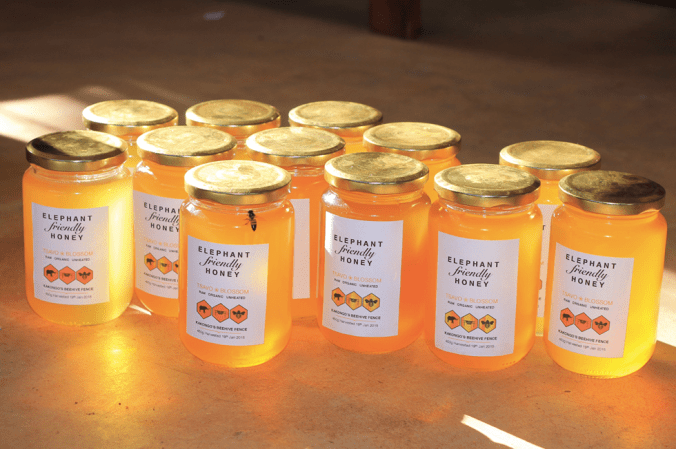
Innovation takes many forms. It’s especially satisfying when that innovation works with nature instead of against her. Examples of creative collaboration to solve environmental issues, be they unusual agricultural pest control or ways to avoid human/wildlife conflict such as this Elephant and Bee project are happy news indeed.

Some of our team live in Kerala, India – and know from personal experience the intelligence, and perseverance of elephants, when confronted with an obstacle to plants or trees they crave. This beehive fence concept is incredibly clever, taking advantage of the elephants’ natural fear of bees to keep them safe from potentially deadly conflict.

“I congratulate Dr. King as the winner of this important award. Her research underlines how working with, rather than against, nature can provide humanity with many of the solutions to the challenges countries and communities face. Continue reading

Balancing Conservation With Use

Bill-Clark_605

Photo courtesy of William Clark. William Clark, Harvey Brooks Professor of International Science, Public Policy, and Human Development at Harvard Kennedy School, has co-authored a new book on sustainability. “Achieving more equitable and sustainable use of the Earth requires a great deal of working together,” he said.

Thanks to the Harvard Gazette for this interview with William Clark:

Pursuing sustainability

A Q&A on connecting science and practice, balancing conservation with use

By Amanda Pearson, Weatherhead Center Communications

United Nations Secretary-General Ban Ki-moon on Friday will welcome 130 heads of state who have pledged to sign the Paris Agreement, the global agreement on managing climate change. For William Clark, Harvey Brooks Professor of International Science, Public Policy, and Human Development at Harvard Kennedy School (HKS), sustainability is a global imperative and a scientific challenge like no other.

Clark sees the Paris Agreement as just one step, though an important one, in this urgent pursuit, as officials wrestle with how to meet the needs of a growing human population without jeopardizing the planet for future generations. He and co-authors Pam Matson of Stanford University and Krister Andersson of the University of Colorado at Boulder tackle that issue in a new book, “Pursuing Sustainability: A Guide to the Science and Practice.” By looking at sustainability as a means of alleviating poverty and enhancing well-being, the book highlights the complex dynamics of social-environmental systems, and suggests how successful strategies can be shaped through collaborations among researchers and practitioners.

Clark, who trained as an ecologist, said that while exhausting Earth’s natural resources would jeopardize future generations, sustainability could counter that. The goal is to find a healthy equilibrium between human adaptation and natural evolution. Clark, the co-director of the Sustainability Science Program at HKS, spoke with the Weatherhead Center for International Affairs about building a more sustainable future. Continue reading

Rainforest Alliance and Sustainable Agriculture Network

Among the farms that the Rainforest Alliance certifies are those that produce bananas, coffee, tea, pineapples, cocoa, flowers and palm oil. Photo by Flickr user Sally Crossthwaite

The Rainforest Alliance and Sustainable Agriculture Network have been doing good work, mostly in developing countries, for over twenty years to improve agricultural practices and protect natural forests. The two groups published an Impacts Report not long ago that reviews their progress, and two executives wrote an article summarizing those impacts on GreenBiz.com:

Independent, third-party certification has grown phenomenally since 1993, when the Rainforest Alliance certified the first banana plantation to meet Sustainable Agriculture Network (SAN) standards.

The standards prohibit conversion of forests or other natural ecosystems to cropland, protect workers and wildlife, regulate the use of chemicals and other farming practices. Today they cover more than a million farmers on Rainforest Alliance Certified farms, most of them smallholders, cultivating 100 crops on a total of 7.4 million acres (about the size of Switzerland) across 42 countries.

Continue reading

Kenya Burns Over 100 Tons of Illegal Ivory

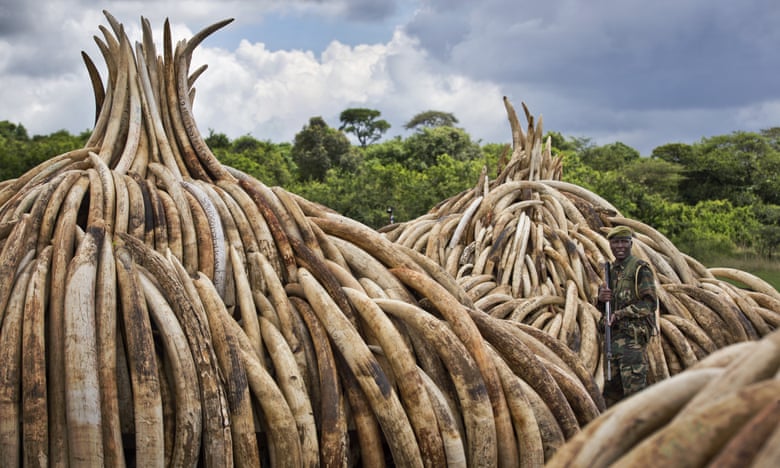
Kenya will burn about 105 tonnes of elephant ivory and 1.5 tonnes of rhino horn in 11 large pyres, about seven times the amount previously burned in a single event. Photograph: Ben Curtis/AP via The Guardian

We featured poaching a few weeks ago here, in the case of primates, and we have discussed the illegal ivory trade and other endangered wildlife on the black market before. This weekend, Fiona Harvey reports for the Guardian, Kenya burned a massive amount of tusks from poached elephants, in a symbolic act of destruction that presumably cost the black market millions of dollars, and thousands of elephants their lives:

Tusks from more than 6,000 illegally killed elephants will be burned in Kenya on Saturday, the biggest ever destruction of an ivory stockpile and the most striking symbol yet of the plight of one of nature’s last great beasts.

The ceremonial burning in Nairobi national park at noon will be attended by Kenya’s president, Uhuru Kenyatta, heads of state including Ali Bongo Ondimba of Gabon and Yoweri Museveni of Uganda, high-ranking United Nations and US officials, and charities. A wide network of conservation groups around the world have sent messages applauding the work.

Continue reading

Must-Read Editorial

01fagin-blog427

Thanks to the New York Times for carrying this in prominent placement:

A Mine vs. a Million Monarchs

In recent years, Angangueo’s 5,000 inhabitants have been cursed by calamities natural and manufactured. Snowstorms, mudslides and flash floods have terrorized the town. Hulking piles of mine tailings line the main road, barren reminders of the silver, gold and copper mining that petered out a quarter-century ago after defining the community for 200 years.

Even the monarch butterflies that are the focus of the “magic town” tourism campaign are suffering. Millions still roost on nearby mountains, a wintertime spectacle that attracts the visitors from “El Norte” who are the town’s economic lifeline. But the overwintering population of monarchs has fallen by almost two-thirds over the past dozen years, and this year’s better-than-usual aggregation was abruptly devastated in March by another freak snowstorm, the worst in years. Continue reading

Discovering Gold in the Greater Antilles (Part 2)

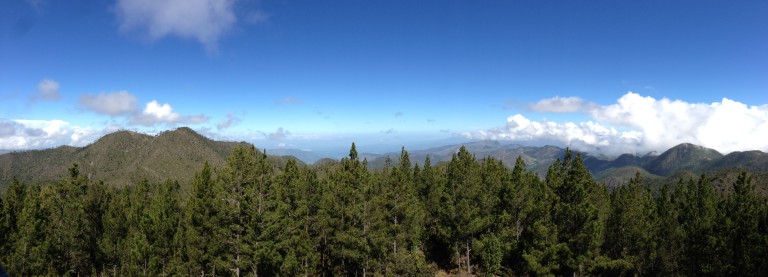
View of Parque Valle Nuevo from the top of the Pajon Blanco Fire Tower; Dominican Republic.

This post follows a previous piece, which you can read here.

And so we set out on an adventure of a lifetime with the underlying goal of studying a bird and using what we learned to help save that bird, while simultaneously nourishing an already burgeoning sense of local stewardship over Hispaniola’s feathered friends and the habitats they so deeply depend upon. We set the bar high from the beginning, and I can be honest in saying that I feel good about what we accomplished and where the project stands today.

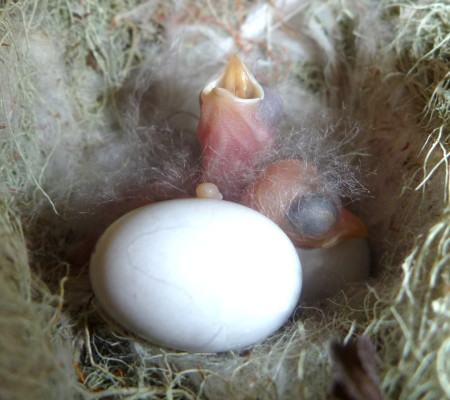
Two Golden Swallow chicks have just hatched. One begs for food, one contemplates life, and one refuses to come out; Parque Valle Nuevo, Dominican Republic, 2014.

However, as opposed to trying to tackle an impossible play-by-play of what transpired over those next three years (thankfully all of that information is in my master’s thesis and can be yours for just three easy payments of $29.99), I’m going to take a slightly different approach. I’m going to share with descriptions of images (and feelings) that go through my head when somebody kindly asks me, “So how’d that Golden Swallow Project go?” Little does that person know how much weight a question like that can have, or how it causes me to temporary black-out as my mind boards a high-speed emotional (and perhaps somewhat spiritual) roller-coaster from which there is little hope for return for at least the ensuing two minutes. So let’s go for a ride.

Continue reading

Library Charisma

01COLORADO1-master768

An old sheep barn and loafing sheds will one day house books. Credit Allison Amend

It has not been long since our last linkage out to a “library love” story. But this one is combined with a travel/journey and a conservation ethos–themes we enjoy seeing addressed together. Worth a read, thanks to the Travel section of the New York Times:

I am perched on a slippery roof ridge at the Buffalo Peaks Ranch in the rain, feet sliding on ancient asphalt shingles atop rotting plywood decking, tethered only by a rope. For fun.

With me on the roof are five other volunteers who are donating their time and brawn to create a live-in rural library in Colorado, helping the booksellers Jeff Lee and Ann Martin realize their dream.

In the course of their 20 years at the independent Denver bookstore Tattered Cover, Mr. Lee and Ms. Martin have accumulated more than 32,000 volumes on the American West (my first novel, “Stations West,” is among them). Seeking to share the books, and their love of Colorado, the pair, who are married, have leased the Buffalo Peaks Ranch, about two hours from Denver, to house their collection. Continue reading

Good News for Manatees

Florida manatee Credit: Carol Grant/Getty Images via Scientific American

When we wrote about “sea-cows” before here it was in a post about water hyacinth. Now Scientific American is sharing some good news on the species that we weren’t aware about, with great increases in their population’s numbers. Sean Carroll reports:

Good news seems to be rare these days, and good news about the environment even rarer.

But in January this year, after fifty years on the endangered species list, the US Fish and Wildlife Service (FWS) proposed to remove the manatee as its numbers in Florida have increased 400% in the past 25 years. And just this month, the FWS proposed to delist the Greater Yellowstone grizzly population as the number of bears has increased from 136 in 1975 to about 700 today.

Continue reading

Swallow-tailed Kite Conservation

Bird of the Day 9/19/15: Swallow-tailed Kite (Reserva El Copal, Costa Rica)

I’ve had the fortune of seeing this long-rumped raptor outside of the United States, where they are now considered rare despite their wide range throughout the Caribbean and Central and South America. And although the population did decrease in the last several decades, the IUCN does now list the species as having an “increasing” population trend. This interesting article in The Nature Conservancy, however, does raise concern over habitat loss and the species’ vulnerability. Ginger Strand reports:

Maria Whitehead yanks her feet out of the water as something crashes into Bull Creek next to the boat. Seconds later, a 10-foot-long alligator surfaces a few yards away. As the prehistoric reptile glides off, leaving a sinuous wake in the tannin-brown river, Whitehead casually retrieves her binoculars and goes back to watching a nest of swallow-tailed kites near the top of a soaring pine.

A project director for The Nature Conservancy in the South Carolina Lowcountry, Whitehead seems unfazed by nearly losing a toe on the job. So does Craig Sasser, manager of the Waccamaw National Wildlife Refuge. Wading into primeval cypress swamps, scaling 100-foot pine trees, paddling up tidal rivers through clouds of insects in triple digit heat: These are all part of researching swallow-tailed kites, a spectacular but poorly understood raptor.

Continue reading