Love For, Of the Planet

claude-and-norma

Claude and Norma Alvares are the pillars of conservation in India’s extreme tourist city of Goa. PHOTO: Rahul Alvares, Scroll

There’s a small but wonderful tribe of people who keep the dignity of life on the planet. Call them eco warriors, guardians of tomorrow, nature’s advocates. No tag can do justice to their lives spent preserving, restoring, and protecting life. Goa, the tourist mecca of India, has sundowners, music, beaches and a welcoming culture going for it. It is also the base of Claude and Norma Alvares’ environmental movement of over 40 years.

Continue reading

Oceans Of Plastic

Feature-NPEC

You may have seen headlines in recent days with predictions about plastic overtaking fish as the primary mass of our planet’s oceans. Go straight to the source to get the facts (below is the press release from the foundation that funded the research; see the chart after the page break below to really get a punch of reality from the scale of this problem):

Applying circular economy principles to global plastic packaging flows could transform the plastics economy and drastically reduce negative externalities such as leakage into oceans, according to the latest report by the World Economic Forum and Ellen MacArthur Foundation, with analytical support from McKinsey & Company.

The New Plastics Economy: Rethinking the future of plastics provides for the first time a vision of a global economy in which plastics never become waste, and outlines concrete steps towards achieving the systemic shift needed. The report, financially supported by the MAVA Foundation, was produced as part of Project MainStream, a global, multi-industry initiative that aims to accelerate business-driven innovations to help scale the circular economy. Continue reading

Short Essay On The Commons

160125_r27591-320

ILLUSTRATION BY CHRISTOPH NIEMANN

Several times since 2011 I have referenced my doctoral dissertation, which addressed the “tragedy of the commons,” in these pages. Seth, during his study on the history of environmentalism movements, has also posted on this concept. Now, , excellent writer of one page essays explaining complex economic issues, takes a recent odd news item and helps us understand the role of government in regulating the use of the commons:

Ammon Bundy, the leader of the armed militia that stormed the Malheur National Wildlife Refuge, in Oregon, has a simple solution for fixing the economy of the West: get the federal government out of the way. His group’s chief demand is that the federal government hand over all of Malheur to local control. The ultimate goal, he says, is “to get the logger back to logging, to get the rancher back to ranching, to get the miner back to mining.” Bundy’s tactics make him easy to dismiss as a kook, but his ideology is squarely in the mainstream of Western conservatism, with its hostility to government ownership, skepticism about environmental rules, and conviction that individual enterprise is being strangled by government regulations. Continue reading

India’s First Organic State

sikkim

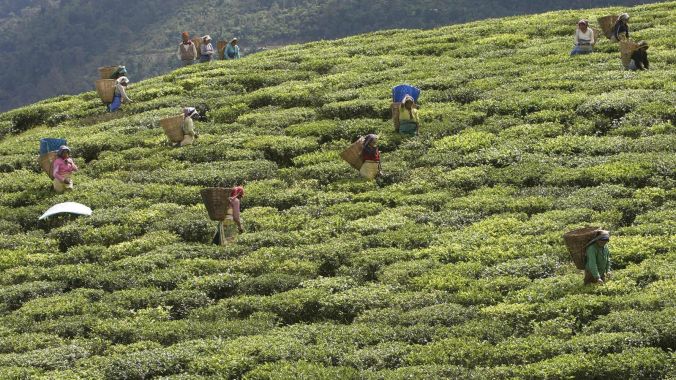
Tea plantations on the hillside. PHOTO: Reuters/ Rupak De Chowdhuri

The buzzword is organic. From grocery store shelves to textile designers to travel. At the center of this phenomenon is respect to the land, cognizance of the immense potential of living organisms, acknowledgement of a way of life that has restorative powers. Today, India hears that message loud and clear in the North-eastern hill state of Sikkim.

Continue reading

The Unexpected Manta Rays

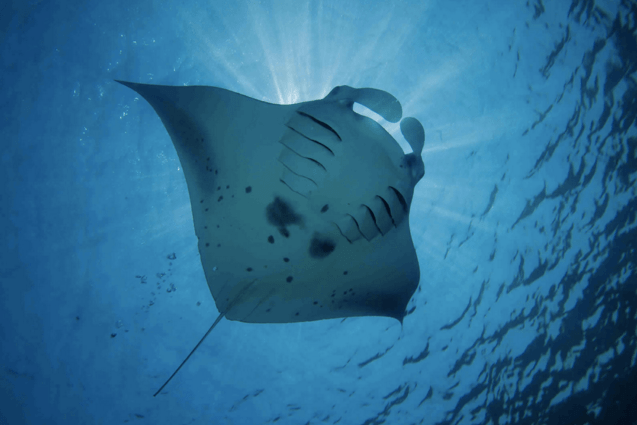
Manta Ray (Manta birostris) at Hin Muang, Thailand. “Neon Fusilier & Manta Ray” by Jon Hanson, via Wikimedia.

We’re no stranger to the benefits of manta rays, especially with contributor Phil Karp’s writings on the subject. The accidental catch of a giant oceanic manta ray (we’re talking about a fish that can weigh up to two tons!) in the northern coast of Peru resulted in the passing of a new law that will significantly help the preservation of this endangered species. On December 31, 2015 the Peruvian government passed a resolution that bans manta fishing and requires the immediate release of mantas that are accidentally caught as “bycatch.”

It’s not unusual for manta rays to get tangled in nets or fishing lines. But rays are also deliberately targeted for their meat and gills plates, which filter out plankton as they swim. The gill plates are considered a culinary delicacy in China, where they’re also used in traditional medicine to reduce toxins, enhance blood circulation, cure cancer, increase breast milk supply, and treat chickenpox and other ailments. There’s no scientific evidence that manta potions are effective in any of these instances.

Continue reading

New York Public Library, At It Again

pd_banner_magnified_3We appreciate the efforts of the New York Public Library, which we have posted on numerous times previously for its innovative as well as its occasionally worrisome institutional changes, to make more of its collection more available to more people for more uses. This blog post by Shana Kimball, Manager of Public Programs and Outreach at NYPL Labs, explaining the value to all of us:

Today we are proud to announce that out-of-copyright materials in NYPL Digital Collections are now available as high-resolution downloads. No permission required, no hoops to jump through: just go forth and reuse!

The release of more than 180,000 digitized items represents both a simplification and an enhancement of digital access to a trove of unique and rare materials: a removal of administration fees and processes from public domain content, and also improvements to interfaces — popular and technical — to the digital assets themselves. Online users of the NYPL Digital Collections website will find more prominent download links and filters highlighting restriction-free content; while more technically inclined users will also benefit from updates to the Digital Collections API enabling bulk use and analysis, as well as data exports and utilities posted to NYPL’s GitHub account. These changes are intended to facilitate sharing, research and reuse by scholars, artists, educators, technologists, publishers, and Internet users of all kinds. All subsequently digitized public domain collections will be made available in the same way, joining a growing repository of open materials. Continue reading

Thanks To Humboldt

Homboldt.jpg

In the “oops, forgot to post on this” category, we recommend you start with the introductory video above, then continue on to the author’s website:

55054_us_humboldt_cov“The Invention of Nature” reveals the extraordinary life of the visionary German naturalist Alexander von Humboldt (1769-1859) and how he created the way we understand nature today. Though almost forgotten today, his name lingers everywhere from the Humboldt Current to the Humboldt penguin. Humboldt was an intrepid explorer and the most famous scientist of his age. His restless life was packed with adventure and discovery, whether climbing the highest volcanoes in the world, paddling down the Orinoco or racing through anthrax–infested Siberia. Perceiving nature as an interconnected global force, Humboldt discovered similarities between climate zones across the world and predicted
Continue reading

Introductions, 2016 & Onward

saji_alila_goaIn keeping with the resolution made here, to share more in 2016 of what we care about , the buck starts here. No excuses for my recent quietude, but a note of thanks to those I handed off blogging to in 2015 so I could tend to our organization’s growth and development. Rosanna in India, Jocelyn in Costa Rica, Seth in Ithaca & Jamaica & Costa Rica, and a cast of others too numerous to name now, all kept our blog real, lively and on point. Thanks to them for that.

Now it is time for me to share again, and I may as well start with our organization. 2015 was a milestone year, and we have started 2016 with new leaders for both our Asia and our Latin America operations. In the photo to the left you see Saji Joseph, who now oversees La Paz Group’s Asia region from the organization’s home office in Kerala, India. Just one thing to say about him for now.

When we started this organization in 2010 the first thing I did to prepare for what would eventually become La Paz Group was to ask everyone I met in the hospitality business: who do you consider to be the best hotelier in India? The response was consistent, with stories about Saji’s leadership in various stories that sounded far-fetched to me at first, but now I believe completely. Maybe one day he will share some of those stories in these pages…

Continue reading

Natural Capital Valuation and Protection of Marine Megafauna – Update on Manta Ray Protection

Photo by: Ray Van Eden http://www.kuredu.com/maldives-underwater-world-manta-rays-kuredu/

Photo by: Ray Van Eden

In a post last year I pointed to the action by the Indonesian government to make its entire 6 million square kilometer exclusive economic zone a sanctuary for manta rays as an example of growing recognition by governments of the ecosystem service value of natural capital.

The threat to mantas through hunting was highlighted in a haunting new documentary, Racing Extinction, which debuted worldwide on Discovery Channel earlier this month. The film followed the efforts of photojournalist/ marine conservationist Shawn Heinrichs to document the manta hunts in Lamakera, in a remote region of Indonesia. Heinrich learned that the hunts have a long tradition in this area, but until recently the number of mantas taken each year was relatively small. It was only in the last decade that the traditional hunting was transformed into a large-scale commercial fishery, fueled by the demand for manta gill rakers as an ingredient in Chinese medicine.

When the first images of a giant manta lit up the screen, a hush fell over the stunned crowd…Even the most hardened of the manta hunters were transfixed by beauty of a world they had only witnessed from the other end of a harpoon shaft. I noticed a row of small children, their wide eyes soaking up the images on the screen. For these children, a seed was planted and a brilliant transformation was already taking place.  Continue reading

An Ingenious Method for Deterring Elephants

bees-1

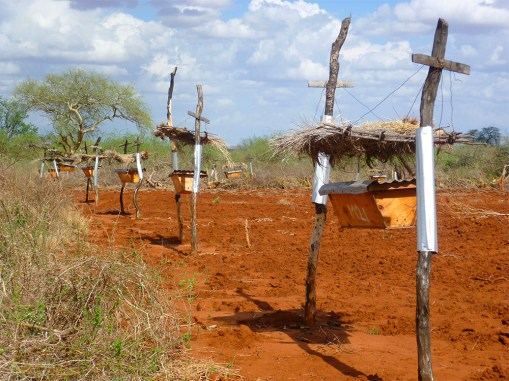
Hanging beehives create a natural deterrent fence around crops in Kenya. Via ThisIsColossal

In Africa and India, elephants can be huge–literally–agricultural pests. Stomping casually through plantations, plowing over fences and crushing or devouring crops, these nearly unstoppable giants are often shot by farmers not for any ivory-related avarice, but rather out of a desire to protect their livelihood that lives in the form of fruits and vegetables.

A more pacific method of keeping elephants out of agricultural areas that I have seen in southern India is deep and wide trenches surrounding the plantation, which elephants are loath to cross since they are likely to get stuck. Of course, these moats are understandably impossible to replicate everywhere, and biologist Lucy King has been studying the possibility of creating another sort of fence since 2006.

As you can see from the photo above, Dr. King’s idea was Continue reading

Sheepdogs Active in Wildlife Conservation Yet Again

Phillip Root with the Maremma sheepdogs of Middle Island, Australia. The dogs were introduced there in 2006 to protect the little penguin, a native species. Credit David Maurice Smith for The New York Times

A few years ago, we shared the story of an effort by the Cheetah Conservation Fund in South Africa as part of their Cheetah Outreach project that involved Anatolian shepherd dogs. The idea was to help livestock owners raise the sheepdogs to guard their herds and therefore not feel the need to kill cheetahs that might see the sheep as potential prey. This program has worked out well, and now we’re hearing from the New York Times about another success story in Australia, although in this case the sheepdogs aren’t protecting livestock: they’re guarding the Little Penguin on Middle Island, Victoria from the introduced red fox.

‘Massacred,’ read the banner headline in the local newspaper — just the single word, as if describing an act of war. Below it was a photo of dead penguins and other birds, the latest casualties in Australia’s long history of imported species’ decimating native wildlife.

Foxes killed 180 penguins in that particular episode, in October 2004. But the toll on Middle Island, off Victoria State in southern Australia, kept rising. By 2005, the small island’s penguin population, which had once numbered 800, was below 10.

Continue reading

Cod’s Feeling the Heat

Zach Whitener, research associate at the Gulf of Maine Research Institute, holds a cod while collecting samples for a study. PHOTO:  Gulf of Maine Research Institute

Zach Whitener, research associate at the Gulf of Maine Research Institute, holds a cod while collecting samples for a study. PHOTO: Gulf of Maine Research Institute

As climate change has warmed the Earth, oceans have responded more slowly than land environments. But scientific research is finding that marine ecosystems can be far more sensitive to even the most modest temperature change. A telling effect of rising temperatures is the problems fishing is plagued by.

Cod was once so plentiful in New England that legend had it you could walk across the local waters by stepping on the backs of the fish. Now, though, this tasty species is in such trouble there that cod fishing is practically shut down. And scientists say it looks like rapid warming in the Gulf of Maine explains why regulators’ recent efforts to help the cod while allowing fishing were a failure.

Continue reading

A Tiny Land and Its Large Ocean Reserve

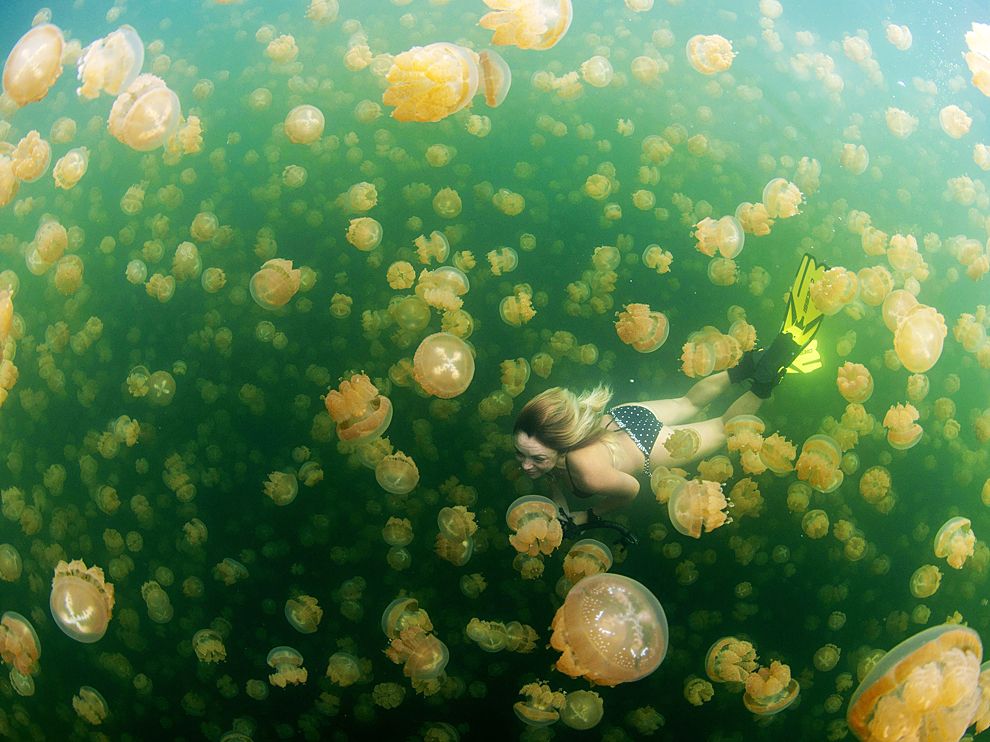
The president of Palau signed legislation Wednesday designating a reserve that's about 193,000 square miles (500,000 square kilometers) in size. This makes it one of the five largest fully protected marine areas in the world. PHOTO: National Geographic

The president of Palau signed legislation Wednesday designating a reserve that’s about 193,000 square miles (500,000 square kilometers) in size. This makes it one of the five largest fully protected marine areas in the world. PHOTO: National Geographic

The Chilean government recently announced that it has created the largest marine reserve in the Americas by protecting an area hundreds of miles off its coast roughly the size of Italy. The new area, called the Nazca-Desventuradas Marine Park, constitutes about eight percent of the ocean areas worldwide that have been declared off-limits to fishing and governed by no-take protections. Now, the Pacific island nation of Palau has resolved to protect nearly 80% of its oceans.

Continue reading

When Development Usurps Lakes

Half of the water bodies in and around Srinagar have disappeared over the last century under the pressure of rapid and badly managed urbanisation. PHOTO:

Half of the water bodies in and around Srinagar have disappeared over the last century under the pressure of rapid and badly managed urbanisation. PHOTO: Kunzum

Urban India is witnessing a rapid growth with more than 300 million Indians already living in cities and towns. In the coming 20-25 years, another 300 million people will be added to the urban population. If not managed properly, Indian cities will turn into ecological disaster zones. In a hurry to expand, cities have already eaten into their local water bodies. Kashmir, the land of snow\clad mountains and unrivaled natural beauty, is feeling the heat already.

The beautiful Kashmir Valley has over a thousand small and large water bodies, which are the bedrock of both its ecology and its economy. Unfortunately over the last century, massive urbanisation around these water bodies has led to pollution, siltation due to deforestation and overexploitation of the many streams and lakes. Many have shrunk to a fraction of their original size while some have all but disappeared.

Continue reading

Saving the Hill of Her Childhood

Plant and animal life on Flag Hill, near the hill station town of Mussoorie in north India, has been restored through the efforts conservationist Sejal Worah.

Plant and animal life on Flag Hill, near the hill station town of Mussoorie in north India, has been restored through the efforts conservationist Sejal Worah.

Environmentalist and WWF India Programme Director, Sejal Worah, and her local team have spent the last two years attempting to revive a 400 acres area situated in the Garwhal Himalayas, in Mussoorie, Uttarakhand.  From being a degraded and over grazed territory, within two years of conservation efforts the protected area has become a sanctuary for wildlife which hadn’t been reported for years, like the Himalayan black bear and Sambhar deer.

Continue reading

When a Way of Life Melts With the Ice

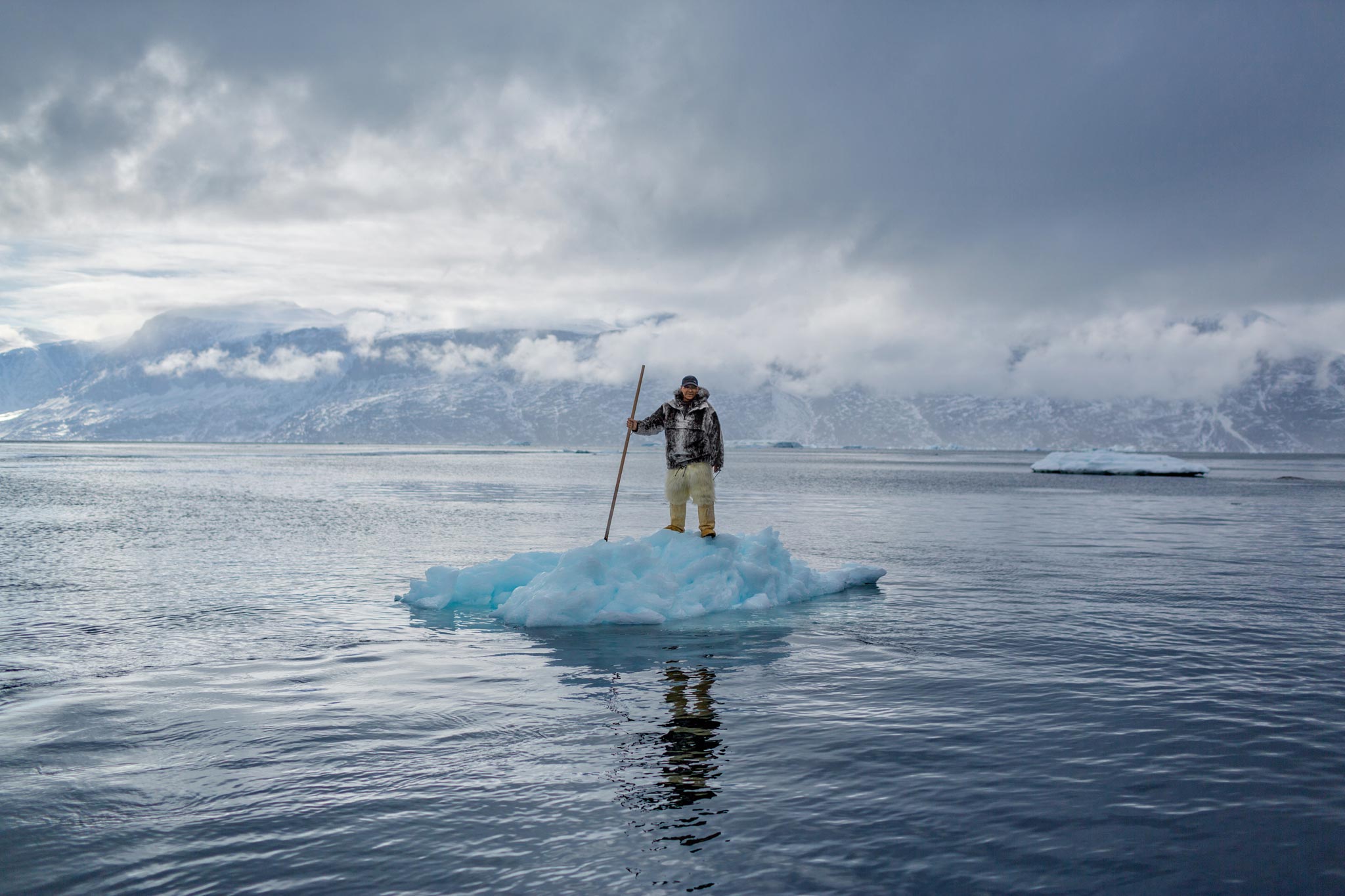
Albert Lukassen’s world is melting around him. When the 64-year-old Inuit man was young, he could hunt by dogsled on the frozen Uummannaq Fjord, on Greenland’s west coast, until June. This photo shows him there in April. PHOTO:  Ciril Jazbec

Albert Lukassen’s world is melting around him. When the 64-year-old Inuit man was young, he could hunt by dogsled on the frozen Uummannaq Fjord, on Greenland’s west coast, until June. This photo shows him there in April. PHOTO: Ciril Jazbec

Climate change – a situation that choices can better, but circumstances see it go from bad to worse. Much talk, much less done. Temperatures rise, glaciers melt, and seas begin to usurp shores. Also, people like the natives of Kiribati and now the Inuit are forced to rethink ways to survive on their lands which once provided for all. And did not threaten their lives. National Geographic reports from the North:

Something else is vanishing here too: a way of life. Young people are fleeing small hunting villages like Niaqornat. Some of the villages struggle to support themselves. And now a culture that has evolved here over many centuries, adapting to the seasonal advance and retreat of sea ice, is facing the prospect that the ice will retreat for good. Can such a culture survive? What will be lost if it can’t?

Continue reading

Nature’s Waste Management Powerhouse

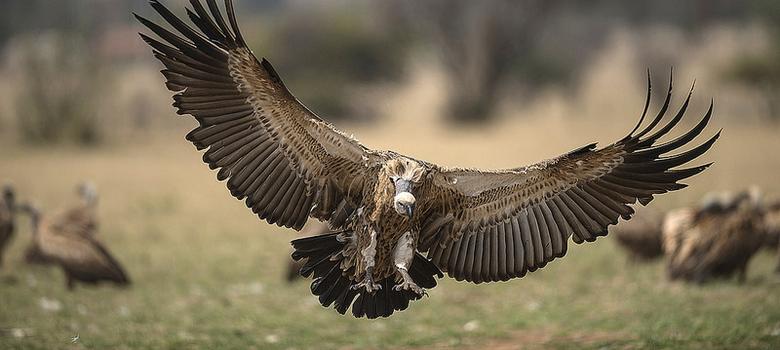
69% of vulture and condor species are listed as threatened or near-threatened, most of which are classed as “endangered” or “critically endangered”.

69% of vulture and condor species are listed as threatened or near-threatened, most of which are classed as “endangered” or “critically endangered”. PHOTO: Mujahid Safodien

Vultures play an important role in the ecosystem by consuming animal carcasses, which helps prevent the spread of disease. The cinereous vulture (Aegypius monachus), the largest bird of prey is distributed throughout Eurasia and is an iconic bird in the Far East. Its population is estimated to number 7,200–10,000 pairs globally, with 5,500–8,000 pairs residing in Asia. Over the past two centuries, its numbers have declined across most of its range leading to this species being classified as ‘near threatened’ on the International Union for Conservation of Nature (IUCN) Red List.

Continue reading

Look At the Germans

Wind turbines surround a coal-fired power plant near Garzweiler in western Germany. Renewables now generate 27 percent of the country’s electricity, up from 9 percent a decade ago. PHOTO: Nat Geo

Wind turbines surround a coal-fired power plant near Garzweiler in western Germany. Renewables now generate 27 percent of the country’s electricity, up from 9 percent a decade ago. PHOTO: Nat Geo

Germany has been one of the few countries that have successfully moved away from nuclear energy. Germany has so far successfully shut down its nine units that had the capacity of generating enough power for at least 20 million homes in Europe. In fact, the contribution of nuclear power in Germany’s electricity generation has now fallen to just 16 percent and renewables are now the preferred source of electricity generation in the country.

Germany is pioneering an epochal transformation it calls the energiewende—an energy revolution that scientists say all nations must one day complete if a climate disaster is to be averted. Last year about 27 percent of its electricity came from renewable sources such as wind and solar power, three times what it got a decade ago and more than twice what the United States gets today. The change accelerated after the 2011 meltdown at Japan’s Fukushima nuclear power plant, which led Chancellor Angela Merkel to declare that Germany would shut all 17 of its own reactors by 2022.

Continue reading

Let the Corals Have Their Colors

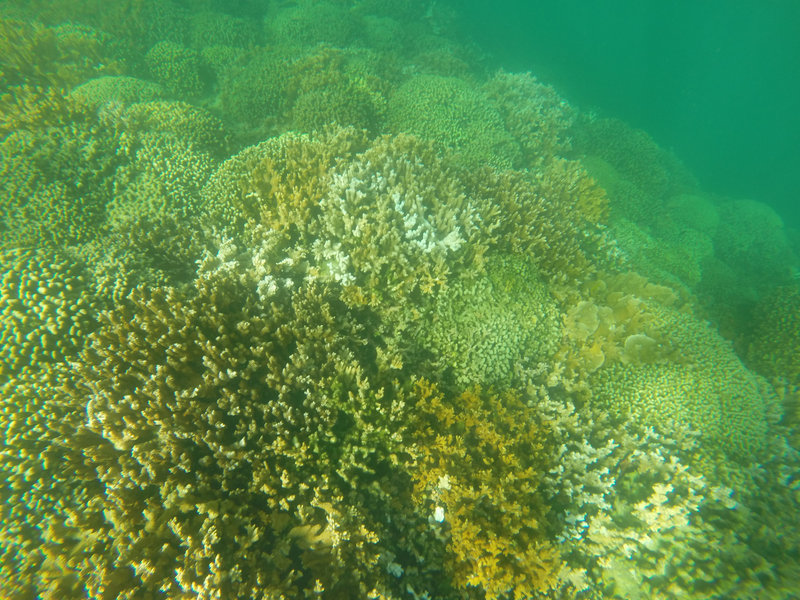
Partially bleached coral in Kaneohe, Hawaii. Coral reefs worldwide are at risk of damage from the suncscreen ingredient oxybenzone. PHOTO: AP

Partially bleached coral in Kaneohe, Hawaii. Coral reefs worldwide are at risk of damage from the suncscreen ingredient oxybenzone. PHOTO: AP

Corals worldwide are losing their colors, they are getting bleached. We’d discussed how stress due to global warming and climate change is forcing corals to drive out the zooanthellae that give them their colors. And now here’s more evidence on how human lifestyles are affecting life beneath the waters.

New research about sunscreen’s damaging effects on coral reefs suggests that you might want to think twice before slathering it on. Reports about the harmful environmental effects of certain chemicals in the water have been circulated for years, but according to the authors of a new study, the chemicals in even one drop of sunscreen are enough to damage fragile coral reef systems. Some 14,000 tons of sunscreen lotions wind up in coral reefs around the world each year.

Continue reading

To Keep The Mountain Gorillas Alive

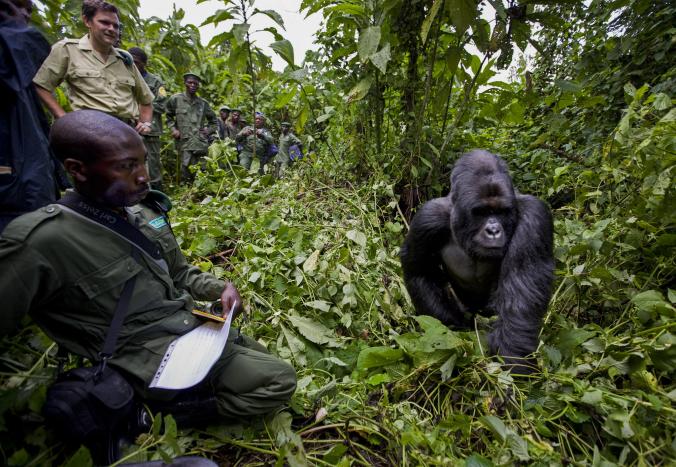
In November 2008, conservation authorities in the DRC had their first sighting of a mountain gorilla in more than 15 months. Because of the commitment and bravery of its rangers, the gorilla population is now estimated to be 880. PHOTO: BRENT STIRTON, GETTY

In November 2008, conservation authorities in the DRC had their first sighting of a mountain gorilla in more than 15 months. Because of the commitment and bravery of its rangers, the gorilla population is now estimated to be 880. PHOTO: BRENT STIRTON, GETTY

The Virunga National Park in the Democratic Republic of Congo is one of the world’s deadliest parks. It’s also home to some 300 mountain gorillas—more than a quarter of those that remain on the planet. Beneath Virunga’s surface lies a wealth of minerals and oil, coveted by multinational companies. Deadliest park because since 1996, more than 150 Virunga rangers have been killed in the line of duty. Emmanuel de Merode, director of Virunga National Park and a National Geographic Society Explorer of the Year, was nearly killed in 2014 for protecting the park and its mountain gorillas.

Continue reading