Periyar Sightings, Gavi

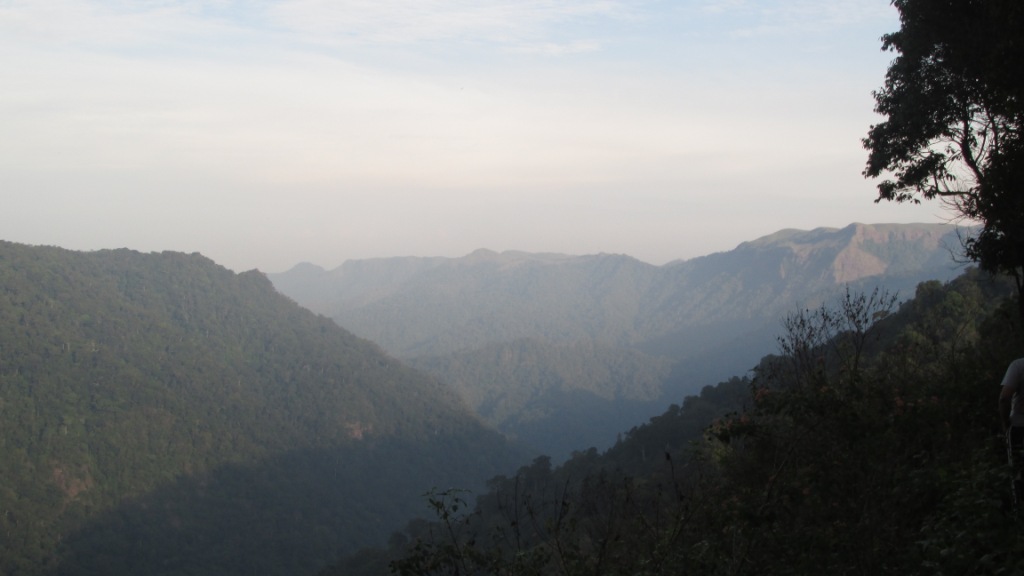
Gavi, part of the Periyar Tiger Reserve under the management of the Kerala Forest Development Corporation, is one of the off-the-beaten-track destinations ideal for a wilderness retreat replete with trekking, birding, canoeing and facilities for lodging. There are hills and valleys, tropical forests, sprawling grasslands, sholas (evergreen tropical forests), cascading waterfalls and cardamom plantations. Elephants, Nilgiri Thar, and the endangered Lion-tailed macaque are all often sighted at the outskirts of Gavi. Yesterday Mr. Sunu from Kottayam visited Gavi and shared some of his photos. Continue reading

Biophilia in Action

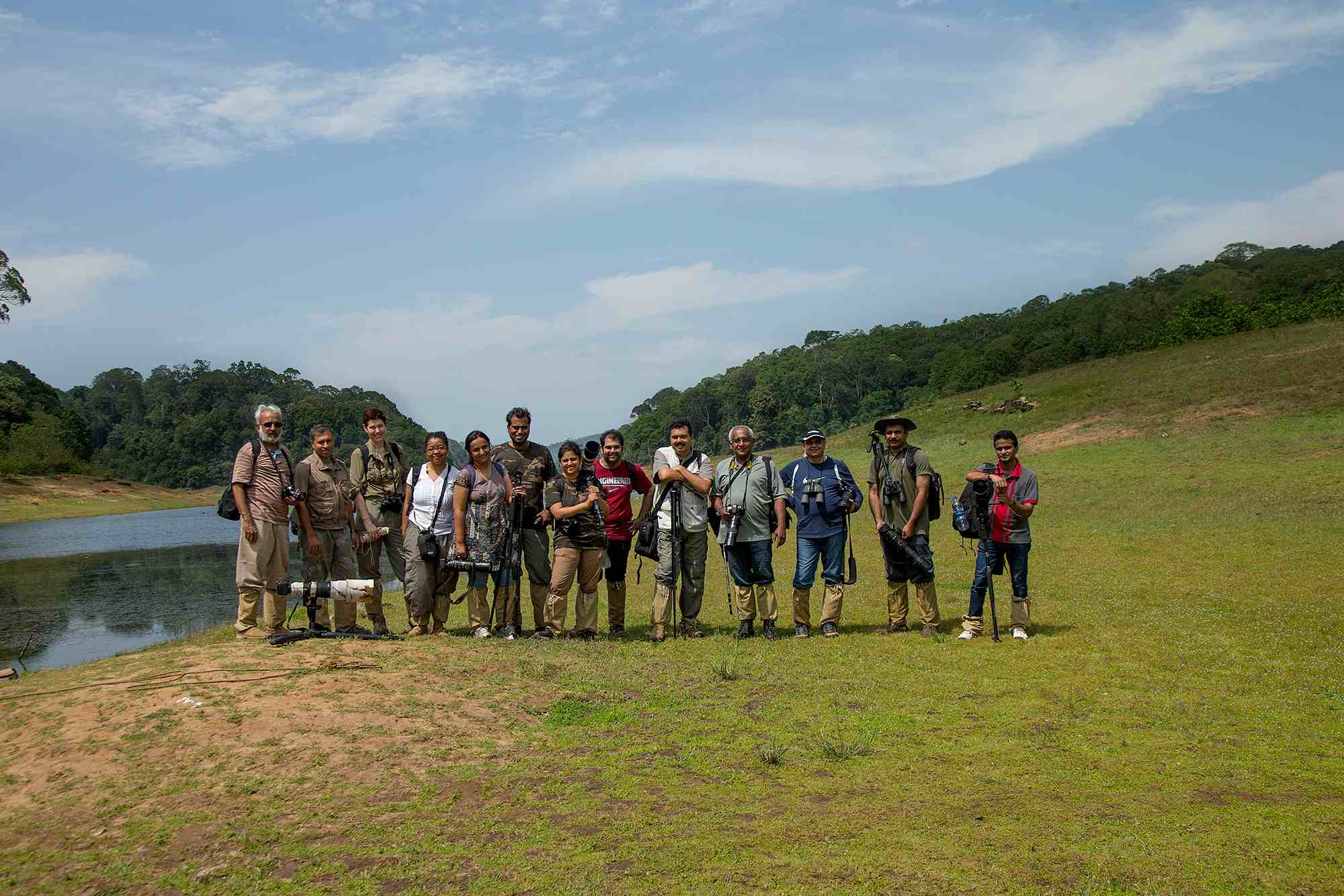
Master Wildlife Photography class in Periyar Tiger Reserve

Master Wildlife Photography class in Periyar Tiger Reserve

We’ve referred to the concept of Biophilia on these pages beforedefined by the Oxford English Dictionary as “A love of or empathy with the natural world, esp. when seen as a human instinct”—in other words, it’s an innate human desire to seek out nature.

This concept was played out last weekend when a group of photographers gathered at Cardamom County at the edge of the Periyar Tiger Reserve to attend a Master Class with Sudhir Shivaram, a renowned wildlife photographer in India. The fact that the majority of the participants have “day jobs” in the worlds of IT, engineering and medicine make the word Biophilia all the more relevant. Continue reading

Out On A Limb

Dr. “Canopy Meg” Lowman, uses the canopy walkway to study leaf growth and defoliation in the forest canopy

Dr. “Canopy Meg” Lowman, uses the canopy walkway to study leaf growth and defoliation in the forest canopy

Nicknamed the “Real-Life Lorax” by National Geographic and “Einstein of the Treetops” by the Wall Street Journal, Meg Lowman pioneered the science of canopy ecology. She is currently the Director of the Nature Research Center at the North Carolina Museum of Natural Science, and research professor at NCSU. For over 30 years, “Canopymeg” has solved mysteries of insect pests and ecosystem health in the highest layer of the world’s forests, designing the tools of the trade- hot-air balloons and walkways for treetop exploration- as she went. Her personal mantra is “no child left indoors.” Continue reading

What do a Super Bowl Hero and a Forest Biologist Have in Common?

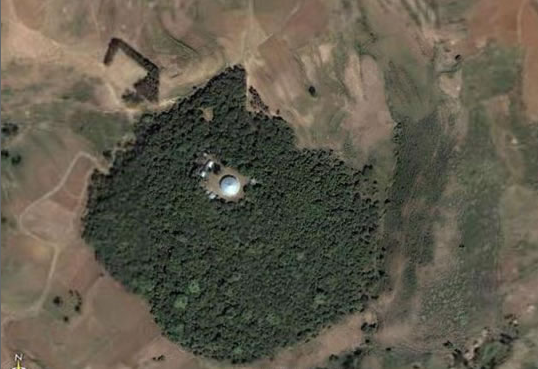
Debresena church forest- South Gondar, Ethiopia (Picture from Google earth)

Debresena church forest- South Gondar, Ethiopia (Picture from Google earth)


“I can try to explain it to you, but unless you see it for yourself, you really can’t gasp the situation. They’re going through one of the worst droughts ever, it’s barely rained in three years. There is no water to grow vegetation, no water to drink. Everything is like desert. For people in the United States, it’s hard to wrap your mind around that.”   

Anquan Boldin, Football star for Baltimore Ravens, winner of the 2013 SuperBowl

As a nerdy scientist, I was never a SuperBowl fan. This year when Anquan Boldin, who shares my passion for building stone walls in Ethiopia, made the first touchdown of the winning Baltimore Ravens, I became one. Continue reading

Indonesia’s Tipping Point

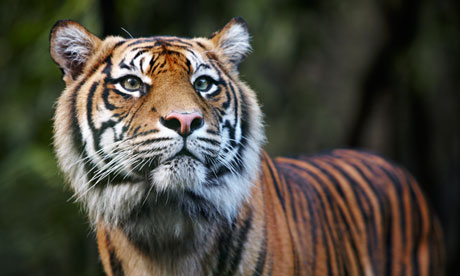
A Sumatran tiger, one of thousands of species threatened by palm oil plantations and paper and timber businesses. Photograph: Allan Baxter/Getty Images

Photograph: Allan Baxter/Getty Images. A Sumatran tiger, one of thousands of species threatened by palm oil plantations and paper and timber businesses.

A recent headline in the Guardian‘s Environment section was titled:

Indonesia’s tropical forests set to benefit from further clearing ban

Susilo Bambang Yudhoyono expected to sign extended deal to help restore habitat of tigers and orangutans

This was bound to get our attention, especially after a series of articles in recent months showing that this could go in either direction, not only for Indonesia but any number of countries in the region.  Indonesia is a developing country whose fulcrum might allow market forces to push (or pull?) it to ecological dystopia, or toward some more sane ecological outcome.

Continue reading

First Egg: Same Box; Same Female; Same Ordinal Date!

We couldn’t believe it either, but an ASY female (an ASY is a bird known to have hatched earlier than the calendar year preceeding the year of banding) that we banded last year has returned to the same box at the same site, built a nest and laid her first egg on the same ordinal date as last year. (In 2012, February had 29 days and the first egg arrived on April 30th, this year February has 28 days and the first egg arrived on May 1st.)  We celebrated how any other field biologists in the middle of nowhere would – a hot cup of tea and an invigorating game of cribbage. Continue reading

Artisanal Glass & Natural History

Intro jelly fishAn article in today’s New York Times by C. Drew Harvell profiles the Blaschkas, glassmakers who were commissioned to create anatomically perfect sculptures of marine creatures for scientific purposes starting in the late 1800s, and current efforts to find living specimens of the same. From the introduction to one of the original collections, at Cornell University:

Before Jacques Cousteau and the aqualung, before Kodachrome and underwater photography – there were the Blaschkas, father and son glassworkers who produced some of the most extraordinary glass objects that have ever been made. Their work has been described as “an artistic marvel in the field of science and a scientific marvel in the field of art.”

Artifacts inevitably reflect the cultural values leading to their creation. In 19th century Europe and America, an explosion of interest in science and education directly affected Leopold and Rudolf Blaschka. Reflecting these interests, new museums were built and opened to the public. They differed from earlier museums not only by admitting the public but also by featuring collections that illustrated science and natural history and often displayed systematic arrangements of plants and animals.

Continue reading

Madagascar Pochard, Rescued From Expected Extinction

This slideshow requires JavaScript.

We are always more than happy to share news stories where a turn of luck, a bit of effort, and/or the will to survive keep a species in the game.  Here we thank Dr. Lee Durrell, the WCT and the WWT for their news release on the return of a nearly gone group of ducks:

The Madagascar pochard – arguably the world’s rarest bird – has bred successfully in captivity building hope that it can be saved from extinction.

Eighteen precious pochard ducklings are being reared at a specially built centre in Antsohihy, Madagascar, opened last year by Dr Lee Durrell. The birth of the ducklings is a key milestone in the conservation of the species, including an emergency expedition two years ago to take eggs into captivity. It is the ducks from those eggs that have now bred for the first time. Continue reading

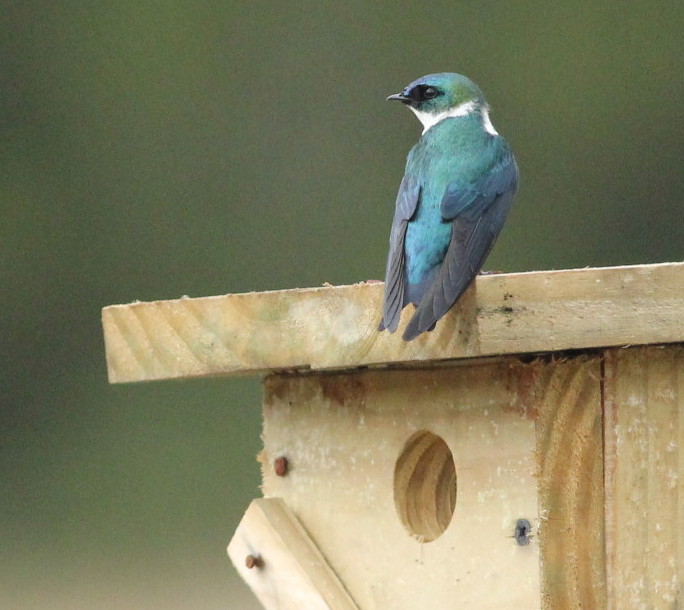
Tracking The Golden Swallow

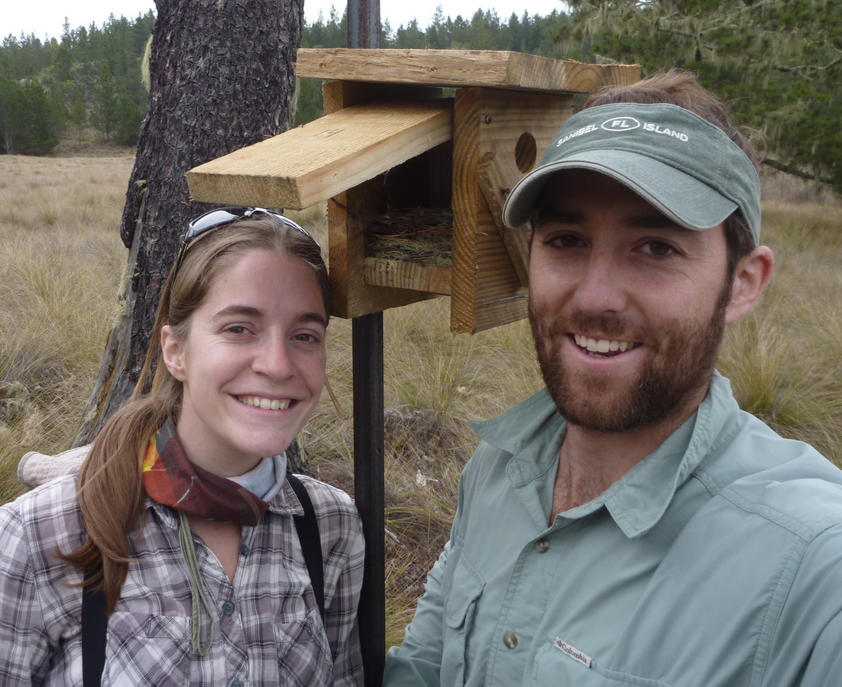
Marisol and Justin

Marisol and Justin

Dear La Paz Group followers,

I’m excited to have been invited to share with you current updates from the Cordillera Central of the Dominican Republic where I am active in uncovering the life history traits and conservation strategies surrounding the Golden Swallow (Tachycineta euchrysea), a threatened passerine endemic to the island of Hispaniola. Continue reading

Underdogs, Against All Odds, Stage Successful Comeback

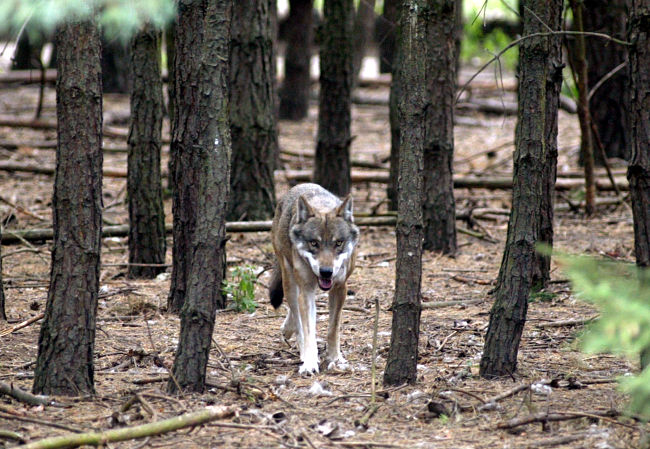
Thanks to the Atlantic Monthly‘s website for this story (click the image above to go to the source) about the resurgence of one of nature’s most historically feared beasts. Although the return of these animals has made relations between conservationists and farmers more difficult in Germany as elsewhere, the net gain for our natural world speaks for itself:

…Wolves have been absent from Germany for nearly a century, hunted out of existence by the end of the 1800s.

But over the past 10 years, they’ve made a comeback as packs from Poland and Russia have migrated into the sparsely populated eastern German state of Brandenburg. Today, some 160 wolves in 17 packs rove south and east of the capital Berlin, occasionally wandering into the city. Continue reading

For Bees, Europe Does The Right Thing

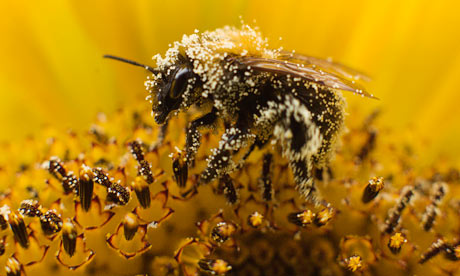
A bee collects pollen from a sunflower in Utrecht, the Netherlands. EU states have voted in favour of a proposal to restrict the use of pesticides linked to serious harm in bees. Photograph: Michael Kooren/Reuters

A bee collects pollen from a sunflower in Utrecht, the Netherlands. EU states have voted in favour of a proposal to restrict the use of pesticides linked to serious harm in bees. Photograph: Michael Kooren/Reuters

At a time when news out of Europe often points to political dysfunction, on at least one front we can point to some good news for these creatures who need help perhaps more than ever, and deserve it; they are finally getting it in at least one part of the world:

Europe will enforce the world’s first continent-wide ban on widely used insecticides alleged to cause serious harm to bees, after a European commission vote on Monday.

The suspension is a landmark victory for millions of environmental campaigners, backed by the European Food Safety Authority (EFSA), concerned about a dramatic decline in the bee population. The vote also represents a serious setback for the chemical producers who make billions each year from the products and also UK ministers, who voted against the ban. Both had argued the ban would harm food production. Continue reading

Who am I and what am I doing in Ecuador?

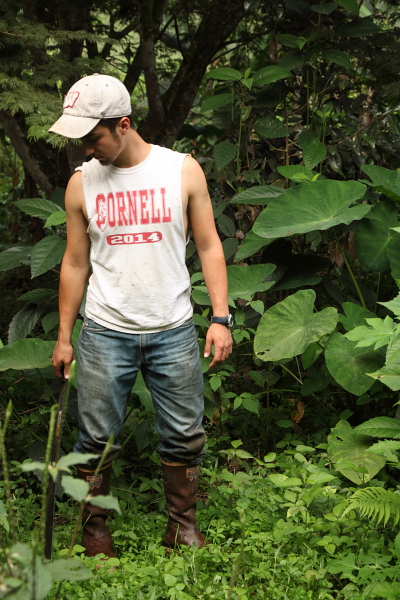
I ask myself that every so often. My name is Evan Barrientos, I was raised in suburban Wisconsin and I go to school at Cornell University in upstate New York. So why am I on a farm in Ecuador right now? The short answer is that I’m about to begin a study on sustainable agriculture and I thought the readers of Raxa Collective might like to hear about it.

Farmer Evan

Farmer Evan

I’m interested in large-scale conservation solutions that make big impacts. There’s nothing wrong with small changes, I’ve just always been a big-picture kind of person. Continue reading

Lost and Found In Ghana

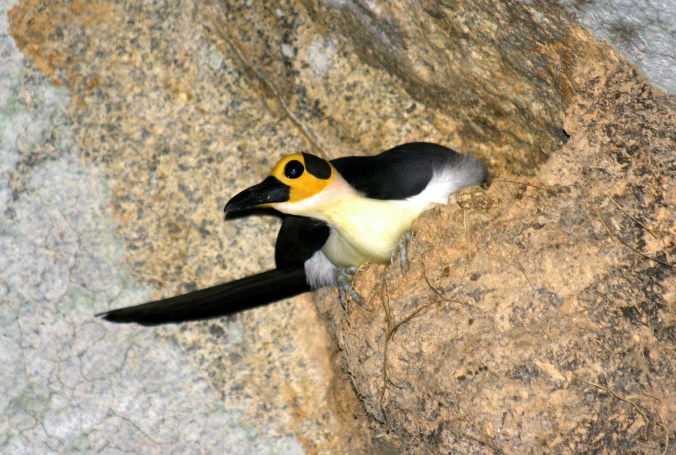
White-necked Picathartes - Photo Credit: David Shackelford Rockjumper Birding Tours

White-necked Picathartes – Photo Credit: David Shackelford Rockjumper Birding Tours

In March we’d introduced the White-necked Rock Fowl in our Bird of the Day series, and then neglected to tell the full story behind this charismatic bird. Shame on us! But better late than never I’m happy to share it now.

West Africa’s Upper Guinean forest block stretches along the coast from Sierra Leone to Ghana, and along with the Congolian forest block is considered a biodiversity hotspot. Up until the mid-1960s-early 1970s it is believed there were at least 200-300 breeding pairs of the endemic white-necked picathartes in Ghana alone. But up until 10 years ago there hadn’t been reports of the bird for nearly 4 decades, leading conservationists to believe it eradicated from the region.

Our colleague John Mason from the Nature Conservation Research Centre (NCRC) in Ghana has provided us with this fascinating story:

Efforts to locate rockfowl were not successful until 2003, when a research team from Louisiana State University, working in collaboration with NCRC and WD, re-discovered rockfowl in Ghana.  A single individual was mist-netted and one breeding site was recorded in the Subim Forest Reserve.  Subsequently the Ghana Wildlife Society located two additional colonies near this first site.  Continue reading

Earth Day In Historical Context

Earth Day began as a minimally organized teach-in.

Earth Day began as a minimally organized teach-in.

Those who do not know their environmental history may or may not be doomed, but they are missing something. Knowing the history is a pleasure in itself, as this article in the current issue of the New Yorker demonstrates.  Know this:

…Earth Day’s success was partly a matter of timing: it took place at the moment when years of slowly building environmental awareness were coming to a head, and when the energy of the sixties was ready to be directed somewhere besides the Vietnam War and the civil-rights movement. A coterie of celebrated environmental prophets—Rachel Carson, David Brower, Barry Commoner, Paul Ehrlich—had already established themselves, and Rome reminds us of  Continue reading

Ecology’s Social Enterprise

ESA


This organization (click the banner above to go to the site), new to us but working its way to a centennial birthday (click the banner below to go to that section on the website)–

ESA History


A meeting was held at Columbus, Ohio, on December 28th, 1915, at which it was decided to organize the Ecological Society of America….The interests and activities of this society will be of the broadest character, embracing every phase of the relation of organisms to their environmental condition…–The Geographical Review 1916–

About the Ecological Society of America

1914: The beginning…

–is as modern and practical as one could want, including this section on its website titled Explore Ecology As A Career with a wealth of links and related resources:

Ecology As A Career

What Do Ecologists Do? Continue reading

Innovation And Toxic Hope

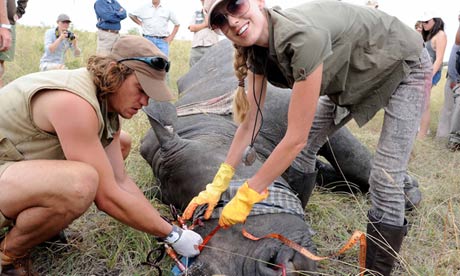
The Sabi Sand Game Reserve is injecting non-lethal chemical mixtures into rhino's horns. Photograph: David Smith/Sabi Sand Game Reserve

The Sabi Sand Game Reserve is injecting non-lethal chemical mixtures into rhino’s horns. Photograph: David Smith/Sabi Sand Game Reserve

We have only occasionally mentioned the facts surrounding the epidemic slaughter of rhinoceros, mainly because the stories are hopelessly hopeless almost (but not all) all the time. This one may be either another case in point, or a perverse example of innovation in times of extreme need. Click the image above to go to the story in the Guardian:

A game reserve in South Africa has taken the radical step of poisoning rhino horns so that people risk becoming “seriously ill” if they consume them.

Sabi Sand said it had injected a mix of parasiticides and indelible pink dye into more than 100 rhinos’ horns over the past 18 months to combat international poaching syndicates. More than 200 rhinos have been poached so far this year in South Africa, driven by demand in the far east, where horn ground into powder is seen as a delicacy or traditional medicine. Continue reading

Reviving an Iraqi Oasis

This slideshow requires JavaScript.

Thirty years ago, Iraq’s Mesopotamian Marshes were referred to by biblical scholars as the Garden of Eden. Fed by the iconic Tigris and Euphrates rivers, for more than 7,000 years this enormous marshland of over 6,000 square miles (twice the size of the Everglades National Park) provided a bountiful home for both wildlife and humans. A large population of indigenous people, the Ma’dan Tribes known as Marsh Arabs, had thrived there for centuries. But in the political conflicts of the 1990s, Saddam Hussein attempted to eradicate them by destroying the marshes on which they depended for survival. The canals and embankments that both diverted the river water away from and prevented it from entering the area caused the marshes to shrink to less than 10% of its original size, transforming the remainder into a parched, lifeless desert; forcing the wildlife and the people to leave.

We are happy to write that the story doesn’t end there. Continue reading

Coffee’s Contentments

In the mid-1990s I moved with Amie and our two sons Seth and Milo from Ithaca, NY in the USA to Costa Rica for my first post-Ph.D. venture, working with the governments and business leaders in each country of Central America.  The project combined a few then-young strategic and economic development models–competitiveness, economic clustering, and sustainable development–with several of their luminary proponents from Harvard Business School and at the Harvard Institute of International Development.  My job was to take those ideas and apply them to my area of expertise as a newly minted Ph.D. from Cornell University.

Sustainable Tourism Development was the terminology applied to this hybrid. In 1996, the third country in my regional rotation was El Salvador, after Costa Rica and Nicaragua. I have not had reason to think of El Salvador lately, but a nearly-lost article in my to-read-later folio popped out today:

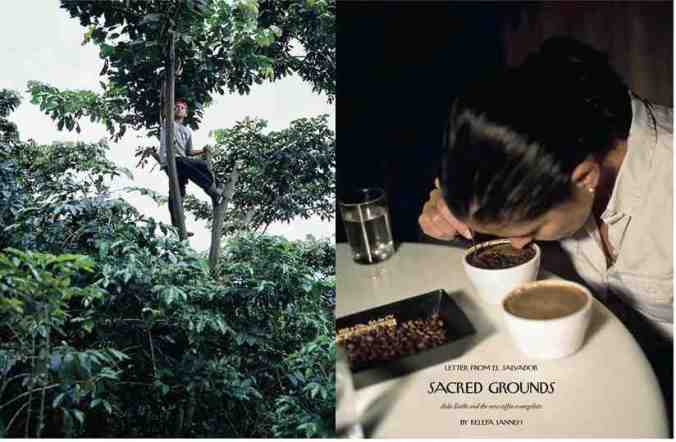
Aida Batlle is a fifth-generation coffee farmer and a first-generation coffee celebrity. On the steep hillsides of the Santa Ana Volcano, in western El Salvador, she produces beans that trade on the extreme end of the coffee market, where a twelve-ounce bag may cost twenty dollars or more and comes accompanied by a lyrical essay on provenance and flavor. These beans have made Batlle an object of obsession among coffee connoisseurs and professionals–the coffee equivalent of a European vigneron–and she is willing to play the role, if it helps raise coffee’s status. Continue reading

Ghana, Canopy Walkways, Conservation

TNC Green Science Blog


Click the banner above to go to the blog, and the image below to go to the most recent post:

Boucher’s Birding Blog: Mamba Meets Bushbaby

MARCH 15, 2013  |  by: Timothy Boucher
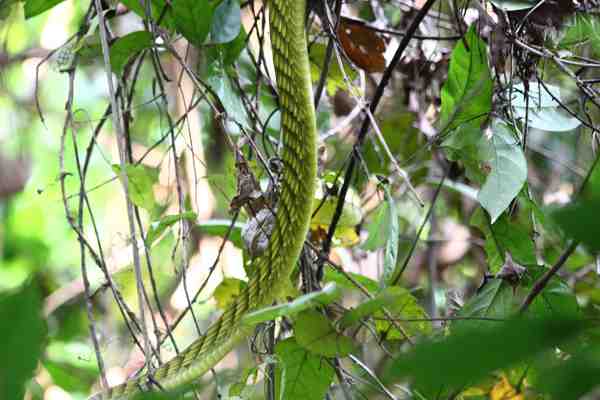
Many visitors see the canopy walkway as a low-tech amusement ride. But look closely, and wonders await: like this green mamba slithering past. Tim Boucher/TNC

Many visitors see the canopy walkway as a low-tech amusement ride. But look closely, and wonders await: like this green mamba slithering past. Tim Boucher/TNC

Sometimes when you go birding, you can’t help but see other animals – elephants, army ants, beautiful butterflies.

Occasionally, if you get out early (as birders always do), you can get to a park before the crowds and you might see something really special (and, in this case, gruesome).

In January, we traveled to Ghana for some superb birding. Our visit included the famous canopy walkway at the Kakum National Park near the Ivory Coast. The seven bridges strung high up in the trees usually teem with visitors who have no appreciation of the amazing birdlife. Continue reading

Sharks As Charismatic Megafauna

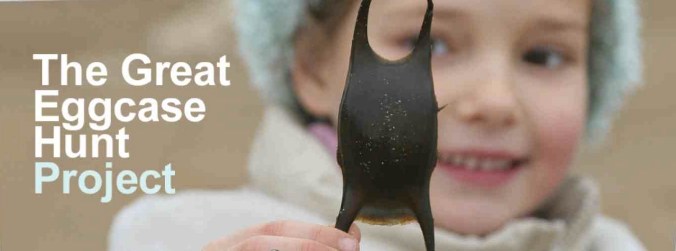
If you are like most people, the words shark and trust do not normally work well together in the same sentence. Sharks are predators, and predators predate. So unless you are a professional you should not take anything for granted when in their waters. But the two words work together well in a sentence about this organization, and the project they have launched to help sharks is intriguing. Entrepreneurial, even.  Click the image above to read more about this initiative:

With over 600 species of skate and ray worldwide, at least 16 species have been regularly recorded in UK coastal waters; most of these species reproduce by laying tough leathery eggcases on the seabed. Of more than 30 species of British sharks, only two species lay eggcases that are commonly found on our beaches; the Smallspotted Catshark and the Nursehound. Continue reading