Conservation Literacy

Photo Credit: John Mason

Photo Credit: John Mason

We’ve mentioned how an interpretive guide can bring the rainforest to life before. We’ve even touched on the fact that sometimes the best of those guides have “poacher” on their resumés, which follows a similar logic to the observation that often the most devoted practitioners of a religion are the newly converted. Here I’d like to point out a recent study by researchers from Wageningen University, along with Kenyan and British colleagues, published in a recent article in the journal Biological Conservation that correlates the levels of literacy and education with general conservation and the long-term protection of local wildlife.

The team of ecologists evaluated the number of elephants across Africa’s continental range, irrespective of political boundaries. The analysis included the numbers of individual elephants and determined the relation with 19 ecological variables, including rainfall, forage and water availability, and 15 human variables, including human density, welfare, literacy rate, and habitat fragmentation.

Although environmental factors such as the availability of food and water were obviously important, it appears that human factors—including policies, corruption, or the country’s economy—are even more important than environmental factors.

The authors write that:

…even for such charismatic species as the African elephant (Loxodonta africana)…we show through continent-scale analysis that ecological factors, such as food availability, are correlated with the presence of elephants, but human factors are better predictors of elephant population densities where elephants are present. These densities strongly correlate with conservation policy, literacy rate, corruption and economic welfare, and associate less with the availability of food or water for these animals. Continue reading

See CITES Save

Loading rosewood timber on trucks at the port of Toamasina (Tamatave), Madagascar. Photograph: Babelon Pierre-Yves/Alamy

Loading rosewood timber on trucks at the port of Toamasina (Tamatave), Madagascar. Photograph: Babelon Pierre-Yves/Alamy

If the proclamations and rules coming out of CITES are even half-implemented, endangered species of various domains–aquatic, terrestrial, animal and plant–will find themselves on roads less perilous than the ones they have been on in recent decades:

Every species of mahogany and rosewood tree in Madagascar gained new protection on Tuesday against a rampant logging trade that threatens to wipe out some species before they are even discovered.

The 178 nations at the world’s biggest wildlife summit agreed unanimously to strictly regulate the international trade in mahogany timber. Continue reading

Interesting Intersections

This slideshow requires JavaScript.

We have pointed him out before, and will likely continue to do so; here, with a link to a catalogue archiving some of his earliest work as an adult artist. And there is a podcast of the radio show about entrepreneurs, From Scratch, featuring an interview with this artist that allows him to sit remarkably well with pioneers at the intersection of conservation and other pursuits:

Andy Goldsworthy

Sculptor

Some sculptors work with materials like bronze or marble, which last forever; but others build sculptures made of ice or snow, which last only a few moments.  Continue reading

Happy Birthday, Douglas Adams

One year ago today I posted this to make sure that anyone who loves this author would be aware that there are still opportunities to celebrate his life in tangible, meaningful ways that he would have appreciated.  I encourage anyone and everyone to continue to do so because the conservation needs have grown rather than diminished.  You might also enjoy his final public appearance above, which will give you 90 minutes of intense amusement and learning.   Continue reading

Conservation Could

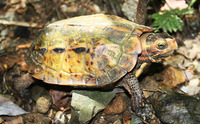
The Ryukyu Black-breasted Leaf Turtle is the subject of Japan's first ever listing proposal to CITES © Taku Sakod

The Ryukyu Black-breasted Leaf Turtle is the subject of Japan’s first ever listing proposal to CITES © Taku Sakod

We are always hoping for good news related to wildlife, whether through habitat conservation, rebounding endangered species, or any of a number of other worthy initiatives to reverse human impact on our fellow species on this planet. We often find more bad news than good. Several stories we have linked to recently report on the progress, and lack thereof, at the CITES gathering in Thailand. This conservation story evokes a certain engine that could:

Bangkok, Thailand, 8th March 2013—Japan is asking the world’s governments to help protect the Ryukyu Black-breasted Leaf Turtle, a rare turtle found on only three small islands in the Okinawa group. Continue reading

A Petition, A Meeting, A Smile

th_pm

On behalf of elephants, the 1.5 million people who signed a petition to this end, and all the other people who care about their welfare, including the ecosystems where they continue to exist in the wild, we extend our strongest thanks for this announcement–years late but still very much appreciated. We hope, following the smiling moment at this important meeting, you will back it up with strict enforcement (click the image to the left for the full press release on the CITES website):

On behalf of the Government and people of the Kingdom of Thailand, I would like to welcome all of you to Bangkok, for the 16th Meeting of the Conference of the Parties to the Convention on International Trade in Endangered Species of Wild Fauna and Flora or CITES CoP16. Continue reading

For Wales?

The Oxapampa-Ashaninka-Yanesha UNESCO biosphere reserve in central Peru. The Welsh funds will help the Ashaninka preserve their forests. Photograph: Nicholas Gill/Alamy

“For Wales? Why Richard, it profit a man nothing to give his soul for the whole world. . . but for Wales!” ― Robert Bolt, A Man for All Seasons

When Richard Rich betrayed, he did so for rewards related to Wales. Thomas More, in top shelf literary insult, takes him to task for it by emphasizing the pathos of having betrayed for profits as meager as Wales.

If you have been to Wales, you know it has nothing to be ashamed of in terms of physical beauty.  And as for cultural beauty, Dylan Thomas or Richard Burton could tell Robert Bolt or Thomas More for that matter a thing or two about Wales.  But now, Wales shows a creative streak in this contribution to conservation, perhaps a deeper greatness than other classics in its history. Continue reading

If You Happen To Be In Bangkok

Associated Press. Stuart Chapman, a regional representative of the World Wildlife Fund, presented a petition for a blanket ban on the ivory trade to Thailand’s prime minister, Yingluck Shinawatra, on Wednesday.

You might want to lend your signature to the petition mentioned below, for which we thank WWF:

As my colleague Erik Olsen just noted here, many threatened species will be competing for attention when officials from 177 countries open a conference on the trade in endangered species on Sunday in Bangkok. Continue reading

Happy Birthday Ansel!

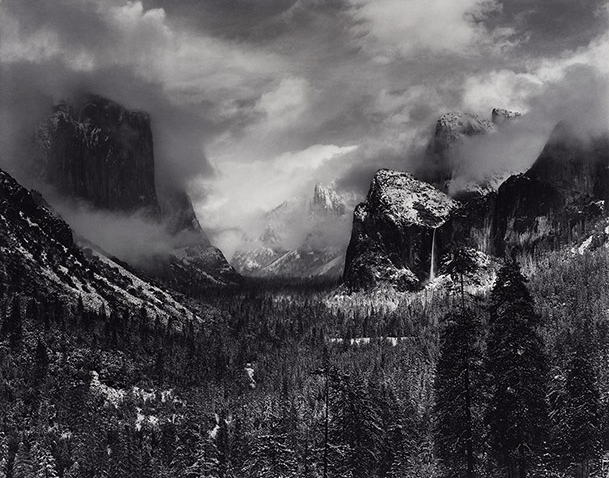
Clearing Winter Storm, Yosemite national park, California, about 1937

Clearing Winter Storm, Yosemite national park, California, about 1937

Ansel Adams has become almost synonymous with the environmental movement in general and Yosemite National Park in particular. He first visited the park when he was 14 and the impression he had at that age would last a lifetime. His photographs played a seminal role in convincing Congress to place that amazing landscape under federal protection.

Yosemite Valley, to me, is always a sunrise, a glitter of green and golden wonder in a vast edifice of stone and space. I know of no sculpture, painting or music that exceeds the compelling spiritual command of the soaring shape of granite cliff and dome, of patina of light on rock and forest, and of the thunder and whispering of the falling, flowing waters…

— Ansel Adams, The Portfolios Of Ansel Adams Continue reading

Camera Traps, Unite

This slideshow requires JavaScript.

Sharing technology, data, knowhow.  Pooling resources in the common interest across regions of the tropical world for the sake of biodiversity conservation.  Take a look at what TEAM is doing. A six minute video appears on the Guardian‘s website, providing much-appreciated coverage:

One million images of wildlife in 16 tropical forests around the world have been captured by the Tropical Ecology Assessment and Monitoring (TEAM) Network. Since it began its work in 2008 to monitor changes in wildlife, vegetation and climate, cameras in the the Americas, Africa and Asia have photographed more than 370 different species including elephants, gorillas, chimpanzees, large cats, honey badgers, tapirs and tropical birds Continue reading

Recommissioning, Stronger Attention To Our Oceans

This slideshow requires JavaScript.

Folks we respect and admire, not retiring nor shrinking from the challenges, but rethinking what’s next, state their case here on opening day:

‘Outstanding opportunity for change’ – Global Ocean Commission launches

The Global Ocean Commission, an independent body of international leaders, launches today (12th February) with the aim of reversing degradation of the ocean and restoring it to full health and productivity.

Chaired by former Costa Rican President José María Figueres, South African cabinet minister Trevor Manuel and former UK Foreign Secretary David Miliband MP, the Commission brings together senior political figures including former Heads of State, Foreign Ministers and Finance Ministers from around the world, alongside business leaders and development specialists. Continue reading

If Green Is The New Black, Perhaps Polar Bear Is The New Panda

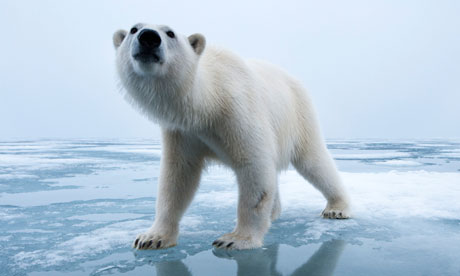
Some polar bears may have to be placed in temporary holding compounds until it is cold enough for them to go back on to the sea ice, say scientists. Photograph: Paul Souders/Corbis

Some polar bears may have to be placed in temporary holding compounds until it is cold enough for them to go back on to the sea ice, say scientists. Photograph: Paul Souders/Corbis

This story in the Guardian‘s Environment section, one of the longest stories that section has ever run, is worth the time to read.  It raises a kind of semi-doomsday scenario, and in the process heightens sensitivity to this particular magnificent charismatic megafauna.  Decades back, WWF leveraged the Panda into a strong iconic hot-button for the need of donations to conservation NGOs.  This article got us thinking whether the polar bear is now the hot button icon for increasing the sense of urgency needed to do something about climate change:

The day may soon come when some of the 19 polar bear populations in Canada, Alaska, Greenland, Norway, and Russia will have to be fed by humans in order to keep them alive during an extended ice-free season or prevent them from roaming into northern communities. Some bears may have to be placed in temporary holding compounds until it is cold enough for them to go back onto the sea ice. In worst-case scenarios, polar bears from southern regions may have to be relocated to more northerly climes that have sufficient sea ice cover. Continue reading

Really, Nevada?

In the spirit of enthusiasm with which we welcomed the news of one politician’s move in an interesting direction, we grouse with equal enthusiasm about the actions of another politician, this one inclined in the opposite direction of entrepreneurial conservation (click the image to go to the story):

The ouster of a Nevada wildlife official has fanned a debate over whether the sage grouse can best be kept off the Endangered Species List by protecting its habitat or by killing more of its predators.

Kenneth Mayer, who had been the director of the Nevada Department of Wildlife and serves on regional and national committees that deal with sage grouse conservation, startled environmentalists and many Nevadans last week by announcing that Gov. Brian Sandoval had demanded his resignation. Continue reading

Entrepreneurial Conservation In The Cabinet

idy0zePVhYWU

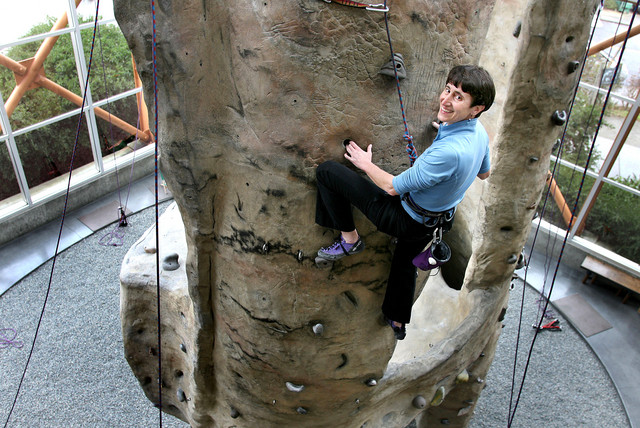
Recreational Equipment, Inc. (REI) CEO Sally Jewell climbs the 65-foot rock climbing pinnacle at REI’s Seattle flagship store. Photographer: Scott Cohen/AP Photo

We stay out of politics, for the most part, but point to interesting events when we notice them. This news qualifies, because it seems the leader of one big country has captured the spirit of entrepreneurial conservation in a rather visible way, choosing a business leader to run the largest conservation component of the federal government. Oddly, she appeals to both environmentalists and industrialists, but that is the point. This choice is outside the box, and seems to tap into some of our favorite “c” words. As the article below notes, this business person has led some important collective action initiatives, building a community to ensure that this political leader gives conservation the attention it deserves. We laud both of them for cooperating in such a creative manner:

President Barack Obama said he has selected Sally Jewell, chief executive officer of Recreational Equipment Inc., to be secretary of the U.S. Interior Department in his second-term Cabinet.

Jewell’s background as an engineer and experience in the banking, energy and retail industries give her the skills needed to run a department that oversees 500 million acres of public land, Obama said as he introduced her at the White House. Continue reading

Thattekkad Bird Sanctuary

Photo credits: Ramesh Kidangoor

Thattekkad Bird Sanctuary is Kerala’s first officially recognized bird sanctuary. Named after the late renowned ornithologist Dr. Salim Ali, the small but intensely biodiverse area lies snugly between two branches of the Periyar river and the serenity of the Anamalai hills. This bird watcher’s paradise was once a rubber plantation, but due to its abundant wildlife and in order to protect the wide range of resident and migratory birds it was declared a sanctuary in 1983.

Continue reading

Gorillas In His Midst

This slideshow requires JavaScript.

Yale Environment 360 has an excellent story on the various animals in this protected area, including the warden and those he is committed to protecting, but also the beasts who prey on those wards. Supporting national parks, wherever they may be and at whatever risk, has never been more critical:

The Perils and Rewards of Protecting Congo’s Gorillas

Virunga National Park, home to one of the last remaining populations of mountain gorillas, has witnessed years of war and civil strife. In an interview with Yale Environment 360, the park’s warden describes the lethal threats faced by his rangers and the remarkable survival of the park’s gorillas. Continue reading

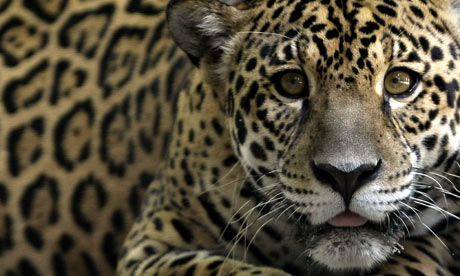
Guyana’s Jaguars

Jaguars once roamed widely from the south-western United States to Argentina, but have lost nearly half of their natural territory and have disappeared altogether from some countries. Photograph: Mauricio Lima/AFP/Getty Images

Jaguars once roamed widely from the south-western United States to Argentina, but have lost nearly half of their natural territory and have disappeared altogether from some countries. Photograph: Mauricio Lima/AFP/Getty Images

Bravo to Panthera for its achievements in the couple of years since we first learned about it in this 60 Minutes segment.  And thanks to the Guardian‘s ongoing coverage of such important topics:

The lushly forested nation of Guyana on Thursday joined a regional pact to protect jaguars, the elusive spotted cat that is the biggest land predator in the Americas but has become vulnerable as expanded agriculture and mining carves away at their fragmented habitat. Continue reading

Oil, Rainforest, Communities

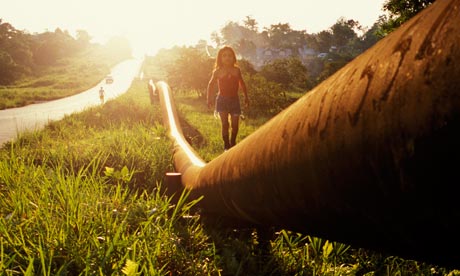
Pipe dreams: the 500km pipeline that transports oil from Lago Agrio to the port of Esmeraldas, on the Pacific Coast. The oil discovery destroyed the area. Photograph: Remi Benali/Corbis

Can there be happy endings related to oil discovery in remote, ecologically and culturally sensitive areas? Note likely.  But this story is worth a read:

American biologist Kelly Swing thwacks a bush with his butterfly net and a dozen or so bugs and insects drop in. One is a harvester, or daddy-long-legs, another a jumping spider which leaps on to a leaf where two beetles are mating. Continue reading

Thank You, Zambia

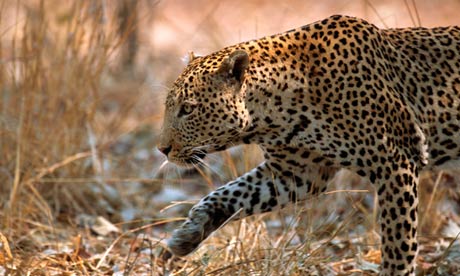
Zambia's leopard

Zambia’s leopard numbers, as well as those of its lions, are too low for a sustainable hunting industry, says its tourism minister. Photograph: Brendan Raisbeck/Alamy

Click the image above to go to the whole story. No easy answers: sometimes hunting is the solution to conservation needs–refer to the US Fish & Wildlife Service for plenty of excellent case studies.  But big game hunting has an intuitively dangerous ring to it.  Zambia has made a decision for their territories:

Zambia has banned the hunting of lions and other endangered wild cats such as leopards because it sees more value in tourism than blood sport, the country’s tourism minister said. Continue reading