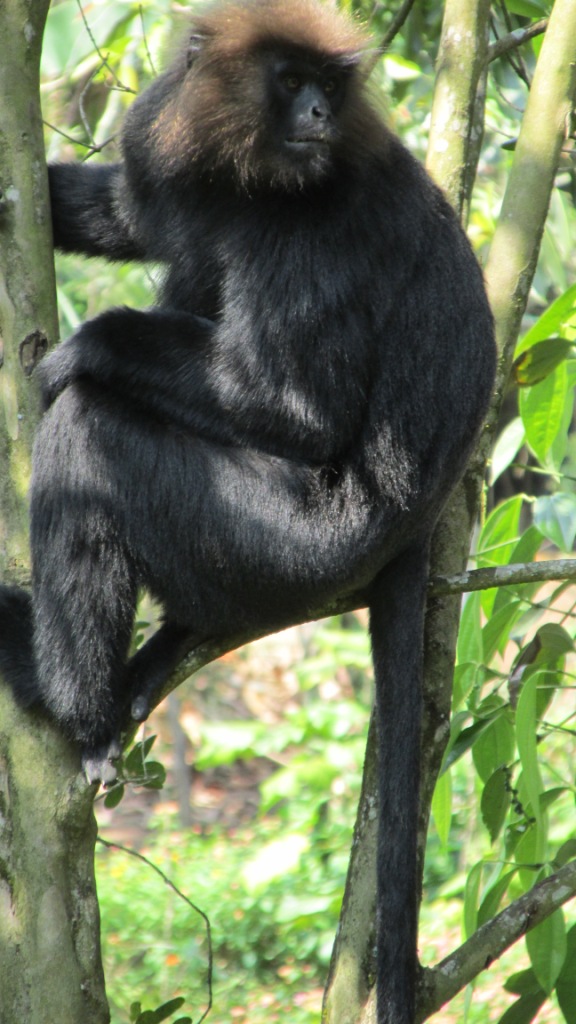
Since we border the famous Periyar Tiger Reserve we are familiar with unexpected wild visitors and welcome these guests from the national park. Yesterday we had Nilgiri Langur, Southern Rustic, Common Grass Yellow and the Bush Hopper Butterflies. Continue reading
Conservation
Ecuador’s Modern Conundrum
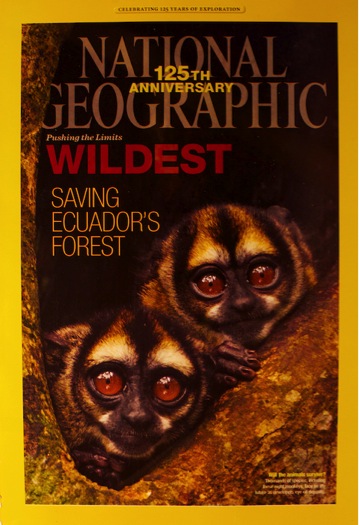
It used to be that Ecuador was in the news primarily due to the instability of its presidency. That has changed in recent years. It is worth more than one magazine article to see what has changed in this amazing country. If you have an interest in conservation, Ecuador or both, you will appreciate this in depth coverage of both in detailed context:
The leaves are still dripping from an overnight downpour when Andrés Link slings on his day pack and heads out into the damp morning chill. It’s just after daybreak, and already the forest is alive with hoots and chatter—the deep-throated roar of a howler monkey, the hollow rat-a-tat-tat of a woodpecker, the squeal of squirrel monkeys
There’s Something About Audrey
Last year I wrote about the eminent blooming of the rare Titan Arum, more fondly known as the corpse plant or in my posts “Audrey”, at Cornell University’s Kenneth Post Lab Greenhouse. The event was followed with quite a bit of fanfare, as these blooms allow for the assisted cross pollination of the various specimens around the world, thus hopefully insuring the survival of the species that is becoming more and more rare in the wild. Continue reading
Just Keep Saying No To These

The National Trust is against plans for a golf course at the edge of the Giant’s Causeway in Northern Ireland. Photograph: Paul Faith/PA
We have the occasional urge to just say no, site unseen. Anything with the name Trump attached, especially if involving golf and Scotland, is generally a good candidate. This is another one:
Conflict is synonymous with the Giant’s Causeway. Children in Northern Ireland are weaned on the legend of how its rugged landscape was formed when the giant Finn MacCool confronted his Scottish rival, Fingal, by hurling rocks into the sea.
A more prosaic, but no less violent, explanation for the causeway’s genesis attributes the creation of its 39,000 hexagonal, basalt stones to a series of volcanic eruptions 60m years ago. Continue reading
Marine Sanctuaries Expanding

The ocean bluff at Vista Point, seven miles south of Elk on California’s Mendocino Coast (Thomas R. McDonough/Knight-Ridder News Service Archives)
Among our favorite type of stories:
In a move that would permanently ban oil drilling along more than 50 miles of Northern California coast, the Obama administration announced plans Thursday to expand two Northern California marine sanctuaries, extending them up the rugged Sonoma and Mendocino coast. Continue reading
Mongering Marine Merchandise Mendaciously
Click here to go to Oceana’s report, which documents a study in which, through sampling and DNA testing, it is found that 39% of seafood peddled in major metro markets is fraudulently labeled:
Executive Summary
Seafood fraud can happen anywhere – even in the Big Apple. Fraud includes any false information accompanying seafood, from short weighting to swapping out one species of fish for another. Oceana’s investigation focused on species substitution, or the swapping of a lower value or lower quality fish for a more desirable species. This “bait and switch” hurts our oceans, our health and rips off consumers. And most importantly, it is illegal. Continue reading
Just Say No

Golden Cap holiday park is on the edge of Dorset’s world heritage-listed Jurassic coast, which includes Studland Bay, above. Photograph: Adam Burton/Robert Harding World Imagery/Corbis
Does the world really need another five-star holiday village? Maybe. But does it need one in Studland Bay? No way. Click the image above to go to the story in today’s Guardian:
One of Britain’s most popular beauty spots could be disfigured by the expansion of a modest caravan park into a five-star holiday village, say opponents of a scheme in Dorset.
Golden Cap holiday park, at the foot the highest point on the south coast, is in England’s only natural Unesco world heritage site and in an area of outstanding natural beauty. It is also surrounded by National Trust inalienable land. Continue reading
Patterns Of Illegal Wildlife Trade

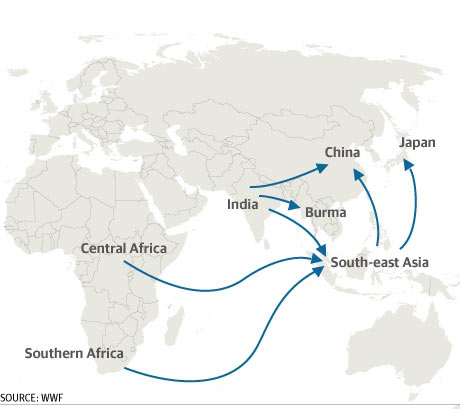
This earlier post touched on WWF’s use of military technology to take on an increasingly militaristic illicit trade. In today’s Guardian, an article with an insightful video embedded (click the map above) touches on approaches to disrupting these patterns. According to a new study commissioned by WWF and conducted by Dalberg, illegal wildlife trade is increasingly mapping on to the patterns of trade for illicit drugs and arms globally:
Organized crime syndicate members at levels 4 and 5 are often located in consumer countries, beyond the reach of enforcement authorities in range countries. For this reason, increased international cooperation is vital. Continue reading
Plowshares, Swords And Wildlife Conservation
Whatever your opinion about a military-industrial complex possibly running amok, you might agree that the state of endangered wildlife deserves some radical brainstorming. Today, sometimes the plowshares plunder while the swords save. It is slightly creepy to celebrate military tools, sponsored by corporations and conservation NGOs, being repurposed this way. But these are truly times that try men’s souls. We will chalk this one up as net-gain innovation.
Friends In High Places

A judge is due to decide whether to authorise a fresh round of forced police evictions in Notre-Dame-des-Landes. Photograph: Jean-Sébastien Evrard/AFP/Getty Images
Alain, meet Miranda; Miranda, Alain. You both have done your part to reverse a long history of human unfriendliness to trees. Those efforts strengthen the likelihood of additional collective action:
The protesters, including farmers, locals and green politicians, argue that building a brand new airport for France’s sixth largest city, which already has an award-winning airport, is both an environmental disaster and a waste of public money during an economic crisis. Support groups have sprung up across France. Continue reading
If You Happen To Be In Kochi
Art and culture are about to explode onto Kochi at a season that is already filled with color and light. Biennales have been taking place for well over a hundred years, starting in Venice and spreading throughout the world.
Just as the lost port of Muziris had been a regional gateway for the world the Kochi Muziris Biennale, the first of its type in India, has the goal of reviving the vibrancy of Kochi as a meeting point of culture and trade. Spanning the calendar period of 12/12/12 and 13/03/13, the three month long exhibition is expected to draw high international visitation in what has been designed as a cultural strategy of self-renewal. Continue reading
Folks Fight Feral Felines For Frigatebirds

A male frigatebird with the distinctive red sac on its chest that is inflated during courtship. Photograph: Derren Fox
Thanks to the Guardian‘s coverage of scientific and environmental issues for this story of success involving collective action on the part of British folk who decided to fix a problem they had inadvertently created starting back in the day when Darwin was voyaging on the Beagle:
…In the early 19th century, Ascension Island was home to more than 20 million seabirds, mainly masked boobies, black noddies, brown noddies and Ascension frigatebirds. The frigatebird was considered to be the most important because it was unique to the island. Continue reading
Friends In High Places
Not all marine creatures have equal opportunity of species survival. As in any social milieu, some are better connected than others; some have benefactors to look out for them; others do not. Thanks to Green Blog, more on the protection of certain charismatic species (but not not others) in the wild blue yonder:
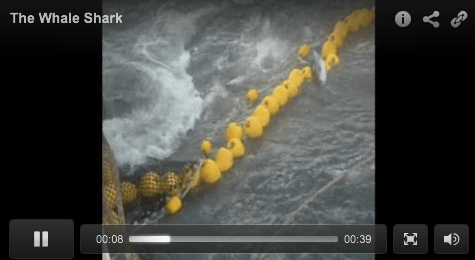
Whale sharks get some respect; the bigeye tuna, not so much.
That was the gist of the message from the Western and Central Pacific Fisheries Commission, whose member nations agreed this week at a meeting in Manila to help reduce whale shark deaths in Pacific fisheries. The commission did not act on a recommendation from scientists that the catch of bigeye tuna be sharply reduced. Continue reading
Final Thoughts On Oysters, Dunes And Conservation

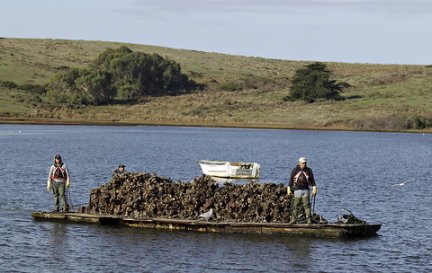
Photo: Associated Press. Workers from Drakes Bay Oyster Company bring in a load of freshly harvested oysters at Point Reyes National Seashore. Interior Secretary Ken Salazar announced last week that the operation would have to shut down.
Thanks to our oft-linked to favorite writer on such topics — Felicity Barringer — for the follow up on this story from a few days ago:
In the end, after all the money spent on the science — on cameras whose images were not carefully examined, on reports that misrepresented scientific studies, and on repeated investigations of flawed scientific work — the Interior Department’s decision not to renew an oyster company’s lease to operate within Point Reyes National Seashore largely sidestepped any scientific issues. Continue reading
Periyar Tiger Reserve (Thekkady, Kerala)
The Periyar Tiger Reserve is one of India’s most famous wildlife sanctuaries. Periyar was declared a Forest Reserve in the late 19th centuary, a Wildlife Sanctuary in the 1930s and a Tiger Reserve in 1977. This land of emerald vistas, productive grasslands, orchid-studded rain forests, moss-laden trees and dripping ferns provide food and shelter to mammals, including Elephants, Tigers, Dholes, Leopards, and Wild gaur, as well as birds, amphibians and insects.
We Love Oysters, But We Love Wilderness More
Thanks to a briefing on Green Blog, we learn today that the good deed was done, as hoped:
California Oyster Farm Must Go | Ken Salazar, the secretary of the interior, announced on Thursday that he would not extend the lease of an oyster farm in the Point Reyes National Seashore in Northern California, allowing the estuary there to become a wilderness area. Continue reading
Soy Versus Forest

Brazil soon expects to overtake the US as the world’s biggest soy producing nation. In the Amazon, soy farmers have rapidly expanded their land by using fire, bulldozers, saw mills and logging teams to clear the rainforest. But amid mounting concerns about global warming and biodiversity loss, Brazil’s government is deploying more personnel and equipment to hold the line between the food and the forest
Click above to go to the video and the accompanying story in the Guardian:
As his helicopter descends through the smoke towards an Amazonian Continue reading
Yale Environment 360 On Burma’s Wilderness And Its Development Options: Beauty And The Beast
We have been watching this website for some time now, looking for the right opportunity to link to a story of relevance to the work we do. Huge, unspoiled wilderness area? Tigers? Development threats? This article by science writer Charles Schmidt hit the spot, relevant portions excerpted below:
As Myanmar Opens to World, Fate of Its Forests Is on the Line
Years of sanctions against Myanmar’s military regime helped protect its extensive wild lands. But as the country’s rulers relax their grip and welcome foreign investment, can the nation protect its forests and biodiversity while embracing development?
…The country’s Northern Forest Complex, a 12,000-square-mile tract that runs along the border from India to China in Myanmar’s Kachin State, is home to tigers, bears, elephants, and hundreds of bird species. The heart of that forest, at nearly 8,500 square miles, is Myanmar’s Hukaung Valley Wildlife Sanctuary, the largest tiger preserve in the world. Continue reading
Heroes In Green Clothing
We pay homage from time to time to the forefathers of our own interest in the more modern entrepreneurial conservation. Here is a lesser known, but no less important, figure in that pantheon. Click the image to the left to go to the full story:
Ask a room full of conservation biologists who they like more, Darwin or Wallace, and Alfred Russel Wallace will win every time. While Darwin is respected, Wallace is revered. More than 800 new species have been named for Wallace, and for Darwin, around 120.
Thursday, Nov. 7, marked the 99th anniversary of Wallace’s death and started the countdown to 100th-anniversary celebrations in Britain, Mexico and Malaysia. Continue reading
An Award, In A Word: SafetyNet
Safetynet won this year’s James Dyson Award and is explained on the website of that award program:
The goal of the SafetyNet system is to make commercial fishing more sustainable by significantly decreasing the numbers of non-target and juvenile fish caught during the trawling process. Escape Ring devices form a part of this system, and are currently the focus of the development work. The rings tackle the problem of