Alternative Bulbs, Designed For Aesthetes

From Clean Technica, a story about a new light:

SWITCH Lighting has now designed a light emitting diode (LED) bulb that is much more industrial looking, like the standard incandescent bulbs, and demonstrates many of the same qualities that consumers like without the wasted energy.

They’ve been widely praised for their sleek industrial design and have even been featured as a work of art in several art galleries. In addition, the SWITCH75 was a Consumer Electronics Show 2012 Innovations Honoree, was named by TIME Magazine as one of the 50 Best Inventions of 2011 and also received a silver rating in the prestigious Edison 2012 Awards.
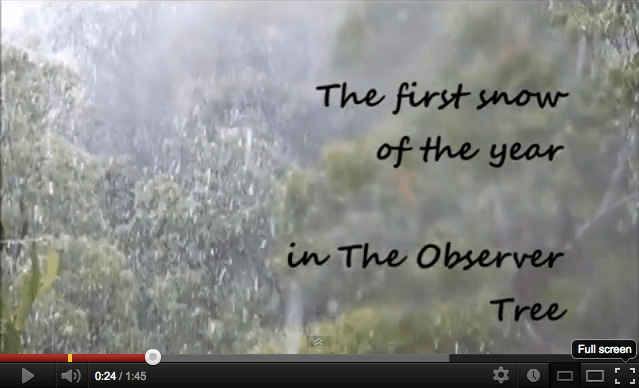
A Forest With Miranda Rights

Click above for the video made by Australian environmental activist Miranda Gibson, who has been living on a platform in a Eucalyptus tree in Tasmania’s southern forest. She has vowed to stay there until the forests receive more protection from logging. She writes about it at Observertree:

Observer Tree needs your help!

I’ve been at the top of this tree for over 300 days now. I think it’s time for the world to know I’m here. The more people who find out and add their voice to the call for forest proteciton… the sooner we can save Tasmania’s forests and I can get down! Continue reading

Farming, Biodiversity & Cooperative Conservation

All over the world farmers like Bishnu Maya (in Nepal) are the main custodians of agricultural biodiversity through the conservation, use and improvement of plant genetic resources on-farm

Click the image above to go to the source of this interesting look at the relationship between farming, biodiversity and conservation:

The study ‘Flows under stress: availability of plant genetic resources in times of climate and policy change’ describes how eight members of the CGIAR Consortium, whose research is focused on plant genetic resources, are (re)organizing their conservation and improvement activities in light of climate change adaptation. Continue reading

Daniel Decker, Come To Kerala!

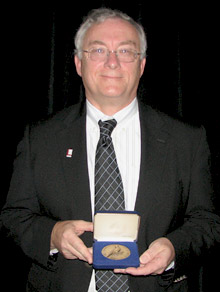
Daniel Decker holds a medal for the Aldo Leopold Award.

From time to time we extend invitations that reflect our appreciation for individuals making heroic contributions to the arts and sciences.  Professor Decker is more than worthy, as you can see in the story about the prize he just received (click the image to the left to go to the full story):

Decker’s research and outreach work has promoted a long-term vision of wildlife management by addressing how human dimensions have impact in such areas as suburban wildlife, adaptive harvest management, community-based management, hunter retention and wildlife habituation in national parks.

Continue reading

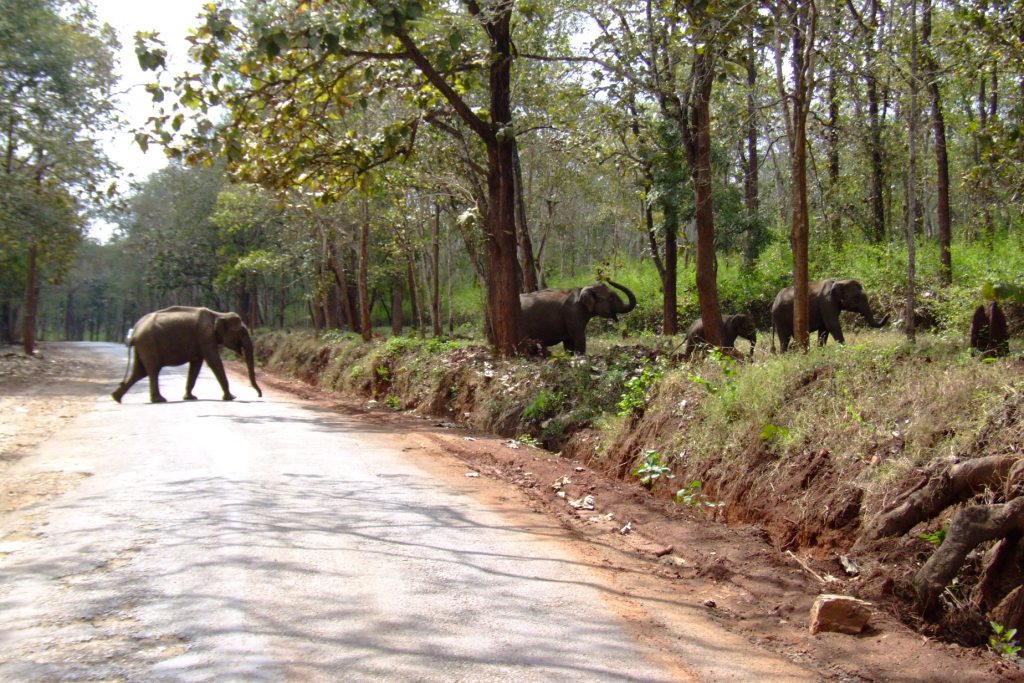
Wayanad Wildlife Sanctuary

Photo credits: Ramesh Kidangoor

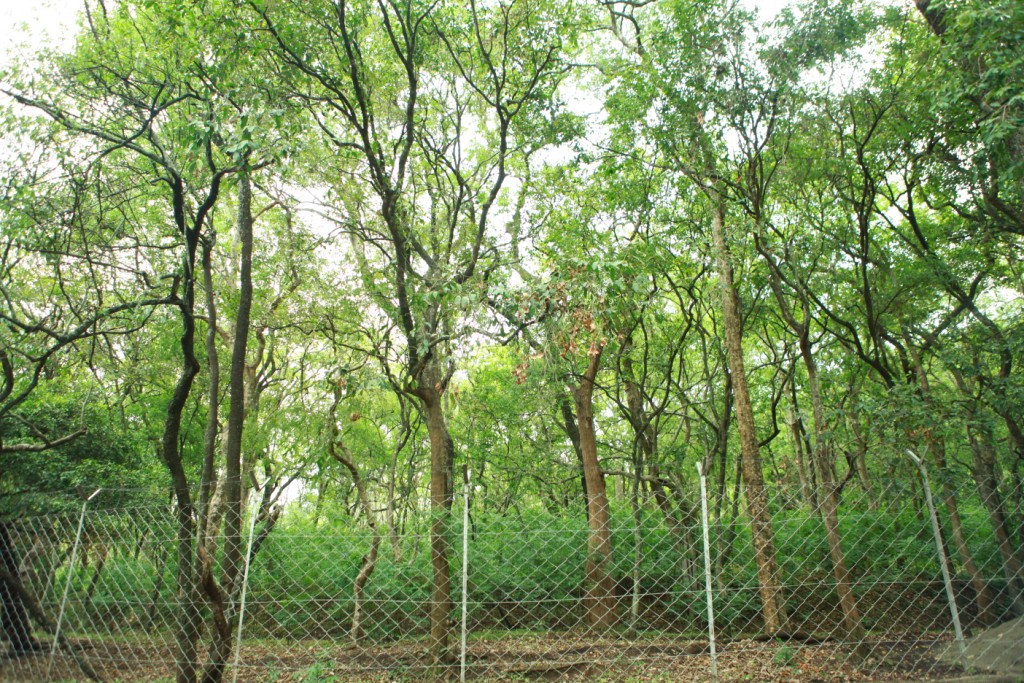
Part of the Nilgiri biosphere, Wayanad  Wildlife Sanctuary is an area of 344.44 square kilometres formed by two discontinuous pockets, Muthunga in the south and Tholpetty in the North. Nearly one third of the area is covered by plantations of Teak, Rosewood, Silver oak and eucalyptus.The rest is covered with Bamboo groves, moist deciduous and semi- evergreen forests. The sanctuary boasts a rich fauna, with elephants and deer the most commonly sighted.

Continue reading

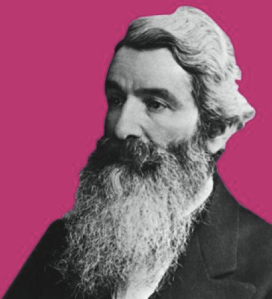
1897, Muir’s View Of American Forests, With A Comparison To India’s

In India systematic forest management was begun about forty years ago, under difficulties—presented by the character of the country, the prevalence of running fires, opposition from lumbermen, settlers, etc.—not unlike those which confront us now. Of the total area of government forests, perhaps 70,000,000 acres, 55,000,000 acres have been brought under the control of the forestry department,—a larger area than that of all our national parks and reservations. Continue reading

Rainforest Guardians

I’m on patrol with the forest rangers of Gola rainforest national park. I’m spending two days with them, gathering data and hopefully preventing poaching as well as illegal mining and subsistence farming within the park. My aim is to get to know the rangers and experience a day in their life. I want to know what challenges they face as well as what gives them the most satisfaction at the end of each day.

Continue reading

Beluga Love

Thanks to the Guardian:

In the 18th century, whalers who heard whales singing beneath their ships believed they were listening to the souls of drowned men. The notion of the silent ocean having a voice seemed so improbable. It wasn’t until the second world war and the advent of underwater acoustics that science discovered how vocal whales really are. Continue reading

Salmon, Protected

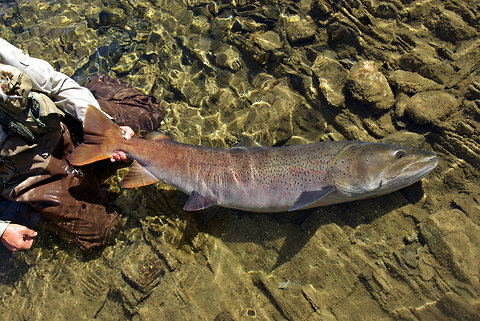
Click the image above to go to the story in Green Blog:

They call them “river wolves” — hundred-pound salmon large enough to snack on ducklings and on mice and muskrats fording the rivers. Five species of these huge fish inhabit the river waters of China, Mongolia, and eastern Russia, and all of them are finally on the “red list” of species compiled by the International Union for Conservation of Nature. Continue reading

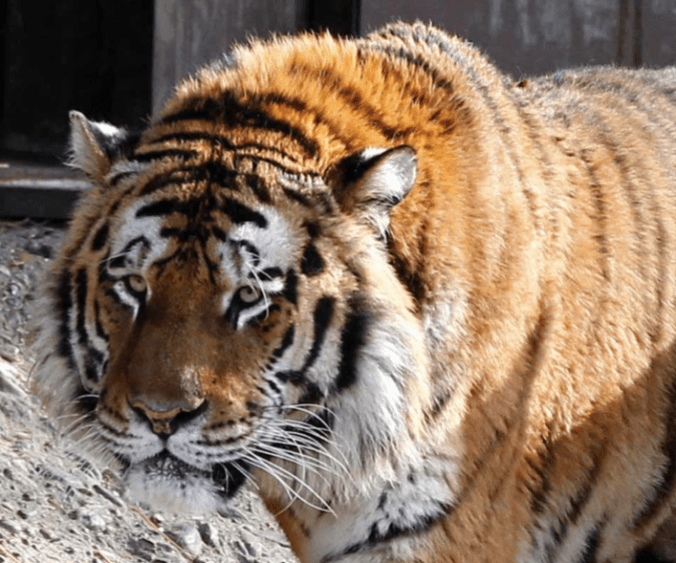
Tiger Reserves In India Re-Open To Visitors

AP Copyright © MediaCorp Press Ltd

While the Periyar Tiger Reserve, which we are closest to and particularly amazed by, was the exception to the rule below, we understood the ban.  Tiger habitat is threatened, and radical action was taken.  The Periyar Tiger Reserve was exempted from the ban for reasons complex and rich enough that we will have to explain on another occasion, but in short there is a history of enlightened leadership of this particular Reserve.  For the moment, we will just relay today’s news, which comes as a relief to all the businesses surrounding all the Tiger Reserves across India, who were severely affected by the ban.   Continue reading

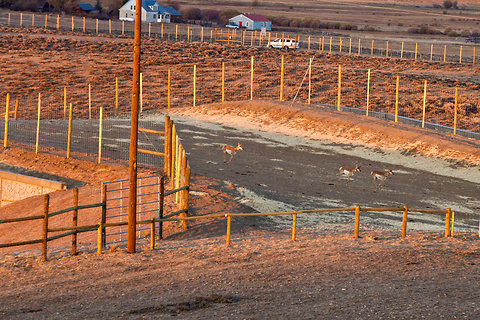
One Small Step For Pronghorns

Jeff Burrell/Wildlife Conservation Society

For a small good news story, click the image above.  It is from the Green Blog of the New York Times, and is the kind of story you would not read about in India because there are no states quite like Wyoming:

Until recently, the population of pronghorn — a small antelope-like mammal endemic to North America — outnumbered people in its native Wyoming. The Cowboy State may be the nation’s least populous, but the two groups still manage to come into conflict. Pronghorns numbering in the tens of thousands cross Highway 191 each year during their annual migration, and collisions between animals and cars are costly for all involved. Continue reading

Young Explorers

I recently discovered that National Geographic offers grants to researchers, conservationists, and explorers between 18 and 25 years old to pursue projects around the world in archaeology, filmmaking, biology, adventure, and exploration, to name a few fields. These Young Explorers Grants, which generally range between $2000 and $5000, can often be a perfect catalyst for more or future funding for people trying to fulfill a lifelong research dream or experiment with a concrete fieldwork idea — after all, having National Geographic’s name on your list of supporters is pretty impressive, and a sign of great potential!

This morning, I attended a workshop given by several members of the National Geographic team hosted by Cornell University and sponsored by the Lab of Ornithology, The North Face, and other groups, which gave an overview of NatGeo’s mission as well as quite specific examples of research possibilities from past and current Young Explorer Grantees. Continue reading

If You Are Not Sure About The Need For That Meeting In Hyderabad

You must be a subscriber to Science or have access through a library in order to read beyond the Abstract (or you can purchase it here) of what is clearly a good explanation and rationale for the meeting currently under way in Hyderabad:

World governments have committed to halting human-induced extinctions and safeguarding important sites for biodiversity by 2020, but the financial costs of meeting these targets are largely unknown. Continue reading

If You Happen To Be In Hyderabad

Inviting film to the table seems like a powerful, creative idea:

The Ministry of Environment and Forests, Government of India, and the National Biodiversity Authority are hosting an International Biodiversity Film Festival and Forum in Hyderabad as part of COP-11 in association with CMS Environment. Continue reading

Nature, Balance & Harmony

Standing for millenia: Reenadinna, an ancient yew woodland in Ireland’s Killarney National Park. Photo by Universal images/Getty

Click the image above to go to the story in Aeon (read the second half for perspective on nature in the Western Ghats):

It is Reenadinna, one of the planet’s few remaining yew woods, a virtual monoculture of coniferous yew trees (Taxus baccata). They grow here on thin mossy soil, though in some places they drape directly over bare limestone bedrock. The light is green-soaked and dim beneath the crowded canopy: it looked no different this summer than it did 30 years before. Of course, three decades is a short time in the life of a yew wood, where an individual tree can live thousands of years. But it looked no different this summer than it would have done in September 1776, when Arthur Young, the great English writer on rural affairs, visited the region and exuberated on the wooded Muckross peninsula. And by the calculation of Fraser Mitchell, a botanist in Dublin’s Trinity College, it has looked that way for millennia. Continue reading

Of Birds and Beans: Part 1 (Birds)

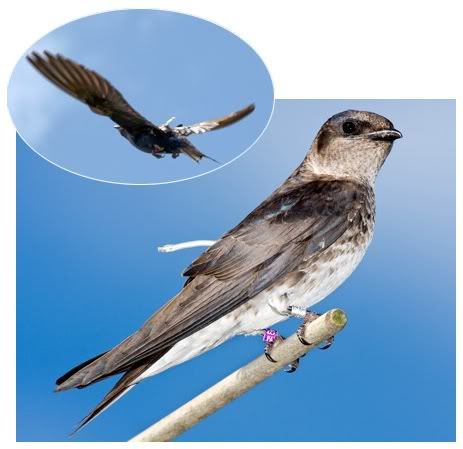
A banded adult purple martin wearing a light logger geolocator. Source: Patrick Kramer and Tim Morton, ScienceMag.

In the time it takes each of us to drink a cup of coffee, acres of tropical forest are cut down. Over the past thirty years, more than half the traditional coffee farms in Latin America have been converted to a newer growing method for higher production. Since the 1960s dozens of migratory bird species from northeastern United States have experienced long-term chronic declines in population size, with few signs of leveling off.

All these events are connected. Deforestation is occurring around the world faster than ever for plenty of reasons, but one of the most widespread and impactful ones is agriculture, and sun coffee (that is, coffee not grown under shade but in huge fields with pesticide, herbicide, and fertilizer assistance) is becoming more common to increase yields in the very same countries where North American migratory birds stay for their winters. But more about sun coffee and its negative ecological impacts later.

Continue reading

Trout Threads

Hanging by a thread? A study offers new insights on the greenback cutthroat trout. Image: Fish and Wildlife Service

From the Green Blog in the New York Times, a story about this beautiful creature:

The rare greenback cutthroat trout, Colorado’s state fish, is even more imperiled than scientists thought, a new study suggests. Continue reading

Cats Guarding Treasure

Vaska the cat, one of the Hermitage Museum mice hunters, seen in the museums yard, with an antic statue on the background, in St. Petersburg, in this April 25, 2004 photo. Cats have been part of the Hermitage’s security system since its founding days. (AP Photo/Dmitry Lovetsky)

Winding beneath the magnificent halls of St. Petersburg’s Hermitage Museum, with its Da Vincis, diamonds, Greek statuary, Egyptian parchments, enormous number of paintings, mechanical peacock clock, and other treasures, there is a catacomb of cellars. It was into this windowless nether region—far below the Winter Palace’s expansive view of the waters of the Neva—that Maria Haltunen and I had cautiously descended. As I followed her through a narrow, imperfectly-lit corridor, full of large pipes and jutting wires, Haltunen gasped. “Look!” she said.

In the semi-darkness, a little being had appeared. He perched, a foot-tall shadow, on a water pipe.

“Oh, you are a fat one!” said Haltunen, jangling the chain of her I.D. pass like a talisman as she approached the pointy-eared creature. “How nice you are!”

The cat sat, perfectly still. Then he vanished.

Continue reading

Bi-Coloured Frog


Bi-Coloured Frogs are endemic to the Western Ghats, especially in Periyar Tiger Reserve. The tropical climate and abundant rain combine to create rich and varied niches that offer safe haven for these amphibians. The leaf litter–the most nutrient and species rich strata–is a favourite hunting ground for these frogs.