Protecting The Largest Forests

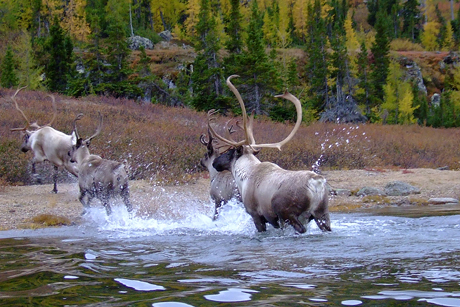
Photo courtesy Valerie Courtois, Canadian Boreal Initiative. Migratory tundra caribou in the boreal region of Quebec migrate hundreds of miles and require large tracts of protected wilderness.

Photo courtesy Valerie Courtois, Canadian Boreal Initiative. Migratory tundra caribou in the boreal region of Quebec migrate hundreds of miles and require large tracts of protected wilderness.

Thanks to Krishna Ramanujan for this story in the Cornell Chronicle about the new mega-scale of conservation planning:

At least half of Canada’s 1.4 billion acre boreal forest, the largest remaining intact wilderness on Earth, must be protected to maintain the area’s current wildlife and ecological systems, according to a report by an international panel of 23 experts. Continue reading

“Buy a Fish, Save a Tree”

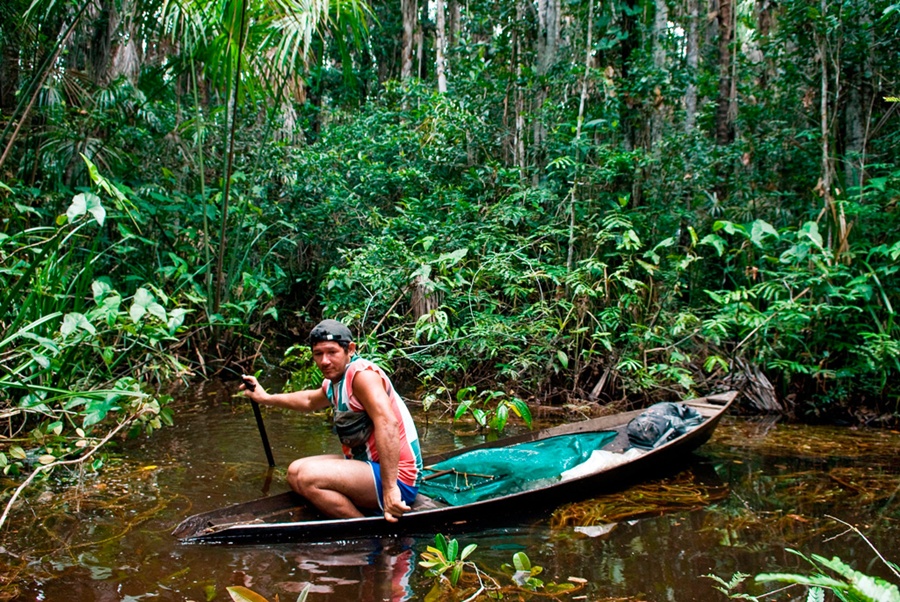
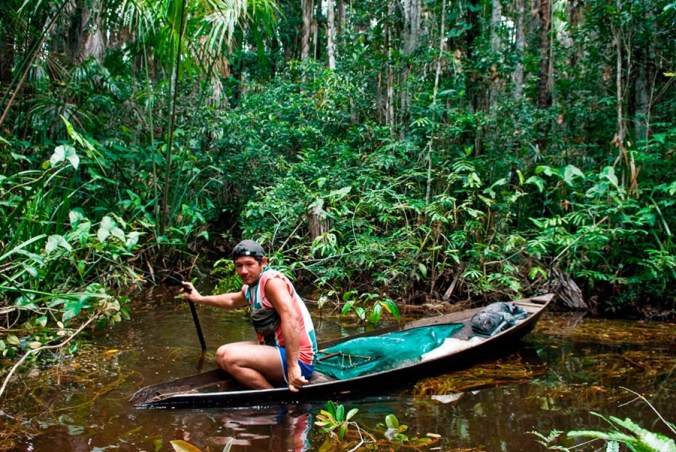
A fisherman on the Rio Negro Photo courtesy of Discover Magazine

A fisherman on the Rio Negro – Photo courtesy of Discover Magazine

One would normally associate conservation with protecting the natural environment and the animals in it, but this Discovery Magazine article shows a new, almost counter-intuitive, way the local people are helping conserve and protect the Amazon Rainforest.

At sunrise on a September day in 1991, as Scott Dowd’s riverboat floated up the Rio Negro in Brazil, flocks of shrieking macaws streaked the sky red and gold. Otherwise, “my full field of vision was filled with jungle,” he remembers.

Best of all for the self-described “fish nerd” from Weymouth, Massachusetts, the dark waters beneath his boat teemed with beautiful fish—species he’d kept in aquarium tanks since he was 10. Now he was headed to the place they’d come from: Barcelos, a town of 20,000 in the heart of the Amazon.

But when he got there, he was horrified.

The riverfront was jammed with men in dugout canoes. They had come from the surrounding municipality, a rainforested area the size of Pennsylvania, bringing hand-woven baskets lined with plastic, now brimming with tiny, colorful fish. Tubs of the fish they caught would fill the entire bottom floor of an 80-foot ferryboat headed to Manaus, 280 miles to the south.

The fish were bound for exporters supplying home aquaria around the world. The estimated catch of tropical fish leaving the area, Dowd discovered, was more than 40 million fish per year. “My kneejerk reaction to this was, this was out of control!” he says.

But now, 22 years later, he eagerly admits: “I could not have been more wrong.” Continue reading

Bravo, WWF & Odnoklassniki!

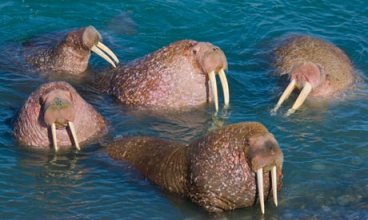
Pacific walruses (Odobenus rosmarus divergens) come ashore at a gravel beach on Arakamchechen Island in the Bering Sea, Chukotka, Russia. Photograph: Jenny E Ross/Corbis

Thanks to Guardian’s coverage of this excellent, innovative campaign:

The 148m users of the Russian social network service Odnoklassniki are being targeted by a World Wildlife Fund for Nature campaign that uses ‘404’ error pages to raise awareness of species on the verge extinction.

Continue reading

Urban Muse

This slideshow requires JavaScript.

It does not matter whether you are a farmer, a geneticist, or whatever you do with your time: you will almost certainly be affected in important, unexpected ways after time spent in Paris.   Continue reading

Chaco Guardians

Biologist Erika Cuéllar says that unless the indigenous inhabitants are involved it will be impossible to save the biodiversity of the Gran Chaco. Photograph: Dan Collyns

Biologist Erika Cuéllar says that unless the indigenous inhabitants are involved it will be impossible to save the biodiversity of the Gran Chaco. Photograph: Dan Collyns

Thanks to the Guardian for its coverage of the Chaco’s guardians in this story, Bolivia’s indigenous people join fight to save Gran Chaco wilderness, by Dan Collyns:

Second largest wilderness in South America threatened by farming, ranching and drugs trade

Only from Cerro Colorado – a rocky outcrop that rears vertiginously over the treetops – is it possible to make out the vastness of the Gran Chaco as it stretches from this corner of Bolivia beyond the horizon into Paraguay. This enormous swath of dry forest and scrubland, where every plant or tree bears thorns, is South America’s second largest wilderness after the Amazon rainforest.

The Gran Chaco is threatened on all sides: Mennonite cattle ranchers have bought up large tracts in Paraguay and Brazilian farmers looking for cheap land for their soy crops have flooded across the border. Continue reading

Malayalam Milestone

Sabdatharavali compiled by Sreekanteswaram

Sabdatharavali compiled by Sreekanteswaram

Sreekanteswaram is our kind of hero, protecting his cultural heritage without much fanfare but with a sense of humor:

That the first and the most authentic Malayalam dictionary to date, Sabdatharavali by Sreekanteswaram G. Padmanabha Pillai, turns 90 this year is a fact lost on Malayalis basking in the language’s hard-won classical status.

While such forgetfulness on the part of language Tsars is understandable, given the backward status of linguists and lexicographers in cultural hierarchy, a handful of ordinary language-lovers like poet Kureeppuzha Sreekumar Continue reading

Metro Travelers Meet Mega-Fauna

Buying Illegal Ivory is Killing Me’: One of the posters from the Shanghai campaign. Credit: UNEP

Shanghai is famous as China’s “City of the Future” and in collaboration with this United Nations-backed campaign metro travelers are finding large-screen displays and posters of endangered animal species during their daily commute.

Public awareness was a key factor behind the reduction in the demand for ivory in North America and Europe in the 20th century, and it can play its part in reducing the illegal wildlife trade today as demand moves to emerging markets. Continue reading

Lonesome George Makes His NYC Debut

There’s something unsettling about taxidermy and the lifelike diaramas that I grew up seeing at museums.  But the research that goes into each zoological and botanical detail serves a monumental educational purpose for visitors and scientists alike. And in a “Last Chance to See” context, there are cases where those diaramas are the only way both current and future generations are able to have a face to face experience with extinct species.

A little over a year ago the icon of Galapagos conservation “Lonesome George” died of natural causes. Although property of the people of Ecuador, he is considered an example of World Heritage Patrimony. Researchers froze his body and shipped it to the American Museum of Natural History for preservation and a temporary exhibition in New York. Continue reading

Conservation Is Sometimes The Story Of Change

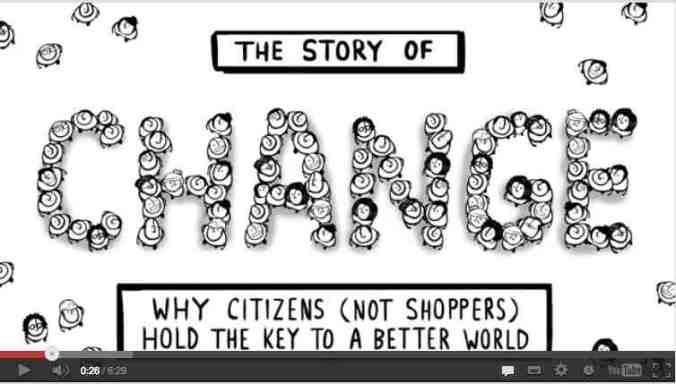
Click above to go to the location where Cornell University is hosting this brief video by a fellow alum of several Raxa Collective contributors:

Can shopping save the world? The Story of Change urges viewers to put down their credit cards and start exercising their citizen muscles to build a more sustainable, just and fulfilling world. Continue reading

Celebrating Conservation’s Important Moments In History

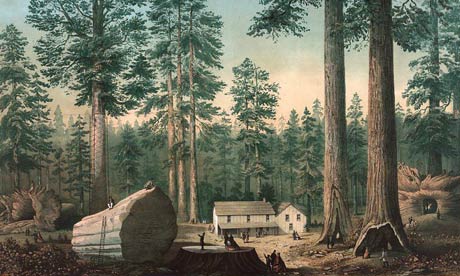
Tourists inspecting the stump of the 'Mammoth Tree' in Calaveras County, California, c1860. The 'Mother of the Forest', without its bark, can be seen in the background. Image: LoC

Tourists inspecting the stump of the ‘Mammoth Tree’ in Calaveras County, California, c1860. The ‘Mother of the Forest’, without its bark, can be seen in the background. Image: LoC

We have written about and sometimes celebrated important moments in conservation history in the past, and these celebrations are among those most responded to by readers of this blog.  A few days ago, a landmark anniversary was observed in an editorial at the newspaper that most consistently keeps us in perspective:

Today marks the 160th anniversary of a seminal, but largely forgotten moment in the history of the conservation movement.

On Monday, 27 June, 1853, a giant sequoia – one of the natural world’s most awe-inspiring sights – was brought to the ground by a band of gold-rush speculators in Calaveras county, California. It had taken the men three weeks to cut through the base of the 300ft-tall, 1,244-year-old tree, but finally it fell to the forest floor. Continue reading

Tree-Sitting Success

Miranda Gibson tree-sitting. Photograph: Miranda Gibson

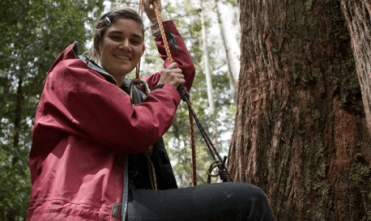
Miranda Gibson tree-sitting. Photograph: Miranda Gibson

When we first wrote about Miranda Gibson November 2012 she’d already lived an arboreal life for 300 days. Her goal was simple: to protect Tasmania’s wild forests from logging and other man-made degredation. She’d learned early on that sometimes grandstand gestures were the only way to get her voice heard, and if living (and blogging about) 449 days in a tree without touching the ground isn’t such a gesture we don’t know what is.

We’re happy to report that yesterday the decision was official to increase the Tasmanian Wilderness World Heritage Area by 170,000 hectares to now cover over 1.4 million hectares (or about 3.46 million acres), thereby representing about 1/5 of the area of the island state of Tasmania.

Nothing can explain how I felt the moment the hammer went down to mark the decision yesterday – Tasmania’s Wilderness World Heritage Area was officially extended by 170,000 hectares. Forests that I had spent the past six years of my life fighting to defend, some of the most contentious forests that thousands of people here and around the world have fought to save for over two decades, were now officially listed.

There’s one patch of that forest that I know like the back of my hand. It’s the Tyenna Valley, surrounding a 400 year old giant Eucalypt known to me as the Observer Tree, and whose upper canopy I lived in for over 14 months without once setting my feet on the ground. Continue reading

Entrepreneurial Conservation And Language Apps

This recent post about a language app was thought to be a one off on a funny subject. Then the topic was no longer one off, and not particularly funny. Even less funny, but technologically amazing, and certainly an example of one of our favorite topics, is this one (click the image to the left to go to the source):

…Last June, FirstVoices launched an iPhone app that allows indigenous-language speakers to text, e-mail, and chat on Facebook and Google Talk in their own languages. Users can select from a hundred and forty keyboards not recognized by iOS; the app supports every indigenous language in North America and Australia. (By default, iOS supports just two: Cherokee and Hawaiian.) The app accomplishes this through mimicry. When a text box is selected, a keyboard identical in form and function to iOS’s appears. The keyboard includes the characters necessary to write in, say, Cree, and follows a layout unique to the chosen language.  Continue reading

Food, Waste, Change

While we are on the subject of looking at food differently, as well as depending on others for new perspective, we can wrap all that around last week’s emphasis on food waste.  We will not let that topic go until we see the dial turning. We will keep a spotlight on the need for change, and share whatever we find from our good neighbors on this topic. WRI shares a thorough examination that is worth a click and read:

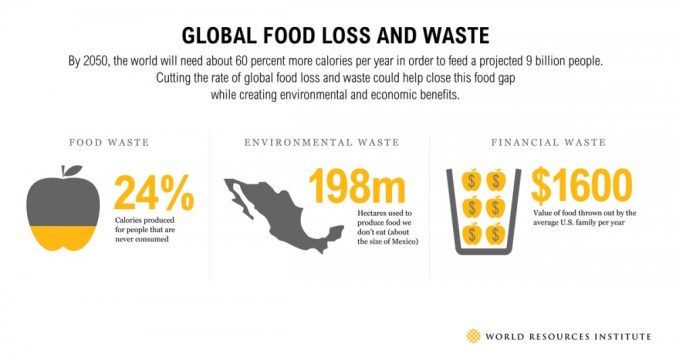
The Food and Agriculture Organization of the United Nations (FAO) estimates that 32 percent of all food produced in the world was lost or wasted in 2009. This estimate is based on weight. When converted into calories, global food loss and waste amounts to approximately 24 percent of all food produced. Essentially, one out of every four food calories intended for people is not ultimately consumed by them. Continue reading

Endangered species : Nilgiri Langur

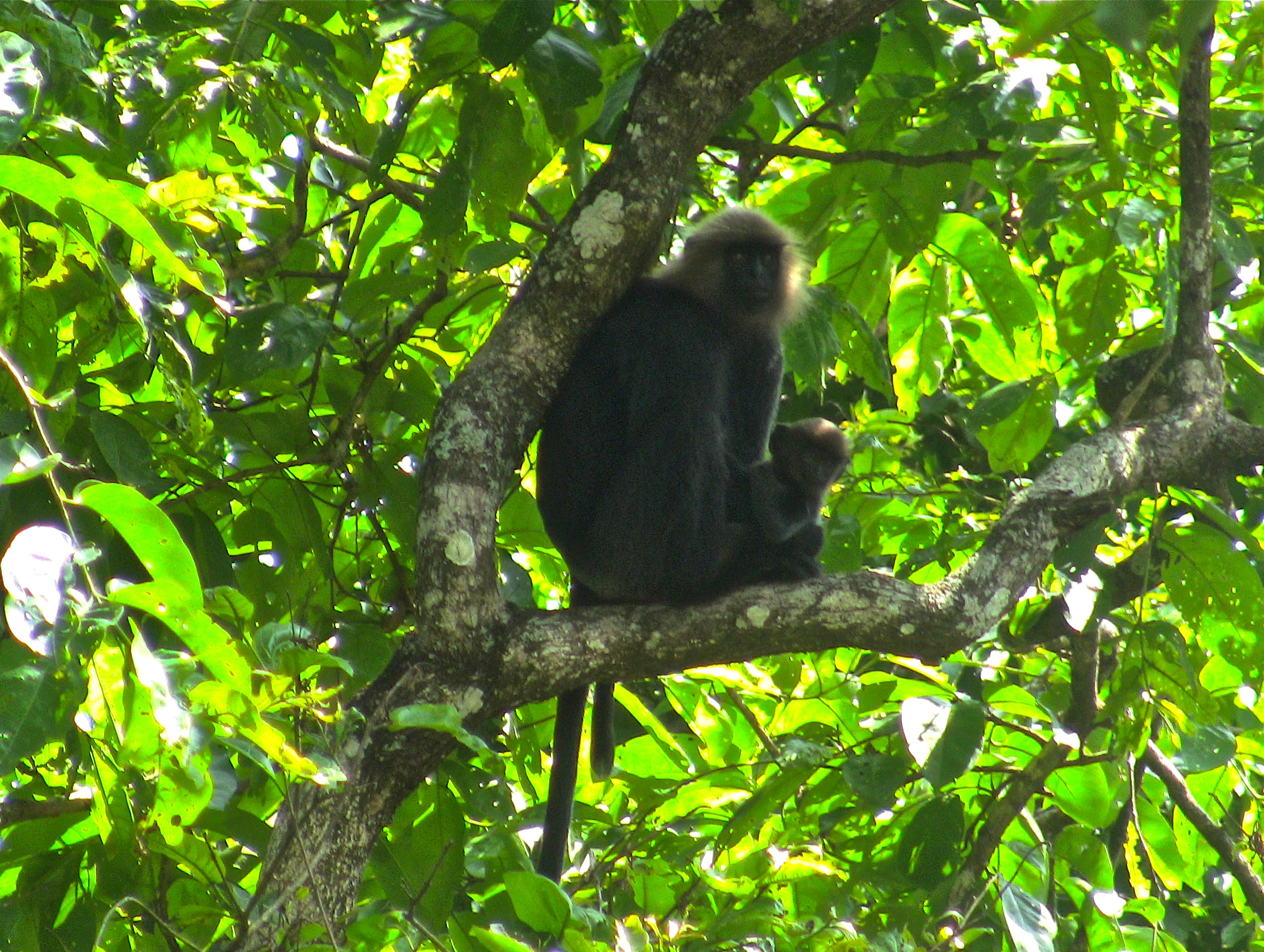
Two centuries ago, under the British rule, much of the Western Ghats forests were cut down to be replaced by tea plantations. In 1895, the damming of the Periyar river plunged 26 square km of pristine forests into what is now called the Periyar Lake. The 925 km2 of dense hilly forest that form the Periyar Wildlife sanctuary may seem huge, but it is actually a limited territory for the endemic species. Continue reading

First Week Of Shade Coffee Research, Ecuador

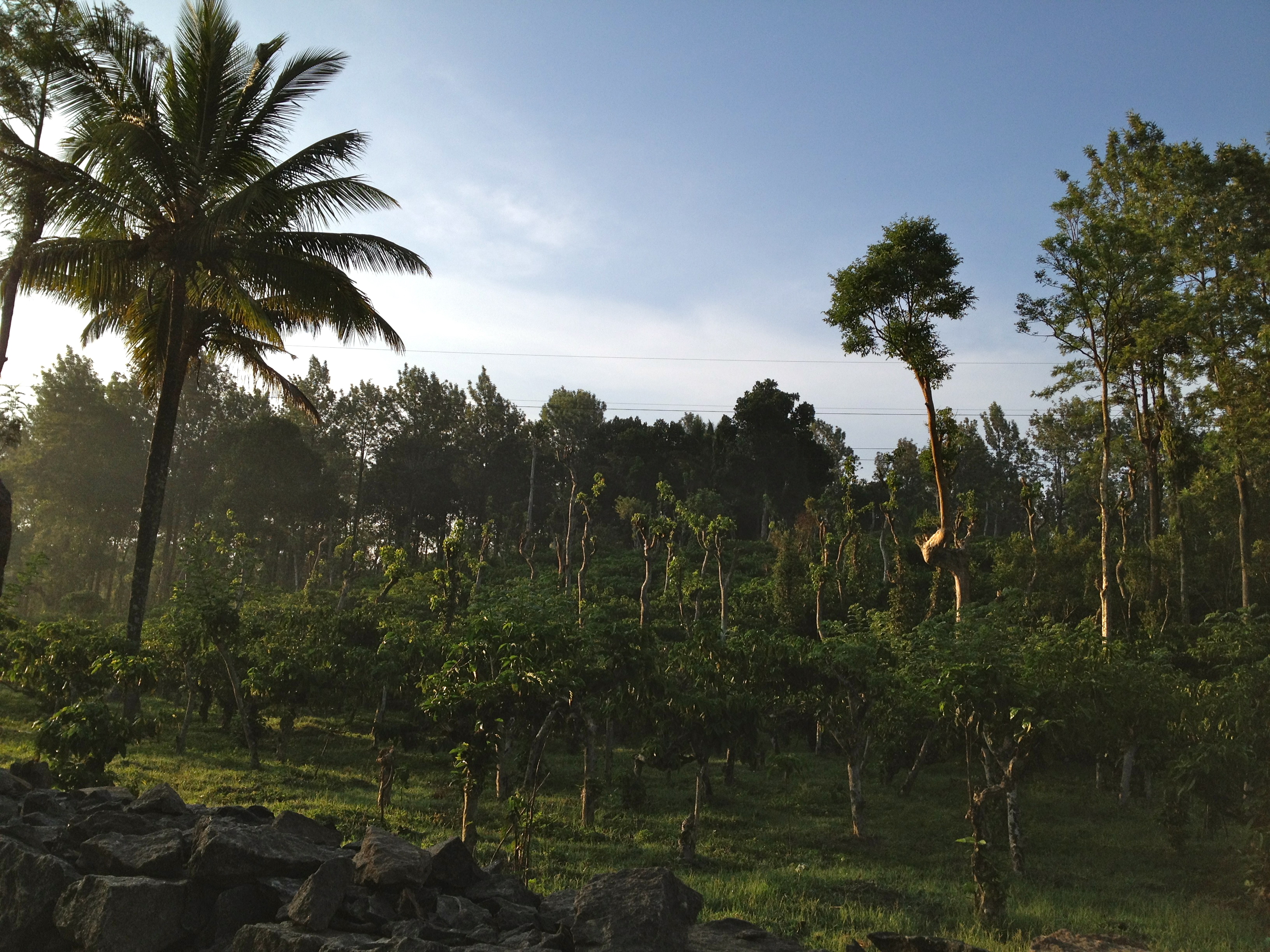
Typical landscape mosaic of Barrio Nuevo

Typical landscape mosaic of Barrio Nuevo

Isabel and I arrived safe and sound to Barrio Nuevo, Pichincha, Ecuador (0.224063°, -78.559691°) on May 21 to begin our study on a shade coffee agroforestry initiated seven years ago (see my blog for background info). We moved into the home of Juan Guevara, the local coffee promoter, and his family. It’s a simple concrete house with a kitchen and three bedrooms.After settling in, we spent a day with Juan going to the homes of various farmers growing coffee to introduce ourselves.

We spent the next three days conducting surveys with the coffee producers as well as visiting, evaluating, and mapping their coffee plots. As I expected, we quickly learned a lot about the problems with the shade coffee project that was implemented about seven years ago. Continue reading

WED 2013: Europe dumps fish dumping

WED 2013 - Raxa Collective

On June 5, we’ll celebrate World Environment Day. This year UNEP focuses on the theme Food waste/Food Loss. At Raxa Collective we’ll be carrying out actions and sharing experience and ideas. Come and join us with your ideas and tips to preserve foods, preserve resources and preserve our planet.

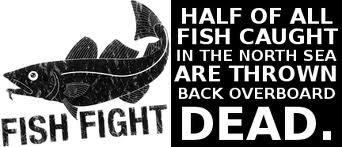
www.fishfight.net

…and about 80 per cent of Mediterranean stocks and 47 per cent of Atlantic stocks are overfished. It may seem rather odd but the European Union’s policy to avoid overfishing consists in tossing dead fish back in the sea if a fleet exceeds its quota.

For decades industrial fleets have been subsidised to plunder the European waters working under the rules of the  Common Fisheries Policy devised in the 1970s. And the rule of ‘discards’ has been let’s say counter-productive in reviving the fish stock. The practice allows fleets to net quantities of fish exceeding their quota, then simply throw any unwanted dead fish overboard.

Continue reading

Coffee and biodiversity

I’ve grown addicted to my colleague Anitha’s cold coffee since I got here (sorry guys but hers is just perfection). Ice cold, 70% arabica/30% robusta, locally grown coffee. India may not be known for its coffee, but in the Western Ghats of Southern India, you’ll find coffee plantations on hills and misty mountains between 800m and 1500m above sea level. One of the challenges here has been to integrate biodiversity conservation and sustainable livelihoods for farmers. Continue reading

How about traditional boats in the Periyar Tiger Reserve ?

The most popular activity in the Periyar Tiger reserve is boating on the  Periyar river. It’s a lazy, indulgent, moment of enjoyment of sightseeing. The ancient sunken tree trunks, the depth of the woods, the indigenous population fishing along the river…it also offers good chances to sight animals drinking, hunting by the river and excellent opportunities for birdwatching.

During the cruise I kept thinking it could all be quieter though, the engines of the motor boats seemed to break with the pristine tranquillity of this place… Continue reading

Siberian Tigers Return, Humans Shrug In Ambivalence

Decades of poaching and logging in China and elsewhere have ravaged the Siberian tiger population, with only about 500 left in the wild worldwide. Photograph: Tim Davis/Corbis

Decades of poaching and logging in China and elsewhere have ravaged the Siberian tiger population, with only about 500 left in the wild worldwide. Photograph: Tim Davis/Corbis

In our day to day work, how humans and wild animals interact is often a matter of personal fulfillment, though at times we tend to the challenging aspects as well.  The Guardian‘s coverage of the fate of charismatic mega-felines falls into this latter category with a mixed message of one wild animal’s population rebound and what can only be described as practical human reaction:

…Decades of poaching and logging have ravaged the population of the big cat, also known as Amur tigers– only about 500 still live in the wild worldwide. In 2010, Chinese authorities launched an initiative to boost numbers in the Hunchun National Siberian Tiger Nature Reserve near the country’s border with Russia and North Korea. Continue reading