Canopy Capture

Click the image above to go to a story covered in Wired about a novel approach to mapping threatened rainforest, using existing technology in an innovative manner:

A small, twin-propeller plane flies over the Amazon rainforest in eastern Peru. The scale of the vegetation is extraordinary. The tree canopy stretches as far as the eye can see — an endless array of broccoli florets bounded only by haze and horizon. Greg Asner, 43, has seen the rainforest from this vantage point many times before, but he still stares out of the window in rapt fascination.

Continue reading

Optimism and Opportunity

Many of my posts reflect my outlook to err on the upside of life’s circumstances.  I try to drown out my inner (and often powerful) pessimism by surrounding myself with positivity and optimism.  I find that this is a careful balance of being hopeful while remaining realistic.  Today, when I was taking a break from my coursework, or the slightly negative part of my day, I watched an encouraging Ted Talk that I think demonstrates hopeful realism.

Johan Rockstrom suggests that the earth is at a point where major transformation must occur.  He optimistically recommends that we use and continue to use crises as opportunities and local initiatives to transform and sustain life.  Also, he makes a realistic statement that climate change is not our biggest problem only a symptom of our land use.

I found this talk engaging and thought-provoking.  I agree that I transformation is soon to happen and I look forward to being a part of it.

Needing Mr. Miyagi

Anyone who has ever been to ski slopes may have experienced small, pint-sized, infant skiers buzzing down the hills.  As a veteran skier of 18-years, I proudly proclaim that I was once one of these daring children.  However, I learned this past weekend that through the years I have lost this fearlessness when I was challenged to try snowboarding.  I would love to boast that my first run was very similar to this video, but the aching of my entire body keeps me truthful as if to say, “Ha!  You wish, Meg!”

Several times I met the side of the mountain and regardless of the many parts of my body that hit, the solid surface was resilient to my attacks; in fact, the bruises that continue to surface would argue that it fought back with increasing firmness.  The absence of soft, powdery snow brought my awareness to this season’s lack of typical winter weather, and it drew my attention to the resort’s snow-making cannons.  Continue reading

Schneider Electric: Saving Energy across Multiple Cultures

Last week in my Facilities Management course at the Cornell Hotel School, Al Nels, Global Account Manager for Marriott from Schneider Electric, presented in class as a guest speaker. His presentation explored the energy-saving capabilities of various systems developed by Schneider Electric, as well as simple tips that hotels often overlook. Among the many insights Nels shared, one in particular stood out to me: the cultural divide between American and European hotel guests—and the steps that Schneider is taking in order to save energy in both areas of the world.

Continue reading

Paper Guardian

Samantha Contis for The New York Times ©

Click the image above for a profile of an amazing entrepreneurial conservationist.  The New York Times continues to demonstrate its subscription-worthiness.  The key line in the profile, which we can relate to both in principal and practice:

Barrett, who is 61, has dedicated his life to unlocking the mysteries of paper, which he regards as both the elemental stuff of civilization and an endangered species in digital culture. For his range of paper-related activities, he received a $500,000 fellowship from the MacArthur Foundation in 2009. “Sometimes I worry about what a weird thing it is to be preoccupied with paper when there’s so much trouble in the world,” Barrett told me, “but then I think of how our whole culture is knitted together by paper, and it makes a kind of sense.”

Continue reading

Travel, Writing & Games

This series has always been worth reading, whether you are an American looking through the eyes of a fellow American, or otherwise intrigued by a niche of American perspective that is not quite representative of that culture as a whole.

First things first: sometimes a book, a music recording or other item is only available from the mainstream online retailers such as Amazon or iTunes, but whenever possible we promote the purchase from independent sellers.  So click the image to the right if you want a link to independent booksellers in the USA, provided by the ever-entrepreneurial American Booksellers Association.

Now, the side show: the series editor Jason Wilson is also a contributor to a site we refer to on occasion, and he wrote an interesting item a couple of years ago that began:

Continue reading

Wild Things Lurk In Tranquil Places

Two of Milo’s recent posts–one about appetites and the other about maternal instincts–provide reminders that as beautiful as nature is, there are situational downsides. In an earlier post we mentioned Walton Ford, and it is interesting to consider Milo’s photographic observations in light of Ford’s work.  And since Milo was writing from India, perhaps even in conjunction with the musical encounter below.

This slideshow requires JavaScript.

Do not let Milo’s fearsome photography, nor Walton Ford’s phantasmagorical extrapolations, lead you astray. Continue reading

Patagonian Expedition Race

Ready, Set…And the Race is On!

We had the good fortune to work directly with the Patagonian Expedition Race and its founders for several years, both behind the scenes and in the field, and it was an exhilarating experience to say the least.

Blending adventure, conservation, sportsmanship and the ancient concept of finding “the sacred” in nature, the race gives athletes the opportunity to test their ingenuity and endurance while bringing attention to one of the earth’s last wild places. Continue reading

Peaks Over Poverty: Taking Adventure Travel to new Heights

Guest Author: Emma Frisch

– Emma Kirwan, Executive Director and Co-Founder of Peaks Over Poverty

Life in the Andes is harsh. 70 million people live in poverty, of which 44 million are rural people who rely on farming for survival. However, water demand, which is primarily used for agriculture, exceeds the available supply by 40% and is worsening with climate change.

Rural mountain people play a key role in preserving fragile highland ecosystems. The way they manage land and water directly impact human and environmental health for nearly half the world relying on mountain resources. The trickle-down effect; we’ve all heard of it before! This is precisely why Peaks Over Poverty was founded; to bring attention and critical resources to highland communities in Ecuador and worldwide.

Photo: Steve Sherwood

So how did we propose to do that? On a hike with my colleague Steve Sherwood (decked out in my hi-tec gear), it suddenly occurred to us. Continue reading

Architectural Conservation in Dubai?

What do you do with a 5 hour layover in Dubai?  Whenever I fly with Emirates, I somehow find myself with a lengthy layover at the Dubai airport. The last time this happened I was lucky enough to have a friend in town to show me the infamous skyline by night. This time, however, my flight arrived in Dubai at about 6am. So after an hour or so nap on the fairly comfortable waiting lounge seat, I headed off to check out old town Dubai by Dubai Creek. The pink women and children-only taxi dropped me off in the Shindagha area, right beside the docking area for the abras, the commuter boats.  I walked along the quiet and pristine port towards a cluster of traditional-looking buildings.

This slideshow requires JavaScript.

Low and behold, I stumbled upon a sign reading “Traditional Dubai House”. Continue reading

Theyyam – The Ritual Dance 2

In Kerala, almost every village has its own temple, with an annual festival. So there’s always a local festival happening somewhere or the other. As we mentioned about Theyam in our previous post, there are more than 400 Theyams performed in Kerala each year. Continue reading

The Cyberspace Jungle

Today, we are bombarded with information. Millions of bits–photos, text, video–stream by us every second we’re on the web. And we’re always on the web. Mobile devices on 3G (and now “4G”) and lightweight laptops able to access nearly ubiquitous WiFi hotspots mean that the modern age is certainly the information age. And the Internet continues to grow riotously; like a tropical rain forest, millions of unique niches exist, but they are inhabited here instead by users and data. And much like a natural ecosystem, the internet is also inextricably interlinked and interdependent: hyperlinks, reference pointers, and social media make the Internet a pseudo-organic entity that has its gaze turned not only outward (towards expansion) but also inward (towards connections). In its own way, the internet is an oddly beautiful thing. The freewheeling, ever-shifting topography of the web means that from second-to-second it’s never quite the same place.

But for all its seductive beauty and facile utility Continue reading

Entrepreneurial Conservation Through Rockclimbing

Guest Author: Robert Frisch

Image

The burgeoning sport of rock climbing is an excellent example of how an adventure sport can propagate the conservation of natural areas through private sector initiatives.  In the early days of the sport, climbers would hammer iron “pitons” into cracks in the rock as they ascended, and attach ropes to them in order to protect against falls.  The pitons were not designed to be removed, and can still be seen on some of the classic climbs around the world.  Visionary thinkers such as Yvon Chouinard (of the Patagonia clothing and gear company) were unsatisfied with the fact that with each new climb, permanent scars were left in the rock, and set out to devise other means of protection.  Nowadays, climbers use removable “nuts” and “cams” that still protect against falls, but leave no trace in the rock.  In fact, rock climbers have even set up organizations such as the Access Fund that participate in conservation and land protection initiatives.  The sport has also helped to bring much needed revenue to rural areas as diverse as Slade Kentucky, Yangshuo China, or Sigsipamba Ecuador. Continue reading

Pepper Harvest and Paper Bags

Guest Author: Aby Thomas

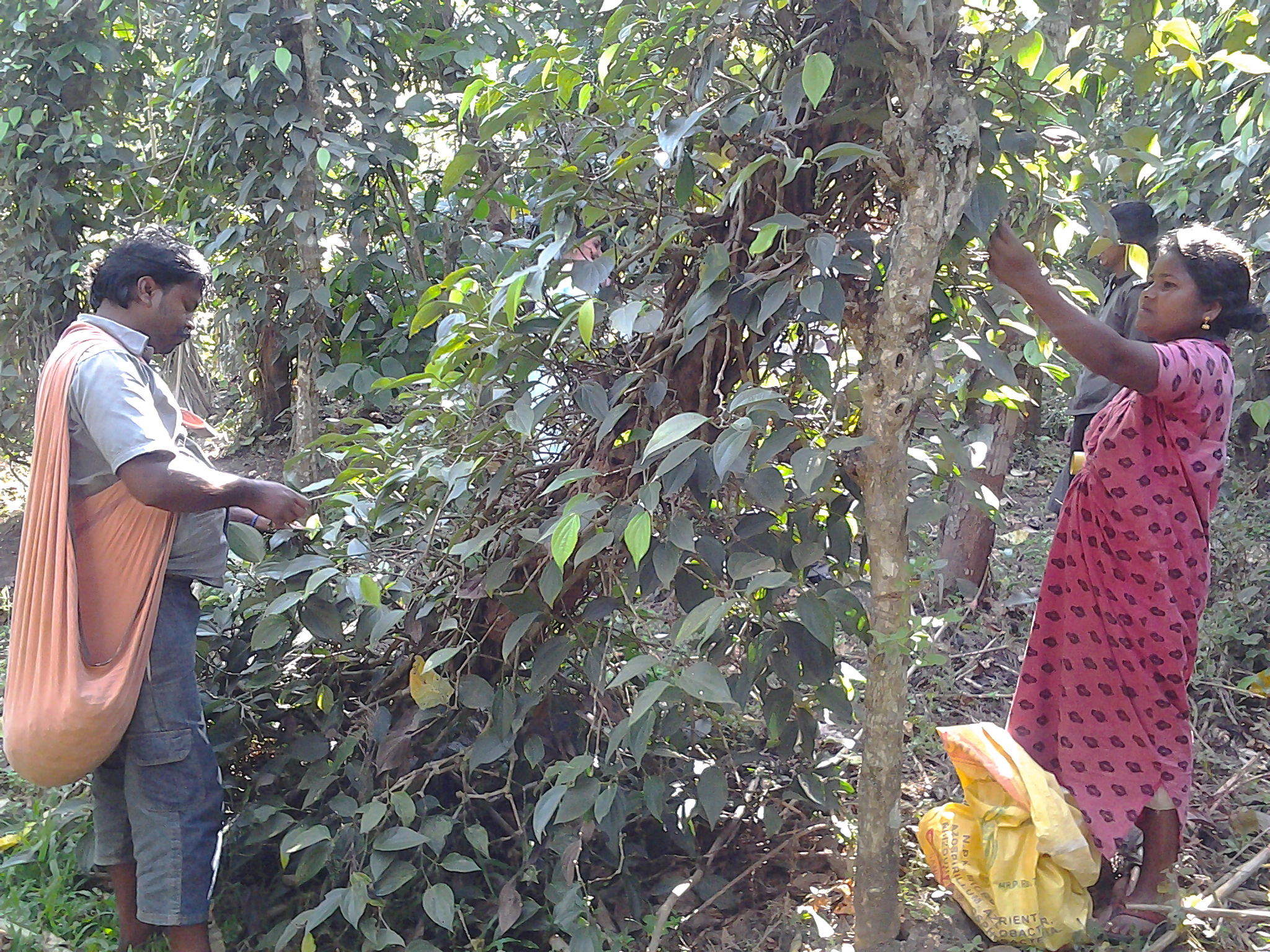
The title “Pepper harvest and Paper bags” may sound unusual, but it’s related to the newspaper bags initiatives by Cardamom County and the forestry department to create alternatives means of income for the tribal ladies leading to community development. The Vanasree Auditorium ladies have multiple responsibilities based on their working directly for the forestry department.  But the Mannakkudy ladies have had the newspaper bags as their primary income.  Until recently….The paper bags unit was active until the end of December, but now the tribal ladies are busy with their pepper harvesting. The pepper harvesting season in the locality begins with the month of January and ends during March. During these periods, the ladies help men in harvesting pepper. Continue reading

Margin Calls

Click the image to the right for an explanation of what that image has to do with the remarkable world of marginalia, which begins:

“In getting my books,” Edgar Allan Poe wrote in 1844, “I have always been solicitous of an ample margin; this is not so much through any love of the thing in itself, however agreeable, as for the facility it affords me of penciling in suggested thoughts, agreements, and differences of opinion, or brief critical comments in general.”

A certain Mr. Wallace, of literary fame, apparently had reason to write in the spaces of whatever was at hand.  But that is a matter of quite trivial pursuit compared to Kerouac’s marginalia while reading Thoreau.

Continue reading

It Might Have Seemed Funny

If you thought you had heard all the most clever jokes in the English language about environmental activists (citizens, scientists and other types) you might want to stay up to date with The Onion.  Activists can say and do things that, on reflection, lead to laughter, wincing or worse.  Perhaps the tendency Raxa Collective is most sensitive to is preachiness: we avoid it at all costs, preferring humor to vinegary sourpuss judgement of others.

If you were to click from humor at The Onion directly onto the page where Merchants Of Despair (click the image to the left) is reviewed and promoted, you might think it is Oniony humor.  But no, it seems to be earnest, determined anti-environmentalism:

Combining riveting tales from history with powerful policy arguments, Merchants of Despair provides scientific refutations to antihumanism’s major pseudo-scientific claims, including its modern tirades against nuclear power, pesticides, population growth, biotech foods, resource depletion, industrial development, and, most recently, fear-mongering about global warming. Merchants of Despair exposes this dangerous agenda and makes the definitive scientific and moral case against it. Continue reading

Bright Ideas

Ingenuity can go a long way in meeting people’s essential needs with the simplest of materials.

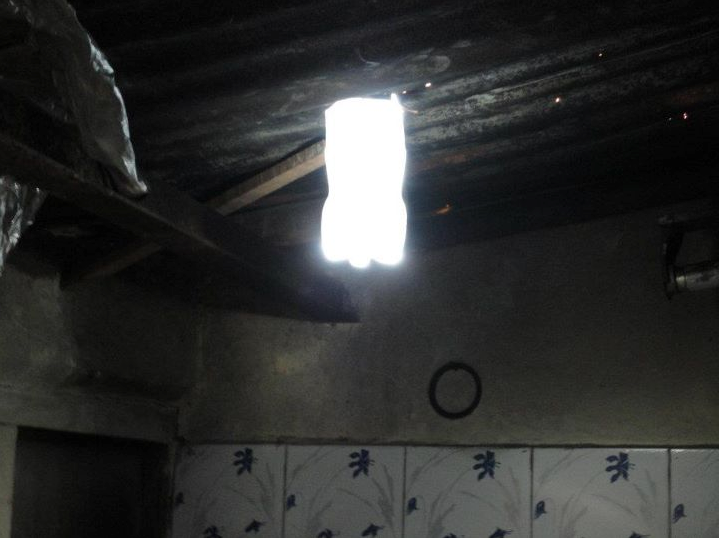
The recipe: Start with students from the Massachusetts Institute of Technology (MIT), add basic materials destined for dumps and landfills around the world, mix with filtered water and bleach, install, expose to sunlight. And voilà!–a light that will last for 10 years!

The Solar Bottle Bulb is based on the principles of Appropriate Technologies – a concept that provides simple and easily replicable technologies that address basic needs in developing communities.

Continue reading

Theyyam – The Ritual Dance

Photo: T J Varghese- taken from a temple festival near kannur, North kerala

Kerala is a land of old traditions, rituals, customs and arts. Most of them spring from folk tradition but they are often related to religious rituals and mythological stories.

Theyyam is one of the oldest popular devotional performance of Kerala. The performer usually takes a role of one deity and continue the character over the year. Continue reading

About That Plowshare Tortoise

This slideshow requires JavaScript.

In an earlier post we pointed to a wondrous article in The New Yorker, and now a blog post on the magazine’s website has a collection of photo out-takes and some behind the scenes description of getting those shots:

The portrait that opens the piece, of Goode with a tortoise, just barely came together. “Everything was planned to the minute, and so many things could have gone wrong,” Torgovnik told me from Rwanda, where he was onto his next assignment.