Collective Memory

Woodpecker specimens, Ornithology Department, Harvard Museum of Comparative Zoology

When the oldest birding group in  the U.S. gets together woodpeckers and their historical significance among endangered bird species are often the order of the day.  The Nuttall Ornithology Club held one of their last meetings of 2011 at the Harvard Museum of Comparative Zoology, excitedly taking advantage of such a rich resource that includes specimens that have both ornithological and historical value.

The Nuttall club goes way beyond the garden variety birding group. Qualification for membership includes examples of ornithological scholarly publication, education, research and conservation efforts. Roger Tory Peterson, (of guidebook fame) is an example of the group’s “high bar”.


Continue reading

Slow, Steady, Go

The January 23 issue of The New Yorker has an article on one wealthy man’s approach to conservation.  Click the image to the left to go to the article and if you are a subscriber to the magazine, and follow conservation trends, this will get your day off to an interesting start, provide a good respite from work in the middle of the day, or send you to bed dreaming.

It is paywalled, but as always available for purchase, and as always providing a tempting reason to subscribe to the magazine.  In case you do not have time to read it, or spare funds for a subscription, take a look at this short video based on some of the material covered in the article.

Continue reading

Pachyderm Surprises

Click the image above to go to the source.  As one of our favored magazines writes about one of our favorite topics (but the species from another continent), we share some surprises:

1) African and Asian elephants are sometimes thought to differ only by the location of the animals, but, evolutionarily speaking, they are species as separate as Asian elephants and woolly mammoths.

2) The elephant’s closest living relative is the rock hyrax, a small furry mammal that lives in rocky landscapes across sub-Saharan Africa and along the coast of the Arabian peninsula.

Continue reading

Backwaters Home: Pampa Villa

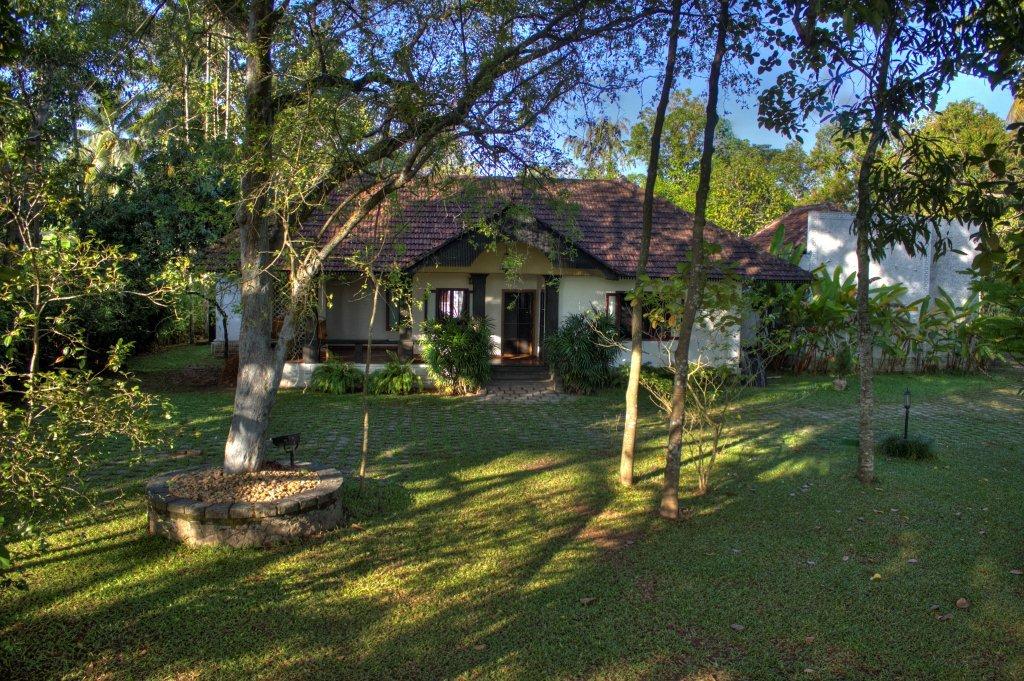
Pampa Villa On The Pamba River

We have mostly shown images of life on Kerala’s backwaters from the perspective of boats, as in looking at and looking from.  As Milo’s recent post showed (at the tail end, so to speak), there is much more life on these waters than first meets the eye of the occasional visitor.  The view above is from the river, looking at a home that Raxa Collective recently took responsibility for.

This responsibility included modifications to the interiors in order to make it more welcoming to travelers.  It had served as the home of a prosperous resident of the backwaters, but now is open to receive visitors whose preferences in terms of privacy, decor and food (at least spice levels) often differ from those of locals, at least a bit.

Continue reading

Shark-Free Shark Fin Soup

The hot hand remains hot.  One of the horrible culinary traditions that persists around the world, even though it is repugnant from an environmental perspective, is the harvesting of fins from sharks to make soup. Click the image to the left for but one small data point in the effort to end the illegal harvesting and sale of shark fins.

Better yet, don’t click that. Continue reading

Alberta Tar Sands: 1984 – 2011

Try as we may to accentuate the positive, from time to time there seems to be a hot hand of unpleasantries reported in the news.  Rather than hide our head in the sand, we thank Scientific American yet again:

This slideshow requires JavaScript.

As they used to say in New England: Continue reading

The Heavy Hand’s Awesome Grip

What can be done to reduce hypoxia?

Although reducing fertilizer use is the most cost effective method of ameliorating hypoxia in the Gulf of Mexico, the reductions necessary are too difficult and expensive to implement; the massive agribusiness establishment of wheat, soy, and especially corn is not easily confronted. So conservation and restoration of wetlands, or creation of any other form of buffer zone, is one of the better alternatives.

Buffer zones can filter between 50 and 90 percent of nitrogen and phosphorous from runoff; riparian buffers, filter strips, grassed waterways, and contour grass strips are practices eligible for the Conservation Reserve Program that also prevent nutrient runoff. The Conservation Reserve Program, or CRP, is Continue reading

A Complex Region Through A Thoughtful Lens

The newspaper, back in its paper days (1908-2008), was always excellent.  As a web resource, we are glad it has found firmer footing.  And some stories and contributors make its Latin America coverage particularly worth watching. Continue reading

Water Resources

We are in constant search mode for methods to reduce the use of plastics in India.  Plastic water bottles are the big frontier to conquer for resorts–no matter how “green” they may otherwise be–in particular.  Travelers are educated from so many sources–guidebooks, travel agents, government advisories, etc.–to demand sealed plastic water bottles (or else not drink from any other source). Continue reading

Water, Success, India

Those are three words that have a certain ring together.  But as per their tradition of seeking out news with a purpose, we appreciate this story in the Monitor, not least because it has to do with our neighbors to the north.  Click the image below to read the story at its source.

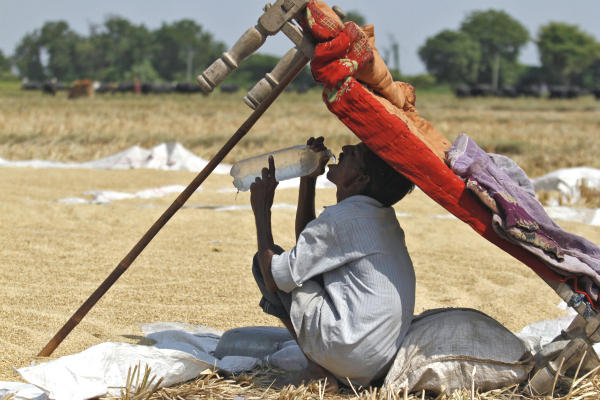
A laborer drinks water while taking a break from spreading paddy crop in a field on the outskirts of the western Indian city of Ahmedabad. In the tiny village of Wankute, water-management practices have eliminated the need to haul water to the village by truck, raised the water table, and widened the variety of crops that can be grown. Amit Dave/Reuters/File

Wankute, a tiny village located high in the Sahyadri mountain range of the Maharashtra state of India, was dry and near-barren in the 1990s. Agriculture was limited to crops that could withstand hot temperatures and little water, such as millet and certain legumes.

Continue reading

Lion King in Real Life

As a kid, I loved watching the Lion King. Either on the Disney Channel, VHS or live on Broadway, I was hooked. For me, safari in the Masai Mara is story of The Lion King coming to life: The whole gang was there- Simba, Nala, Pumba, Timon and even Rafiki!

This slideshow requires JavaScript.

Continue reading

Wordsmithing: Zoo

It is one of the words that most children associate with wildlife. Does it qualify as a word?  OED shows the etymology of these three letters as:
c1847    Macaulay in Life & Lett. (1878) II. 216   We treated the Clifton Zoo much too contemptuously.
1886    C. E. Pascoe London of To-day (ed. 3) iv. 65   The ‘Zoo’ in time past was as favourite a fashionable resort as Rotten Row.

Bumbling Back From The Brink

Cockerell's Bumblebee. (Credit: G. Ballmer, UC Riverside)

While news related to species loss seems almost always seem to be coming in at us like floodlights, occasionally there is a glimmer of hope shining outward in the headlines:

ScienceDaily (Dec. 5, 2011) — A team of scientists from the University of California, Riverside recently rediscovered the rarest species of bumblebee in the United States, last seen in 1956, living in the White Mountains of south-central New Mexico. Continue reading

Flourishing Fynbos


Although it may seem counterproductive to conservation, there are quite a few plant and tree species that require the heat of fire to allow their seeds to germinate.  The Lodgepole Pine is one such example, where the heat of the fire burns off the resin that normally seals the seed laden cones.

The South African Fynbos is another.   Continue reading

Mahatma Gandhi In Paris

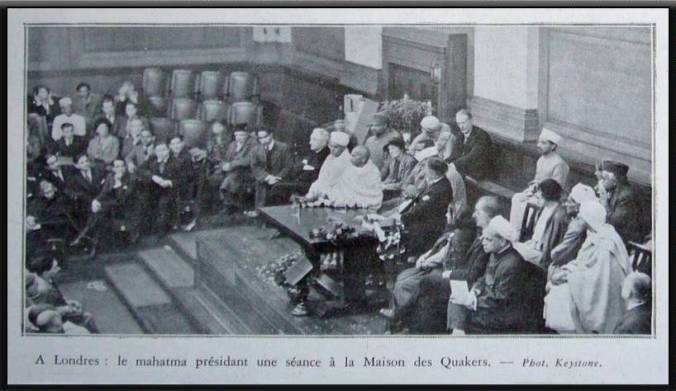
With a mission like this how could we not pay attention? The image above links to the story about two of our favorite subjects, brought together by The Caravan.  The image is from a French magazine, which covered the Mahatma’s visit to Paris (and elsewhere) with reverence.

Continue reading