Sense & Sensibility Off Grid

170313_r29532-600

“Sanditon” is robust, unsparing, and alert to all the latest fashions in human foolishness. Illustration by Rutu Modan

It has been nearly two decades since we adopted and adapted the two words, made meaningful as a study in contrasts and complementary values by a favored novelist, to remind us of what we are out to accomplish.

In recent weeks at Chan Chich Lodge the senses have been stimulated by wildlife sightings. Meditation on and in nature seems to fix, if momentarily, everything.

Apart from those meditations our guests find time to relax in a hammock, reading. Whether on paper (we prefer its off grid feel), or even on modern devices (on which there are some clear advantages) reading is a perfect complement to the day’s action. The quiet contemplation is a perfect counterpart to the nature excursions, so we are pleased to see Jane Austen has more to say than any of us knew:

On March 18, 1817, Jane Austen stopped writing a book. We know the date because she wrote it at the end of the manuscript, in her slanting hand. She had done the same at the beginning of the manuscript, on January 27th of that year. In the seven weeks in between, she had completed eleven chapters and slightly more than nine pages of a twelfth—some twenty-three thousand five hundred words. The final sentence in the manuscript runs as follows: Continue reading

Impossible’s Intriguing Inclination

Impossible.jpgMeatless is not even a concept yet for some, but we’re working on that. Many of us contributing on this platform have already started taking it seriously even if not totally converted–reducing meat consumption rather than going all out vegetarian, let alone vegan–for all kinds of good reasons.

We have already expressed our interest as best we can without having yet tasted one of these, but thanks to this Guardian review we are now a step closer to the impossible. We do not need to have tasted it to have high expectations and hopes to match the ambitions of the company:

Impossible Foods is on the cusp of big things. But as the company lines up its first burger chain, it still needs to show it can convert the meat-loving masses Continue reading

Cacao’s Curious Clues

4TB-amazon1-superJumbo.jpg

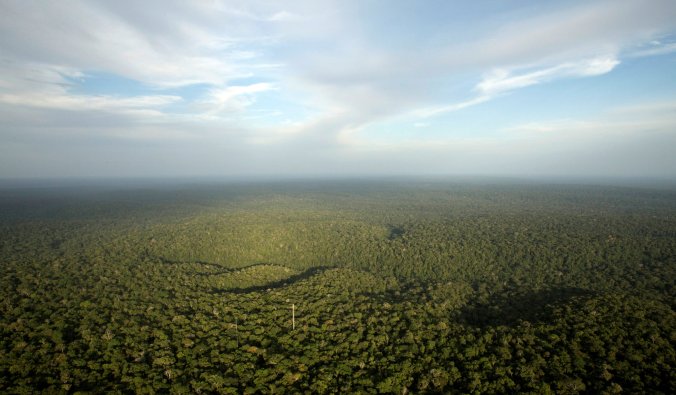
A view from the Amazon Tall Tower Observatory in São Sebastião do Uatumã, Brazil. A new study examines correlations between plant species in the forest today and archaeological finds. Credit Bruno Kelly/Reuters

Different day, different location, and our interest in cacao is  piqued again:

How the Amazon’s Cashews and Cacao Point to Cultivation by the Ancients

By

Scientists studying the Amazon rain forest are tangled in a debate of nature versus nurture.

Many ecologists tend to think that before Europeans arrived in the Americas, the vast wilderness was pristine and untouched by humans. But several archaeologists argue that ancient civilizations once thrived in its thickets and played a role in its development. Continue reading

Liquid Renaissance

28tmag-cocktails-slide-3bo4-master768

Sullivan Doh, owner-mixologist at Le Syndicat in Paris.Credit Charissa Fay

We are pleased to read of Mr. Field, in some ways doing in Paris what we have just noted happening with cacao in the Caribbean–a kind of renaissance of beverages that is also on our agenda in Belize:

The Slow Rise of Craft Cocktails in Paris

By

28tmag-cocktails-slide-Q0D3-master180.jpgIn her new book, “The New Paris: The People, Places & Ideas Fueling a Movement” ($30, amazon.com), the writer (and T contributor) Lindsey Tramuta documents the creative and cultural shift she has witnessed in the city in recent years. Below is a passage on the rise of craft cocktails there.

To say that cocktails are a new phenomenon in Paris is to overlook a culture of distilling liquors dating back to the 1800s, one that gained greater traction more than one hundred years later during American prohibition, when newly unemployed bartenders came to Europe in droves and landed in some of the continent’s best hotel bars. Continue reading

Reviving Cacao

59417_orig_custom-915406cf70e2af518f4441fd5d23a7fd2512008d-s1400-c85-1

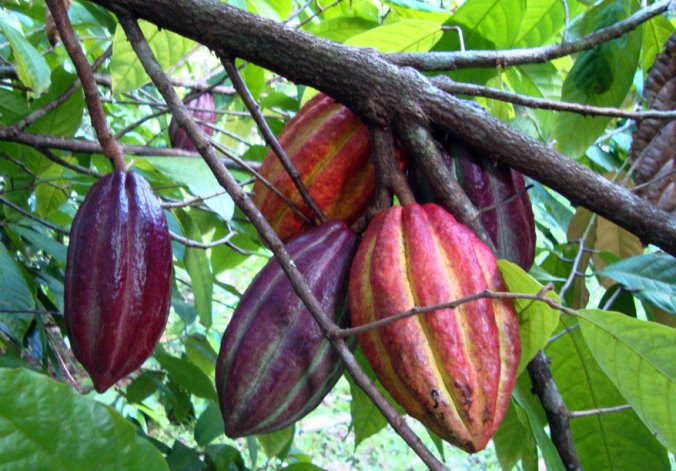
Cacao pods ready for harvest at the Loiza Dark Chocolate farm. Courtesy of Loiza Dark Chocolate

Thanks to Dan Charles and his colleagues at the salt, over at National Public Radio (USA) for telling us about that something speaking to Mr. Vizcarrondo; we, working in Belize, working on farm revival among other things, also hear that something and we are inspired to hear of others who hear it too:

The dream of reviving Puerto Rico’s chocolate tradition took root in Juan Carlos Vizcarrondo’s mind years ago.

He’s always been obsessed with flowers and trees. As a boy, he planted so much greenery in his mother’s backyard, there was hardly room to walk.

But in his thirties, he started planting cocoa trees, with their colorful pods full of magical seeds. “Something told me, just keep planting, because nobody has it! It’s so strange, nobody has it!,” he recalls. Continue reading

Eat Your Vegetables, If You Can Find Them

vegcrisis_1-2-5a935c2edcf303caf9d2c322914a74c41ca02089-s1400-c85

Vegetables were rationed at supermarkets in the U.K. due to poor weather conditions in Europe. Here, lettuce, broccoli and zucchini were rationed at a Tesco store in London. Victoria Jones/PA Images via Getty Images

Thanks to National Public Radio (USA) and the folks at the salt for this story about the implications of vegetable shortages in the UK:

It started in late January. At my local grocery store in South London, salad seemed to be just a few pence pricier than usual. But I didn’t think much of it.

Later that week, the same market had conspicuously run out of zucchini. I’m not particularly fond of it, but I lamented for the carb-conscious yuppies who depended — and subsisted — on spiralized zucchini spaghetti. How would they cope? Continue reading

A Serving Of Tradition, If You Please

mexico-mole-slide-DWS8-jumbo.jpg

We are close to this tradition, geographically anyway, both in Belize and in Baja California Sur where members of our team are, so we must pass this along:

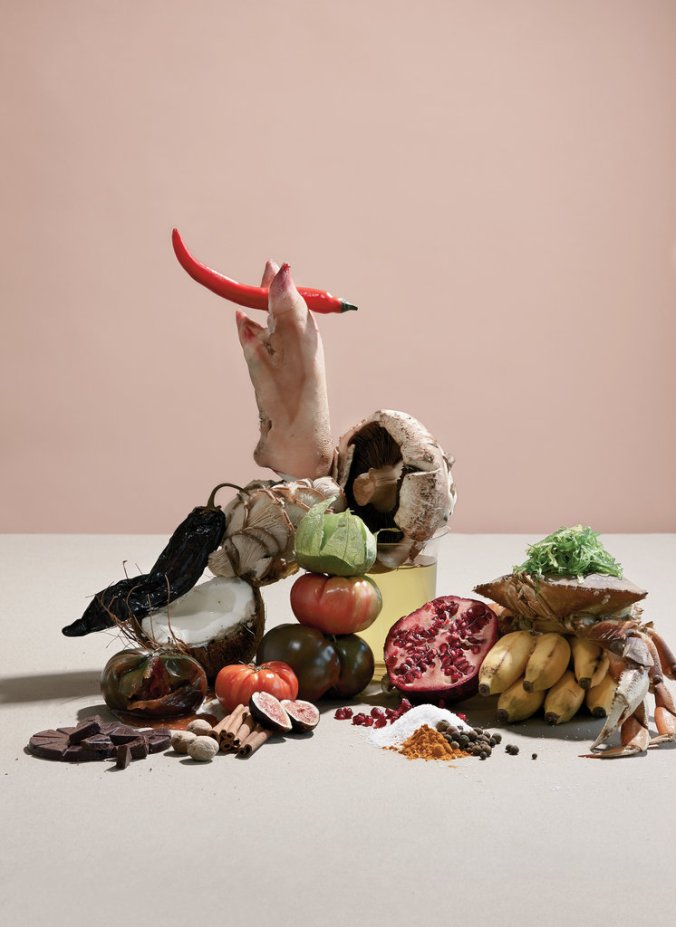
The New Age of Traditional Mexican Mole

The country’s top chefs are reinventing the complex sauce — 10, 20, even 30 ingredients at a time. Continue reading

Model Mad, Icon


petrusich-harrybelafonteandthesocialpowerofsong-800

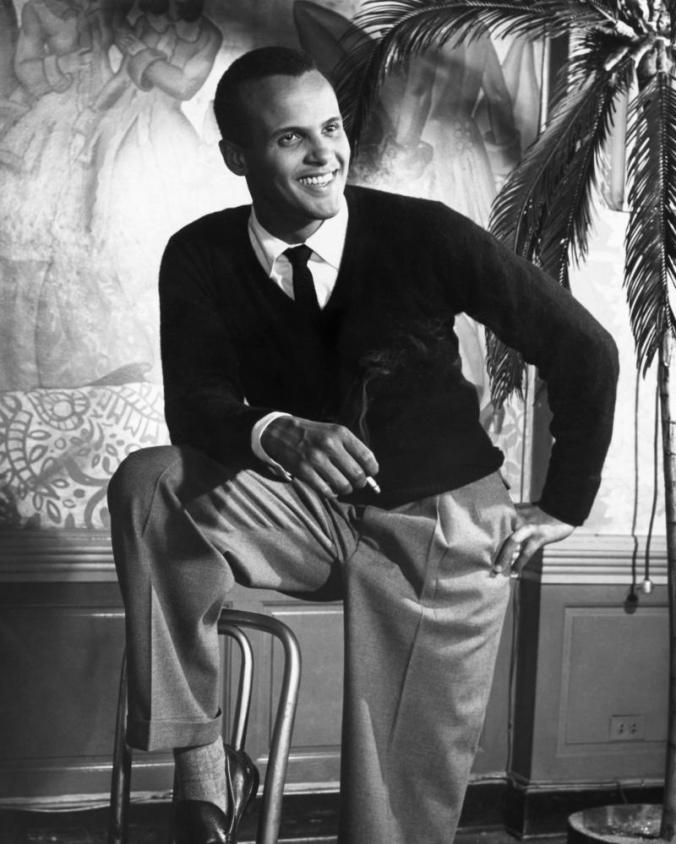
A new anthology of the work of Harry Belafonte, pictured here in the nineteen-forties or fifties, reiterates his standing in American music. PHOTOGRAPH BY BETTMANN / GETTY

There was an editorial a few days ago that alerted us to the birthdays of two buddies, each on icon in his own right, who have 70 years of solidarity in the tough times, and best of times too. It also alerted us to the time since our last post with the model mad theme, so here is one more:

HARRY BELAFONTE AND THE SOCIAL POWER OF SONG

By Amanda Petrusich

Sixty-one years ago, in 1956, Harry Belafonte recorded a version of the Jamaican folk song “Day-O,” for his third studio album, “Calypso.” It opens with a distant and eager rumbling—as if something dark and hulking were approaching from a remote horizon. Belafonte—who was born in Harlem in 1927, but lived with his grandmother in a wooden house on stilts in Aboukir, a mountain village in Jamaica, for a good chunk of his childhood—bellows the title in a clipped island pitch. The instrumentation is spare and creeping. His voice bounces and echoes as it moves closer. It sounds like a call to prayer. Continue reading

The Future Of News

2503_cover_beigeThe purpose of this, where I am typing this just now, is to share information. Sometimes that information comes in the form of a personal story, which is highly subjective but informative about the challenges, the innovations, and accomplishments related to conservation and the wellbeing of communities around the world. We depend on the New York Times for this kind of information every day, and more days than not we link out to stories they publish related to the environment, community, or other topics of interest on this platform; so this story matters to us:

ARTHUR GREGG SULZBERGER doesn’t remember the first time he visited the family business. He was young, he says, no older than 6, when he shuffled through the brass-plated revolving doors of the old concrete hulk on 43rd Street and boarded the elevator up to his father’s and grandfather’s offices. He often visited for a few minutes before taking a trip to the newsroom on the third floor, all typewriters and moldering stacks of paper, and then he’d sometimes go down to the subbasement to take in the oily scents and clanking sounds of the printing press. Continue reading

Truffle Entrepreneur, Immigrant Son’s Success

lavin-howatexasteen-agerbecamenewyorkcitystoptruffledealer-800

Ian Purkayastha, the twenty-four-year-old wunderkind behind the luxury-food company Regalis, aims to “demystify this bourgeois product for a new generation.” PHOTOGRAPH BY KRISTIN GLADNEY / WIEDEN+KENNEDY

It could just be that I have had a nearly two-decade love for truffles; or the storyline combining entrepreneurship, economics and food, a mix that I favor; or maybe my being the son of an immigrant explains my response to this post at the New Yorker’s website; probably it is because I can almost picture my own son in such a story, in a parallel universe; whatever, enjoy:

HOW A TEXAS TEEN-AGER BECAME NEW YORK CITY’S PREMIER TRUFFLE DEALER

On a bare side street in Long Island City, Queens, beside Oh Bok Steel Shelving & Electric Supply, the Regalis luxury-food company keeps its goods. Upon entering the warehouse through a small red door, a visitor is immediately greeted by an intoxicating and pungent scent: the unmistakable, and nearly indescribable, odor of truffles. Continue reading

Small Dairy Farm & Value Creation

cheese1-c6070525cade53b6706864da524537124dd434af-s1400-c85

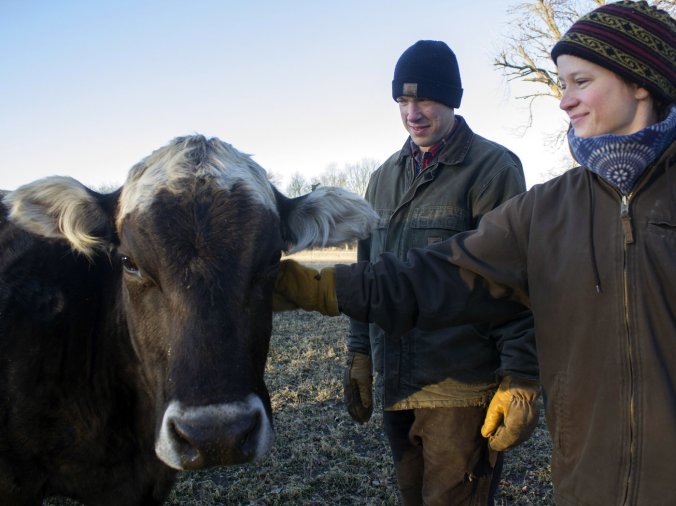
Kevin and Ranae Dietzel, owners of a small dairy herd near Jewell, Iowa, named their signature cheese after this cow, Ingrid. Amy Mayer

A lovely little piece from the salt, over at National Public Radio (USA), that illustrates again how the production of artisanal cheeses can add value, in this case to an otherwise economically challenged farming enterprise

On a clear, cold winter evening, the sun begins to set at Lost Lake Farm near Jewell, Iowa, and Kevin Dietzel calls his 15 dairy cows to come home.

“Come on!” he hollers in a singsong voice. “Come on!”

Brown Swiss cows and black Normandy cows trot across the frozen field and, in groups of four, are ushered into the small milking parlor.: Continue reading

Librarian’s Librarian

poi_librarian_of_congress_carla_hayden-WP-1200.jpg

The Librarian of Congress, Dr. Carla Hayden, believes in citizens’ right to access information. “It should feel very special because it is very special,” she said, of the Library. “But it should be very familiar.” ILLUSTRATION BY BEN KIRCHNER; PHOTOGRAPH BY LEXEY SWALL / THE NEW YORK TIMES / REDUX

It has been too long since our last shout out, among dozens starting in 2011, to libraries and librarians, so we are thankful for this opportunity with a brief excerpt from the middle of this post on the New Yorker website:

THE LIBRARIAN OF CONGRESS AND THE GREATNESS OF HUMILITY

The values of Dr. Carla Hayden, the first woman and the first person of color in the position, can be seen in every aspect of the institution she runs.

…Mention her name to a New York Public Library staffer, and there’s a frisson of excitement; at her raucous and bustling sendoff in Baltimore, a high-school librarian, quoted in the Washington Post, called her a “rock star.”…

Chef Ram At Chan Chich Lodge

Chef Ram2.jpg
Chef Ram and I have multiple chef colleagues and foodie friends in common, but this is the first chance that he and I have had to work together. I have been looking forward to this opportunity for quite some time.

He will be expanding and strengthening the farm to table program that Chan Chich Lodge started nearly three decades ago. He will work primarily with Amie, whose success with food programming (and places where that food is enjoyed, which has also been widely appreciated) in India since 2010 made sure that the projects got attention. You will see those ideas here, so stay tuned. Continue reading

Appreciating Earth’s Amenities

bjornerud-storingearthsmagneticfieldinajar_01

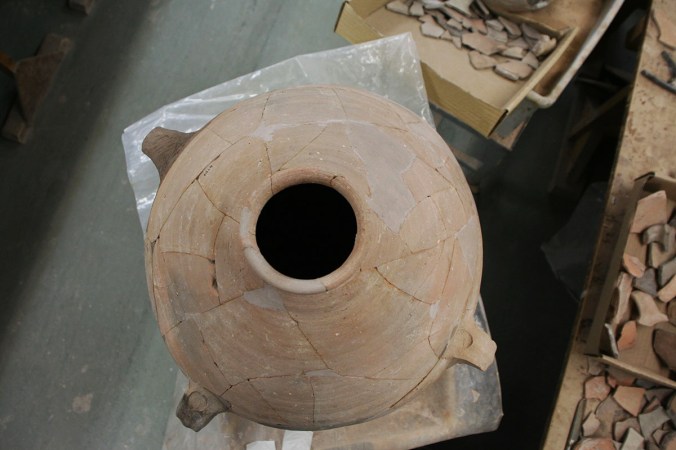
Ancient pottery, like this jar from Iron Age Judea, can record our planet’s magnetic ebb and flow. COURTESY ODED LIPSCHITS

Funny, as we just started carrying a new line of amenities at Chan Chich Lodge (what we had was already earth-friendly, but the new line is even more so), to be reminded of an amenity we never thought of as an amenity:

EARTH’S MYSTERIOUS MAGNETIC FIELD, STORED IN A JAR

Of all the environmental amenities that this hospitable planet provides, the magnetic field is perhaps the strangest and least appreciated. It has existed for more than three and a half billion years but fluctuates daily. It emanates from Earth’s deep interior but extends far out into space. It is intangible and mostly invisible—except when it lights up in ostentatious greens and reds during the auroras—but essential to life. The magnetic field is our protective bubble; it deflects not only the rapacious solar wind, which could otherwise strip away Earth’s atmosphere over time, but also cosmic rays, which dart in from deep space with enough energy to damage living cells. Continue reading

Heatless Habanero!

courtesy-of-blue-hill_slide-9b632a9cd15cdc7e587d3adea9090145933a476f-s1400-c85 (1).jpg

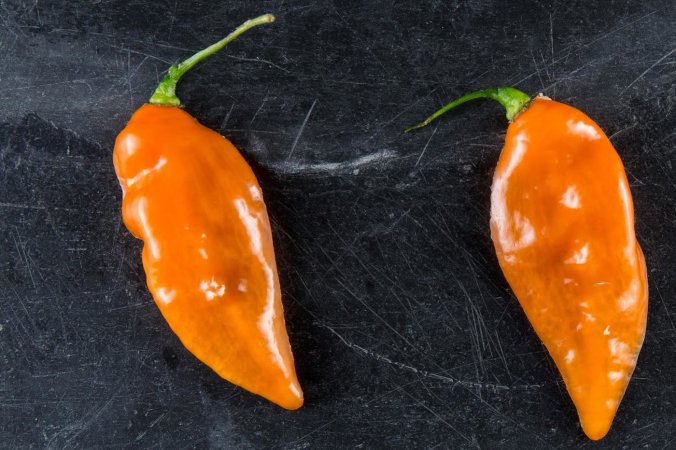
New York City’s Blue Hill restaurant is the biggest buyer of “Habanadas,” a habanero bred to be heatless, so the focus is on its melon-like flavor. Courtesy of Blue Hill

A few reasons to read this include Dan Barber and his Blue Hill being mentioned in the opening sentence; plus the arrival of our new chef at Chan Chich Lodge, hinted at last month; plus the fact that many of our guests cannot tolerate the heat of habaneros; plus our plan to expand the variety of salsas produced at Gallon Jug Farm; plus the fact that the plant breeder responsible for this innovation is in one of our favorite places for agricultural innovation:

For Dan Barber, the celebrated chef of the New York City restaurant Blue Hill, each course of a meal is an opportunity to tell a story. One of these stories is about a pepper — an aromatic, orange habanero without any heat. Continue reading

Model Mad, Music

Ross-marking-art-in-time-of-rage-1200.jpg

In the face of Trump, many artists report feelings of paralysis. Should they carry on as before, nobly defying the ruination of public discourse? Or seize on a new mission, abandoning the illusion of aesthetic autonomy? PHOTOGRAPH BY ERICH AUERBACH/HULTON ARCHIVE/GETTY

Alex Ross asks the right question, in our view of the importance of finding a new model of behavior to reflect mad, with his opening question and the whole first paragraph prepares you for a worthy read:

MAKING ART IN A TIME OF RAGE

What is the point of making beautiful things, or of cherishing the beauty of the past, when ugliness runs rampant? Those who work in the realm of the arts have been asking themselves that question in recent weeks. Continue reading

Corn Culture Cropped

3915997480_7d3bb9ab91_o_wide-d1096f93994052a70749306989017f6effbc93a6-s1400-c85.jpg

Cahokia Mounds State Historic Site in Collinsville, Ill. A thriving American Indian city that rose to prominence after A.D. 900 owing to successful maize farming, it may have collapsed because of changing climate. Michael Dolan/Flickr

Thanks to National Public Radio (USA) and the folks at the salt for raising our awareness of another corn-influenced culture we knew nothing about until just now:

1,000 Years Ago, Corn Made This Society Big. Then, A Changing Climate Destroyed It

by Angus Chen

About a 15-minute drive east of St. Louis is a complex of earthen mounds that once supported a prehistoric city of thousands. For a couple of hundred years, the city, called Cahokia, and several smaller city-states like it flourished in the Mississippi River Valley. But by the time European colonizers set foot on American soil in the 15th century, these cities were already empty. Continue reading

Art as Public Domain

Young Woman with a Water Pitcher by Johannes Vermeer (Dutch, Delft 1632–1675 Delft)

Young Woman with a Water Pitcher
by Johannes Vermeer (Dutch, Delft 1632–1675 Delft)

In these current times when Art, Culture and Civility appear to be under constant attack, news that museums and galleries – both private and public – are opening their virtual archives of Public Domain artworks to be just that, public, is newsworthy.

For example, a click on the image to the left takes viewers to the Metropolitan Museum’s website that includes not only the full details of the painting (description, catalogue entry, provenance and exhibition history, etc.), but also a hyperlink to a map of the gallery where viewers can find the actual painting, and related objects within the museum’s vast collection.

We’re happy to know that museums, whether virtual or physical, still provide inclusive space to breathe deep.

Met Museum Makes 375,000 Images Free

Continue reading

Millenia-Old Amazonian Practices Worthy Of Marvel

11tb-amazon01-superJumbo.jpg

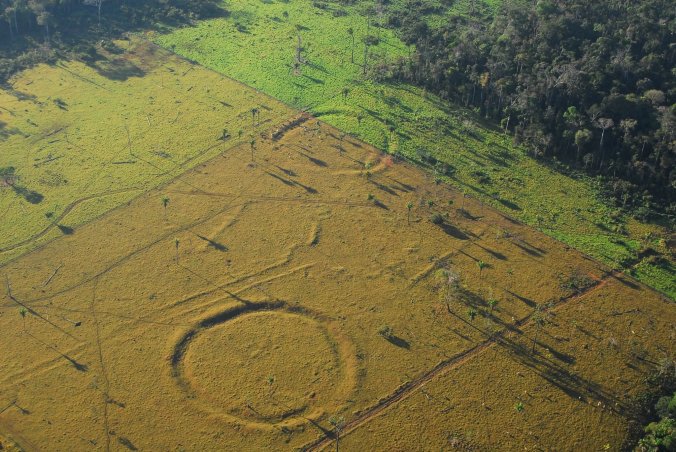
New research suggests people were sustainably managing the Amazon rain forest much earlier than was previously thought. Credit Jenny Watling

Anything with the word Amazon in it, when it refers to the rainforest ecosystem in South America, is worthy of marvel. Joanna Klein offers this story, in the Trilobites feature at the New York Times, that is one of the more surprising finds we have seen in a long time:

Deep in the Amazon, the rain forest once covered ancient secrets. Spread across hundreds of thousands of acres are massive, geometric earthworks. The carvings stretch out in circles and squares that can be as big as a city block, with trenches up to 12 yards wide and 13 feet deep. They appear to have been built up to 2,000 years ago.

Were the broken ceramics found near the entrances used for ritual sacrifices? Why were they here? The answer remains a mystery. Continue reading

Grrreat Print, Walton Ford

rs-12035-20130805-stones-624x420-1375716018

We  studiously avoid wading into the realm of popular music here, but today we make an exception. Not for the sake of the music itself (the greatest hits of a band celebrating 50 years of working together), but because we have just discovered that one of our favorite artists, featured here more than once, was the cover artist for the album above. Yes, we see we are a few years behind the times on this story, but better late than never when it comes to Walton Ford:

Rolling Stones Gorilla Logo Artist Slams Critics

Walton Ford offering limited-edition etching of widely seen gorilla logo Continue reading