Support Edible Utensils, Reduce Plastic

Screen Shot 2016-05-31 at 8.52.42 AM

Click the image above to go to the video on this new company’s page at Kickstarter, and then scroll down if you want to pre-order items to support the mission:

Eat your utensil and prevent waste at its source! 

Bakeys is launching the world’s first edible cutlery line made of three flours: rice, wheat, and sorghum. Help us change the way we eat and think about waste!

And we understand how important it is to be able to provide delicious cutlery that can be eaten by anyone. We are already fully vegan, preservative free, trans fat free, dairy free and operate on principals of fair trade. We have put a focus on bringing up the following certifications within the following year: Continue reading

Musical Ecology

MJ15_image_Page_066_Image_0001

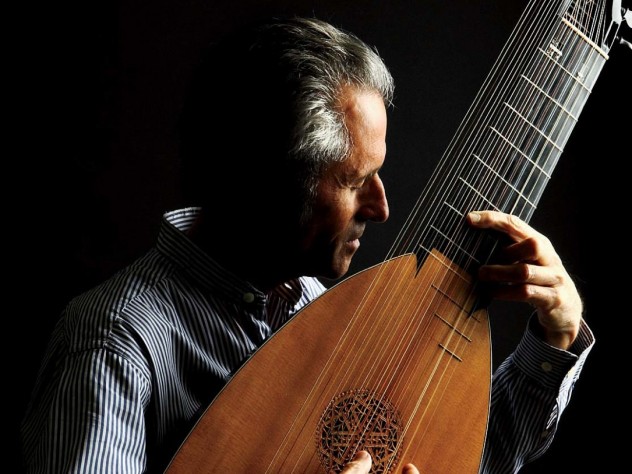
Hopkinson Smith playing the German theorbo built for him by Joel van Lennep. Photograph by Philippe Gontier/Courtesy of Hopkinson Smith

When a musician of this talent dedicates his life to mastery of instruments that keep an old tradition alive, we take notice. When he describes  J.S. Bach as a recycler, we understand in a fresh context the value of this concept that we tend on these pages to relegate to the reduction of waste. Recycling is also about adaptation, evolution, improvement (thanks to Harvard Magazine):

HOPKINSON SMITH ’70 describes J.S. Bach as a musical ecologist. “He recycled so many of his own works,” Smith explains. “He never stopped trying to adapt what he’d written.” It was an accepted musical practice at the time, but one imagines the composer was driven at least in part by pragmatism: his posts in a number of German cities required him to produce new compositions at a fierce pace. Refashioning musical materials helped him keep up with those demands. “Even so,” Smith adds, “writing a cantata a week would not have been a manageable task for the rest of us mortals.” Continue reading

Forward To The Past

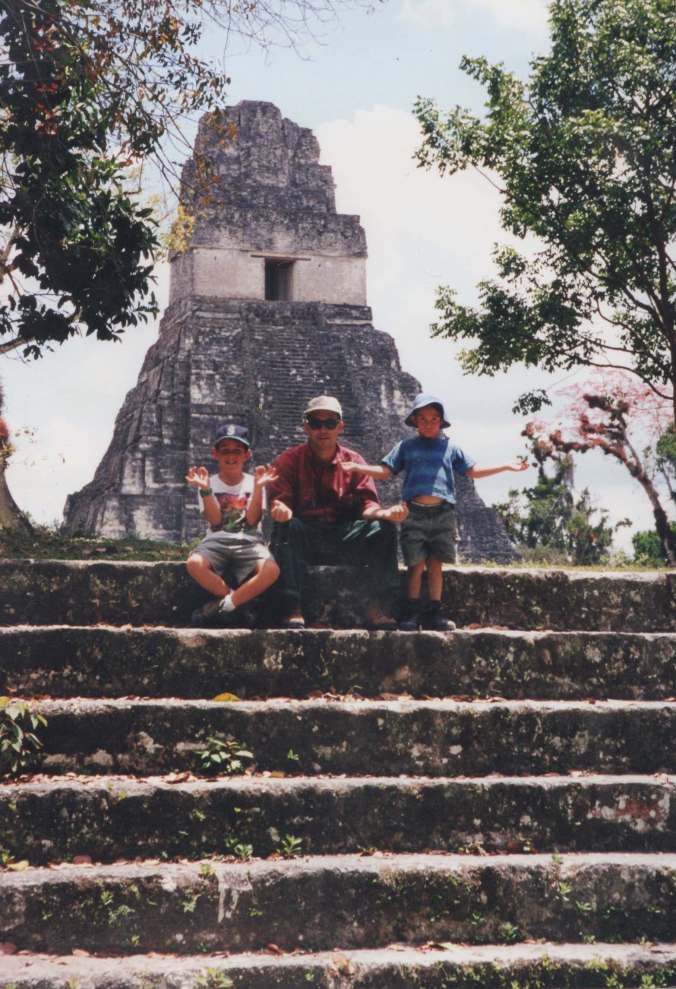
crist and boys tikal.jpg

A few days ago I mentioned, in reference to my recent visit to Belize, an earlier visit to Tikal in Guatemala. In the photo above, taken in 1999, three future La Paz Group contributors (Seth Inman, me, and Milo Inman from left to right) were getting our “om” on in preparation to climb the stairs in the background.

Amie Inman, who took that photo, reminds me that she and I had been to Tikal earlier, without our two sons. On both occasions we had the kind of mystical experiences for which this location is known. We had climbed the temple in advance of sunrise, as recommended (no photos from that with us currently, so credit for the photo below goes to a fellow wordpress blogger; click the photo for attribution).
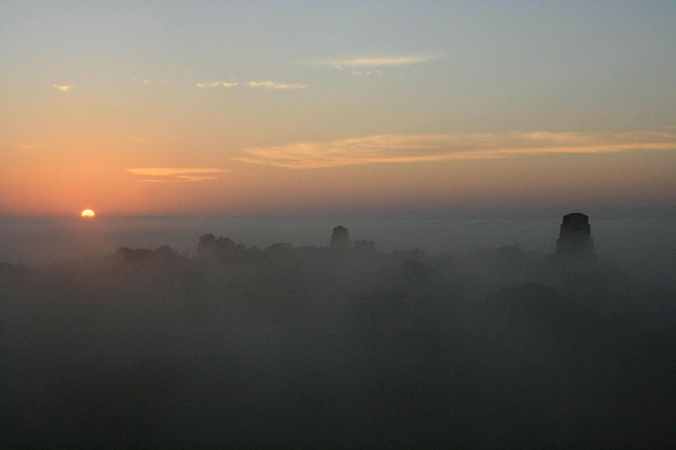
sunrise-in-tikal

What we all remember about our visits to Tikal, and on a separate journey to Copan in Honduras we had the same sense, was how the archeologists and the relevant authorities in these particular national parks had done just the right amount of excavation. Some things were left to the imagination. Seth and Milo, in a conversation we overheard, said that Tikal was much better than Disney World, because it was real – it was like being Indian Jones. Our understanding of “real” was “unspoiled” in the sense that one could see plenty of uncovered evidence of Mayan culture, and also see that these artifacts of that culture eventually were swallowed by the jungle. Continue reading

Lost & Found, Geological Trickery, Conservation

looters_trench02

I had the opportunity to visit a site in Belize that had been on my radar for most of the last two decades. On my radar, but chance had conspired to keep me away, until last week. I will write more about that visit soon, but for now I want to share a thought on the photo above, and the one below (since I neglected to snap photos while standing in exactly the same location as the photographer who took these two, my thanks to him for his website’s provision of these two images).

looters_trench

These are commonly referred to as looter’s trenches, on opposite sides of a Mayan burial site. They are relatively fresh. The family that owns the property on which these trenches were dug, by tomb raiders looking for valuables, decided that the best way to protect the patrimony of this site was to ensure that there were always people nearby to keep looters away. A lodge was built, and it became a pioneering success story in protecting both archeological and natural patrimony. In other words, what we call entrepreneurial conservation. Continue reading

Intangible Heritage In Ireland

p03swypw

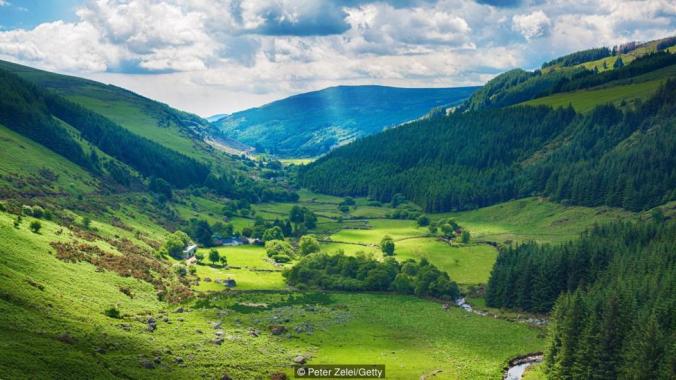
Irish landscape

Apropos of this post yesterday, and many that preceded it on the topic of intangible patrimony (thanks to the BBC):

How The Irish Lost Their Words

New storytelling groups are reintroducing the Irish to ancient myths and the art of blarney.

By Rory Boland

I always knew my Uncle Peter was setting up for a story when he’d lean back in his bar stool. Nothing dramatic, nothing too flashy, just a gentle recline – always followed by a more determined pushing away of his half-drunk pint of Harp and a wipe of the whiskers. Stage set, audience warned, he’d begin by saying “C’mere ‘till I tell you.” By the time that pint of Harp was drained, half the pub would be leaning in to listen and laugh. Continue reading

Intangible Heritage Worthy Of Conservation

9-690

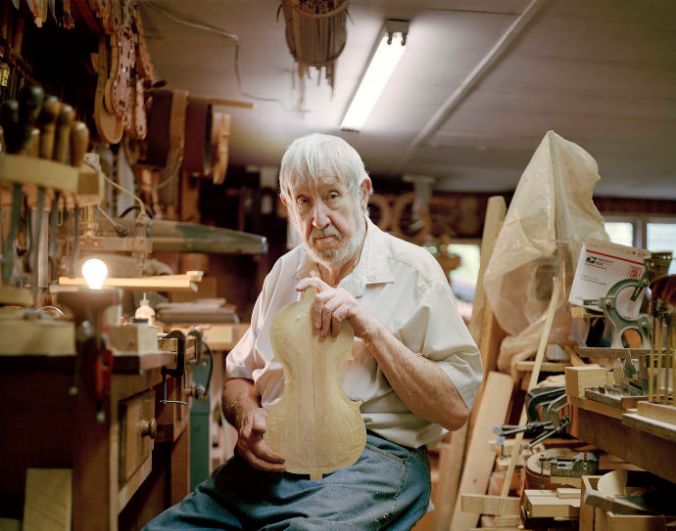
Who gets to decide what is worthy of conservation, and what is not? I am given reason to think about this on a regular basis, given the work that we have been doing for the last two decades. There is no one answer, of course, but I conclude regularly that it comes down to very deep personal experiences–those which lead individuals to alter the path of their lives and thereby have an impact on the conservation of something they have come to care deeply about. John Muir, Teddy Roosevelt and others come to mind on the larger scale of this line of thinking.

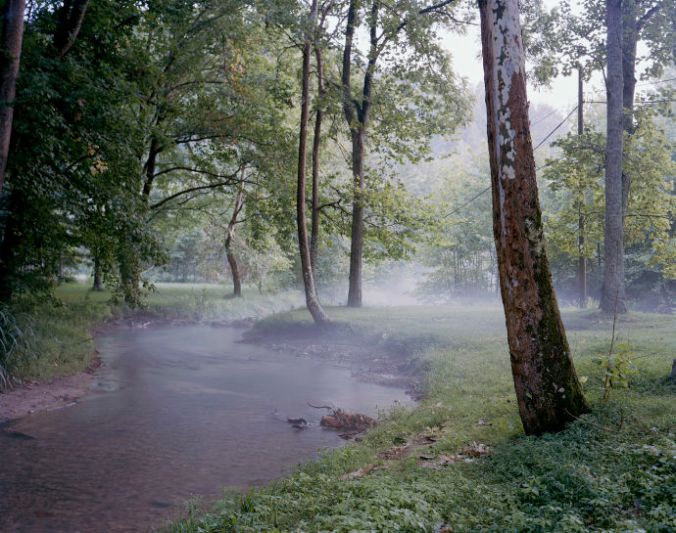
Reading one of our other blog posts today, I was taken back in time to pre-India workdays, 2008-2010. Milo, I had forgotten until just now, had a chance to wrestle firsthand with one of Patagonia’s most important conservation issues, and it is fair to say that what he is doing today is influenced by intense experiences he had in Patagonia, followed by a couple of years living with us in India. That would be an example of a smaller scale of this line of thinking. Same goes for the story I just read, and when I look at the photo above, and the one below, I am reminded that sometimes an image alone, or a series of images like these, can lead to this same path-changing epiphany.

4-690

I have family in the vicinity of this story’s subjects, and am thinking just now that I have not made a visit to that family in too long; time to plan a visit? The thought is now lodged deeply in my thinking.
Continue reading

The Medium Is The Message

o-COLUMNS-570.jpg

Charcoal has often been used by artists as a tool for sketching, but now this:

Floating Charcoal Sculptures Explore The Complex Relationship Between Man And Nature

Priscilla Frank
Arts Writer, The Huffington Post

Charcoal is a natural substance derived from the geological process of burning trees. The light black residue that remains, though created by nature, has a distinct architecture to its rough sides and sharp edges, reminiscent of the shapes made, consciously, by man.

Korean artist Seon Ghi Bahk uses this unorthodox artistic material to explore the complex and interwoven relationship between nature and human civilization. While Western culture has the tendency to view our natural surroundings as either a tool of human civilization or a pleasant backdrop for our daily lives, Bahk paints, or rather sculpts, a more nuanced picture.

Continue reading

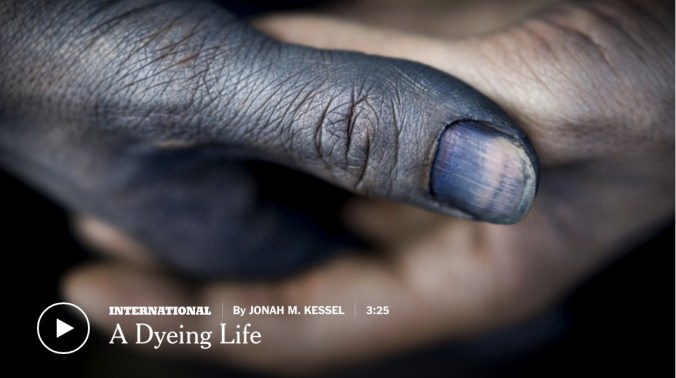
3.5 Beautiful Minutes

Screen Shot 2016-05-09 at 8.54.30 AM

Image by Jonah M. Kessel/The New York Times.

Disillusioned with China’s urban dream, a young man set off on a 15-year walk and rediscovered his family’s ethnic Miao traditions.


Dirty Things Dominate

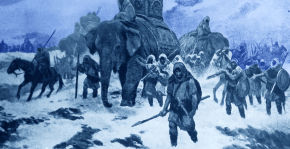
Holloway-Hannibals-Route-290x149-1462556756 (1)

The Carthaginian general Hannibal is remembered for his march across the Alps with thirty-seven elephants, but scholars have long disputed exactly which route he took over the mountains. ILLUSTRATION COURTESY UNIVERSAL HISTORY ARCHIVE / UIG / GETTY

Nature appreciation in these pages frequently has to do with dirty things that are simply fascinating. Related topics we care about such as conservation, as often as not have to do with dirty things; as in, things that need to be cleaned up. Here is another slightly odd appreciation of dirty things that fits the dirty but fascinating and useful category:

Searching for Signs of Hannibal’s Route in DNA from Horse Manure

BY MARGUERITE HOLLOWAY

More than two thousand years ago, thirty-seven elephants from heat-shimmering latitudes ascended Europe’s highest mountain range, tramped though snow and across ice, and breathed the thin air of high altitudes. Those that survived the perilous journey met with a bitter winter and war, as the Carthaginian general Hannibal, who had urged them through the Alps, battled the emergent Roman Republic. Continue reading

Photos Worth Viewing

131057014004857876_ruben_salgado_escudero_spain_3rd-place_professional_portraiture_2016_1.pr-fdd94b9ac90bcf41006731d34441184f9bd48803-s1400-c85

A young man from Bali, Indonesia, shows off his rainbow-colored rooster before a cockfight. Courtesy of Ruben Salgado Escudero and the World Photography Organization

Thanks to National Public Radio (USA) for reminding us that it is that time of the year, again, when Sony culls through hundreds of thousands of entries to narrow the field down to a handful of exceptional photos:

6 Sensational Photos From A Global Contest With 230,000 Entries

One photo of a pensive Congolese woman in her distinctive makeup could be mistaken for a Renaissance painting. Another, of a coal plant sending smoke plumes over a town in China, looks like a still from a 1950s propaganda film. And another, of a little girl yawning during an Indonesian festival, will just make you smile. Continue reading

Purity Is Never Out Of Date

germanbeer_custom-b386ef6cf1c1b0762fcba4c0b18588f8df0b00ef-s1400-c85

A waiter carries beers at the Theresienwiese fair grounds of the Oktoberfest beer festival in Munich, southern Germany, last September. For centuries, a German law has stipulated that beer can only be made from four ingredients. But as Germany embraces craft beer, some believe the law impedes good brewing. Karl-Josef Hildenbrand/AFP/Getty Images

Laws can come and go, as far as we are concerned (and we get the point here), but purity remains forever of value (thanks to National Public Radio, USA):

Germany’s Beer Purity Law Is 500 Years Old. Is It Past Its Sell-By Date?

With more than 1,300 breweries producing some five-and-a-half thousand different types of beer, Germany is serious about the amber nectar. There’s even a word for it –bierernst – which means “deadly serious” and translates literally as “beer serious.”

This sober attitude applies particularly to the German beer purity law known as the Reinheitsgebot. Introduced in 1516 by Duke Wilhelm IV of Bavaria, the decree allows for only hops, barley, water and, later, yeast in every Stein. For 500 years, this recipe has served Bavaria very well, and for the last century, the rest of Germany. Continue reading

If You Happen To Be In Helsinki

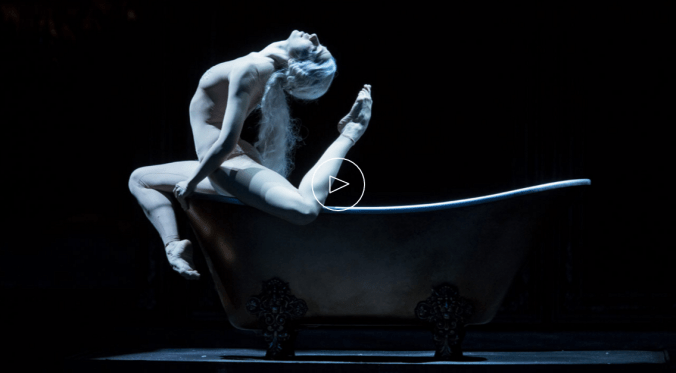
Last year while doing one of our favorite work “responsibilities”, two of our team spent some time with guests at Xandari Harbour. The family happened to be from Finland, and one member of the family happened to be a composer of film scores and ballets. We’ve kept in touch, and they recently shared this amazing production of the Little Mermaid by the Finnish National Opera Ballet.

The blend of ballet, contemporary dance, unusual costuming and staging with 3D technology all merge to create an amazing staging of a creatively interpreted classic.

Click here or the photo for the evocative trailer…


If You Happen To Be In Atlanta

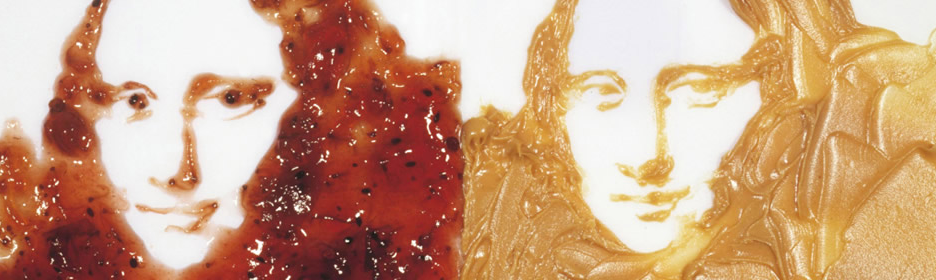
Vik Muniz Double Mona Lisa (Peanut Butter and Jelly), from the After Warhol series, 1999 Chromogenic print Galerie Xippas, Paris Art © Vik Muniz/Licensed by VAGA, New York, NY

It’s easy to be a fan of Vik Muniz’s work on so many levels: his visual wit redefining materials as medium for art; his entrepreneurial use of art to bring attention to disenfranchised communities; the collaborative spirit clearly evident in so many of his works… I, personally, love his cheeky reproductions of the world’s iconic artworks, rendered in the most banal of mediums.

A mid-career retrospective, currently mounted at the High Museum of Art Atlanta covers the full range of his work from grand to microscopic scale, using diverse media—including food, dust, string, sugar, magazine clippings, and literal junk.

On view through August 21, 2016.

If You Happen To Be In New York City

Screen Shot 2016-04-21 at 5.28.08 AM

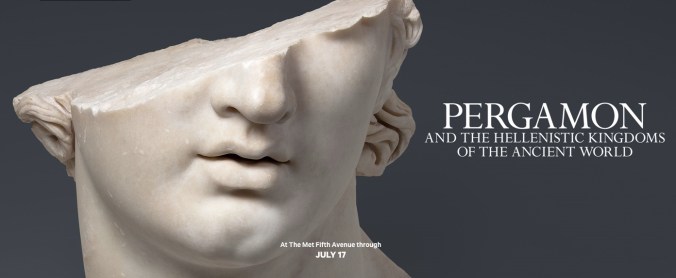
History can be dry, except when in the hands of masterful story-tellers. Which reminds us of James, and other scholars who have graced these pages in recent years with practical stories of the past linked to our present day lives. The value of this Pergamon exhibition (click the image above to go to the museum’s description of the exhibition) catches our attention because this review, which exemplifies the sort of interpretation that allows history to jump into our present tense:

…This tidal wave of wealth sloshed all around the eastern Mediterranean during the three centuries that followed, the era known today as the Hellenistic Age. It soaked the shores of the half-dozen new kingdoms carved out of Alexander’s conquests…

Read the description of this exhibition below, in the words of the Met’s curators, to get a renewed sense of the important role museums play in our civic lives.

The conquests of Alexander the Great transformed the ancient world, making trade and cultural exchange possible across great distances. Alexander’s retinue of court artists and extensive artistic patronage provided a model for his successors, the Hellenistic kings, who came to rule over much of his empire. For the first time in the United States, a major international loan exhibition will focus on the astonishing wealth, outstanding artistry, and technical achievements of the Hellenistic period—the three centuries between Alexander’s death, in 323 B.C., and the establishment of the Roman Empire, in the first century B.C. Continue reading

Of the Land


Tradition is like a collective memory, where craft and cultivation intermingle, inspired with stories of the land, its history and its culture.

Anoodha from Curiouser says “A stay at Xandari Pearl, is experiencing a slice of life, of the beautiful coastal town of Marari.”

Yes indeed.


All the Ducks in a Row…

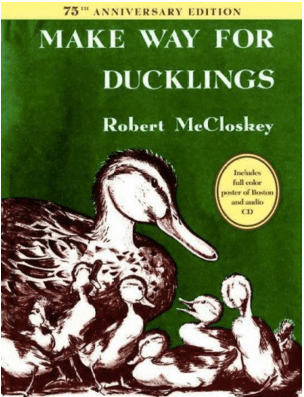
Of the many volumes in our family bookcase, Robert McCloskey’s Make Way for Ducklings and Blueberries for Sal always held pride of place. The stories, the charm and personality of the illustrations, made them family favorites to be read over and over at story time.

It’s not surprising to read that the artist took his work so seriously as to fill his Greenwich Village apartment with a clutch of ducklings for inspiration.  Continue reading

Processed Views

Although a previous post that embraced the sculptural qualities of food had a far more lighthearted intent, the juxtaposition of Carleton Watkins’ classic photographs and Barbara Ciurej and Lindsay Lochman’s irreverent dioramas has to be viewed with a certain level of irony. The iconic photos of America’s great national parks brought a sense of the country’s vastness home.

The pioneering nineteenth-century landscape photographer Carleton Watkins visited Yosemite during a time of rapid industrialization in the American West, but you’d never know it from the majestic tranquility of the rivers, mountains, forests, and rock faces he depicted. In her book “River of Shadows,” Rebecca Solnit, chronicling the life of another influential photographer of the time, Eadweard Muybridge, whose studies of high-speed movement helped to pioneer motion-picture technology, wrote that Watkins’s landscapes “looked like the true world everyone sought but no one else could locate among the mining booms, railroad building, land grabs, mobs, and murders” of the period. And yet Watkins’s images—which provided many people back East their first views of Yosemite’s idyllic splendor—were, in some sense, an advertisement for the possibilities of the West, and the vast untapped resources that American corporations of the eighteen-sixties and seventies were rushing to exploit. Continue reading

WWF Reports Half of World Heritage Sites Put at Risk by Development

Ambatotsondrona cliffs, in the Marojejy National Park of Madagascar. This park is one of several included in the UNESCO World Heritage Site named Rainforests of the Atsinanana, which has been declared In Danger. Photo by Jeff Gibbs via WikiMedia Commons

We deeply care about UNESCO World Heritage Sites anywhere on the globe, and believe they can be a great conservation tool, so reading that the World Wildlife Fund thinks almost three times more of the Sites are threatened than UNESCO lists as “In Danger” is worrisome, to say the least. Fiona Harvey reports for the Guardian:

Close to half of the sites around the world designated for special protection as areas of outstanding importance for nature are now being threatened by industrial development, a new survey has shown.

The sites, which include Australia’s Great Barrier Reef, the Grand Canyon in the US, and China’s giant panda sanctuaries in Szechuan, are all supposed to be protected under the United Nations’ designated world heritage status. But encroachments from industries, including fossil fuel exploration and illegal logging, are threatening to destroy the valuable habitats, the conservation charity WWF said on Wednesday.

Continue reading

Medicine Crow, Last War Chief of his Tribe, Dies at 102

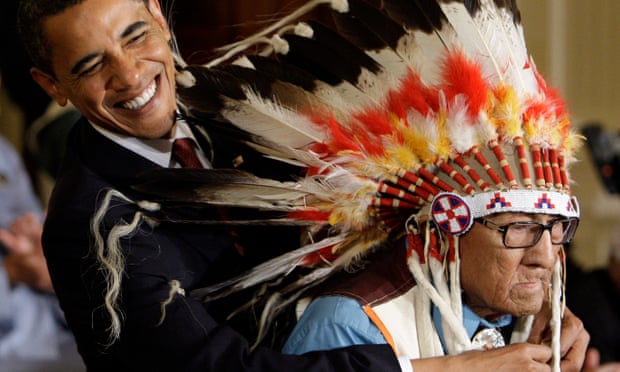
Barack Obama reaches around the headdress of chief Joseph Medicine Crow to place a 2009 presidential medal of freedom around his neck. Photograph: Alex Brandon/AP/The Guardian

The history and rights of Native Americans in the United States have held interest for us over the years, with our last story mentioning a tribe being early last month, in reference to buffalo hunting near Yosemite. Yesterday, the great Crow tribe historian, war chief, and historian Joseph Medicine Crow, who was also a second world war veteran, a holder of the presidential medal of freedom, and a nominee for the congressional gold medal, passed away at 102 years old. Aisha Gani reports for the Guardian:

Medicine Crow, who was raised by his grandparents in a log house in a rural area of the Crow Reservation near Lodge Grass, Montana, wore his war paint beneath his second world war uniform.

As a child, Medicine Crow listened to stories about the Battle of Little Bighorn – the conflict that pitted federal troops led by Lt Col George Armstrong Custer against native Lakota Sioux and Cheyenne warriors. He translated for his great uncle, White Man Runs Him, when white reporters came to interview him about the battle, and would go on to become a lifelong emissary between the Crow community and white Americans.

Continue reading

Strange Brew

160404_r27913-690

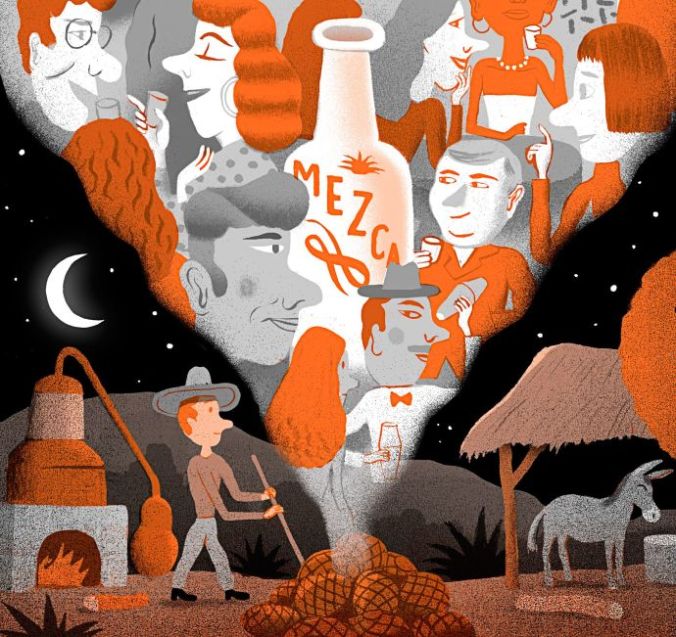
“Mezcal makes you cry, sing, dance, hug the neighbor you just met an hour ago.” ILLUSTRATION BY BJORN LIE

One more gem from the magazine issue that most recently also brought you this, and this:

Mezcal Sunrise

Searching for the ultimate artisanal distillate.

BY DANA GOODYEAR

Bricia Lopez is the mezcal queen of Los Angeles. Five years ago, Lopez, who is thirty-one and imposingly savvy, persuaded her father to let her build a mezcal bar at Guelaguetza, the restaurant that he opened when the family moved north from Oaxaca, a center of mezcal culture, in the mid-nineties. He didn’t know if Americans would like mezcal, or if Mexicans would admit that they did. But he decided to trust Bricia, and she focussed her offerings on premium mezcals—high proof, small lots, no worm. At that point, there were only a handful of brands on the market. Since then, mezcal imports have spiked, and labels have proliferated. Lopez now carries thirty. When I visited her at the bar the other day, she was in the midst of a renovation, doubling its size. Continue reading