If you have had the experience of seeing this man on stage, the eight minute clip below will come as no surprise. Live on stage, he owns the interminable fuse and phenomenal explosion, both for comedic and dramatic (and sometimes both) effect. He does something in a theater that film has not captured well. Until, trivially, now. So bravo to the camera, and the person behind it, for finding Alan Rickman’s inner tea party gunpowder and lighting it:
Culture
Rollin’ On The River
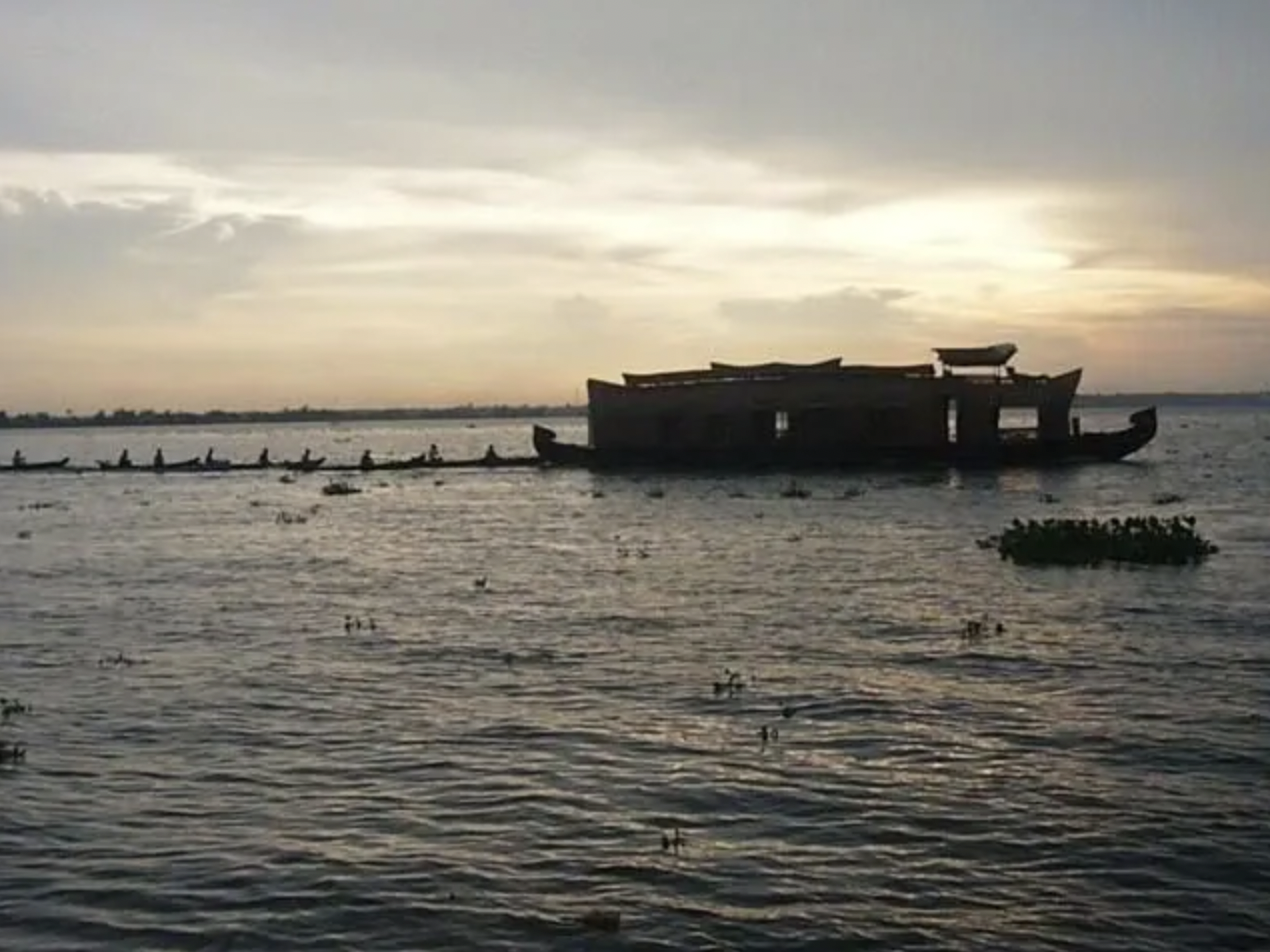
Our second excursion in India was heading from Fort Cochin to the backwater region of Kerala called Alleppey. (The actual Malayalam name is Alappuzha, the ‘zha’ letters forming the same sound as the Hungarian actress who I’m sure to date myself by mentioning.) Just the sound of these Indian names invoked a sense of the exotic and we weren’t disappointed. After a little adventure finding the River Escapes dock (a determined taxi driver made sure we arrived at the right location), we were welcomed with a refreshing drink of tender coconut and sipped away along with four other guests – a young Indian couple (honeymoon perhaps?) and an older English couple. As Dave and I began to settle in, we felt ourselves slipping into a lazy relaxation underlined with an excited sense of anticipation. After a brief orientation, each group was escorted to the dock, where a row of beautifully maintained wooden houseboats waited for boarding.
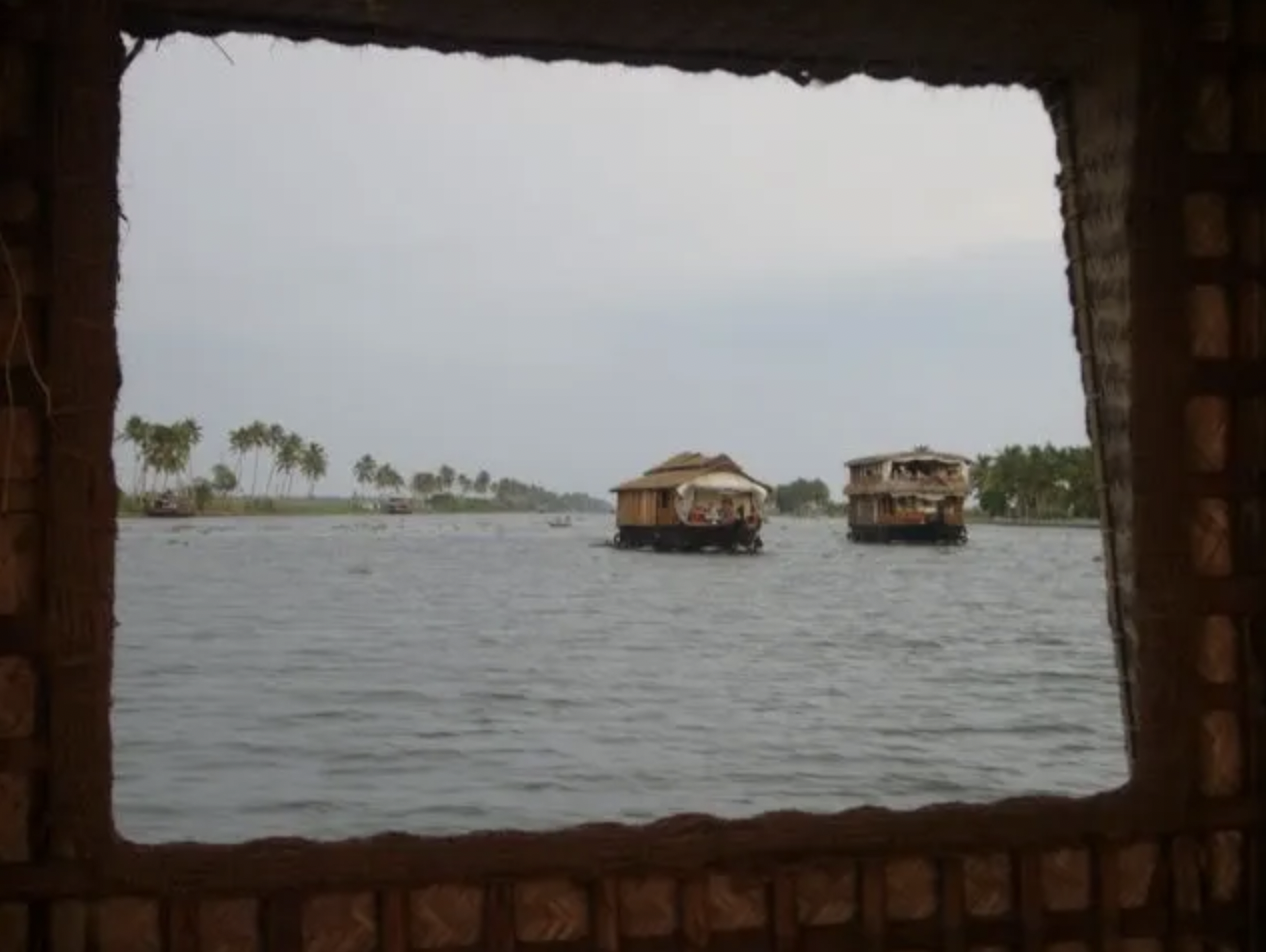
The houseboat held a casual elegance with spotless wooden floors, wide wicker chairs and large open-air windows. The dining table had a bowl of fresh fruit and before we even got our shoes off, the staff of three – the captain, first mate and chef introduced themselves, integrating a slight nod of the head, a typical Indian gesture indicating friendship or often agreement (depending upon the exchange at the moment). With the captain comfortably seated at the helm, the steward pushed the houseboat away from the dock and the chef headed to the galley.
Having been a chef on the high seas myself, a highlight for me was following the chef to the galley as he prepared our lunch. (At the end of this blog, I’ve included some of the culinary tips I learned and have repeated, with great success, at home.) The chef, a tall, slender man in a clean white chef’s coat and tall toque (making him all the more imposing in height) was shy but friendly, explaining his preparations as he skillfully cooked with a deliberateness that conveyed training and personal pride. Our fish, a favorite on the Kerala backwaters called Pearl Spot or Karimeen, was trippy looking, resembling more of a skeleton than an edible item, but it was delicious – crunchy and spicy. As the chef cooked, the captain remained attentive at the helm, navigating through the waterways that would eventually (for someone else) lead to the Arabian Sea. And we were not alone. There were dozens of other houseboats meandering their way down the river – some had two levels with expansive balconies while others stood out with ornate window frames and decorative wood designs. And we all just moseyed along, with passengers waving to one another as we passed modest homes on the shore with clotheslines holding colorful saris. As the waterway became narrower, we found ourselves being led off the houseboat and into a long motorized canoe. We had arrived at the backwaters. Continue reading
Bollywood Century
As several of us prepare to celebrate a couple years of residence in India, and this site approaches its first birthday, a certain theme song (and equally essential accompanying dance) comes to mind. Therefore, a big thanks to The New Yorker‘s James Pomerantz for posting this reminder:
While it may seem like just yesterday that the silent film “Shree Pundalik” was released in Mumbai, May 18th marks the hundredth anniversary of what many consider to be the first Indian film made. The past century has seen India grow to become the world’s largest producer of films…
Lime
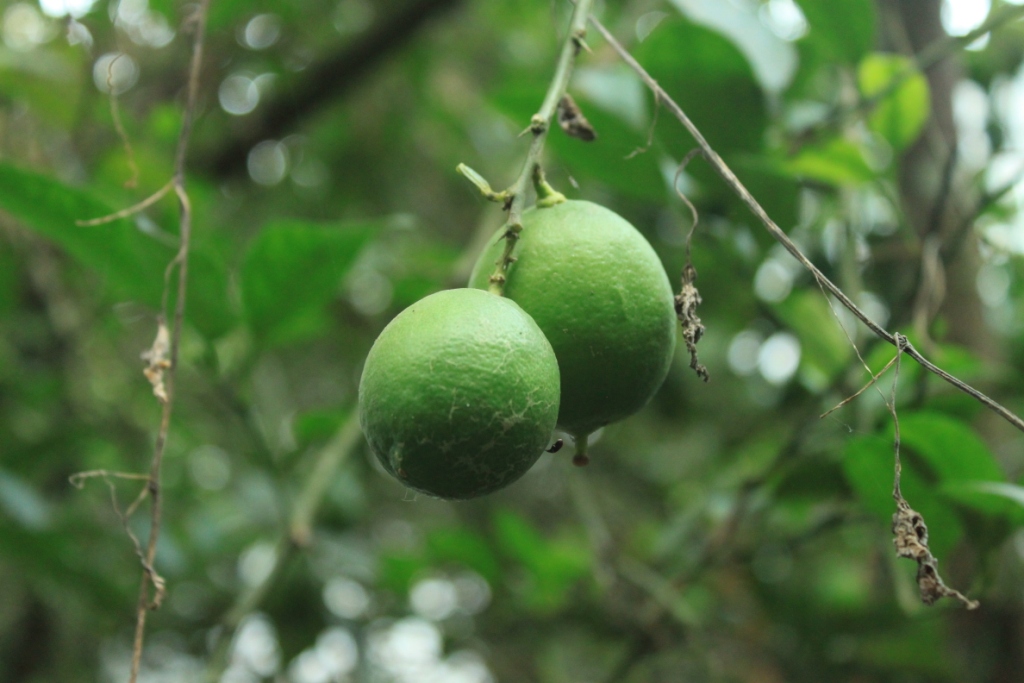
The lime tree is a spiny evergreen shrub found in plenty in the Western Ghats of India. Limes are typically round, green, with leathery leaves and fragrant white flowers. They are rich in vitamin C and often used to add more taste to the flavors of Indian food and beverages like lime water, lime juice, etc. Continue reading
Gold’s Glitter Guarded
From The New Yorker‘s website, a slide show on the recent article about last year’s discovery of gold buried in a temple in south Kerala, and a remarkable set of observations from the photographer assigned to that story:
In India, deities can own property, and this temple, dedicated to Vishnu, has been accumulating gold for centuries. “I was asked to photograph it from the outside; it is strictly forbidden to take photos inside,” Goia said. “Jake and I found ourselves jumping from office to office calling whatever number possible to try to get permission to access the security area.”
Mangala Devi Temple in Thekkady
The 1000 year old Mangala Devi Temple is a good example of the traditional architectural style of South India. It is situated on the northern boundary of the Periyar Tiger Reserve 1400m above sea level. Continue reading
나는 한국말을 해요 (I speak Korean)
Ok, maybe that’s a little white lie. I don’t really speak Korean – you can thank good old Google Translate for the post title – but I’m on my way! My interest was piqued back in first year when my phonology lecturer mentioned the language, since it has a unique alphabet in which the shapes of the written letters actually represent the shape your mouth makes when you sound them out! Isn’t that amazing?!

Thanks to wright-house.com for a great article on why Korean looks the way it does.
Well, call me a language freak, but I just had to learn more. It took me a while (read: two years) to take the plunge, but when my friend Kim posted this on my Timeline yesterday (girl, you know me so well…), I decided. I have so much time on my hands and it’s driving me nuts, so today I finally started making use of the university’s language centre: I trammed it in to the centre, grabbed a bagel and a lemonade for good measure, then showed up at the library and got Korein’! Continue reading
Backwater Fishing

Kerala is a land of rivers, lakes, lagoons, rivulets and beautiful canals filled with rich and diversified fish fauna, many of which are rare and endemic species. Fisherman ply the Vemabanad Lake, Ashtamudi Lake and Kayamkulam Lake as well as the backwaters still using using traditional methods, including Chinese fishing nets as well as small nets that are cast by hand.
If You Happen to Be In Connecticut
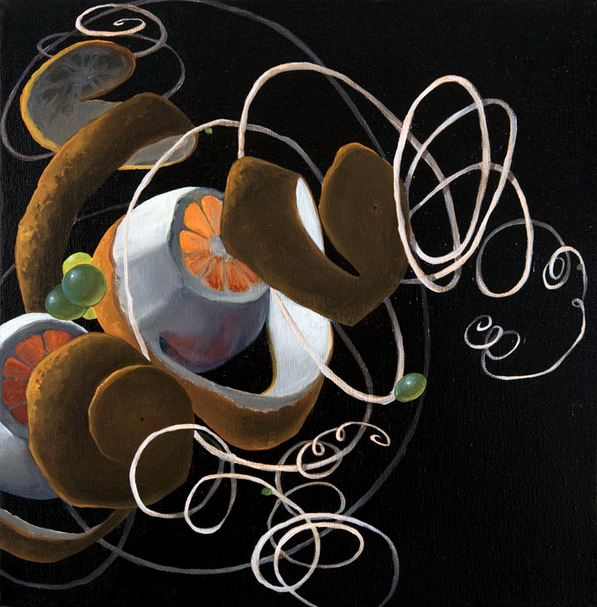
Still Life with Peeler II, 2011; Mia Brownell; Akus Gallery
Anyone who has spent time at our site can vouch for our commitment to community and the power of the liberal arts to sustain and develop each of us both individually and collectively.
The Akus Gallery at Eastern Connecticut State University is bound by their own mission statement to provide a fertile environment for interchange among the diverse disciplinary perspectives of the university’s liberal arts community. Continue reading
Gold’s Glitter Illuminated
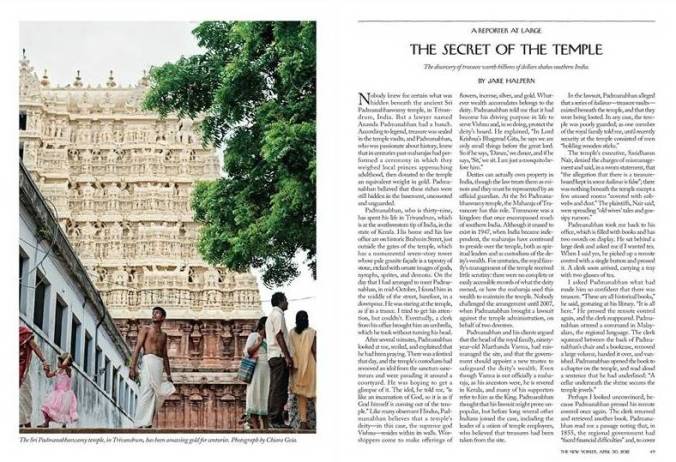
Back at about the time when Michael and Seth had posted their first reflections on this site, and Michael had just encountered his own first truly unusual finding in southern India, the newspapers across India were starting to report on this. It took me months to be sure it was a true story. And finally, about Thanksgiving time (USA holiday calendar) I took a moment to reflect on it. I could not be happier to find that The New Yorker has done the kind of homework I had not had time to do. If you are not yet a subscriber, now might be a good time to reconsider. Continue reading
Pakal Pooram – Glimpse of Thrissur Pooram
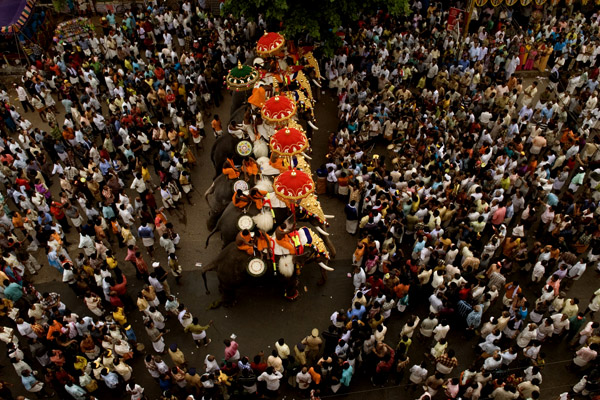
Photo: Joshy Manjumel
Pakal Pooram is a small-scale version of the grand Thrisssur Pooram. The Pakal Pooram (Day Pooram) pictured above took place last December in Thekkady as a tourist attraction.
Elephants have been the part of the cultural ethos of Kerala for centuries. The people of Kerala consider this animal a harbinger of good fortune, a remover of obstacles and as a representative of the god Ganesh, an inseparable and integral part of religious and economic life.
Of Sylphs and Shadows
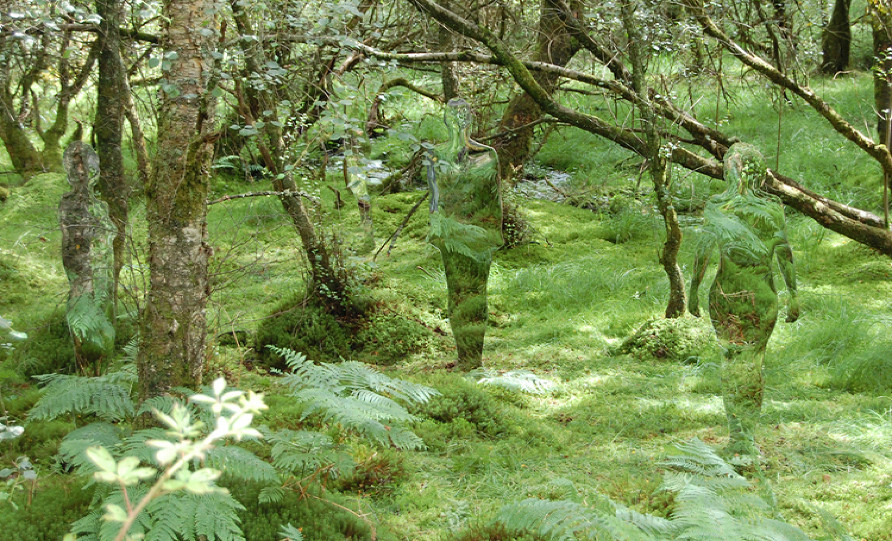
Vestiges, David Marshall Lodge, 2012
Scottish artist Rob Mulholland‘s work touches on Man’s relationship with Nature in many ways, but for me the most essential is the most literal. At our very best we reflect the beauty of our environment, in the same way that we are said to reflect the divine.
A few minutes ago every tree was excited, bowing to the roaring storm, waving, swirling, tossing their branches in glorious enthusiasm like worship. But though to the outer ear these trees are now silent, their songs never cease. Every hidden cell is throbbing with music and life, every fiber thrilling like harp strings, while incense is ever flowing from the balsam bells and leaves. No wonder the hills and groves were God’s first temples…
-John Muir Continue reading
The Upside of Empire
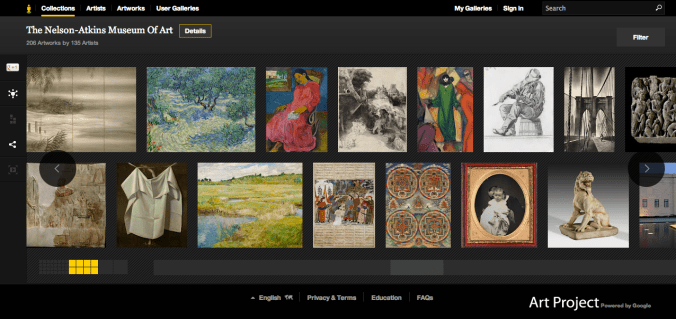
For art lovers nothing quite tops the experience of standing before a favorite painting, sculpture or tapestry, far from the madding crowds, soaking in the aura of history. But few of us have the luxury of being able to visit the “Hermitage” in the morning and the Musée d’Orsay in the afternoon, not to mention the connections that would enable a personalize tour with the curator.
Over the past year Google has put its technological powerhouse behind a project that brings over 30,000 pieces of art from 151 museums in 40 countries into the home of anyone with a computer and an internet connection. Continue reading
Heart Throb

There’s something about drums. Like dance, they have an almost primordial capacity to rouse even the most complacent person to action. The sound connects with the heartbeat and makes it impossible to stand still. Personally I can’t decide whether I prefer West African Djembes, Indian Tablas or Japanese Taiko. Percussion seems to be by nature a communal activity, and the bottom line is that I love the way the sound makes me long to participate. Continue reading
Dance Now
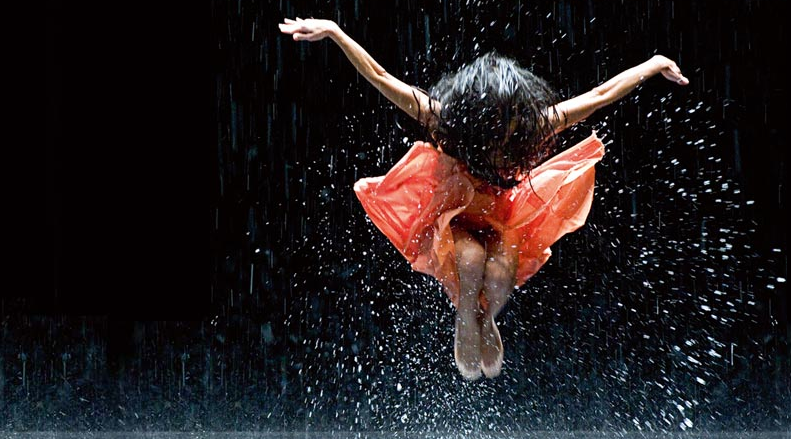
Throughout human history Dance has been a form of culture that is much greater than the sum of its parts. Wordlessly it has the capacity to tell stories, communicate with deities, perform rites of passage, lead a people to war or join them together.
Whether linked to seasonal activity in villages or the entertainment history of the 20th century, dance is part and parcel of the human condition.
In the cinematic world director Wim Wenders has made a career making films that do similar things. Continue reading
Dance Then
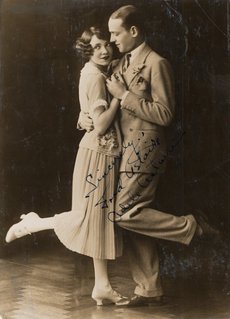
Click the image to the right for a wonderful reminder, in the form of book review, of what makes dance uniquely suited to certain important cultural tasks:
Now that The Artist has whetted our interest in the silent film and the revolutionary impact of sound, it may be time to reconsider the career of the man who made the conversion to sound the basis of a whole new kind of movie, Fred Astaire. The Artist suggests quite accurately that the definitive event of the new sound era was the arrival of the film musical. Sound meant music; music meant jazz. But the technological transition was slow. After the first feature-length sound movie, The Jazz Singer (1927), which starred Al Jolson, it was six years before the advent of the Jazz Dancer proved that talking and even singing mouths were not nearly as expressive in the new medium as dancing feet, especially and almost exclusively the feet of Fred Astaire. Astaire and the difference he made to the film musical add up to more than the story of one career. No other film genre provided as perfect a synchronization of sight and sound or an experience as exhilarating, and that was very largely Astaire’s doing. Continue reading
A Rare View In New York
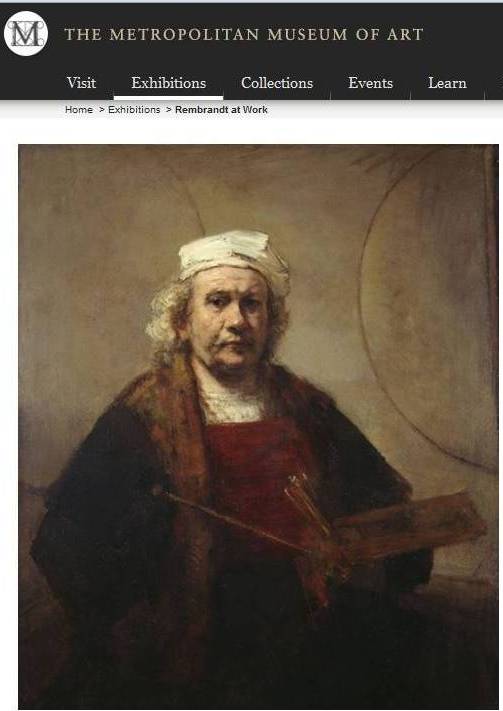
Click the image above to go to the Museum’s listing for a brief opportunity to view Rembrandt’s Portrait of the Artist (ca. 1663–65) Continue reading
Poisson d’Avril
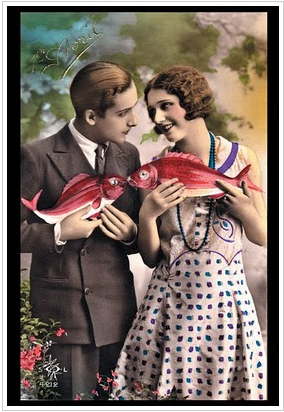 It was unlike me to have missed acknowledging the Vernal Equinox last week but please note that it wasn’t forgotten. In much of the northern hemisphere spring began sprouting all over the place, sometimes unseasonably early, and the first day of spring was observed in all its glory in Crist’s Holi series.
So I’m being careful not to miss April 1st and in the spirit of that celebration am sharing some of artist Ken Brown‘s collection of turn of the century (the 19th to the 20th that is!) French fantasy postcards that celebrate “Poisson d’Avril”, the French equivalent of April 1st or April Fools’ Day. Continue reading
Bharatanatyam
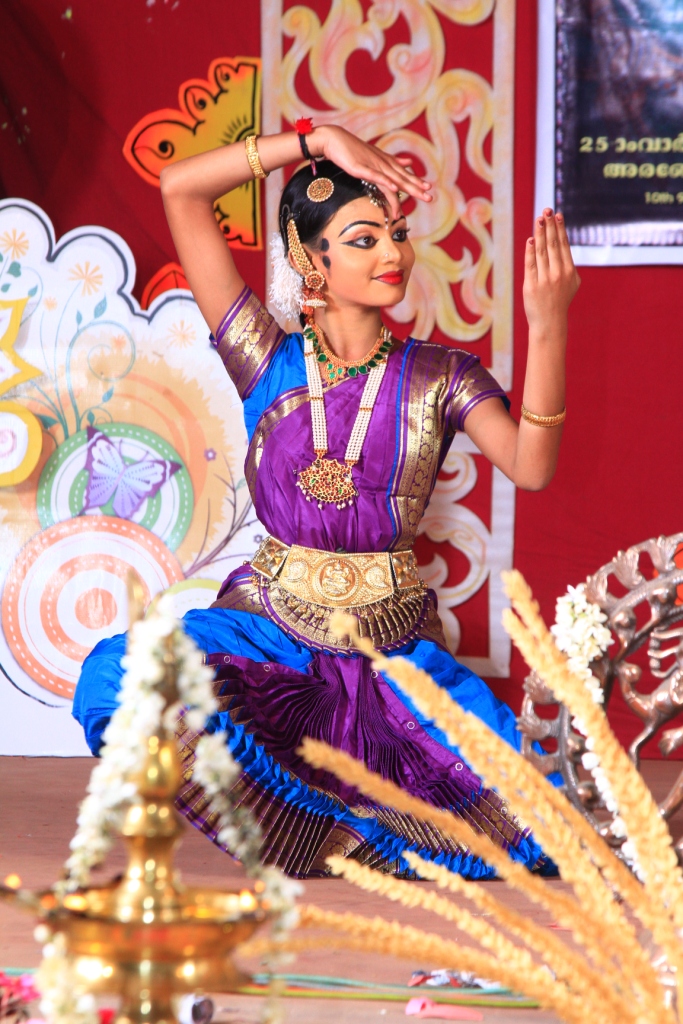
Bharatanatyam originated around 2000 years ago, making it one of the most ancient of all Indian Classical Dances. It is performed along with south Indian vocal songs and with instruments like violin, flute, Mridangam (drums) etc. In the ancient times it was only performed in the temples and courts of South India.
Machad Mamankam – Unique and Traditional Temple Festival

In Kerala, almost every village has its own temple with an annual festival. So there is always a local festival happening somewhere or the other, each with its own flavor and color. The 800 year old Mamankam festival is celebrated annually at the Machad Thiruvanikav temple near Trichur, the cultural capital of Kerala. Continue reading
 Organikos