Addressing and Absorbing Oil Spills

salvinia

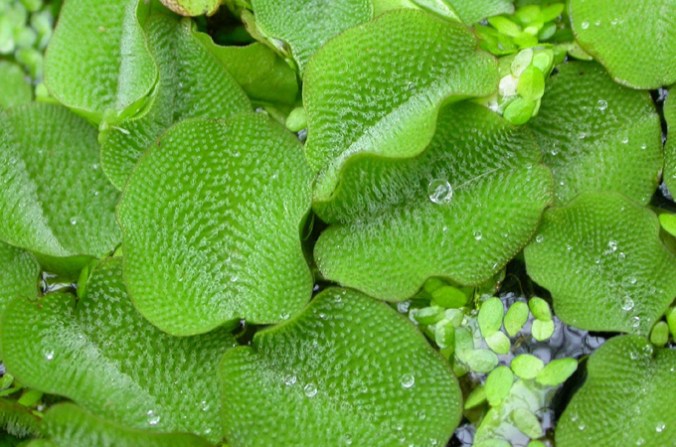
Water lettuce and aquatic fern are misnomers for the type of task these plants might be used for in the near future. German researchers recently discovered that Salvinia molesta, an aquatic fern, and Pistia stratiotes, a type of water lettuce, have a specialized leaf anatomy that not only repels water and traps air, but also traps a lot of oil. The leaves of these plants are covered with tiny, hairlike structures called trichomes that allow the plant to float on the water surface and when dried, absorb more oil than two commercial oil absorbents used for oil spill cleanup, Duerex Pure and Öl-Ex.

[The] existing methods of dealing with oil spills all have significant drawbacks. Chemical dispersants and burning can spread toxins around, while environmentally friendly materials like sawdust and wheat straw absorb water in addition to oil, making cleanup messy and inefficient.
Continue reading

The Bosnian Tree Elder

122212_web

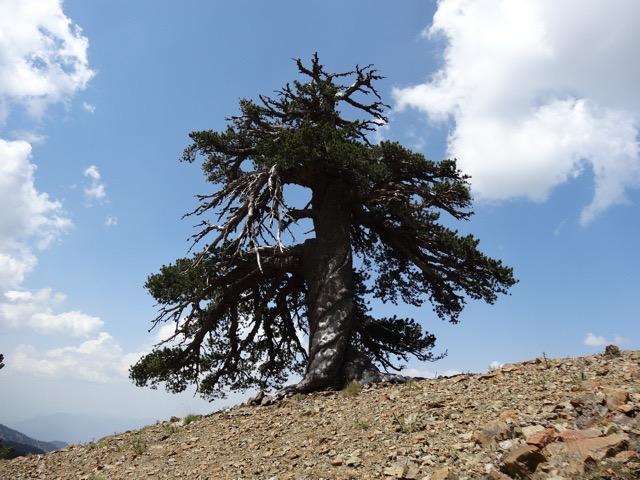
Certain species of trees can grow to be very old, and a group of scientists from Stockholm University  discovered a Bosnian pine (Pinus heldreichii) that would certainly classify as ancient. The solitary Bosnian pine is growing in the highlands of northern Greece and has been dendrochronologically dated– that is, analyzed to see how old the tree is – to be more than 1075 years old, making it the oldest known living tree in Europe.

“It is quite remarkable that this large, complex and impressive organism has survived so long in such an inhospitable environment, in a land that has been civilized for over 3000 years” says Swedish dendrochronologist, Paul J. Krusic, leader of the expedition that found the tree. It is one of more than a dozen individuals of millennial age, living in a treeline forest high in the Pindos mountains.

Continue reading

New Snake Species Discovered in Mexican Mountains

A specimen of the new species, Geophis loranca, in life. Photo © Miguel Ángel de la Torre Loranca

Last time we mentioned a new species being discovered, it was also long, thin and reddish, but in the form of a toxic cave worm. The freshly-found reptile, which when translated from its scientific name would be called “Loranca’s earth snake,” is a red and black burrowing animal that is only found in a very localized region of east central Mexico, as the collaborative team of Mexican university researchers wrote in their academic journal article published in ZooKeys:

These burrowing reptiles are seldom encountered and, consequently, have been poorly studied. Furthermore, several species have restricted distribution, making them particularly vulnerable to extinction.

Continue reading

Pepper’s Historical Place

A painting of Muziris by the artist Ajit Kumar. In 2004, excavations in Kerala sparked new interest in this lost port. Illustration: KCHR

A painting of Muziris by the artist Ajit Kumar. In 2004, excavations in Kerala sparked new interest in this lost port. Illustration: KCHR

Our first exposure to the name Muziris was during the planing stages of the 1st edition of the eponymous Kochi-Muziris Biennale in 2012. The flurry of activity in Fort Kochi not only brought Kochi into the spotlight of the international Art World, but added focus to the archeological works at Kerala’s ancient port.

Lost cities #3 – Muziris: did black pepper cause the demise of India’s ancient port?

Around 2,000 years ago, Muziris was one of India’s most important trading ports. According to the Akananuru, a collection of Tamil poetry from the period, it was “the city where the beautiful vessels, the masterpieces of the Yavanas [Westerners], stir white foam on the Periyar, river of Kerala, arriving with gold and departing with pepper.”

Another poem speaks of Muziris (also known as Muciripattanam or Muciri) as “the city where liquor abounds”, which “bestows wealth to its visitors indiscriminately” with “gold deliveries, carried by the ocean-going ships and brought to the river bank by local boats”.

The Roman author Pliny, in his Natural History, called Muziris “the first emporium of India”. The city appears prominently on the Tabula Peutingeriana, a fifth-century map of the world as seen from Rome. But from thereon, the story of this great Indian port becomes hazy. As reports of its location grow more sporadic, it literally drops off the map.

Continue reading

Must-see Aerial Insectivores in the Greater Antilles: Part 5/5

Northern Potoo perched on a fence post near the Windsor Research Station, Trelawny Parish, Jamaica. (photo by Justin Proctor)

This post is part of a series; visit Part 4 here.

Let’s move now from the diurnal species to a nocturnal favorite, the Northern Potoo (Nyctibius jamaicensis), which has been featured here before a couple times. These birds actively hunt for insects at night by sallying out from low-lying perches where they remain camouflaged and motionless until prey is spotted. If you’ve got a little bit of energy left in you after the sun goes down, and you also remembered to pack a decent headlamp or flashlight, I can’t encourage you enough to just go for a little walk down a quiet road nearby.

Continue reading

Must-see Aerial Insectivores in the Greater Antilles: Part 4/5

White-collared Swifts in flight, Jamaica; top photo is a good depiction of the species viewed head-on from a mountain top. (with the observer positioned at the same elevation that the swifts are flying) as they come together to flock in the evening. (photos by Justin Proctor)

This post is part of a series; visit Part 3 here.

In Part 3 I introduced you to the smallest swift you’ll find in the Greater Antilles, so it seems appropriate to bring the largest swift of the region into the equation. An all-around phenomenal bird, the White-collared Swift (aerial insectivore 4) doesn’t get the attention it deserves, and I think I know why. Wetmore and Swales summarize the problem perfectly:

…through its great speed in flight so annihilates distance that flocks may appear temporarily almost anywhere.” (1931)

Continue reading

“Kissing” Corals

Source discovermagazine.com

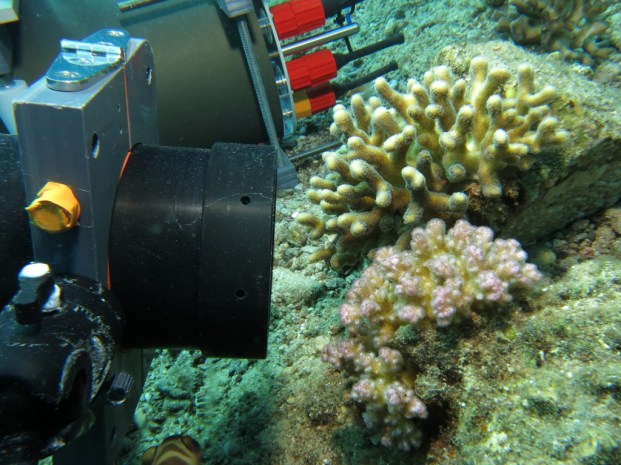
You don’t have to be a romantic to appreciate the underwater rainbow canvas that is a coral reef and marvel at the fact that these organisms have been spotted exchanging an underwater embrace, a behavior researchers have termed “polyp kissing.”

A first-of-its-kind underwater microscope that can observe coral polyps at resolutions of up to 2 micrometers while still remaining a safe distance away allowed marine biologists to watch coral behavior in real time. Not only did they see two species of coral fighting for territory (a previously observed behavior), but also two corals entwine their gastrovascular openings in the act of “polyp kissing” (a previously unknown behavior). Continue reading

What’s the Longest Living Animal?

Some sea sponges can live for centuries, and are indeed animals. PHOTOGRAPH BY JAD DAVENPORT, NATIONAL GEOGRAPHIC CREATIVE

That’s a question National Geographic reader Mohamed Larbi Bahou asked the columnists of “Weird Animal Question of the Week,” and a question we hadn’t asked ourselves. Liz Langley answers Mohamed’s question – thanks to both of them for these interesting facts:

Some days it feels like it might be me.

Kidding aside, humans these days live pretty long lives: The average global life expectancy of someone born in 2015 is 71.4 years.

That’s not bad compared with some adult female mayflies, which live for under five minutes—just long enough to mate and lay eggs. Talk about speed dating.

Continue reading

Must-see Aerial Insectivores in the Greater Antilles: Part 3/5

Antillean Palm-Swifts in flight as well as entering and exiting nests located within the hanging fronds of palm trees, Jamaica. (photos by Justin Proctor)

This post is part of a series; visit Part 2 here.

Antillean Palm-Swift (Tachornis phoenicobia)

This is going to be the most noticeable and easy to identify swift out there. However, that doesn’t mean you’re going to get a really good look at one right away. They are fast, and they are small. Luckily they are gregarious and colonial nesters, which means that you will usually come across them in large numbers as they forage or move into and out of their nests – which, amazingly, are a blend of saliva, plant fibers, and feathers attached to the undersides of dead, hanging palm fronds.

Continue reading

Must-see Aerial Insectivores in the Greater Antilles: Part 2/5

Cave Swallows in flight from multiple angles under different lighting conditions, Jamaica.

This post is part of a series; visit Part 1 here.

Cave Swallows (Petrochelidon fulva)

These little guys are a great species to start with because they are known to all of the Greater Antilles islands. One of the best contexts to find Cave Swallows in would be nearby to one of their communal roosts / nesting sites. Terrestrially, look around cave entrances or pocket-like formations in the sides of rocky cliffs. Coastally, look for limestone formations along the beach or just offshore. If they are there, you won’t miss them. Their nests are primarily made up of a mix of mud and plant fibers that have been attached to a vertical wall. If you can manage to get close, you might be lucky enough to see a pair of Cave Swallows sitting still in a nest giving you that famous 1000-yard stare.

Continue reading

Must-see Aerial Insectivores in the Greater Antilles: Part 1/5

Illustration by Justin Proctor

Are you tired of really crisp, up-close views of beautiful Caribbean birds? Are you repulsed at the idea of having an extended period of time to view a bird, jot down detailed notes about its breath-taking plumage, and really connect with the moment? Well, I knew it; and I’m happy to say that here at Proctor & Proctor Inc., we can offer you something much more challenging! Let’s start by having a long, long look at the following Rorschach test (pictured left). And if at any time it becomes painful to keep your eyes on the image, just keep looking…

Alright, let’s reflect. Did you see a hamster? If you did, I’m gonna ask you to just kindly walk away now. If rather you saw some intriguing silhouettes of our feathered friends in front of our beloved Yellow Star, you’re sitting pretty. And if you took one quick glance and were able to immediately identify all the different species present, I think we can probably get you a movie deal.

Continue reading

CO2 + Brine = Baking Soda and More

Map showing the largely artificial salinity of the Persian Gulf.

Desalination is clearly going to be a very important technology for the future, as our drinking water supply dwindles. Carbon capture/storage is also an imperative process to be working on in an effort to slow down global warming in any way possible. So the fact that a scientist at Qatar University is working on a process that takes pure CO2 waste from natural gas plants, waste brine from desalination plants, and ammonia, which all react chemically to create sodium bicarbonate (baking soda), calcium chloride (used as a preservative or tanning chemical), and ammonia (which can be recycled to continue the process). Erica Gies reports for Scientific American:

Farid Benyahia wants to solve two environmental problems at once: excess carbon dioxide in the atmosphere and excess salt in the Persian Gulf (aka the Arabian Gulf). Oil and natural gas drive the region’s booming economies—hence the excess CO2—and desalination supplies the vast majority of drinking water, a process that creates concentrated brine waste that is usually dumped back into the gulf.

Continue reading

New Species in Toxic Colorado Cave

These worms in Colorado’s Sulphur Cave are believed to live on the chemical energy in the sulfur in the cave, similar to deep-ocean tube worms. On the left are streamers—colonies of microorganisms similar to those in hot springs in Yellowstone National Park. PHOTOGRAPH BY NORMAN R. THOMPSON

We like the discovery of new species, and caves are cool too. And beneath Steamboat Springs in Colorado, USA, a cave full of noxious carbon dioxide and hydrogen sulfide gas has harbored a new species of worm, as well as weird bacteria formations called snottites. Erika Engelhaupt reports for NatGeo’s Phenomena blog:

Lurking below the quaint ski town of Steamboat Springs, Colorado, lies a cave belching deadly gases. Its ceiling is dotted with snottites, dangling blobs that look like thick mucus and drip sulfuric acid strong enough to burn holes through T-shirts. And the whole place is covered in slime.

So why would anyone want to go there?

Continue reading

Archaeoastronomy

William Gadoury used the position of a constellation to identify the location of a possible Maya city where an anomaly, shown above in a satellite image, was observed. Further study on the ground is required to determine the nature of this feature. IMAGE COURTESY OF ARMAND LAROCQUE via NATGEO

We have shared stories about Mayans, and especially the archaeological questions surrounding them, before; and also discussed the modern region that was once the civilization’s stronghold more recently. And although we missed the original news covering this interesting hypothetical discovery by a Canadian teenager, his recent interview with NatGeo brought the aspiring “archaeoastronomer’s” ideas to light, and we certainly hope Mr. Gadoury is right about the undiscovered settlement. Below, the first reporting by National Geographic, on May 11 of this year:

For gee-whiz value, the announcement has been hard to beat: A Canadian teenager discovers a lost Maya city without even stepping foot in the Central American jungle.

Unfortunately, this “discovery” appears to be the well-intentioned, albeit faulty, result of modern Western education colliding with an ancient civilization that saw the world in a very different way.

Continue reading

A Moth’s Dark Side Evolution

A mutation giving rise to the black form of peppered moths has been discovered and is estimated to have occurred around 1820. Photo by Ilik Saccheri

The story of moth populations turning from light grey to sooty black in England during the Industrial Revolution is a popular schoolbook lesson of evolution, but an explanation for the genes responsible for the change had not been clear until now. Ed Yong reports for Nat Geo’s Phenomena blog:

In the early 19th century, coal-fired power stations belched a miasma of soot over the English countryside, blackening trees between London and Manchester. The pollution was bad news for the peppered moth. This insect, whose pale speckled body blended perfectly against the barks of normal trees, suddenly became conspicuous—a white beacon against blackened bark, and an easy target for birds.

As the decades ticked by, black peppered moths started appearing. These mutants belonged to the same species, but they had traded in their typical colours for a dark look that once again concealed their bodies against the trees. By the end of the century, almost all the moths in Manchester were black.

Continue reading

The King of Sting

I’ve heard about the Schmidt Pain Scale before, having lived and worked in the tropics for long enough to have seen first-hand, and countless times, two of the insects with the most painful stings on his index: the bullet ant and the tarantula hawk. Of course, I haven’t sought out their stings and will actively avoid the two hymenopterans as much as possible, but Justin Schmidt has been doing the opposite with insects around the world for years. From the TNC Cool Green Science blog:
A yellow jacket just stung you. You jump, scream and shout expletives.

Or, if you’re Justin Schmidt, you describe the sting as such: “Hot and smoky, almost irreverent. Imagine W.C. Fields extinguishing a cigar on your tongue.”

Schmidt might be called the King of Sting: He’s spent much of his career researching bees, wasps and ants, including the chemical make-up of their venom. He’s traveled to six continents to track down stinging insects.

Continue reading

New Mouse Lemur Species Found

Microcebus ganzhorni is named in honor of the Hamburg ecologist Prof. Jörg Ganzhorn who has worked on ecology and conservation in Madagascar for more than thirty years. Photo by G. Donati via Mongabay.

Madagascar is a place of wonder and near-fantastical wildlife, though sadly many of their ecosystems are at risk, as referenced in this UNESCO World Heritage Site post. So it’s no surprise to read that new species are being found there. Mike Garowecki reports for Mongabay:

There are now 24 known species of mouse lemur, all of them found in Madagascar.

Scientists with the German Primate Center (DPZ), the University of Kentucky, the American Duke Lemur Center, and Madagascar’s Université d’Antananarivo have found three new species of mouse lemurs that live in the South and East of Madagascar. They described the new species — Microcebus boraha, Microcebus ganzhorni, and Microcebus manitatra — in the journal Molecular Ecology.

Though their name and appearance might suggest that they are rodents, mouse lemurs are in fact primates. What’s more, all mouse lemur species look extremely similar: they are small, nocturnal animals with brown fur and large eyes. It was only through the use of advanced methods that allow for more precise measurements of genetic differences that the team of researchers was able to establish the three new species.

Continue reading

Finding a Boiling River in Peru

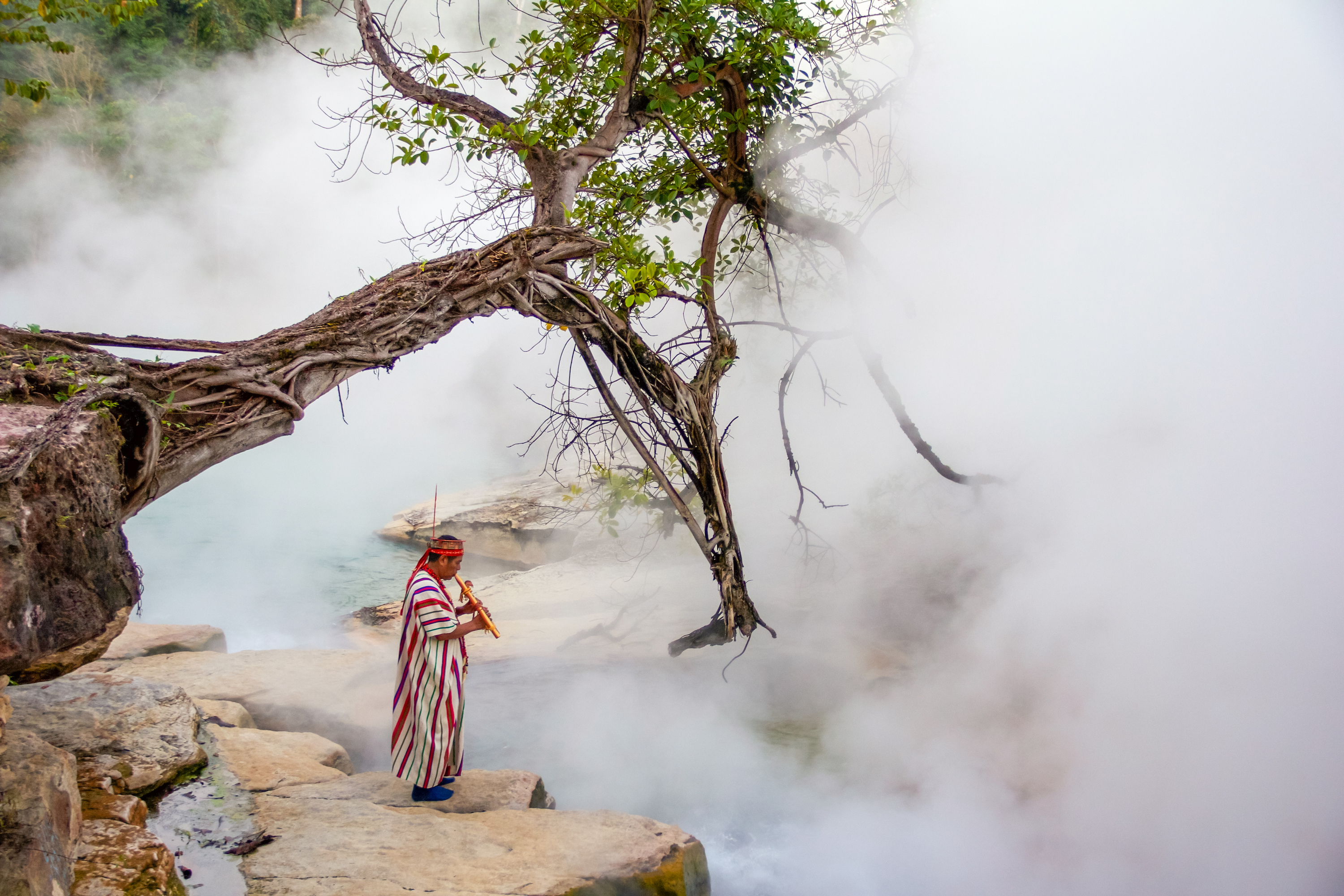
The Boiling River and an Amazonian shaman. Photo by Sofia Ruzo

Thanks once again to Chau Tu at Science Friday’s weekly written article, we’ve learned something new about the natural world, and it sounds like pretty much everyone except maybe a couple hundred people were unaware of its existence too: a steaming-hot river in the Amazon of Peru that isn’t volcanically heated. As Andrés Ruzo, the first geoscientist to study the water body, said in his TED Talk on the subject in 2014 (just released this February), “At a time when everything seems mapped, measured and understood, this river challenges what we think we know. It has forced me to question the line between known and unknown, ancient and modern, scientific and spiritual. It is a reminder that there are still great wonders to be discovered.” Here’s more from Chau Tu on the subject, and make sure to visit the Boiling River Foundation website.

Andrés Ruzo first heard about the Boiling River from his Peruvian grandfather, who shared a legend with him when he was a kid about the Lost City of Gold in Peru. “One of the details of the story was a ‘river that boils,’” Ruzo recalls.

Twelve years later, when Ruzo was studying at Southern Methodist University in Texas to become a geophysicist, he asked colleagues and other experts if they knew anything about a large river that boiled in the Peruvian Amazon. No one had; some scoffed at the inquiry. While thermal rivers do occur on earth, they’re generally tied to active volcanic or magmatic systems—neither of which were known to exist in the Amazon jungle, they said.

Continue reading

Colorful Scientific News From Kerala

06mpm-Four-exti_07_2765284g.jpg

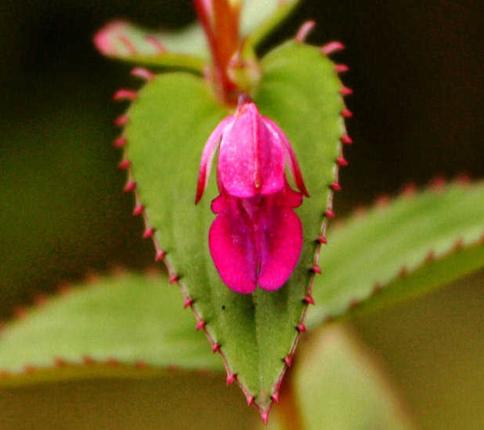
The rediscovered plants, Impatiens concinna, Impatiens sasidharanii, Impatiens sasidharanii var hirsute and Impatiens neo-modesta, are found to have great medicinal value.

Even without the medicinal value component of this discovery, we would consider this good news:

Four ‘extinct’ plant species rediscovered

Four species of Impatiens (Kasi Thumba) plants believed to have gone extinct were rediscovered from the Western Ghats recently. Continue reading

Hatching the ‘Third Eye’

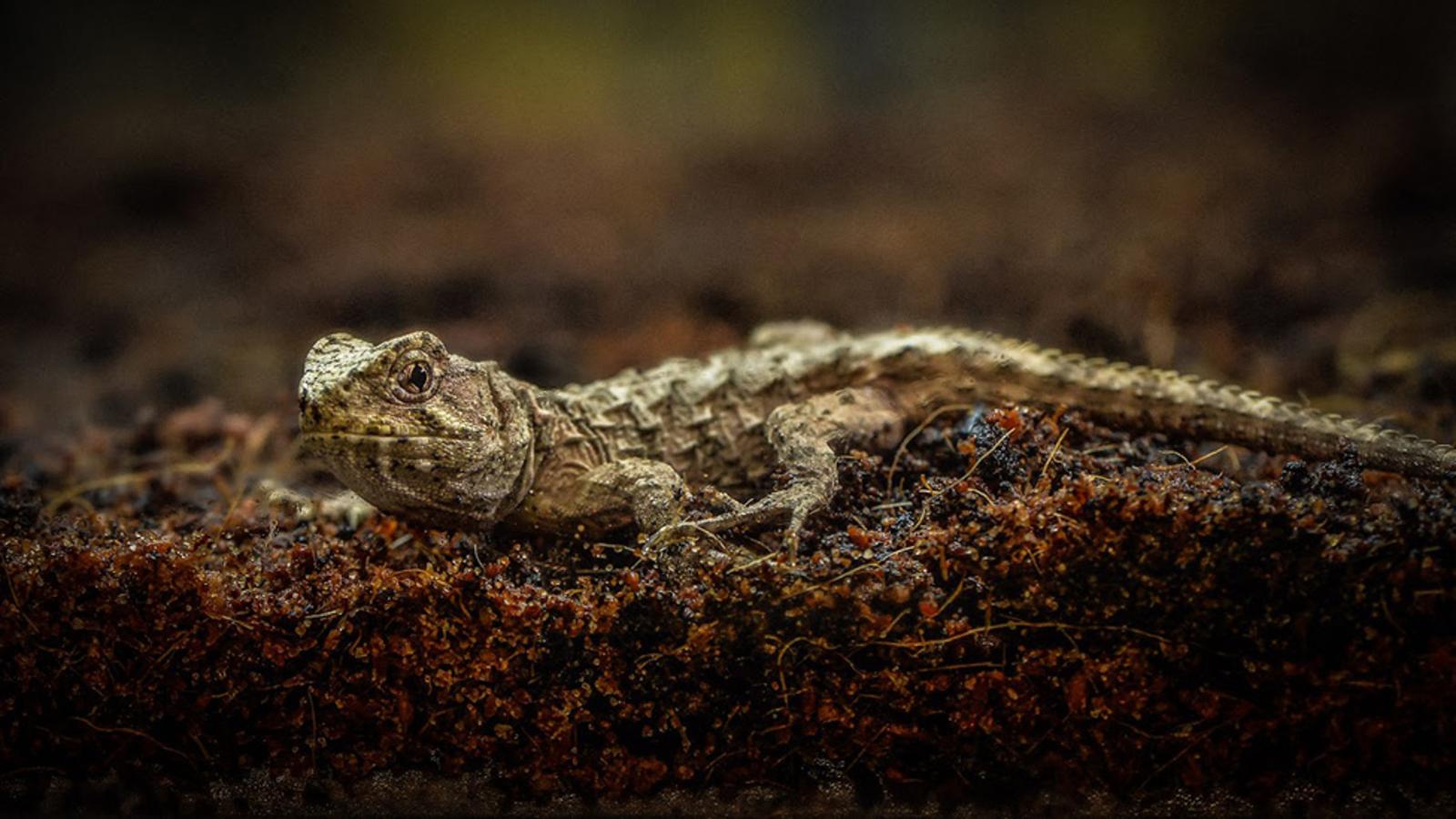
The first tuatara hatchling has been born outside of its native New Zealand. photo: Chester Zoo

The first tuatara hatchling has been born outside of its native New Zealand. PHOTO: Chester Zoo

Discoveries excite us, an event that defies all odds even more so. Like the hatching of this tuatara outside its native of New Zealand.

After decades of work by a dedicated team at Chester Zoo in England, the first tuatara hatchling has been born outside of its native New Zealand.

“Breeding tuatara is an incredible achievement,” says Isolde McGeorge, the zoo’s tuatara keeper since 1977. “They are notoriously difficult to breed and it’s probably fair to say that I know that better than most as it has taken me 38 years to get here.”

Continue reading