There’s a transformation underway in how people think about plants: not just as inanimate biological objects, but as capable of perceptions and actions that resemble the intelligent behaviors of animals. Continue reading →
While I personally don’t focus on organized religion, I can’t deny the power of sacred music to uplift my spirit. This story of inspired Renaissance composition and modern-day curiosity resonates with historical sleuthing and musical puzzle solving.
Click on the Sound Cloud musical links, close your eyes and breathe deep.
Eight years ago, leafing through a bibliography of 16th-century music prints (like you do), my eye was caught by the title of a motet: “Salve sponsa Dei.” “Bride of Christ,” I thought. “Must be for nuns!”
It was one of 23 anonymous motets published together in 1543, so I did what any self-respecting nunologist would do, and ordered a reproduction of the book. As I put the motets into a usable edition for modern singers, I found they were unlike any other 16th-century music I’d ever seen. They were dense, intense and sometimes startlingly dissonant.
The music – for five equal voices (of unspecified sex) – is astonishingly beautiful and yet strange, radical even. These works had lain unsung and unloved for almost four centuries, mostly because they were anonymous. These days, anonymity suggests that whoever created the book, music, painting or whatever was not important enough, or the product is not good enough, for anyone to care who made it. But in the 16th century, anonymity was also an important way for members of the nobility to disguise their participation in commercial ventures that were considered beneath them (which is why Gesualdo, a prince, published his madrigals anonymously).
But Virginia Woolf was right when she said: “Anonymous was a woman.” Continue reading →
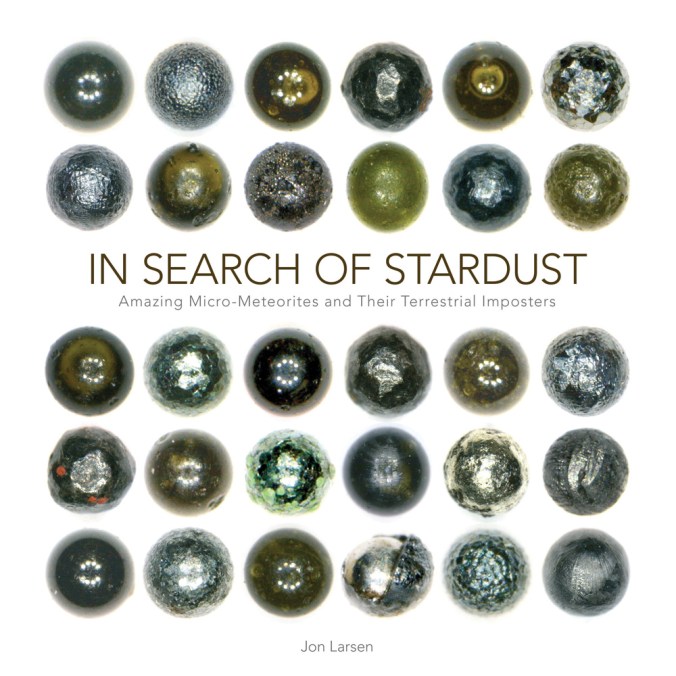
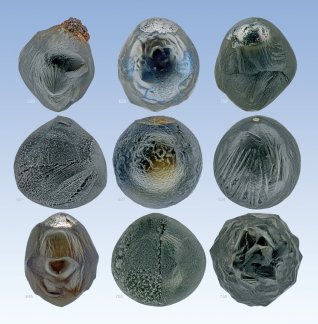
Varieties of space dust, barely the width of a human hair. These photomicrographs were made with a special camera setup that magnifies the dust grains nearly 3,000 times.CreditJan Braly Kihle/Jon Larsen
After decades of failures and misunderstandings, scientists have solved a cosmic riddle — what happens to the tons of dust particles that hit the Earth every day but seldom if ever get discovered in the places that humans know best, like buildings and parking lots, sidewalks and park benches.
The answer? Nothing. Look harder. The tiny flecks are everywhere.
An international team found that rooftops and other cityscapes readily collect the extraterrestrial dust in ways that can ease its identification, contrary to science authorities who long pooh-poohed the idea as little more than an urban myth Continue reading →
From a cartwheeling spider to a fish that hops on its fins and a katydid species that uses drumming to communicate, scientists are finding about 18,000 new species each year. Conniff reveals that so far, humans have identified about 2 million species, and the total number may be anywhere from 10 million to 100 million. He traveled to the remote country of Suriname on the northeastern coast of South America to take a firsthand look at what species discovery is all about.
We recommend this interview (click the Listen button in the banner above) with Richard Conniff on one of the WNYC programs we depend on for variety of perspectives as we pay attention to news about wellness, biodiversity and other topics of interest. Thanks to Smithsonian magazine for publishing Conniff’s story:
A newly discovered katydid species uses drumming to communicate. (Piotr Naskrecki)
On a sunny January morning outside Richmond Hill, Georgia, Bill Eberlein, a fifty-two-year-old former I.T. specialist, went diving in a local creek. He wore a wetsuit, a drysuit, a dive hood, and an orange kayaking helmet affixed with a waterproof headlamp, whose ten thousand lumens would afford him six inches of visibility under the murky water. Continue reading →
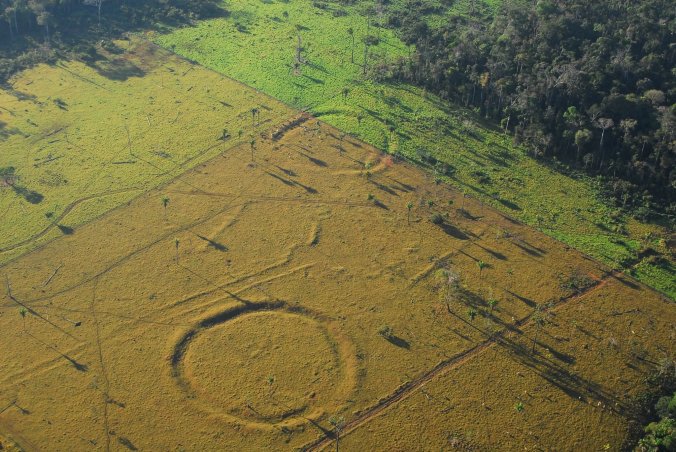
New research suggests people were sustainably managing the Amazon rain forest much earlier than was previously thought.Credit Jenny Watling
Anything with the word Amazon in it, when it refers to the rainforest ecosystem in South America, is worthy of marvel. Joanna Klein offers this story, in the Trilobites feature at the New York Times, that is one of the more surprising finds we have seen in a long time:
Deep in the Amazon, the rain forest once covered ancient secrets. Spread across hundreds of thousands of acres are massive, geometric earthworks. The carvings stretch out in circles and squares that can be as big as a city block, with trenches up to 12 yards wide and 13 feet deep. They appear to have been built up to 2,000 years ago.
Were the broken ceramics found near the entrances used for ritual sacrifices? Why were they here? The answer remains a mystery. Continue reading →
An ancient continent that was once sandwiched between India and Madagascar now lies scattered on the bottom of the Indian Ocean.
The first clues to the continent’s existence came when some parts of the Indian Ocean were found to have stronger gravitational fields than others, indicating thicker crusts. One theory was that chunks of land had sunk and become attached to the ocean crust below. Continue reading →
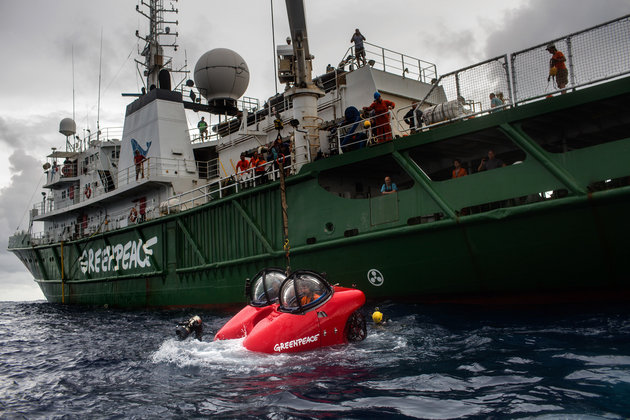
Thanks to the old school model mad outfit, Greenpeace, for bringing this to our attention in a fresh press release today, that adds urgency to earlier announcements starting last year on this rare and unexpected find:
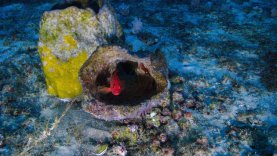
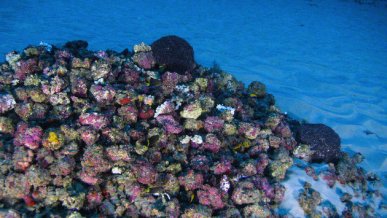
Amapá state, Brazil, 28 January 2017 – Greenpeace Brazil has captured the first underwater images of the Amazon Reef, a 9500 km2 system of corals, sponges and rhodoliths located where the Amazon River meets the Atlantic Ocean – an area that the Brazilian government has opened for oil exploration.
GREENPEACE
A team of experts, including several oceanographers who announced the discovery of the reef last year, have joined the Greenpeace ship Esperanza on an expedition to document this new biome, which runs from French Guyana to the Brazilian state of Maranhão, an area larger than the cities of São Paulo or London.[1] Oil companies Total and BP could start drilling in this area if they obtain authorization from the Brazilian government. Continue reading →
Mr. Preston shares an experience that is not familiar to many people, and perhaps only considered enviable by a select few. The team at Chan Chich Lodge meets visitors every day of the year who are looking for a distant cousin of this experience described below, and those guests come away invariably awed by the opportunity to have a safe, comfortable adventure deep in nature, exploring well protected remains of a Mayan civilization buried by time and jungle. For them, this is worth a read:
…The revelation of an ancient city in a valley in the Mosquitia mountains, of Honduras, one of the last scientifically unexplored regions on Earth, was a different story. This was the first time a large archaeological site had been discovered in a purely speculative search using a technology called lidar, or “light detection and ranging,” which can map terrain through the thickest jungle foliage, an event I chronicled in a story for the magazine in 2013. As a result, this discovery revealed something vanishingly rare: a city in an absolutely intact, undisturbed, pristine state, buried in a rain forest so remote and untouched that the animals there appeared never to have seen people before. Continue reading →
If you’ve ever ordered a lobster tail from Red Lobster, there’s a good chance some of your meal can be traced back to swamp gas.
Let me explain.
Red Lobster is a major purchaser of Caribbean spiny lobster, a species that lives in coral reefs in the western Atlantic Ocean. In the 1980s, lobster fishers started constructing artificial reefs in sea grass beds throughout the Caribbean to attract these lobsters. Continue reading →
Science, as a section of the daily newspaper of old, was geek-out territory. In the modernizing news organization, it has every bit of that old intensity, magnified by the wonders of technology. This little item demonstrates the point:
We’re taking you on a journey to help you understand how bees, while hunting for pollen, use all of their senses — taste, touch, smell and more — to decide what to pick up and bring home.
By JOANNA KLEIN
Set your meetings, phone calls and emails aside, at least for the next several minutes. That’s because today you’re a bee.
Many drugs are based on molecules produced by bacteria. Previously, the search for such drugs has mostly focused on “pristine” environments in far-flung locales. But a new study shows that many useful molecules could already be, quite literally, at our feet. Continue reading →
When plant leaves absorb too much sunlight, a mechanism kicks in that releases the excess energy as heat, rather than photosynthesizing it. While it prevents leaf damage, sometimes it is too much of a good thing. That’s because once a cloud moves in or another leaf casts a shadow, there is a lag time before photosynthesis ramps up again. This lag time can rob crops of 20 percent of their full potential in terms of yield. Continue reading →
Ants in Fiji farm plants and fertilize them with their poop. And they’ve been doing this for 3 million years, much longer than humans, who began experimenting with farming about 12,000 years ago. Continue reading →
Even at this relatively late stage in Earth’s exploration, it’s still possible to discover phenomena that are widespread, ecologically important, and—frankly—beautiful. Continue reading →
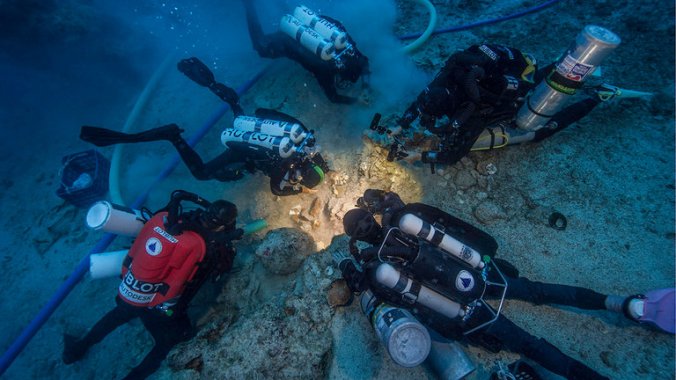
Divers and archaeologists excavating the 2,000 year old Antikythera shipwreck. Credit Brett Seymour/EUA-WHOI, via Argo
This story, about remains recently found under water in a region of the Greek islands where several of us at La Paz Group have very fond memories of, gives me pause. At the time the ship in this story wrecked, the Mayans in Belize were flourishing. The archeologists working at Chan Chich Lodge are still dating the structures there, but the sailor from the ship lost in Antikytheran waters would likely have found the Mayans quite advanced relative to his own culture.
Greece’s classical period was long over by the time this sailor lost his life, and Rome’s empire was still expanding, impressively. Lots of progress, civilization-wise, philosophy-wise, math-wise, geometry-wise in that Mediterranean zone; but also in what is now called Belize, and the wider Mesoamerican corridor. Reading this article, I appreciate the work of archeologists who advance our understanding of those who came before us:
Underwater archaeologists have found a 2,000-year-old skeleton belonging to a victim of the famed Antikythera shipwreck from ancient Roman times. Continue reading →
Iconic limestone Tsingy rocks in Ankarana National Park in northern Madagascar where the ghost snake was discovered. Photo by Sarah Ruane, LSU
Last month it was Mexico, and this time it’s Madagascar – once again, a new snake species with a presumably localized distribution has been discovered in a little-explored area. The elusive and pale gray snake has likely evolved to camouflage against the rocks of the region, and was named Madagascarophis lolo (lolo meaning ghost in Malagasy) by researchers from the LSU Museum of Natural Science, the American Museum of Natural History and the Université de Mahajunga in Madagascar.
The ghost snake is part of a common group of snakes called Madagascarophis, or cat-eyed snakes, named for their vertical pupils, which is often found among snakes that are active in the evening or night. Many of the cat-eyed snakes are found in developed areas or degraded forests. However, the researchers found the ghost snake on the national park’s iconic pale grey limestone Tsingy rocks.
A new study on plant water retention from the University of California, Irvine and the University of Washington might rescind some of our assumptions of climate change impacts on agriculture, water resources, wildfire risk, and plant growth. Their findings reveal that water conserved by plants under high CO2 conditions compensates for much of the effect of warmer temperatures, which means more water is retained on land than predicted in commonly used drought assessments. ScienceDaily reports:
The study compares current drought indices with ones that take into account changes in plant water use. Reduced precipitation will increase droughts across southern North America, southern Europe and northeastern South America. But the results show that in Central Africa and temperate Asia — including China, the Middle East, East Asia and most of Russia — water conservation by plants will largely counteract the parching due to climate change.
Tasman Lake, which is fed by melt water from the retreating Tasman Glacier. Photo by Trevor Chinn
The kiwis referred to here are cute, small, fluffy, brown birds, not to be confused with small fuzzy brown fruit nor with the people who live in New Zealand. These flightless and nocturnal birds used to be divided in three to five species, but new DNA evidence from extensive blood sampling conducted over the last couple decades in their island home is indicating that there is in fact much more genetic diversity – which is often separated geographically – than previously thought, perhaps even enough to declare new species, or at the very least certainly new subspecies. And this might affect conservation strategies for these birds, which are all either endangered or vulnerable to endangerment. Ed Yong reports:
Several million years ago, a small bird flew to New Zealand. Arriving there, it found few threats and plenty of opportunities. In the absence of mammals, its descendants gradually lost the ability to fly, as island birds are wont to do. They also evolved to fill those niches that mammals typically occupy, rootling around the leaf litter in search of worms and grubs. They transformed into that icon of New Zealand—the adorable, bumbling kiwi.






 Organikos