About Those Dancing Frogs


Thanks to National Geographic’s website for extending the details of this  news we first shared here:

…The spectacular haul more than doubles the number of Indian dancing frogs, a family named for the bizarre courtship displays of their foot-waving males, to 24 species. Continue reading

Vegetarian Music

This slideshow requires JavaScript.

While we complete our design and planning for the menu and the musical accompaniment at 51, the restaurant at Spice Harbour, we seem to have hit two birds with one stone in our research today. We tend more and more to the preferences of vegetarian travelers, and to the tendency of many non-vegetarian guests generally to reduce consumption of animal protein. And everyone loves good music. So this caught our attention, thanks to a slideshow on the Reuters newsfeed; this orchestra’s website tells the story (with a great video here):

Worldwide one of a kind, the Vegetable Orchestra performs on instruments made of fresh vegetables. The utilization of various ever refined vegetable instruments creates a musically and aesthetically unique sound universe.

The Vegetable Orchestra was founded in 1998. Based in Vienna, the Vegetable Orchestra plays concerts in all over the world. Continue reading

Fantastic Flying Foxes

The phrase “flying fox” in our experience has been used to describe the huge bats that can be found around Cardamom County in Thekkady, feasting on fruit and insects. In the video above, however, we learned that even common ground-dwelling foxes can reach stunning heights — in their pursuit of rodents living underneath deep layers of snow!

Continue reading

Self-Sufficiency Taken To The Outer Extremes

Before the lights go out on the last New Yorker issue of 2013, one more of several articles we found worth the read, and relevant to our common themes of interest–community-building, innovation, environmentalism, farming, etc.–on this blog, even if we tend to incremental change rather than the radicalism on display here:

Marcin Jakubowski, the owner of a small farm in northwestern Missouri, is an agrarian romantic for high-tech times. A forty-one-year-old Polish-American, he has spent the past five years building industrial machines from scratch, in a demonstration of radical self-sufficiency that he intends as a model for human society everywhere. He believes that freedom and prosperity lie within the reach of anyone willing to return to the land and make the tools necessary to erect civilization on top of it. His project, the Global Village Construction Set, has attracted a following, but among the obstacles he has faced is a dearth of skilled acolytes: the people who show up at his farm typically display more enthusiasm for his ideas than expertise with a lathe or a band saw. Continue reading

Paleo-ethical Questions

young-tyrannosaur-990x664

Scientists, like all others, are faced with puzzling  ethical questions from time to time. Questions where there is no right or wrong answer, but for which “do the right thing” is the imperative. We like to think we know exactly how we would answer such a question, but sometimes the questions (or answers) are dark grey or light grey rather than black and/or white, as various characters referred to in this blog post make clear (click the image above to go to the original post):

On November 19th, science may lose a pair of dinosaurs. Preserved next to each other – and given the dramatic title the “Dueling Dinosaurs” – the tyrannosaur and ceratopsid are going up for auction at Bonham’s in New York City. The two are expected to rake in around nine million dollars, with no guarantee that the fossils will go to a museum or that their beautiful bones will even have the chance to be rigorously studied by scientists. That’s exactly why paleontologists were aghast when the auction block tyrannosaur made an appearance at the Society of Vertebrate Paleontology annual meeting yesterday afternoon. Continue reading

What Else is Out There?

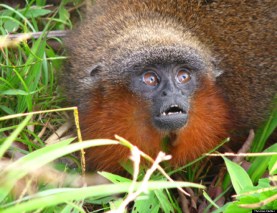
Thanks to the World Wildlife Fund, 441 new species of plants and animals have been discovered in the Amazonian rainforest, including a truly bizarre looking monkey that apparently purrs like a cat when content, as well as a… vegetarian piranha.

Image

Newly discovered Titi Monkey. Photo Courtesy World Wildlife Fund

It is a good feeling in any naturalist’s gut, amateur or professional, too know that undiscovered species still remain in today’s world — where technology and advancements in various facets of our lives thanks to 21st century progressivism don’t leave much to the imagination; it seems as though the mystique of discovery still remains just as true to many of us as it did when we were children. Unfortunately this is not the case for absolutely everyone, but for those who are still amazed by the world, discoveries such as this are a blessing.

Continue reading

The Hut of Romulus

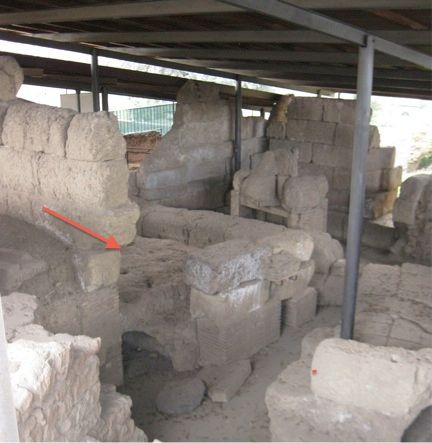
Hut of Romulus (Post holes where arrow is pointing.)

Today, all that remains of the so-called “Hut of Romulus” are the holes you see in the picture above (the slight indentations on the platform where the arrow is pointing). When intact, Romulus’ humble wattle-and-daub dwelling, located in the southwest corner of the Palatine Hill in Rome, might have looked something like this. One might have expected that the passing of nearly three millennia would not have treated well the wood, straw, and twisted bark ties of the hut, but even in its own day the Hut was prone to accidental destruction. One particularly ignominious story has a crow dropping Continue reading

Reading, Libraries & Good Citizenship

'We have an obligation to imagine' … Neil Gaiman gives The Reading Agency annual lecture on the future of reading and libraries. Photograph: Robin Mayes

‘We have an obligation to imagine’ … Neil Gaiman gives The Reading Agency annual lecture on the future of reading and libraries. Photograph: Robin Mayes

Libraries still have enough friends that we do not yet count them out, but the challenges they face are undeniable. Thanks to the Guardian‘s coverage of one prominent writer’s address on this important topic:

Neil Gaiman: Why our future depends on libraries, reading and daydreaming

A lecture explaining why using our imaginations, and providing for others to use theirs, is an obligation for all citizens

It’s important for people to tell you what side they are on and why, and whether they might be biased. A declaration of members’ interests, of a sort. So, I am going to be talking to you about reading. I’m going to tell you that libraries are important. I’m going to suggest that reading fiction, that reading for pleasure, is one of the most important things one can do. I’m going to make an impassioned plea for people to understand what libraries and librarians are, and to preserve both of these things. Continue reading

Disconnected

A usual day in States starts out with me waking up to the ear-drillingly loud alarm on my Samsung Galaxy, checking my email and Facebook, surfing the web and reading the news. Then I soullessly get out of bed and proceed to breakfast, during which I also constantly fidget with my phone, jotting down everything I need to do for that day and texting my friends, usually to vent about how tired we are and who has gotten less sleep. Then in class, I take notes on my laptop as I constantly browse through my email and simultaneously type things I don’t understand into the Google search bar. As soon as I get out of class, I go back to staring at my phone, browsing through Instagram and Facebook, walking to my next class or lunch. (I have once literally run into a door because I had my head in my phone and didn’t see the door at all.) Bottom line, I am always connected, always online, and always ready to access everything on the Web. A ridiculous amount of my life is consumed by my phone and my laptop.

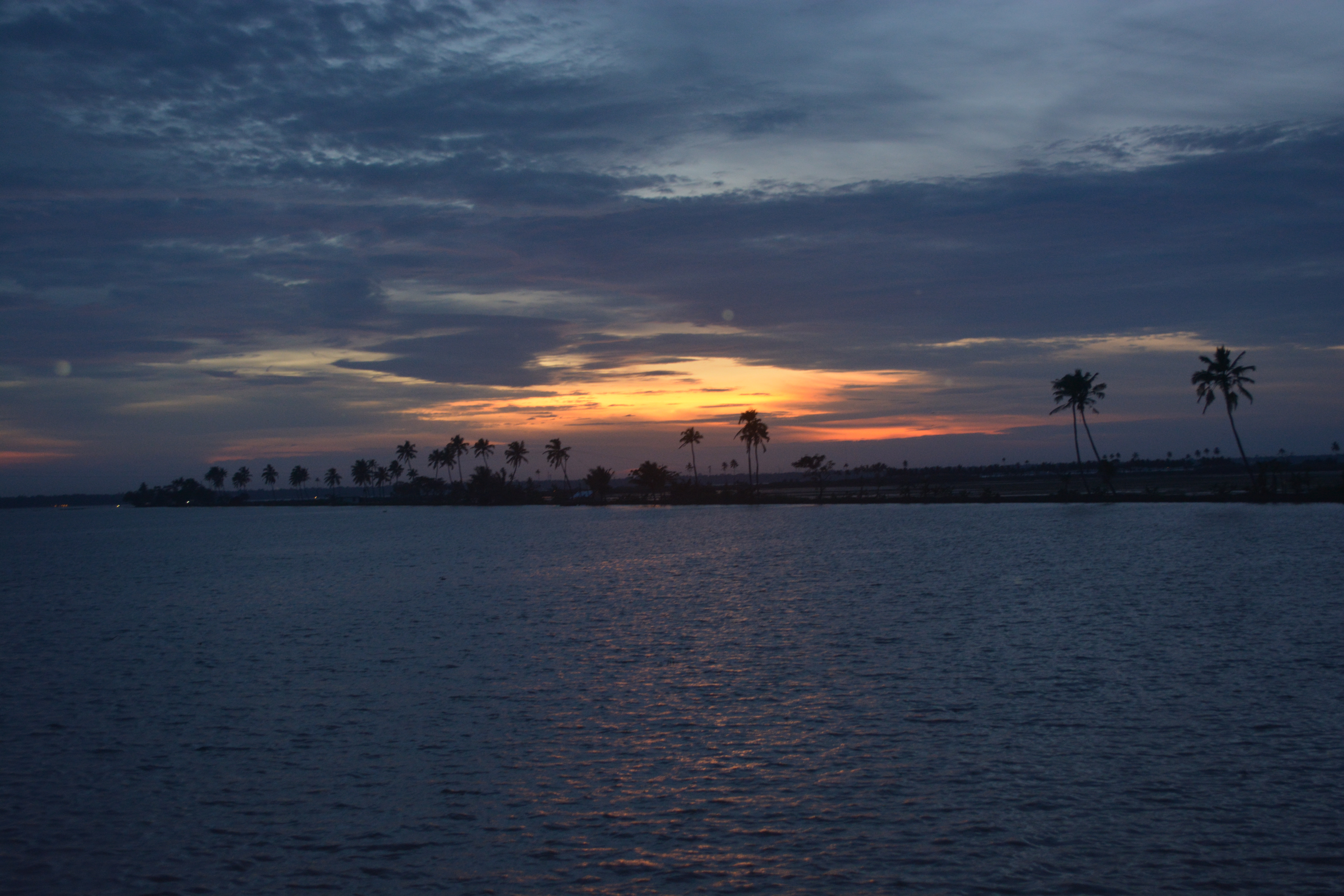
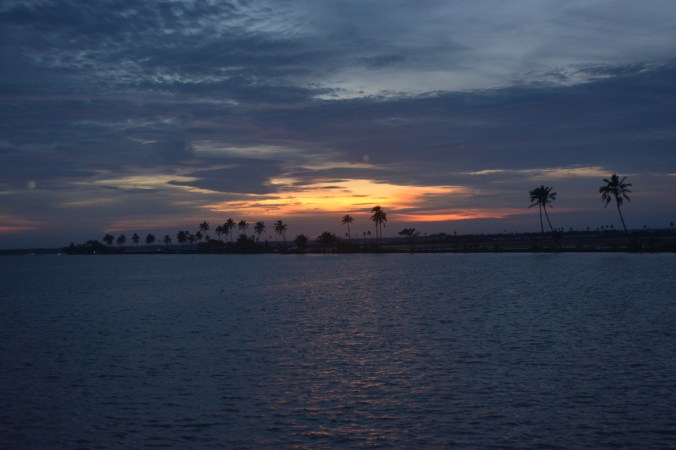
However, on my second day in India, I went on a houseboat—my fellow intern Jake has written about it a few posts back—and it did not have Wifi! I felt disconnected and nervous. I cannot even remember the last time I didn’t have access to Internet or my phone. After a couple of hours, I simply didn’t know what to do with myself. I didn’t even have music to listen to since I always stream it from Spotify or Youtube. In hopelessness, I lay down on the cushioned sun deck, hoping to take a nap, which would kill some time. So I sat there, directionlessly looking into the backwaters, the rice farms, and the tiny villages clustered up in the narrow grounds next to the river. I watched little naked boys taking a bath in the river and running away in embarrassment as they saw me staring at them on the boat. I also watched the birds hover right on top of the river surface, meticulously and gracefully snatch the fish out of the water, and fly away gobbling it down. I watched the sun slowly setting, painting the whole sky orange and pink with its radiance.

Before I knew it, it was pitch black outside and we were called down for dinner. Continue reading

Library, Guardian Of Spiritual Treasure

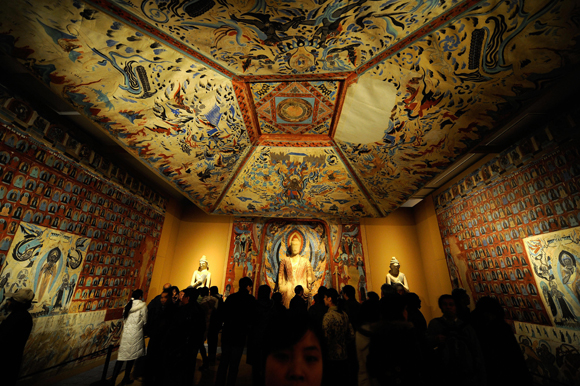
Visitors visit a replica parts of the Mogao Cave during the Dunhuang Art Exhibition in Beijing on February 20, 2008.  The exhibition displays collections mostly from the Dunhuang Grottoes which were constructed between the 4th and the 14th century, including recovered antres, original painted sculptures and their replicas from Library Cave of Dunhuang. Dunhuang, located in Jiuquan of Northwest China's Gansu province along the historic Silk Road, is in danger of being swallowed by sands of the adjacent Kumtag desert, which are creeping closer at a rate of up to four metres (13 feet) a year. (Photo credit TEH ENG KOON/AFP/Getty Images)

Visitors visit a replica parts of the Mogao Cave during the Dunhuang Art Exhibition in Beijing on February 20, 2008. The exhibition displays collections mostly from the Dunhuang Grottoes which were constructed between the 4th and the 14th century, including recovered antres, original painted sculptures and their replicas from Library Cave of Dunhuang. Dunhuang, located in Jiuquan of Northwest China’s Gansu province along the historic Silk Road, is in danger of being swallowed by sands of the adjacent Kumtag desert, which are creeping closer at a rate of up to four metres (13 feet) a year. (Photo credit TEH ENG KOON/AFP/Getty Images)

We tend to avoid topics pertaining to religion, spirituality or related highly personal matters that sometimes can lead to misunderstandings, misapprehensions, or worse; but our love of libraries, of archives, of discoveries are all satisfied in one fell swoop of a blog post, and we are particularly impressed to learn that Gutenberg may not be the only key to understanding the history of printing:

Just over a thousand years ago, someone sealed up a chamber in a cave outside the oasis town of Dunhuang, on the edge of the Gobi Desert in western China. The chamber was filled with more than five hundred cubic feet of bundled manuscripts. They sat there, hidden, for the next nine hundred years. When the room, which came to be known as the Dunhuang Library, was finally opened in 1900, it was hailed as one of the great archaeological discoveries of the twentieth century, on par with Tutankhamun’s tomb and the Dead Sea Scrolls. Continue reading

Discovery, Conservation’s Better Half

Wilderness conservation, marine or terrestrial, is difficult. On a good day the challenge might be described as a complex puzzle, which has its pleasures; but on most days it is slogging and increasingly, dangerously warlike.

On the best days, we observe, conservationists have the thrill of discovery. Thanks to the Guardian‘s commitment to reporting on the environment, and specifically for this story that highlights that discovery of species is an ongoing enterprise, one more reason why posts like this, and this, among others are so important in getting us all to do our part:

‘Walking shark’ discovered in Indonesia

Previously unknown fish, Hemiscyllium halmahera, uses its fins to move along the sea bed in search of crustaceans Continue reading

19th Century Modern

daguerrotype-004-580

Students in need of tuition money sometimes prove the saying that necessity is the mother of invention, as this New Yorker historical note indicates:

In 1843, a Dartmouth College freshman named Augustus Washington needed to earn some money for tuition. As a man of mixed-race—a black father, a South Asian mother—many professions were closed to him. But anyone could learn the new art of daguerreotype photography, which had been perfected and publicized a few years earlier by the French artist Louis-Jacques-Mandé Daguerre. After mastering the bulky camera, Washington opened a studio in Hartford, Connecticut, where he made a good living photographing middle-class families. Continue reading

National Geographic Over the Years

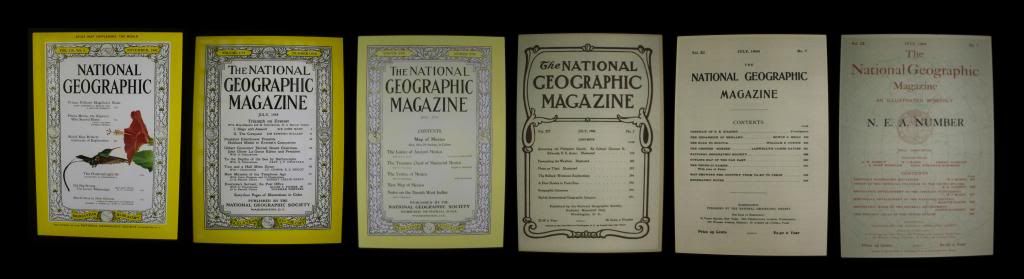
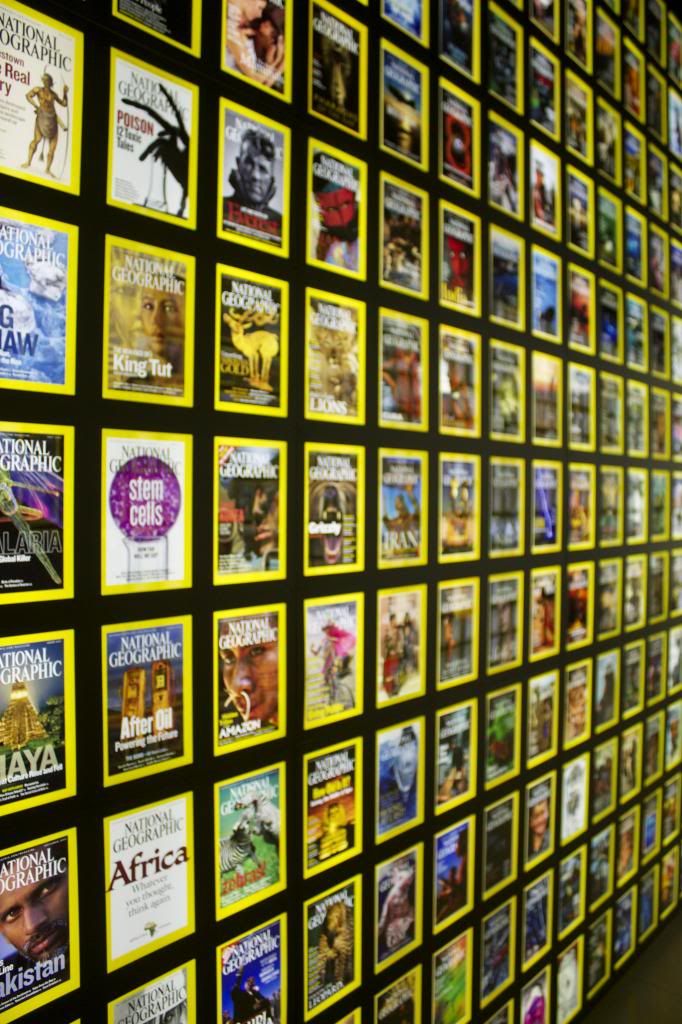
NatGeo’s magazine covers over the years, stitched together from individual photos I took at the National Geographic Museum in Washington, D.C.

As National Geographic celebrates its 125th year of journalism, it is interesting to see how small things, like the magazine covers and the information they conveyed, have changed. In the photo above, the November, 1960 issue (far left) was priced at $1.00; the July, 1954 issue (second from left) at 65¢; and from then backwards each magazine was a whopping 25¢. Today’s magazines don’t disclose their individual price, but a yearly subscription at $15 is not too shabby considering it was $8/yr in 1960, up from $6.50 in 1954.

The July, 1954 issue’s first featured article is titled, “Triumph on Everest,” and the last, “Everyone’s Servant, the Post Office”; July, 1898 (far right in the photo above), on the other hand, saw “American Geographic Education” and “The Geologic Atlas of the United States” as the first and last articles.

Continue reading

Seasteading, Self-Reliance Utopia, And Our Shared Future

An article recently published in n+1 examines a utopian futurist form of an idea that seems oddly symmetric with Seth’s posts about the history of exploration using Iceland as a case study. Looking back, we see much in common with explorers, pioneerspilgrims and adventurous thinkers of all sorts.  Looking forward, we are inclined to embrace smart, creative, enthusiastic group efforts to resolve seemingly intractable challenges. Especially when they involve living on boats. We recommend reading the following all the way through:

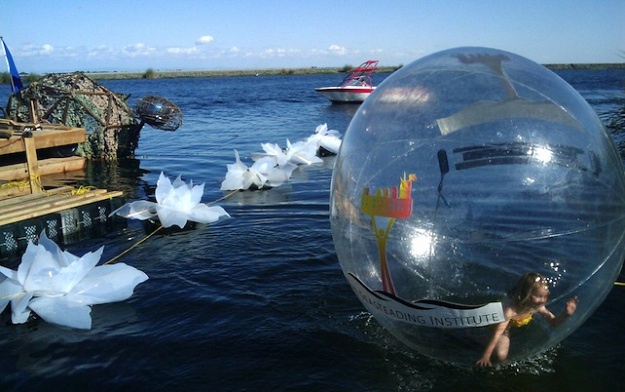
To get to Ephemerisle, the floating festival of radical self-reliance, I left San Francisco in a rental car and drove east through Oakland, along the California Delta Highway, and onto Route 4. I passed windmill farms, trailer parks, and fields of produce dotted with multicolored Porta Potties. I took an accidental detour around Stockton, a municipality that would soon declare bankruptcy, citing generous public pensions as a main reason for its economic collapse. After rumbling along the gravely path, I reached the edge of the Sacramento–San Joaquin River Delta. The delta is one of the most dredged, dammed, and government subsidized bodies of water in the region. It’s estimated that it provides two-thirds of Californians with their water supply.  Continue reading

Creative Uses Of Intelligence, Intelligent Uses Of Creativity

How smart are they? Do they drink alot of coffee?  Find out by clicking the image above, or reading the following from the article accompanying that video:

…Google X seeks to be an heir to the classic research labs, such as the Manhattan Project, which created the first atomic bomb, and Bletchley Park, where code breakers cracked German ciphers and gave birth to modern cryptography. After the war, the spirit of these efforts was captured in pastoral corporate settings: AT&T’s (T) Bell Labs and Xerox (XRX) PARC, for example, became synonymous with breakthroughs (the transistor and the personal computer among them) and the inability of each company to capitalize on them. Continue reading

Mapping Iceland

In my last post on the subject I mentioned that portions of Iceland on contemporary maps all the way up to the early 20th century remained blank. The main culprit for explorers, travelers, and cartographers was the great glacial region of Vatnajökull, at 3,139 sq. mi (8,130 sq. km) the largest glacier in Europe, and now a national park in southeast Iceland. Terrible snowstorms, heavy rains, unreliable ice, and poor local knowledge of the frigid plateau contributed to the failure of multiple expeditions by many men into the interior of the “Glacier of Rivers,” and during the late 1800s it became clear that there was frequent volcanic activity in the area as well.

1906 geological map by Icelandic geographer/geologist Þorvaldur Thoroddsen, who is credited with being the first to map the interior of the Icelandic Highlands in 1901, which is when this map was first published. The different colors represent different compositions of the island, such as basalt, liparite, volcanic ash, etc.

Continue reading

False Starts, Heroic Conclusions

ESSAY: A Different River Every Time
What is ‘smart’ and how does it fit our consciousness? Is there just one way to it? Are smarter people happier, richer? The answers may not always be that obvious. by SANDIPAN DEB

…Which, of course, brings us to that common capitalist question: “If you’re so smart, why aren’t you rich?” There is something abhorrent about this query. Of course, Mukesh Ambani is super-smart, but so was Jagadish Chandra Bose, who invented wireless communication at least a couple of years before Guglielmo Marconi, who received the Nobel prize for the breakthrough (It is now established that Marconi met Bose in London when the Indian scientist was demonstrating his wireless devices there, and changed his research methods after that meeting). Bose also invented microwave transmission and the whole field of solid state physics, which forms the basis of micro-electronics. Bose’s contributions are all around us today, from almost every electronic device we have at home to the most powerful radio telescopes in the world. But he steadfastly refused to patent any of his inventions, or to license them to any specific company. Some 70 years after Bose’s death, the global apex body, Institute of Electrical and Electronics Engineers, officially acknowledged Bose to be the father of wireless communication.

This is an excerpt whose catchy question pervades an essay worth reading in full. Intelligence, specifically smart Indian people, is the subject of a whole special issue of Outlook magazine. We have pondered amazing people from India on occasion in the past, and if the brief tale above intrigues you then see this post about Tesla versus Edison, but for now Continue reading

Exploring Iceland

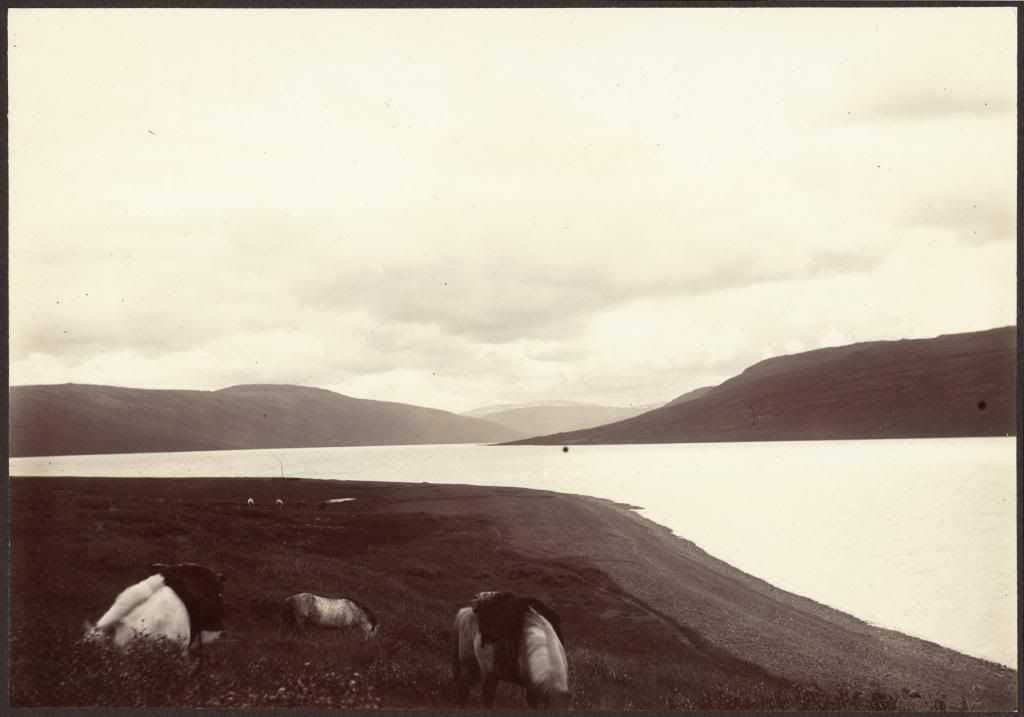
The head of Skorradalsvatn. Collodion print ca. 1900 by Frederick W. Howell. Bequest of Daniel Willard Fiske; compilation by Halldór Hermannsson at the Fiske Icelandic Collection of Cornell University.

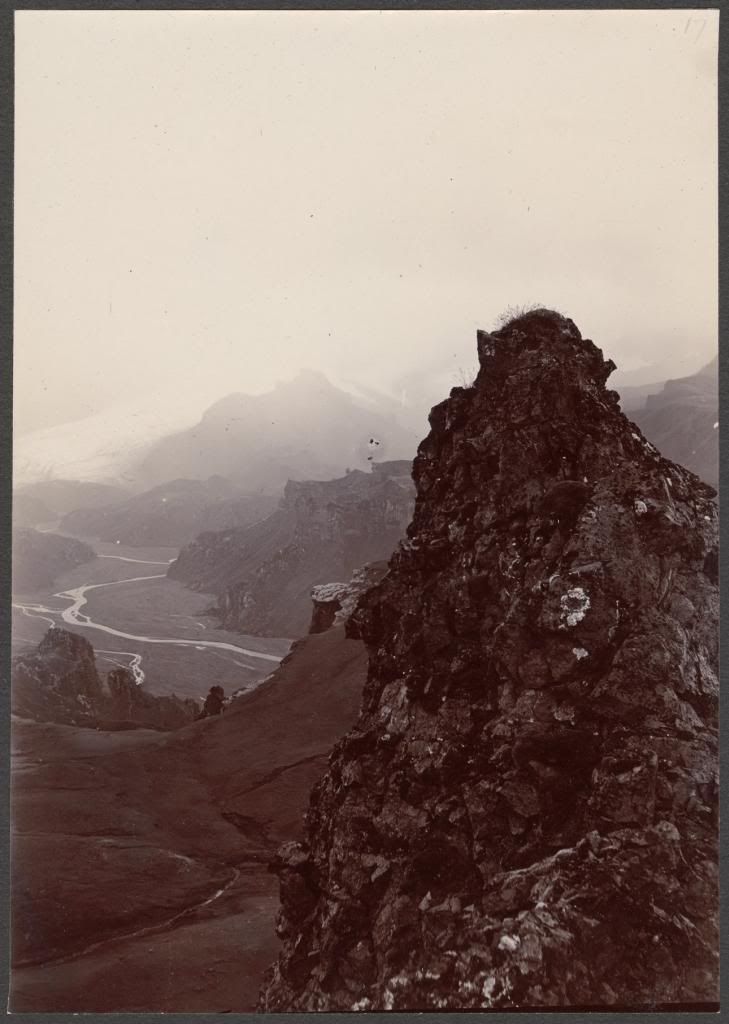
Þórsmörk. Head of Krossárdalur. Collodion print ca. 1900 by Frederick W. Howell. Bequest of Daniel Willard Fiske; compilation by Halldór Hermannsson at the Fiske Icelandic Collection of Cornell University.

It was mentioned a week or two ago that Iceland is in the air. For me, Iceland is on my mind, in my laptop, hidden throughout the Cornell libraries, and scattered about my room. After a couple essays for an environmental history course last year and some preliminary research for finding an honors thesis topic in the history major, I discovered that, thanks primarily to Cornell University’s first librarian, we have one of the largest collections of Icelandic material in the world. Since one of my projects for the environmental history class had shown me that Iceland was an interesting place to examine more closely, I did some more research and found the topic of European travel there during the eighteenth and nineteenth centuries engaging enough to choose as an honors thesis subject.

One of the places in Europe with the most spaces left blank by cartographers through the eighteenth and nineteenth centuries, Iceland’s inner regions were not fully mapped until 1901. Continue reading

On Language, Travel And Imagination

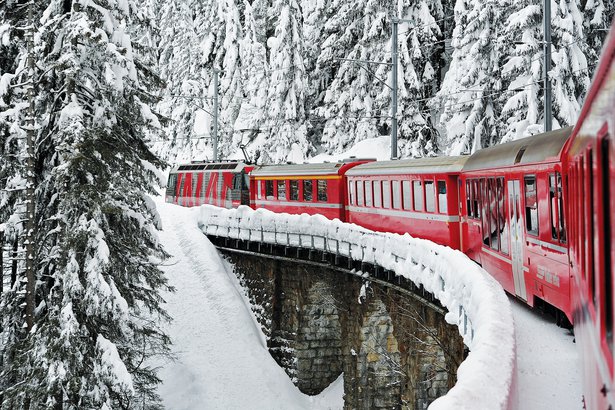
The snow-covered mountains and punctual trains of Montreux, Switzerland, summon childhood train sets, and the daydreams that accompanied them. (Harold Cunningham/Getty)

The snow-covered mountains and punctual trains of Montreux, Switzerland, summon childhood train sets, and the daydreams that accompanied them. (Harold Cunningham/Getty)

If we failed to get you reading him here, shame on us. If you choose to ignore this short piece of his, well, you have only yourself to answer to. He has had a running series of blog posts on the Atlantic‘s website dealing with the frustrations and wonders of language acquisition as an adult, a phenomenon several of us at Raxa Collective can relate to perfectly well.  He captures some of the many benefits of the process and the outcome, especially the collaborative part, in short order here:

When I was about 6 years old, I started collecting model trains with my father. We would assemble the track in the attic, put a foam mountain with a tunnel over the top, and, through the magic of a transformer, watch the trains make their rounds. My dad took me to train shows, and for my birthdays back then, I always got train sets or trestles. I had books on model trains, and books on actual trains. Both kinds showed pictures of big mountains parted by trains, small towns bisected by trains, and trains adorning white Christmas-scapes. Continue reading

Lost and Found In Ghana

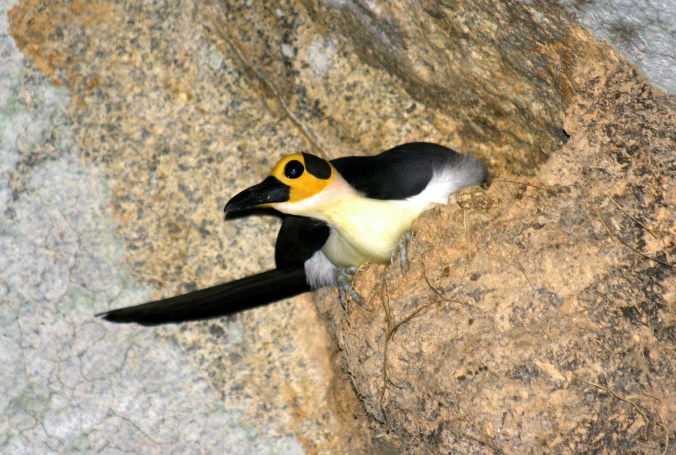
White-necked Picathartes - Photo Credit: David Shackelford Rockjumper Birding Tours

White-necked Picathartes – Photo Credit: David Shackelford Rockjumper Birding Tours

In March we’d introduced the White-necked Rock Fowl in our Bird of the Day series, and then neglected to tell the full story behind this charismatic bird. Shame on us! But better late than never I’m happy to share it now.

West Africa’s Upper Guinean forest block stretches along the coast from Sierra Leone to Ghana, and along with the Congolian forest block is considered a biodiversity hotspot. Up until the mid-1960s-early 1970s it is believed there were at least 200-300 breeding pairs of the endemic white-necked picathartes in Ghana alone. But up until 10 years ago there hadn’t been reports of the bird for nearly 4 decades, leading conservationists to believe it eradicated from the region.

Our colleague John Mason from the Nature Conservation Research Centre (NCRC) in Ghana has provided us with this fascinating story:

Efforts to locate rockfowl were not successful until 2003, when a research team from Louisiana State University, working in collaboration with NCRC and WD, re-discovered rockfowl in Ghana.  A single individual was mist-netted and one breeding site was recorded in the Subim Forest Reserve.  Subsequently the Ghana Wildlife Society located two additional colonies near this first site.  Continue reading