Communities of Learning, Science, And The Role Of Culture

A meeting of doctors at the university of Paris. From a medieval manuscript of “Chants Royaux”, Bibliothèque Nationale, Paris.

A meeting of doctors at the university of Paris. From a medieval manuscript of “Chants Royaux”, Bibliothèque Nationale, Paris.

Click on the image to the right to go to the source, an online publication we have consistently enjoyed so far:

The lone survivor of traditional Western European ‘scientific’ culture is science.

It has survived because it is now the handmaid of technology, without which contemporary civilization would collapse utterly. Anyone who doubts this should try to get a research grant for genuinely “pure” research.Today, in European cultures, and in other cultures that have borrowed it, science per se is strictly peripheral at best. It is not only inseparable from technology; it is all but completely divorced from philosophy. This is a far cry from the Middle Ages.

The centrality of science in all spheres of Western European culture was ensured when the crucial elements — all of them — were borrowed during the Crusades, more or less simultaneously, from Classical Arabic civilization. Continue reading

Small Wonders

A Mayfly nymph. Photo by Daniel Stoupin, www.microworldsphotography.com

A Mayfly nymph. Photo by Daniel Stoupin, www.microworldsphotography.com

Yet another fascinating view of the world from Aeon, whose very name conflates the single into the infinite, making everything a matter of perspective.

When the Dutch cloth merchant Antonie van Leeuwenhoek looked at a drop of pond water through his home-made microscope in the 1670s, he didn’t just see tiny ‘animals’ swimming in there. He saw a new world: too small for the eye to register yet teeming with invisible life. The implications were theological as much as they were scientific. Continue reading

Birds-of-Paradise Project

Photo by Tim Laman.

We’ve written about the birds-of-paradise before, mostly to share great images of them. But all that is about to be topped by the same folks who brought us two out of the three links above: Tim Laman and Ed Scholes. On February 19th, a new website was released that contains over two hours of footage never seen before, specifically designed to serve as an educational base for anyone trying to learn more about the whacky birds.

The Cornell Lab of Ornithology was one of the main funders for the project (others include the estate of Madelon G. and Robert Wehner, Conservation International, and the National Geographic Expeditions Council). According to their official press-release, the “website, videos, and interactive features were produced by the Cornell Lab’s Multimedia program with sound and video from the archives of the Lab’s Macaulay Library. Producer Marc Dantzker said the production team sorted through more than 2,500 video clips, almost 40,000 photos, and hundreds of sound recordings to find close-up examples of each adaptation, courtship pose, display feather, and dance move.”

So after eight years of painstaking research by Scholes and Laman, we get to enjoy this unforgettable imagery! Watch the video below of the King-of-Saxony, Continue reading

A Few Etruscan Tombs

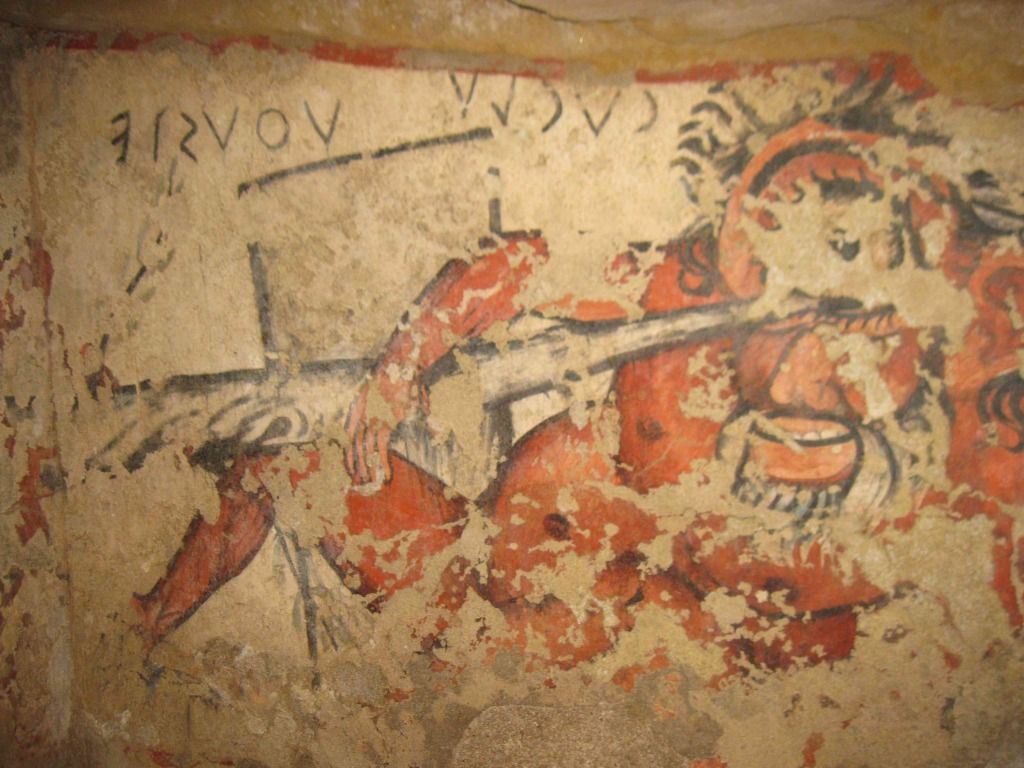
Polyphemus the Cyclops (Tomb of Orcus)

The Etruscans are, for all their great cultural influence on the Romans, a  poorly understood people. We know they once dominated northern Italy and much of its western coast and that they interacted extensively with not only the Romans but also many other native Italic tribes in the 1st milennium BC. Some of this contact is reflected linguistically: the modern English word “person,” deriving from Latin persona, entered the Latin language from Etruscan phersu Continue reading

Obelisks in Rome

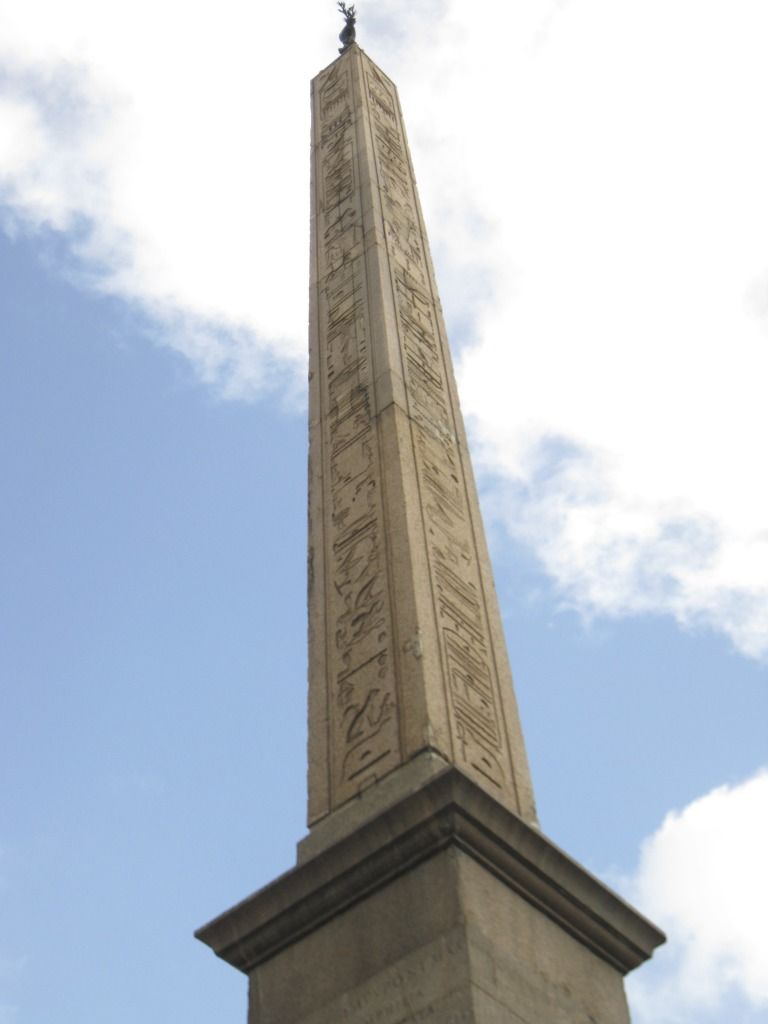
The Obelisk at Piazza Navona

Rome is renowned for (among many other, er, more important things) its vast “collection” of obelisks. These obelisks, most featuring hieroglyphics running their length, typically came to Rome through conquests in Egypt. Victorious generals and emperors Continue reading

Sweet Potato Tango

Ted Aljibe/AFP/Getty Images

Ted Aljibe/AFP/Getty Images

It wouldn’t be the first time that we’ve written about the “Columbian Exchange” on this site. So many of the foods now considered synonymous with “Old World” or “Asian” cuisines are actually endemic to the Americas, and according to NPR’s The Salt “anthropologists think that a few foods made the 5,000-mile trek across the Pacific Ocean long before Columbus landed in the New World.”

Sweet potatoes originated in Central and South America. But archaeologists have found prehistoric remnants of sweet potato in Polynesia from about A.D. 1000 to A.D. 1100, according to radiocarbon dating. They’ve hypothesized that those ancient samples came from the western coast of South America. Among the clues: One Polynesian word for sweet potato — “kuumala” — resembles “kumara,” or “cumal,” the words for the vegetable in Quechua, a language spoken by Andean natives.

But until now, there was little genetic proof for this theory of how the tater traveled. Continue reading

Privacy Disturbed

Emperor penguin colony

The newly discovered 9,000-strong emperor penguin colony on Antarctica’s Princess Ragnhild coast. Photograph: International Polar Foundation/PA

Click the photo above for the story in the Guardian. It sounds beautiful. They are so charismatic.  But it also raises the question of whether these creatures might have been happier without the visitors:

A previously unknown colony of about 9,000 emperor penguins has received its first human visitors.

Scientists from the British Antarctic Survey and US colleagues discovered the colony from satellite images. Continue reading

Voyager’s Dilemma

Harvard University Professor Joyce Chaplin talked about her book, Round About the Earth: Circumnavigation from Magellan to Orbit, in which she presents the history of the circumnavigation of earth, going back to the days of Portuguese explorer Ferdinand Magellan. Professor Chaplin spoke at Harvard Book Store in Cambridge, Massachusetts.

Three of our most viewed posts since starting this site in mid-2011 have to do with the intersection of travel (in all its various forms) and sustainability so when we saw this video and the related book reviews we could not help thinking it might resonate with readers who have enjoyed those three posts. One challenge for the modern voyager is an inverse of the same as that to a hospitality-providing organization such as ours going forward: how do we get there and back with the smallest footprint possible?  It is not the same question Magellan was asking but some of the “voyage issues” have not changed over the centuries.  Click the image above to go to the video, and here for a review of the book in the LA Times:

A trip on a 140-foot sailboat helped inspire Harvard professor Joyce E. Chaplin to write “Round About the Earth: Circumnavigation From Magellan to Orbit” — and that may explain the enthusiasm she brings to the many-stranded narrative. At the very least, it underlies her sympathy for sailors on small boats heading into rough, unknown seas.

This history, the first of its kind, is a lively charge through 500 years of worldwide exploration (and beyond). Chaplin sets to the task by carving that time span into three parts. Continue reading

From West to East: A Road Trip Journal (Part 1)

This is the first in a series of posts on a summer trip. Sorry it’s not quite summer anymore; things have been busy, but hopefully I’ll get the rest of these out before too long!

A little bit of background: I spent this summer studying ancient Greek language at the University of Berkeley. In late May, a few days before I was scheduled to catch my plane at Hartsfield-Jackson airport for Berkeley, I invited a few of my best friends over to bid them a fond farewell for the summer. Suffice to say, we ended up on the roof at three a.m. discussing how incredible it would be to do a cross-country road trip after my class was over. Now, we had thrown around this possibility dozens of times before, but this time, everything was a bit different. For one, none of us was a kid anymore; Tyler, my next door neighbor, had just graduated from University of Georgia; my brother, Carl, is going into his senior year at Emory University; and Nick, a good friend from high school, and I are both going into our junior years (Emory for me, Haverford for him). Moreover, all of us were itching to get out of our quiet suburbs and see some of the world before the relentless march of years and responsibility would make it impossible for us to take the trip together.  Before we knew it, we were taking solemn oaths that we’d be hitting the road in shortly more than two months. Obviously, we did, or I wouldn’t be writing this now.

Continue reading

Young Explorers

I recently discovered that National Geographic offers grants to researchers, conservationists, and explorers between 18 and 25 years old to pursue projects around the world in archaeology, filmmaking, biology, adventure, and exploration, to name a few fields. These Young Explorers Grants, which generally range between $2000 and $5000, can often be a perfect catalyst for more or future funding for people trying to fulfill a lifelong research dream or experiment with a concrete fieldwork idea — after all, having National Geographic’s name on your list of supporters is pretty impressive, and a sign of great potential!

This morning, I attended a workshop given by several members of the National Geographic team hosted by Cornell University and sponsored by the Lab of Ornithology, The North Face, and other groups, which gave an overview of NatGeo’s mission as well as quite specific examples of research possibilities from past and current Young Explorer Grantees. Continue reading

Ideas Shopping

It is a snappy idea: selling ideas in the market place.  If they are worth something, how will we know?  They will be sold out (hopefully in a good way).

Bibliotherapy?   Never heard of it until now.  Snappy, again.

We do not normally pass along commercial messages, but on occasion we make an exception, as we do now; here is what the School of Life says about itself:

The School of Life is a new enterprise offering good ideas for everyday life. We are based in a small shop in Central London where we offer a variety of programmes and services concerned with how to live wisely and well.  Continue reading

Dear Pretenders, Best In Category Is Here

Commencement speech season is long over, and I barely remember this last batch, though from time to time I have an opportunity to watch those of people I admire. Thanks to the internet for that, among all its wonders. This one above does credit to the genre, and to the school, not to mention the speaker himself. I believe he is as good as any commencement speaker I have ever heard. The video of his talk has not gone viral, nor is it likely to.  But Robert Krulwich, hitherto known to us mainly by his froggy nasal tones on Radio Lab and elsewhere, has arrived. At least, he is in our pantheon.

It is rare to find a half hour so well spent as this, whether or not you have university-aged kids, are a recent or soon to graduate university student yourself, or just plain curious how the man of wonders might mete advice given the opportunity.  And thanks not least to him for introducing us to this amazing-sounding college.  We will be interviewing for interns there soon, no doubt.

p.s. Jad, our feelings about you remain the same, but your buddy is now playing leap-frog.

Project Management and Homestay in Kerala, India

Last week, I was very fortunate to be invited to live, work, and learn development process with a project management company here in Kerala, India. I have to say that it was a short but a very meaningful opportunity: both culturally and academically. Here is a story of my two day journey:

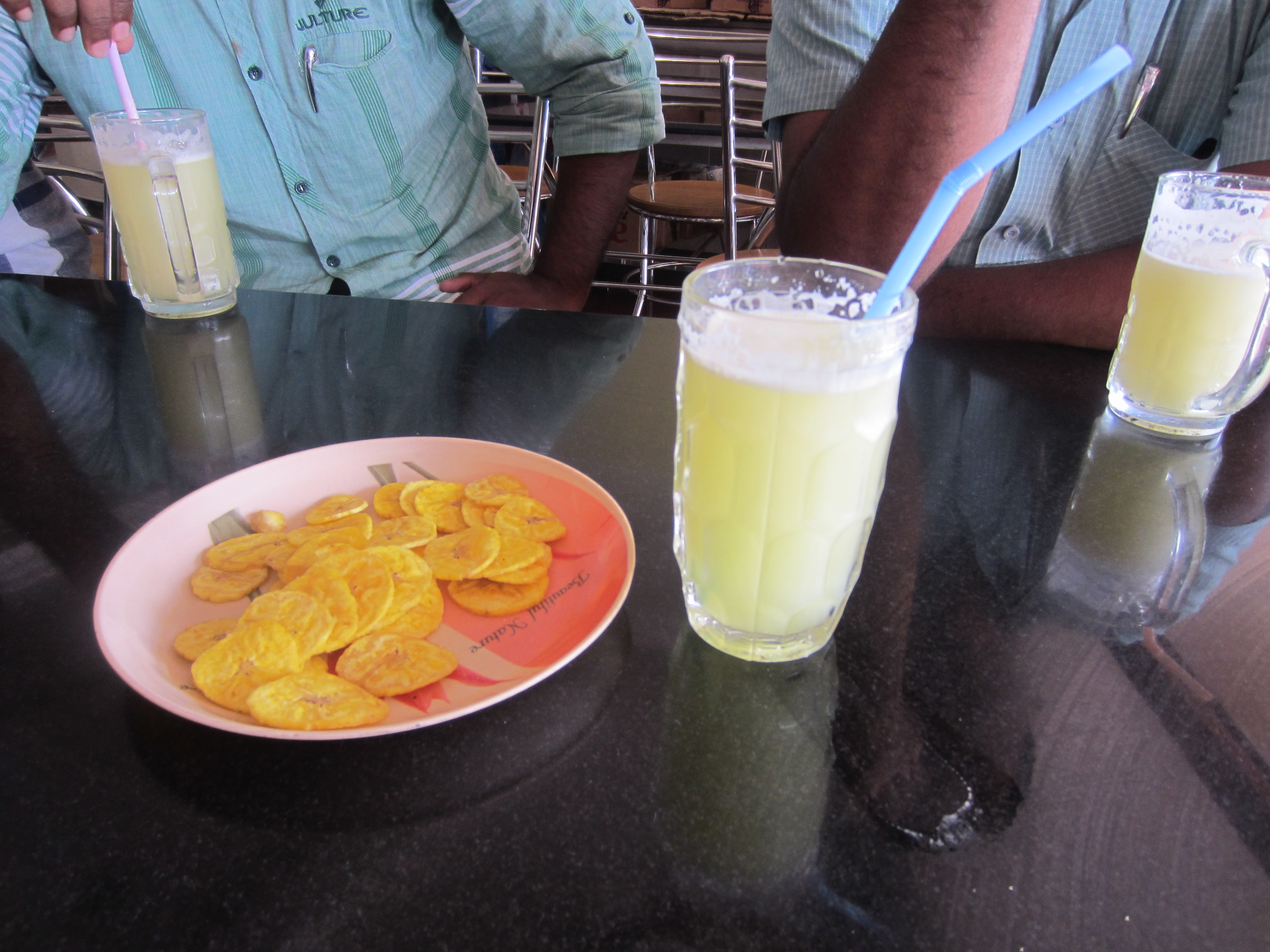
Fresh Lime Juice with Banana Chips @ Break time

In the US, the concept of project management is very common, and thus most construction projects often include a project management company; a mediator that facilitates the communication among the client/owner, architect, interior designer, and the various contractors by managing construction schedules, budget & estimates, and translation of design to actual building structure. However, in India, many construction projects happen without project management, which may cause all kinds of issues. So, when I first heard that RAXA was hiring a project management company, I was thrilled to meet the project managers and what I’d be learning from them.

Continue reading

Socially Mediated Discovery

This Green Lacewing is an entirely new species, discovered in a set of Flickr photos. (Photo: Species ID/Guek)

Click the banner above for a link to a publication we have just come across that looks quite interesting. Click the photo above for the source of the discovery explained in this story (quoted below).  There are still plenty of flora and fauna that have not been identified.  One of the hopes of nature conservation is to get further down the path to identifying and understanding all our co-habitants on this planet. It should come as no surprise that social media and photographers like Hock Ping Guek play a critical role in this race against time:

The lacewing Guek had photographed in May 2011 was quite distinctive. Beneath long antenna sat its bulbous, iridescent eyes in front of a turquoise thorax supported by six translucent legs. Continue reading

Cornell’s New Little Red Bird

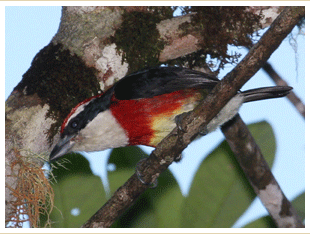
Sira Barbet by Michael G. Harvey

What happens when a group of “newly minted” Cornell ornithologists go on a birding expedition in the high Peruvian Andes and the team discovers a new species of bird?

They name it after the Cornell Lab of Ornithology executive director Dr. John W. Fitzpatrick whose fieldwork in Peru during the 1970s and 1980s led to numerous discoveries of course!

Continue reading

My First Dives in Galápagos (2/2)

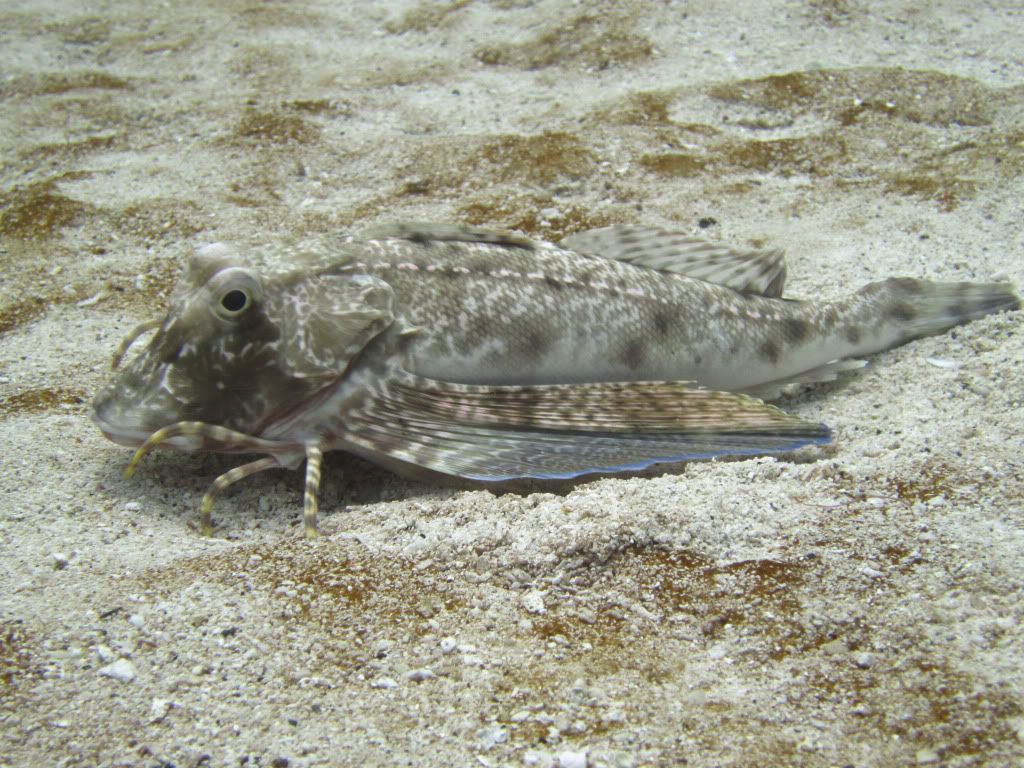
Six legs and two sail-like fins! What?!

My last post shared a video of some of my scuba trips and a few images of two absolutely bizarre ocean species: the Red-lipped Batfish and the Galápagos Searobin. I had no clue that any such creatures existed in nature, or at least not under the light of the sun no more than 15 meters below surface level. Once again, Quike Morán of Scuba Iguana took the pictures and video with a point-and-shoot digital camera in a plastic waterproof case, and the two dives featured here were at Seymour Island and Mosquera Island, north of Santa Cruz.

My First Scuba Dives in Galápagos (1/2)

Last week, I had my first, second, third, and fourth dives since I got my CMAS diving certification in 2007 in Croatia. I saw two of the weirdest organisms I’ve ever encountered in the flesh (to be named in the next post), and was also able to fulfill one of my longtime wishes: to be underwater with any aquatic mammal!

I leave for a camping trip on the island of Isabela today, so for now my two brief and scheduled posts will be limited to a couple photos and the video that will be in each! All images and videos were taken by Quike Morán, my Scuba Iguana guide.

5 Lenses For Every Vacation

Hey guys,

All of us photobugs and travel-junkies have struggled with the age-old question: which lens should I bring on my River Escapes backwaters adventure or my Roman holiday or my trip to the moon?

As a casual photographer, I’m not crazy about specs. I don’t get the numbers and technical terms! JUST TELL IT TO ME STRAIGHT! I know there are people out there who are like me, so Ben, Milo, and I will make it as easy as possible to understand which lens YOU need to bring on your next vacation! We’d also love to know what YOU brought on your last vacation!

See which of description fits you best:

  1. I’m out to shoot wildlife. Tell me what I need to know.
  2. I love architecture and the built world. What should I bring with me?
  3. I’m a tourist who’s going to stick out like a sore thumb, but I really want to capture candid portraits of interesting people– help!
  4. I’m going to a naturey place filled with dust/humidity/dirt/whatever and I don’t want to constantly change my lens. What’s the best daily walk-around lens?
  5. I’m going on a service trip and I’ll be working on a construction site. How do I make it look epic?
Here’s what we’ll be introducing from our private collections today:
  1. Canon EF 70-200mm f/2.8 L IS USM with 2x extender
  2. Canon EF 70-300mm f/4-5.6 IS USM
  3. Canon EF 50mm f/1.8
  4. Canon EF-S 10-22mm f/3.5-4.5 USM
  5. Canon EF-S 18-55mm f/3.5-5.6 IS

ALRIGHT, I’M READY!! NOW SHOW ME THE 5 LENSES I SHOULD BRING ON MY NEXT VACATION!!!

Continue reading

A Jersey Girl’s Introduction to Camping

Guest Author: Siobhan Powers

Photo Courtesy of Milo Inman

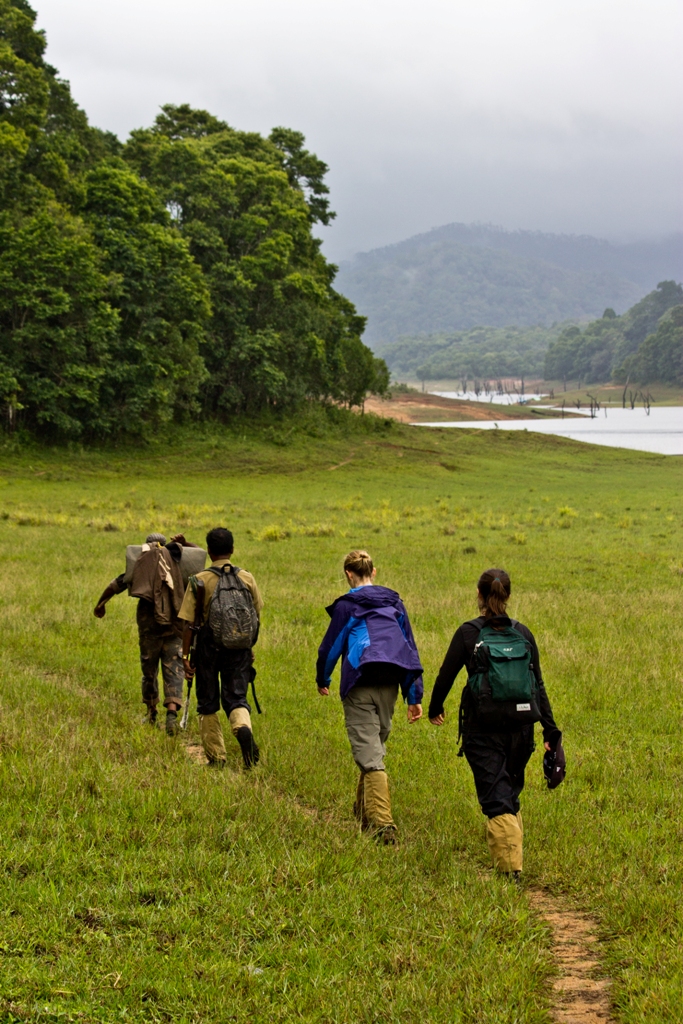
Before my journey to India, I’d never camped. Sure, I had slept in a tent in my friend’s backyard and gone to Girl Scout camp with my Scooby Doo sleeping bag, but I was feet from indoor plumbing and a roof every time. Where’s the fun in that? When I was belatedly asked to join a few interns on the Tiger Trail overnight trip into the Periyar Tiger Reserve, I was skeptical. My summer nights are usually spent running seafood to a hungry customer or chasing a high-maintenance boy across the beaches of the Jersey shore-therefore my presence in the jungles of Asia is quite ectopic, but I am an adventurous person (sometimes to my detriment). I took the opportunity for what it was- a once-in-a-lifetime chance to snuggle up to some tigers. Continue reading

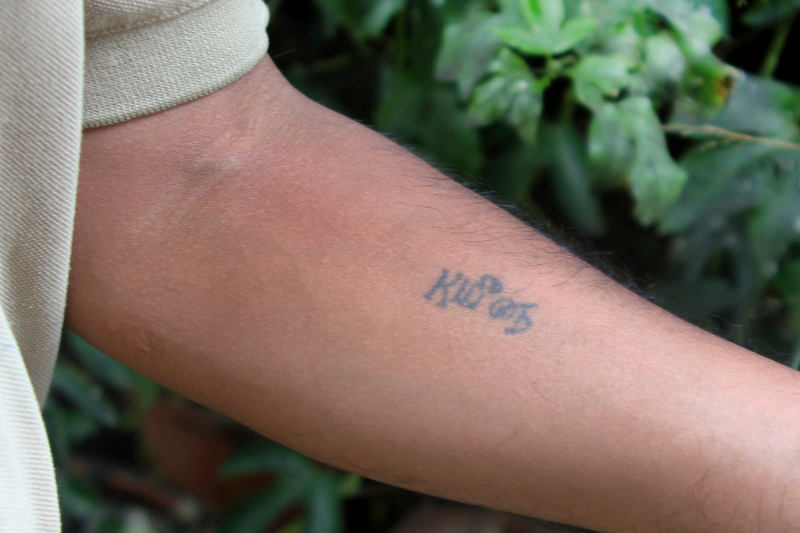
“I found love when I was 6”: A Story of Tattoos and Love

There are many things I could have named this blog post, but I decided it should sound scandalous, it should sound crazy, it should sound epic. I mean, what is more scandalous, more crazy, and more epic than falling in love when you’re is only 6 years old?

Getting a tattoo? No.

Getting a tatttoo at 6? No.

Getting a tattoo of your true love at 6? Now that, my friends, is crazy.

Kamal's Tattoo of his wife's name, Meena

Kamal’s Tattoo of his wife’s name, Meena

Continue reading