Shipworms, Pasts & Futures

merlin_166107183_88f5b417-0852-4d36-a84a-d531e035fd7b-jumbo

Bailey Miller, a postdoctoral researcher at the University of Utah, dived off the Research Vessel E.O. Wilson to explore an ancient underwater cypress forest in the Gulf of Mexico off of Dauphin Island, Ala.

Thanks to JoAnna Klein, who now more than ever is appreciated for the reminder of the wonders of natural history:

A Forest Submerged 60,000 Years Ago Could Save Your Life One Day

Before this underwater forest disappears, scientists recently raced to search for shipworms and other sea life that might conceal medicine of the future.

An ancient log, home to shipworms, which may help researchers discover new medicines.

An ancient log, home to shipworms, which may help researchers discover new medicines.

DAUPHIN ISLAND, Ala. — It was 6 a.m. at the dock on a Tuesday in December, and the weather did not look promising. Fog hovered over the water, and the engine of the Research Vessel E.O. Wilson rumbled.

Our ship disappeared into the mist, and by 7:30 the crew, a team of biologists, chemists and microbiologists, reached its destination. The sun lounged on obsidian water, masking a secret world where land and sea swap places, and past, present and future collide.

This is the underwater forest. Its unusual residents, shipworms and related marine organisms, could serve as incubators of unexpected medicines, churning out new lifesaving formulas and compounds that may not be found anywhere else on the planet. But first the group of scientists had to manage to dive 60 feet beneath the ocean’s surface to recover their unusual subjects, a task made more challenging by three days of uncooperative weather.

Another log recovered from the underwater forest.

Another log recovered from the underwater forest.

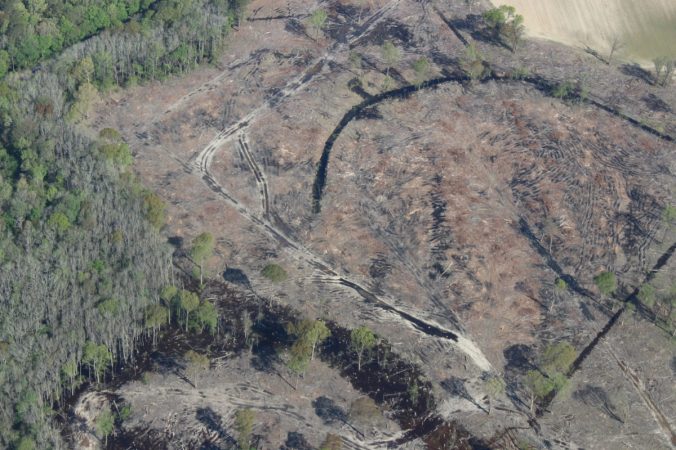
“Underwater forest” is not a metaphor — this is a not a coral reef or a sea grass bed that resembles surface woodlands but bona fide trees with roots and leaves. For thousands of years, this cypress grove — about two football fields long and five feet wide — lay silent, preserved within an oxygen-less tomb of sand and sediment. Then came Ivan.

In 2004, the hurricane, category 5 before making landfall, ripped through the Gulf of Mexico, with winds up to 140 miles per hour kicking up 90-foot waves. The storm scooped up nearly 10 feet of sand from the seabed, awakening the sleeping forest beneath. Continue reading

Bacterium With A Purpose

7360 (3)

The bacterium is the first that is known to attack polyurethane. Photograph: imageBroker/Alamy

Thanks to the scientists who found this bacterium:

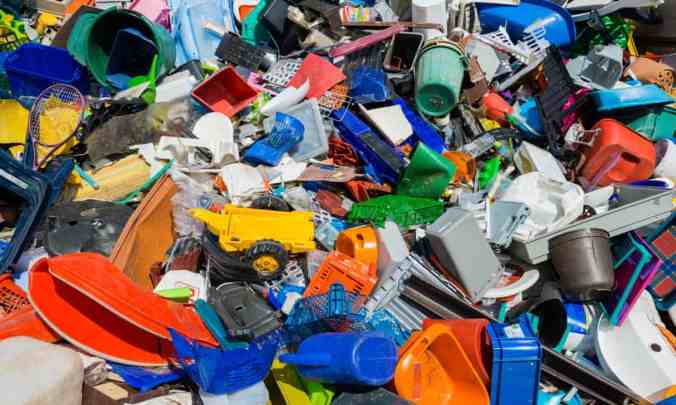
Scientists find bug that feasts on toxic plastic

Bacterium is able to break down polyurethane, which is widely used but rarely recycled

A bacterium that feeds on toxic plastic has been discovered by scientists. The bug not only breaks the plastic down but uses it as food to power the process. Continue reading
Scent & Memory

scentillocrop2

Illustration by James Taylor

Thanks to Colleen Walsh and the Harvard Gazette for this:

What the nose knows

Experts discuss the science of smell and how scent, emotion, and memory are intertwined — and exploited

Bioflourescing Amphibians

merlin_169642665_14a4ae74-6362-4534-a6c7-83d777f2fc19-jumbo

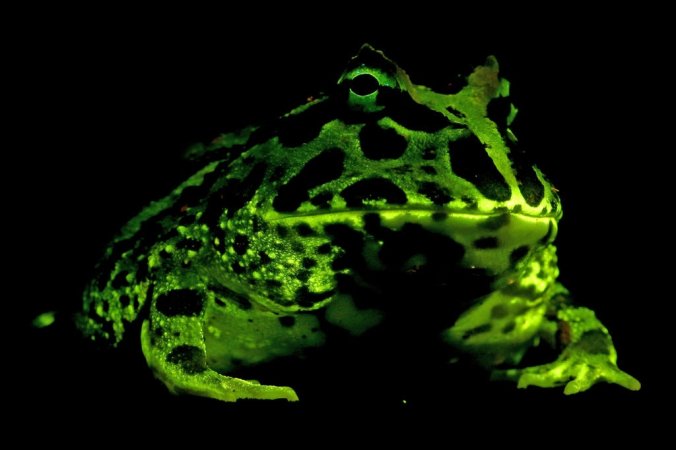
A biofluorescing Cranwell’s horned frog. Jennifer Lamb and Matt Davis

Thanks to Joanna Klein, as always:

Salamanders and Frogs Hide a Glowing Secret

Many amphibians — possibly all of them — are biofluorescent, according to a new survey.

merlin_169642629_a3e022bf-ee8a-498f-a8a3-471f5cb3b125-jumbo

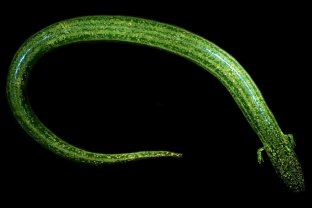
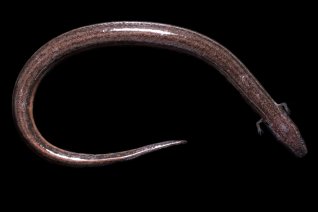
A glowing dwarf siren… Jennifer Lamb and Matt Davis

Amphibians are half-landlubbers, half water-babies. They breathe through skin that is moist, warty, crested and in some cases, poisonous or hallucinogenic. Some wear dull, leaflike-camo patterns. Others sport Guy Fieri flames.

And as cute, gross, pretty, ugly, magical and witchy-named as these slip-sliding creatures may be, they’ve been hiding something in a secret, fluorescent world invisible to humans. Many amphibians, whether salamanders, frogs or their distant cousins — possibly all of them — glow, according to a survey published Thursday in Scientific Reports.

merlin_169642605_292f5de5-d7ba-4b2c-90ff-b7f395a9544a-jumbo

Jennifer Lamb and Matt Davis

“There is still a lot out there that we don’t know,” said Jennifer Lamb, a biologist who conducted the research with Matt Davis, both at St. Cloud State University in Minnesota. “This opens up this whole window into the possibility that organisms that can see fluorescence — their world may look a lot different from ours.”

The study paves the way for new research into how or why amphibians possess this special adaptation, which has potential applications in medical technology and conservation. Continue reading
Add Global Worming To Your List Of Concerns

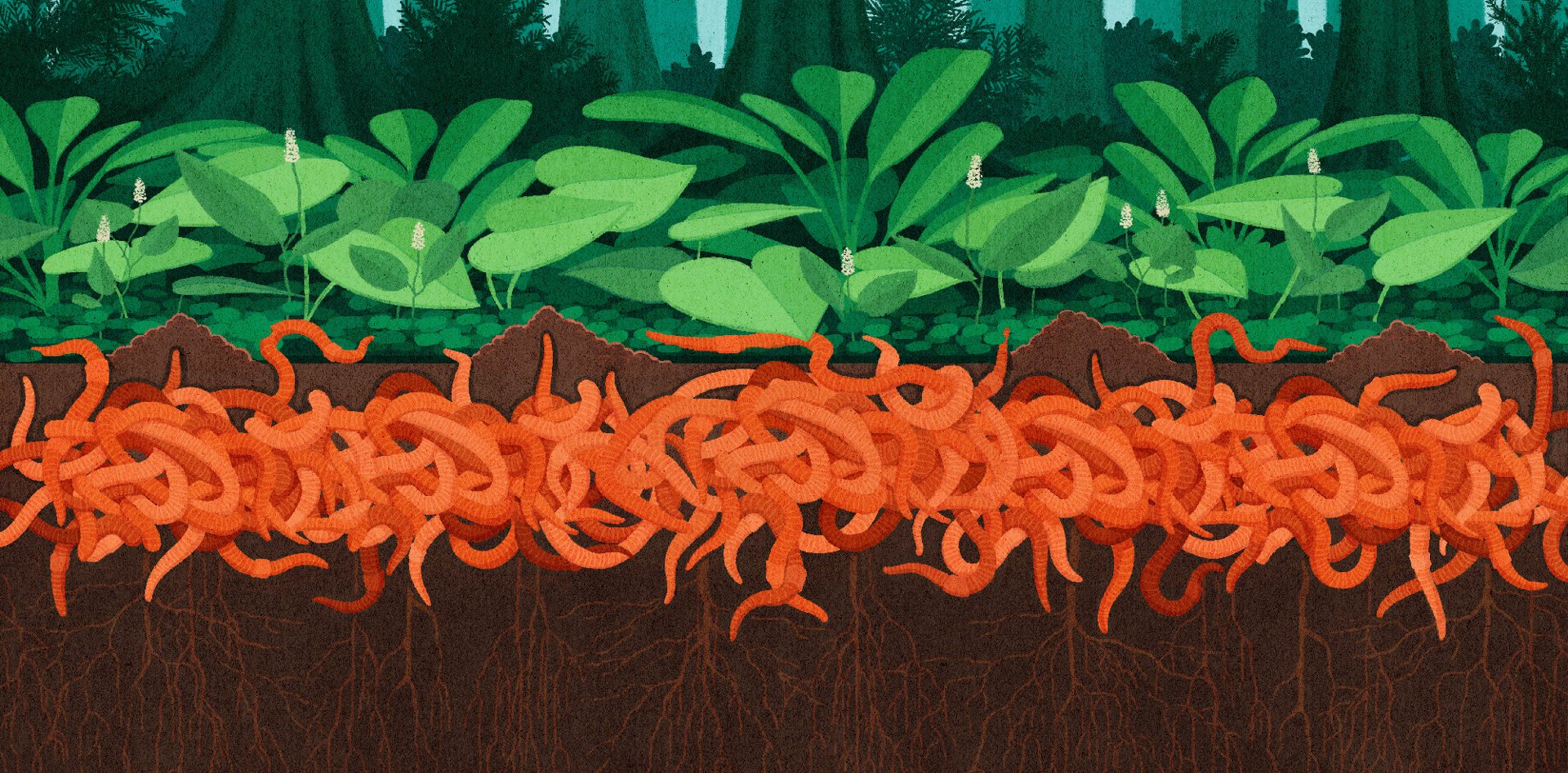
An illustration of a mass of worms beneath a forest.

Myriam Wares

Thanks to Julia Rosen, writing in the Atlantic, I am reading for the second time about worms as a radically different creature than I had assumed for my entire life:

Cancel Earthworms

The “crazy worms” remaking forests aren’t your friendly neighborhood garden worms. Then again, those aren’t so great either.

On a sweltering July day, I follow Annise Dobson down an overgrown path into the heart of Seton Falls Park. It’s a splotch of unruly forest, surrounded by the clamoring streets and cramped rowhouses of the Bronx. Broken glass, food wrappers, and condoms litter the ground. But Dobson, bounding ahead in khaki hiking pants with her blond ponytail swinging, appears unfazed. As I quickly learn, neither trash nor oppressive humidity nor ecological catastrophe can dampen her ample enthusiasm. Continue reading
Ugly, Not Deadly

t8awet

Photo: Vangelis Aragiannis/Alamy

We do not like looking at them. They disrupt many otherwise pristine views of nature, in the most surprising places. And so the thought of them being dangerous to birds would be an easy stretch of the imagination. Thanks to Audubon for the clarification, that their danger to birds is just an act of imagination:

No, 5G Radio Waves Do Not Kill Birds

Here’s the truth behind a Facebook falsehood spreading across the internet.

On the internet, there is often a fine line between a healthy skepticism of new technologies and blatant misinformation. The recent claim that the radio waves from 5G cellular communication towers are causing mass bird die-offs is a perfect example of just how thin that line can be—and how quickly falsehoods can spread across Facebook, Twitter, YouTube, and even in the comments of Audubon magazine’s stories.

The origin of this claim is as head-spinning as it is instructive, so let’s untangle the knot: Does 5G really kill birds, and if not, why are so many people shouting about it online? Continue reading
What’s New In Taliabu?

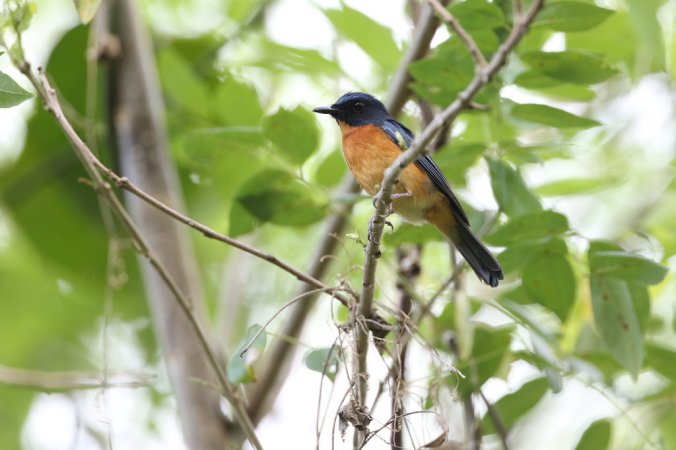
09TB-NEWBIRDS3-jumbo.jpg

James Eaton/Birdtour Asia

Thanks to Karen Weintraub for sharing the rare story that our bird-oriented readers will appreciate as breaking news:

Trove of New Bird Species Found on Remote Indonesian Islands

Researchers found 10 new species and subspecies of songbirds off the coast of Sulawesi, with distinct songs and genetics from known birds.

09TB-NEWBIRDS1-jumbo.jpg

A Togian jungle-flycatcher, one of several new bird species found in the Wallacean islands off Indonesia’s east coast. James Eaton/Birdtour Asia

One day in 2009, Frank Rheindt was wandering up a forested mountainside on an Indonesian island when the skies opened up. He had spent months planning this trip, days finding a charter boat that would carry him to this remote place, and hours plodding uphill, but the local tour guides insisted that the rain would make the search impossible. Continue reading
Acts Of Kindness, Random & Otherwise

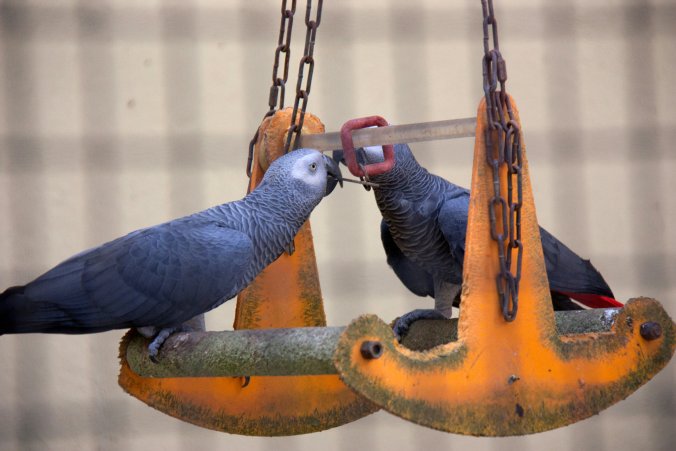
african-greys_custom-406e3bbc76cdd928262d52f3d2b51d18110460c5-s1700-c85

Recent research has explored “helping” behavior in species ranging from nonhuman primates to rats and bats. To see whether intelligent birds might help out a feathered pal, scientists did an experiment using African grey parrots like these. Henry Lok/EyeEm/Getty Images

Thanks to Nell Greenfieldboyce, science correspondent at National Public Radio (USA), for summarizing findings about how some animals help one another. We are on the lookout for more stories of how, why, when acts of kindness happen, and if we need to turn to parrots for inspiration, no problem:

Polly Share A Cracker? Parrots Can Practice Acts Of Kindness, Study Finds

Parrots can perform impressive feats of intelligence, and a new study suggests that some of these “feathered apes” may also practice acts of kindness.

African grey parrots voluntarily helped a partner get a food reward by giving the other bird a valuable metal token that could be exchanged for a walnut, according to a newly published report in the journal Current Biology. Continue reading
Adaptive Re-Use, Puffin Style

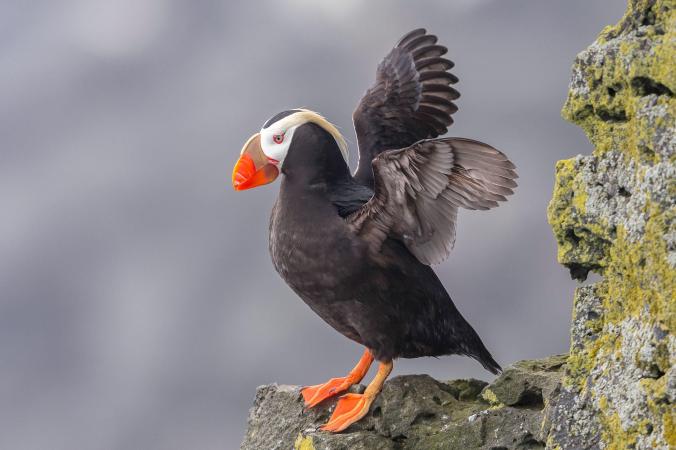
aud_apa-2018_tufted-puffin_a1-5046-15_kk_photo-tom-ingram_0.jpg

Tufted Puffin. Photo: Tom Ingram/Audubon Photography Awards

Thanks to Audubon Magazine we start 2020 with a short story about an adaptation that is not just pretty, but practical in more than one way:

Those Big Orange Bills Also Help Puffins Stay Cool After a Workout

Good for more than just attracting a mate, the clownish feature appears to keep the subpar fliers from overheating.

The puffin’s iconic orange bill might be its most recognizable feature, but it’s also quite functional, serving the charismatic seabird in all avenues of life. The bill’s large volume makes it a hefty food carrier, and its ultraviolet glow amps up puffins’ sex appeal. Now, scientists have identified yet another use of this dramatically curved bill: staying cool. Continue reading
Smart Bees

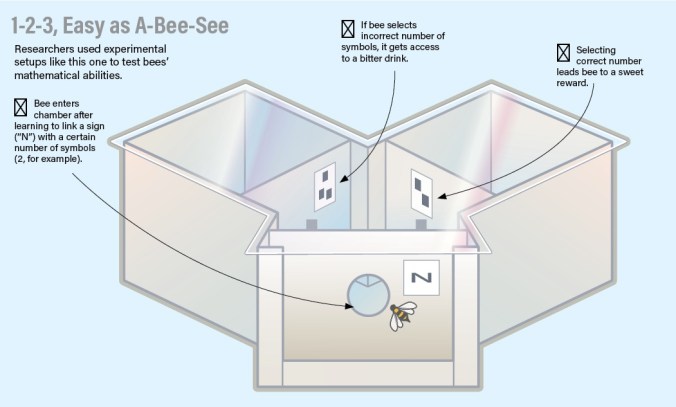
easy_as_a-bee.jpg

Thanks to Discover Magazine’s Sarah White for bringing our attention to Three Studies Are Showing Bees’ Amazing Math Abilities, a story we had missed earlier:

DSC-D0120_03.jpg

(Credit: Gemma Tarlach/DISCOVER)

Honeybees caused quite a buzz this year when three separate studies showed they possess some of the same mathematical abilities as humans, despite much tinier brains.

In February, research in Science Advances indicated honeybees could learn to add and subtract. To teach the bees arithmetic, cognitive scientists set up a Y-shaped box for the bees to fly through. When a bee entered the box at the bottom of the Y, it saw blue or yellow shapes. If the shapes were blue, the bees were trained to fly down an arm of the Y toward a picture with one additional shape to receive a sucrose reward; the other arm had a bitter drink instead. If the shapes were yellow, bees were rewarded for choosing the picture with one fewer shape…

Do Not Underestimate The Value Of Fly Brains

GettyImages-878677396.jpg

Comprised of only around 100,000 neurons, the Drosophila fruit fly brain is capable of highly complex behaviors. Getty Images

This link is in the spirit of appreciating the value of the lowliest members of our day to day encounters with nature, and the role they play in helping scientists better understand phenomena important to humans. Thanks to Kevin Jiang and the Harvard Gazette:

Where we get our sense of direction

Experiments reveal how visual cues reorganize course-sensing neurons in fruit flies

Recipe From Another Time

10-02_cookbooks_kw_custom-7590cdc484b3905fc6f8b4d410b078f30cf1598a-s800-c85.jpg

The Yale Babylonian Collection houses four unique tablets that contain various recipes for stews, soups and pies. Three of these tablets date back to the Old Babylonian period, no later than 1730 B.C. Klaus Wagensonner/Yale Babylonian Collection

A meal from ancient history, decoded, and the scholar who sleuthed the recipe discusses it in a brief interview:

Eat Like The Ancient Babylonians: Researchers Cook Up Nearly 4,000-Year-Old Recipes

What did a meal taste like nearly 4,000 years ago in ancient Babylonia? Pretty good, according to a team of international scholars who have deciphered and are re-creating what are considered to be the world’s oldest-known culinary recipes.

The recipes were inscribed on ancient Babylonian tablets that researchers have known about since early in the 20th century but that were not properly translated until the end of the century.

The tablets are part of the Yale Babylonian Collection at the Yale Peabody Museum. Three of the tablets date back to the Old Babylonian period, no later than 1730 B.C., according to Harvard University Assyriologist and cuneiform scholar Gojko Barjamovic, who put together the interdisciplinary team that is reviving these ancient recipes in the kitchen. A fourth tablet was produced about 1,000 years later. All four tablets are from the Mesopotamian region, in what is today Turkey, Syria, Iran and Iraq. Continue reading

Crowd-Sourced Data from the Deep

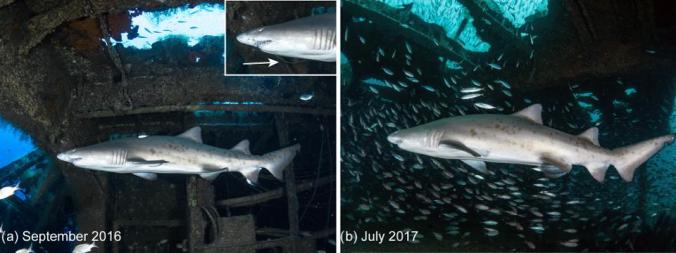
Female sand tiger shark observed on the wreck Aeolus in (a) September 2016 and (b) 10 months later in July 2017. In the older photograph (a), fishing gear is visible in the mouth of the shark (inset). SPOT A SHARK USA BY TANYA HOUPPERMANS.

A great example of how data crowd-sourced from Citizen Scientists is helping to improve understanding of shark populations and behavior.

Female Sand Tiger Sharks Love Shipwrecks… Really.

Site fidelity – the tendency to return to a particular area – isn’t exactly new in a species of shark (e.g. reef sharkslemon sharks, even great white sharks). But that place is usually some sort of habitat… not a over 100-feet (34 meter) deep shipwreck. However, that is exactly the case for female sand tiger sharks (Carcharias taurus) off the coast of North Carolina!

Sand tiger sharks, also known as grey nurse sharks or spotted ragged-tooth sharks, are found globally in subtropical and temperate waters. Despite looking quite scary due to their tooth grins that never quite close, they are a slow-moving shark that are listed as Vulnerable by the International Union for Conservation of Nature (IUCN). A grey colored shark with reddish-brown spots throughout its body, they feast on a variety of animals such as a fish, crustaceans, squid, skates and even other sharks!

In September 2016, a citizen scientist wasn’t surprised to see an individual female sand tiger shark while scuba diving on the Aeolus shipwreck. Continue reading

Putting the Reuse back into Recycle

Thanks once again to YaleEnvironment360 for sharing valuable information.

Scientists Find Way to Fully Recycle Plastics Without Losing Quality

A team of Swedish scientists have found a new way to break down plastic so that it can be recycled into material the same quality as the original — a process they say could help shift the focus of the plastics industry to recycling and drastically reduce the amount of pollution that ends up in the world’s oceans.

The technique involves heating discarded plastic to around 850 degrees Celsius until it turns into a gas mixture. That mixture “can then be recycled at the molecular level to become new plastic material of virgin quality,” Henrik Thunman, an environmental scientist at Chalmers University of Technology who led the new research, said in a statement. “Circular use would help give used plastics a true value, and thus an economic impetus for collecting it anywhere on earth.” Continue reading

Unsubtle Love Song

21tb-loudbird-02-jumbo.jpg

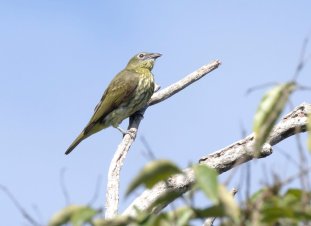
Female bellbirds lack a wattle and sing no songs. Anselmo d’Affonseca

Cara Giaimo provides additional perspective, perhaps the key question in the New York Times coverage of this story, which is about the female in this species, along with a great recording of the male’s call:

…One big mystery remains. The white bellbird sings its pile driver tune when a potential mate is nearby. It starts facing away from her, and then whips around to blast the loudest, record-setting note right into her face. Continue reading

Proforestation & The Value Of Mature Forests

Trees_shutterstock_142702201_web.jpg

Thanks to Yale e360 for this interview that helps us understand the dynamics and differences between mature forests and newly planted forests in terms of carbon sequestration:

Why Keeping Mature Forests Intact Is Key to the Climate Fight

Preserving mature forests can play a vital role in removing CO2 from the atmosphere, says policy scientist William Moomaw. In an e360 interview, he talks about the importance of existing forests and why the push to cut them for fuel to generate electricity is misguided.

Berkshires_forest_web.jpg

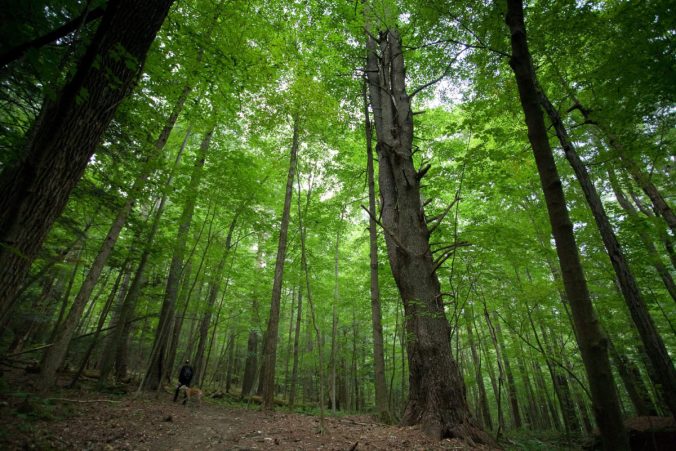
A mature forest in the Berkshire Hills in western Massachusetts. LIZA DALY/FLICKR

William Moomaw has had a distinguished career as a physical chemist and environmental scientist, helping found the Center for International Environment and Resource Policy at Tufts University’s Fletcher School and serving as lead author on five reports of the Intergovernmental Panel on Climate Change (IPCC). In recent years, Moomaw has turned his attention to working on natural solutions to climate change and has become a leading proponent of what he calls “proforestation” — leaving older and middle-aged forests intact because of their superior carbon-sequestration abilities.

While Moomaw lauds intensifying efforts to plant billions of young trees, he says that preserving existing mature forests will have an even more profound effect on slowing global warming in the coming decades, since immature trees sequester far less CO2 than older ones. In an interview with Yale Environment 360, Moomaw explains the benefits of proforestation, discusses the policy changes that would lead to the preservation of existing forests, and sharply criticizes the recent trend of converting forests in the Southeastern U.S. to wood pellets that can be burned to produce electricity in Europe and elsewhere.

2019-overhead_DogwoodAlliance_web

An area of clearcut forest in the Tar-Pamlico River basin in northeastern North Carolina. DOGWOOD ALLIANCE

“The most effective thing that we can do is to allow trees that are already planted, that are already growing, to continue growing to reach their full ecological potential, to store carbon, and develop a forest that has its full complement of environmental services,” said Moomaw. “Cutting trees to burn them is not a way to get there.”

Yale Environment 360: How do you define proforestation?

William Moomaw: So I began looking at some of the data and some of the papers that had come out recently, and I found that if we managed our forests and grasslands in a different way they could be sequestering twice as much carbon dioxide from the atmosphere as they currently do. Continue reading

Drones Sound Like Bees To Wild Animals

Our links to stories in Cool Green Science have been among the most abundant of all our sources. This may be due to the publication’s commitment to finding stories that highlight positive change in our approach to understanding, respecting, protecting the environment. Here is another:

Gustavo Lozada wants to change your mind about using drones around wildlife.

Lozada, technology manager for The Nature Conservancy in Colorado, knows that many people think that increasing drone use will only harass and terrify wild animals. He also knows it doesn’t have to be that way, and that drones can be a really important tool in wildlife research and protection. The videos in this blog, he hopes, will show that drones do not have to disturb the peace.

To be clear, Lozada knows that much drone use is detrimental to wildlife. He points to a recent viral video that showed a small cub trying repeatedly to scale slick, snowy slopes to reach its obviously distressed mother. The video was widely shared as showing the cub’s pluck and determination.

But researchers and animal lovers questioned that narrative, as reported in a National Geographic story titled “Viral bear video shows dark side of filming animals with drones.” The article notes that the whole reason the cub found itself in its predicament was likely because it was terrified of the drone filming it. Continue reading

Barn Owls Throw Shade

merlin_159945324_2f097416-2cc6-4128-9773-b37c448e7324-jumbo.jpg

Arterra/Universal Images Group, via Getty Images

Thank you, as always, Mr. Gorman:

White Barn Owls Thrive When Hunting in Bright Moonlight

Something about the light from a full moon shining on the frightening face of a barn owl makes voles freeze a bit too long.

When the moon hits your eye like a big pizza pie, it may not be amore at all, but a ghostly white barn owl about to kill and eat you.

If you’re a vole, that is.

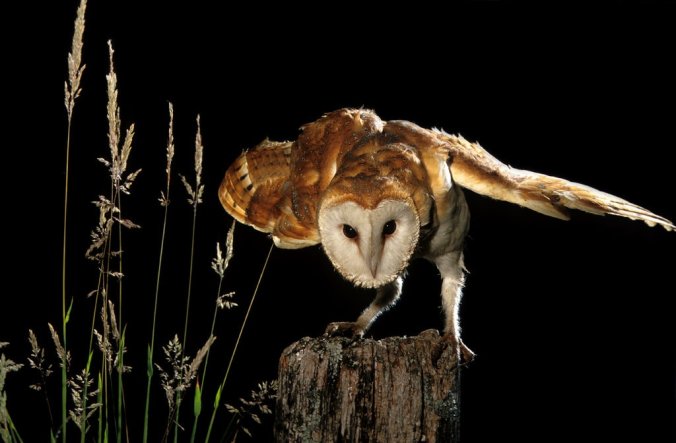
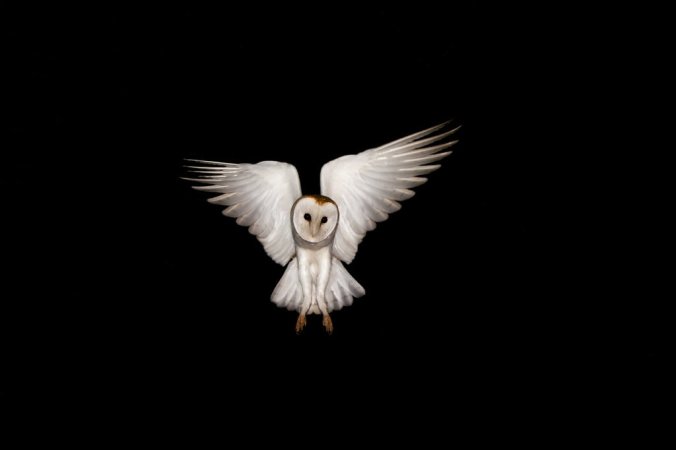
Voles are a favorite meal for barn owls, which come in two shades, reddish brown and white. When the moon is new, both have equal success hunting for their young, snagging about five voles in a night. But when the moon is full and bright, the reddish owls do poorly, dropping to three a night.

02TB-OWLS2-jumbo.jpg

Education Images/Universal Images Group, via Getty Images

Barn owls with white faces and breasts do as well as ever, however, even though they should be more easily spotted than their reddish relatives when the lunar light reflects off their feathers. Continue reading

Trees Breathe in Brooklyn

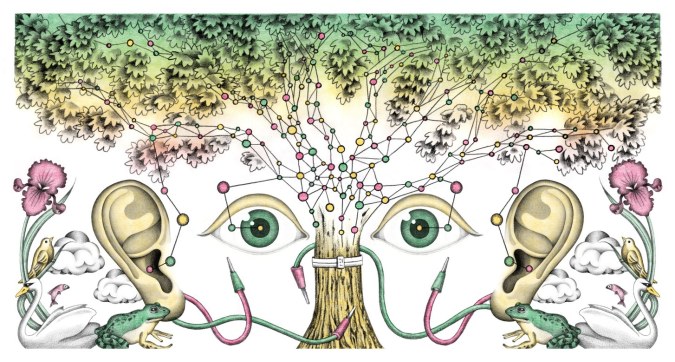
Using new technology, researchers can watch as trees grow, shrink, drink, and breathe. Illustration by Christelle Enault

When we start reading about using transducers to create precision dendrometers to see how a tree grows in Brooklyn, we know we are out of our league. But surprisingly readable, this story tells why it is important to be able to measure tree growth in real time:

A Day in the Life of a Tree

One morning earlier this summer, the sun rose over Brooklyn’s Prospect Park Lake. It was 5:28 a.m., and a black-crowned night heron hunched into its pale-gray wings. Three minutes later, the trunk of a nearby London plane tree expanded, growing in circumference by five-eighths of a millimetre. Not long afterward, a fish splashed in the lake, and the tree shrunk by a quarter of a millimetre. Two bullfrogs erupted in baritone harmony; the tree expanded. The Earth turned imperceptibly, the sky took on a violet hue, and a soft rain fell. Then the rain stopped, and the sun emerged to touch the uppermost canopy of the tree. Its trunk contracted by a millimetre. Then it rested, neither expanding or contracting, content, it seemed, to be an amphitheater for the birds.

“I wonder about the trees,” Robert Frost wrote. Monumental in size, alive but inert, they inhabit a different temporality than ours. Some species’ life spans can be measured in human generations. We wake to find that a tree’s leaves have turned, or register, come spring, its sturdier trunk. But such changes are always perceived after the fact. We’ll never see them unfold, with our own eyes, in human time.

To understand how trees transform, dendrochronologists, researchers who study change in trees, have developed a few techniques. They cut trees down to analyze their rings, which have been created by the seasonal formation of new cells, but this terminal strategy can provide only a static overview of the past. They “core” living trees, using bores to extract trunk tissue; this technique, however, can stress trees and sometimes, though rarely, wound them fatally. They measure tree girth with calipers and tape—a less invasive means of studying growth that is also frustratingly intermittent.

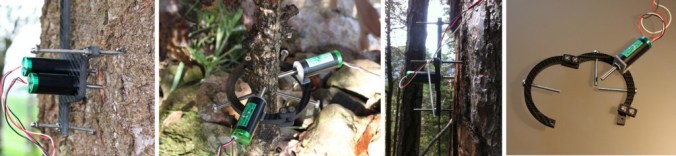
Once we had read to this point the following paragraph led to an image search. What does this thing look like? The story did not show it, only described it, so our image search led here:

DendroCollection_2014-1024x237

Figure M1 Collection of point dendrometers (natkon.ch). The carbon frames are either T-shaped (for large stems) or O-shaped (for small stems or branches) and are anchored in the stem with stainless steel rods. Up to three sensors are attached to the different type of frames in order to measure different expositions at the stem or to measure stem radius fluctuations over bark and on the xylem separately.

And those images helped the following make a bit more sense:

In the early two-thousands, a new technique emerged that changed the field. It relies on low-cost transducers: equipped with a tiny spring, a transducer—which converts, or “transduces,” physical motion into an electrical signal—can rest on the bark of a tree, sensing and logging tiny changes in pressure. Instruments that use this approach, known as precision dendrometers, allow scientists to do something entirely new: watch how trees change and respond to their environments on an instantaneous scale.

This spring, I walked along the eastern edge of Prospect Park Lake with Jeremy Hise, the founder of Hise Scientific Instrumentation, a company that sells affordable precision dendrometers to scientists, students, and members of what Hise called the “D.I.Y. makerspace.” Bearded and affable in jeans and a blue sweatshirt, Hise explained that his dendrometers could now deliver their measurements wirelessly to a cloud-based platform called the EcoSensor Network. Users of the network can monitor a tree’s growth, generate graphs, and correlate them with meteorological data. Together with Kevin Griffin, a professor of earth and environmental sciences at Columbia University, Hise is planning to build the largest network of dendrometers in the world, generating millions of data points each year. “We’re looking to be the Weather Underground of trees,” Hise said.

Continue reading

Perennial Grain’s Future

Field-Work-July-2019-11_web.jpg

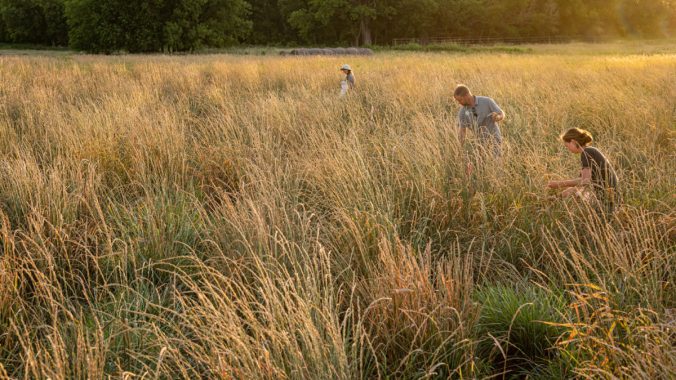
Harvesting heads of Kernza, a newly developed perennial grain, on a research plot in Salina, Kansas. THE LAND INSTITUTE

Thanks to Jim Robbins, as always, and Yale e360 for brightening our day just a bit:

With New Perennial Grain, a Step Forward for Eco-Friendly Agriculture

A cereal and beers are now being made with a new variety of perennial grain known as Kernza. Proponents say this marks a significant advance for a new agriculture that borrows from the wild prairie and could help ensure sustainable food production in a warming world.

Tractor-Tilling_Washington_BF2X7Y_web.jpg

A tractor plows a field of wheat stubble on a traditional farm near Pullman, Washington. RICK DALTON/ALAMY

Some 40 years ago, Wes Jackson, a plant geneticist, founded The Land Institute on the prairie near Salina, Kansas. Concerned that modern agriculture destroyed native grasslands, he asked a question that came to define his life: How can we harness the inherent strengths of the prairie ecosystem — the natural resistance of native plants to insects and weeds, the ability of those plants to grow perennially, and their evolved resistance to cold and drought — and marry those traits to the task of growing domesticated crops for food?

Kernza-Roots-Sept-2017-2_web.jpg

Kernza’s long roots stabilize soil and prevent erosion. THE LAND INSTITUTE

Jackson, the recipient of a 1992 MacArthur “genius grant,” set out to create a new kind of farming he called “natural systems agriculture,” which has the “ecological stability of the prairie and a grain and seed yield comparable to that from annual crops.”

After four decades of breeding and testing, the institute has introduced its first commercial grain, a trademarked variety called Kernza, a domesticated wild grass — intermediate wheatgrass — that has a long, slender head that resembles wheat seeds. Described as sweet and nutty, it is now being made into a cereal called Honey Toasted Kernza by Cascadian Farms, and Patagonia Provisions — an offshoot of the clothing company — has brewed it into beers, including Long Root Pale Ale. Both are being produced now in limited runs.

Kernza-Seeds-and-Milled-Flour-Oct-2017_web.jpg

The perennial grain is currently being used to make small batches of cereal and beer. THE LAND INSTITUTE

The development of Kernza is being held out as a prime example of a new way of doing agriculture that borrows from the perennial nature of the wild prairie. “The goal is to mitigate a lot of the problems inherent in annual grain farming systems,” said Tim Crews, research director at The Land Institute. For example, he noted, “Farmers write off 50 percent of their fertilizer as not being taken up by the crop.” Continue reading