Dismantling Protection, Effectively & Efficiently

Kolbert-earth-day-trump-1200.jpg

How is it that an Administration as disorganized as Donald Trump’s has been so methodical when it comes to attacking the environment? PHOTOGRAPH BY JOE RAEDLE / GETTY

I committed myself to not name the name, because it adds fuel to a flame that is already out of control. But if you have read any of the posts in our model mad series the name is clearly implied.  Plenty of others name so well that it is best just to link their work. One of the best namer of names when it comes to our environment, and failure to protect it, is Elizabeth Kolbert. She occasionally points out that we do not simply fail to protect, but willingly allow the named to dismantle critical protections. We are sadly impressed that Dame Doomsday doesn’t disappoint with her latest contribution:

Next week, millions of Americans will celebrate Earth Day, even though, three months into Donald Trump’s Presidency, there sure isn’t much to celebrate. A White House characterized by flaming incompetence has nevertheless managed to do one thing effectively: it has trashed years’ worth of work to protect the planet. As David Horsey put it recently, in the Los Angeles Times, “Donald Trump’s foreign policy and legislative agenda may be a confused mess,” but “his administration’s attack on the environment is operating with the focus and zeal of the Spanish Inquisition.” Continue reading


Thank You National Public Radio (USA)

gettyimages-461032685-d9e390da618284547ffcceb14e2c93177fe08e0a-s1400-c85.jpg

In this 2014 photo, two Siberian tigers rest beside a gamekeeper’s vehicle at the Harbin Siberian Tiger Park in China’s Heilongjiang province. Goh Chai Hin/AFP/Getty Images

We watched this video, from a link on social media that sometimes offers excellent, informative material related to the animal kingdom, wilderness, and conservation; but this turned our stomach so we are happy that NPR gives it exactly the kind of attention it deserves:

The Problem With That Video Of Tigers Squaring Off With A Drone

By Colin Dwyer

The video of about a dozen hefty Siberian tigers chasing and batting a flying drone from the sky seemed a lighthearted reprieve from the more serious news of the day. But since sharing the footage, we’ve become aware that it may conceal a darker story. Continue reading

Model Mad, McKibben

McKibben-ABadDayfortheEnvironmentwithManyMoretoCome-1456x750-1485299497.jpg

PHOTOGRAPH BY DOUG MILLS / THE NEW YORK TIMES / REDUX

Bill McKibben is the founder of 350.org and we have posted on him so many times in the past for his environmental and other forms of activism we sometimes forget that he also has a day job, as the Schumann Distinguished Scholar in environmental studies at Middlebury College. Today he posted in a manner that captures well what we meant when we used the word mad, and qualified our intent to remain madly determined:

…There’s not the slightest evidence that Americans want laxer environmental laws. A poll released last week showed that nearly two-thirds of Americans would prefer that the E.P.A.’s powers be preserved or strengthened. Solar power, meanwhile, polls somewhere in the neighborhood of ice cream among Democrats, Independents, and Republicans alike. Continue reading

The State Of Great

29brown-hp-master768

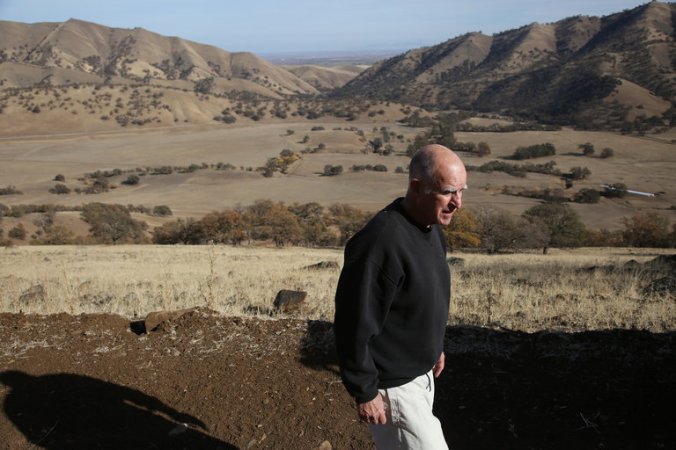
Gov. Jerry Brown at his 2,514-acre family ranch in Colusa County, Calif. “I wouldn’t underestimate California’s resolve if everything moves in this extreme climate denial direction,” he said. “Yes, we will take action.” Credit Jim Wilson/The New York Times

This article, by Adam Nagourney and science writer Henry Fountain, gives climate-concerned citizens everywhere hope that recent tectonic shifts on the political landscape in the USA will not result in complete abandonment of reason within all the states of that union:

LOS ANGELES — Foreign governments concerned about climate change may soon be spending more time dealing with Sacramento than Washington.” Continue reading

Banks, Rainforests, We The People

04DEFORESTATION-superJumbo.jpg

Young orphaned orangutans on a climbing expedition with their keeper at International Animal Rescue’s orangutan school in West Kalimantan, Indonesia. Credit Kemal Jufri for The New York Times

We first started paying close attention to the plight of the ecosystem in the image above when we saw the talk given by Willie Smits, who has taken action, to say the least, in the interest of protecting that rainforest and its inhabitants. It is not because of the orangutans (though see the photo below and try to resist reading on) that we find this article compelling; it is because there is a clear and compelling call to action on holding our institutions accountable:

How Big Banks Are Putting Rain Forests in Peril

By

In early 2015, scientists monitoring satellite images at Global Forest Watch raised the alarm about the destruction of rain forests in Indonesia.

Environmental groups raced to the scene in West Kalimantan province, on the island of Borneo, to find a charred wasteland: smoldering fires, orangutans driven from their nests, and signs of an extensive release of carbon dioxide into the atmosphere. Continue reading

Something’s Wrong With This Picture

3872

Under current legislation, European bioenergy plants do not have to produce evidence that their wood products have been sustainably sourced. Photograph: Wolf Forest Protection Movement

Thanks to the Guardian for this coverage of disturbing news from Europe:

Protected forests in Europe felled to meet EU renewable targets – report

Europe’s bioenergy plants are burning trees felled from protected conservation areas rather than using forest waste, new report shows

Arthur Neslen

Protected forests are being indiscriminately felled across Europe to meet the EU’s renewable energy targets, according to an investigation by the conservation group Birdlife. Continue reading

The Definition Of Rich

22rockefellerjp-master768

David Kaiser, is a fifth-generation Rockefeller and the head of a family fund fighting Exxon Mobil. Credit Sasha Maslov for The New York Times

The saying “that is rich” means, in this case, something more like–Really, Exxon Mobil?

Exxon Mobil Accuses the Rockefellers of a Climate Conspiracy

By

Exxon Mobil, under fire over its past efforts to undercut climate science, is accusing the Rockefeller family of masterminding a conspiracy against it. Yes, that Rockefeller family. Continue reading

Nestle, No Thanks

980x-11

“The issue is the privatization of a critical resource. How much is too much?” said Jeff Ostahowski, vice president of the Michigan Citizens for Water Conservation.Steven Depolo / Flickr

If the company’s history was full of better examples of environmental stewardship and social responsibility, maybe this news would not disturb us so much:

Nestlé Plans Dramatic Expansion of Water Privatization in Michigan, Just 120 Miles From Flint

By Lauren McCauley

The state of Michigan has reportedly issued preliminary approval for bottled water behemoth Nestlé to nearly triple the amount of groundwater it will pump, to be bottled and sold at its Ice Mountain plant, which lies roughly 120 miles northwest of the beleaguered community of Flint.

“Nestlé Waters North America is asking the Michigan Department of Environmental Quality (DEQ) for permission to increase allowed pumping from 150 to 400 gallons-per-minute at one of its production wells north of Evart,” MLive reported on Monday. Continue reading

False Equivalence, Exhibit A?

02dakota1-master675We are concerned about false equivalence journalism, especially on environmental topics, so we have read this story twice before highlighting it. The human interest attraction is meant to be heightened by including the law enforcement perspective.

02dakota2-master675One of the most respected journalists of our time, however, seems to have committed the error right on the heels of an obviously awkward parallel story that serves as a perfect cautionary tale for false equivalence. We still recommend reading it, so you can decide for yourself:
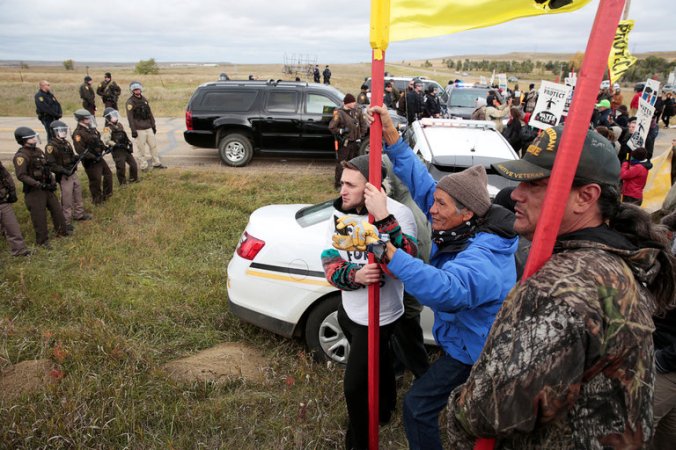
The View From Two Sides of the Standing Rock Front Lines

Dakota, Keystone & Resistance

29mckibbenWeb-master768.jpg

Dakota Access Pipeline protesters facing police officers in North Dakota this month. Credit Terray Sylvester/Reuters

As usual, Mr. McKibben is on the correct side of the debate and urges the rest of us to join that side and resist in solidarity:

Why Dakota Is the New Keystone

By

MIDDLEBURY, Vt. — The Native Americans who have spent the last months in peaceful protest against an oil pipeline along the banks of the Missouri are standing up for tribal rights. They’re also standing up for clean water, environmental justice and a working climate. And it’s time that everyone else joined in.

The shocking images of the National Guard destroying tepees and sweat lodges and arresting elders this week remind us that the battle over the Dakota Access Pipeline is part of the longest-running drama in American history — the United States Army versus Native Americans. In the past, it’s almost always ended horribly, and nothing we can do now will erase a history of massacres, stolen land and broken treaties. But this time, it can end differently. Continue reading

Restorative Justice, Environmental Case Study

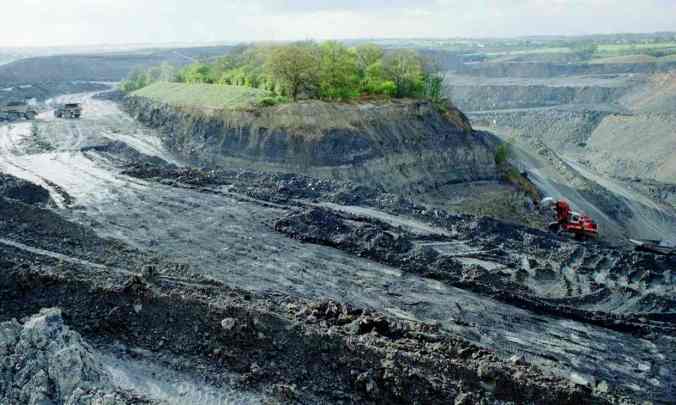
1500.jpg

I am linking to this with a long series of links to rewilding stories in mind. Thanks to the Guardian for occasional environmental rags to riches stories:

How millions of trees brought a broken landscape back to life

After 25 years, the decision to site the National Forest amid derelict coal and quarry workings has borne spectacular fruit

by John Vidal

Twenty-five years ago, the Midlands villages of Moira, Donisthorpe and Overseal overlooked a gruesome landscape. The communities were surrounded by opencast mines, old clay quarries, spoil heaps, derelict coal workings, polluted waterways and all the other ecological wreckage of heavy industry.

The air smelt and tasted unpleasant and the land was poisoned. There were next to no trees, not many jobs and little wildlife. Following the closure of the pits, people were deserting the area for Midlands cities such as Birmingham, Derby and Leicester. The future looked bleak.

Today, a pastoral renaissance is taking place. Around dozens of former mining and industrial communities, in what was the broken heart of the old Midlands coalfield, a vast, splendid forest of native oak, ash and birch trees is emerging, attracting cyclists, walkers, birdwatchers, canoeists, campers and horse-riders.

Continue reading

Bill McKibben Deserves Better

07mckibbenSUB-master768.jpg

We frequently have linked to articles about, and to messages by, this man whenever we see them. It is not surprising to read this, but it is important that we are all aware of this additional price he pays for the actions he takes on behalf of the environment:

MIDDLEBURY, Vt. — THERE are shameful photos of me on the internet.

In one series, my groceries are being packed into plastic bags, as I’d forgotten to bring cloth ones. In other shots, I am getting in and out of … cars. There are video snippets of me giving talks, or standing on the street. Sometimes I see the cameraman, sometimes I don’t. The images are often posted to Twitter, reminders that I’m being watched.

In April, Politico and The Hill reported that America Rising Squared, an arm of the Republican opposition research group America Rising, had decided to go after me and Tom Steyer, another prominent environmentalist, with a campaign on a scale previously reserved for presidential candidates. Using what The Hill called “an unprecedented amount of effort and money,” the group, its executive director said, was seeking to demonstrate our “epic hypocrisy and extreme positions.” Continue reading

Thanks As Usual, Monsanto

img_3117_edited-8ee56f2024cb095b7e2552ed630ec23e085d621b-s1400-c85.jpg

These soybean leaves show evidence of damage from dicamba. It could cut the the harvest by 10 to 30 percent. Courtesy of the University of Arkansas

We live at a time when figuring out how to feed an already-oversized global population (relative to the earth’s natural resources and known agricultural methods) is a monumental task. But Monsanto seems determined to take shortcuts that do as much harm as good. And that is probably putting it too politely, considering the number of times their misdeeds come to our attention (thanks to National Public Radio, USA):

Crime In The Fields: How Monsanto And Scofflaw Farmers Hurt Soybeans In Arkansas

by Dan Charles, August 1, 2016

When agricultural extension agent Tom Barber drives the country roads of eastern Arkansas this summer, his trained eye can spot the damage: soybean leaves contorted into cup-like shapes.

He’s seeing it in field after field. Similar damage is turning up in Tennessee and in the “boot-heel” region of Missouri. Tens of thousands of acres are affected. Continue reading

Cacti in Trouble from Collectors

Mammillaria herrerae. Photo © Jardín Botánico Regional de Cadereyta

While we have amateur ornithologists, herpetologists, mycologists, and entomologists who contribute to this blog, we haven’t had many botanists around, and therefore we learned something new today about cacti: they’re a group of plants that’s only present in the Americas, apart from one species that grows in Madagascar, Sri Lanka, and South Africa. We also read some bad news from a Cool Green Science blog post by Christine Peterson, which is that 31% of cacti species have a threatened status, a terribly high proportion. Peterson writes,

The smugglers carried their tiny prizes tucked away in suitcases of jalapeños and dirty laundry. The spicy fruit was supposed to deflect inspections. Perhaps they thought the dirty laundry would do the same. Another rare item sat nestled in a new box of Uncle Ben’s Rice. Russians had a hard time finding Uncle Ben’s Rice back home, says Nicholas Chavez, Special Agent in charge of the Southwest Region for the U.S. Fish and Wildlife Service.

From the Los Angeles airport, the six Russian men weren’t carrying precious art or poached ivory. They were smuggling cacti stolen from National Parks and Indian Reservations. Some of the cacti they had were labeled appendix two, which means they aren’t currently “threatened with extinction but may become so unless trade is closely controlled,” according to the Convention on International Trade in Endangered Species of Wild Fauna and Flora.

Continue reading

Coffee Capsules Are Terrible For The Environment, Still

17REVALUED1-master675

An engineer measuring a K-Cup prototype at a Keurig Green Mountain lab in Burlington, Mass. Tony Luong for The New York Times

Way back when, early last year, I thought for sure this company was going to respond seriously to the challenge posed by the fun-yet-serious viral campaign highlighting its environmental atrocities. Many people I know and love use these machines or machines like them. These friends are generally serious devotees of the capsule machines due to their convenience.

Every person every time, once they learn about how environmentally irresponsible the capsule machines are (more specifically, the capsules themselves are the problem), seems genuinely horrified (or expresses some emotion akin to the one generated by the viral video). But, how many have given up the K-convenience? Hmmm. The notable quote in the following story implies that because demand for this convenience is growing, there is not much likelihood of abandoning the technology–expect continued tinkering for the time being (sounds like fiddling while Rome burned):

If It Sounds Too Good To Be True…

cadizwater

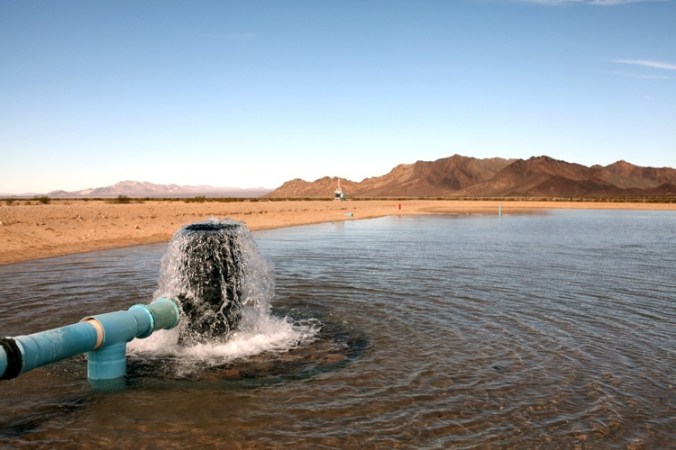
A pilot well on Cadiz Inc. property in the Mojave Desert. Photo credit: Cadiz Inc.

The water shortage in California is complicated, to say the least. So, the solution, if there is one, is bound to be complicated. And expensive. We have no illusion that the cost of change in this case will be high, but this particular $2 billion price tag does not immediately sound like a good idea:

Scott Slater, CEO of Cadiz Inc., has a controversial plan. He wants to pump 814 billion gallons of water from the Mojave Desert to Los Angeles, San Diego and other drought-stricken communities in Southern California—making more than $2 billion in the process. Continue reading

Mining Companies Gonna Mine

MAËLLE DOLIVEUX

MAËLLE DOLIVEUX

We try to stay away from stereotypes, cliche, cute kitten videos and memes. But the editorial below will leave you with heightened awareness of just how low mining companies can go, literally, figuratively and spiritually to get what they want. Rio Tinto is a cliche, a nightmare about killing the earth and any cultural artifacts that get in the way of its profits. Let’s awake from this nightmare. Come on, Arizona, be better than this:

Selling Off Apache Holy Land

Lydia Millet

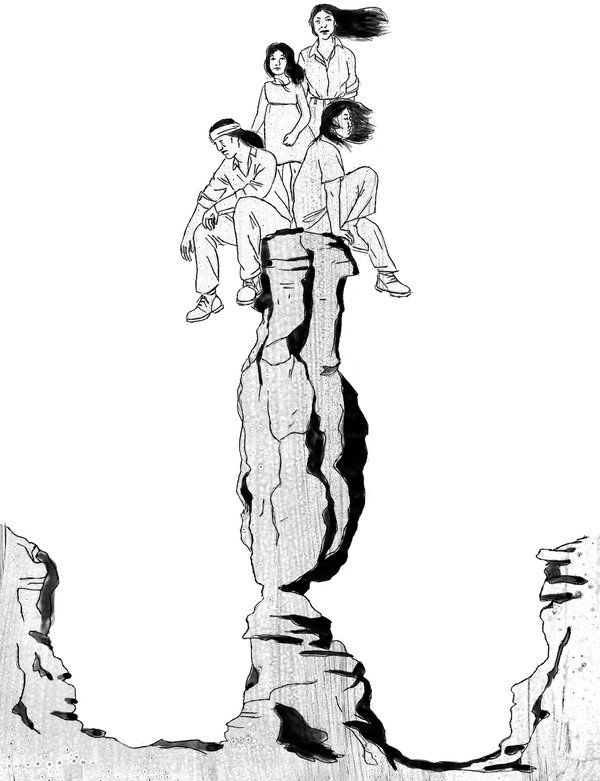
ABOUT an hour east of Phoenix, near a mining town called Superior, men, women and children of the San Carlos Apache tribe have been camped out at a place called Oak Flat for more than three months, protesting the latest assault on their culture. Continue reading

#PeopleVsShell

Photo credits: Greenpeace.org

Environmental Activism has never taken a back seat in Seattle and we continue to root for the individuals, organizations and public officials who are working to draw global attention to a possible environmental disaster. Certainly not the moment to “Keep Calm & Carry On”…

Hundreds of kayakers in Seattle were preparing to go and “shake their paddles” in protest at a newly arrived 400ft long, 355ft tall Royal Dutch Shell oil rig on Saturday, with hundreds – perhaps thousands – more scheduled to attend on dry land.

“We here in Seattle do not want Shell in our port. We want them to get out and change their business before they change our planet and destroy the life of future generations,” said Annette Klapstein, a 62-year-old retired attorney and member of activist group the Raging Grannies.

On Monday, the Obama administration effectively gave Shell the green light to restart its Arctic drilling and exploration operations with an approval issued by the Bureau of Ocean Energy Management, a governmental regulatory agency.

Shell was forced to halt its Arctic exploration in 2012 amid a series of severe security mishaps.

Environmental groups and scientists reacted to Monday’s news badly, warning that letting Shell back into the Arctic for exploration and drilling was very likely to cause an ecological disaster and contribute to climate change. Continue reading

Creative Solutions To Seemingly Impossible Challenges

A protester opposes allowing Royal Dutch Shell drilling rigs to dock in Seattle on their way to Alaska. Credit David Ryder for The New York Times

A protester opposes allowing Royal Dutch Shell drilling rigs to dock in Seattle on their way to Alaska. Credit David Ryder for The New York Times

After a shockingly depressing, disappointing decision by the President of the USA to approve Shell’s drilling plan in the Arctic (this company is clearly not ready for the responsibility–what happened to your better, judicious self, Mr. President?!?), it is heartening to see citizens’ creative counter-tactics (even if this particular David does not beat this particular Goliath, thank you anyway, thinking people of Seattle, for trying):

Continue reading

Where Are The Market Forces When We Need Them?

More than half of the world’s forest loss between 1990 and 2010 took place in Brazil and Indonesia. Photograph: Nacho Doce/Reuters

More than half of the world’s forest loss between 1990 and 2010 took place in Brazil and Indonesia. Photograph: Nacho Doce/Reuters

Thanks to the Guardian‘s environment-focused reporting for this sad evidence on the state of affairs:

Subsidies to industries that cause deforestation worth 100 times more than aid to prevent it

Brazil and Indonesia paid over $40bn in subsidies to industries that drive rainforest destruction between 2009 and 2012 – compared to $346m in conservation aid they received to protect forests, according to new research

Brazil and Indonesia spent over 100 times more in subsidies to industries that cause deforestation than they received in international conservation aid to prevent it, according to a report by the Overseas Development Institute (ODI).

The two countries handed out over $40bn (£27bn) in subsidies to the palm oil, timber, soy, beef and biofuels sectors between 2009 and 2012 – 126 times more than the $346m they received to preserve their rainforests from the United Nations’ (UN) REDD+ scheme, mostly from Norway and Germany.

Continue reading