Cases Illustrating The Value Of Ecosystem Services

This website is on nominally and practically about bird life, but is also more broadly about the health of the planet where birds live.  This is a great resource on how to value the services that ecosystems provide.  Click the banner above to go to the source:

Ecosystem services are the benefits we receive from nature, such as provision of crops or medicinal plants, the control of pests (Birds control insect pests in farmlands and forests), the regulation of climate, the reduction of flood risk (BirdLife Partners are restoring forests that will help buffer communities against climate change), and opportunities for cultural, spiritual and recreational experiences. Continue reading

If You Are Not Sure About The Need For That Meeting In Hyderabad

You must be a subscriber to Science or have access through a library in order to read beyond the Abstract (or you can purchase it here) of what is clearly a good explanation and rationale for the meeting currently under way in Hyderabad:

World governments have committed to halting human-induced extinctions and safeguarding important sites for biodiversity by 2020, but the financial costs of meeting these targets are largely unknown. Continue reading

If You Happen To Be In Hyderabad

Inviting film to the table seems like a powerful, creative idea:

The Ministry of Environment and Forests, Government of India, and the National Biodiversity Authority are hosting an International Biodiversity Film Festival and Forum in Hyderabad as part of COP-11 in association with CMS Environment. Continue reading

What Makes the Baya Weaver’s Nest a Baya Weaver’s Nest?

“Pick a nest.”

It was the first day of my architectural design studio class and we were told to pick a nest, any nest. I knew this was going to be a great semester: the first assignment was seemingly random, kooky, and just a little ‘out there.’ I was excited! As an architecture student, I love when things are approached in such a non-traditional way.

I know what you must be thinking: aren’t architects supposed to be designing buildings for people? Why are you looking at bird nests?!

I, too, was confused, but I didn’t question it because I had a really cool nest in mind. Because I spent the summer in India with bird-lover and birder extraordinaire, Ben Barkley, the Baya Weaver Bird, who builds its iconic hanging nests around the backwaters of Kerala, was an obvious choice.

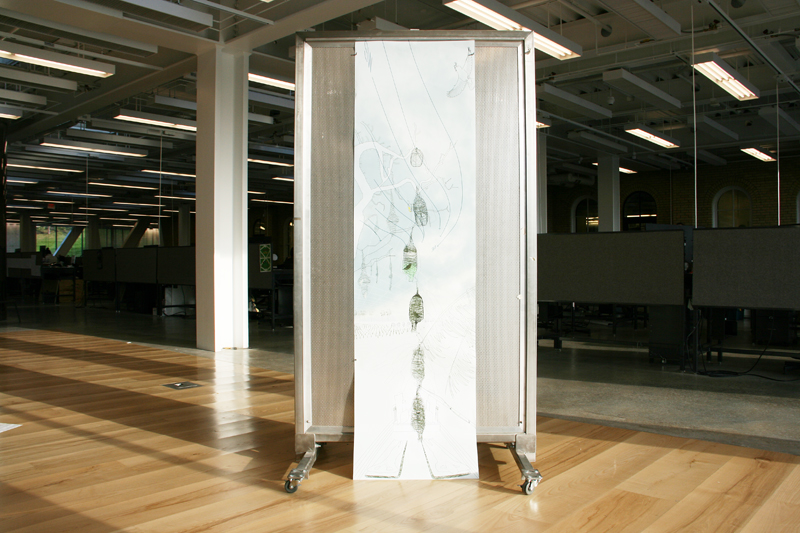
Here are my “comprehensive drawings” of the Baya Weaver Bird that attempt to explain the complex relationships the bird maintains with its surroundings.

2nd Draft of Baya Weaver Nest Comprehensive Drawing (By Karen Chi-Chi Lin)

My 2nd draft of Baya Weaver nest comprehensive drawing (Photograph and drawing by Karen Chi-Chi Lin)

Continue reading

Of Birds and Beans: Part 1 (Birds)

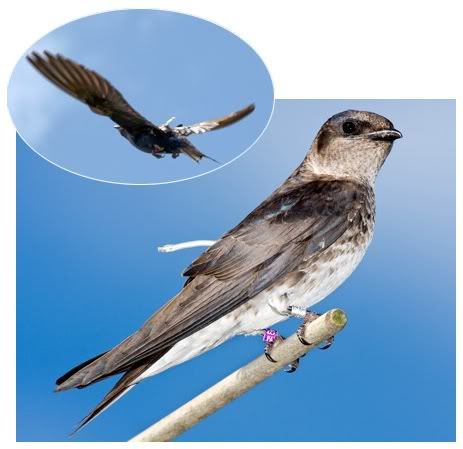
A banded adult purple martin wearing a light logger geolocator. Source: Patrick Kramer and Tim Morton, ScienceMag.

In the time it takes each of us to drink a cup of coffee, acres of tropical forest are cut down. Over the past thirty years, more than half the traditional coffee farms in Latin America have been converted to a newer growing method for higher production. Since the 1960s dozens of migratory bird species from northeastern United States have experienced long-term chronic declines in population size, with few signs of leveling off.

All these events are connected. Deforestation is occurring around the world faster than ever for plenty of reasons, but one of the most widespread and impactful ones is agriculture, and sun coffee (that is, coffee not grown under shade but in huge fields with pesticide, herbicide, and fertilizer assistance) is becoming more common to increase yields in the very same countries where North American migratory birds stay for their winters. But more about sun coffee and its negative ecological impacts later.

Continue reading

Bi-Coloured Frog


Bi-Coloured Frogs are endemic to the Western Ghats, especially in Periyar Tiger Reserve. The tropical climate and abundant rain combine to create rich and varied niches that offer safe haven for these amphibians. The leaf litter–the most nutrient and species rich strata–is a favourite hunting ground for these frogs.

A Man, A Plan, A Grain of Sand

Newspaper editor Brendon Grimshaw bought an “abandoned” Seychelle island in the 1960s and spent the rest of his life lovingly creating the habitat that is now Moyenne Island National Park, part of the Ste. Anne Marine National Park.

Together with a Seychellois named Rene Lafortune Grimshaw transformed the island, planting 16,000 trees by hand, including native hard woods such as mahogany.  The trees attracted birds (some 2,000 make the island their home), and Grimshaw himself reintroduced over 100 giant tortoises, native to the Seychelles but almost hunted to extinction in the early 1900s. The labor of love resulted in Moyenne island now holding more than two thirds of all endemic plants to the Seychelles as well as the Seychelles government standing firm against the multiple advances offering millions of dollars to”develop” the island after Grimshaw’s death. Continue reading

Saying Something Well

Thanks to Alberto Yanosky, leader of Paraguay’s most important conservation organization, for bringing this old clip to our attention.  Fitting tribute to the man in the clip who, according to INTELLIGENT LIFE magazine, September/October 2012 is celebrating an amazing milestone:

When David Attenborough joined the BBC, 60 years ago this September, Britain had only one television channel. Cameras had to be wound up like a clock and could only film live or in 20-second bursts. There was no way to capture sound and vision at the same time, or to broadcast from anywhere but the studio. Attenborough, like most people, did not own a television set; he thinks he had seen only one programme in his life. Continue reading

Story of a Stream (Lakkom)

The Lakkom Stream forms 7300 feet above sea level in the watershed region of the Eravimala Plateau and flows into Eravikulam National Park, the fragile home land of the Nilgiri tahr and the mysterious Neelakkurinji (a flower which blooms once in 12 years). Continue reading

Burmese Python Invasion

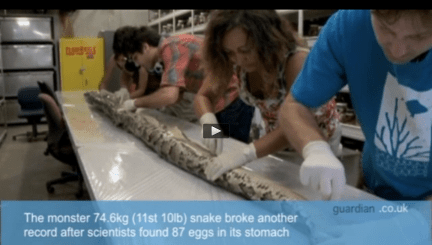
Click to the left to go to the 38 seconds of video on a topic we first posted about here.  It has a bit of ick factor, but the topic is of enormous consequence for the original ecosystems where these wild animals come from, not to mention the innocent creatures they encroach on in their new habitats.

Banyan (Ficus benghalensis)

Banyans are large evergreen trees with aerial roots descending from branches that enter the ground and thicken and become strong enough to support the crown. The Banyan is sacred to the Hindus; they frequently stand guardian near temples and shrines. The figs provide food for variety of animal life and the leaves are fodder for elephants and camels. Banyan is the national tree of India. Continue reading

Blue Mormon Butterfly

Blue Mormon Butterflies are commonly found in and around forest paths, streams, lake sides and forest patches of the Western Ghats. Female butterflies are usually larger. These butterflies are endemic to the Western Ghats and Sri Lanka. They can be found flocking around nectar rich blossoms such as Ixora and pagoda flowers

Continue reading

Chocolate Pansy (Junonia Iphita)

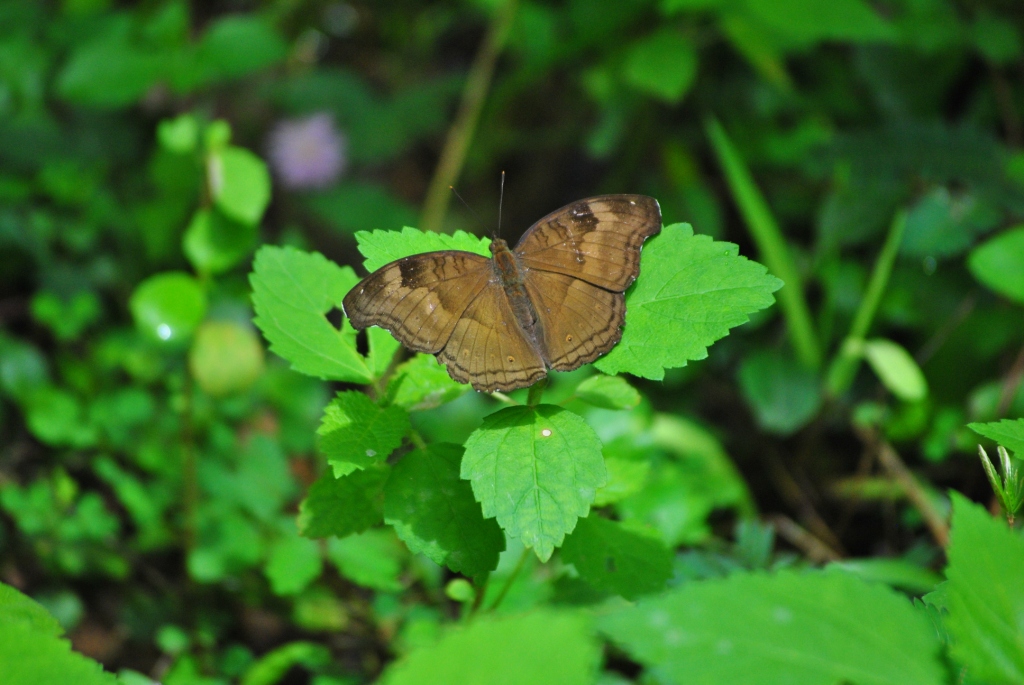
Chocolate Pansy butterflies are common in nature reserves as well as urban areas. These butterflies have the habit of opening their wings wide to sunbathe while resting. The wings of this butterfly are chocolate in colour with small eyes spots on their lower side.

Continue reading

Golf Course Wildlife

From Scotland and South Africa to Scottsdale and South America, certain destinations draw countless visitors whose singular recreational motivation is golf. Few other sports or activities require the amount of terrain that golf does, so its environmental implications go further than most sports. But when considering golf’s land use, it is refreshing to recognize how many courses end up being preservations of rich natural areas and contribute to conservation as places of refuge for wildlife and plant life.

Continue reading

Baby Red-Tailed Hawks Hatching at Cornell University

Today, baby red-tailed hawks hatched out of their eggs. According to my friend who works at the Cornell Lab of Ornithology, the mom hawk “Big Red” was covered in snow and couldn’t move around because she had to protect her baby from the cold weather (it snows in Ithaca in late April).

Image

Here is a link to the Livestream video of the hawk nest. Enjoy!

Forests Need People

The premise underlying entrepreneurial conservation is that there are good economic reasons to preserve natural and cultural heritage.  And when such good reasons present themselves, opportunity dances with need. With natural heritage in particular, in the interest of introducing the dance partners with neither too much fanfare nor scowling, we have taken a light approach to the concept of biophilia, making reference from time to time.

Click the photograph above, by Raul Touzon, to go to National Geographic‘s online coverage of forests under threat, which we link to with entrepreneurial intent.  A bit of fanfare (just look at that creature!) and a hint of scowl are inevitable when you read the sampling in this series: Continue reading

What Ice Reveals

Good news is meant to be shared., and we are excited to share the achievements of another branch of our company: La Paz Group, Heritage Conservation Project – Mammuthus. (Click on the photo to go to the BBC Nature News link.)

A year and half ago we began discussions with Discovery Channel and BBC, and the first step of our four-year media plan for Mammuthus was set in motion with the airing of “Woolly Mammoth: Secrets from the Ice” in the UK this week. Continue reading

Why Is Mimicry Funny?

In Latin it’s called Thaumoctopus mimicus, but I’d call it The Master. It’s Meryl Streep in octopus form. There are ocean animals that can change shape, imitate plants, rocks, flora, and I’ve blogged about some of them. But this octopus is special. It seems to study other creatures and then imitate them, copying their moves and their bodies. It can do sea snakes, lion fish, flatfish, giant crabs, seashells, stingrays, jellyfish and weird beings that have no name, and maybe no earthly existence. Is it imagining? I don’t know, but no scientist has ever seen a shaggy sprinting bipedal crab — until our octopus decided to be one.

Click the banner above to go to the remainder of Robert Krulwich’s blog post on this wonder.  A bit more on the same after the jump (click the image to go to the original)… Continue reading

Enchanting Backwaters – Kuttanad

This slideshow requires JavaScript.

Kerala is a land of extensive networks of rivers, canals, streams and lagoons that form the Enchanting Backwaters which exemplify an amazing relationship between the ingenuity of man and the artistry of Nature. Its crisscrossing canals which were once busy waterways, have evoked comparisons with Venice since travelers began visiting them. The backwater region of Kuttanad is famous for paddy fields, duck farming and fishing. Most of Kuttanad consists of paddy fields that spill out into vast structures inland from the backwaters. With its abuntant paddy Kuttanad has been named the “Rice Bowl of Kerala”.

Continue reading

If You Happen To Be In New York City

In New York, of all places, you can see and learn about one of our favorite phenomena.  If we have not written about it yet, we will post on this topic from the perspective of some of our own contributors who have seen this in southern Chile, and as recently as last summer Seth took photos while at Morgan’s Rock in Nicaragua.  Here is what the New York Times has to say about the exhibition at the Museum of Natural History in New York:

A thoroughly engrossing exhibition at the American Museum of Natural History that opens on Saturday — “Creatures of Light: Nature’s Bioluminescence” — teaches us quite a bit about the phenomenon. Yet it still manages to preserve that otherworldly mystery, even cherishing it — treating it as if it were one of those ecologically vulnerable bioluminescent bays of glowing plankton in the Caribbean by whose shimmer visitors could once read in the middle of the night. Continue reading