Participatory Monitoring Workshop: Part 2/3

My penultimate post covered the participatory monitoring workshop I attended the last week of June. Here I will describe our results in the last two days of the meetings.

When dividing the attendees into different groups with assigned topics of discussion, the workshop organizers assigned me as discussion leader of the Resident (Urban and Rural) group, where six or seven of us talked about varied approaches and types of programs.

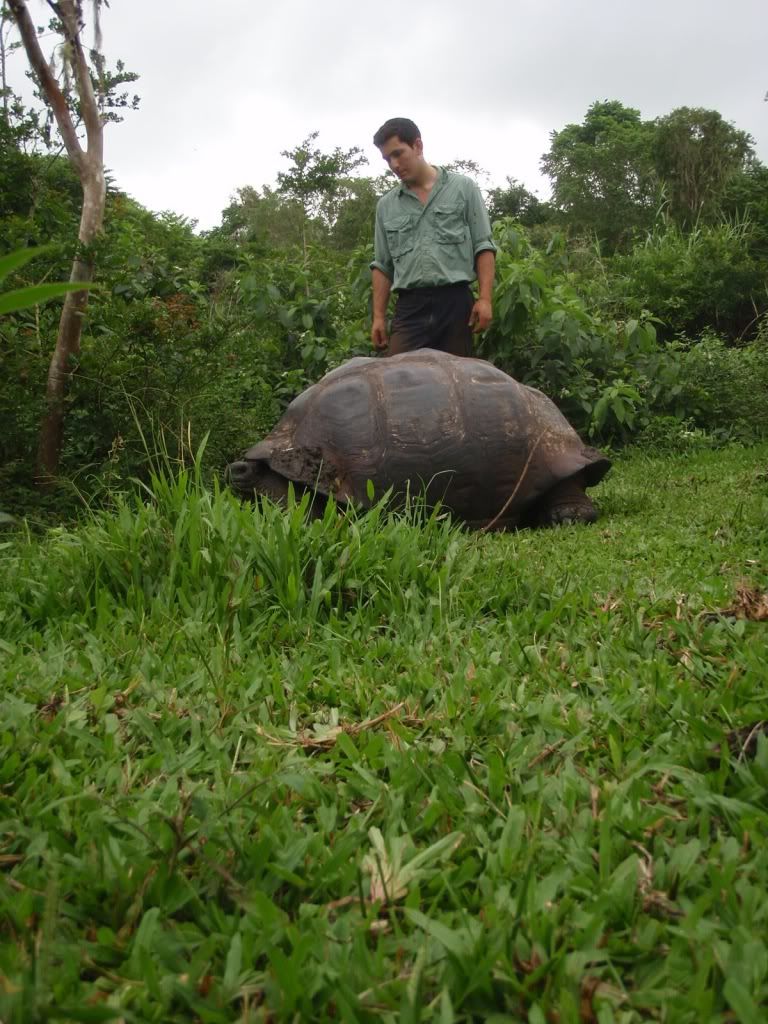
We started with the rural residents, focusing on farmers since the majority of landowners in the agricultural region of Santa Cruz fit that category, either with coffee, sugarcane, cattle, or other crops. There are countless farms in the area, and only about a dozen of them practice any tourism, but we considered this smaller group the perfect audience for a pilot project, since they should be more interested in completing periodic checklists of focal species that serve as tourist attractions. Guides from cruises or local operators often take groups of tourists up into the highlands to see wild giant tortoises and less common landbird species like the Vermilion Flycatcher, and these few farms offer not only passage in their land (as safe havens for the attractive species) but also their coffee or homebrewed sugarcane rum to the tourists. Some properties even have lava tunnels, one of which I’ve been told by a Hawaiian visitor is even more impressive than the famous Thurston lava tunnel on the other well-known volcanic archipelago of the Pacific Ocean.

Continue reading

Participatory Workshop Introduction

Last week, thanks to the effort of very helpful contacts on the islands, I was able to attend a Participatory Monitoring workshop in Puerto Ayora. For those of you unfamiliar with the term in the workshop title, you are not alone. Participatory monitoring, community science, public participation in scientific research, volunteer data collection–these all mean practically the same thing as citizen science, which I have briefly written about before. Here is another good, and possibly the most definitive, source of information on the subject, and although the site is a part of the Cornell Lab of Ornithology, I’ve pointed out (even more briefly) that projects are by no means limited to birds.

The workshop consisted of an impressive list of international expert invitees—representing Cedar Crest College/Earth Watch, SUNY (College of Environmental Science and Forestry and at Stony Brook), Stanford University, Pepperdine University/ Scripps Institution of Oceanography, the Center for Biodiversity and Conservation/American Museum of Natural History, Colorado State University/University of Wisconsin-Madison, the United States National Park Service (Joshua Tree National Park and Acadia National Park), and the Galápagos Conservancy. Additionally, the Galápagos National Park, Charles Darwin Foundation, WWF Galápagos, Conservation International, Universidad Central Sede Galápagos, and Grupo FARO were present. A very skilled interpreter, with portable headsets, helped those who didn’t speak English or Spanish. Being in the minority of non-PhD.-holders, and practically the only person with just an undergraduate education, made walking into the room slightly unnerving, but I knew that since the Cornell Lab of Ornithology didn’t have a representative in attendance there were still constructive inputs that I could contribute, seeing as the workshop was about citizen science. Another comfort was that people commonly mistake me for being older than I am. While a freshman at Cornell two years ago, many of my TAs thought I was a senior or junior for most of the semester, and when traveling, people who I tell I’m studying at Cornell tend to assume I’m in graduate studies until I correct them.

Continue reading

Bird-watching Trips with Tomás de Berlanga Students

Friday morning, at 9:30, my 10th-12th graders and I took two taxis down to Puerto Ayora to look for birds. We started at the intersection between the two main streets of the town: Baltra Rd, which is the same road all the way from the other side of the island at the canal separating Santa Cruz and Baltra, and Charles Darwin Ave, which is the southernmost street in the area and is lined with tourist shops and the ocean.

We walked down Charles Darwin Ave and easily pished some Yellow Warblers from bushes and overhanging trees on the sidewalks. A little space that cut towards the water and was surrounded by artisans’ booths (closed until the afternoon and evening) had a couple cacti with nests in them, and indeed we saw a pair of Cactus Finches fly away as we approached. Looking out over the water, we could see some frigatebirds circling around the Muelle de Pescadores—Fishermen’s Pier—and Brown Pelicans flapping towards it. We returned to the sidewalk and reached a zigzagging plank pathway that wound between red mangroves and led to stairs descending towards small boats moored next to the pier, and from there we could watch the action at the pier and the surrounding water from a good vantage point. Brown Pelicans, both adults in breeding plumage and the greyer juveniles, sat in the water and trees nearby, and waddled among the feet of the fishermen cleaning their fish. A couple of Lava Gulls were also underfoot, as well as a young sea lion!

The same scene awaited us on Monday afternoon, at 12:30PM, when I went back to the Puerto with nineteen 7th-9th graders and a fellow teacher, Andrew. Continue reading

First Few Days at Tomás de Berlanga: Part 2/3

This post continues the description of my first week working at Unidad Educativa Tomás de Berlanga.

On Wednesday, I started playing soccer with the students during recess. School for these grades goes from 7:10AM to 2PM with a 25-minute break at 9:10AM and 12:15PM, and many of the boys play on the cement basketball court, which is fitted with soccer goals as well. There is actually a bigger court just a half-minute away, but it is essentially made of crushed lava-gravel (the red variety) and when I asked why they didn’t play there I was told the surface is too slippery to run on without falling relatively often. The guys normally play with teams of three or four and play to between one and three goals, rotating the losing team until recess is over.

As the youngest of the teachers here (and probably the least concerned about getting back to class all sweaty), I’m the only one to play soccer, and so far I’ve been on teams with mostly my own students. I think this helps them remember that I’m not just someone teaching them about birds in English, asking them to quiet down, or tell me what I just said, but a person they can have fun with both in and out of class.

Continue reading

First Few Days at Tomás de Berlanga: Part 1

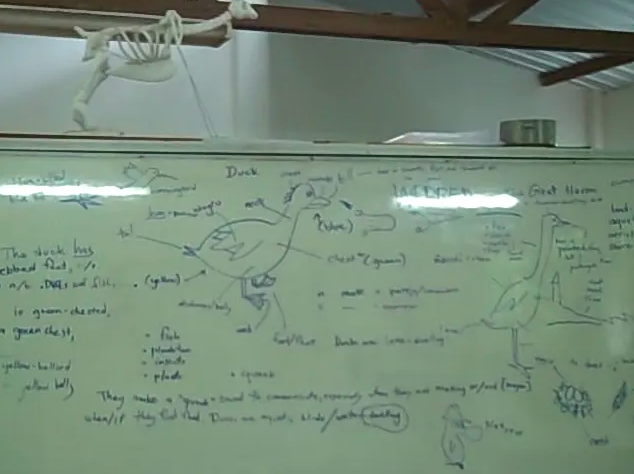
Snapshot of whiteboard on Friday afternoon

Although I have not yet posted as promised about the birds I saw in Mindo, I have to describe my week so far on Santa Cruz before I forget the details and delay the sequence of more current and relevant events too much.

I arrived at school early Monday morning to start working at the Tomás de Berlanga school (named for the man who first discovered the archipelago). I was to temporarily take the place of an English teacher who was still waiting for her visa renewal on the mainland, or “el Continente,” as Galapageños call it, and teach English to two classes.

For the upper levels of the school, classes are on a block schedule of eighty minutes periods, and my two classes were of intermediate English level 7th-9th graders and 10th-12th graders. Each group was of ten to twelve students that had all been born on one of the islands or el Continente, and some of whose parents speak English.

My goal for this first day was to spend the classes gauging the students’ English proficiency, their interest in birds, and especially their knowledge of Santa Cruz’s avifauna. One of the ways I did the former was via an exercise that one of the other English teachers, Eduardo, recommended: put a sentence on a piece of paper and cut it so each word is separated, mix them up, and give them to groups of students to put back together. I thought this was a great idea, so I took some time to think of sentences that might have several ways to be composed (both to ease the process for students but also to see if there were any trends towards certain structures).

Continue reading

Stories In The Service Of Science Education

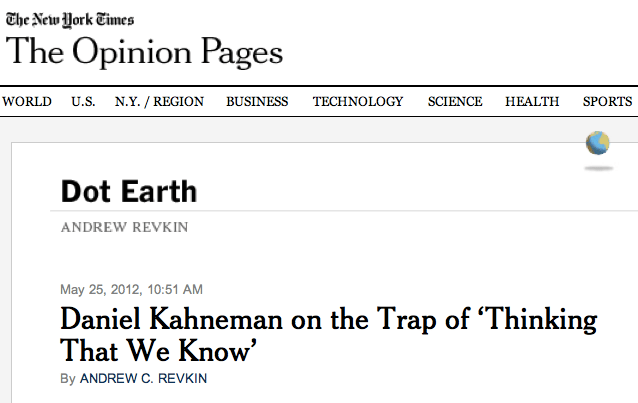
Andrew Revkin’s contributions to the New York Times, via Dot Earth, make a subscription to their website worthwhile; add in video with Daniel Kahneman addressing the National Academy of Sciences, and the value skyrockets.  68 minutes and 51 seconds later, you will know more about what you do not know; and likely appreciate the way that knowledge reached you.

We have pointed to evidence of this scholar’s general awesomeness, also to his 2011 book and to an event quite some time ago all without any video demonstration of his combined intellectual and communication capacities.  Click the image below to go to Revkin’s coverage, which includes the video of a surprisingly accessible lecture.

Creating a Species List for CUBs-Galápagos

Screen Shot 2020-08-14 at 10.57.16 AMI think Puerto Ayora will be a perfect place to celebrate “(sub)urban” birds, as it is the largest urban center in an archipelago that boasts almost thirty endemic bird species—including two flightless ones (the Galápagos Penguin and the Flightless Cormorant, both seen mostly on the island of Isabella). Santa Cruz in particular hosts quite a few of the Galápagos’ fifty eight resident bird species.

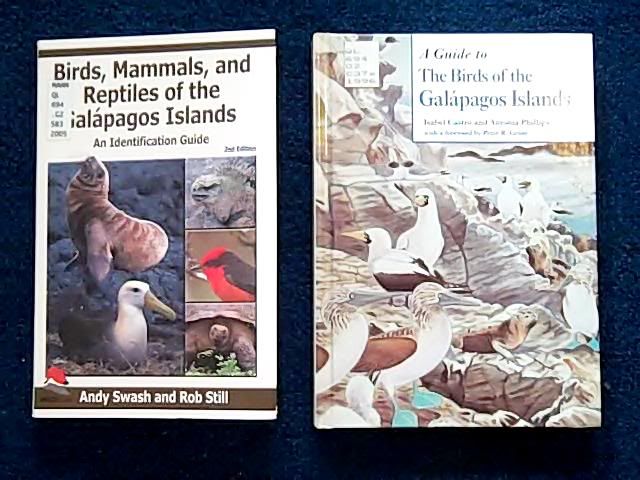
Looking through several bird guidebooks from Cornell University’s Mann Library, I have created my list of around twenty birds that should be seen on Santa Cruz and its shores. The list is biased towards land birds for now, because until I reach the island I won’t be able to determine what shorebirds are common enough migrants at this time of year.

Screen Shot 2020-08-14 at 10.58.43 AM

When creating a finalized list of birds to parallel the North American CUBs list, I’ll be trying to include species that will be frequently feasible for Santa Cruz’s youth to identify. Putting only the most common or most exciting birds in the list might lead to frustration or boredom, depending on how widely distributed certain species and the children that I have contact with are.

Once the list is finalized and I have spent more time in the Galápagos, I will also be able to write about each species in a focused, individual post, sharing where participants and I have seen the birds so far on Santa Cruz, and what unique behavior they may have exhibited around us. Continue reading

Low-Impact Voluntourism

Guest Author: Denzel Johnson

Tourism is a big industry. In some countries it’s their largest.  A fair amount of people who travel come from developed regions and visit less developed countries with the aim to help. No one can fault another person for wanting their travels to have a positive impact, but what happens when voluntourism causes more harm than good?

This question led me to form an opinion about what type of tourism is acceptable. I began with the premise that travel has positive implications on the traveller and used myself as an example. Having graduated from High School last summer, I set off to travel and explore the Americas. In England, that is referred to as a Gap Year, wherein a student takes the year off between High School and College (University) and in this year can travel, work or do nothing. My situation is a little different because I am travelling on a scholarship from the Royal Geographic Society but the benefits are the same. Continue reading

Preparing for CUBs in the Galápagos

Over the summer, I’ll be working with youth in the community of the second largest island of the Galápagos archipelago, Santa Cruz. This central island is the touristic center of the archipelago, and Puerto Ayora, its capital, is the most populated (and thus, urban) area in the islands. In particular, my goal is to engage students of the Unidad Educativa Modelo Tomás de Berlanga, a bilingual non-profit school five minutes from the center of Puerto Ayora, and create a youth-led project that focuses on habitat awareness and improvement, participatory science, and the arts, specifically through birds.

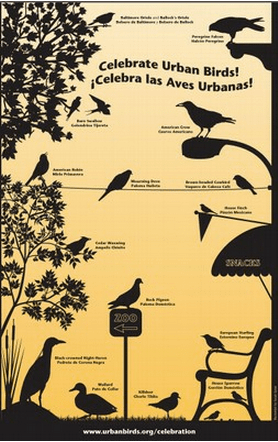
I will try to apply the framework of the Celebrate Urban Birds program to the Galápagos, using a list of around 16-20 focal species to teach those I can reach on Santa Cruz about citizen science as a tool for conservation and research while hopefully deepening an appreciation of their surroundings. I aim Continue reading

A Road Less Traveled

Guest Author: Denzel Johnson

The positive thinker regards life as an adventure where the rewards are in the risks and the pleasure in responding to the challenge.

A card printed with that quote has sat in my wallet since setting off last year for my journey through Latin America. I convinced myself that my philosophy as a traveller should somehow reflect these words and the card was meant to encourage me to step off the beaten track and venture where others wouldn’t consider a destination.

Having recently just spent a good portion of my gap year in solo travel through South America, I not only found myself on my own but always more positively challenged because there was no one else I could rely on. Continue reading

Celebrate Urban Birds

Screen Shot 2012-12-22 at 8.01.16 AMFor the past year, I have been working at the Cornell Lab of Ornithology for the project Celebrate Urban Birds. Distinct from other citizen science projects the Lab of O. is involved with, such as eBird or FeederWatch, Celebrate Urban Birds (CUBs) stays true to its name and hones in on the celebratory aspect of studying birds: artwork, festivals, education, and other activities promoting community. Of course, there is still data involved. Thousands of forms have been filed—both electronically and physically—containing information on sightings of the sixteen focal species within 10-minute observation periods. These observations, along with notes about sighting location, are the source of data for the project. Participants include the address from which they are looking for birds in the ten minutes, describe the general amount of greenery and pavement in the area (as well as the size of the area itself), and list whether they saw, did not see, or were not sure about each of the sixteen species. This information constitutes a checklist that can be compiled into a larger repository of sightings in various types of green spaces around the country; the CUBs website contains species maps according to the number of observations in the last 90 days, marking where, say, a Brown-headed Cowbird has and has not been seen.

Continue reading

나는 한국말을 해요 (I speak Korean)

Ok, maybe that’s a little white lie. I don’t really speak Korean – you can thank good old Google Translate for the post title – but I’m on my way! My interest was piqued back in first year when my phonology lecturer mentioned the language, since it has a unique alphabet in which the shapes of the written letters actually represent the shape your mouth makes when you sound them out! Isn’t that amazing?!

Thanks to wright-house.com for a great article on why Korean looks the way it does.

Well, call me a language freak, but I just had to learn more. It took me a while (read: two years) to take the plunge, but when my friend Kim posted this on my Timeline yesterday (girl, you know me so well…), I decided. I have so much time on my hands and it’s driving me nuts, so today I finally started making use of the university’s language centre: I trammed it in to the centre, grabbed a bagel and a lemonade for good measure, then showed up at the library and got Korein’! Continue reading

If You Happen to Be In Connecticut

Still Life with Peeler II, 2011; Mia Brownell; Akus Gallery

Anyone who has spent time at our site can vouch for our commitment to community and the power of the liberal arts to sustain and develop each of us both individually and collectively.

The Akus Gallery at Eastern Connecticut State University is bound by their own mission statement to provide a fertile environment for interchange among the diverse disciplinary perspectives of the university’s liberal arts community.  Continue reading

Drifters

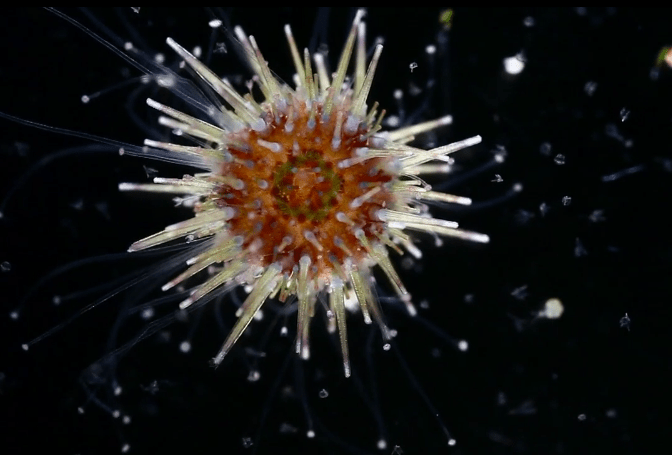
Despite its “Science Fiction Trilogy” sounding name, The Plankton Chronicles is a series of short, compelling educational videos made in conjunction with Tara Oceans Expeditions (a scientific expedition to “sail the seven seas” collecting plankton samples to understand and hopefully mitigate the effects of climate change) and the Observatoire Oceanologique de Villefranche-sur-Mer.

Viewed as a set, they invite the viewer into the kaleidoscopic world that exists in a teaspoon of seawater as well as the open oceans.  Click on the image for a macro lens glimpse. Continue reading

The Upside of Empire

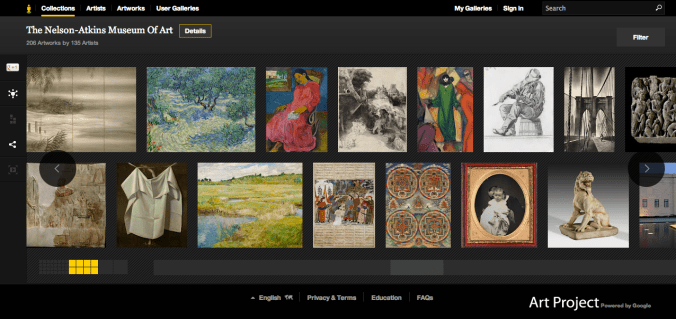
For art lovers nothing quite tops the experience of standing before a favorite painting, sculpture or tapestry, far from the madding crowds, soaking in the aura of history.  But few of us have the luxury of being able to visit the “Hermitage” in the morning and the Musée d’Orsay in the afternoon, not to mention the connections that would enable a personalize tour with the curator.

Over the past year Google has put its technological powerhouse behind a project that brings over 30,000 pieces of art from 151 museums in 40 countries into the home of anyone with a computer and an internet connection. Continue reading

Do You Remember These Dates?

On July 20-22, 2007 all these people attended a workshop of sorts.  On those exact dates I was with my family on a small island in the Adriatic sea, watching off in the distance as fire fighters in airplanes performed their heroics in the forests surrounding Dubrovnik.  Little did I know that Daniel Kahneman was leading a master class for Edge (and those attendees) titled “A SHORT COURSE IN THINKING ABOUT THINKING.” Continue reading

Happy 150th, Oswego

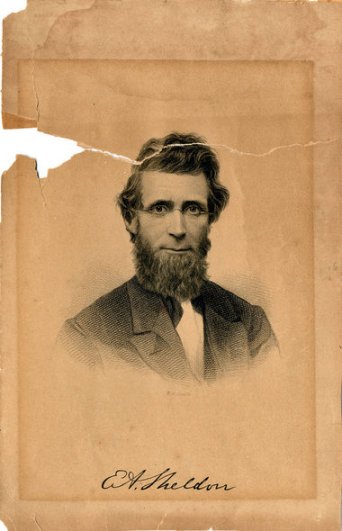
For a school not widely known outside its region and professional focus, it is interesting to note a bit about the man who founded a school in upstate New York in the 19th Century that has recently been quietly celebrated for things that we care deeply about on this site:

The Carnegie Foundation awarded Oswego State a prestigious Community Engagement Classification in January 2011… Then in May 2011, Oswego was named to the U.S. President’s Higher Education Community Service Honor Roll “with Distinction,” an equally distinguished recognition for the college’s commitment to volunteerism, service learning and civic engagement.

Continue reading

“You-er Than You!”

Photo: Library of Congress Prints and Photographs Division

A Dr. Seuss centennial had come upon me a few days ago in an “almost missed it moment”. In many ways the consumate “ad man” who became one of the most beloved children’s book authors never actually changed careers.  Nearly each and every one of his books continues to reach the pinacle of salesmanship, but not for a product. With joy, wit and often irony, they sold the love of reading, imagination and exploration.

Continue reading

Guardians

This slideshow requires JavaScript.

A trusted source of information, ideas, news, and more — the website of The Guardian is always worth a visit.  Today is no exception, but above (click here to go to the original) is an exceptional example of its visual contribution to our sense of wonder about India’s diverse communities and how they worship.

Continue reading

Connecting The Madeleines

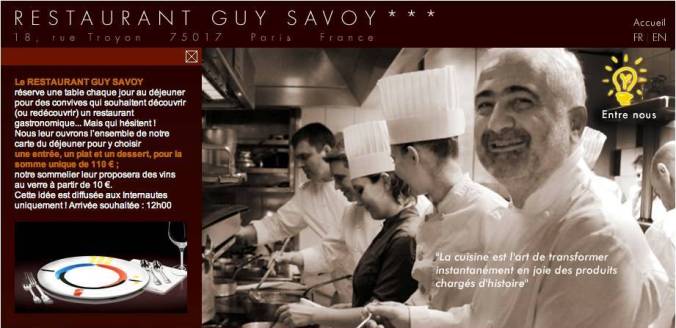
The young man working his way through the kitchen brought to mind a young man of about the same age, three decades earlier. I had the good fortune, in my early adulthood, to work in a restaurant owned and operated by a man who is one of the great chefs of his generation.  I did not work in the kitchen, but in the dining room, from 1983-1985. It provided the most important education of my life, which is saying a lot because I eventually earned a Ph.D. and even that did not top the learning earned in Guy Savoy’s restaurant.

Continue reading