Concrete Jungles, Habitat For Humanity, Parrots

BilgerPets

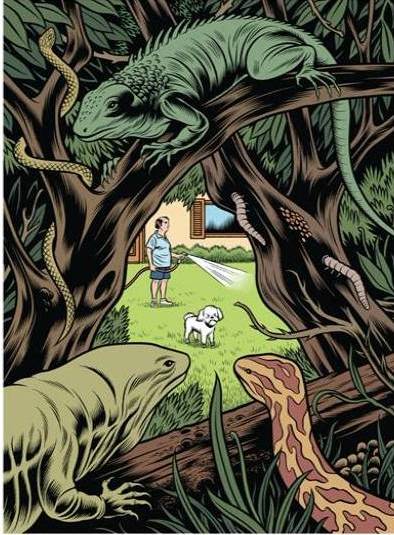
The state’s ecology is a kind of urban legend come true—the old alligator-flushed-down-the-toilet story, with a thousand species. Illustration by Charles Burns

When I first read this article about the downstream problems of the pet trade, I was living in India and learning about efforts to reduce the poaching crisis of wild animals being transported eastward as well as westward. Florida seemed a long way away and the problem Bilger described was a crisis, for sure, but it bordered on sounding, for lack of a better term, exotic. And maybe worthy of closer observation?

The Atlantic’s Emily Buder offers this post that includes an 8-minute video by Neil Losin. It immediately takes me back to the big picture:

The Legal ‘Pet-Poaching’ Problem

It’s easy to spot a wild parrot in Miami, as in San Francisco, San Diego, and several other metropolitan areas in the U.S. But in Florida, “technically, it’s not illegal to take wild parrots, according to Florida Fish & Wildlife,” says Daria Feinstein, a parrot conservationist, in Neil Losin’s short documentary, Parrots in Peril. The film examines the threat that poaching poses to Miami’s wild macaws. Continue reading

Invasive Species, Eradication Efforts, Success Story

sght-monitoring-credit--oli-prince-230-2859dbe05902ffba6a40bf580c0c137db5803219-s1400-c85

Jane Tansell, one of the two handlers responsible for the rodent detection dogs, looks on from the background as a seal stares down the camera on South Georgia Island earlier this year.
Oliver Prince/Courtesy of South Georgia Heritage Trust

These three pairs of words in the post title, placed together in this order in a search engine, produce some interesting results from around the world. And today we find one more to add to the database. Thanks to National Public Radio (USA)’s Colin Dwyer for sharing this story:

south-georgia-pipit_credit-ingo-arndt_custom-2b8f235f1d7d80e43a778471718118bae53dd8d4-s1400-c85.jpg

The South Georgia pipit, seen posing for a glamour shot earlier this year, had been among the species hardest hit by the island’s invasive rodents.
Ingo Arndt/Courtesy of South Georgia Heritage Trust

There are no other birds quite like them in the world. The South Georgia pipit and pintail are so distinctive in the grand pantheon of ornithology, in fact, they draw their names from the one place they’ve made their home: South Georgia Island, sitting lonely in the forbidding South Atlantic not far from Antarctica.

Yet even in such a remote location, surrounded by penguins, fur seals and seemingly endless ocean, the birds have long been besieged by tiny alien invaders: rodents. Since the first European ships arrived in the late 18th century bearing rodents as stowaways, the voracious predators have devastated the South Georgia birds — which, with no trees to nest in, must make their vulnerable homes on the ground or in burrows.

Now, after more than two centuries, those invaders have been rebuffed. Continue reading

Humpback Comeback, Brink To Boom

merlin_137560146_04720b59-267d-4943-82e7-2da5e9f11e4d-master768

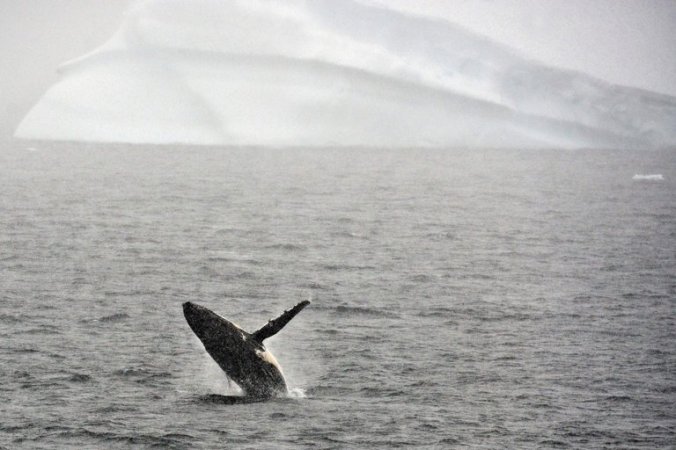
Humpback whales in the southern oceans around Antarctica appear to be breeding successfully, recovering their population. Credit Eitan Abramovich/Agence France-Presse — Getty Images

Ford does what it thinks to be in the best interest of its shareholders, and other companies follow suit as they sense the opportunity to do so, reducing their environmental responsibilities. Meanwhile and nonetheless, thanks to the work of organizations like WWF and Greenpeace, we have the opportunity to witness, if from afar, the rebirth of a population that signals some intact corners of the earth’s environment:

Humpback Whale Baby Boom Near Antarctica

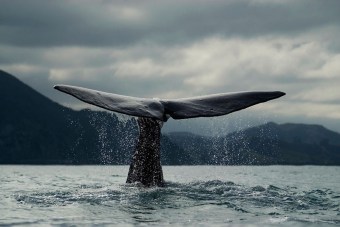
Blue whale, New Zealand

© naturepl.com/Mark Brownlow/WWF

In a rare piece of good news for whales, humpbacks who live and breed in the southern oceans near Antarctica appear to be making a comeback, with females in recent years having a high pregnancy rate and giving birth to more calves.

Humpback whales were nearly hunted out of existence in the late 19th and most of the 20th centuries until treaties were signed to stop killing them and protections were put in place for the world’s coldest, least accessible continent.

Humpback Whales in the Southern OceanThe end of hunting has fostered the recovery of the school-bus-sized animals whose life spans are roughly comparable to ours, according to Ari Friedlaender, an associate researcher at the University of California Santa Cruz, who led the new study.

The population was believed to have been reduced to less than 10 percent of it pre-whaling levels. Continue reading
Mary River Turtle, Hang On!


Thanks to the Guardian for bringing this to our attention:

Green-haired turtle that breathes through its genitals added to endangered list

With its punky green mohican the striking Mary river turtle joins a new ZSL list of the world’s most vulnerable reptiles

3500 (3)

The Mary River turtle, found in Queensland, Australia, features on a new list of the most vulnerable reptile species on the planet. Photograph: Chris Van Wyk/ZSL/PA

It sports a green mohican, fleshy finger-like growths under its chin and can breathe through its genitals.

The Mary river turtle is one of the most striking creatures on the planet, and it is also one of the most endangered.

The 40cm long turtle, which is only found on the Mary river in Queensland, features in a new list of the most vulnerable reptile species compiled by the Zoological Society of London (ZSL). Continue reading
From Re-Wilding To Un-Wilding

03SNAKE-GIF-superJumbo

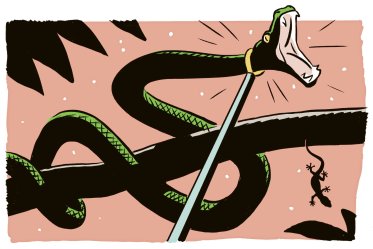
Illustrations by R. Kikuo Johnson

Yesterday our attention was riveted by heroic efforts in the Highlands to re-wild, and today it is back to the sadder topic of un-wilding. Thanks to Rachel Nuwer for this article on a topic long of interest in these pages:

That Python in the Pet Store? It May Have Been Snatched From the Wild

03SNAKE3-superJumbo.jpg

R. Kikuo Johnson

JAKARTA — In the market for a new pet? Maybe something a bit exotic? For many consumers, reptiles and amphibians are just the thing: geckos, monitors, pythons, tree frogs, boas, turtles and many more species are available in seemingly endless varieties, many brilliantly colored, some exceedingly rare.

Exotic reptiles and amphibians began surging in popularity in the early 1990s, not only in the United States but also in Europe and Japan. From 2004 to 2014, the European Union imported nearly 21 million of these animals; an estimated 4.7 million households in the United States owned at least one reptile in 2016.

But popularity has spawned an enormous illegal trade, conservationists say. Many reptiles sold as pets are said to have been bred in captivity, and sales of those animals are legal. In fact, many — perhaps most, depending on the species — were illegally captured in the wild. Continue reading

Thermal Imaging For Species-Level Learning

merlin_136343916_184e67ea-b2c7-4c2d-8cf5-2dbc257b126a-superJumbo.jpg

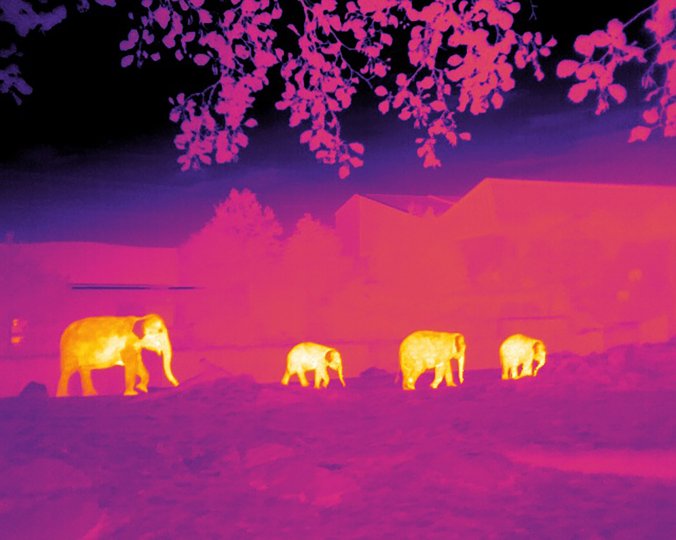
A thermal image of elephants, part of an effort to apply tools from astronomy to help conservationists and fight poaching. Credit Endangered Wildlife Trust/LJMU

We have noted this technology more than once in recent years, and who can resist the images? But Joanna Klein’s story here is a bit different from our earlier notes:

How Do You Count Endangered Species? Look to the Stars

06TB-INFRARED2-superJumbo.jpg

The research team has been working with a local safari park and zoo to film and photograph animals, like these chimpanzees, to build up a reference library of different animals. Credit Endangered Wildlife Trust/LJMU

The conversation started over a fence dividing two backyards. On one side, an ecologist remarked that surveying animals is a pain. His neighbor, an astronomer, said he could see objects in space billions of light years away.

And so began an unusual partnership to adapt tools originally developed to detect stars in the sky to monitor animals on the ground. Continue reading

Respecting Our Oceans, And Our Fellow Beings

Holloway-Whales

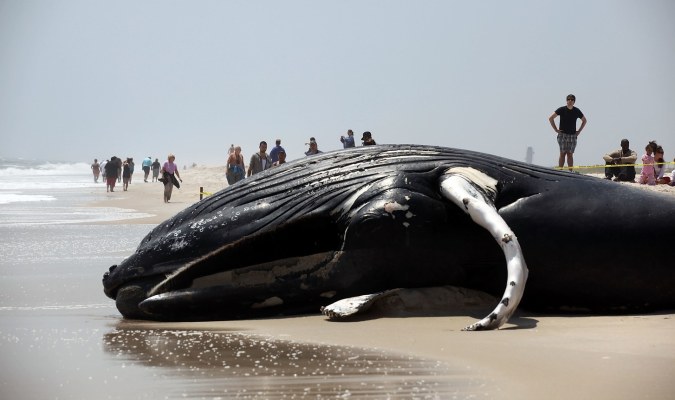
A humpback whale calf that washed ashore in Wantagh, New York. A series of “unusual mortality events” among whales has scientists worried that the ocean is more dangerous than ever. Photograph by Mario Tama / Getty

Thanks to Marguerite Holloway, who we have appreciated a couple times earlier, for this:

One foggy morning last April, a dead humpback whale washed up on New York’s Rockaway Beach. It was a young male, thirty-one feet long, and had extensive bruising—the result of contact with “something very large,” according to Kimberly Durham, of the Atlantic Marine Conservation Society, who performed the necropsy. The Rockaway whale was one of sixty-eight humpbacks that have died between North Carolina and Maine since 2016, casualties in what the National Oceanic and Atmospheric Administration is calling an “unusual mortality event.” And humpbacks, it turns out, are not the only species suffering. Continue reading
Salmon, Shrinkage & Man

large-chinook-salmon_wide-e91ab4e6c6999d8d452ab3824075c74f0f7bbf3f-s1600-c85

A photo taken in Astoria, Ore., circa 1910. It was stated that the chinook on the left weighed 116 pounds and the one on the right weighed 121 pounds. WikiMedia Commons

John Ryan, filed this story through Northwest Public Radio, KUOW and EarthFix, an environmental journalism collaboration led by Oregon Public Broadcasting in partnership with five other public media stations in Oregon, Washington and Idaho. Another of the many reasons we appreciate National Public Radio (USA) and its various associates:

This Is Why You Don’t See People-Size Salmon Anymore

While the orcas of Puget Sound are sliding toward extinction, orcas farther north have been expanding their numbers. Their burgeoning hunger for big fish may be causing the killer whales’ main prey, chinook salmon, to shrink up and down the West Coast.

Chinook salmon are also known as kings: the biggest of all salmon. They used to grow so enormous that it’s hard now to believe the old photos in which fishermen stand next to chinooks almost as tall as they are, sometimes weighing 100 pounds or more.

“This has been a season of unusually large fish, and many weighing from 60 to 70 pounds have been taken,” The Oregonian reported in 1895. Continue reading
The Wisdom Of Wolves

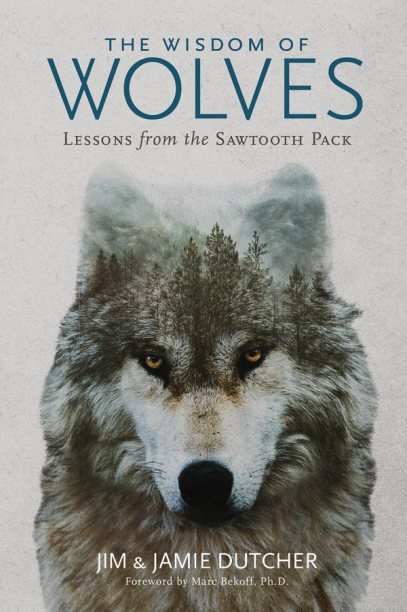
WisdomofWolvesCover.600x900.jpgWe first heard of the book here, so thanks to Public Radio station WNYC. However, in the blurb for the podcast interview with the authors, the link to the book went directly to Amazon. Must it forever more be so? Hope not.

So, click the image to the left to go to the actual source of the book, which seems a more worthy place to consider purchasing it, even though here too they give you the option to buy on Amazon. But there is a slight favoring of the publisher, National Geographic, in the purchase options. Here’s what they say:

CURIOSITY. COMPASSION. FAMILY FIRST.

After living among the wolves of The Sawtooth Pack for years, Jim and Jamie Dutcher present a new book, The Wisdom of Wolves: Lessons from the Sawtooth Packproviding groundbreaking observations of their unique experience.

As strong, and just as immediately recognizable as the ties that unite a human family, the emotional bonds shared among wolves are far more complex than ever realized, and now are detailed in this exceptional book. Continue reading
When Edward O. Wilson Has Something To Say In Writing, Reading It Is A Top Priority

04wilson-master768

Credit Jillian Tamaki

Edward O. Wilson invariably focuses our attention on the planet in new and interesting, not to mention critically important, ways. Here he goes again, and the supporting graphics, highly informative maps, alone are worth the read:

The 8 Million Species We Don’t Know

The history of conservation is a story of many victories in a losing war. Having served on the boards of global conservation organizations for more than 30 years, I know very well the sweat, tears and even blood shed by those who dedicate their lives to saving species. Their efforts have led to major achievements, but they have been only partly successful.

The extinction of species by human activity continues to accelerate, fast enough to eliminate more than half of all species by the end of this century. Unless humanity is suicidal (which, granted, is a possibility), we will solve the problem of climate change. Yes, the problem is enormous, but we have both the knowledge and the resources to do this and require only the will. Continue reading
Writers, Thinkers, Birders

Petrusich-Dont-Mess-with-the-Birds.jpg

A proposed Republican amendment threatens to weaken the protections in the Migratory Bird Treaty Act of 1918. Photograph by Ernest Manewal / Camera Press / Redux

Thanks to writers who become birders, and this one in particular:

Don’t Mess with the Birds!

By Amanda Petrusich

Catskill, New York—the small Hudson River town where the American painter Thomas Cole lived and worked, from 1825 to 1847—is also home to the RamsHorn-Livingston Sanctuary, which contains four hundred and thirty acres of tidal marsh, upland forest, and fallow farmland, and is presently occupied by common loons, great blue and green herons, wood ducks, mallards, a pair of bald eagles, northern harrier and red-tailed hawks, ruffled grouse, merlin falcons, eastern screech and great horned owls, belted kingfishers, pileated woodpeckers, warblers, scarlet tanagers, blue-gray gnatcatchers, a tiny and nervous-looking thrush known as a veery, and various other species of birds whose names, I will admit, are perilously delightful to type. There is also a beaver. Continue reading
Finn The Wonder Dog, And Other Introduced Species

KarenAndrew_Finn-1-1260x708

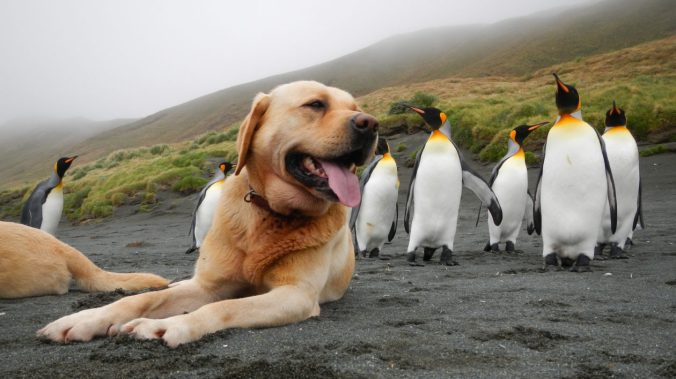
Finn the Wonder Dog on Macquarie Island with king penguins. Photo © Karen Andrew/New Zealand Department of Conservation

Thanks to Ted Williams at Cool Green Science for this article about the eviction of an invasive species in a remote location with charismatic species both native and introduced:

16051893298_01a0a7f12f_k-1260x708.jpg

Choros Field Work. Photo © Island Conservation

Early in the 20th century settlers on the islands of Chañaral and Choros off northern Chile had a brainstorm: They’d create a ready supply of fresh meat by unleashing European rabbits.

It worked out as well as rabbit introduction in Australia. Continue reading
Intact Coral And Its Above-Water Counterparts


Coral

Heron Island and its hundreds of species have so far been spared the worst of the crisis. But scientists there fear what the future may hold.  Illustration by Lily Padula

Helen Sullivan, founding editor of the South African literary magazine Prufrock, shares a short essay for the environmentally-minded:

On a recent trip to Heron Island, a speck of sand and foliage on the southern end of Australia’s Great Barrier Reef, I found myself on a walking tour of the local birdlife. My group’s guide was young, determinedly friendly, and seemed to feel not a little trapped. She looked as though she might, at any moment, reconsider everything and run as far as she could—which is to say, not very far: Heron is just half a mile long. We began with the egrets, which inspired the island’s not altogether accurate name, and which are born either black or white; our guide pointed out monochrome pairs roosting together in the trees. Then it was on to the buff-banded rails, which reminded me of thin, shifty, omnivorous quails. Beneath a Pisonia tree, also known as a grand devil’s-claws, we encountered a rowdy group of white-capped noddies. (The caps, our guide told us cheerfully, were to stop the birds’ brains from overheating in the sun.) Noddies, which feed on fish and make their nests by glueing together fallen Pisonia leaves, lead perilous lives. The trees’ seeds are sticky, often adhering to the birds’ charcoal-feathered bodies. Sometimes, a noddie will get covered in so many seeds that it can no longer fly, and so it falls to the ground and starves to death, its carcass fertilizing the nutrient-poor sand in which the Pisonia grows. “The noddies have a really special relationship with the devil’s-claws,” our guide said.

Heron Island is also home to the Barrier Reef’s oldest research station, where Sophie Dove, a biology professor at the University of Queensland, has lately been studying the effects of climate change on corals. Though she was off on the mainland when I visited, we caught up a few days later. Continue reading
Species Replenishment Story

Sawfish-Grubbs2-1260x708

Pregnant female sawfish found by Dr. Dean Grubbs and team at Andros Island. Photo © Dean Grubbs

Thanks to Ted Williams at Cool Green Science:

Recovery: Smalltooth Sawfish Flickering Back

Andrea-Kroetz-credit-sawfish

What goes down April 12, 2017 on a Sanibel, Florida beach is both encouraging and discouraging.

Angler and shark tagger Elliot Sudal hooks something huge. A crowd gathers including Vice President Mike Pence accompanied by his entourage of Secret Service agents who rifle through Sudal’s tackle box. Not surprisingly, they find (and temporarily confiscate) knives. But Sudal, seated and straining on the rod with blistered hands, is hardly a threat. Pence safely takes photos, then poses for a photo next to the embattled Sudal. Continue reading

Preparing For Reef Wipeout, Corals Bred In Captivity

1200 (1)

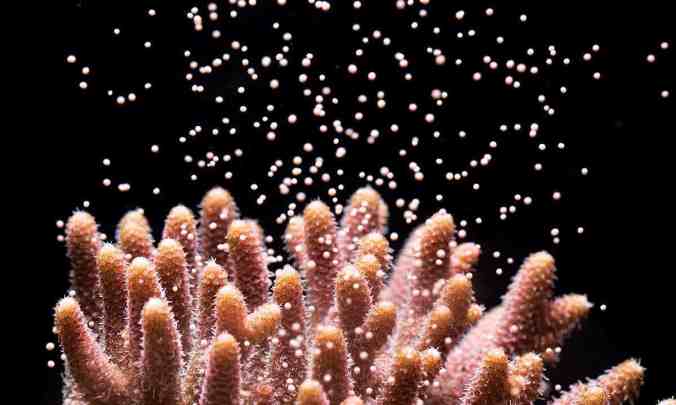
Coral spawning at the Horniman museum. Photograph: James Craggs/Horniman Museum

The Horniman Museum and Gardens in the UK is doing important work related to coral reef regeneration. Thanks to Damian Carrington and the Guardian for bringing this to our attention:

New lab-bred super corals could help avert global reef wipeout

Pioneering research on cross-species coral hybrids, inoculations with protective bacteria and even genetic engineering could provide a lifeline for the ‘rainforests of the oceans’

coral-reefs-a-globally-important-habitat-but-threaten-image-by-j-craggs-horniman-museum-and-gardens

Coral reefs are globally important habitats

New super corals bred by scientists to resist global warming could be tested on the Great Barrier Reef within a year as part of a global research effort to accelerate evolution and save the “rainforests of the seas” from extinction.

Researchers are getting promising early results from cross-breeding different species of reef-building corals, rapidly developing new strains of the symbiotic algae that corals rely on and testing inoculations of protective bacteria. They are also mapping out the genomes of the algae to assess the potential for genetic engineering.

planulae-held-in-the-tentacles-of-tubastrea-coccinea-image-by-j-craggs-horniman-museum-and-gardens

Planulae held in the tentacles of Tubastrea coccinea prior to release

Innovation is also moving fast in the techniques need to create new corals and successfully deploy them on reefs. One breakthrough is the reproduction of the entire complex life cycle of spawning corals in a London aquarium, which is now being scaled up in Florida and could see corals planted off that coast by 2019. Continue reading

Lepidopterist’s Treasure

730

Heterosphecia tawonoides puddling on a dry leaf washed out by the river. Photograph: Courtesy of Marta A. Skowron Volponi

Thanks to the Guardian for sharing this bit of good news:

Lost species of bee-mimicking moth rediscovered after 130 years

The rare oriental blue clearwing, that disguises itself as a bee, was spotted in the Malaysian rainforest

A moth that disguises itself as a bee and was previously only identified by a single damaged specimen collected in 1887 has been rediscovered in the Malaysian rainforest by a lepidopterist from Poland.

The oriental blue clearwing (Heterosphecia tawonoides) was seen “mud-puddling” – collecting salts and minerals from damp areas with its tongue-like proboscis – on the banks of a river in Malaysia’s lowland rainforest, one of the most wildlife-rich – and threatened – regions on Earth. Continue reading

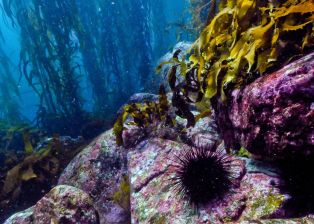
Kelp Forest Versus Kelp Farm

Shutterstock_ChannelIslandsKelpCalifornia_web

Kelp forest commentary is not new to our pages, but much more frequently the generic category seaweed has been highlighted for its farming potential. We have apparently not give sufficient attention to the specific value of natural kelp forests. Thanks to Yale 360 and science writer Alastair Bland for this story:

As Oceans Warm, the World’s Kelp Forests Begin to Disappear

Macrocystis_Scott_Ling_web

The progression of the destruction of a kelp forest in Tasmania by urchins, photo 1/3.

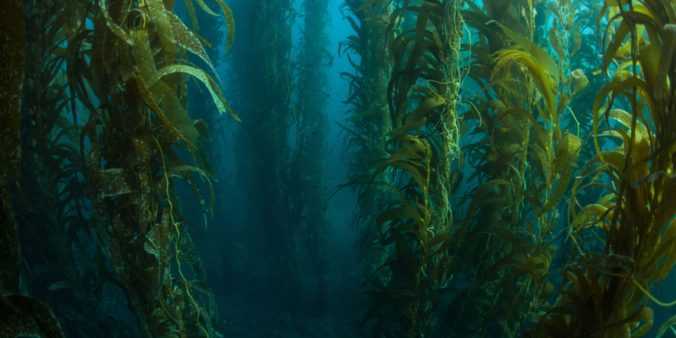
Kelp forests — luxuriant coastal ecosystems that are home to a wide variety of marine biodiversity — are being wiped out from Tasmania to California, replaced by sea urchin barrens that are nearly devoid of life.

A steady increase in ocean temperatures — nearly 3 degrees Fahrenheit in recent decades — was all it took to doom the once-luxuriant giant kelp forests of eastern Australia and Tasmania: Thick canopies that once covered much of the region’s coastal sea surface have wilted in intolerably warm and nutrient-poor water.

centro_overgrazing_phase_shift_Tasmania2_SDLing_web

The progression of the destruction of a kelp forest in Tasmania by urchins, photo 2/3.

Then, a warm-water sea urchin species moved in. Voracious grazers, the invaders have mowed down much of the remaining vegetation and, over vast areas, have formed what scientists call urchin barrens, bleak marine environments largely devoid of life.

Today, more than 95 percent of eastern Tasmania’s kelp forests — luxuriant marine environments that provide food and shelter for species at all levels of the food web — are gone. With the water still warming rapidly and the long-spine urchin spreading southward in the favorable conditions, researchers see little hope of saving the vanishing ecosystem.

Diver_surveying_overgrazed_reef_web The progression of the destruction of a kelp forest in Tasmania by urchins, photo 3/3. The Australian island state has lost more than 95 percent its kelp forests in recent decades. COURTESY OF SCOTT LING Continue reading

With Gene-Altering Schemes, Be Careful What You Wish For

merlin_130180247_f155f48f-78b8-4667-8348-506d3ed9edeb-master768

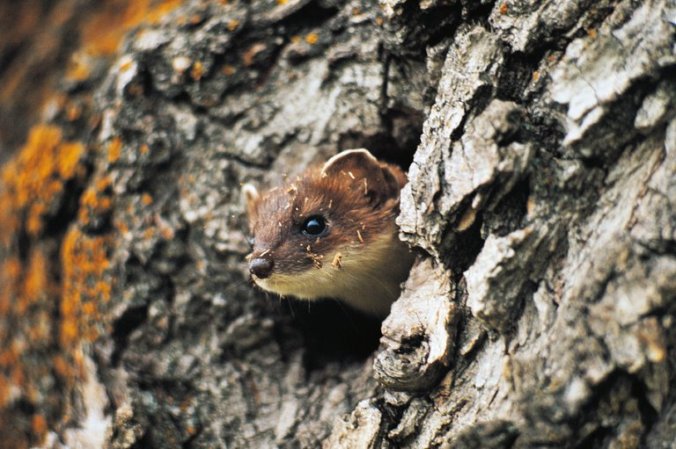
The short-tailed weasel, or stoat, decimated native bird populations after it was introduced to New Zealand. Altering the genes of invasive animals might save threatened species, scientists said, but could also have devastating consequences. Credit DeAgostini, via Getty Images

Two days ago we were intrigued by the notion; today, not so much. Is it a cat fight between two of the science writers most often linked to in these pages? Or perhaps it is an example of how scientific consensus is built:

‘Gene Drives’ Are Too Risky for Field Trials, Scientists Say

In 2013, scientists discovered a new way to precisely edit genes — technology called Crispr that raised all sorts of enticing possibilities. Scientists wondered if it might be used to fix hereditary diseases, for example, or to develop new crops.

One of the more intriguing ideas came from Kevin M. Esvelt and his colleagues at Harvard University: Crispr, they suggested, could be used to save endangered wildlife from extinction by implanting a fertility-reducing gene in invasive animals — a so-called gene drive. Continue reading

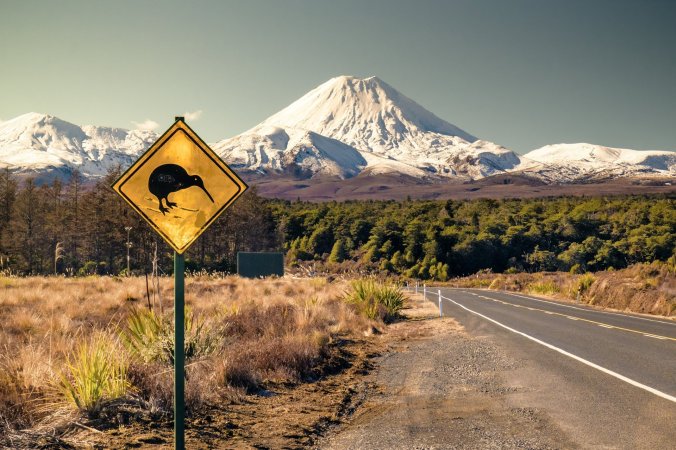
New Zealand, Invasive Species & Gene Editing

1920

Thanks to Ed Yong and his editors at The Atlantic for this story on one country’s approach to rats:

New Zealand’s War on Rats Could Change the World

The nation wants to eradicate all invasive mammal predators by 2050. Gene-editing technology could help—or it could trigger an ecological disaster of global proportions.

The first thing that hit me about Zealandia was the noise.

I was a 15-minute drive from the center of Wellington, New Zealand’s capital city, but instead of the honks of horns or the bustle of passersby, all I could hear was birdsong. It came in every flavor—resonant coos, high-pitched cheeps, and alien notes that seemed to come from otherworldly instruments. Continue reading

Jane Goodall Then And Now

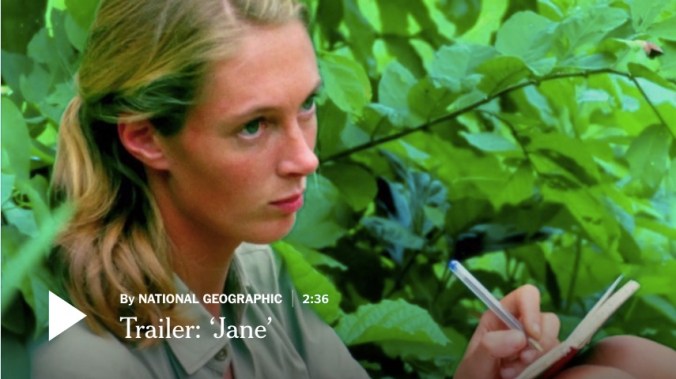
Jane

A preview of the film. By NATIONAL GEOGRAPHIC on Publish DateOctober 18, 2017.Image courtesy of Internet Video Archive. Watch in Times Video »

Several of us contributing to this platform have had the opportunity to meet her, and can attest to what Melena Ryzyk says below. There really are not sufficiently powerful words to describe her, but we link out to those stories that try.  It may be that photography or film offer the best medium for understanding and more fully appreciating her work. Click above for the trailer, or click the title below to read the review of this film, high on our list for viewing:

Jane Goodall’s Unparalleled Life, in Never-Before-Seen Footage

If you ever meet Jane Goodall and well up with overwhelmed joy, you won’t be alone. “I make everybody cry,” said Dr. Goodall, the primatologist and conservationist. “The Jane effect.” Continue reading