Keeping Those Scarlet Macaws Out Of Harm’s Way

web_camilla-cerea_au0117_sm_049

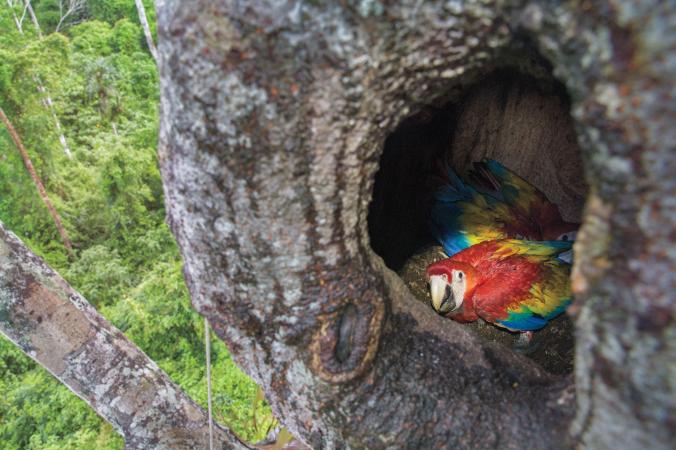
Two Scarlet Macaws chicks sit in their nest in the cavity of a quamwood tree in Belize’s Chiquibul Forest. Photo: Camilla Cerea/Audubon

Thanks to the neighbors of Chan Chich for bringing to my attention this article by Martha Harbison in the current issue of Audubon Magazine, which touches on the topic I referenced back here, not far from Chan Chich Lodge as the bird flies (so to speak):

…To keep macaw chicks safe, a team of rangers spends night and day watching over the birds’ nests and homes.

The Scarlet Macaw’s last, best defense against wildlife poachers doesn’t look like much: just a ramshackle collection of tarps, makeshift tables, plastic five-gallon buckets, jungle hammocks, and a cook fire, hidden in the dense understory of a tropical hardwood forest near the fraught and uncomfortably porous border between Belize and Guatemala. Continue reading

Saving Snow Leopards

08TB-snowleopard1-master768.jpg

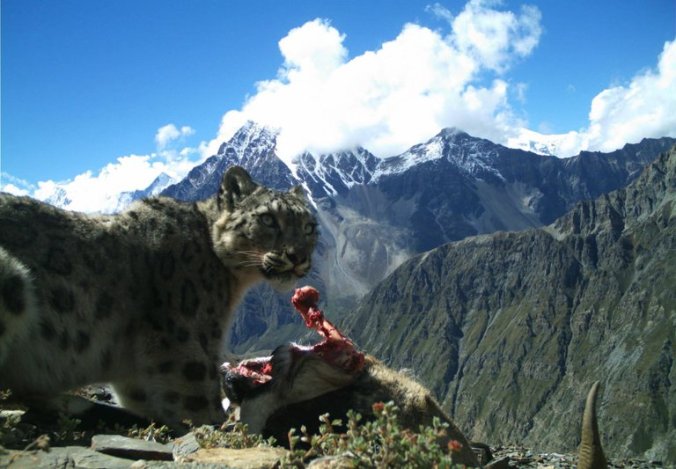
A snow leopard in the Himalayas eating its prey. Credit Madhu Chetri

The New York Times’ always-appreciated Science section, once a Tuesday feature, has been joined by many features made possible by the wonders of modern technology, and the news organization has also responded creatively to the competition made possible by all that wondrous technology. This article by Nicholas St. Fleur is a good example of why we check in on the Trilobites feature of the website daily:

How Do You Save Snow Leopards? First, Gather Their Droppings

Celebrating Species Recoveries

8727656416_56347460b6_k-1260x708.jpg

Brown Pelican. Photo by ALAN SCHMIERER / Flickr in the Public Domain

Thanks to Cool Green Science:

Five Endangered Species Recoveries You’ve Never Heard Of

by Christine Peterson

More than 40 species have been officially recovered by the Endangered Species Act. Some, like bald eagles and peregrine falcons, have received a lot of publicity.

Here are five lesser known – but no less interesting – stories of recovery. Continue reading

Tagimoucia, A Glimpse Of Heaven

02fiji-superJumbo.jpg

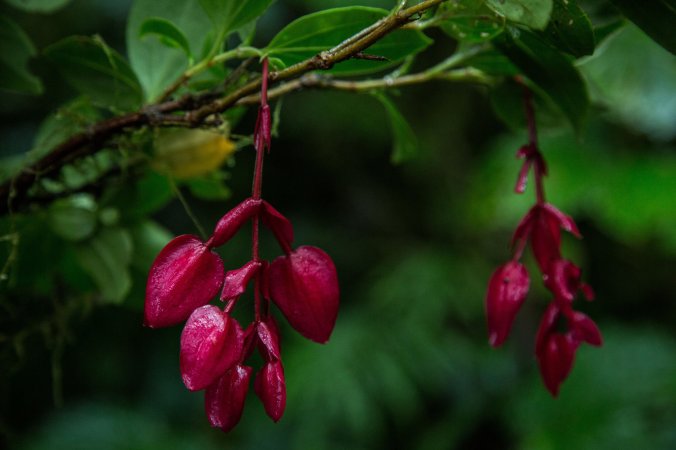
Tagimoucia has attained a kind of celebrity status because of its beauty and rarity. Credit Lam Yik Fei for The New York Times

For Fijians, this flower is viewed rarely enough to enhance its sacred status; for the rest of us, a photograph like the one above is like a siren call to come, behold it:

A Rare Pacific Islander Captivates Its Neighborhood

TAVEUNI ISLAND, Fiji — In Fiji, flowers can take on a spiritual, magical significance. They are strung together as garlands for ceremonies and festivals or worn as an ornament behind the ear on any given day.

The South Pacific archipelago is home to about 800 species of plants found nowhere else in the world. But the most special is the tagimoucia, a crimson and white flower that hangs down in clusters like a chain of ruby raindrops. Because of its beauty and rarity, it has attained a kind of celebrity status. Continue reading

An Uncommon Conundrum

22eagles1-jumbo-v5.jpg

Illustration by Kelsey Dake

For our bird-centric and conservation-focused readers especially, this is a rich one:

When the National Bird Is a Burden

Bald eagles have been the emblem of the United States for more than two centuries. Now, in some parts of the country, they’re a nuisance. Continue reading

Bumble Bees & Conservation

06About-blog427-v2.jpg

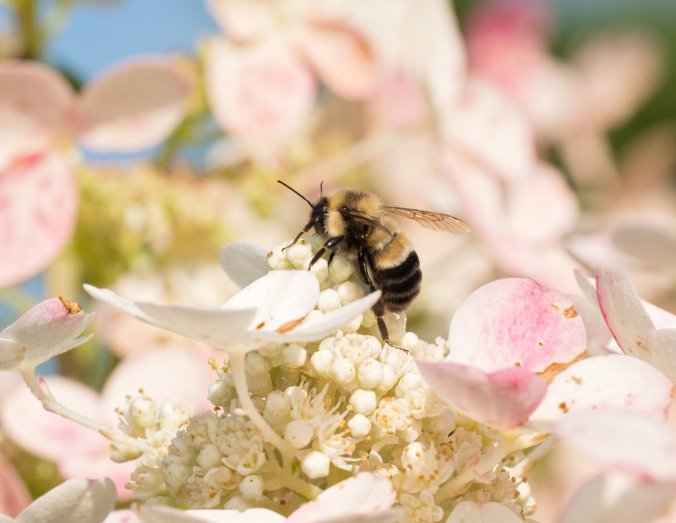
The rusty-patched bumblebee, once common across the continental United States, has been designated an endangered species. Credit Clay Bolt

One more gift of protection:

A Bumblebee Gets New Protection on Obama’s Way Out

By and

The Obama administration, rushing to secure its environmental legacy, has increased protection for a humble bumblebee. Continue reading

New Rules, Fishing & Conservation

seal-caught_custom-88cc31db868f28dc5d59726aed04e66499e21c83-s1400-c85.jpg

Divers release a seal from fishing gear. Getting entangled in active or abandoned fishing gear often leads to injury or death in marine mammals. NOAA Marine Debris Program/Flickr

Thanks to the salt folks at National Public Radio (USA) for this news on a rule change that could do for all marine mammals what has already been done for dolphins:

The vaquita is a small porpoise found only in the northern Gulf of California, in Mexico. Today, the species is critically endangered, with less than 60 animals left in the wild, thanks to fishing nets to catch fish and shrimp for sale in Mexico and America. The animal is an accidental victim of the fishing industry, as are many other marine mammals. Continue reading

China Closes Out 2016 With Another Important Conservation Statement

jp-ivory-master768

A Chinese police officer watched over ivory products being prepared for destruction during a ceremony in Beijing in 2015. China’s ban announced on Friday would shut down the world’s largest domestic ivory market. Credit Ng Han Guan/Associated Press

Yesterday’s news, combined with today’s, could be called a conservation bifecta:

China Bans Its Ivory Trade, Moving Against Elephant Poaching

By

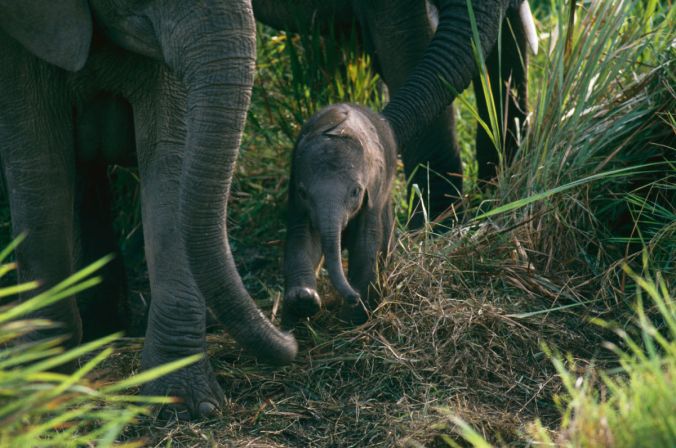
China announced on Friday that it was banning all commerce in ivory by the end of 2017, a move that would shut down the world’s largest ivory market and could deal a critical blow to the practice of elephant poaching in Africa. Continue reading

Thank You, China, For Pandolin Protection

gettyimages-630598630_wide-7e4e677e0cd500d7c0e39f09b54a995411618f81-s1100-c85

An undated photo, released Wednesday, shows Shanghai customs officers checking pangolin scales at a port in Shanghai. Chinese customs seized over three tonnes of pangolin scales, state media said, in the country’s biggest-ever smuggling case involving the animal parts. STR/AFP/Getty Images

Thanks to National Public Radio (USA) for reporting the news related to this remarkable animal:

China Announces Its Largest-Ever Seizure Of Trafficked Pangolin Scales

Camila Domonoske

Chinese officials have seized 3.1 tonnes (more than 3.4 tons) of illegally trafficked pangolin scales from a port in Shanghai, according to state media. Continue reading

Fast Cats’ Feast

The cheetah is the fastest animal on land—a fact that is often repeated, but seldom truly appreciated. When documentary-makers film cheetas, they typically go for low-angle close-ups that capture the creature’s majesty, but that underplay its speed. The BBC’s The Hunt bucked the trend last year with aerial shots that reveal just how fast the cheetah is.

Ed Yong, writing on the Atlantic’s website, refers to the video clip above with his opening paragraph of Cheetahs Never Prosper. The cat lays the table for its feast, in full speed, and then Mr. Yong shares some plain truths: Continue reading

Big Weather & Big Cats At Chan Chich Lodge

Cockscomb Basin Wildlife Sanctuary is of interest because it is a pioneer in conservation in Belize–as Chan Chich Lodge is in its own way. But in writing about it Vicky Croke, for The Wild Life at WBUR (National Public Radio, Boston, USA), reminds a few of us of our time in Belize during Earl, and the aftermath during which jaguar sitings have been, and continue to be, inexplicably spectacular:

Jaguars Interrupted: Counting Big Cats After A Hurricane

Two months after Earl hit Belize, researchers at the world’s first jaguar reserve are still taking stock.

By Vicki Croke

This past summer, within days of gathering spectacular camera-trap footage of a female jaguar and her two tiny cubs sauntering through the Cockscomb Basin Wildlife Sanctuary in Belize, field scientists with Panthera, the global wild cat conservation organization, got the news that a tropical storm was forming and might just come their way. Continue reading

Banks, Rainforests, We The People

04DEFORESTATION-superJumbo.jpg

Young orphaned orangutans on a climbing expedition with their keeper at International Animal Rescue’s orangutan school in West Kalimantan, Indonesia. Credit Kemal Jufri for The New York Times

We first started paying close attention to the plight of the ecosystem in the image above when we saw the talk given by Willie Smits, who has taken action, to say the least, in the interest of protecting that rainforest and its inhabitants. It is not because of the orangutans (though see the photo below and try to resist reading on) that we find this article compelling; it is because there is a clear and compelling call to action on holding our institutions accountable:

How Big Banks Are Putting Rain Forests in Peril

By

In early 2015, scientists monitoring satellite images at Global Forest Watch raised the alarm about the destruction of rain forests in Indonesia.

Environmental groups raced to the scene in West Kalimantan province, on the island of Borneo, to find a charred wasteland: smoldering fires, orangutans driven from their nests, and signs of an extensive release of carbon dioxide into the atmosphere. Continue reading

The Science Of Marine Conservation

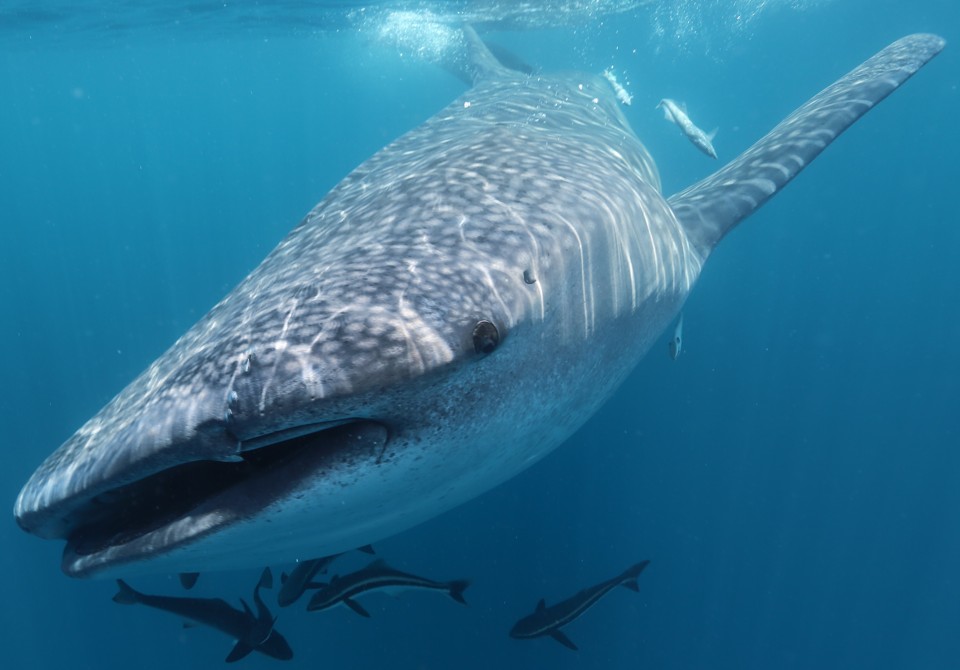
A whale shark in the Persian Gulf. Steffen Sanvig Bach

This is the future of marine ecosystem science (thanks as always to Ed Yong and the Atlantic’s ongoing  commitment to compelling coverage of environmental issues):

The World’s Biggest Fish in a Bucket of Water

Scientists used DNA floating in just 30 liters of seawater to count the endangered whale shark across two oceans.

ED YONG

If you lean over the side of a boat and scoop up some water with a jug, you have just taken a census of the ocean. That water contains traces of the animals that swim below your boat—flecks of skin and scales, fragments of mucus and waste, tiny cells released from their bodies. All of these specks contain DNA. And by sequencing that DNA gathered from the environment—which is known as environmental DNA, or eDNA—scientists can work out exactly what’s living in a patch of water, without ever having to find, spot, or identify a single creature.

And that helps, even when the creature in question is 18 meters long. Continue reading

The Mysterious Saola

28560535993_0fd7776ce4_o-1260x708

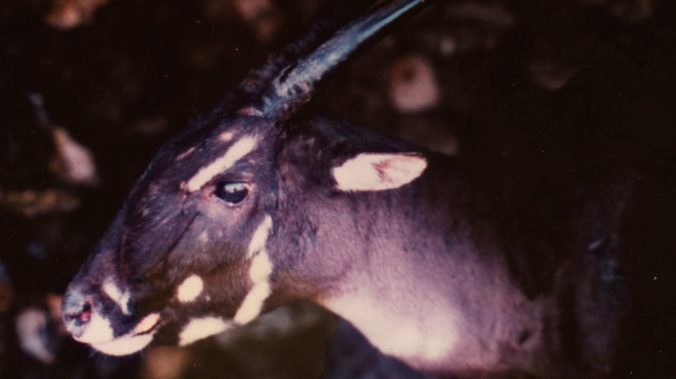
Saola. Photo © Bill Robichaud

Still so much to learn, and sometimes it seems like there is so little time to do so:

The Largest Mammal That No Scientist Has Ever Seen in the Wild

BY

The saola is the largest terrestrial mammal never seen alive in the wild by a biologist. This is not a Bigfoot story. The saola undeniably exists. It roams only in the Annamite Mountains of Laos and Vietnam. Continue reading

Golden Eagle Population On The Mend

3500 (1).jpg

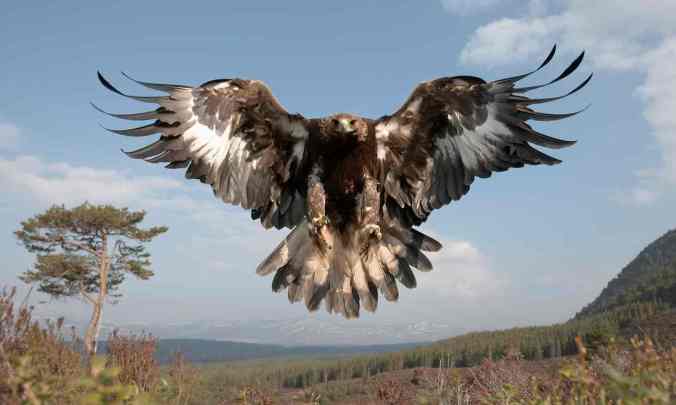
There are now more than 500 breeding pairs of golden eagles in the UK, all in Scotland. Photograph: Peter Cairns/RSPB

Scotland, a hospitable environment for one of the majestic birds, deserves credit for this comeback:

UK golden eagle population soars to new heights

Numbers pass the level deemed viable for the raptor’s long-term survival but it remains missing from a third of its traditional territories

Britain’s golden eagle population has soared to new heights, according to a new survey released on Wednesday.

There are now more than 500 breeding pairs in the UK, up 15% and passing the threshold at which bird’s long-term future is thought viable. Continue reading

Changing Values For Anglers

AZGFD-GeorgeAndrejko-Humpback8-e1476823079410-1260x708.jpg

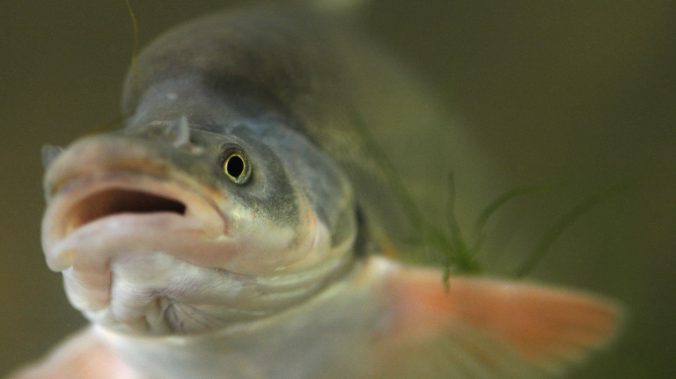
Humpback chub. Photo © George Andrejko, Arizona Game and Fish Department

We appreciate the perspective Mr. Williams brings to the story:

Recovery: Humpback Chubs, New Values and New Hope for Endangered Native Fish

BY TED WILLIAMS

There are “undesirable fish,” “rough fish,” and “trash fish.” Humpback chubs, native to the turbulent, turbid water of the Colorado River system, are all three. They compete with nonnative gamefish like brown trout from Europe and rainbow trout for the Pacific Northwest. If you catch a humpback chub, you should squeeze it and toss it into the bushesSuch was the counsel I and my fellow anglers received from our elders and the fisheries management establishment until the 1970s. Continue reading

Bass, Harbinger Of Hope

16nature-master768

Its numbers fluctuate, but the striped bass is far more common than it was just a few decades ago. Credit Getty Images

Thanks to Mr. Taft and the New York Times for this note of reversed fortunes for the fish, and for the anglers who champion them most vocally:

Striped Bass of the Hudson

By

With the jutting jaw of a mob kingpin and the pinstripes of a Wall Street executive, striped bass swim through the brackish waters of New York Harbor like old-school New Yorkers — as if they own the place. Continue reading

Elephants & The Buzzer

canby-elephants-2-2-1200

The arrest of a key member of an ivory-trafficking group is a bright spot in an otherwise complicated season for African elephants. PHOTOGRAPH BY PATRICK ROBERT / SYGMA / GETTY

We wish conservation was always all about warm and fuzzy topics, but it is not. We are mostly confronted with habitat loss, climate change and other human-initiated causes of threat to species’ survival. The worst of all, from a jolting immediacy perspective, but probably the simplest to counter, is the poaching. Men take animal lives only for body parts that have a mystique–medicinal, ornamental, or whatever–to people in faraway lands willing to pay a price that poachers cannot say no to. That is the problem.

Stories like this one below are too seldom to allow us to have confidence in the underdog winning. The underdog in this game is many points behind, and the clock in this game is ticking down very quickly. We vigilantly watch for stories like this in hope that the elephants beat the buzzer:

A WIN IN THE GROUND WAR AGAINST ELEPHANT POACHERS IN AFRICA

By

Nouabalé-Ndoki National Park, in northern Republic of Congo, consists of sixteen hundred square miles of Central African rain forest and is jointly administered by the Congolese ministry of forests and the Wildlife Conservation Society, of the Bronx.

Lying just east of the Sangha River, the park is home to significant populations of western lowland gorillas, chimpanzees, giant forest hogs, and, above all, to some five thousand forest elephants. Like elephants everywhere in Africa, those in the park are, increasingly, under siege. Two years ago, when I visited,  the park’s technical adviser, Tomo Nishihara, told me that the numbers of elephants in the park and its surrounding buffer zones had fallen from ten thousand to five thousand in just five years. “That gives us five more years before they’re gone,” he said. Continue reading

The Great Iguana Comeback

11tb-iguana1-superjumbo

The Jamaican rock iguana, a critically endangered species, is making a comeback. Credit Robin Moore

We love comeback stories! Here is a great one from an island country that was featured in these pages much more last year, and we miss hearing about the place:

Jamaican Rock Iguanas Get a Shot at a New Home in the Wild

By

Meet the Jamaican rock iguana. Its scaly body stretches around two feet long, tail not included. Slate blue spikes stick up along its spine, and a saggy sac of loose skin wraps around its head like a hoodless cowl. When cornered, it strikes with its front claws — one reportedly ripped an eye from a dog. Continue reading

Bravo, Romania

980xz

Romania’s government has taken action to protect its large carnivores from trophy hunters.iStock

There was a time when we found portions of the hunting-to-support-conservation argument compelling. Our view is getting more and more firm against it. We applaud a small country teeming with wildlife for taking a firm stand:

Wildlife Advocates Celebrate: Romania Bans Trophy Hunting

By Alicia Graef

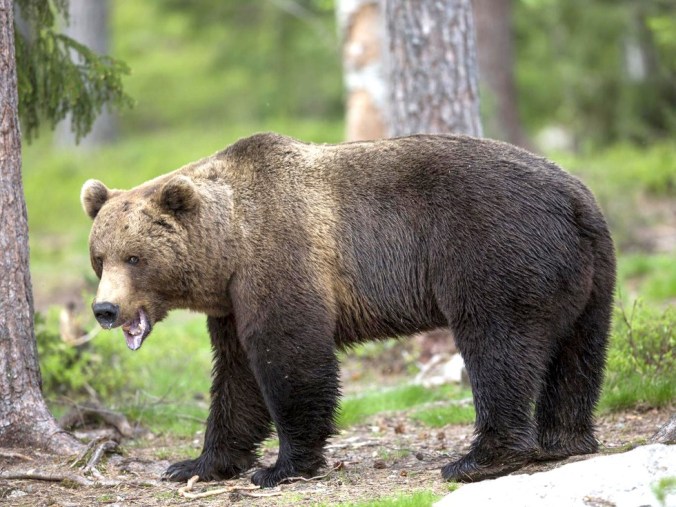
In a surprise move that has wildlife advocates cheering, Romania’s government has taken action to protect its large carnivores from trophy hunters.

Last week, the Environment Ministry announced a total ban on trophy hunting of brown bears, wolves, lynx and and other wild cats, which is expected to save thousands of animals from being killed. Continue reading