Flamingos In The City

5059

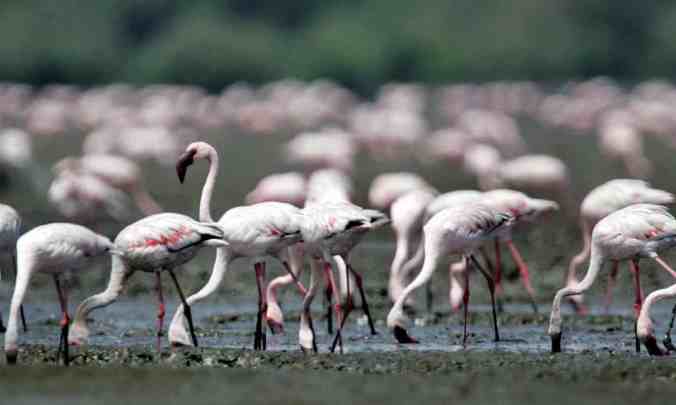
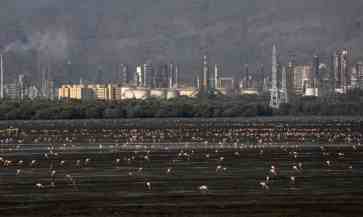
Flamingos eat plankton in front of an industrial area at Sewri mudflats, Mumbai. Photograph: Divyakant Solanki/EPA-EFE

Payal Mohta reported from Mumbai for this story in the Guardian that caught our attention with images of urban flamingos. An unusual beauty can be the result of a common problem. As it is important to understand nature in wilderness areas, which is our strong preference, it is also important to understand these man-made phenomena:

3284.jpg

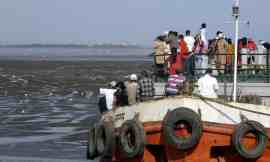
People watch flamingos from a boat during the Bombay Natural History Society’s flamingo festival. Photograph: Hindustan Times/Hindustan Times via Getty Images

There is an air of anxious excitement among the urban professionals and tourists on board our 24-seater motorboat as we enter Thane Creek.

A chorus of “oohs” and “aahs” breaks out as we spot the visions in pink we came to see – hundreds of flamingos listlessly bobbing in the murky green water – followed by the furious clicking of cameras.

4898

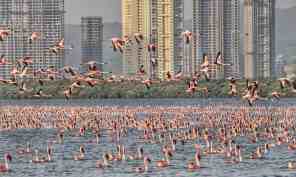
Flamingos at Sewri. Photograph: Hindustan Times/Hindustan Times via Getty Images

Then, almost as one, the birds skim the water and take off in sync. “They always stay together,” says Prathamesh Desai, who has been organising birding excursions in the city for seven years. “They are an extremely gregarious species.”…
1857

Flamingos at Sewri. Photograph: Hindustan Times/Hindustan Times via Getty Images
gettyimages-960486752_wide-883dade8322ed23956ec36d5285d3f8b5751b17b-s1200-c85.jpg

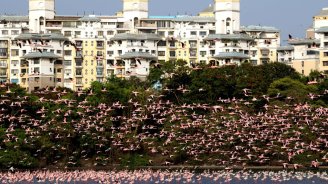
Flamingos flock to Mumbai between September and April, but this year there are almost three times more birds than the amount that usually flocks to the area.
Bachchan Kumar/Hindustan Times via Getty Images

That story continues after the jump below. First, thanks to National Public Radio (USA)’s Audrey Nguyen and Sarah Oliver for producing and bringing this story to our attention with this opening line (which goes on to credit the Guardian story as its source):

Around this time every year, tens of thousands of flamingos flock to Mumbai to feed. But this year, there are almost three times more than the normal amount in the city — about 120,000.

The reason for the influx is currently a mystery. But some scientists believe that pollution in the birds’ natural habitat might be one factor at play… Continue reading
Adaptation & South-South Cooperation

Ethiopia_Wheat_23496722552_5868e72816_k_web

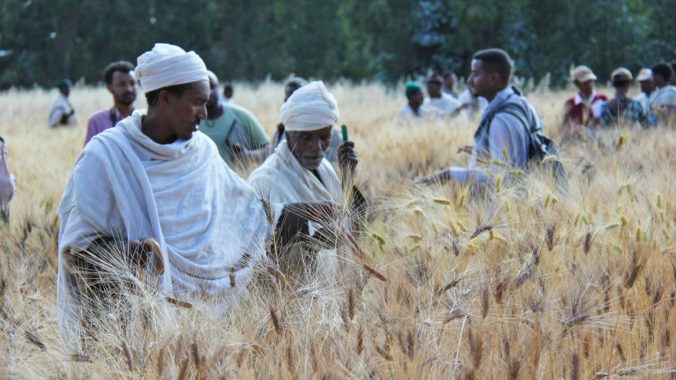
Ethiopian farmers examine the results of a trial of wheat varieties. BIOVERSITY INTERNATIONAL

The bread we eat in the not so distant future may depend on the type of cooperation described below. Thanks to Yale e360 and Virginia Gewin for this story:

How Crowdsourcing Seeds Can Help Farmers Adapt to Climate Change

In Ethiopia and other developing nations, scientists are working with small-scale farmers on trials to see which seed varieties perform best in changing conditions. These initiatives are enabling farmers to make smarter crop choices in the face of rising temperatures, drought, and more extreme weather.

Ethiopia_Wheat_23605266175_c076fa1be7_k_web.jpg

Durum wheat varieties grow in trial plots in Ethiopia’s Amhara region. Thousands of farmers participated in the project, testing how various wheat strands performed under changing climatic conditions. BIOVERSITY INTERNATIONAL

In Ethiopia’s undulating, high-elevation grasslands, farmers — most of them working parcels of only two to three acres — produce more wheat than anywhere else in sub-Saharan Africa. They accomplish this feat in the face of chronically short supplies of high-quality seed. Still, Ethiopia’s record harvest of 4.6 million metric tons in 2017 didn’t satisfy the country’s needs, forcing it to import an additional 1.5 million tons of wheat. Continue reading

Elephants By The Sea

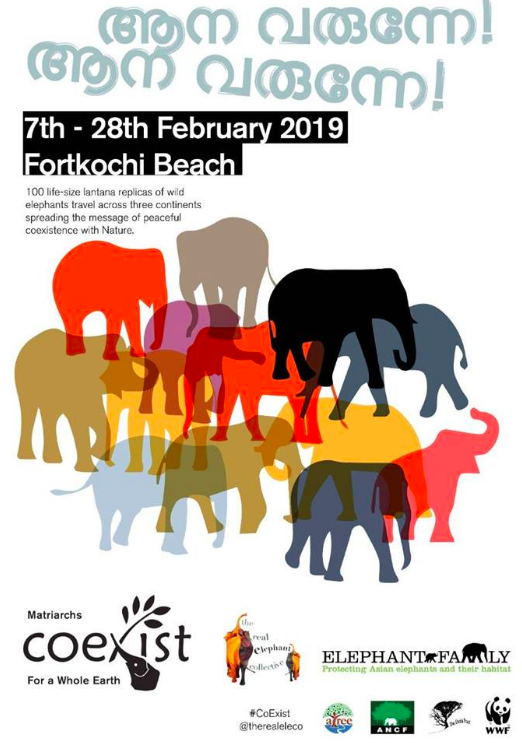
100 life-size lantana replicas of wild elephants will travel across three continents spreading the message of peaceful coexistence with nature.

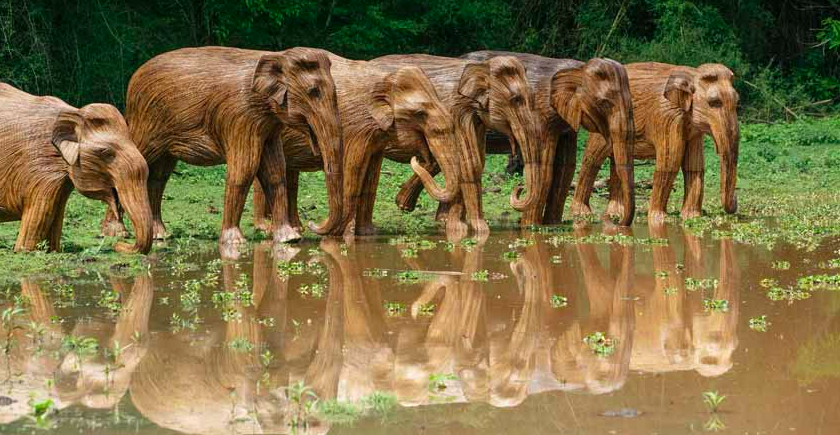
The beautiful herd of Asian Elephants calmly drinking from this watering hole poses no threat to any onlooker. They’re actually sculptures made from the invasive lantana, introduced to the Indian subcontinent as an ornamental shrub by the British. The harmless looking plant is a scourge to native flora, animals and people of the regions where it’s taken over, as it literally poisons its surroundings so nothing else can survive there, destroying the natural biodiversity of the area.

30 of these extraordinary, life-sized works of art have been on display in Kerala, at Kochi’s South Beach, coinciding with the Kochi-Muziris Biennale. The outdoor exhibit, entitled Co-Exist: Matriarchs for a Whole Earth, is on display for only until the end of February, after which it will travel to Bangalore and New Delhi. In 2020, the elephant models will be taken to England where they will be displayed at the Victoria and Albert Museum and the Royal Parks, both in London. In 2021, they will travel by truck across the USA, where they will finally be auctioned, the proceeds of which will go to preservation of wild animals.

The project is a collaboration between multiple organizations, designers and indigenous community artisans. Members of the Ashoka Trust Trust for Research in Ecology & the Environment (ATREE) devised a way to safely craft with lantana as a raw material and support for the making and display of lantana elephants is through the NGOs Elephant Family, The Real Elephant Collective (TREC), and The Shola Trust.

Fort Kochi To Have 100 ‘Lantana’ Elephants. And Here’s Why You Need To See Them

Highlighting the cause of nature and wildlife conservation at a global scale, the Lantana elephants are part of a greater initiative to raise funds for conservation and help people and elephants live together more harmoniously.

On February 7, if you are wandering around the popular South Beach in Fort Kochi, you are sure to come across a magnificent herd of 100 Asian elephants.

If you are wondering about the possibility of such a huge congregation of these beings at one place, let us break the news.

These are beautifully sculpted life-size elephants that have been made by tribal artisans from Thorapalli in Gudalur using Lantana camara or Lantana, a toxic invasive weed.

Lantana elephants are part of a greater initiative to raise funds for conservation and help people and elephants live together more harmoniously.

“Our vision is to bring Asia’s elephants and the issues they face out of India and the shadow cast by the African ivory crisis. With Asian elephants numbering only a tenth of their African counterparts, the importance of this unique migration cannot be underplayed. The survival of a species is at stake,” says Ruth Ganesh, principal trustee and the creative force of Elephant Family.

She had conceptualised the Lantana herd along with Shubhra Nayar of TREC. Modelled on real elephants from the Gudalur-Pandalur region, in its bid to raise awareness and funds for the conservation of Asian elephants, this unique project is also clearing the harmful Lantana from the Nilgiri forests while providing livelihoods to about 70 artisans from the Paniya, Bettakurumba and Soliga communities.

With their inherent knowledge of wild elephants and their exceptional crafting skills with Lantana, these artisans are bringing life to the elephant forms, while earning a dignified income. The elephants are designed by Shubhra Nayar and Tariq T of TREC, with Subhash Gautam overseeing the process. Continue reading

One More Way Technology Can Benefit Birds

minden_90710440.jpg

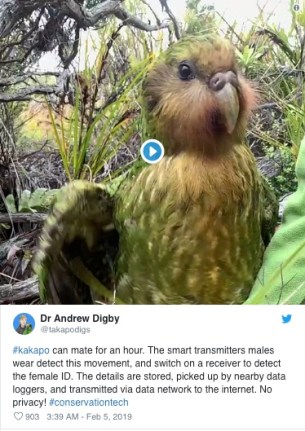
Kakapo on Codfish Island, New Zealand. Photo: Tui De Roy/Minden Pictures
Conservation

Modernization has put pressure on bird populations in so many ways, it is easy to forget that it has its occasional bright sides. We have favored on this platform the citizen science possibilities that technology allows, but even social media can add value. Thanks to Audubon Magazine for pointing this out:

Fat, Flightless, and Funny, Kākāpō Make the Internet a Much Better Place

With a savvy social media presence, caretakers of the endangered parrots have created an utterly delightful, conservation-focused corner of the web.

minden_90710440b.jpgSoon, the Kākāpō of New Zealand will have a little extra motivation when it’s time to mate. That’s because, thanks to a recent competition, some of these large, flightless, long-lived parrots will be treated to a special saxophone-laden soundtrack. The composer behind the mood music will be the winner of a recent search to find the next Kenny G. of Kākāpō smooth jazz.

Of course, there’s no evidence that critically endangered Kākāpō, which breed in leks every two to three years, find saxophone music particularly romantic. For the Kākāpō Recovery team and its partner in the project Meridian Energy, the campaign was more about raising awareness than coming up with a serious conservation strategy. But the search points to a larger truth about the Kakapo conservation effort: It’s as good at getting the word out about the Kākāpō as it is at working to save them.

minden_90710440c.jpgKākāpō, the heaviest parrots in the world, need all the help they can get. The birds evolved without natural mammalian predators, making them easy targets for the cats, rats, and stoats that arrived with European settlers hundreds of years ago. Kākāpō were nearly wiped out by these invaders, but in the mid-1990s, when the population hovered around 51 birds, New Zealand’s Kākāpō Recovery Program was formed to help bring these birds back from the brink.

The birds’ first big social media break came in 2009, when the internet met Sirocco, a 21-year-old Kākāpō who went viral for, in the words of the BBC television hosts, “shagging” zoologist Mark Carwardine while filming a documentary on the species (remember his name). The video of Sirocco wildly beating his wings against Carwardine’s head launched the bird’s career: In 2010, New Zealand Prime Minister John Key appointed Sirocco the country’s first Spokesbird for Conservation. Continue reading

Great Rivers Are Worthy Of Great Restoration Projects

CORiverMX-100819-0623_DeltaAerial_web.jpg

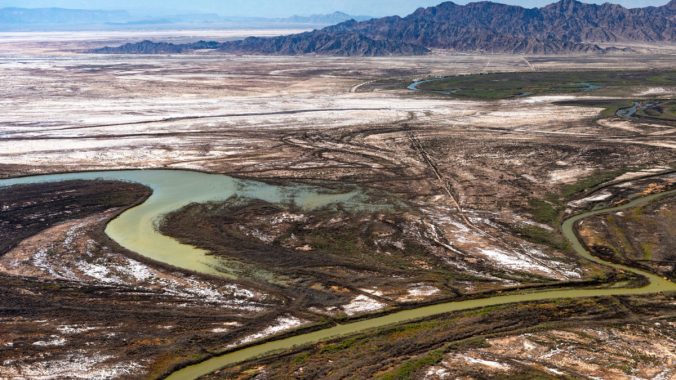
The Colorado River delta in Baja California is now a mosaic of largely dried-up river channels and tidal salt flats. TED WOOD

DetailMap_C_26_Delta_web.jpg

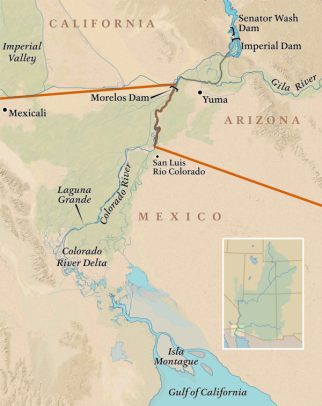
Downstream from the Morelos Dam, the Colorado River delta now runs dry before reaching the Gulf of California. MAP BY DAVID LINDROTH

When the first couple of stories about the Colorado River ran in Yale e360, it was difficult to imagine how much more there might be to say about it. But now the last article in the series, Restoring the Colorado: Bringing New Life to a Stressed River, provides an example of saving the best for last:

The Colorado River has been dammed, diverted, and slowed by reservoirs, strangling the life out of a once-thriving ecosystem. But in the U.S. and Mexico, efforts are underway to revive sections of the river and restore vital riparian habitat for native plants, fish, and wildlife. Last in a series.

CORiverMX-100819-0513_Morelos-Dam_web.jpg

The Morelos Dam on the U.S.-Mexico border, where the Colorado’s remaining water is diverted to cities and farms in Mexico. SUPPORT FOR AERIAL PHOTOGRAPHS PROVIDED BY LIGHTHAWK

From the air, the last gasp of the Colorado River is sudden and dramatic. The pale green river flows smack into the Morelos Dam on the U.S.-Mexico border, and virtually all of it is immediately diverted into a large irrigation canal that waters a mosaic of hundreds of fields — alfalfa, asparagus, lettuce, and other vegetables, their vivid green color clashing against the sere desert. The slender thread of water that remains in the Colorado’s channel continues to flow south, but is soon swallowed up by a sea of sand, far short of its delta, which lies 100 miles farther on.

TU-CO-20100912-0190_COFishing_web.jpg

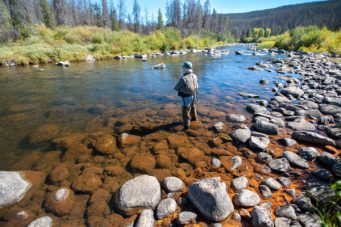
A fisherman on the upper Colorado River in northern Colorado. Low water flows have endangered fish populations and led last year to the closing of parts of the river to fishing.

The Colorado River once surged through the delta during high flows, carrying so much water at times that shallow draft steamboats chugged hundreds of miles up the river into the U.S. with loads of freight. The water in the delta nourished a vast fertile landscape, a fitting end to a river known as the Nile of North America.

“The river was everywhere and nowhere,” the naturalist Aldo Leopold wrote during a 1922 canoe trip to the delta, describing the waterway as it ebbed, flowed, braided, and stalled into pools, nourishing a rich and diverse ecosystem of “a hundred green lagoons,” a “milk and honey wilderness” with thick stands of cottonwoods and willows that provided habitat for hundreds of species of birds. The delta’s marshes, mudflats, and white sand beaches were home to clapper rails, bitterns, mallards, teal, and clouds of egrets.

Bobcats, puma, deer, and wild boar wandered the delta’s forests. Leopold was searching for the jaguar that roamed there, but didn’t see any. Continue reading

Connecting the Dots Between Technology & Nature Conservation

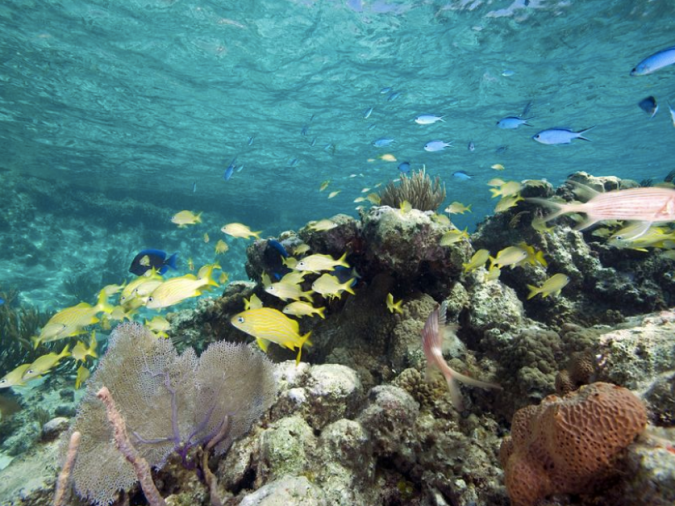
REEF FISH, BAHAMAS Fish congregate near a shallow reef in Exuma Cays Land and Sea Park. © Jeff Yonover

Those familiar with our work will recognize the word valorization, which is an essential element of what we write about and what we do. It’s increasingly important to note that Nature, made more fragile with each passing year by human impact climate change, requires human efforts to protect and hopefully, turn back the clock on damage already done; and it appears to be human nature that maintain a direct  correlation between how something is valued and the amount of attention it gets.

We’re particularly impressed by this example of tech collaboration. Thanks to the Nature Conservancy for highlighting these stories…

The Caribbean Needs Tourism, and Tourism Needs Healthy Coral Reefs

AI and social media are helping quantify the economic value of coral reefs

The Caribbean region is more dependent on tourism than any other region in the world—the sector accounts for over 15 percent of GDP and 13 percent of jobs in the region. And almost all visitors to the Caribbean take part in some activity that relates to coral reefs—either directly, like snorkeling and scuba diving, or indirectly, like enjoying sandy beaches, eating fresh seafood and swimming in crystal waters. That means the health of the Caribbean’s tourism industry—and thus the whole regional economy—is dependent on the health of its coral reefs.

But just how much value do reefs produce? After all, “what gets measured gets managed and improved.” The Nature Conservancy (TNC) recently released the results of a study that focused on reef-adjacent activities and the value they generate for the tourism industry, island governments and Caribbean communities. This study, which builds on an earlier body of globally focused research produced by TNC, found that reef-adjacent activities alone generate an estimated $5.7 billion per year in the Caribbean from roughly 7.4 million visitors. When combined with reef-dependent tourism activities, they generate $7.9 billion total from roughly 11 million visitors.

In other words, a major draw for people traveling to the Caribbean are activities related to coral reef ecosystems, and both the tourism industry and other aspects of the local economies depend on healthy coral reefs to keep this relationship afloat. This evidence offers a pivotal opportunity for advancing coral conservation initiatives not only in the Caribbean but around the world, as it can catalyze both the tourism industry and local governments and communities to invest in protecting and restoring coral reefs for the benefit of economies and incomes.

We now know that these natural wonders are responsible for generating billions of dollars, sustaining livelihoods and anchoring economies in the Caribbean as well as other tropical destinations across the globe. And that should translate into a major incentive to conserve them.   Continue reading
Megafauna’s Neglected Cousin, Microflora

Steve-Pearlman-32_FLUXMAG_WEB (1).jpg

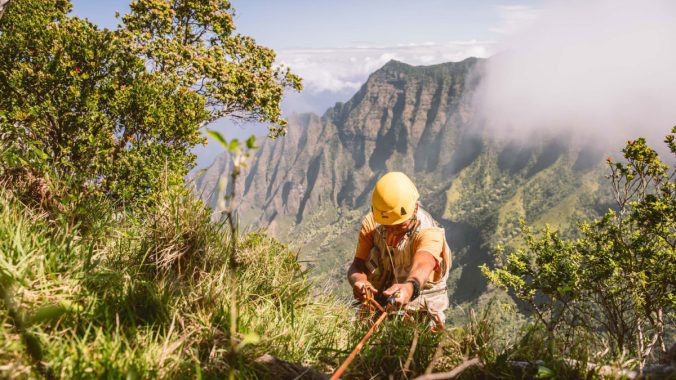
Botanist Steve Perlman rappels into the Kalalau Valley, a biodiversity hotspot on the Hawaiian island of Kauai. COURTESY OF BRYCE JOHNSON/FLUX HAWAII

RS40032_Limahuli-Garden_Brighamia-insignis_Nov-8-2016-2_web (1)

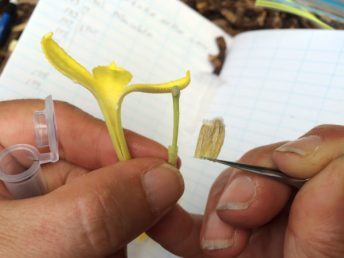
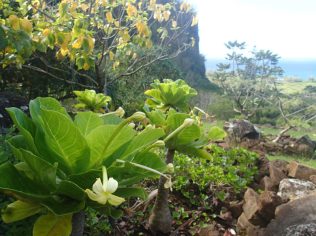
A botanist collects pollen from the flower of Brighamia insignis. NATIONAL TROPICAL BOTANICAL GARDEN

The work described in this article may explain why I first missed the story when it was published in October. The heroics get lost in the delicacy. My attention, like that of many people who are fortunate enough to have plenty of exposure to the natural world, gravitates to megafauna. And next in line for our attention is usually the rest of the fauna. But without flora, none of that fauna would be possible. And so our concern for biodiversity, and perhaps especially for the hotspots of biodiversity, should reflect an equal gravitational pull. So, my thanks to Yale e360 for this story:

Extreme Botany: The Precarious Science of Endangered Rare Plants

They don’t make the headlines the way charismatic animals such as rhinos and elephants do. But there are thousands of critically endangered plants in the world, and a determined group of botanists are ready to go to great lengths to save them.

Scientist-climbing_PEPP_WEB2

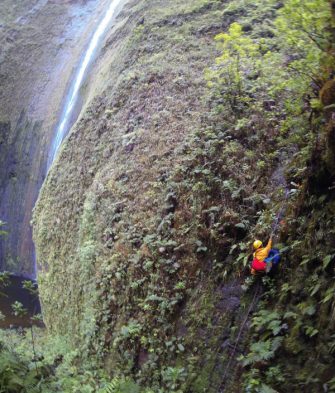
A scientist with the Plant Extinction Prevention Program climbs through remote Hawaiian ecosystems to study endangered plant species. PEPP

To save plants that can no longer survive on their own, Steve Perlman has bushwhacked through remote valleys, dangled from helicopters, and teetered on the edge of towering sea cliffs. Watching a video of the self-described “extreme botanist” in actio­­n is not for the faint-hearted. “Each time I make this journey I’m aware that nature can turn on me,” Perlman says in the video as he battles ocean swells in a kayak to reach the few remaining members of a critically endangered species on a rugged, isolated stretch of Hawaiian coastline. “The ocean could suddenly rise up and dash me against the rocks like a piece of driftwood.”

B.insignis-outplanted-in-former-range-at-LImahuli-Garden-2_web (1).jpg

The plant known as cabbage-on-a-stick (Brighamia insignis) has been grown at Limahuli Garden & Preserve on Kauai, which is within the historic range of the species. SEANA WALSH

When he arrives at his destination, Perlman starts hauling himself up an impossibly steep, razor-sharp cliff 3,000 feet above the sea without a rope, his fingers sending chunks of rock tumbling down to the waters below. Finally, he reaches the plants and painstakingly transfers pollen from the flowers of one to those of another to ensure that the species can perpetuate itself. At the end of the season, he will return to collect any seeds they were able to produce. Continue reading
In The Eyes Of Motivated Beholders

ChineseWarehouses_53_Ong_web.jpg

Stacks of rosewood at a timber market in Dongyang, China, a well-known hub for the illegal trade. SANDY ONG

Thanks to Sandy Ong and Edward Carver for this story about a type of tree that is too beautiful for its own good:

The Rosewood Trade: The Illicit Trail from Forest to Furniture

The most widely traded illegal wild product in the world today is rosewood, an endangered hardwood prized for its use in traditional Chinese furniture. An e360investigation follows the trail of destruction and corruption from the forests of Madagascar to furniture showrooms in China.

madagascar_4_carver_web

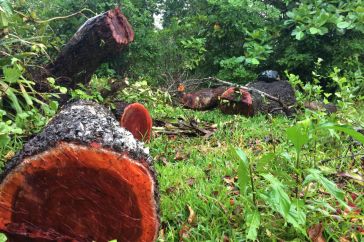
Logged wood on a path near Masoala National Park in northeast Madagascar. The park has been plundered not just of rosewood but many types of tropical hardwood. EDWARD CARVER

Fampotakely, a sandy village in northeast Madagascar, at first seems an unlikely destination for migrants. It has no hospital, no secondary school, no electricity, and limited well water. Yet its population has exploded to 5,000 in recent years. A few of the houses, usually made from dried palm leaves and stalks, now have concrete foundations and solar panels. Fampotakely’s relative wealth is due to its strategic location in the illegal timber trade: it’s downriver from Masoala National Park, home to some of the world’s most valuable rosewood.

Madagascar_3_Carver_web.jpg

Waterways around Fampotakely, Madagascar run blood red from rosewood stored underwater while waiting for ships to transport it to China. EDWARD CARVER

For the last decade, men from all over the region have gone into the park’s dense forests to work as loggers, a job that pays well by local standards. They cut down the massive trees, carve grooves in the logs, and use climbing vines to drag them to the nearest waterway. With rafts made from other felled trees, they use bamboo poles to float the precious hardwood toward Fampotakely and other villages along the Indian Ocean coastline. Continue reading
Sloths, Cecropia & Cacao

merlin_149583099_9e8bfb16-91b4-467e-bb18-dc2a98fde90e-jumbo.jpg

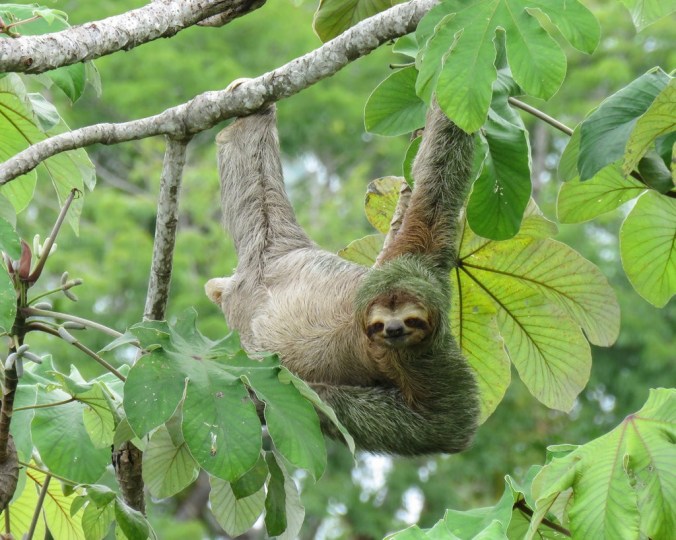
A sloth in Costa Rica.  Karen Reyes

I had never heard the name guarumo for this tree before. Cecropia is the name we have commonly heard for it in Costa Rica. Veronique Greenwood, who we have linked to twice until now, has contributed more than vocabulary to me through this article. I am particularly thankful for the realization that cacao can be more useful than I had been aware. Beyond the benefits of being grown organically it may play a key role in regenerative forest development. This, entrepreneurial conservation in mind, must become a variable by which Organikos sources chocolate in Costa Rica:

Where Sloths Find These Branches, Their Family Trees Expand

A study showed that when some animals find a crucial resource, they can survive in changing environments and even thrive.

Look closely up in the trees of a shade-grown cacao plantation in eastern Costa Rica, and you’ll see an array of small furry faces peering back at you. Those are three-toed sloths that make their homes there, clambering ever so slowly into the upper branches to bask in the morning sun. You might also spot them munching on leaves from the guarumo tree, which shades the cacao plants. Continue reading
A Pop-Up Vision Of Nature’s Future


Michelle Nijhuis came to my attention in 2014 by making me laugh. She has since been featured in our pages too many times to count. Now, after all those previous (nine, but who’s counting?) shout outs I thank her for bringing to my attention a book that makes me smile at the same time it makes me wince:

…Though Beyond the Sixth Extinction can be enjoyed solely for its dystopian yuks, its elegant paper sculptures tell a deeper story. The book doesn’t spend much time blaming humans for the world it imagines, or spell out exactly what has befallen Homo sapiens during the nearly three millennia between 2019 and 4847. But it does hint at a world in which the human footprint has been radically reduced. Chicago transformed into the diminished district of Cago, and life to some extent has moved on without us…

lead_720_405 (6).jpg

The rex roach is one of many lively species that inhabit the Cago district in the year 4847. PAPER ENGINEERING © SHAWN SHEEHY / CANDLEWICK PRESS

076368788X.jpgWhen I first saw something vaguely akin some years ago, the creative approach to a dark topic made me smile. This time, I am drawn in by an artist’s unique vision of the future as it relates to the natural world, and my reaction is to think while smiling.

So, off to Candlewick Press (click the image of the book to the left). Even though I am not inclined to dystopia, I like what the author / artist / pop-up engineer says about what looks to be its hand-made progenitor:

popupbookIn his book The Sixth Extinction, Richard Leakey describes five major catastrophes in Earth’s history that led to significant extinctions—the last of which was the meteor impact that eliminated the dinosaurs. He theorizes that the sixth big extinction has already begun, and that it is human-authored. Be it through over-hunting, global warming, or habitat destruction, humans have the power to destroy species at alarming rates.

PopupBook2.jpgEvolutionary theorists like Stephen Jay Gould have studied and written about the speciation that followed these previous die-offs, like the mammalian bloom that followed the extinction of the dinosaurs. I myself wonder which species might survive and flourish in a new environment if humans are successful in instigating a profound die-off. I wonder what anatomical adaptations they might acquire in their proliferation.

popupbook3All of the creatures in this book are based on organisms that have high survival ratings, including: ubiquity (or nearly so), omnivory (linked to high intelligence), adaptability (especially to human-made habitats), and escape mobility. Since I am interested in representing a single system, they also had to have the potential to entertain plausible interdependencies.

popupbook4Though the content of this book is bleak, the tone is cautiously optimistic. Some ecological theorists believe that humans—being the most adaptable species in the history of the planet—will be the very last species to be exterminated, but there is still hope that a sustainable balance can be found between human resource use and the resource use of everything else. Continue reading

Livestreaming Conservation

1200 (4)

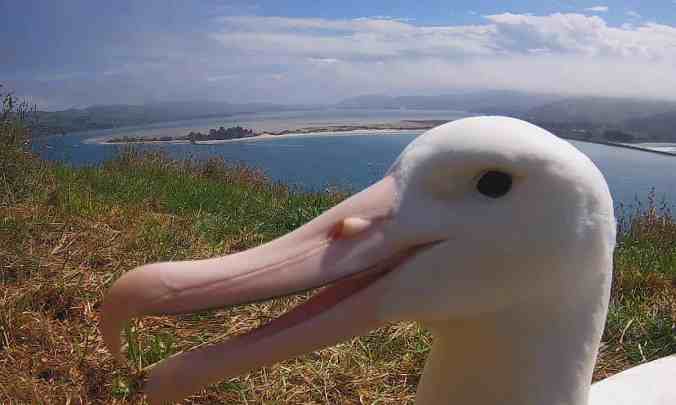
A northern royal albatross inspects the New Zealand Department of Conservation’s ‘Royal Cam’, a 24/7 livestream that documents an albatross nest in breeding season. Photograph: Department of Conservation

The revolution may not be televised but conservation may be livestreamed from time to time, conditions permitting. Thanks to the Guardian for this story from New Zealand:

On a wing and a player: hopes webcam can save endangered albatross

Footage of tiny colony of birds on the southern tip of New Zealand captivates millions around the globe

nzalbMillions of amateur naturalists around the world have been tuning in to the secret lives of albatrosses as New Zealand rangers employ YouTube in a bid to save the mysterious giant sea birds.

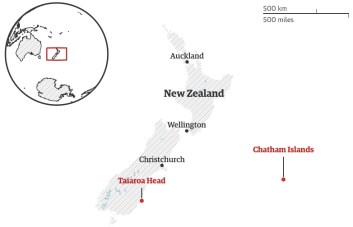
New Zealand conservation teams set up a 24-hour live-stream of an albatross nest at Taiaroa Head on the Otago peninsula in 2016. Three years on, the feed has become an unexpected global hit, with 2.3 million people from 190 countries tuning in to watch the endangered birds rear their chicks on a frigid peninsula at the bottom of the world. Continue reading

Closure Requires Looking Forward

OConnor-The-Snow-Leopard.jpg

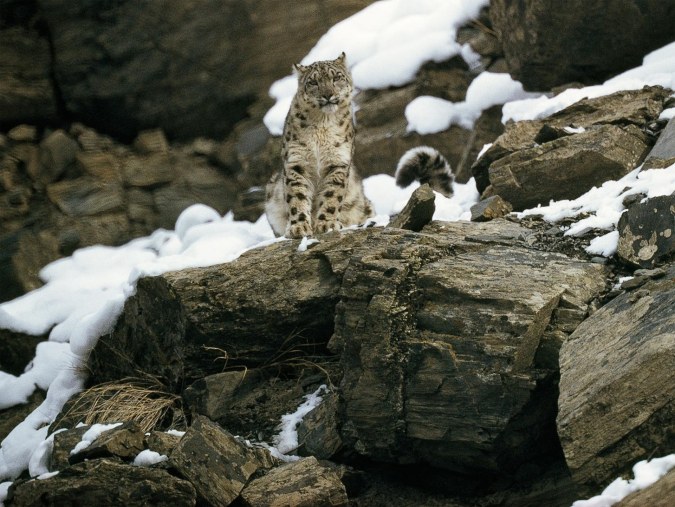
The zoologist George Schaller, whom Matthiessen accompanied to the Himalayas, says that, forty years after “The Snow Leopard” ’s publication, the animal has grown only slightly less mysterious. Photograph by George Schaller

9781137279293.jpgWhen I see the name Peter Matthiessen the first thing I think of is a recording of his voice on my telephone ten years ago. I knew he would be passing nearby and had invited him to see what we were doing in Patagonia. His message was a very warm decline of the invitation.
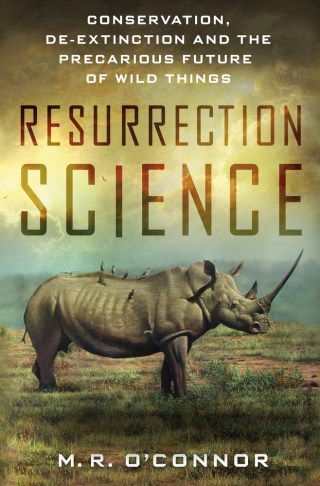
In addition to triggering that memory, M.R. O’Connor’s essay below reminds me that my family’s subscription to the New Yorker began in 1978, possibly with the late March issue in which Peter Matthiessen’s article about the snow leopard appeared. I can trace my interest in conservation back to that, and perhaps this accounts for why that magazine has been arriving weekly for me in the mail ever since. In the meantime this interest has exposed me to books like the one to the right. Which is as good a reason as anyway to make this link the 2018 coda (for me) on this platform:

In the autumn of 1973, the naturalist and writer Peter Matthiessen and the zoologist George Schaller set out on a gruelling trek into the Himalayas. They were headed toward the Dolpo region of the Tibetan plateau. Schaller wanted to study Himalayan blue sheep; Matthiessen hoped to see a snow leopard—a large, majestic cat with fur the color of smoke. Snow leopards, which belong to the genus Panthera, inhabit some of the highest mountain ranges in the world, and their camouflage is so perfectly tuned that they appear ethereal, as though made from storm clouds. Two of them feature on the Tibetan flag of independence, representing harmony between the temporal and spiritual planes.

For Matthiessen, a serious student of Zen Buddhism, the expedition wasn’t strictly scientific. It was also a pilgrimage during which he would seek to break “the burdensome armor of the ego,” perceiving his “true nature.” After it was published, in 1978—first, in part, in The New Yorker, then as a book—“The Snow Leopard,” his account of the trip, won two National Book Awards, becoming both a naturalist and a spiritual classic. It overflows with crystalline descriptions of animals and mountains: “The golden birds fall from the morning sun like blowing sparks that drop away and are extinguished in the dark,” Matthiessen writes. But it’s also an austere Buddhist memoir in which the snow leopard is as alluring and mysterious as enlightenment itself. Continue reading

Tigers, Tales, Illumination

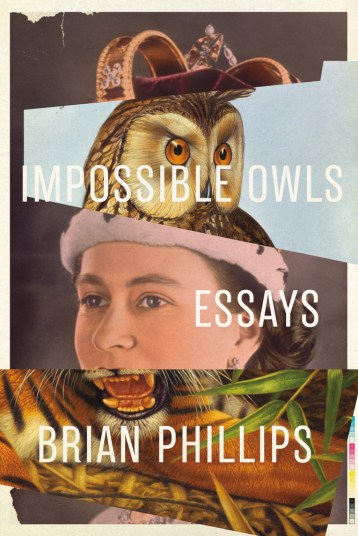
ImpossibleOwl.jpgBrian Phillips has not featured once in our pages until now, nor has The Ringer. If you read his essay below, featured also in the book to the right, the fit with our platform here is clear. Strange, though; I would not have expected to see it featured on a website that looks to be mostly focused on sports.

But it is a welcome surprise. It serves as another welcome reminder of some of the highlights of our years in India. And it provides a reason to track the author. The blurb the publisher chose to accompany the book (click the image to the right) is telling: “…Dogged, self-aware, and radiating a contagious enthusiasm for his subjects, Phillips is an exhilarating guide to the confusion and wonder of the world today. If John Jeremiah Sullivan’s Pulphead was the last great collection of New Journalism from the print era, Impossible Owls is the first of the digital age.”

phillips_tiger_getty_ringer.0.jpg

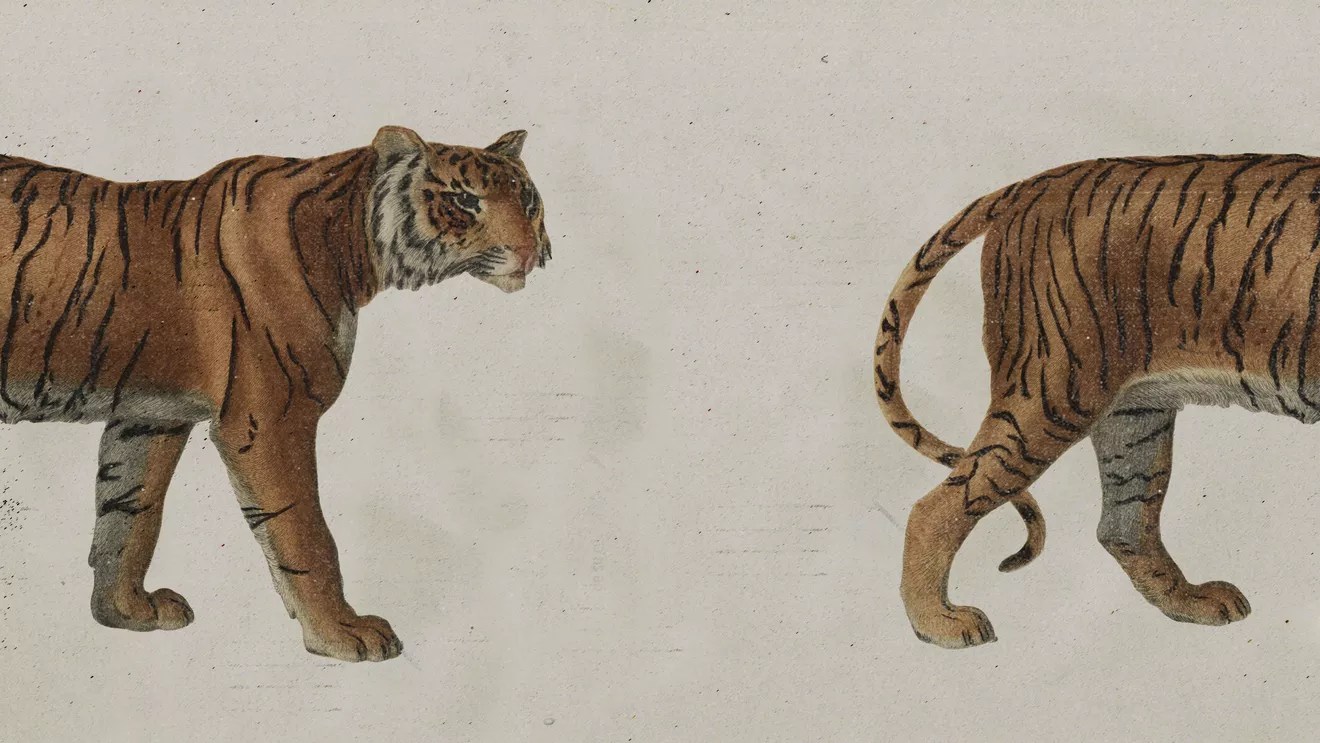
Getty Images/Ringer illustration

Man-eaters

1

Of the twelve tigers I saw in India, one might have been a ghost; two were in water, eight were on land, and one was sleeping in a tree. One stepped out of high grass, crossed the road in front of me, and disappeared into grass on the other side. One walked along a low ridge on the edge of a different road, oblivious or indifferent to the tourists taking her photograph. One looked out from a cover of branches and red leaves, so perfectly concealed that from thirty feet away he kept stereoscoping in and out of sight. Three were cubs, just four or five months old. Three were juveniles, aged around one year. The rest were fully grown. All were tired, because the days were hot, and because the days were dry they moved and breathed and slept in a film of clay-colored dust. Continue reading

Fungi, Bees & Future

30stamets-hope-jumbo.jpg

Lilli Carré

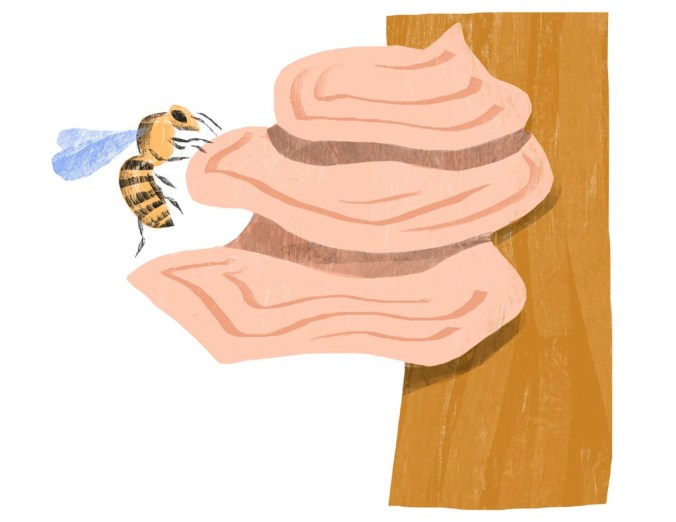
Fungi first appeared in our pages thanks to Milo. And the name of the essayist below was mentioned a couple times earlier as well. He deserves more attention, especially if his attention is focused on bees:

Will Mushrooms Be Magic for Threatened Bees?

We might be able to save honeybees from viruses transmitted by invasive parasites without chemical treatment.

By Paul Stamets

Mr. Stamets is a mycologist.

Sometime in the 1980s, microscopic mites that had been afflicting honeybees outside the United States found their way to Florida and Wisconsin and began wreaking havoc across the country. These parasites have invaded and decimated wild and domestic bee colonies. Along with other dangers facing bees, like pesticides and the loss of forage lands, the viruses these mites carry threaten the bees we rely on to pollinate many of the fruits, nuts and vegetables we eat. Continue reading

Paul Watson Speaks

merlin_81011591_6f2b6bd7-4d1d-4c32-8d90-471604eed16a-jumbo.jpg

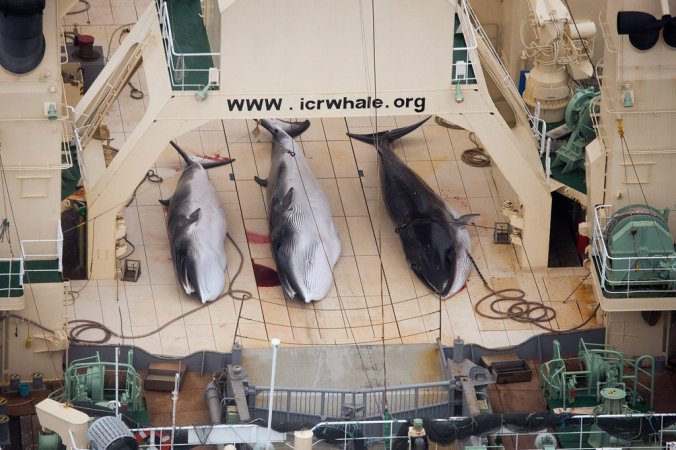
A photo from 2013, released by the environmentalist group Sea Shepherd, showing minke whales on the deck of a Japanese ship in the Antarctic. Japan says it will restrict whalers to its own waters as it resumes commercial whaling. Credit Tim Watters/Sea Shepherd Australia, via EPA, via Shutterstock

I had to read to the end to see Paul Watson’s name, and more importantly his proclamation on the significance of Japan’s withdrawal. It has been a long time since we have seen him or Sea Shepherd in our pages. My thanks to Daniel Victor and his employer for this important story:

Japan to Resume Commercial Whaling, Defying International Ban

Japan said on Wednesday that it would withdraw from an international agreement and resume commercial whaling, a defiant move to prop up an industry that still has cultural significance there, despite plummeting demand for whale meat.

Yoshihide Suga, Japan’s chief cabinet secretary, said the country would leave the International Whaling Commission, which established a moratorium on hunting whales that took effect in 1986.

The international agreement never stopped Japanese whaling, because it allowed the country to continue killing whales for scientific research while selling the meat. Critics considered the research a sham, little more than a cover for commercial whaling. Continue reading

The Little Creatures We Cannot Live Without

02mag-insects-image1-superJumbo-v3.jpg

Photo illustrations by Matt Dorfman. Source photographs: Bridgeman Images.

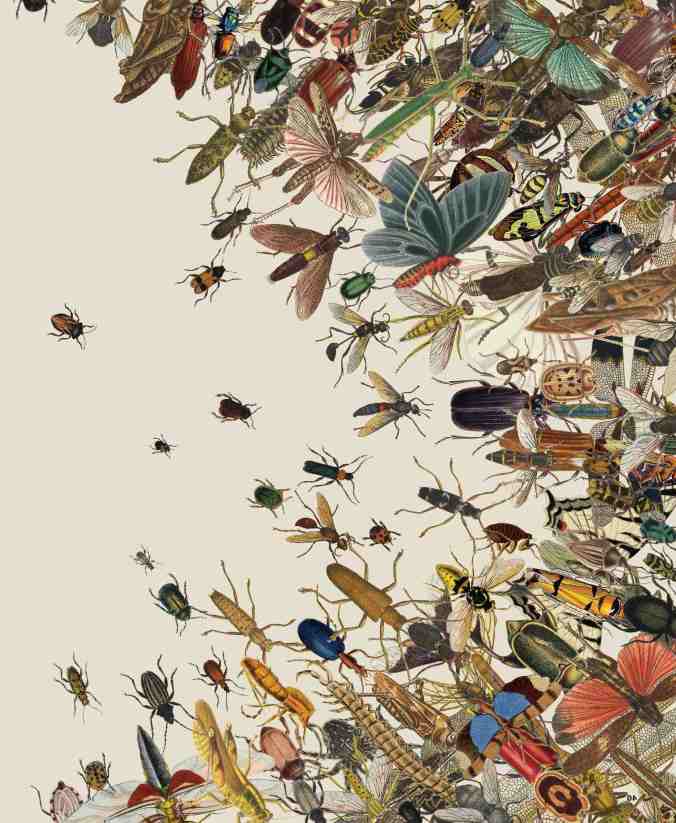
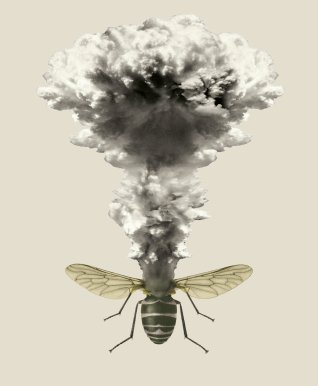
Brooke Jarvis has written a longform feature article with the word apocalypse in the title, which may make you wince and turn away. As might the word insect, even if you find the illustration above mesmerizing as I do. And reading to the end is an investment in time. But do not turn away just because the illustration below is alarming. It is another alarming topic we are responsible for taking account of.

02mag-insects-image2-superJumbo-v5.jpgSune Boye Riis was on a bike ride with his youngest son, enjoying the sun slanting over the fields and woodlands near their home north of Copenhagen, when it suddenly occurred to him that something about the experience was amiss. Specifically, something was missing.

It was summer. He was out in the country, moving fast. But strangely, he wasn’t eating any bugs.

For a moment, Riis was transported to his childhood on the Danish island of Lolland, in the Baltic Sea. Back then, summer bike rides meant closing his mouth to cruise through thick clouds of insects, but inevitably he swallowed some anyway. When his parents took him driving, he remembered, the car’s windshield was frequently so smeared with insect carcasses that you almost couldn’t see through it. But all that seemed distant now. He couldn’t recall the last time he needed to wash bugs from his windshield; he even wondered, vaguely, whether car manufacturers had invented some fancy new coating to keep off insects. But this absence, he now realized with some alarm, seemed to be all around him. Where had all those insects gone? And when? And why hadn’t he noticed? Continue reading

The Case For Being Unreasonable

merlin_146824716_5b9a3ecd-f45b-4b34-be0f-db4aecb19a14-jumbo.jpg

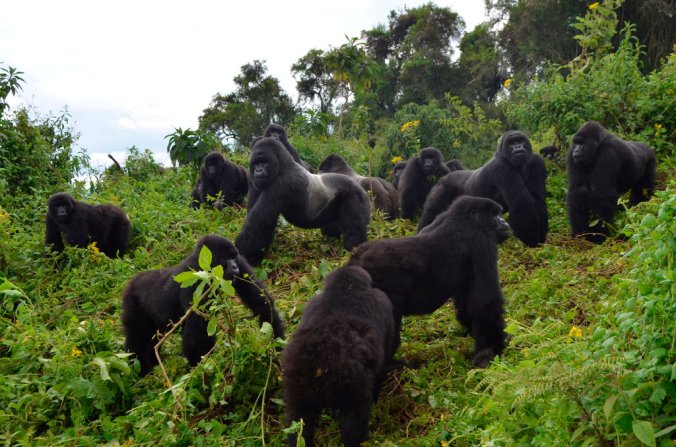
There are only about 1,000 mountain gorillas, but their numbers have risen from a low of just a few hundred. Credit Dian Fossey Gorilla Fund, via Associated Press

Thanks to James Gorman for this brief masterpiece:

Is There Hope for These Great Apes?

Mountain gorillas are faring better — perhaps because some humans just won’t listen to reason.

merlin_146945076_9f6d18ed-63df-4aec-b47a-ca915be5e8df-jumbo.jpg

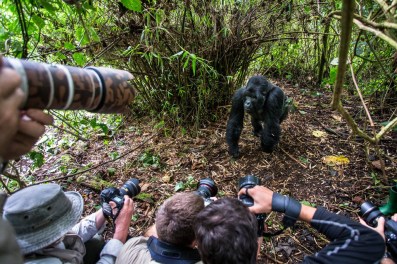
Ecotourism is largely responsible for the resources to protect the mountain gorilla. Credit Christophe Courteau/NPL, via Minden Pictures

Last Thursday there was a bit of good news relating to the impending extinction and destruction of everything.

The mountain gorilla, a subspecies of the Eastern gorilla, was upgraded from critically endangered to endangered. There still are only about 1,000 of them, up from a low point of a few hundred, so it’s not like they were declared vulnerable (better than endangered), or just fine (not a real category). And the Eastern gorilla as a species overall is still critically endangered.

merlin_146945079_cd496a6f-8009-4792-925c-5da10f85160f-superJumbo.jpg

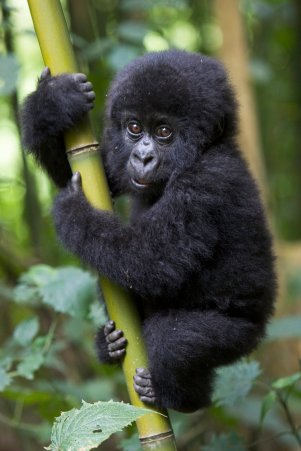
A 10-month-old mountain gorilla in Volcanoes National Park in Rwanda.Credit Credit Suzi Eszterhas/Minden Pictures

But the mountain gorillas are in fact doing better, according to the announcement from the International Union for Conservation of Nature and Natural Resources. It bases its decisions on information gathered from scientists and conservation experts.

The gorillas’ population has been increasing for about 30 years. And it has taken a tremendous amount of struggle and work to get this far.

That raises a question: If things have improved so much for an animal in such a dire situation as the mountain gorilla, should we then give in to hope?

I know this isn’t the accepted way of speaking about the planet and its creatures. In public discourse, hope is the one thing you should never give up. But in our minds (well, in my mind, anyway, and I can’t be the only one), the reasoning behind that often expressed sentiment is not so clear. Continue reading

Defending Megafauna

Canby-Elephant-Path-Njaia-Njoku.jpg

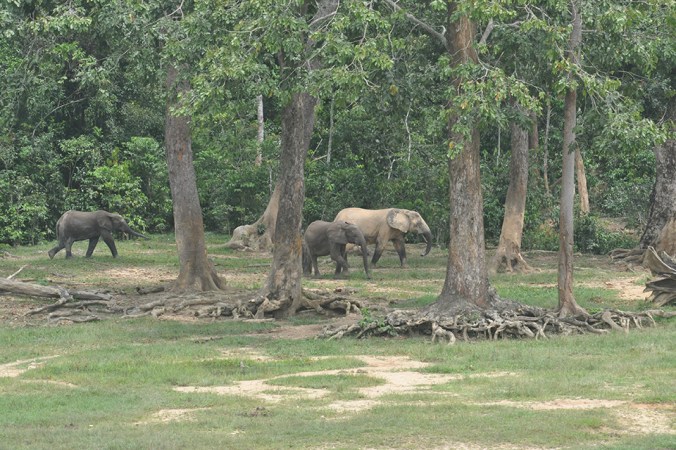
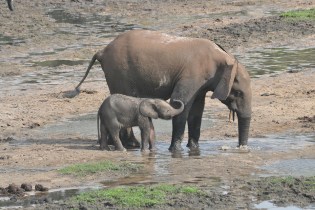
Perhaps as few as eighty thousand African forest elephants remain, and a new documentary explores the megafauna’s threats and defenders.Photograph Courtesy Elephant Path / Njaia Njoku

When we moved to Kerala in 2010 one of our motivations was that among the properties we would take responsibility for one was within a vast protected forest area in southern India. It was/is one of the great remaining habitats of elephants and tigers among other mammals, not to mention birds and all kinds of other life. Which is to say the ecosystem is intact enough to support apex predators and their megafauna prey, and everything around them and below them in the food chain. Which makes their viability as species possible. We networked as much as possible with scientists whose initiatives seemed relevant to our own.  Todd McGrain somehow escaped our attention until now, even though his work at the Lab of Ornithology should have caught it the way other artists’ did. Thanks to Peter Canby for pointing us here, and we have taken the liberty of inserting some of Tom’s other photos within the text below, which you can click on to go to one of his websites to learn more:

EP_0277.jpg

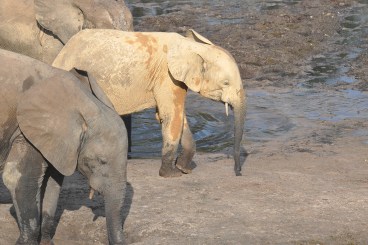
EP_0419.jpgIn Africa, there are two kinds of elephants: savanna and forest elephants. The species diverged somewhere between two and six million years ago, with the better-known savanna elephants spreading over the plains and open woodlands of Eastern, Southern, and Western Africa while forest elephants stayed behind in the dense forests at the center of the continent. Although the two occasionally hybridize, they are widely viewed as separate species. Forest elephants are smaller, with smaller and straighter tusks. The size of their tusks, however, has not protected them from rampant poaching, because the tusks have a distinctive hue, sometimes known as “pink ivory,” that has made them particularly valuable.

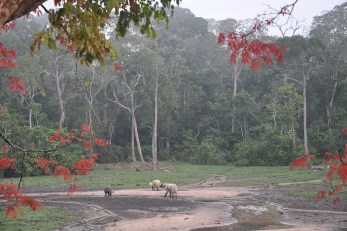
EP_0634.jpgSomething about the nobility of forest elephants regularly raises concern for their extinction. The tropical forests of the Congo Basin, once considered impenetrable, are now yielding to logging roads, mines, and even palm-oil plantations. In 2013, a widely respected study by Fiona Maisels, of the Wildlife Conservation Society, found that, between 2002 and 2011, the population of forest elephants had declined by sixty-two per cent. Perhaps as few as eighty thousand remain. The story of these declining numbers is also a story of habitat destruction. Where forest elephants exist in an undisturbed state, they build networks of trails through the deep forest. These trails connect mineral deposits, fruit groves, and other essentials of forest-elephant life. In Central Africa, there are dozens of fruit trees whose seeds are too large to pass through the guts of any other animal and for which forest elephants have evolved as the sole dispersers. These trees line the forest-elephant paths. Where elephant populations are disturbed, the paths disappear.

EP_0480.jpgMatt Davis, a researcher in ecoinformatics and biodiversity at Aarhus University, in Denmark, recently published a paper arguing that we are entering a period of extinction of large mammals akin to the scale of the extinction of the dinosaurs. “We are now living in a world without giants,” he told the Guardian, and went on to detail the many ecological consequences of the loss of megafauna. When I asked John Poulsen, an assistant professor of tropical ecology at Duke’s Nicholas School of the Environment, if this observation could apply to the role of forest elephants, he said, “Absolutely.”

The sculptor Todd McGrain has made a name for himself, over a thirty-year career, as the creator of sculptural monuments to birds that have been the victims of “human-caused extinction.” It’s not, therefore, entirely surprising that he has directed a documentary about forest elephants, “Elephant Path / Njaia Njoku,” showing at New York’s DOC NYC film festival this Wednesday and Thursday. McGrain’s subjects have included, among others, the passenger pigeon, the great auk, the Labrador duck, the heath hen, and the Carolina parakeet. When McGrain was the artist in residence at the Cornell Lab of Ornithology, Katy Payne, founder of the Elephant Listening Project at the Bioacoustics Research Program, introduced him to something she had discovered: forest-elephant infrasound, which is how elephants communicate inside the forest, at a frequency too low for human ears to register. She pitched up the recordings of elephant calls so that McGrain could listen to them. “I couldn’t help but hear them as bird calls,” he told me. “It was the complexity of their language that grabbed me.” Continue reading

Franzen, Watching Out For Birds

5760 (2).jpg

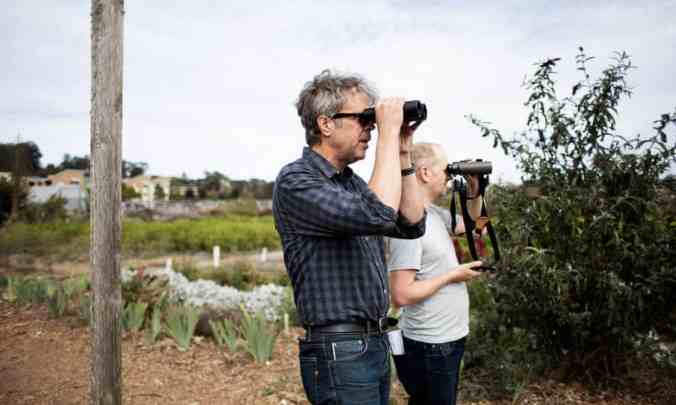
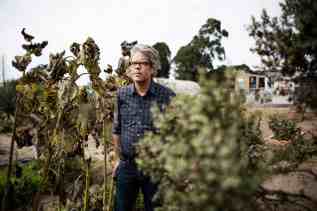
Freedom … Jonathan Franzen (left), birdwatching with Guardian writer Oliver Milman (right) at Natural Bridges Farm, Santa Cruz, California. Photograph: Talia Herman for the Guardian

Thanks to Oliver Milman writing for the Guardian from Santa Cruz, California with someone whose concerns about the intersection of books and technology, combined with his interest in birds and the art of watching, have led to us featuring him more frequently in these pages than most other people:

Jonathan Franzen: ‘Climate change isn’t the only danger to birds’

‘The two things I love most are novels and birds, and they’re both in trouble,’ says The Corrections author, one of the world’s most famous birdwatchers

1300.png

Illustration: Sarah Mazzetti

Birdwatching was once an activity that elicited a sense of mild shame in Jonathan Franzen. The author stalked New York parks with binoculars in hand, rather than on a strap, carefully hiding from view the word “birds” on his field guide. Debonair friends in London recoiled in horror when told of his pastime. Franzen was furtive, almost embarrassed. Now, he is one of the most famous birdwatchers in the world.

5648.jpg

 Author and birdwatcher Jonathan Franzen, at Natural Bridges Farm where he goes to birdwatch in Santa Cruz, California, September 30th, 2018. Photograph: Talia Herman for the Guardian

“I totally let my freak flag fly now,” Franzen says as he scans for birds at a community garden near his home in Santa Cruz, California. His phone has an app that deciphers bird sounds. He travels the world to see recondite species. He has written about birds in essays, op-eds and novels.

“I was so socially unsuccessful in my youth and such a pariah in junior high that I really didn’t want to look like a dork,” says Franzen, the 59-year-old author whose best known works include The Corrections and Freedom. “I got over that. The success started to make me think: ‘Hey, it’s not me who’s got the problem.’” Continue reading

Trust & Responsibility

4284

Sir David Attenborough on location for the new series. Photograph: Nick Lyons/BBC NHU

There are few people featured as frequently in our pages since 2011. His documentation of the wonders of nature surely qualifies as a major contribution to humanity. He has a new series and as always we link out to it here. But with it, some questions arise based on an interview he recently gave to Jonathan Watts, the Guardian’s Global Environment Editor, to promote the series:

David Attenborough: too much alarmism on environment a turn-off

Veteran broadcaster says Dynasties, his new BBC wildlife series, will be gripping, truthful and entertaining but not overtly campaigning

I am susceptible to those questions, especially after reading Guardian columnist (another frequent subject in our pages) George Monbiot’s editorial below. Just because David Attenborough is a hero does not mean he is always right. These two items are both worth a read and further consideration about the responsibility that comes with trust, well-earned, but whose value perhaps should be employed for campaigning considering what is at stake. I find myself surprised to reflexively lean in to this editorial argument, because the mission of our platform here is to emphasize creative, entrepreneurial approaches to conservation. While we chose at the outset to not focus exclusively on feel-good stories, we also do not serve up excessive doom and gloom because there is plenty of reporting on that for anyone paying attention. Maybe my surprise is more that a hero of nature-lovers reveals himself to explicitly avoid campaigning when he knows better than most from decades of close observation what the planet has been losing during his lifetime.

David Attenborough has betrayed the living world he loves

By downplaying our environmental crisis, the presenter’s BBC films have generated complacency, confusion and ignorance

3909

David Attenborough filming the BBC series Africa in the Suguta Valley, northern Kenya. Photograph: David Chancellor/BBC

Knowingly creating a false impression of the world: this is a serious matter. It is more serious still when the BBC does it, and yet worse when the presenter is “the most trusted man in Britain”. But, as his latest interview with the Observer reveals, David Attenborough sticks to his line that fully representing environmental issues is a “turn-off”.

His new series, Dynasties, will mention the pressures affecting wildlife, but Attenborough makes it clear that it will play them down. To do otherwise, he suggests, would be “proselytising” and “alarmist”. His series will be “a great relief from the political landscape which otherwise dominates our thoughts”. In light of the astonishing rate of collapse of the animal populations he features, alongside most of the rest of the world’s living systems – and when broadcasting as a whole has disgracefully failed to represent such truths – I don’t think such escapism is appropriate or justifiable. Continue reading