Controlling Invasive Lionfish – Update on Market Solutions: Part 2/2 — Lionfish Art

spines and tails-photo3

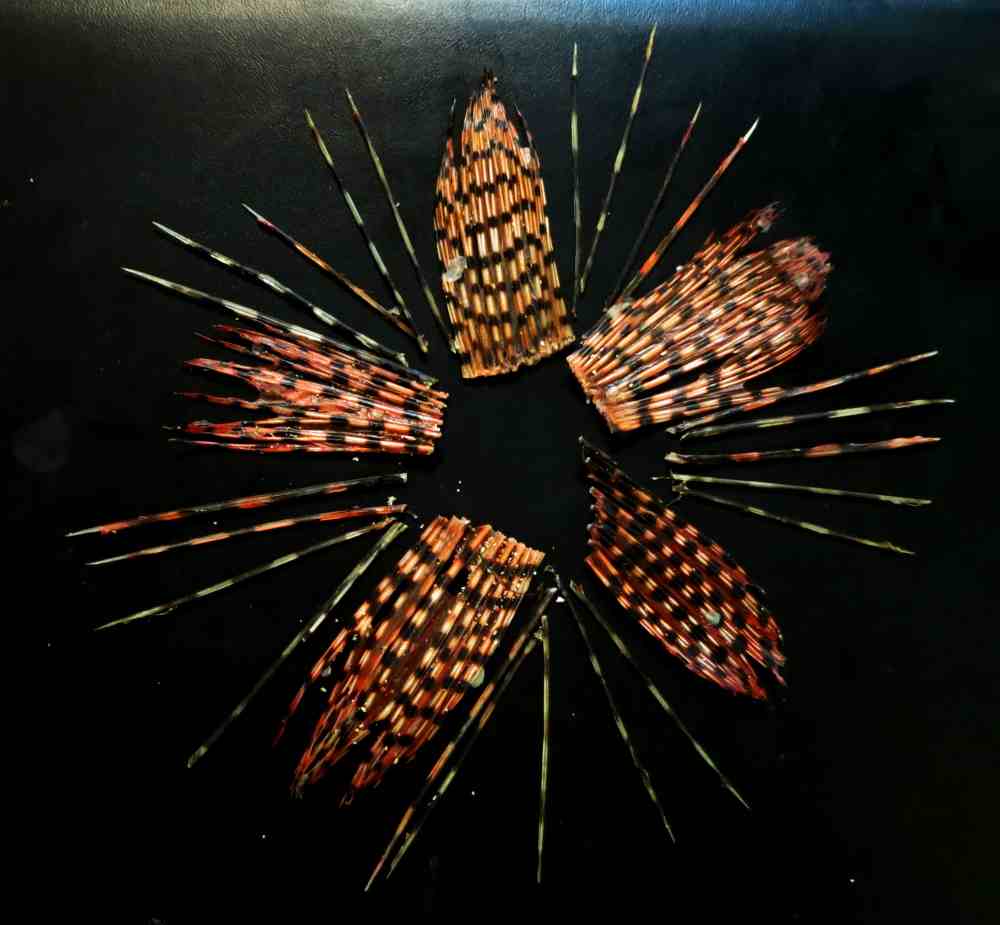
Array of dried lionfish spines and tails -ready for jewelry use Credit: ReefCI

In Part 1 of this post regarding market-based solutions to fighting the lionfish invasion that is threatening coral reef and other marine ecosystems throughout the Caribbean, Gulf of Mexico, and Southern Atlantic Seaboard of the United States, I wrote about the challenge of developing commercially sustainable strategies for undertaking the systematic removals that are needed to keep lionfish populations under control. I discussed the need to develop a series of vertical markets, pointing to promotion of lionfish as a seafood choice as the most obvious of these. Capture of juvenile lionfish for the aquarium trade as another.  A third market, and one in which I’m personally involved, is use of lionfish spines and tails for jewelry and other decorative items.  Continue reading
Useful Or Not, Therein Lies The Rub

Horace Dediu

Horace Dediu

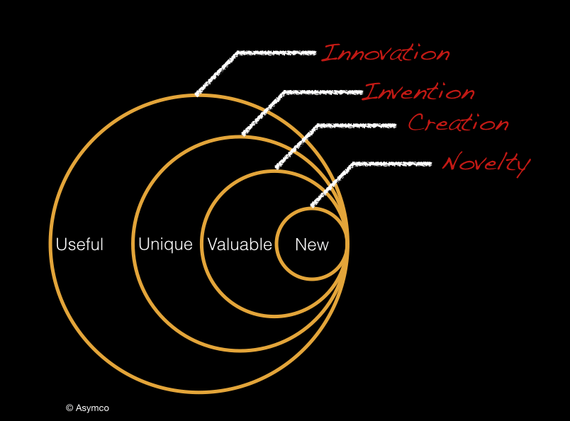
We frequently link to stories about innovation related to protecting natural and cultural heritage, particularly our own favored practice of entrepreneurial conservation. We do so with the hope, and sometimes blind faith, that what we are focused on is not only effective (as in, accomplishing what we set out to accomplish), but also useful (as in, of lasting, rather than just short term value). So, Horace Dediu has our attention. Not the clever new terminology, which is not what we find innovative, but the basic point behind it seems to be:

Innoveracy: Misunderstanding Innovation

Illiteracy is the inability to read and write. Though the percent of sufferers has halved in the last 35 years, currently 15% of the world has this affliction. Innumeracy is the inability to apply simple numerical concepts. The rate of innumeracy is unknown but chances are that it affects over 50% of us. This tragedy impedes our ability to have a discourse on matters related to quantitative judgement while policy decisions increasingly depend on this judgement.

But there is another form of ignorance which seems to be universal: the inability to understand the concept and role of innovation.

Continue reading

Duchamp Design Du Jour

tumblr_mjnoeg7QzL1qz5g9bo1_1280

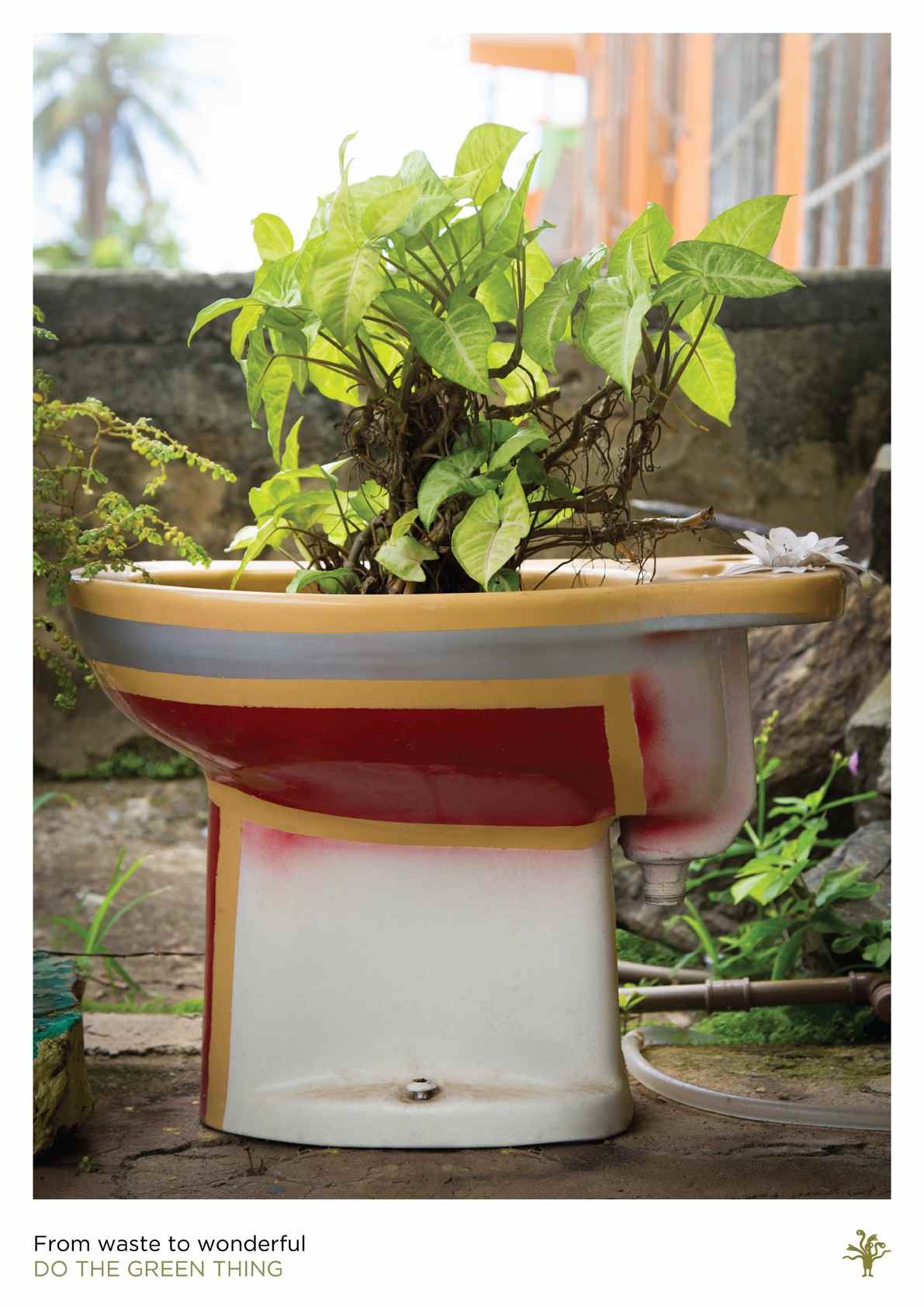
Our thanks to Mel Duarte for this referral of a design idea that has artistic legs and history, but is as fresh as ever:

In a small Brazilian village, artist and photographer Mel Duarte came across this great example of turning an old thing into a new thing.

“I really like the idea of creative recycling, and hope to inspire people with the potential it offers. With this in mind, I took the chance when I was in a little town in Bahia, Brazil, called Serra Grande, to wander through the village looking for something that could express this idea. That’s how I came across the recycled toilet bowl – it’s such a lovely example of how waste can be turned into something funny and beautiful.” Continue reading

If You Happen To Be In Philadelphia

This slideshow requires JavaScript.

We are on a Prosek roll…Currently, through June in Wood Gallery 227 at the Philadelphia Museum of Art, you can experience an exhibition dear to the heart of many members of Raxa Collective’s team in South Asia, and travelers from around the world, from the artist’s 2008 work:

The Peacock and the Cobra, a portfolio by artist and naturalist James Prosek (American, born 1975), forms the centerpiece of this exhibition. Also on view are a variety of painted pages and other objects from the Museum’s rich collection of art from India and Pakistan. While Prosek is not himself South Asian, the narratives that compose The Peacock and the Cobra invoke a range of ideas and images from the subcontinent. Continue reading

Font Innovation, Greening Government

We like all the dots that can be connected in this story.  First, for our friends at Thought Factory Design, another story about font innovations. Second, the fact that at 14 years old this fellow is thinking about waste reduction in such inventive ways means he may be a candidate for membership on the Young Creatives dream team. Third, a bit of home team pride for several hundred members of Raxa Collective, some of the stories that ran after CNN first reported this mention that Suvir is from a family of Indian origin:

(CNN) — An e. You can write it with one fluid swoop of a pen or one tap of the keyboard. The most commonly used letter in the English dictionary. Simple, right?

Now imagine it printed out millions of times on thousands of forms and documents. Then think of how much ink would be needed.

OK, so that may have been a first for you, but it came naturally to 14-year-old Suvir Mirchandani when he was trying to think of ways to cut waste and save money at his Pittsburgh-area middle school.

It all started as a science fair project. As a neophyte sixth-grader at Dorseyville Middle School, Suvir noticed he was getting a lot more handouts than he did in elementary school. Continue reading

Pro-Environment Posters For WWF’s March 29 Earth Hour Initiative

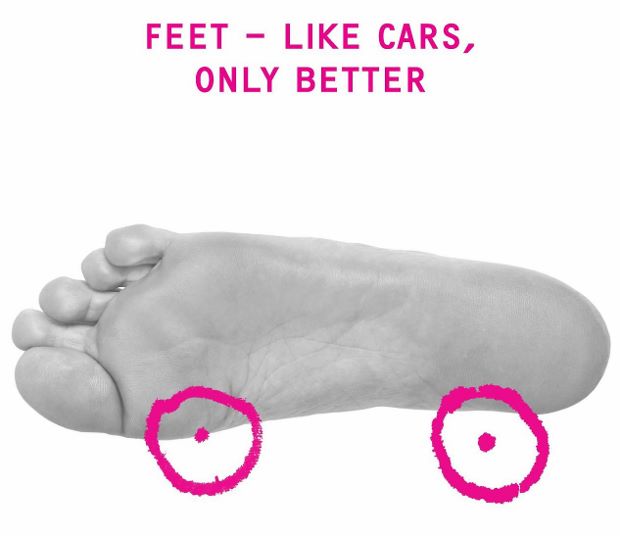
Walk the Walk by Marina Willer for 29 Posters for the Planet

Walk the Walk by Marina Willer for 29 Posters for the Planet

We appreciate collaborative efforts to raise awareness about environmental issues, especially when they come from places where the focus is not normally on conservation. Design agencies are generally designed to sell more stuff. Publishers are generally designed to use ex-trees to communicate stuff. But some designers are on the other side of the consumer behavior-influencing fence. And some publishers use those ex-trees to publicize a more tree-centric future.  Ethics sometimes prevail over ambition. Education sometimes jumps the line.

Professional communities–whether design firms, publishers, hotel companies or take your pick–all have latent collective action lurking in their futures. We hope nature and culture are the beneficiaries. Thanks in particular at this moment to publisher Phaidon, which is in itself worthy of a post on its series of environmentally-friendly books and initiatives, for bringing this initiative of design firm Pentagram to our attention:

Pentagram’s carbon free foot print

Design agency works with Do The Green Thing charity on environmentally friendly posters

The gulf between our high-consumption lifestyles and the kind of sustainable world many of us hope to inhabit is vast. Yet the changes that could take us there aren’t unthinkable, as our recent book, The World We Made, makes clear. Continue reading

10 Years Of Thought Factory Design, Essential Member Of Raxa Collective’s Collaborative Community

This slideshow requires JavaScript.

We are thinking of the awesome folks at Thought Factory Design today as we review stationary for Spice Harbour, menu layouts for 51, and the logo for a new property we have recently accepted responsibility for (more on which when that logo is ready). They are members of our community with whom we collaborate more than just about anybody. They definitely get our commitment to conservation, and strengthen our ability to creatively pursue solutions. Continue reading

Saving Rainforest One Pop-Tart At A Time

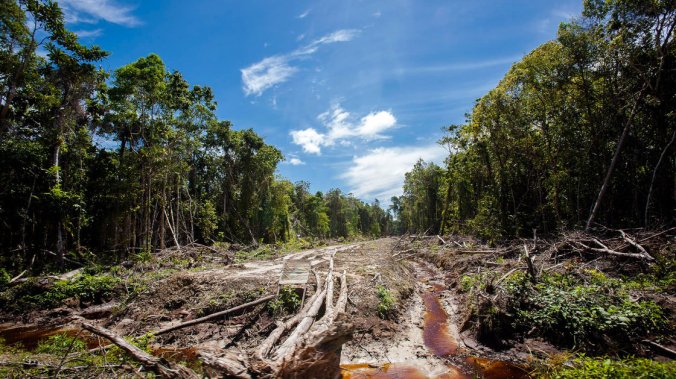
An access road is constructed in a peatland forest being cleared for a palm oil plantation on Indonesia's Sumatra island in 2013. Chaideer. Mahyuddin/AFP/Getty Images

An access road is constructed in a peatland forest being cleared for a palm oil plantation on Indonesia’s Sumatra island in 2013. Chaideer. Mahyuddin/AFP/Getty Images

Thanks to National Public Radio in the USA for this story of palm oil, Pop-Tarts and ethics, wrapped up in the clothing of an entrepreneurial conservation case study among multinational corporations:

If you think a small shareholder can’t get the attention of the multibillion-dollar palm oil industry, think again.

Lucia von Reusner lives half a world away from the palm oil plantations in Southeast Asia that have become notorious for environmental, labor and human rights abuses.

So, how did she nudge for change? She couldn’t tell palm oil plantations in Indonesia to clean up their act. But, as a Kellogg shareholder, she figured out how to put pressure on the company to use its leverage to push for change.

Palm oil, of course, is the fat that lubricates so many of our packaged snacks today, from Pop-Tarts and Eggo waffles to soaps and other personal products. And global demand for palm oil has grown quickly.

The clear-cutting of precious forests in countries like Indonesia and Malaysia to grow the oil palm trees has been well-documented. More recently, an investigation by Bloomberg Businessweek into human rights abuses on Indonesian palm oil plantations and an Accenture analysis that described the use of child labor have raised more awareness about other unsavory realities in the industry. Continue reading

Welcome, Xandari

Seen from one angle, the sun is setting over the pool on Xandari’s western perimeter; the way this photo is taken makes it appear that way, but if seen from Kerala, the sun would just be rising.  Just hours ago, Xandari joined Raxa Collective.  Welcome! Continue reading

Food-Related Whodunnit

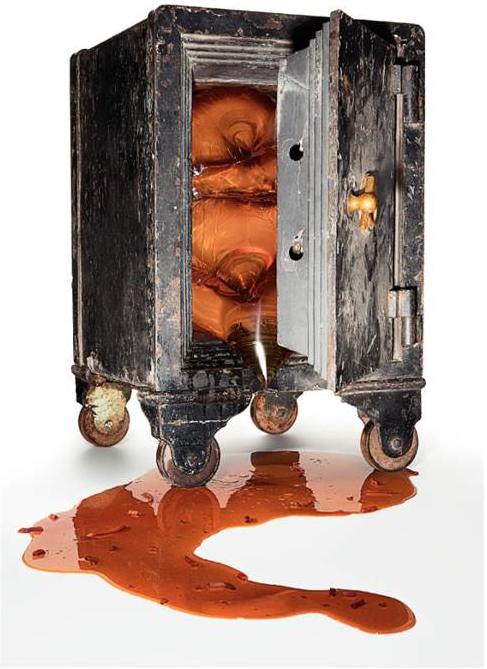
Illustration for "HOT GREASE, The Wild West of used-cooking-oil theft"

Illustration for “HOT GREASE, The Wild West of used-cooking-oil theft”

Food and/or its by-products are not the centerpiece of any literary genre that we know of, other than cookbooks and more recently food histories.  This week’s New Yorker has a welcome addition in the annals of food as a key ingredient in other genres:

A few months ago, in a clanging, hissing plant on the outskirts of Newark, a tanker truck backed up to a deep reservoir and delivered thousands of dollars’ worth of raw material—what people in the rendering industry sometimes refer to as “liquid gold.” The plant’s owner is a company called Dar Pro, and the C.E.O., Randall Stuewe, looked on while a hose from the truck gushed a brown fluid, filled with fine sediment and the occasional mysterious solid. Slowly, the pit became a pool, whose surface frothed and eddied and gave off a potent odor of old French fries, onion rings, and batter-fried shrimp. “Used cooking oil,” Stuewe told me. “We process two billion pounds a year.” Continue reading

Valuing Monarch Butterflies

Image © Doug Lemke | Shutterstock

Image © Doug Lemke | Shutterstock

Thanks to the University of Washington’s Conservation magazine website for this discussion of the key question facing La Paz Group and other conservation-focused entrepreneurial firms (here focused on a particular kind of butterfly but our interest is in how people participate in conservation through travel experiences):

How much would people pay to save the iconic monarch butterfly? A lot, according to a new study in Conservation Letters. Based on survey data, the authors estimate that American households are willing to spend about $4 to 6 billion to support monarch conservation.

Even people who aren’t butterfly-lovers are likely to have heard about the monarchs’ spectacular migrations from the northern U.S. and Canada to Mexico and California. “People’s interest in monarchs and their fascinating, visible biology is obvious,” the researchers write. They note that seven states have adopted the monarch as their official insect or butterfly, and the U.S., Canada, and Mexico hold festivals in the monarch’s honor. Continue reading

Fellow Travelers

We pointed to this interview he gave some time back, in which he talks about how his company came to be, and what it has meant to him personally. We have enjoyed news stories in the last couple years covering some of his company’s innovative approaches to making their business model viral–not only so consumers are more hooked, but so that other entrepreneurs get hooked on their business model.  In our own small way we are fellow travelers, at La Paz Group, with Patagonia’s much older, established business; we hew to the same path even as our particulars could not be more different.

This letter by Patagonia’s founder provides his simple explanation of what this new initiative of the company is all about. The website’s FAQ section explains it all in a nutshell:

…What are the responsibilities of Patagonia Works as the holding company?

The Responsibilities of Patagonia Works:

  •   Nurture entrepreneurial ventures
  •   Incubate environmentally responsible companies
  •   Diversify corporate holdings
  •   Extend the reach and the influence of the brand to new markets
  •   Influence the global business paradigm
  •   Offer a new way to measure return on invested capital
  •   Provide long-term economic health with consideration of environmental and social risk
  •   Promote The Responsible Economy, Patagonia’s ongoing environmental campaign
  •   Provide best-quality shared services and allow each business to focus on product, quality, sales and customer experience

Continue reading

If You Happen To Be In Scotland

The 20th annual World Porridge Making Championships will take place in the Scottish Highland village of Carrbridge on Saturday 5th October 2013.

We should have known such an event existed. Now that we do, but being stuck in south India with no time to witness it first hand today, we will watch it from afar; but we have marked the calendar for next year’s championships. Meanwhile, you might find interesting how we came to know about this event.

Continue reading

Community, Alive And Well, Downtown NYC


Among the more interesting revelations, during his tenure as Editor of the New Yorker magazine, is that he is a big fan of The Boss.  He has posted on the magazine’s website several times following his profile of Bruce Springsteen in the magazine last year.  We normally shy away from posts about music on this site, for the same reason we shy away from cute kitten videos: you do not need more of that.  But David Remnick’s writing is different.  It is about community as much as it is about music.  And his post today about this event in New York is not only about community, but about keeping heritage alive by infusing it with innovation–that is, entrepreneurial conservation:

When it comes to “Inside Llewyn Davis,” the new Coen brothers movie, I’ll respectfully leave the critical work to my colleagues Anthony Lane and David Denby, except to say that the movie’s appreciation of its great subject—the folk-music scene in Greenwich Village in the period just before Bob Dylan’s arrival—is wry, but full and soulful. Inspired by Dave Van Ronk’s wonderful memoir, “The Mayor of MacDougal Street,” and many other sources, the Coens have their fun about the scene, but their love for the music—the depth and variety of it—could not be more evident. Continue reading

Poet, Publisher, Arboreal Millionaire

Dennis Publishing staff planting native broadleaf saplings for The Heart of England Forest project that has planted one million trees, Warwickshire. Photograph: The Heart of England Fores

Dennis Publishing staff planting native broadleaf saplings for The Heart of England Forest project that has planted one million trees, Warwickshire. Photograph: The Heart of England Fores

We like, therefore we link:

A scheme by one of Britain’s most successful entrepreneurs to reforest the heart of England planted its millionth tree.

Poet and publisher Felix Dennis said he was proud to have planted the first 10% of his ambitious vision. “I’m hoping that long after I’m dead that the charity I founded will one day be the proud possessor of 25,000 acres of woodland planted with 10 million native broadleafed trees, completely open to the public,” he said. Continue reading

Citizen Science in Belize – Update – If You Can’t Beat’em, Wear’em

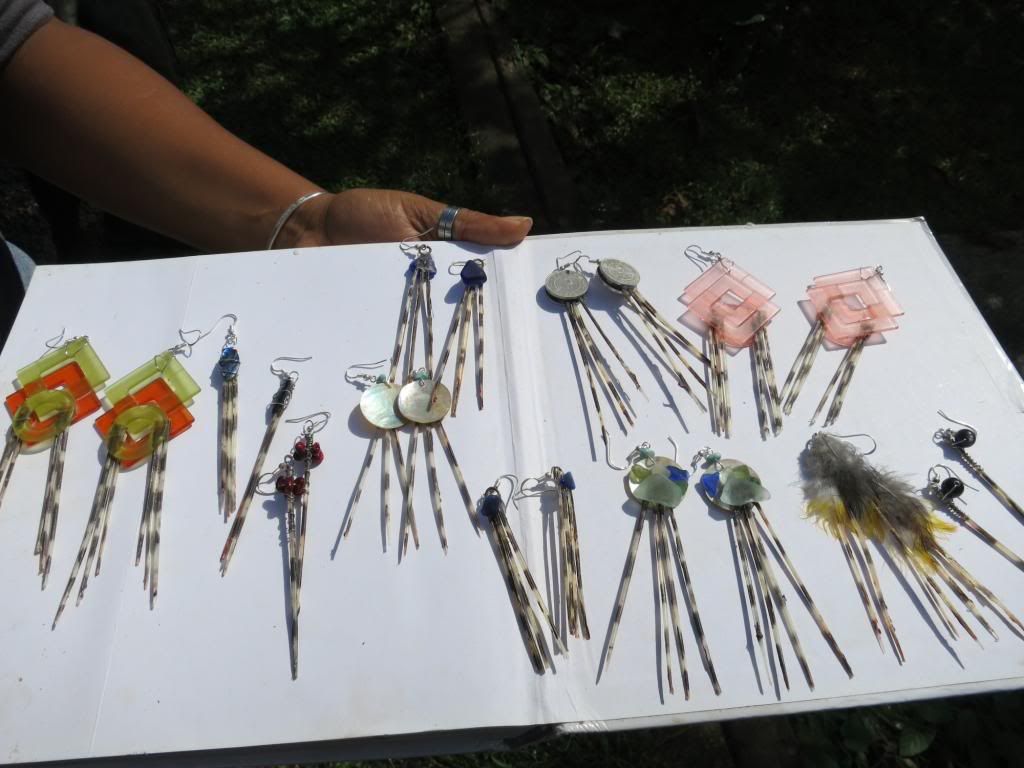
Lionfish spine earrings crafted by Palovi Baezar, Punta Gorda, Belize. Credit: Polly Alford, ReefCI

In earlier posts about my volunteer experience in Belize with ReefCI, I talked about the lionfish invasion that is threatening coral reef and other marine ecosystems throughout the Caribbean, Gulf of Mexico, and Southern Atlantic Seaboard of the United States, and noted that, at least for the foreseeable future, human intervention, particularly the establishment of a commercial fishery for the species, appears to be the only solution to keep the invasion under control.

I mentioned the idea of lionfish jewelry as a possible way of increasing the economic return to fisherfolk who may otherwise be reluctant to go after lionfish given the difficulty of catching them (the fish must be harvested by spearing or hand netting rather than through traditional methods such as lines or nets). I’ve been pleased to learn that at least one artisan in Belize has picked up on the idea, using some of the lionfish spines that I collected while I was there. She has already crafted some beautiful earrings (see photo above) and is working on other jewelry items as well as decorative mirrors. Elsewhere, jewelry crafted from lionfish tails and fins is being sold online, and through a retail outlet in Curaçao.  Continue reading

Cheetahs And Shepherd Dogs, Partners In Entrepreneurial Conservation

Thanks to a friend’s travels to the southern tip of Africa, a story from the field about colleagues we hope to meet soon. The friend learned of this program during a visit to a Cape Town winery (cheers to them and that; click the logo to the right to read more than we can share here):

Cheetah Outreach

Promoting the survival of the free ranging, Southern African cheetah through environmental education and delivering conservation initiatives.

As a result of the success of Cheetah Conservation Fund’s livestock guarding dog programme in Namibia, a trial programme was launched by De Wildt’s Wild Cheetah Management Project (WCMP) and Cheetah Outreach in 2005 to introduce the Anatolian shepherd to serve farmers in South Africa. To give this trial the best possible chance of success, farmers  Continue reading

Citizen Science in Belize: Part 2/2 – If You Can’t Beat’em, Eat’em

Photo by Alexander Vasenin

Lionfish sushi – Photo © World Lionfish Hunters Association (click on photo to visit their website)

In Part 1 of this post I talked about the lionfish invasion that is threatening coral reef and other marine ecosystems throughout the Caribbean, Gulf of Mexico, and Southern Atlantic Seaboard of the United States.  Scientists, environmental groups and governments that are studying the problem have all come to the conclusion that it is probably impossible to eradicate lionfish in the Atlantic – they are here to stay. Continue reading

Citizen Science in Belize: Part 1/2

Photo © ReefCI

Photo © ReefCI

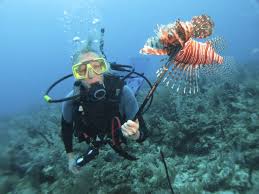
It might seem strange to accompany a posting about marine conservation with a photo of a fish on a spear, but in this case, it is entirely warranted.

I recently returned from the Sapodilla Cayes Marine Reserve in Southern Belize, where I spent two weeks working as a volunteer with ReefCI, a NGO dedicated to coral reef ecosystem conservation. Located 30 miles off the coast of Belize on the southern tip of the Mesoamerican Barrier Reef (the second largest in the world, after Australia’s Great Barrier Reef), the Sapodilla Cayes constitute a unique ecosystem.

Along with other volunteers, I assisted the ReefCI marine biologist with population surveys of conch, lobster, and commercial fish species, as well as coral reef health checks. At least one, and sometimes two surveys were carried out each day. The data collected is provided to the Belize Fisheries Department as well as to other cooperating NGOs.

Now about that fish on a spear. One of ReefCI’s projects is lionfish control. Spears Continue reading

Those Fabulous Buffett Boys

It sure sounds like a great way to pass time, giving away billions of dollars. The fact that they seem to think deeply about the implications of their wealth, as well as their methods of getting and giving, makes them even more noteworthy. Thanks to tax-payer, and listener-supported National Public Radio in the USA for bringing the other brother/son to our attention with this story:

Get Howard Buffett into the cab of a big ole’ farm tractor and he’s like a kid — albeit a 58-year-old, gray-haired one. He’s especially excited when it comes to the tractor’s elaborate GPS system, which he describes as “very cool.”

“I’m driving hands-free,” says Buffett, the son of billionaire investor Warren Buffett. Continue reading