Collective Action & Learning

This site has more than one expression of gratitude for the founders, funders, faculties and students at more than one institution of higher learning.  Students have written their own descriptions of gratitude for experiences that such schools (as well as their families and communities) have prepared them for.  Recently I have interacted with the faculty and students of a course at Brown University and the takeaways keep on giving and then giving some more. Now, I extend an invitation, or recommendation, to students elsewhere: join!

I do not necessarily mean, as in here, join us.  Just as well if you can support the efforts here or here or here; otherwise take your pick from other posts on this site.

I direct this to students at a course at Cornell University, taught by Steve Wolf.  They are challenged to figure out the collective action problem, and solve it practically.  Side note: some recent graduates of Cornell, such as Nicole and Katrina, have shared their personal experiences in projects inspired by the topics in this course; a couple of examples are here and here (see their other posts by clicking on their names on the right side of this site); so has Adrien, a couple of years out of Amherst; and David, who would have graduated Brown a few years ago if he had not been busy forming this organization.

You get the point.  I hope that more of you join, wherever you may. And you are more than welcome here.  We all look forward to your contributions.

Brown Takeaways, & Galapagos Giveaways

For the work we do, there are a few places always on my radar.  I do not mean some search engine tool for getting all the news on such and such.  I mean radar in the sense of, what really matters?  Why? When and where did it start mattering for me?  September, 1983 at JFK Airport is at the very top of the list, believe it or not, but I will save that story for another day. August, 1988 at Cornell University is near the top, as is February, 1995 in Costa Rica.  The Galapagos Islands joined the list in July, 1998 when I had my first work assignment there.  Ever since, I have had WWDD? buzzing in my thoughts, something like a bumper sticker in the back of my mind that cannot and will not go away.

This story from 2000 is a reminder of one my my subsequent visits.  Continue reading

Takeaways

The video clip above is what comes to mind after a bit of reflection. Thanks to Alan, Bill and 30+ others, I have not only fonder thoughts for Brown University, but food for thought.  The course ENGN 1930, aka Social Entrepreneurship, asks students to provide brief, written reflections on class sessions, readings, etc.  In my session with them, I started by sharing my experience completing a PhD and moving to Costa Rica in the mid-1990s.  I then described the process of learning from both public sector leaders and entrepreneurs there, and eventually forming a company that practices entrepreneurial conservation.

The gist of several of the “takeaways” from students is the reasonable question that I am chewing over now: are the Raxa Collective initiatives examples of social entrepreneurship?  Is La Paz Group practicing social entrepreneurship?  The snarky, if partially true reply would have been that I do not care all that much what it is called.  Continue reading

Beta-Think Is Better

Jeff Jarvis has this to say in a post combining the topics Beta-Think and End Malaria Day:

The modern cure to Voltaire’s paradox [“Le mieux est l’ennemi du bien,” or “the best is the enemy of the good”]—and a gift of the digital age—is the beta: the unfinished and imperfect product or process that is opened up so customers can offer advice and improvements.

Those of us who have worked in bricks and mortar environments, especially hospitality businesses, might wonder: did he never hear of a “soft opening” before?  Those have been around since long before the digital age.  But he likely means, and we agree, that digital and especially social media facilitate more effective soft openings of all kinds, everywhere.

News(Paper) Power

Despite the now ubiquitous use of the internet to follow both local and world news, newspapers continue to exist for many people as their daily connection to current events.  In many countries that’s not their only use of course.  We’ve written about the recycling initiatives of newspaper bags and baskets, as well as their use as wrappers and packaging in markets around the world.  But used for fueling our cars?  Now that’s news!

Tulane University associate professor of cell and molecular biology Dr. Mullin and his team have just applied for a patent for a method to produce the biofuel butanol from organic material.  Continue reading

Borneo On Our Mind

If you enjoyed Nicole’s post, you will definitely want to watch this.  We had the opportunity to exchange emails with Willie and can affirm what you will see at 1:11 (one minute and eleven seconds) into this TED talk: being an activist for a cause you care about can be frustrating and challenging enough that applause is not a motivator.  He is already recognized by enough famous organizations that our two cents will seem a pittance, but we consider him a hero of entrepreneurial conservation, so must say: thank you Willie!

If you feel the same way after watching this video, say so by visiting this website and then this one.  Especially this latter link should give you some ideas about how to get involved and make a difference.

Borneoculars: Observations from a Scientific Expedition in Borneo

Guest Author: Nicole Kravec

Indiana Jones would be proud of the entire scientific expedition team.  For two weeks we trekked through the jungles of Malaysia’s Imbak Canyon, the “biological gene bank” in the heart of the Malaysian state of Sabah in northern Borneo.  It was one of the best – and most adventurous – trips of my life.

Continue reading

“Go Green, Young Man (or Woman)…!”

When Horace Greely (well, actually John B. L. Soule) said “Go West, young man, and grow up with the country!” he was speaking from the perspective of limitless possibilities. The Lewis and Clark Expedition had helped map out the west and many young men, and later women, answered the call.

With wilderness in peril, that same entrepreneurial spirit has opened up a new world of empowerment and possibilities for later generations. The California Conservation Corps and Southwest Conservation Corps have teamed with the non-profit Veterans Green Jobs in a win-win program to support both the country’s military veterans and the country’s national parks. Continue reading

Can Your University Do This With Paper?

Originally motivated by the Big Ideas article, and further motivated by looking into Cornell University’s many resources to try to get answers to those questions, now Seth’s mention of banana paper deserves a pointer to the amazing university that got that movement started.  If you visit Costa Rica, you should visit EARTH University, which is oddly modest in mentioning its history with regard to banana paper.  If you are not on your way to Costa Rica, but live in the United States, try to find a Whole Foods supermarket if for no other reason that to purchase one of several EARTH-branded products.  EARTH is our idea of the perfect mix of practical education, entrepreneurial conservation initiatives, and quality outcomes–things we care deeply about–so purchasing their products may lead to the next breakthrough innovation in sustainable agriculture.

Lomax Legacies

Creative effort always deserves credit, and on occasion deserves valorization.  The fellow that drew this chart definitely deserves credit:

He has done his homework, both musically and legally, to deliver a punchy sermon with good graphic and multi-media accompaniment. His moral question for us to wrestle with:

grateful as I am to Alan Lomax for recording and disseminating so much great folk music, I remain baffled as to why he was allowed to copyright it. Our creative heritage deserves better stewardship than our current laws provide.

Continue reading

“I just want to say one word to you. Just one word….Plastics” *

Yes, Plastics.  That ubiquitous, universal petroleum product that no one but a Hottentot can pass a day without touching.

It’s impossible to conceive of a world completely devoid of plastics, but we certainly can conceive of alternatives to at least some of its uses.  Forums such as Fortune’s Brainstorm Green bring together innovators and day dreamers with tangible results.

Eben Bayer and Gavin McIntyre, co-founders of Ecovative Design, aren’t much older than Benjamin Braddock *  was when he received that erstwhile advice. Continue reading

Don’t Honk To Change The Rules

Guest Author: George M. George

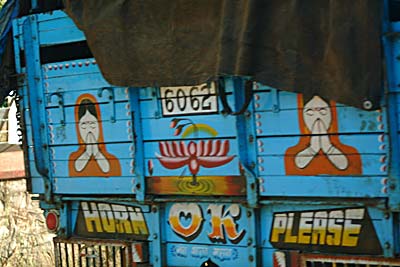
Driving in Kerala sometimes makes me wonder whether Dante failed to describe an essential part of that descent into the inferno.

A recent advertisement for a major automotive company actually made this statement: Make Your Own Rules.

Oh. Thank you so much. It seems that most drivers here have in fact made their own rules and do not care how the ‘game’ is played as long as they win. So it is imperative that when you get here you opt for a slower, safer drive to your destination by asking your driver to go easy on the right pedal.  If you do so, you will actually enjoy the scenery, of which there is plenty.  But, you will still have the sonic thrill of your life. Continue reading

Wordsmithing: Market

Amie has written about market in various contexts, making use of both its verb and noun form.  In our day to day activities, we are motivated by entrepreneurial conservation, by which we mean market-oriented solutions to complement the efforts of NGO, philanthropic and governmental efforts to preserve ecosystems and maintain the vitality of cultures.

We abhor all things fundamentalist, so the cliche of the University of Chicago notion of markets is not one we cling to (nor is the cliche apt anymore; see their contributions in the realm of behavioral economics to get a sense of where this great institution is heading in terms of hegemonic ideas).  The same goes for the fundamentalism that has prevailed in the world of conservation–a belief that markets cause environmental problems but cannot provide solutions.  So, in the spirit of tamping down fundamentalism of all kinds, we might look at the marginalia of this word’s definition, rather than OED‘s definition itself, as we otherwise systematically do:

Proverb: you may know how the market goes by the market folks.

We adapt this, in our daily work, to mean: let’s be realistic while we attempt creative, fun approaches to serious problem-solving.

New Wheels

A friend writes from Santa Monica, California (USA) that he has taken a new job with a new company producing a new kind of electric vehicle.  It will be fun to watch the progress of all three.  If you read his column regularly, you may recall Thomas Friedman wrote about them.  So did these folks, and we are happy to know of their site.  It looks like one more source for staying apprised of technological innovations and the businesses that provide to and feed from such troughs.  And we like the word collaboration on their masthead.

Wordsmithing: Entrepreneurial Conservation

Two previous posts about words pointed out how common usage can alter the course of their meaning over time in surprising ways. We might not even recognize the original meaning today, some perishing in dungeons and others flying too high for their own good. The risk of writing these particular posts is when their intent seems anything other than constructive. Who wants to cast a stone, first or otherwise? We live in glass houses, and all that. In the spirit of focusing on that intent, this quick post draws together two words: entrepreneurial conservation.

As any phrase should, these words together build something more valuable, more effective, than either could on its own. If words can be cousins, as implied in a previous post, then phrases can be part of an extended family too: these two words, as a phrase, share linguistic DNA with social enterprise, but OED does not know it yet. The phrase (and our work) recognizes that for all the heroic efforts of traditional conservation organizations—The Nature Conservancy, WWF, Conservation International, etc.—not to mention incredible government commitments to national and state parks throughout the world in the last century, there is still a deficit of conservation.

The world still loses more wilderness than it protects. Ditto for intangibles in the domain of cultural heritage. So, what else to do other than pitch in and see what we can do? And if it can be shown that conservation is good business, then more people and organizations will pitch in. Watch Adrien’s posts for more on this in Patagonia, and Reyna’s upcoming posts from the Galapagos Islands. Those are two pristine natural wonderlands with limited human populations. But also watch for posts from Kerala, India — where the story is more complex with regard to population growth and wilderness conservation. Or from Nicaragua, where we feel Morgan’s Rock is leading the way in Central America with a robust mixed-use model that makes use of each idea we have put on the anvil so far: resort (old meaning), luxury (new meaning), entrepreneurial and conservation (combined meaning).

Biodiversity Buffers

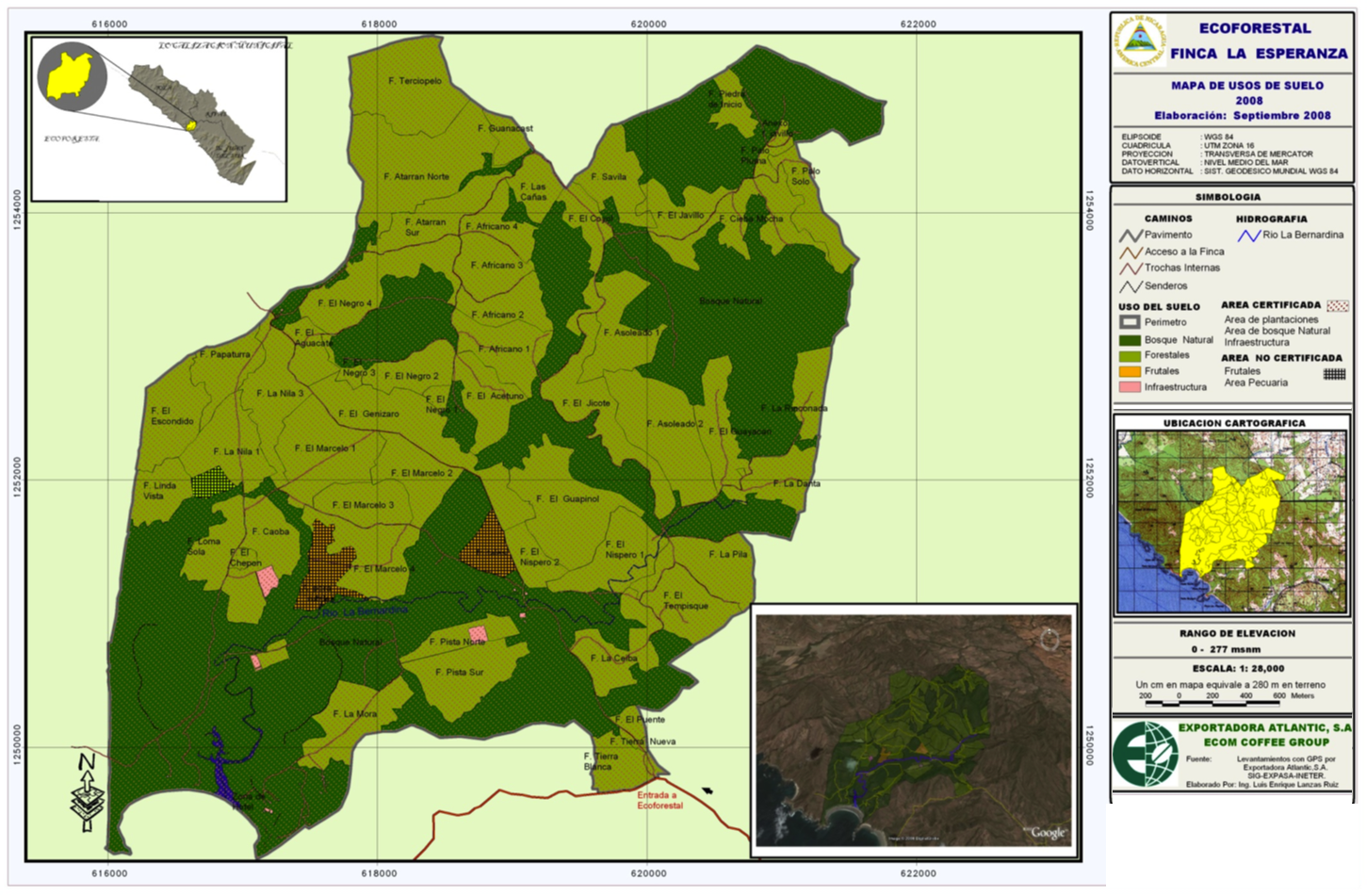
Private reserves have been established in many countries around the world, dramatically expanding the conservation provided to biodiversity in public parks by voluntarily protecting buffer zones. Despite their smaller size (relative to public parks) on an individual basis, in aggregation these private reserves are significant providers of environmental services.

So far the Nicaraguan Red de Reservas Silvestres Privadas includes 50 private reserves that protect 7,467 hectares—18,453 acres—of various ecosystems. Each one has renewable status as a reserve for ten years at a time, and is exempted from income taxes for ten years, property taxes for whatever amount of time the land is a private wildlife reserve, and retail sales taxes on goods that contribute to the reserve.

The Nicaraguan Ministry of Environment and Natural Resources (MARENA) supports certification of conservation activities, includes the private reserves in sustainability workshops, and helps bring teams of scientist investigators to the reserves to conduct studies like the one done at Morgan’s Rock/El Aguacate. Among other things, the reserve owners must make a yearly management plan, comply with environmental norms, and protect the wildlife inside their property. Some of the required contents of a management plan include Continue reading

In Conversation with Team Sustain

Over the past week our team at Cardamom Country has been in conversation with another team working for a brighter and better future for Planet Earth called Team Sustain. Founded in 1994, Team Sustain is based in Kochi, India and provides cost effective logistics and infrastructure solutions for sustainable resource utilization, engineering green solutions for the modern world. Mr. George Matthew, the founder of Team Sustain, spoke with me and explained that his main goal was to reduce the carbon footprint of as many people and organizations as possible. Mr. Matthew especially said he wanted to increase the benchmark and accepted levels of energy efficiency and encourage further sustainability-oriented social projects with minimal environmental costs. Continue reading

Profile: Varghese & Resource Management

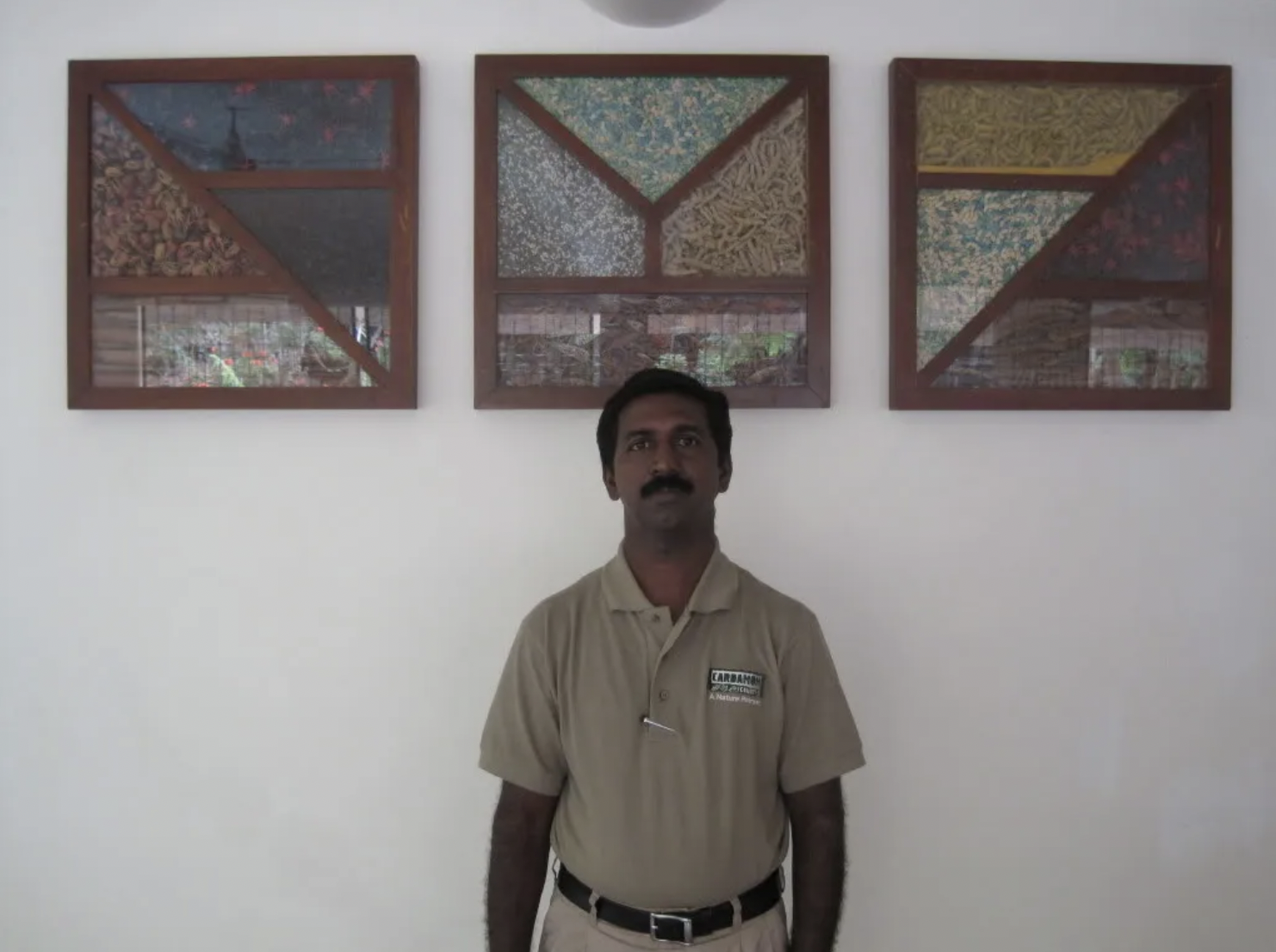
A few days ago I spoke with Varghese, the restaurant manager and head of the food and beverage department here at Cardamom County, who prides himself in running a tight ship and making sure that guests are at their happiest. Varghese is another long-time member of the Cardamom County family, originally arriving here eleven years ago, in 2000. Having taken a two-year hospitality course in Ravipuram in Ernakulam (the same district housing Cochi), at a school that has now shifted to become the Fort Munnar Catering College in the misty mountains of nearby Munnar, and training with Taj Group of Hotels, he arrived to fill the role of a restaurant supervisor.


Varghese told me about his Uncle Phillip who was one of the many well-educated people from Kerala who went over to a Gulf country, in this case being Bahrain. We talked about this brain drain, which Varghese mentioned had been going on since as early as the 1970s. The highly educated people and professionals of Kerala go in search of new opportunities, higher living standards, and money to send back home. Varghese also talked about Arabic being a language that is not too difficult to pick up, especially because of the difficulty and speed with which the native tongue of Malayalam is spoken. However, what is interesting to note is the stark contrast of climate between the Gulf countries and Kerala, the former being very dry, arid, and hot with the latter being humid and comfortably cooler especially at higher altitudes near the Western Ghats such as here in Kumily, Idukki. Continue reading

Reserve @ Morgan’s Rock

El Aguacate, the protected forest at Morgan’s Rock, is part of the Nicaraguan network of private reserves, or La Red de Reservas Silvestres Privadas. Over the past two days, a team of three biologists (one botanist in this forties and two zoologists in their twenties) has been walking through the reserve, photographing and documenting the wildlife they encounter in order to perform a sort of valuation study of the natural resources at El Aguacate. For the past week this team has been in the Rivas/San Juan del Sur area qualitatively assessing the floral and faunal density and diversity at around thirteen different private reserves; similar teams around the country are doing the same according to region.

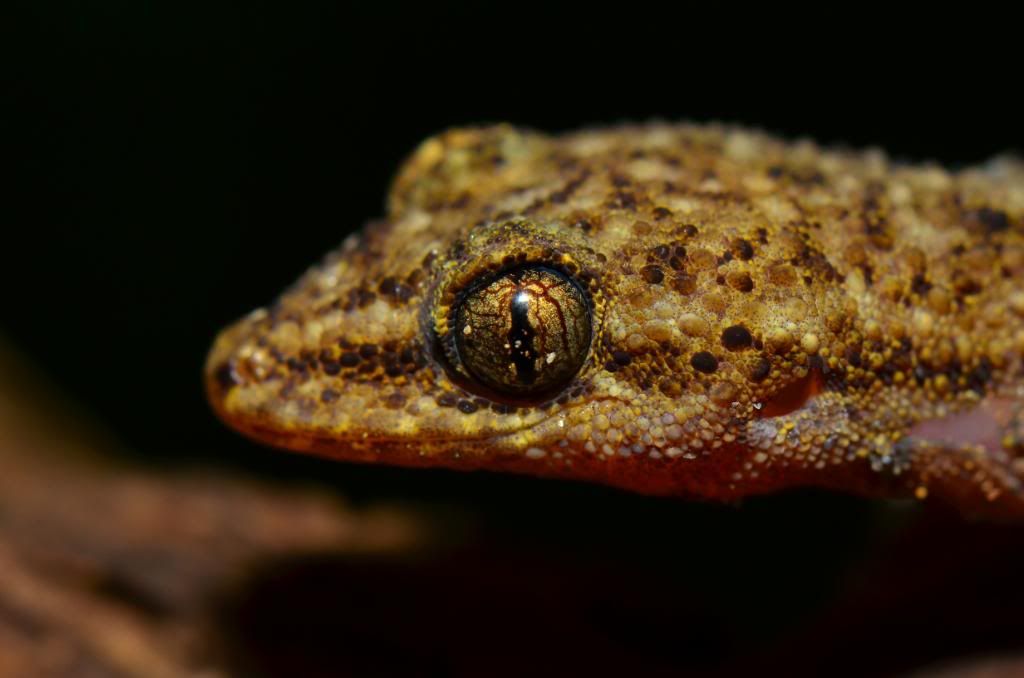
Gecko; species to be identified

José Gabriel Martínez Fonseca, one of the zoologists who also sports a Nikon camera that seems to have a telephoto lens (it looks almost a foot long), calls his photography enterprise Svaldvard Ink., after watching a show on the Svalbard archipelago in Norway on the Discovery Channel as a kid. Interested in the polar bears, he wrote down what he heard and years later preferred his own spelling of the word, adopting it as a username/alias for business. With his camera and skill as a biologist whose job it is to document species of reptiles, amphibians, birds, and mammals, José was able to photograph animals that have evaded my lens during my time at Morgan’s Rock. He was happy to share his images with me, so now I can share some of the best of them: all the photos in this post are his. Continue reading