 I have been following the Paper Trail since I got here as an intern and got involved in this social entrepreneurship project Raxa Collective has been working on! There are some types of environmental action that focus on being inherently low-impact from the original design while other methods focus on closing loops from more poor designs that leave good material wasted, such as newspapers. Something is sustainable when it meets the triple bottom line: environmental, economic, and social. RAXA Collective has been meeting this triple bottom line with its newspaper bag initiative! Working with the group, PaperTrails, they have been able to provide a livable income for local people who are unable to get work for whatever reason. They have work based on creating useful bags or envelopes out of recycled newspaper. Paper Trails has been providing bags and envelopes for Raxa Collective’s properties from newspapers and other recycled material. Now, we are taking the newspaper bag initiative to the next level. Continue reading
Ethics
Plant-a-Tree at Xandari
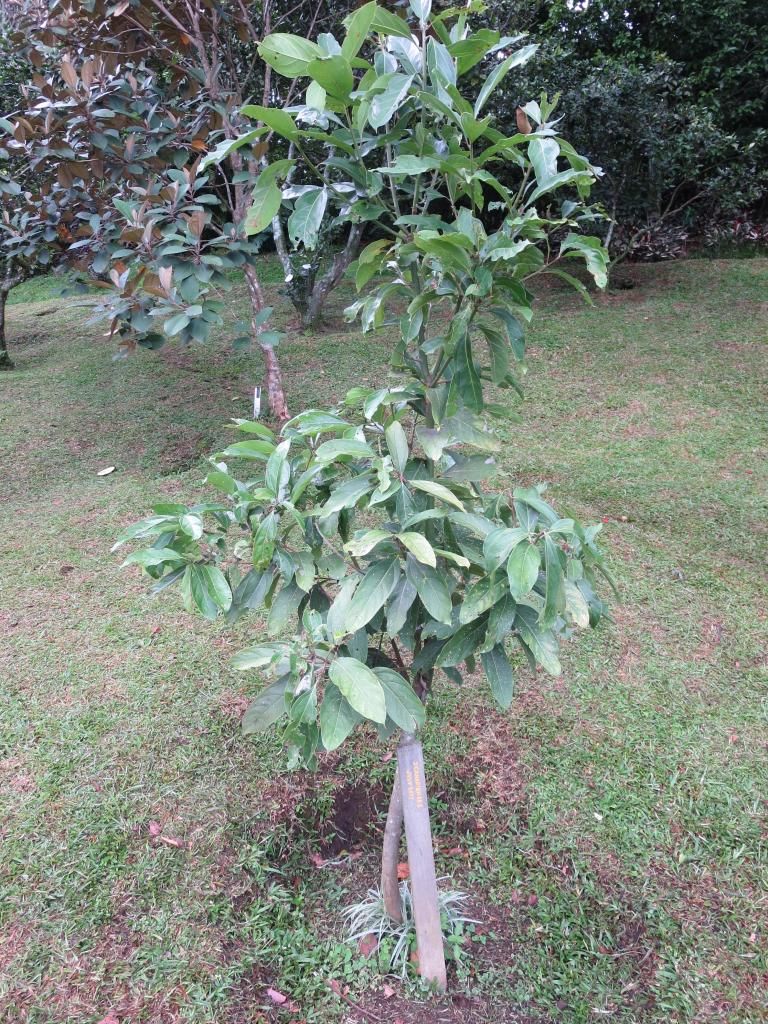
The stake in front that holds the planter’s name says (quite humorously, to my mind): 3 CANADIENSES!
Plant-a-tree programs are real winners: educational, fun, and productive. Next time you visit Xandari (or another sustainable or eco-friendly hotel), be sure to ask about the opportunity about the opportunity to plant a sapling. At Xandari, plantings are usually done in the orchard or in one of the old coffee plots. Everybody who plants a tree has a small wooden stake erected near the spot, commemorating the event and recognizing the effort to make the world a little bit greener. Continue reading
Do The Green Thing Countdown 25/29
 Continuing our promotion of Do The Green Thing’s campaign on behalf of WWF for Earth Hour, we point you to Switch Off Engine by Harry Pearce in which he:
…takes a warning sign from the depths of the car world and reuses it to create a messages that instructs us to step away from our vehicles and go by foot instead.
“The visual language of obedience demands our attention and compliance,” says Harry. “Maybe the car industry should follow its own rules.”
Why?
Pro-Environment Posters For WWF’s March 29 Earth Hour Initiative
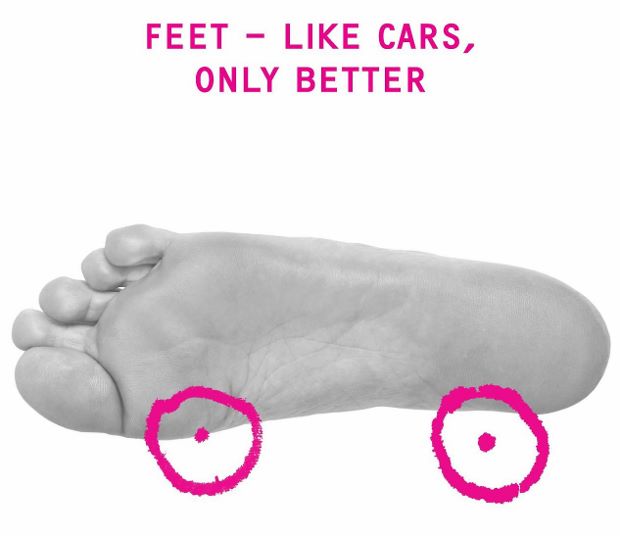
Walk the Walk by Marina Willer for 29 Posters for the Planet
We appreciate collaborative efforts to raise awareness about environmental issues, especially when they come from places where the focus is not normally on conservation. Design agencies are generally designed to sell more stuff. Publishers are generally designed to use ex-trees to communicate stuff. But some designers are on the other side of the consumer behavior-influencing fence. And some publishers use those ex-trees to publicize a more tree-centric future. Ethics sometimes prevail over ambition. Education sometimes jumps the line.
Professional communities–whether design firms, publishers, hotel companies or take your pick–all have latent collective action lurking in their futures. We hope nature and culture are the beneficiaries. Thanks in particular at this moment to publisher Phaidon, which is in itself worthy of a post on its series of environmentally-friendly books and initiatives, for bringing this initiative of design firm Pentagram to our attention:
Pentagram’s carbon free foot print
Design agency works with Do The Green Thing charity on environmentally friendly posters
The gulf between our high-consumption lifestyles and the kind of sustainable world many of us hope to inhabit is vast. Yet the changes that could take us there aren’t unthinkable, as our recent book, The World We Made, makes clear. Continue reading
If You Happen To Be In Oxford

As we continue menu/kitchen-testing at 51, we confront daily the question of how much meat we want to offer guests, how to source it ethically, and how to improve our vegetarian options. This book has generated considerable food for thought, so to speak. March 27 at 4pm, during the Oxford Literary Festival, co-author of the book Farmageddon, which is reviewed here and here, will be speaking for one hour. Wish we could attend. If you can and do, please send video or notes:
The chief executive of Compassion in World Farming Philip Lymbery uncovers the trend towards mega-farming that he says is threatening our countryside, farms and food. He says farm animals have been disappearing from our fields as food production becomes a global industry. And the recent horsemeat scandal demonstrates that we no longer know for certain what is entering the food chain. Lymbery collaborated with Sunday Times journalist Isabel Oakesott onFarmageddon, an investigation into mega-farming that ranges from the UK to Europe, the USA, China, Argentina, Peru and Mexico. Continue reading
Extinction And Its Discontents
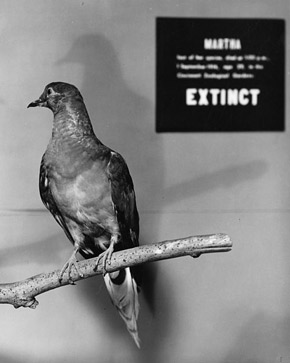
Photograph: Smithsonian Institution Archives.
I consciously favor stories of alternative approaches and progress on solving environmental challenges rather than the easier-to-find doom and gloom stories, which can have the effect of making one want to turn off the news altogether. I also strive, often in vain, to not be trite. But on occasion I am willing to push that edge as well–pop tarts? yes, when the story is worth telling. Among the toughest topics is extinction, because of its foreverness, and repeated stories with ethical heaviness embedded. Still, I try.
Elizabeth Kolbert, the New Yorker‘s point person on ecological challenges, not least mass extinction, has a remarkable ability to make information about impending cataclysm compelling; she compels me with that information to open my eyes rather than shut them; she also has reasoned ideas about that information, as this post on the magazine’s website displays:
Sometime in the summer of 1914, probably on September 1st but perhaps a few days earlier, the last passenger pigeon on Earth expired. The bird, named Martha, had spent most of her life at the Cincinnati Zoo. Until a few years before her death, she had a companion, George, who shared her ten-by-twelve-foot cage. Whether the two ever tried to mate is unknown. Like the Washingtons, they left no heirs. Continue reading
Drought, Desalination, Drink
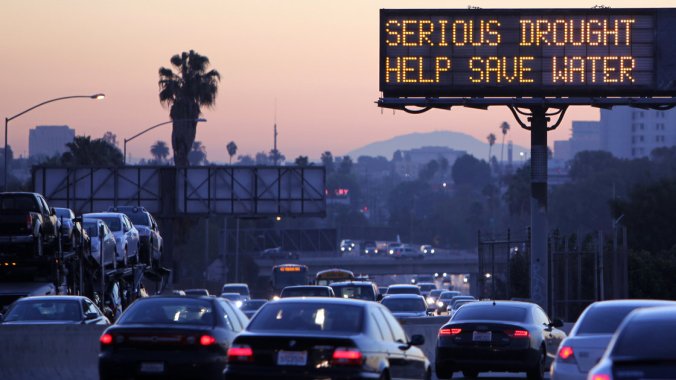
Extreme drought conditions in California have state officials looking for alternative sources of water, including desalinated ocean water. Richard Vogel/AP
National Public Radio in the USA has this story, both podcast and text version, about efforts to provide drinking water to a dry, thirsty region:
California is getting some much needed rain this week, but more than two-thirds of the state is still in extreme drought conditions, and that has the state thinking about alternative ways of getting water.
On the coast in Carlsbad, Calif., construction workers are building what will be the largest seawater desalination plant in the Western Hemisphere. When finished in early 2016, it is expected to provide up to 50 million gallons of fresh drinkable water every day.
“That’s enough water for 112,000 households here in the region,” says Peter MacLaggan with Poseidon Resources, the developer of this $1 billion plant. Continue reading
Saving Rainforest One Pop-Tart At A Time
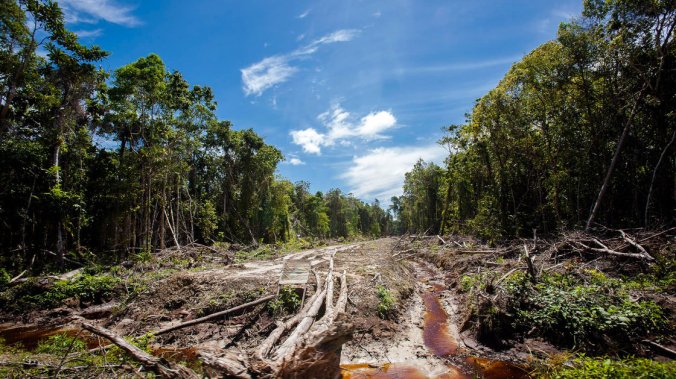
An access road is constructed in a peatland forest being cleared for a palm oil plantation on Indonesia’s Sumatra island in 2013. Chaideer. Mahyuddin/AFP/Getty Images
Thanks to National Public Radio in the USA for this story of palm oil, Pop-Tarts and ethics, wrapped up in the clothing of an entrepreneurial conservation case study among multinational corporations:
If you think a small shareholder can’t get the attention of the multibillion-dollar palm oil industry, think again.
Lucia von Reusner lives half a world away from the palm oil plantations in Southeast Asia that have become notorious for environmental, labor and human rights abuses.
So, how did she nudge for change? She couldn’t tell palm oil plantations in Indonesia to clean up their act. But, as a Kellogg shareholder, she figured out how to put pressure on the company to use its leverage to push for change.
Palm oil, of course, is the fat that lubricates so many of our packaged snacks today, from Pop-Tarts and Eggo waffles to soaps and other personal products. And global demand for palm oil has grown quickly.
The clear-cutting of precious forests in countries like Indonesia and Malaysia to grow the oil palm trees has been well-documented. More recently, an investigation by Bloomberg Businessweek into human rights abuses on Indonesian palm oil plantations and an Accenture analysis that described the use of child labor have raised more awareness about other unsavory realities in the industry. Continue reading
What Part Of Sacred Is So Difficult To Understand?

Navajo activist Klee Benally chains himself to an excavator on the San Francisco Peaks, which he and 13 tribes consider sacred. Ethan Sing
We are encouraged to see more coverage of these important cultural-ethical issues:
The Paris auction of 27 sacred American-Indian items earlier this month marks just the latest in a series of conflicts between what tribes consider sacred and what western cultures think is fair game in the marketplace. Continue reading
Vegan Viewpoint
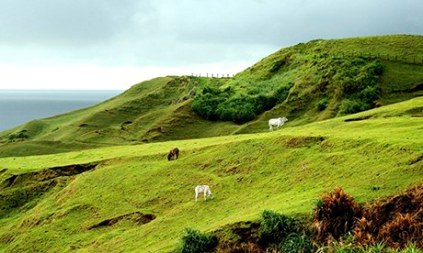
‘By preventing the growth of trees and other deep vegetation in the hills, and by compacting the soil, grazing animals cause a cycle of flash floods and drought.’ Photograph: Farley Baricuatro (www./Getty Images/Flickr RF)
One of the editorialists at the Guardian whom we read for an unflinching environmentalist perspective, today on veganism:
He did it quietly, and the decision is the better for that: Al Gore, according to reports in the US press, has gone vegan.
Certain things could be said about other aspects of his lifestyle: his enormous houses and occasional use of private jets, for example. While we can’t demand that everyone who espouses green causes should live like a Jain monk, I think we can ask that they don’t live like Al Gore. He’s a brilliant campaigner, but I find the disjunction between the restraint he advocates and the size of his ecological footprint disorienting.
So saying, if he is managing to sustain his vegan diet, in this respect he puts most of us to shame. I tried it for 18 months and almost faded away. Continue reading
If You Build It They May Come, But If You Build It Better Will They Pay For It?
 The following paper has been influential since its publication more than two and a half years ago, and seems destined to have a lengthy shelf life, which we hope to contribute to. It is not only interesting theoretically, but gets at practical questions we consider existential at the level of our enterprise. If consumers (in our case travelers) are willing to pay a fair premium for building and operating a business that is more sensitive to environmental and social responsibility, we can afford to engage in fair trade; if they are not really willing, uh oh…
We are more than happy to share our empirical evidence, but for now let’s take a look at some scientifically-derived evidence:
Consumer Demand for the Fair Trade Label: Evidence from a Field Experiment
Jens Hainmueller
Massachusetts Institute of Technology (MIT) – Department of Political Science
Michael J. Hiscox
Harvard University
Sandra Sequeira
London School of Economics
April 1, 2011
MIT Political Science Department Research Paper No. 2011-9B
Abstract:
A majority of surveyed consumers claim to prefer ethically certified products over non-certified alternatives, and to be willing to pay a price premium for such products. There is no clear evidence, however, that people actually seek out such ethically certified goods and pay a premium for them when shopping. We provide new evidence on consumer behavior from experiments conducted in a major U.S. grocery store chain. Continue reading
Food Transparency
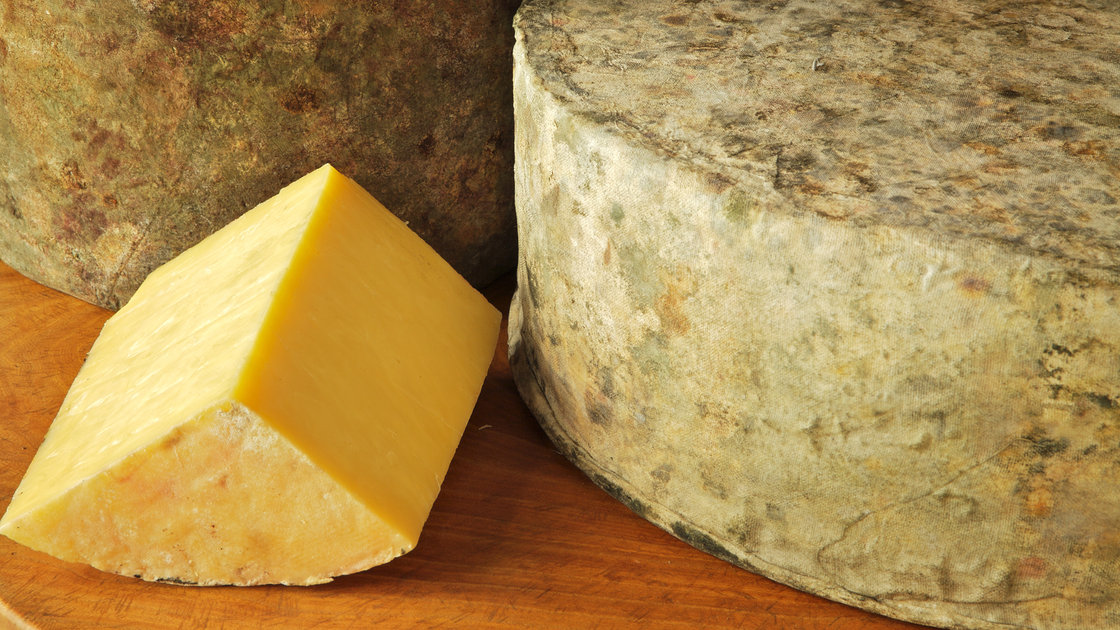
Shelburne Farms’ clothbound cheddar has a bright yellow color because it’s made from the milk of cows that graze on grasses high in beta-carotene. Courtesy of A. Blake Gardner
We have been posting on the topic of transparency in food several times each year since starting this blog, so this news/commentary podcast fits in a tradition:
The news from Kraft last week that the company is ditching two artificial dyes in some versions of its macaroni and cheese products left me with a question.
Why did we start coloring cheeses orange to begin with? Turns out there’s a curious history here. Continue reading
Paleo-ethical Questions

Scientists, like all others, are faced with puzzling ethical questions from time to time. Questions where there is no right or wrong answer, but for which “do the right thing” is the imperative. We like to think we know exactly how we would answer such a question, but sometimes the questions (or answers) are dark grey or light grey rather than black and/or white, as various characters referred to in this blog post make clear (click the image above to go to the original post):
On November 19th, science may lose a pair of dinosaurs. Preserved next to each other – and given the dramatic title the “Dueling Dinosaurs” – the tyrannosaur and ceratopsid are going up for auction at Bonham’s in New York City. The two are expected to rake in around nine million dollars, with no guarantee that the fossils will go to a museum or that their beautiful bones will even have the chance to be rigorously studied by scientists. That’s exactly why paleontologists were aghast when the auction block tyrannosaur made an appearance at the Society of Vertebrate Paleontology annual meeting yesterday afternoon. Continue reading
The Hut of Romulus
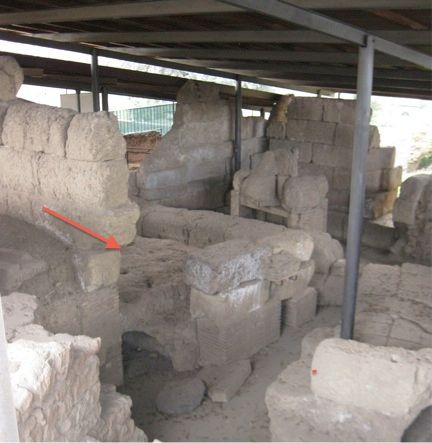
Hut of Romulus (Post holes where arrow is pointing.)
Today, all that remains of the so-called “Hut of Romulus” are the holes you see in the picture above (the slight indentations on the platform where the arrow is pointing). When intact, Romulus’ humble wattle-and-daub dwelling, located in the southwest corner of the Palatine Hill in Rome, might have looked something like this. One might have expected that the passing of nearly three millennia would not have treated well the wood, straw, and twisted bark ties of the hut, but even in its own day the Hut was prone to accidental destruction. One particularly ignominious story has a crow dropping Continue reading
Understanding Animal Behaviour
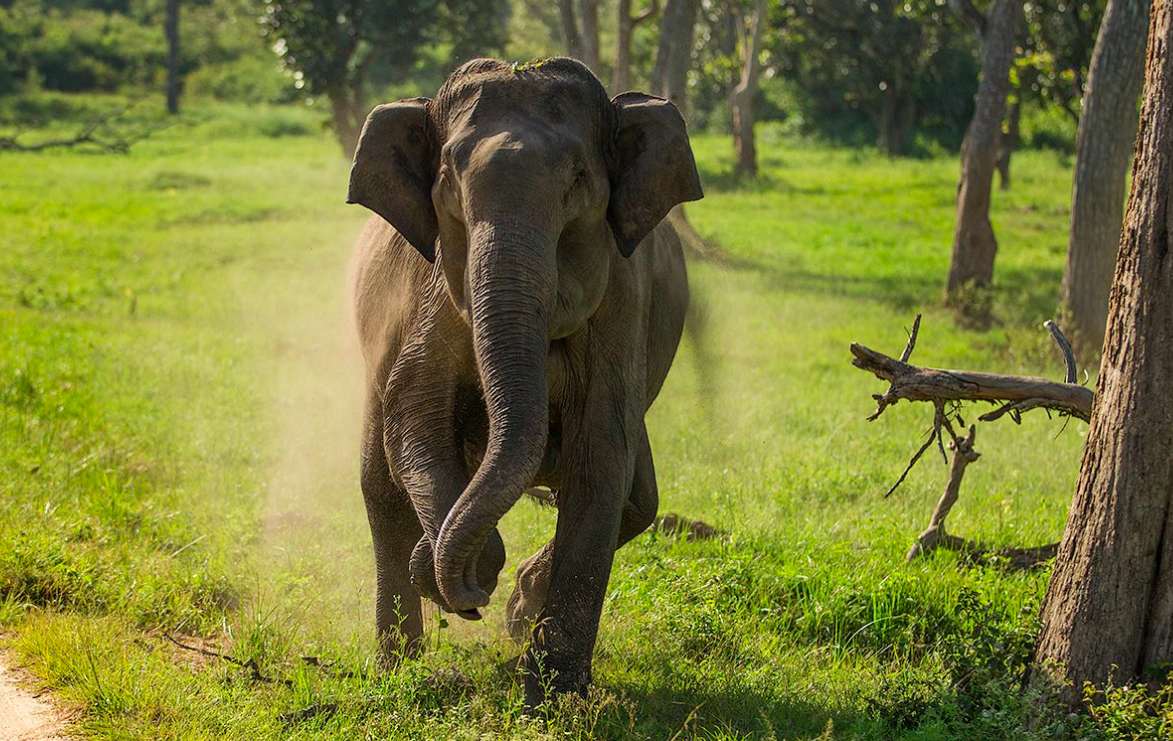
Elephant in mock charge at Bandipur Tiger Reserve; photo credit: Sudhir Shivaram
If you want to be a good wildlife photographer, you need to be a good naturalist first. Understanding your subject’s behaviour and knowing the natural history is even more important than good equipment to make good images.
Elephants commonly make a mock charge when they have calves in their group. During a photographic safari in India’s national parks the drivers and guides are knowledgable about this behaviour and know how to react. When a jeep enters the vicinity with elephants they understand that a mock charge is likely.
After the mock charge the elephant relaxes and moves within the family group naturally. This is the opportunity for good behaviour shots. Continue reading
If You Happen To Be In Austin

An expected 3,000 attendees are gathering in Austin, Texas, for SXSW Eco next week. Photograph: Austin CVB
We normally think of technology or music when we think of Austin, or SXSW. This even provides more to think about with regard to either of them. Thanks to the Guardian for letting us know about it:
Activists and industrialists might be like oil and water, but 3,000 of these strange bedfellows are gathering together in Austin, Texas, to discuss oil and water at SXSW Eco 2013 next week. Now in its third year, the annual conference aims to encourage cross-sector collaboration between professionals in business, government, academia and nonprofits on topics ranging from policy to consumer engagement. Continue reading
Gandhi’s Deep Ecology
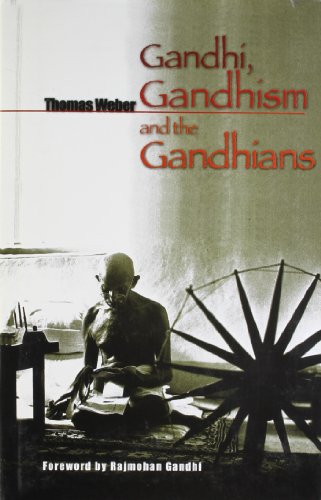
Among the many writings about Gandhi, Thomas Weber’s books seem to be held in esteem in India, with the book to the right being the most recent:
Mahatma Gandhi and his philosophy of truth and non-violence have intrigued the world for decades. Looking at the Western and Indian influences that had gone into making Gandhi the Mahatma, and the central importance of Gandhi to non-violent activism, these essays reclaim the power of truth and non-violence, which can still change the destinies of people and nations. In this collection, Weber discusses Gandhi, his ideology, and how India and the rest of the world is interpreting and reinterpreting the Mahatma. The doctrine of conflict resolution theory, new environmentalism, peace research, deep ecology, and Buddhist economics based on Gandhian principles renews the world`s belief in Mahatma and his teachings for our lives and our times.
One of the most visible and active Gandhi-focused websites posted an essay by Weber* about Gandhi’s influence on what eventually came to be known as deep ecology, and that seems a fitting reference on our site to commemorate this year’s birthday, which is also a national holiday in India. A few snippets: Continue reading
Extinction Reversal
When Phil first mentioned the series he would share here, the fit could not have been more perfect. It was based on his own experience as a diver; on his own informed understanding of environmental challenges at once universal and personal (as a diver, he has witnessed changes that disturb him); on his role as a citizen science participant; and on his belief in entrepreneurial conservation as a solution to some otherwise intractable challenges.
We prefer the first person here, but also share as much as we can of what science has to say on these subjects through our reliable cadre of science journalists. Carl Zimmer, over at National Geographic‘s Phenomena site, writes about genetically engineering in the wild, which raises important, obvious and not so obvious ethical issues:
Back in April, I wrote in National Geographic about the provocative idea of bringing extinct species back to life. In the five months that have passed since then, I haven’t spotted any mammoths or saber-tooth lions drifting through my front yard. If “de-extinction” ever does become real, it won’t for quite a while.
What I have seen over the past five months is a new conversation. Part of the conversation has revolved around the specifics of de-extinction. Some people are open to the possibilities of rebuilding genomes and embryos of vanished species. Some people find it a flashy distraction from the real work of fighting the current wave of extinctions. Continue reading
Winter Arrivals
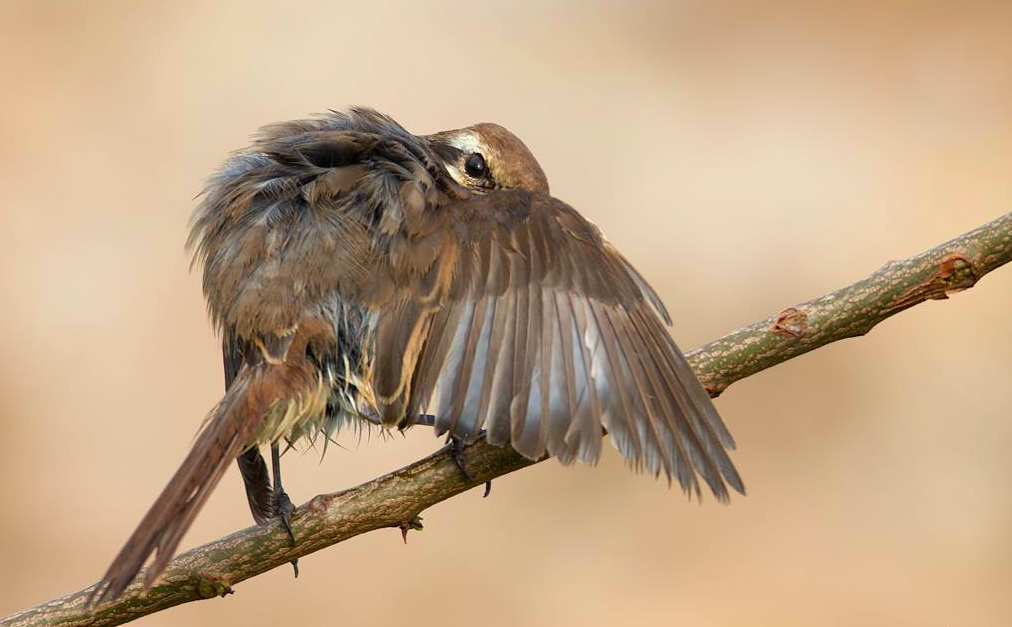
An exhausted winter arrival
Yesterday I encountered the first Brown Shrike for the season at Daroji Bear Sanctuary, near the town of Hampi, Karnataka.
For me, the appearance of the Brown Shrike is an indication of the winter migrants arrival. In previous years my first sightings have been in October, but they’ve arrived earlier this year.
I saw and photographed 2 individuals. One was totally worn out, probably because of the long, tiring migration from as far north as Siberia. Continue reading
The Journalism-Academic Complex

Illustration to John Seabrook’s May 16, 2011 article “Snacks For A Fat Planet” in the New Yorker. showing: Indra Nooyi, the C.E.O. of PepsiCo, says it must be a “good company” in a moral sense.
The Military-Industrial Complex that then-exiting President Eisenhower warned about is unfortunately alive and well, as we saw in the previous decade, when journalists were mostly asleep at the wheel, often even contributors to the dark complex. But journalism has been reborn in some quarters with a new sense of purpose, and new approaches to vigilance that is worthy of the Fourth Estate. Diligent investigative journalism allied with advanced academic research-driven thinking skills produces a better complex.
Case in point: when accomplished academics such as Professor Aaron Chatterji share cogent, punchy follow up posts to articles that caught our attention years back, today’s news on labor activism meets yesterday’s analysis of the intersection of food/health trends and corporate buzz phrases like social responsibility. Thanks to this Duke University professor, New Yorker readers get follow up on a story that might otherwise have been fading, but should not:
Nooyi has backed up her rhetoric with concrete steps, acquiring healthier brands like Tropicana and Quaker Oats and creating Pepsi Next, a lower-calorie version of the flagship brand. She even hired a former official from the World Health Organization to oversee the reforms. Continue reading
 Organikos