The Earliest Artists

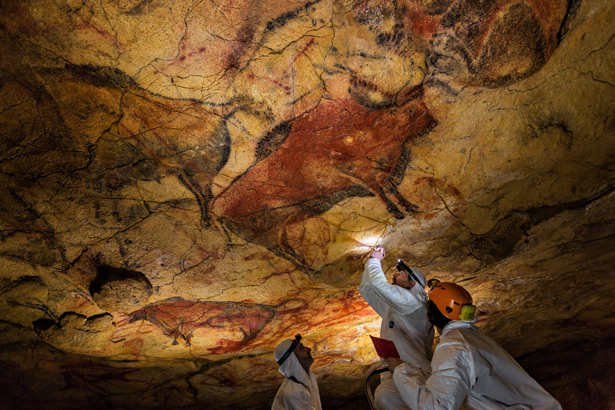
Located in southern France, the Cave of Pont d’Arc holds the earliest-known and best-preserved figurative drawings, dating back to the Aurignacian period (30,000–32,000 BP). PHOTO: Nat Geo

Located in southern France, the Cave of Pont d’Arc holds the earliest-known and best-preserved figurative drawings, dating back to the Aurignacian period (30,000–32,000 BP). PHOTO: Nat Geo

The Cave of Chauvet-Pont-d’Arc has been ferociously protected by the French Ministry of Culture. An exceptional testimony of prehistoric art, the cave was closed off by a rock fall and remained sealed until its discovery in 1994. The images demonstrate techniques of shading, combinations of paint and engraving, three-dimensionality and movement.

Around 36,000 years ago, someone living in a time incomprehensibly different from ours began to draw on its bare walls: profiles of cave lions, herds of rhinos and mammoths, a magnificent bison off to the right, and a chimeric creature—part bison, part woman—conjured from an enormous cone of overhanging rock. Other chambers harbor horses, ibex, and aurochs; an owl shaped out of mud by a single finger on a rock wall; an immense bison formed from ocher-soaked handprints; and cave bears walking casually, as if in search of a spot for a long winter’s nap. The works are often drawn with nothing more than a single and perfect continuous line. In all, the artists depicted 442 animals over perhaps thousands of years, using nearly 400,000 square feet of cave surface as their canvas.
Continue reading

A Great Race

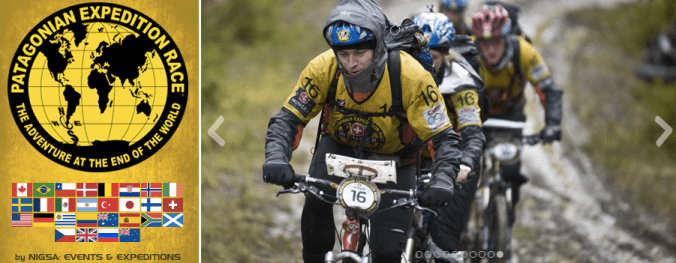
As I type this post the 20 4 person co-ed teams participating in the 2016 Patagonia Expedition Race are hopefully getting a good night’s sleep before tomorrow’s Kayak and Rope evaluations. From our collaboration with the organizers, both behind the scenes and in the field, we know the teams are going to need it!

Statistically, fewer than half the teams that start the grueling combination of trekking, mountain biking, kayaking and rope traverses complete the race. The teams receive minimal assistance – basic maps that require extreme orienteering and problem solving – to make the best time from checkpoint to checkpoint in often inhospitable environments.

Imitating the journeys of our Indian forefathers, competitors advance over plains, mountains, glaciers, native forests, swampland, rivers, lakes and channels; guided only by mind and spirit but driven on by physical stamina and experience.

Every edition features a unique route. Past racers have found themselves in the Southern Continental Ice Field, the Strait of Magellan, Torres del Paine, Tierra del Fuego, the Beagle Channel and Cape Horn. The land is diverse, the challenge real, the adventure untamed. Continue reading

History Underground

The tunnel system must be one of the most mysterious engineering projects in Liverpool’s history. One entrance into the tunnels was found in the basement of their patron’s former house (Credit: Chris Iles/Friends of Williamson’s Tunnel)

The Williamson’s tunnel system must be one of the most mysterious engineering projects in Liverpool’s history. One entrance into the tunnels was found in the basement of their patron’s former house PHOTO: Chris Iles

The Williamson Tunnels are a labyrinth of tunnels and underground caverns under the Edge Hill district of Liverpool in north-west England. They were built in the first few decades of the 1800s under the control of a retired tobacco merchant called Joseph Williamson.The purpose of their construction is not known with any certainty. Theories range from pure philanthropy, offering work to the unemployed of the district, to religious extremism. Although some of the tunnels have been lost over the years, a lot of them still exist today, under what is now a residential area. One section of the tunnels has been cleared and renovated and is open to the public. The remaining parts of the labyrinth are closed, with many suspected tunnels yet to be rediscovered.

Continue reading

If You Are in DC…

The Capitol stones at Rock Creek Park in DC. PHOTO: Bill Lebovich

The Capitol stones at Rock Creek Park in DC. PHOTO: Bill Lebovich

When the dust settled after 9/11, shipbuilders recycled the Twin Towers’ steel into the USS New York. And when the United States Capitol got a face-lift, the old stones were destined for an almost forgotten existence in a Washington, D.C. forest. Save for the occasional runner who veers off his usual trail and the rare visitor with ample time to explore more of the Rock Creek Park, not many have chanced upon and delved into the history of the pile of moss-covered stone columns. Obscura Society is headed there this week, and you may want to join them.

Continue reading

The Wettest Place on Earth

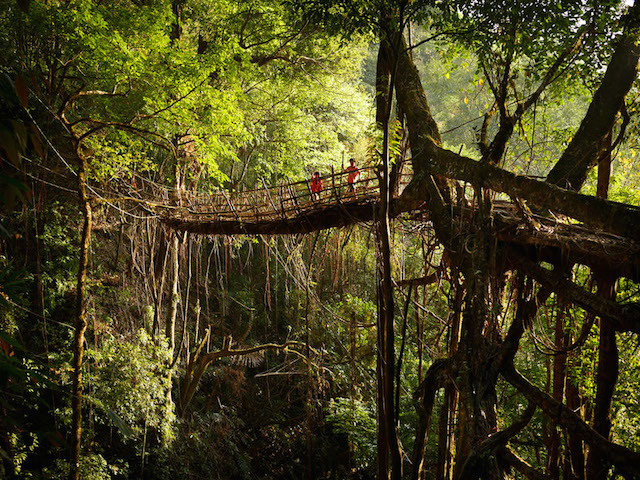
New Zealand-based photographer Amos Chapple captures a "living bridge" deep in the forests of Meghalaya, India.

New Zealand-based photographer Amos Chapple captures a “living bridge” deep in the forests of Meghalaya, India.

Perched atop a ridge in the Khasi Hills of India’s north-east, Mawsynram has the highest average rainfall – 467in (11.86 metres) of rain per year – thanks to summer air currents gathering moisture over the floodplains of Bangladesh. When the clouds hit the steep hills of Meghalaya they are compressed to the point where they can no longer hold their moisture. The end result is near constant rain. Even the world’s biggest statue, Rio de Janeiro’s 30m tall Christ the Redeemer, would be up to his knees in that volume of water.

Continue reading

Notes from a Natural History Museum

Harvard Natural History Museum

I recently had the chance to visit the Harvard Natural History Museum. Despite having lived in Cambridge for nearly a year, and having often thought about visiting the museum when I passed by going to and from my apartment, I had not stopped in until now. What a treat! The collections are full, diverse, and well curated. On this occasion, I spent most of my time in the animal wing, but I plan to return soon to take in the flora and minerals, and spend much more time in choice display rooms (e.g. the absolutely gorgeous Mammals/Birds of the World permanent exhibit: see below for pictures).

A ground sloth skeleton. It is hard to get an idea of the size of this creature from this photo, but it probably weighed several tons while alive!

Continue reading

Colors From Life Way Out There

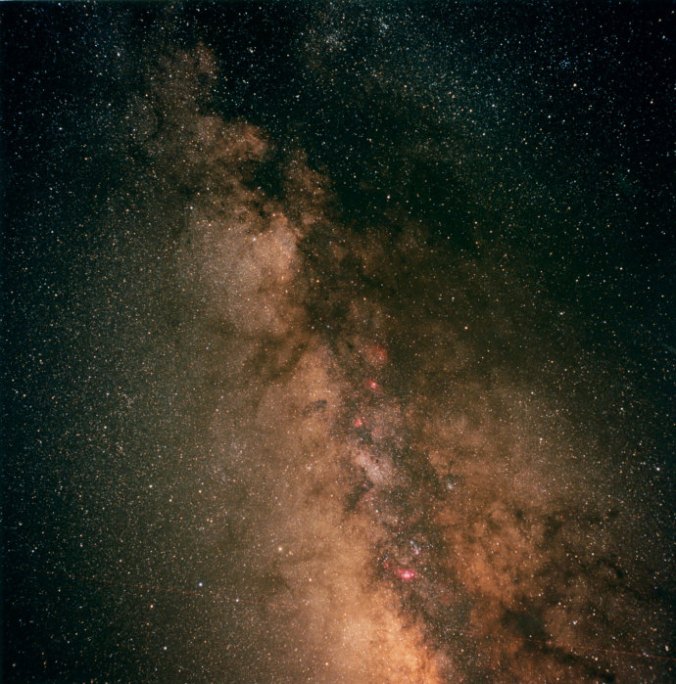
The Milky Way, from Scutum to Serpens and northern Sagittarius. CREDIT IMAGE BY JOHN CHUMACK / SCIENCE SOURCE

The Milky Way, from Scutum to Serpens and northern Sagittarius. CREDIT IMAGE BY JOHN CHUMACK / SCIENCE SOURCE

While pondering our own local attractions in the universe tonight, our minds will certainly wander, in wonder, toward the colors further afield, thanks to this post in the Elements section of the New Yorker‘s website and some of our earlier posts on this topic:

What Are the Colors of Alien Life?

BY NICOLA TWILLEY

Just before it became the first man-made vessel to leave the solar system, in 1990, Voyager 1 took a portrait of Earth, some four billion miles away. Our pinprick of a planet occupied a mere twelve per cent of one pixel, but its atmosphere, rich in water, oxygen, and ozone, reflected and scattered the glow of the sun in an unmistakable way; the astronomer Carl Sagan dubbed Earth the “pale blue dot.”  Continue reading

The New Grand Tour

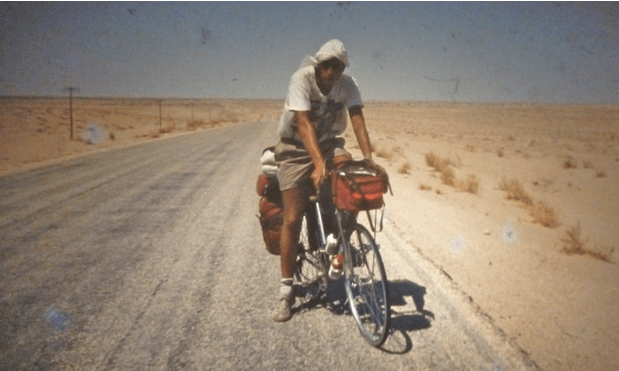
Trevor Ward on a cycle tour in the Sahara. Photograph: Trevor Ward

Trevor Ward on a cycle tour in the Sahara. Photograph: Trevor Ward

In the summer of 1988 Crist and I boarded a flight to Missoula, Montana, watching nervously through the window as the luggage that included our bikes and gear was loaded on the plane. We’d been “training” for several months, riding our bikes around New York City, our panniers filled with heavy phone books. Our 900 kilometer journey through the Canadian Rockies from Missoula to Jasper, Alberta – carrying all the requisite gear – was exhilarating, “impossible” and crazy, especially for biking novices such as ourselves. Reading about Trevor Ward’s experiences strikes a chord.

Back in the mid-1980s, I did something that members of my local cycling club found hilarious – I cycled to the Sahara Desert and back.

In their Lycra shorts and replica Peugeot and La Vie Claire racing jerseys, they laughed at my bike which, laden with panniers, tent, cooking stove, sleeping bag, spare tyres and even a small folding deckchair, had been transformed from a sleek blade of steel to something resembling the aftermath of a gas explosion.

My humiliation continued in the remotest parts of Tunisia and Algeria where groups of children would greet my arrival at their villages by throwing lumps of rock at my head. Continue reading

Expeditions In The Interest Of Science, Nature And Conservation

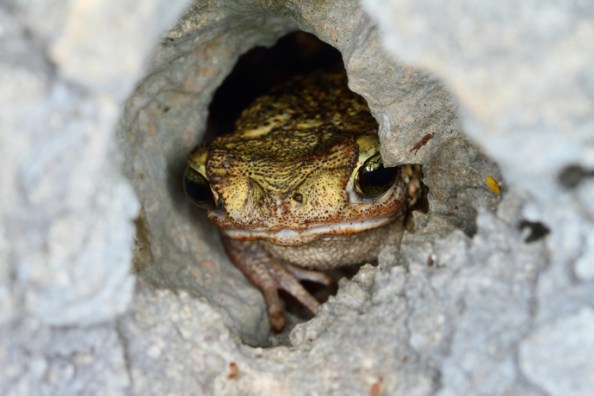
A male toad of an undescribed species hides in the limestone of the southwestern Dominican Republic. CREDIT PHOTOGRAPH COURTESY MIGUEL A. LANDESTOY

A male toad of an undescribed species hides in the limestone of the southwestern Dominican Republic. CREDIT PHOTOGRAPH COURTESY MIGUEL A. LANDESTOY

There is a reason why we highlight birds every single day. They are spectacular in many diverse ways, as well as beautiful in more ways than can be counted, and sometimes smile-inducingly odd; always exceptional ambassadors to the human world from their natural habitats, which are under constant pressure and threat. Birds may seem more charismatic than amphibians but from an ecologist’s point of view they are both extremely valuable indicators of ecosystem health. If you have been following Seth’s posts about the preparation for the Smithsonian expedition he is about to embark on, you will likely agree they would enjoy crossing paths with the team described in this story:

The southernmost corner of the Dominican Republic is dominated by limestone karst, a landscape with the look and feel of a petrified giant sponge. Snakes, small mammals, and fat, furry tarantulas live in the fissures and holes in the karst, as do toads, including one species that is not yet fully known to science. I met this new toad at three o’clock one late-fall morning, in a karst forest off a mining road near the town of Pedernales. I was with Miguel Landestoy and Robert Ortiz, a pair of freelance field biologists who have been friends since their youth, and who still spend much of their time looking for amphibians. Continue reading

Sorry To Have Missed It

UeliIce

The Explorer’s Club, last week, hosted a lecture by Ueli Steck, who has had our attention for other reasons, on more than one occasion.  He is in perpetual comeback mode, it seems but after the jump read what Steck did while in New York for this presentation at the Explorer’s Club, which we are sorry to have missed:

World renowned Swiss alpinist and record-breaking rock climber Ueli Steck joins us to present his legendary experiences. In this lecture, the “Swiss Machine” – whose rapid ascents of classic routes are just as demanding as three-minute miles – will share stories of his extreme expeditions all around the world. Join us in listening to tales of his rocky adventures and meet the Swiss Superman in person! Continue reading

That Traveling State of Mind

10437354_10201362789791511_7388278044108926240_n

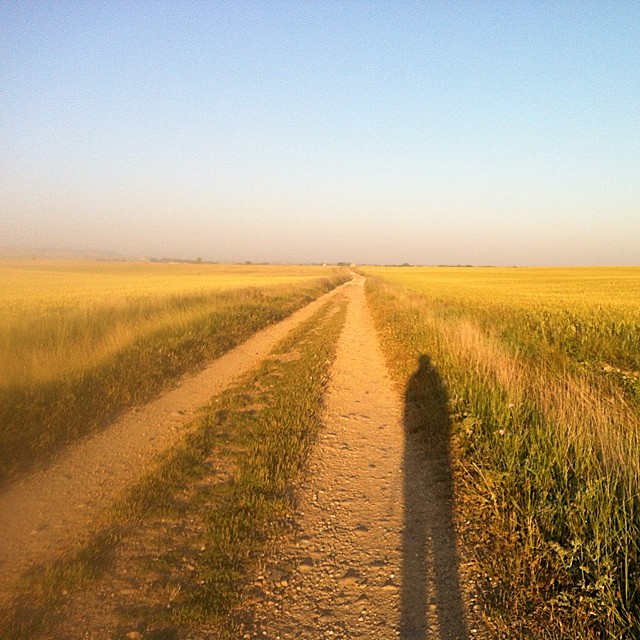
I took this while backpacking across this very empty and flat part of the Camino in Spain called the Meseta.

In my daily life, I flee myself in sneaky ways. I flip on a movie. I hang out with friends. I have habits when I am at home. There are these creature comforts that become little patterns that can give me an easy way out. Since I’ve been traveling, different parts of myself have surfaced. And if I don’t like those parts, tough luck. There is no easy way out, only a way forward. To just be with what I am experiencing, as it is.

The culture of the different places I have been and the range of different things I see activate streams of thought and states of mind I do not find myself in from my experiences at home. I really appreciate this about the traveling state of mind.

I think this is a different kind of tourism. Visiting different parts of myself inspired by different parts of the world.

Continue reading

Old Fashioned Cinema

Cinema Machine in the days

Old-fashioned Film Projector

Not many youngsters will recognize this machine but in the olden days it was the only source of entertainment for people other than the dramatic theatrical dances of Kerala. This huge, elaborate machine is the predecessor of the portable devices we now can plug into a laptop to entertain ourselves at our convenience. Years ago this beast of a machine was installed in movie theaters also called a cinema. Continue reading

Periyar Sightings

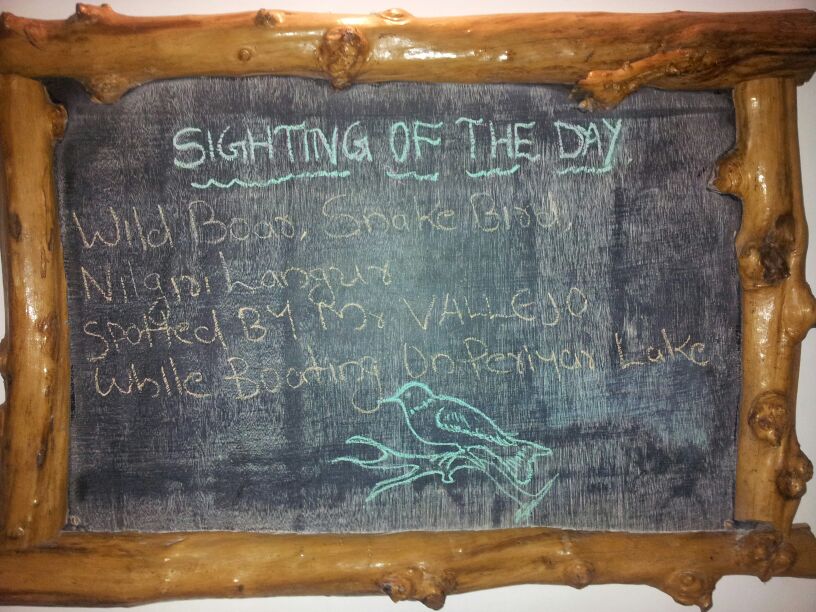
Sighting of the day

Sighting of the day

It has been a while since we have shared our guest sightings at the Periyar Tiger Reserve. Some guests carry cameras to capture every moment and some just like enjoying the moment. Our reception chalk board gives people the opportunity to share those experiences with others–in this case not in photos but their memories.


Birding’s Big Catch

http://youtu.be/l5sVI_-LRCI

The world of birding, it is safe to say, is growing. Occasionally we read about a noted person having established a passion for birdwatching and/or related conservation. Normally we do not take a humorist literally, but David Letterman, in announcing his retirement, seemed to give birds and in particular a newfound interest in bird identification a special credit in realizing he wanted to do something else with his time now:

…Letterman told the audience that people have always asked him how long he would continue to host. His answer is usually, “When this show stops being fun — I will retire 10 years later.”

Continuing his tale, Letterman said that he wanted to share an anecdote: Last fall, he went fishing with his 10-year-old son, Harry, and during the outing, they saw a giant, crazy-looking bird. So when Letterman got into work that following Monday, he spent the entire day making calls to bird societies, e-mailing the photo to his outdoorsy friends, and launching a full-scale investigation to find out what type of bird they saw. Continue reading

Grid Growth Gazing

(Thinkstock) Is there anywhere left on Earth where it’s impossible to access the internet? There are a few places, but you have to go out of your way to find them, discovers Rachel Nuwer.

(Thinkstock) Is there anywhere left on Earth where it’s impossible to access the internet? There are a few places, but you have to go out of your way to find them, discovers Rachel Nuwer.

As much as we encourage travelers to join us off grid in remote locations, to disconnect and engage in authentic experiences of communities and ecosystems not like home, nonetheless we depend on the grid for our ability to connect with those very same travelers. We are paying increasing attention to the evolution of connectedness, and this report by the BBC is of interest:

It can be easy to forget what life was like before the internet. For many, not a day goes by without checking email, browsing online or consulting Google. Some 1.3 billion people alive today are young enough never to have experienced anything else. Yet has the network of networks underpinning all this activity actually reached every part of the globe?

Various reasons still stop people accessing the internet where they live, of course. There’s censorship, for starters. “We don’t get much traffic from North Korea,” says John Graham-Cumming of CloudFlare, a content delivery network – the equivalent of a regional parcel distribution centre, but for web traffic. “Likewise, early in the Syrian civil war they cut off internet access and we saw a drop in traffic coming from those Syrian connections.” Continue reading

If You Happen To Be In Denmark

We have been paying a lot of attention to Iceland in the last year, and we do not expect that to change very soon. At least not until May of this year.  But we will always consider the two poles of the planet worthy of our time and investigation. There is an excellent exhibition website separate from the museum’s website pages about this exhibit whose last month has just begun:

ARCTIC

September 26 2013 –  February 2 2014

Louisiana’s major, multi-faceted autumn exhibition explores a wonderful, fragile, frightening and powerful world. ARCTIC is a story about dreams, destiny, adventure and beauty. It is a tale of fear, fascination, desire, downfall, and survival in spite of everything. A quest for a location, real and imagined, that through the centuries has stirred up strong drives and emotions, fascinating and attracting artists, scientists, writers and adventurers alike.  Continue reading

Antarctic Exploration One Century Ago

This slideshow requires JavaScript.

Thanks to the Guardian‘s occasional history lessons via photography, like this one:

Eschewing the race for the South Pole, geologist and explorer Douglas Mawson took his scientific expedition to the eastern Antarctic – a region totally unmapped and unexplored. Here is a glimpse of the photographic archive that records their epic journey

Wildlife Sanctuaries of India–Bandhavgarh National Park

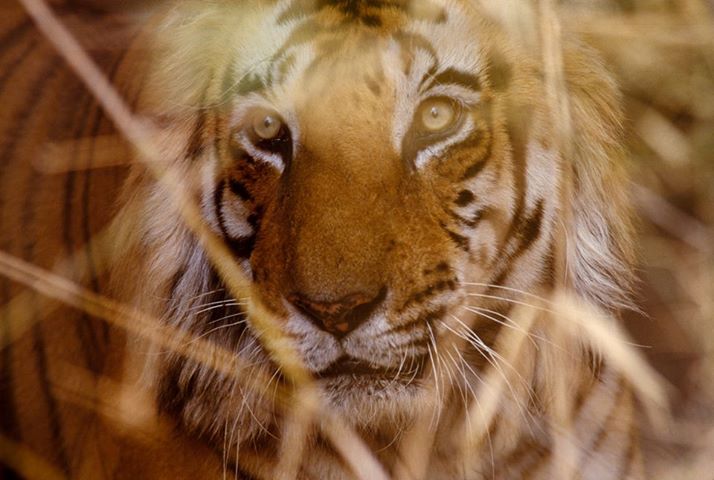
Sita, National Geographic

Sita, National Geographic

If you are really, really desperate to see tigers in their natural habitat, maybe you should try visiting Bandhavgarh National Park in the Umaria district of Madhya Pradesh since it has the highest concentration of tigers among all the national parks in India! With an area of 105 sq km open to tourists and a buffer zone of 427 sq km, Bandhavgarh National Park is home to almost 50 Bengal tigers.

A female tiger named Sita, who also appeared on the cover of National Geographic and is the most photographed tiger in the world, also lived in Banhavgarh. In fact, most tigers in the reserve today are thought to be descendants of her and a male tiger named Charger. Continue reading

Cenote, A Mesoamerican Phenomenon

Thanks to National Geographic‘s Newswatch service for bringing this story, related to SUNY Albany’s work in a part of the world still being explored, to our attention:

The Mayapán Taboo Cenote Project will undertake an extensive exploration of the underwater cave, Cenote Sac Uayum, to document 20+ submerged skeletons and artifacts. Team leader and National Geographic Grantee Bradley Russell will also investigate the modern belief that a supernatural power- a feathered serpent- guards the water within. Continue reading

Journey to the Center of the Earth, Via Iceland

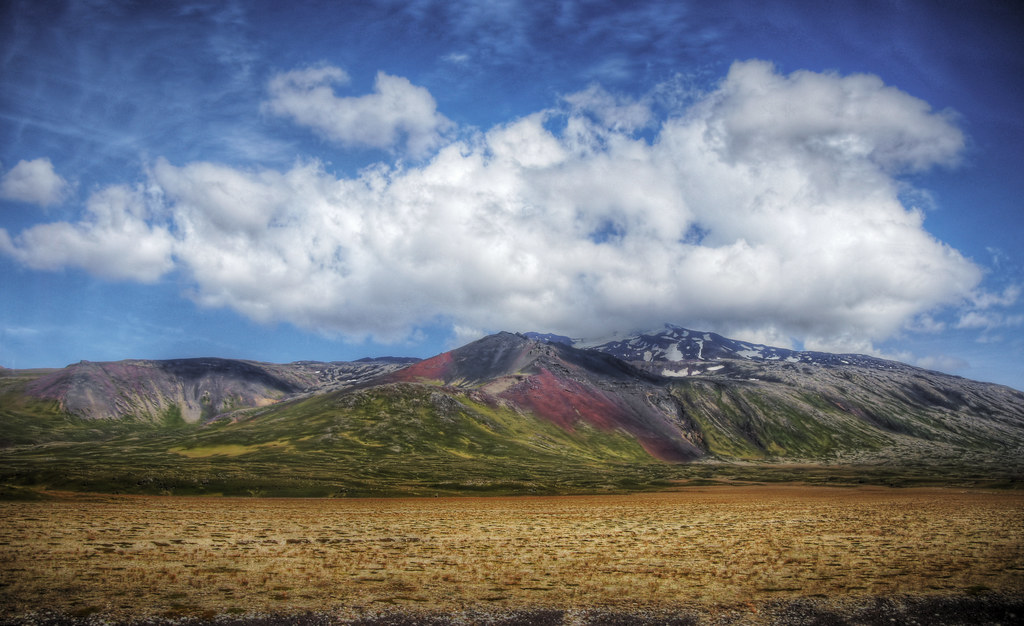
Snæfellsjökull, Iceland. Photo © Mariusz Kluzniak

When I explain my honors thesis subject to those who ask about it, not a few of them ask if I plan on looking at Jules Verne’s classic science fiction novel, since the volcanic entrance to the cavernous depths of the world in his story is ‘Snäfell,’ in western Iceland. For some , Journey to the Center of the Earth might be their only popular source of information on the country, since it is perceived as so remote, and, in many American minds at least, the Nordic countries can all get mixed up in a Scandinavian mélange of fjörds and vikings and skyr.

Snæfellsjökull, Iceland. Photo © Manny on BiteMyTrip.com

To Verne’s credit, therefore, he has put Iceland on the map for many people over the past century and a half (his book was first published in France in 1864, and was translated by 1871). To his discredit, however, he never visited Iceland himself, and instead relied primarily on two French works on Iceland written about scientific expeditions made there in the late 1830s. Continue reading