Scraping Hell’s Attic

The Sulphur-Bottom Whale

The sulphur-bottom whale is the largest mammal on (or under) the earth’s surface; many speculate that it might be the largest animal ever to have inhabited our terraqueous globe. These immense creatures can typically grow to between eighty and a hundred feet long, with the largest specimens caught suggesting that the whales might exceed one hundred and ten feet in length! The weight of the sulphur-bottom whale is commensurate with its size: they can weigh between one hundred and one hundred and fifty tons. For comparison, the largest elephant ever recorded weighed a mere twelve tons. If the sulphur-bottom whale rolled over in its sleep Continue reading

Galapagos Crafts

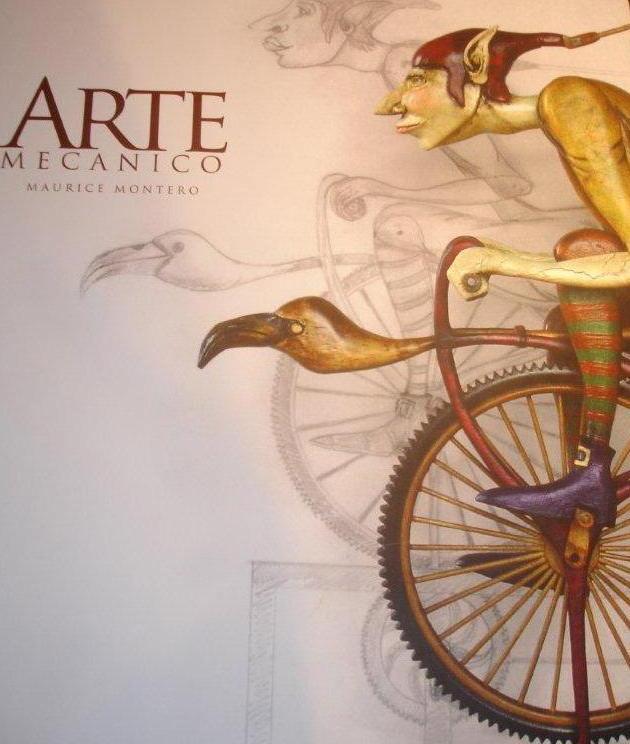
Another change visible in the Galapagos Islands circa 2011, versus 2oo3, is the quality of the craft on display in at least one shop in Puerto Ayora.  I have always been interested in artisan craft, but especially so in the last 15 years.  My first exposure to the intersection between ancient traditions and modern methods was in Guatemala in the mid-1990s, where an Austrian artisan was working with Maya communities on the re-establishment of production of finely carved ceremonial masks.  Not long after that, I saw the same thing in Ecuador, where a Swiss artisan was working with the tagua nut (aka vegetable ivory) to create remarkable carved curiosities.

Now, in Galapagos, I see that an Ecuadoran artisan has documented his work in this book, showing a series of hand-made, all-wooden mechanical devices.  While he is not based in the islands, his work is on display and somehow resonates especially well there.  I took these short videos while visiting the gallery showing his work:


Maize

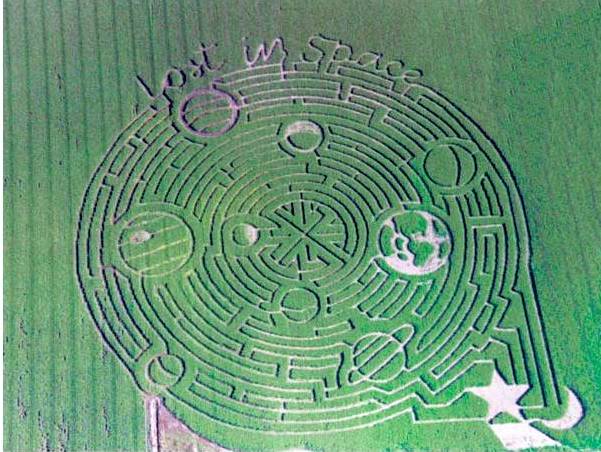
Despite the lush color in the photograph above, most corn mazes designed by Brett Herbst are enjoyed by people this time of year, when the pumpkins are filling their patches and the apples are filling their trees.  During this season the mazes coincide well with hay rides and cider pressing, quintessential fall activities.

Mr. Herbst and his team have designed 1,800 mazes in the past 15 years, from custom made “Your Name Here” styles to the image above that almost feels inspired by the Nazca Lines.

Many of the mazes have bridges and signposts with clues to assist visitors to find the correct paths, versus the twists and turns that lead to either dead ends or back where you came from.

Wouldn’t it be great if life was like that?

Rotam fortunae non timeo!

Rotam fortunae non timeo -- "I do not fear the wheel of fortune!"

“Mortal men travel by different paths, though all are striving to reach one and the same goal… happiness,”[1] or so says Boethius, the great Roman philosopher. I think we can all agree that, no matter what we want to do or how we choose to do it, our ultimate goal is happiness. It is “the good which once obtained leaves nothing more to be desired.”[2] It doesn’t necessarily take a philosopher to realize this, though; approach any random person and he or she will probably confirm that a happy life, is, of necessity, a good one.

But what is happiness? We say we are “happy” when we get an A on a test, win an important sports game, or finish a grueling paper—but what do we mean by it? The joy from these moments, however real at the time, begins to appear ephemeral in retrospect. Think back to the 6th or 7th grade: do you still glow with warmth when you remember getting a 93 on an Earth Sciences test (if you remember at all!)? Continue reading

A Worldly Point of View

Emory’s Language Lab

Diversity in American universities is on the rise: just a little under a quarter (23%) of Harvard’s undergraduate enrollment consists of international students. At Columbia University, over a quarter (26%) of the university’s enrollment are international students. The story is the same at other top schools around the nation. UCLA, Boston University, Cornell and NYU all boast international student levels at around 15%. Here at Emory, the picture is roughly the same. Most of these international students in American universities hail from Asian countries, but there is plenty of exchange from Europe, Africa, the Middle East, and other parts of the world as well.

At Emory, many international students specifically come from China, India, South Korea, and Japan. Having spoken to these foreign exchange students, it is clear that international admissions to a top-20 American university are incredibly competitive, even more so than they are here. One friend told me that he was the only student from his entire town (a suburb of Calcutta, so quite a lot of competition) to attend a top-30 American school; even with his extremely impressive credentials Continue reading

Watch It On National Geographic Channel

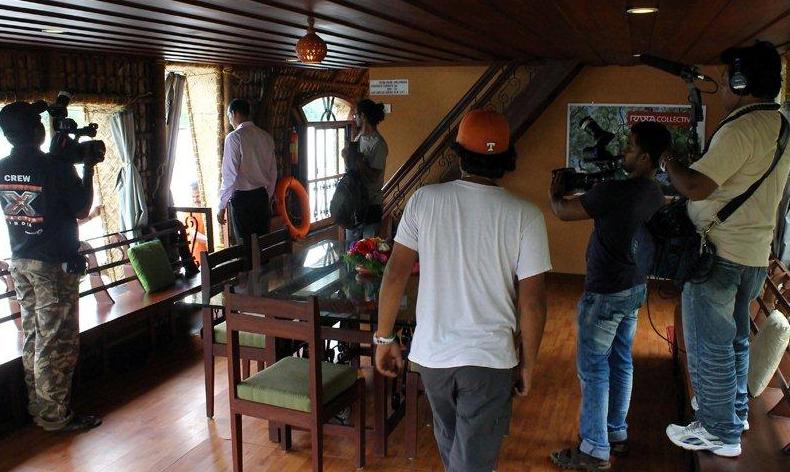
Our colleagues offer amazing experiences on the backwaters of Kerala, in the houseboats described here, with some visual support here and here; and once more here (really, look at it to get a sense of grocery shopping in our neighborhood); so no surprise that a film crew and remarkable cast of characters asked to spend time with them.  The crew of 15 or so (I lost count) was from all over India; so was the cast.  The four featured men in this film are part of a “bucket list” adventure that is being filmed in the locations ranked most highly in a national competition as “must go.” Kerala’s backwaters made that list. Raxa Collective’s houseboats were chosen as the venue for best experiencing those backwaters.

The four men–a student, an IT marketing executive, an Indian Capoeira master-in-training, and a famous Bollywood actor–met for the first time not long ago, and by the time we met them they seemed like old friends.  By the time it airs on the National Geographic Channel, that will stand out as much as the fabulous locations (I like the picture hanging on the wall past the camera man).  We will share more on the broadcast times when we have them.  The photo below is Milo’s, and we have some additional photos by Sung from this particular day (they were on the houseboats for many more days), more on which as we have those photos, and hopefully some film outtakes.

Color Wheels

Whether by coincidence or just being on a roll (sorry), I just came across an inspiring urban art project that is part Civil Disobedience, part Public Art Initiative, part plain old recycling and completely FUN! Continue reading

Moving Through Space, Time, and Culture

Hundreds of years of studying physics has told us that the journey through time is linear, and only goes one way. Laws of gravity aside, travelling through space need not be linear – any course can be taken as we move through our lives. These videos were created on a journey through 1056 hours of time and 38,000 miles of space – but the cultures witnessed and experienced by the travelers  are innumerate.

[vimeo 27246366]

Continue reading

The Buffet Personality Test

There’s the Myers-Briggs test, the Jungian archetypes, the Japanese with their blood types and the astrologically inclined with their zodiac signs. These are all ways of putting people into classifications of one kind or another, to see which boxes they check and use this as a means of understanding their personalities. These taxonomies are useful for some in their attempts to easily judge books by their covers (or perhaps by their tables of contents). But I’ve got a new one: the buffet approach – comparably empirical but a lot more fun!
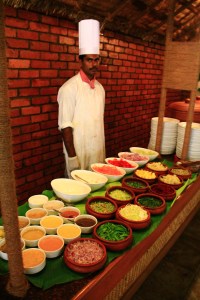
When you’re at a buffet, do you take a little of everything for the first round, then go back for bigger helpings of the dishes you liked best? Or do you browse at first, automatically writing off the red stuff for its overt similarity to a vegan rump roast and skipping the crunchy stuff for its unrecognizable position on the food chain? Or do you phase through it, bit by bit, going back for the things you’ve not yet tried? In my highly rudimentary and anthropologically unqualified analysis, I’d be willing to take your “buffet approach” as a proxy for your “approach to life.”

There are the grazers, particular and self assured. Then there are the nibblers, shy, disciplined and unimposing. And at the other extreme you have the all-out face-stuffers, decadent adventurists for whom a plate’s inadequacy of surface area is just another reminder of the fact that there aren’t enough hours in a day. Of course there would be the combo personalities, like the high-piling sharers, ambitious enough to stack up the sweets yet self-restrained and manipulative enough to make their partner eat the rest. Or the serial nibblers, philosophically conservative yet constitutionally indulgent. I’m telling you, this could be the new Rorschach test. Continue reading

Urbanscape

Vimeo is one of the many slippery slopes on the mountainous terrain aka the internets.  The creativity unleashed there can knock you head over heels.  Nonetheless, we must risk those slopes.  And give credit where it is due.  Just two hours ago Moritz Oberholzer commented on this video, and how it was created (including his credit where due): Continue reading

An Abundant Life

I recently read an essay in the Wall Street Journal titled, “Living to 100 and Beyond.”  As I read about the technology that is rapidly increasing human longevity, the movie Death Becomes Her began replaying in my mind.  I imagined myself following in Meryl Streep’s and Goldie Hawn’s footsteps and taking some magic potion that makes me immortal.  However, instead of the body deteriorating with age like the Streep and Hawn rivalry, advances in modern technology will likely not only increase life span but also health spans.   Living for centuries may seem appealing on the surface, but we should consider the overall effects of a longer life.

Continue reading

Cardamom County, Kids’ Country

The energy was different at Cardamom County today. The delighted squeals of children replaced the semi-usual morning chatter of monkeys outside my room. Infants, toddlers and their pre-teen brothers and sisters outnumbered the adults at the buffet line at least 2:1. The splashes in the pool were made not by raindrops but by curious children, the plasticky click of ping-pong balls filled the recreation area, and each unexplored nook of the property made a perfect hiding place for games of hide-and-seek. It’s a virtual summer camp around here! Parents followed their young ones, not even feigning a chase, patiently flicking their billowing saris over their shoulders. I felt like I was reliving family field day at my primary school all over again, but in an alternate cultural and physical context. Continue reading

Honey, Hope & Future Cod

Milo’s post yesterday is of special interest to various initiatives we support related to food.  We will have much more to say on bees (and honey), but for now, it gets us thinking. Combined with Seth’s recent post, touching on the subject of overfishing (do read Mark Kurlansky’s books related to food, in addition to Cod), provide a reminder to stop and take a breath.  In a world full of challenges that daunting, how do we keep our wits about us?  How do we remain, fundamentally, hopeful?  An answer, but not necessarily with explanation, can be found sometimes in art (defined as you choose).  If we do not solve the tragedy of the commons with fisheries, might we still hope for a beautiful future for marine life that looks something like this?