Drink the Wild Air

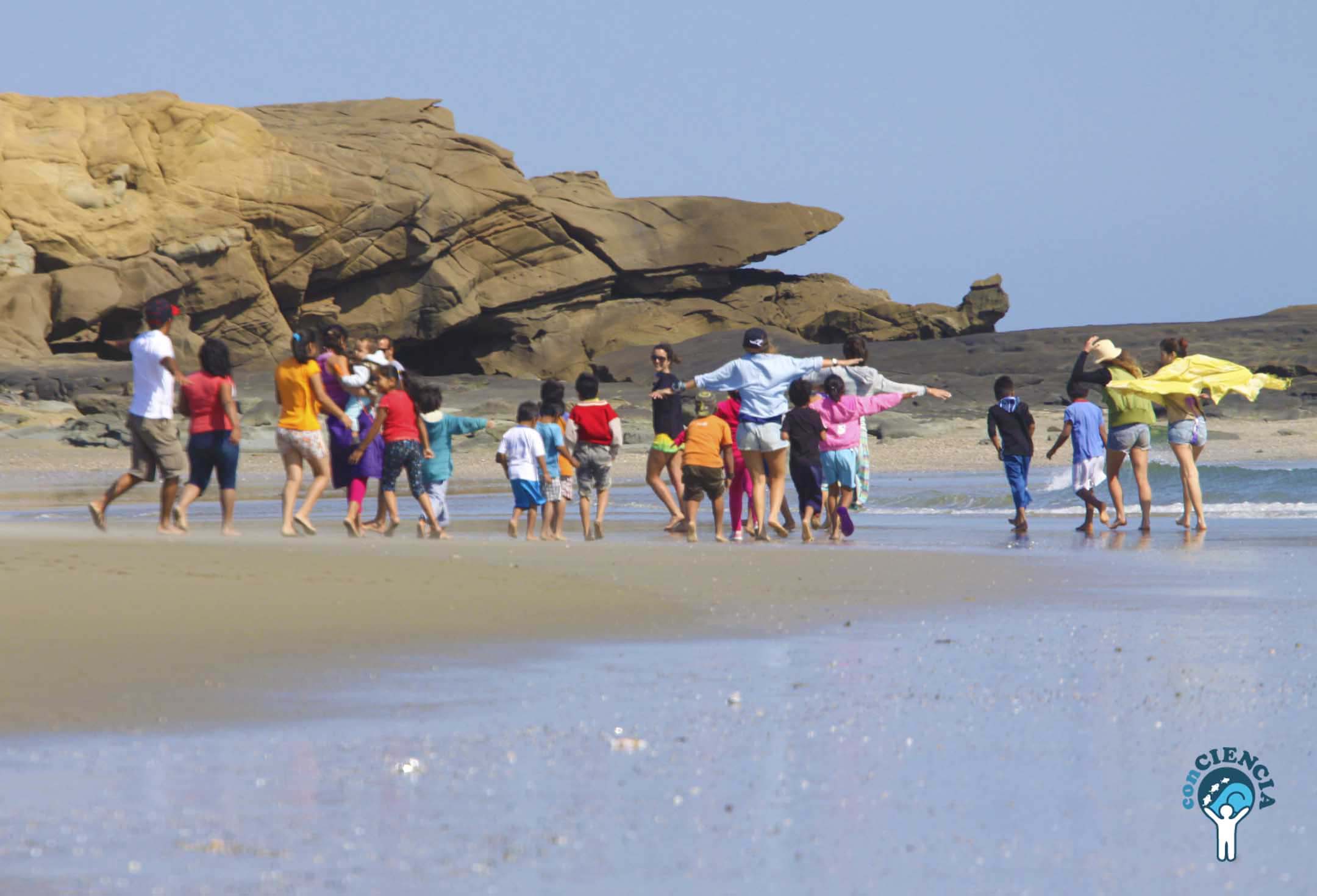
“Live in the sunshine, swim the sea, drink the wild air.” Alejandra Benavides/conCIENCIA

Working for the balance and health of nature as a conservation biologist brought me to understand the importance of nature in the balance and health of communities. The great gap between the two inspired me to establish conCIENCIA, a nature-based education design program. We build environmental identity in fishing villages across Peru through nature-based integrated learning guided by play, creativity, curiosity and the senses.
As First Mermaid in conCIENCIA, I work with an amazing group of artists and scientist, to connect coastal children to the natural wonderland, since 2010.

Lobitos has some of the most beautiful beaches on the Peruvian coast. Its world-class surfing draws hundreds of surfers from all over the planet and is known far and wide. A lesser-known fact is that it also has 153 children enrolled in its elementary school. Walking down the beach we wonder where these kids are. We walk from point to point with not one in sight. There’s no laughter or splashing on the shores. Surfers and fishermen dominate our view. No mothers and children sharing the democratic fun the beach offers: a place with more attractions than we could ever finish exploring.

In Latin American cities like Rio de Janeiro it is on the beach that rich and poor meet, crossing the giant social chasm that separates them, virtually identical in their bathing suits, covered in sand, sweat and salt. Surprisingly, this doesn’t seem to be the case in many of Peru’s coastal towns. Exactly why is hard to say. Our NGO conCIENCIA helps coastal communities develop an environmental identity and engagement through outdoor science-based learning. We hope to be able to answer the question ‘why’ through surveys, conversation and appreciation.

On the surface one could say it is cultural.  Fishermen don’t bathe in the sea or lounge on the beach. This is their place of work, as for a New Yorker her office would be–of course, with greater hardships and demands. The sea is treacherous and fish stock is dwindling. Continue reading
Tackling Tough Topics

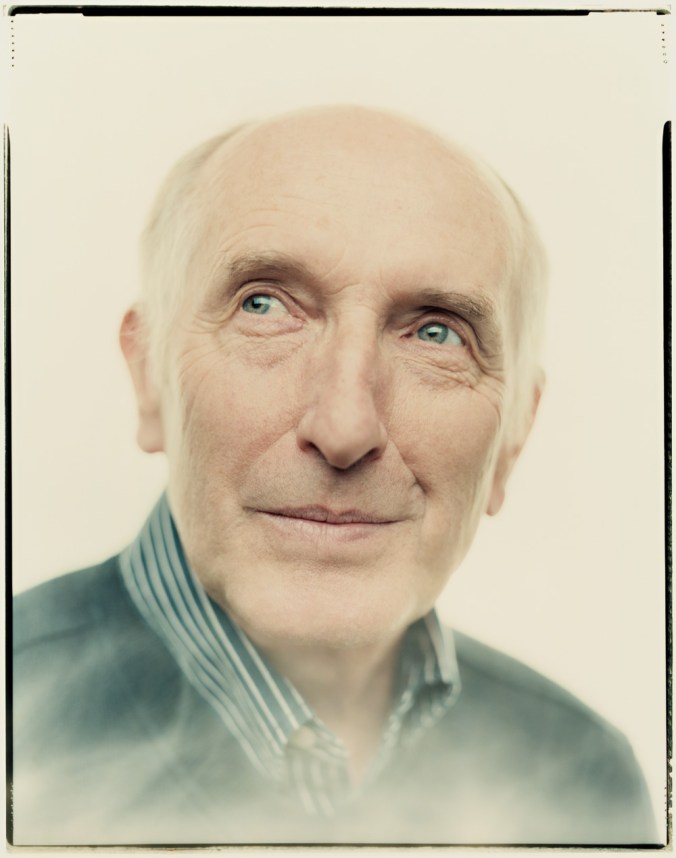
Author Vaclav Smil tackles the big problems facing America and the world.   Andreas Laszlo Konrath

Author Vaclav Smil tackles the big problems facing America and the world. Andreas Laszlo Konrath

Thanks to this interview in Wired magazine (click the image above to go to the source) we hear a bit about the craft of a thinker-writer’s approach to major economic, environmental and technological puzzles, one book at a time, but at an amazing pace:

You’ve written over 30 books and published three this year alone. How do you do it?

Hemingway knew the secret. I mean, he was a lush and a bad man in many ways, but he knew the secret. You get up and, first thing in the morning, you do your 500 words. Do it every day and you’ve got a book in eight or nine months.

What draws you to such big, all-encompassing subjects?

I saw how the university life goes, both in Europe and then in the US. I was at Penn State, and I was just aghast, because everyone was what I call drillers of deeper wells. These academics sit at the bottom of a deep well and they look up and see a sliver of the sky. They know everything about that little sliver of sky and nothing else. I scan all my horizons. Continue reading

Vegan Viewpoint

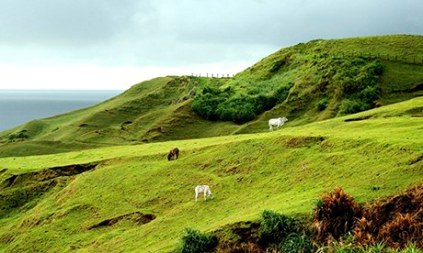
'By preventing the growth of trees and other deep vegetation in the hills, and by compacting the soil, grazing animals cause a cycle of flash floods and drought.' Photograph: Farley Baricuatro (www./Getty Images/Flickr RF)

‘By preventing the growth of trees and other deep vegetation in the hills, and by compacting the soil, grazing animals cause a cycle of flash floods and drought.’ Photograph: Farley Baricuatro (www./Getty Images/Flickr RF)

One of the editorialists at the Guardian whom we read for an unflinching environmentalist perspective, today on veganism:

He did it quietly, and the decision is the better for that: Al Gore, according to reports in the US press, has gone vegan.

Certain things could be said about other aspects of his lifestyle: his enormous houses and occasional use of private jets, for example. While we can’t demand that everyone who espouses green causes should live like a Jain monk, I think we can ask that they don’t live like Al Gore. He’s a brilliant campaigner, but I find the disjunction between the restraint he advocates and the size of his ecological footprint disorienting.

So saying, if he is managing to sustain his vegan diet, in this respect he puts most of us to shame. I tried it for 18 months and almost faded away.  Continue reading
Marma Chikitsa – Ayurveda Treatment

Photo credit : Ranjith

Photo credits: Ranjith

Ayurveda is science of life. Although Ayurveda is practised all over India, Kerala is perhaps the only state where this science of medicine still follows age-old traditional laws. Marma Points are positions on the body where flesh, veins, tendons, bones and joints meet. Oil therapy is an important Marma Chikitsa, where warm Medicated oils are used in specific Marma points. Continue reading

In Praise of Slowness

Slow Food, Slow Cities, Slow Travel…the element of time and how we either squander it or savor it has become a meme for the movement toward the local, the artisanal, the responsible. The idea that doing something slowly and carefully and taking the time to enjoy it can be almost universally applied.

There’s enough evidence that the stress of fast-paced, over-programed lives take a toll on our health and happiness, no matter what our age. Continue reading
Kizhi – Ayurvedic Treatment

Kizhi

Kizhi

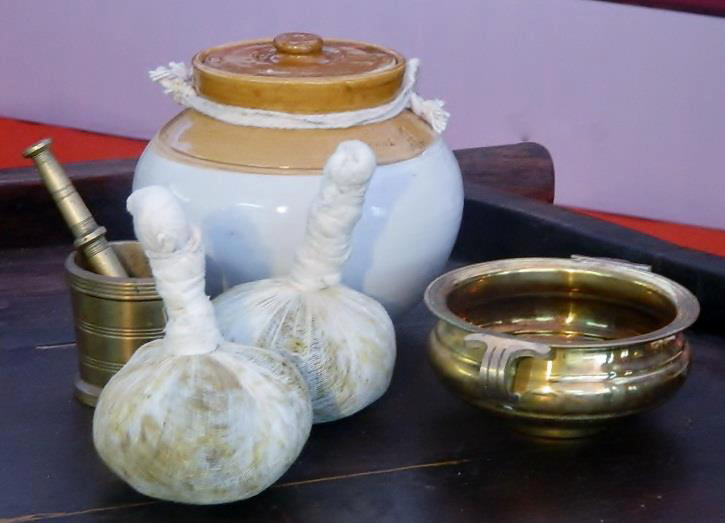
Ayurveda is the science of life. Mythology says that this science of healing originated in the cosmic consciousness of Brahma – The Creator. Kizhi Treatment is a therapy where heated herbs and medicinal oil is tied in cloths and used as a bolus on the effected body part. Continue reading

Walking the Talk

Nowadays people are sitting 9.3 hours a day, which is more than we’re sleeping, at 7.7 hours. Sitting is so incredibly prevalent, we don’t even question how much we’re doing it, and because everyone else is doing it, it doesn’t even occur to us that it’s not okay. In that way, sitting has become the smoking of our generation.

If business innovator Nilofer Merchant had her way there would be a “surgeon’s general warning” placed on desk chairs around the world. But she isn’t only referring to the health reasons why we shouldn’t be sitting as much as we are. Continue reading

Conservation and Your Health

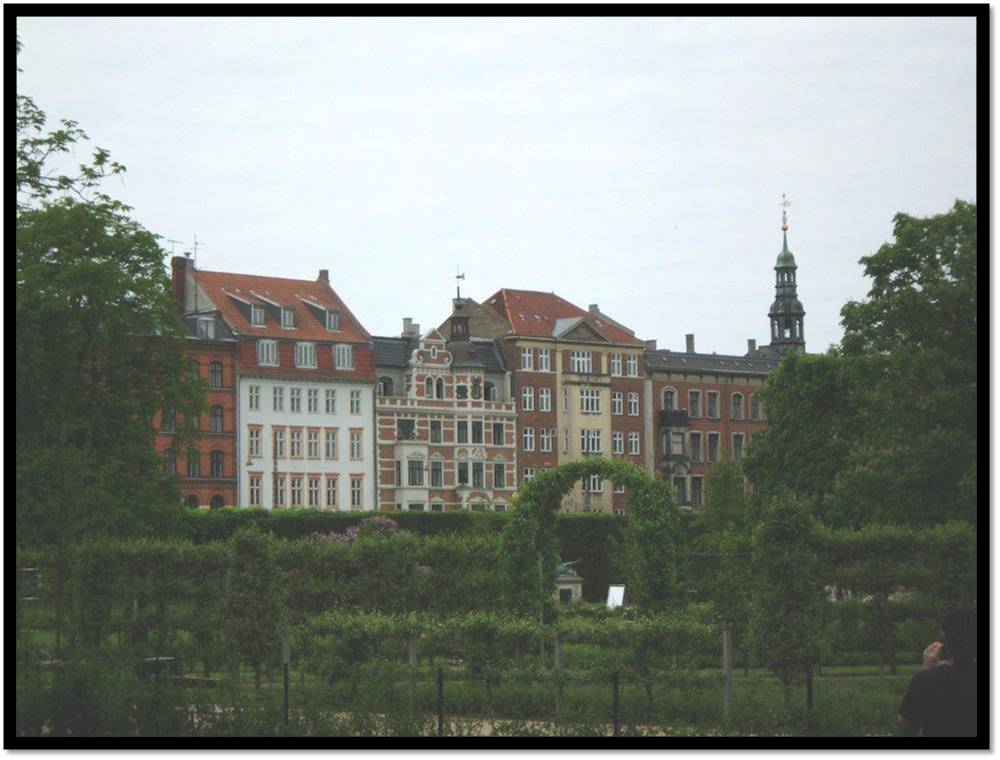
Park in København  -Enriching the city's biodiversity

Park in København -Enriching the city’s biodiversity

Conservationists have always referenced the benefits of biodiversity to the natural world, but many people wouldn’t associate that benefit with our own species. Humans have always had a bond and relation with the natural world, so it is logical that the change, no matter how small, in one would affect the other. According to a Discovery Magazine article, there is new compelling evidence out there showing that biodiversity is good for our health, and the lack of it in urban areas might be the cause of the rise in inflammatory and allergy problems.

The main evidence comes from a Finnish study that found that children who lived in a more biodiverse environment were less likely to have an allergic reaction to a controlled allergen substance than children who did not.

…the urban-dwelling nature of developed countries may be to blame for their increasing problem with inflammatory diseases. If so, conservation of natural spaces, including parks and other green initiatives, may be key to protecting the health of future generations. Continue reading

Eat Wild, Eat Well

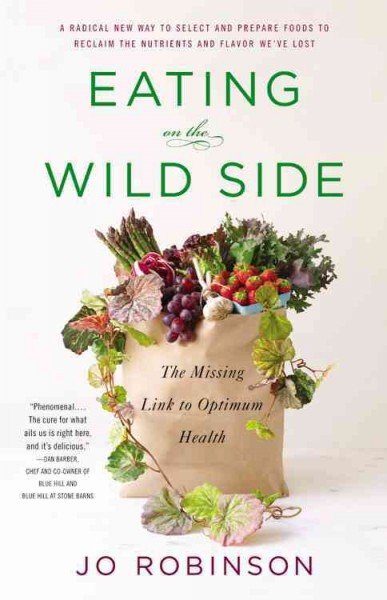
9780316227940_custom-6ce3aa1cfe7dd79644c4d9978c27fa29b29f3b20-s500-c85.jpgAs we start thinking through food programming at the two new properties we are working on here in Kerala, our attentions are scattered around the world, but eating wild keeps coming to us from all over. So when the great interviewer Dave Davies discusses this book with its author, podcast here, our attention is riveted:

In her new book, Eating on the Wild Side, Robinson argues that our prehistoric ancestors picked and gathered wild plants that were in many ways far more healthful than the stuff we buy today at farmers’ markets.

But this change, she says, isn’t the result of the much-bemoaned modern, industrial food system. It has been thousands of years in the making — ever since humans first took up farming (some 12,000 years ago, more or less) and decided to “cultivate the wild plants that were the most pleasurable to eat,” she writes. More pleasurable generally meant less bitter and higher in sugar, starch or oil.

Continue reading

Reducing Waste While Contributing to Communities

When “first world” travelers are planning a trip to the “third world”, their doctors often require them to take a handful of vaccinations, and a few prescriptions. This summer, about 40 students from a graduate program at the University of Western Ontario interned in Kerala, hosted by Raxa Collective; many of them, to err on the side of caution brought medicines for tropical diseases, including malaria. However, most of those medications are not needed in Kerala, whose health profile is comparable to Costa Rica, and which happens to be malaria-free.

As weeks progressed, many of the interns stopped taking their pills and consequently they were left with an excess, which are worth much more to those in need than in the garbage can back home. Continue reading

Healthcare in the Tibetan Exile Community

Guest Author: Hannah Miller

Last January I arrived in Dharamsala, a small city in India’s northwest state of Himachal Pradesh. Along with fifteen other American students I was there to study Tibetan culture, history, language and Buddhism. We spent the semester studying these subjects at two Tibetan colleges in Dharamsala, while living with Tibetan roommates and host families. At the end of the semester, we were given three weeks to conduct an independent research project of our choice. At my college in the United States I am majoring in Global Health, so I wanted to pursue a project related to public health in the Tibetan exile community in India.

Prior to 2012, there was almost no use of health insurance in the Tibetan exile community. The Tibetan government in exile provided reimbursement for healthcare costs on a case-by-case basis to Tibetans living in India, but could not afford to provide coverage for all who needed it.

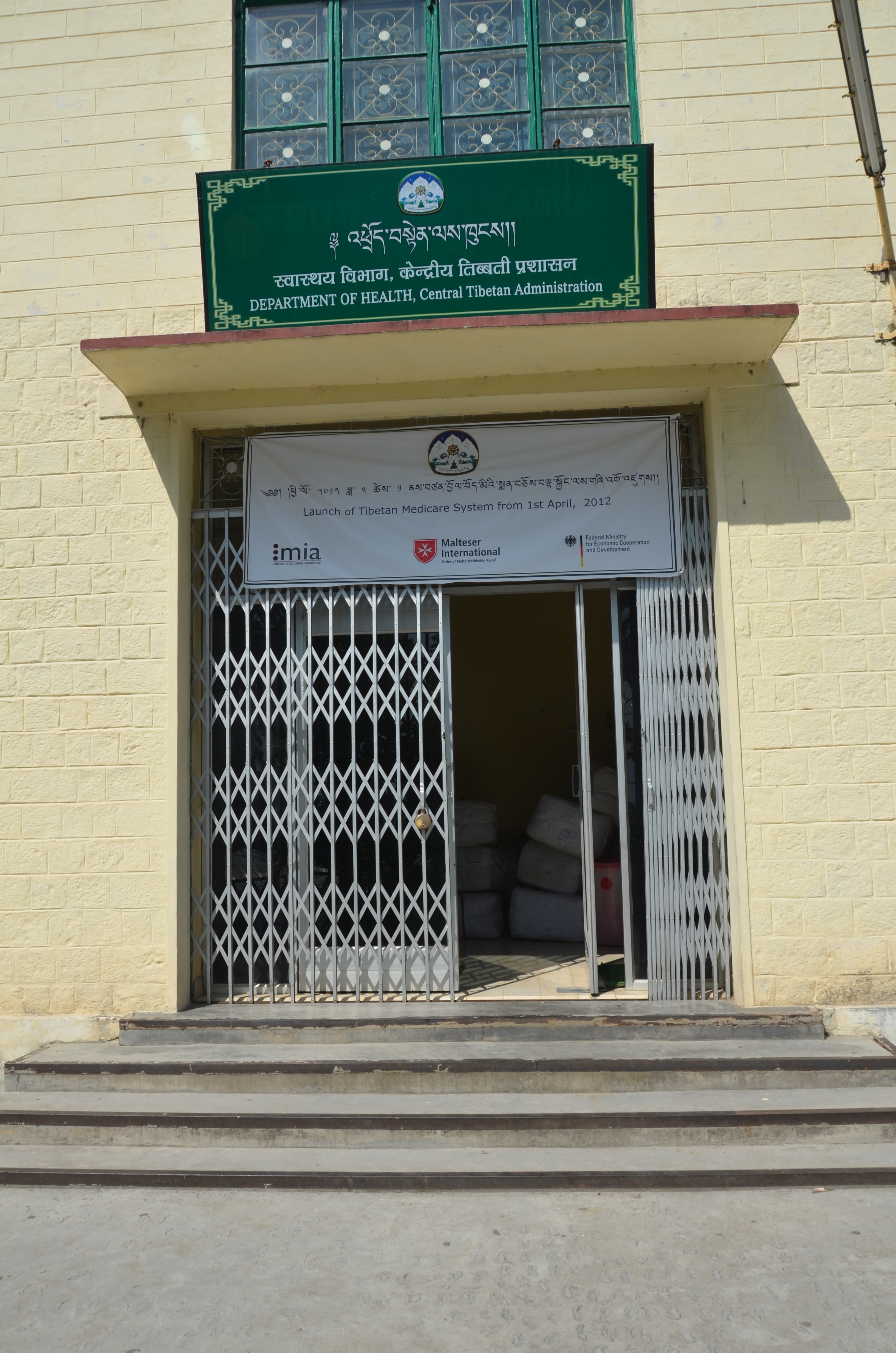
The Department of Health in Dharamsala, India

The Department of Health in Dharamsala, India

In 2012, the Tibetan exile government introduced the Tibetan Medicare System (TMS), which began providing coverage for inpatient expenses to Tibetan families and individuals. The system was developed through a partnership between the Central Tibetan Administration’s Department of Health and the Micro Insurance Academy (MIA), an NGO based in New Delhi, India. The program is open to any Tibetan individuals and families living in India. For an individual, it costs 950 INR per year to enroll, and 3565 INR per year for a family of two to five people. The insurance can be used at an extensive list of hospitals to cover inpatient expenses up to 50,000 INR or 100,000 INR per year for individuals and families, respectively. Continue reading

Ayurveda in Kerala: getting back in shape

Ayurveda, India’s traditional medicine is a major presence in healthcare in Kerala. My colleague Lissi has ten years of experience practicing ayurvedic massage. She started her training at an ayurvedic hospital before enrolling at an ayurvedic institute. There, she pursued her apprenticeship while practicing at the hospital. Continue reading

Simple health tips to travel in Kerala from our Ayurvedic doctor

The first aid kit I packed to come here in Kerala is the size of a small shoebox. Except for mosquito repellent and cold cream I have yet to use it, and although I should be relieved, I am annoyed. It’s the heaviest part of my luggage and I’ll probably carry it all back home ! A lot of this medication treats tummy-aches and Kerala has a strong system of traditional medicine, Ayurveda, that handles those issues well and without the long tail of potential side effects.

“You were right to take precautions, when traveling you never know where you’re going to land and what you’re going to find.  Kerala is rich in water sources and is not at risk for Malaria. But you may want to travel to other parts of India which are less fortunate in those regards.” Dr Sulficker reminded me. Dr Pameela Sulficker is the Ayurvedic doctor here at Cardamom County, she introduces travelers to ayurveda at the Ayura Wellness Center. Continue reading

Foodie’s Feature


NYT Food

Click the image for today’s Sunday New York Times, our annual favorite edition, dedicated to Food and as recently more and more is the case, particular attention is paid to the intersection between food and wellness:

The Food & Drink Issue

Time to supersize your bean burger and sweet potato fries.

From the 2012 Net Impact Conference, Part 3

In my last installment of a trio of posts on the 2012 Net Impact Conference, I want to draw our readers’ attention to a keynote panel that included the CEO of Coca-Cola and the president of Honest Tea. The topic of this panel centered on healthy eating and consumer choices. By way of background, Honest Tea is an organic tea company that was founded by Seth Goldman in 1998. Honest Tea is a poster child of socially responsible innovation: the firm sources herbs/plants from developing countries, supports poor farmers, uses organic ingredients, and provides sustainable product packaging. But in 2011, Coca-Cola bought a majority share of Honest Tea.

Leaders from Honest Tea and Coca-Cola sparred over a variety of issues, but they agreed that consumers were ultimately responsible for their own health.

Continue reading

Indian Lotus Flower

Photo Credits:Ramesh Kidangoor

Photo Credits: Ramesh Kidangoor

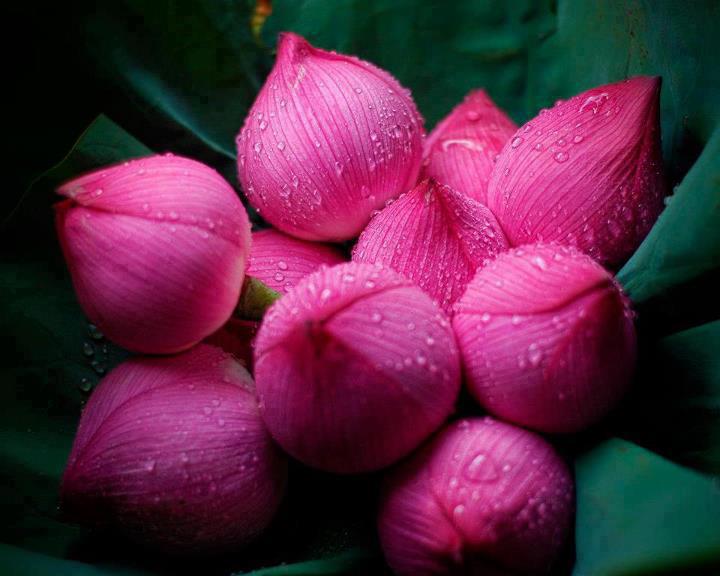
Lotus, the national flower of India, symbolizes beauty, majesty, spirituality, purity, wealth, serenity and knowledge. It is an aquatic plant that belongs to the Nelumbonaceae species with broad floating leaves and bright aromatic flowers that grows in shallow waters. Its seeds, leaves, flowers and roots are all edible and used in a variety of medicines. Lotus is also a sacred flower for Hindus and Buddhists. Continue reading

Vegetarian Roulette

joe-yonan

Yonan says he became a vegetarian in part for health reason, but also for environmental ones.

Click the image above to go to the podcast of this interview with Washington Post food editor Joe Yonan. It is funny to think that committing to a vegetarian diet could pose a career risk to anyone, but if you are a food-focsed writer or editor, of course:

You could see how high cholesterol might be a job hazard for these folks. “The meals that we food people get into can sometimes be way over-the-top of the kinds of things that normal people eat,” Yonan says.

But it’s not just foodies who are cutting back on meat. In a poll conducted last year with Truven Health Analytics, NPR found that 39 percent of adults surveyed said they eat less meat than they did three years ago. The main reason they cited for the change? Health concerns. Continue reading

Shine A Light

chipata-blog480

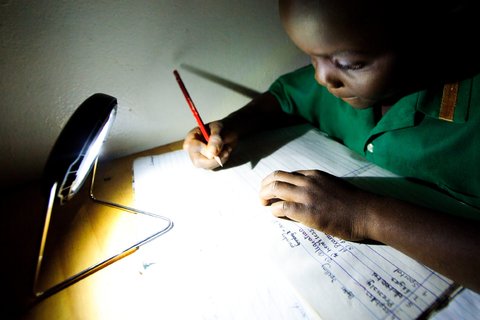
Green Blog shares this news about a significant innovation at the intersection of crowdfunding, renewables and community welfare in Africa and Asia:

By visiting Web sites like Kickstarter and Indiegogo, you can give money to any number of causes. These Web sites collect small amounts from many individuals in what is known as crowdfunding to finance everything from business start-ups to charitable causes to art projects.

While online crowdfunding is still relatively new, it has already demonstrated that many small contributions can add up. Deloitte, the accounting and consulting firm, estimates that the largest 30 crowdfunding sites raised more than $1.5 billion over the last five years, and expects that in 2013 alone the number could be $3 billion.

Continue reading